Download to read offline

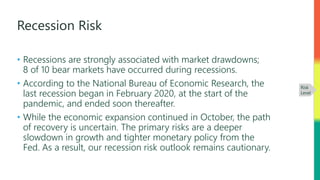
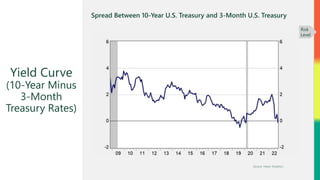
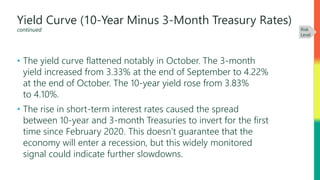
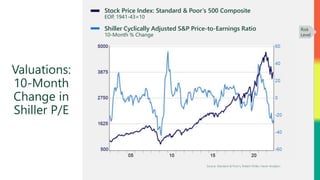
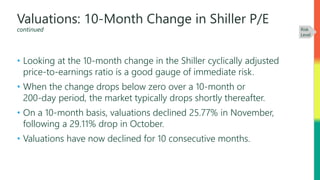
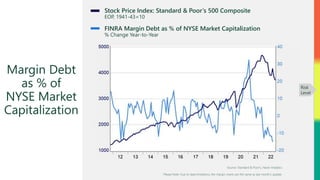
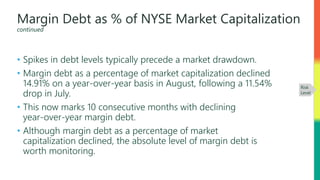
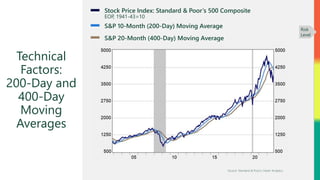
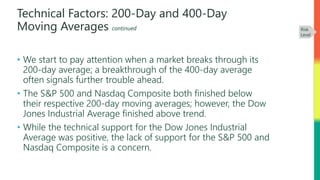
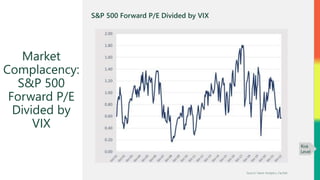
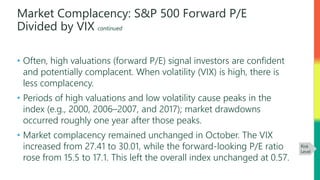
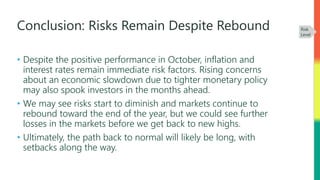

The November 2022 market risk update highlights ongoing recession risks tied to past patterns, with the economic recovery remaining uncertain due to potential slowdowns and tighter monetary policy from the Federal Reserve. Key indicators such as the inverted yield curve, declining valuations, and decreasing margin debt suggest caution as market conditions evolve, with a potential pathway to recovery anticipated but fraught with risks. Overall, despite some positive market performance, inflation and interest rates remain significant immediate concerns for investors.
![Monthly Market Risk Update: January 2023 [SlideShare]](https://cdn.slidesharecdn.com/ss_thumbnails/monthlymarketriskupdatejanuary2023rlam-230118150940-eac4e1d7-thumbnail.jpg?width=640&height=640&fit=bounds)
![Monthly Market Risk Update: December 2022 [SlideShare]](https://cdn.slidesharecdn.com/ss_thumbnails/monthlymarketriskupdatedecember2022amrl-221222150145-c91a7010-thumbnail.jpg?width=640&height=640&fit=bounds)
![Monthly Market Risk Update: October 2022 [SlideShare]](https://cdn.slidesharecdn.com/ss_thumbnails/monthlymarketriskupdateoctober2022rlkfam-221019163337-f0504aff-thumbnail.jpg?width=640&height=640&fit=bounds)
![Monthly Market Risk Update: February 2023 [SlideShare]](https://cdn.slidesharecdn.com/ss_thumbnails/monthlymarketriskupdatefebruary2023amrl-230215153736-3cc82535-thumbnail.jpg?width=640&height=640&fit=bounds)
![Monthly Market Risk Update: December 2023 [SlideShare]](https://cdn.slidesharecdn.com/ss_thumbnails/monthlymarketriskupdatedecember2023-231220143729-32260328-thumbnail.jpg?width=640&height=640&fit=bounds)
![Monthly Market Risk Update: May 2023 [SlideShare]](https://cdn.slidesharecdn.com/ss_thumbnails/monthlymarketriskupdatemay2023-230517141602-38346c0d-thumbnail.jpg?width=640&height=640&fit=bounds)
![Monthly Market Risk Update: October 2024 [SlideShare]](https://cdn.slidesharecdn.com/ss_thumbnails/monthlymarketriskupdateoct2024am-241016133219-d645282f-thumbnail.jpg?width=640&height=640&fit=bounds)
![Monthly Market Risk Update: September 2024 [SlideShare]](https://cdn.slidesharecdn.com/ss_thumbnails/monthlymarketriskupdatesept2024am-240918134147-6b6cc9a3-thumbnail.jpg?width=640&height=640&fit=bounds)
![Monthly Market Risk Update: January 2024 [SlideShare]](https://cdn.slidesharecdn.com/ss_thumbnails/monthlymarketriskupdatejanuary2024-240117184430-04ccf529-thumbnail.jpg?width=640&height=640&fit=bounds)
![Monthly Market Risk Update: June 2023 [SlideShare]](https://cdn.slidesharecdn.com/ss_thumbnails/monthlymarketriskupdatejune2023-230614154355-e99841d6-thumbnail.jpg?width=640&height=640&fit=bounds)
![Monthly Market Risk Update: March 2023 [SlideShare]](https://cdn.slidesharecdn.com/ss_thumbnails/monthlymarketriskupdatemarch2023-230316184503-55129960-thumbnail.jpg?width=640&height=640&fit=bounds)
![Monthly Market Risk Update: September 2022 [SlideShare]](https://cdn.slidesharecdn.com/ss_thumbnails/monthlymarketriskupdateseptember2022-220915194606-6c06e262-thumbnail.jpg?width=640&height=640&fit=bounds)
![Monthly Market Risk Update: November 2023 [SlideShare]](https://cdn.slidesharecdn.com/ss_thumbnails/monthlymarketriskupdatenovember2023-231115143226-35f33125-thumbnail.jpg?width=640&height=640&fit=bounds)
![Monthly Market Risk Update: October 2023 [SlideShare]](https://cdn.slidesharecdn.com/ss_thumbnails/monthlymarketriskupdateoctober2023-231018170735-6202cf20-thumbnail.jpg?width=640&height=640&fit=bounds)
![Monthly Market Risk Update: September 2023 [SlideShare]](https://cdn.slidesharecdn.com/ss_thumbnails/monthlymarketriskupdateseptember2023-230912213959-e48e736b-thumbnail.jpg?width=640&height=640&fit=bounds)
![Monthly Market Risk Update: April 2023 [SlideShare]](https://cdn.slidesharecdn.com/ss_thumbnails/monthlymarketriskupdateapril2023-230419170710-4fe1603f-thumbnail.jpg?width=640&height=640&fit=bounds)
![Monthly Market Risk Update: August 2024 [SlideShare]](https://cdn.slidesharecdn.com/ss_thumbnails/monthlymarketriskupdateaugust2024am-240821135054-bcf05ed7-thumbnail.jpg?width=640&height=640&fit=bounds)
![Monthly Market Risk Update: February 2024 [SlideShare]](https://cdn.slidesharecdn.com/ss_thumbnails/monthlymarketriskupdatefebruary2024-240214182605-2944667c-thumbnail.jpg?width=640&height=640&fit=bounds)
![Monthly Market Risk Update: July 2023 [SlideShare]](https://cdn.slidesharecdn.com/ss_thumbnails/monthlymarketriskupdatejuly2023-230719123124-43dfed09-thumbnail.jpg?width=640&height=640&fit=bounds)
![Monthly Market Risk Update: July 2024 [SlideShare]](https://cdn.slidesharecdn.com/ss_thumbnails/monthlymarketriskupdatejuly2024am-240717142310-0da22cfe-thumbnail.jpg?width=640&height=640&fit=bounds)
![Monthly Market Risk Update: August 2023 [SlideShare]](https://cdn.slidesharecdn.com/ss_thumbnails/monthlymarketriskupdateaugust2023-230823125440-082a056b-thumbnail.jpg?width=640&height=640&fit=bounds)
![Monthly Market Risk Update: April 2024 [SlideShare]](https://cdn.slidesharecdn.com/ss_thumbnails/monthlymarketriskupdateapril2024am-240424140359-342f2410-thumbnail.jpg?width=640&height=640&fit=bounds)
![Monthly Market Risk Update: March 2024 [SlideShare]](https://cdn.slidesharecdn.com/ss_thumbnails/monthlymarketriskupdatefebruary2024am-240320140945-833de20e-thumbnail.jpg?width=640&height=640&fit=bounds)
![Monthly Market Risk Update: June 2024 [SlideShare]](https://cdn.slidesharecdn.com/ss_thumbnails/monthlymarketriskupdatejune2024am-pf2ka417-240618125718-421c825a-thumbnail.jpg?width=640&height=640&fit=bounds)
![Monthly Market Risk Update: May 2024 [SlideShare]](https://cdn.slidesharecdn.com/ss_thumbnails/monthlymarketriskupdatemay2024am-240522122148-e521348e-thumbnail.jpg?width=640&height=640&fit=bounds)
![Economic Risk Factor Update: November 2023 [SlideShare]](https://cdn.slidesharecdn.com/ss_thumbnails/economicriskfactorupdatenovember2023am-231108133417-ef934499-thumbnail.jpg?width=640&height=640&fit=bounds)
![Economic Risk Factor Update: December 2023 [SlideShare]](https://cdn.slidesharecdn.com/ss_thumbnails/economicriskfactorupdatedecember2023am-231213134840-5e762269-thumbnail.jpg?width=640&height=640&fit=bounds)

![Economic Risk Factor Update: October 2024 [SlideShare]](https://cdn.slidesharecdn.com/ss_thumbnails/economicriskfactorupdateoctober2024am-241009015353-d2831b2a-thumbnail.jpg?width=640&height=640&fit=bounds)
![Economic Risk Factor Update: September 2024 [SlideShare]](https://cdn.slidesharecdn.com/ss_thumbnails/economicriskfactorupdateseptember2024am-240911134348-d9aeec3f-thumbnail.jpg?width=640&height=640&fit=bounds)
![Economic Risk Factor Update: August 2024 [SlideShare]](https://cdn.slidesharecdn.com/ss_thumbnails/economicriskfactorupdateaugust2024am-240815171155-2612b755-thumbnail.jpg?width=640&height=640&fit=bounds)
![Economic Risk Factor Update: July 2024 [SlideShare]](https://cdn.slidesharecdn.com/ss_thumbnails/economicriskfactorupdatejuly2024am-240712130225-147b17c8-thumbnail.jpg?width=640&height=640&fit=bounds)
![Economic Risk Factor Update: June 2024 [SlideShare]](https://cdn.slidesharecdn.com/ss_thumbnails/economicriskfactorupdatejune2024am-240612135955-62fda29d-thumbnail.jpg?width=640&height=640&fit=bounds)
![Economic Risk Factor Update: May 2024 [SlideShare]](https://cdn.slidesharecdn.com/ss_thumbnails/economicriskfactorupdatemay2024am-240515130440-74d66100-thumbnail.jpg?width=640&height=640&fit=bounds)
![Economic Risk Factor Update: April 2024 [SlideShare]](https://cdn.slidesharecdn.com/ss_thumbnails/economicriskfactorupdateapril2024am-240417130922-b8ca38a5-thumbnail.jpg?width=640&height=640&fit=bounds)
![Economic Risk Factor Update: March 2024 [SlideShare]](https://cdn.slidesharecdn.com/ss_thumbnails/economicriskfactorupdatemarch2024am-240313133142-2574fc7f-thumbnail.jpg?width=640&height=640&fit=bounds)
![Economic Risk Factor Update: February 2024 [SlideShare]](https://cdn.slidesharecdn.com/ss_thumbnails/economicriskfactorupdatefebruary2024am-240207153630-0724fa23-thumbnail.jpg?width=640&height=640&fit=bounds)
![Economic Risk Factor Update: January 2024 [SlideShare]](https://cdn.slidesharecdn.com/ss_thumbnails/economicriskfactorupdatejanuary2024am-240110150920-3ad906d7-thumbnail.jpg?width=640&height=640&fit=bounds)
![Economic Risk Factor Update: October 2023 [SlideShare]](https://cdn.slidesharecdn.com/ss_thumbnails/economicriskfactorupdateoctober2023am-231011151056-66e85714-thumbnail.jpg?width=640&height=640&fit=bounds)
![Economic Risk Factor Update: September 2023 [SlideShare]](https://cdn.slidesharecdn.com/ss_thumbnails/economicriskfactorupdateseptember2023am-230906173934-b5fa365e-thumbnail.jpg?width=640&height=640&fit=bounds)
![Economic Risk Factor Update: August 2023 [SlideShare]](https://cdn.slidesharecdn.com/ss_thumbnails/economicriskfactorupdateaugust2023am-230816184852-13dbaeea-thumbnail.jpg?width=640&height=640&fit=bounds)


