Principles of Holistic Information
Governance
Good Governance is Good Business
ARMA Calgary Chapter
May 13, 2013

Copyright © OpenText Corporation. All rights reserved.
Information governance is about …
 Records

 Security
 Info architecture
 Storage

 Acceptable use
 Etc.

GETTING STUFF DONE!!!
Copyright © Open Text Corporation. All rights reserved.

2
Principles of Holistic Information Governance
(PHIGs)
1. Information is an asset
2. Information has purpose
3. Information has sources & targets
4. Information has deadlines
5. Information has consumers
6. Information carries obligations
7. Information carries risks
8. Information has many forms

9. Information isn’t immortal
10. Information demands accountability

3
Information is an asset
Belongs to the org – not the person
 Device, location are irrelevant

Costs of acquisition, maintenance
Value may depreciate over time
Residual value

4
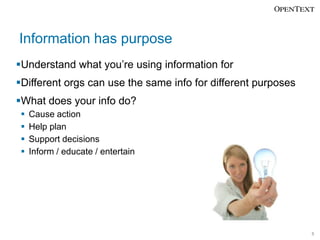
Information has purpose
Understand what you’re using information for

Different orgs can use the same info for different purposes
What does your info do?





Cause action
Help plan
Support decisions
Inform / educate / entertain

5
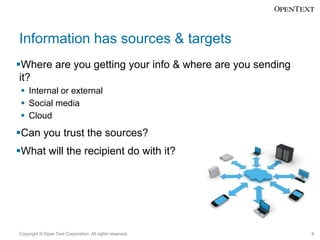
Information has sources & targets
Where are you getting your info & where are you sending
it?
 Internal or external
 Social media
 Cloud

Can you trust the sources?
What will the recipient do with it?

Copyright © Open Text Corporation. All rights reserved.

6
Information has deadlines
 When do you really need it?

 Is real-time really necessary?
 What do you do when you don’t get it in time?

Copyright © Open Text Corporation. All rights reserved.

7
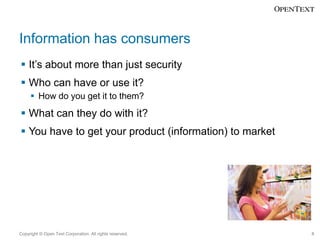
Information has consumers
 It’s about more than just security

 Who can have or use it?
 How do you get it to them?

 What can they do with it?
 You have to get your product (information) to market

Copyright © Open Text Corporation. All rights reserved.

8
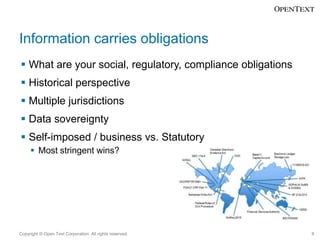
Information carries obligations
 What are your social, regulatory, compliance obligations

 Historical perspective
 Multiple jurisdictions
 Data sovereignty

 Self-imposed / business vs. Statutory
 Most stringent wins?

Copyright © Open Text Corporation. All rights reserved.

9
Information carries risks
 Too much or not enough?
 Bad decisions or analysis paralysis?

 What if it leaks?
 Legal, FOIP/FOIA/ATIP
 Risk profile
 Probability of occurrence
 Impact of occurrence
 Litigation frequency

 Costs of mitigation vs. Impacts of occurrence
 You can’t protect against everything
Copyright © Open Text Corporation. All rights reserved.

10
Information has many forms
 How are stakeholders interacting with it?
 What kinds of devices?
 Where are they accessing?

 Passive or active interactions?
 Do your consumers become contributors?

Copyright © Open Text Corporation. All rights reserved.

11
Information isn’t immortal
 Most information doesn’t last forever

 Get rid of it when you can
 Legally defensible destruction is only one aspect
 If it still has business value, keep it

 De-clutter, become info-efficient

Copyright © Open Text Corporation. All rights reserved.

12
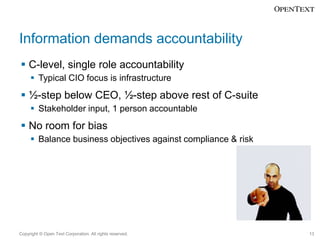
Information demands accountability
 C-level, single role accountability
 Typical CIO focus is infrastructure

 ½-step below CEO, ½-step above rest of C-suite
 Stakeholder input, 1 person accountable

 No room for bias
 Balance business objectives against compliance & risk

Copyright © Open Text Corporation. All rights reserved.

13
Wrapping it up
 Time to switch
 Risks -> Benefits
 Cost -> Value

 Policies -> procedures -> education -> tools
 Review & repeat as required

 It doesn’t have to be perfect, good enough is good
enough
 Focus on business first
 Balance business benefits against compliance, risk

 Approach depends on org type & info type
 Information governance is about getting business done
Copyright © Open Text Corporation. All rights reserved.

14
Additional Resources
The Blog posts that started this
 Principles of Holistic Information Governance
 Chris Walker, April 2013 (updated broken link 2014-01-19)

 Policies First – Holism in Information Governance
 Chris Walker, February 2013

 Governance Sucks but Doesn’t Have To
 Chris Walker, September 2012

20 Information Governance Questions and Answers
Webcast
ECM Maturity Assessment

Copyright © Open Text Corporation. All rights reserved.

15
Thank You
Good Governance is Good Business

Chris Walker
Business Development Manager, Services, Western Canada
walkerc@opentext.com
+1 780 270 5359
Skype christianpwalker1
Twitter @chris_p_walker
Copyright © OpenText Corporation. All rights reserved.

Principles of Holistic Information Governance

  • 1.
    Principles of HolisticInformation Governance Good Governance is Good Business ARMA Calgary Chapter May 13, 2013 Copyright © OpenText Corporation. All rights reserved.
  • 2.
    Information governance isabout …  Records  Security  Info architecture  Storage  Acceptable use  Etc. GETTING STUFF DONE!!! Copyright © Open Text Corporation. All rights reserved. 2
  • 3.
    Principles of HolisticInformation Governance (PHIGs) 1. Information is an asset 2. Information has purpose 3. Information has sources & targets 4. Information has deadlines 5. Information has consumers 6. Information carries obligations 7. Information carries risks 8. Information has many forms 9. Information isn’t immortal 10. Information demands accountability 3
  • 4.
    Information is anasset Belongs to the org – not the person  Device, location are irrelevant Costs of acquisition, maintenance Value may depreciate over time Residual value 4
  • 5.
    Information has purpose Understandwhat you’re using information for Different orgs can use the same info for different purposes What does your info do?     Cause action Help plan Support decisions Inform / educate / entertain 5
  • 6.
    Information has sources& targets Where are you getting your info & where are you sending it?  Internal or external  Social media  Cloud Can you trust the sources? What will the recipient do with it? Copyright © Open Text Corporation. All rights reserved. 6
  • 7.
    Information has deadlines When do you really need it?  Is real-time really necessary?  What do you do when you don’t get it in time? Copyright © Open Text Corporation. All rights reserved. 7
  • 8.
    Information has consumers It’s about more than just security  Who can have or use it?  How do you get it to them?  What can they do with it?  You have to get your product (information) to market Copyright © Open Text Corporation. All rights reserved. 8
  • 9.
    Information carries obligations What are your social, regulatory, compliance obligations  Historical perspective  Multiple jurisdictions  Data sovereignty  Self-imposed / business vs. Statutory  Most stringent wins? Copyright © Open Text Corporation. All rights reserved. 9
  • 10.
    Information carries risks Too much or not enough?  Bad decisions or analysis paralysis?  What if it leaks?  Legal, FOIP/FOIA/ATIP  Risk profile  Probability of occurrence  Impact of occurrence  Litigation frequency  Costs of mitigation vs. Impacts of occurrence  You can’t protect against everything Copyright © Open Text Corporation. All rights reserved. 10
  • 11.
    Information has manyforms  How are stakeholders interacting with it?  What kinds of devices?  Where are they accessing?  Passive or active interactions?  Do your consumers become contributors? Copyright © Open Text Corporation. All rights reserved. 11
  • 12.
    Information isn’t immortal Most information doesn’t last forever  Get rid of it when you can  Legally defensible destruction is only one aspect  If it still has business value, keep it  De-clutter, become info-efficient Copyright © Open Text Corporation. All rights reserved. 12
  • 13.
    Information demands accountability C-level, single role accountability  Typical CIO focus is infrastructure  ½-step below CEO, ½-step above rest of C-suite  Stakeholder input, 1 person accountable  No room for bias  Balance business objectives against compliance & risk Copyright © Open Text Corporation. All rights reserved. 13
  • 14.
    Wrapping it up Time to switch  Risks -> Benefits  Cost -> Value  Policies -> procedures -> education -> tools  Review & repeat as required  It doesn’t have to be perfect, good enough is good enough  Focus on business first  Balance business benefits against compliance, risk  Approach depends on org type & info type  Information governance is about getting business done Copyright © Open Text Corporation. All rights reserved. 14
  • 15.
    Additional Resources The Blogposts that started this  Principles of Holistic Information Governance  Chris Walker, April 2013 (updated broken link 2014-01-19)  Policies First – Holism in Information Governance  Chris Walker, February 2013  Governance Sucks but Doesn’t Have To  Chris Walker, September 2012 20 Information Governance Questions and Answers Webcast ECM Maturity Assessment Copyright © Open Text Corporation. All rights reserved. 15
  • 16.
    Thank You Good Governanceis Good Business Chris Walker Business Development Manager, Services, Western Canada walkerc@opentext.com +1 780 270 5359 Skype christianpwalker1 Twitter @chris_p_walker Copyright © OpenText Corporation. All rights reserved.