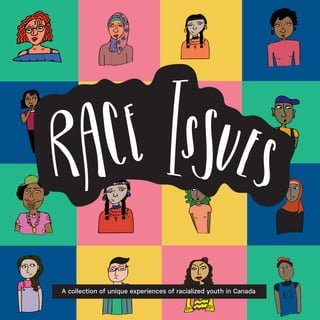










A collection of unique experiences of racialized youth in Canada
The Canadian Cultural Mosaic Foundation and all contributors who worked on this project
would like to honour and acknowledge all that reside on the traditional Treaty 7 territory of
the Blackfoot confederacy. This includes the Siksika, Kainai, Piikani as well as the Stoney
Nakoda and Tsuut’ina nations. We further acknowledge that we are also home to many
Métis communities and Region 3 of the Métis Nation. We conclude with honoring the city
of Calgary’s indigenous roots, traditionally known as “Moh’Kinstsis”.
This book is made in memory of
Octavio Ventura. Special thank you to
Kerry Longpre for making this project
a reality.
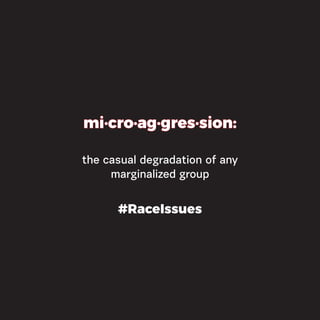
mi·cro·ag·gres·sion:
the casual degradation of any
marginalized group
#RaceIssues
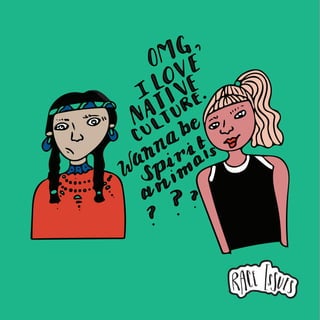
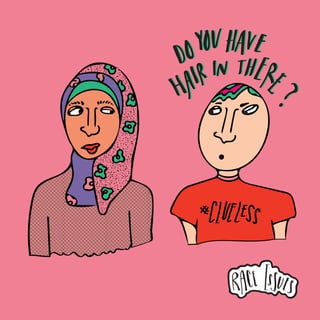
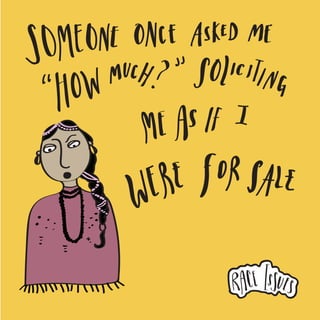
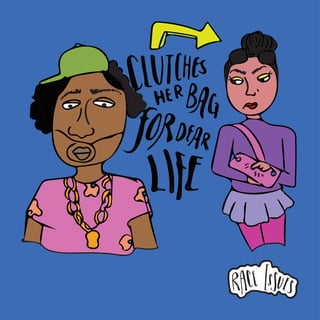
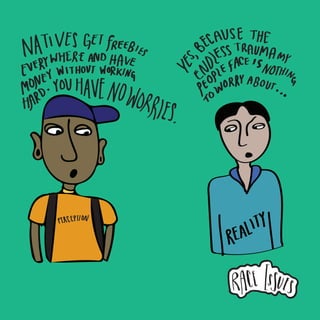
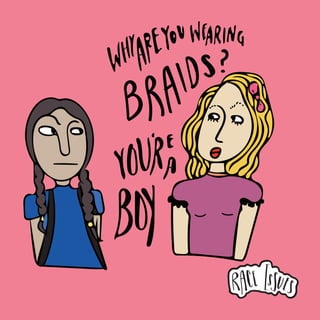
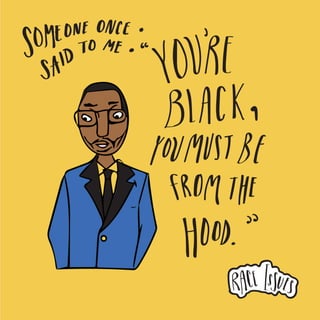
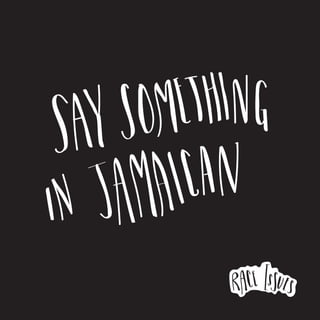
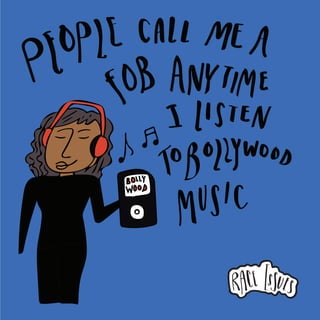
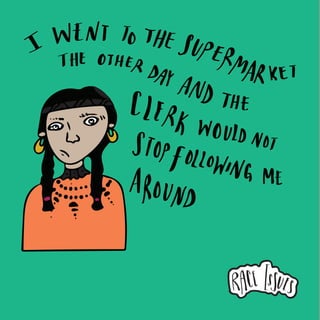
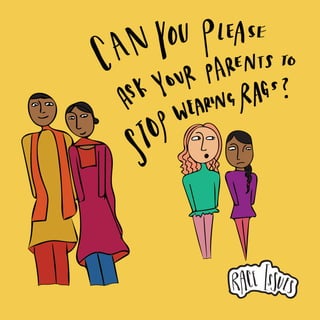
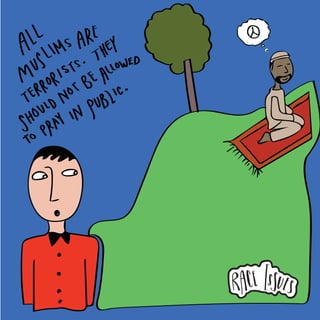
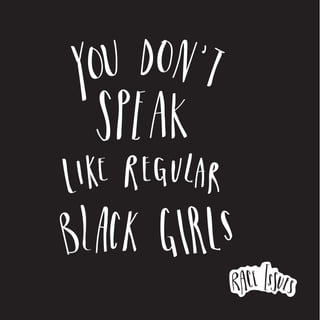
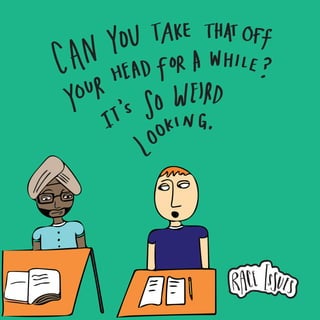
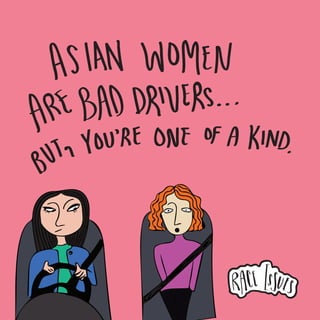
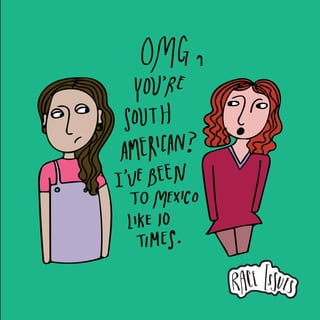
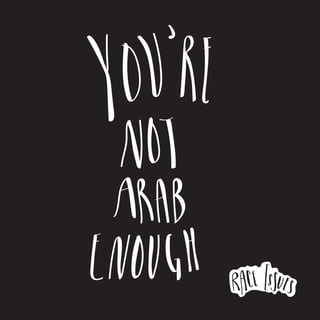
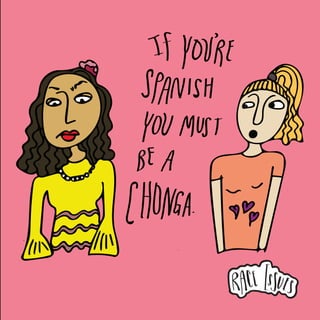
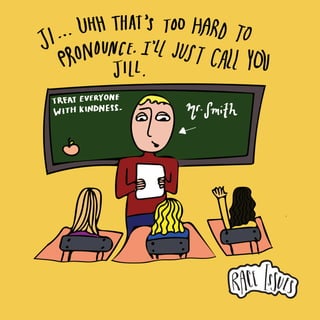
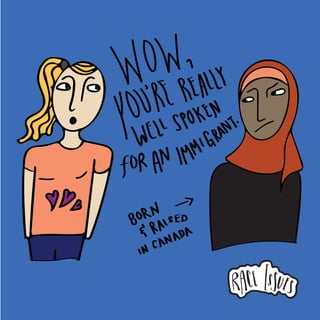
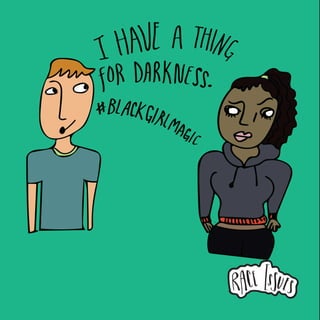
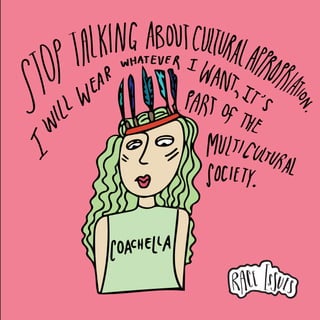
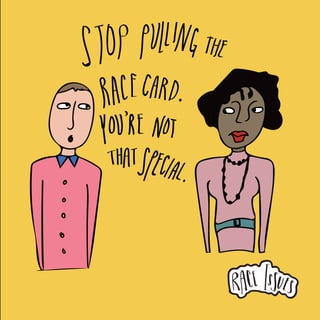
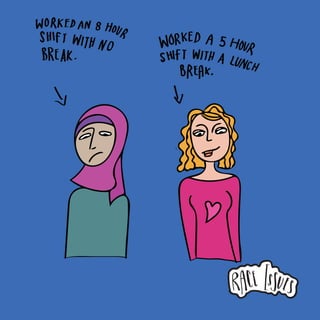
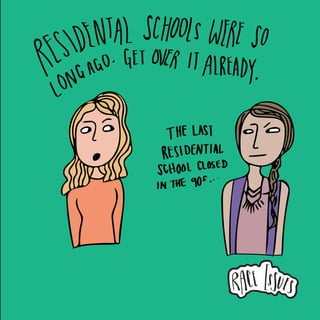
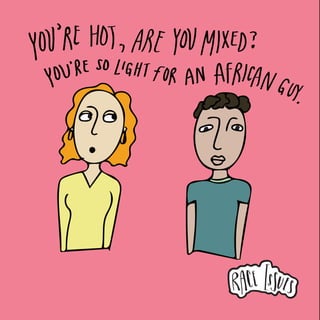
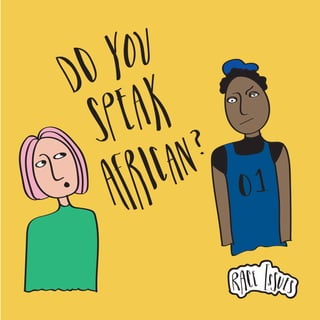
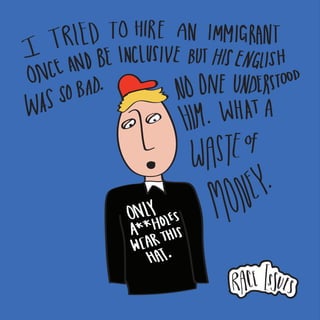
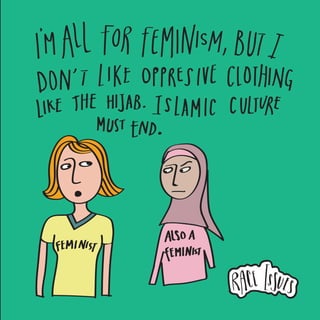
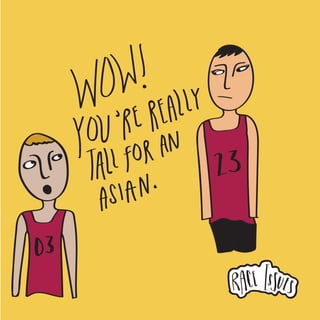
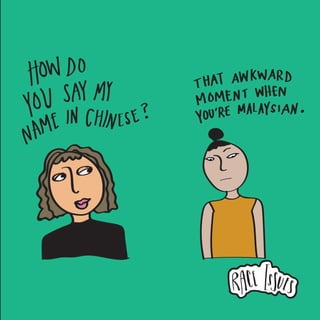
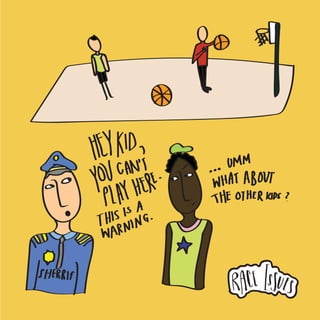
This relatable comic series was created as a way of expressing the overlooked yet
extremely common ways that people of colour are treated in a variety of social
settings in our nation. We reached out to youth across the country, both in person
and online, and asked them to share their unfiltered stories about how race plays a
role in their daily interactions. Common themes emerged from the many responses
we received, and the notion of micro-aggressions was included by each individual.
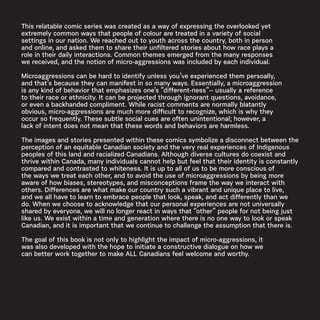
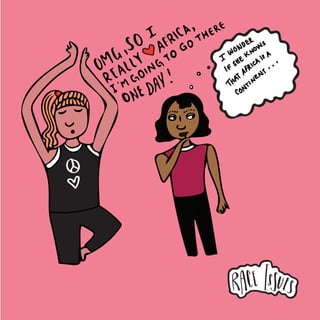
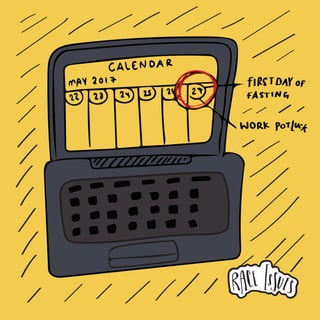
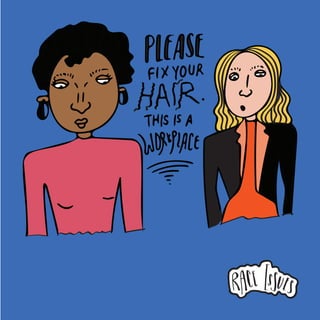
Microaggressions can be hard to identify unless you’ve experienced them persoally,
and that’s because they can manifest in so many ways. Essentially, a microaggression
is any kind of behavior that emphasizes one’s “different-ness”-- usually a reference
to their race or ethnicity. It can be projected through ignorant questions, avoidance,
or even a backhanded compliment. While racist comments are normally blatantly
obvious, micro-aggressions are much more difficult to recognize, which is why they
occur so frequently. These subtle social cues are often unintentional; however, a
lack of intent does not mean that these words and behaviors are harmless.
The images and stories presented within these comics symbolize a disconnect between the
perception of an equitable Canadian society and the very real experiences of Indigenous
peoples of this land and racialized Canadians. Although diverse cultures do coexist and
thrive within Canada, many individuals cannot help but feel that their identity is constantly
compared and contrasted to whiteness. It is up to all of us to be more conscious of
the ways we treat each other, and to avoid the use of microaggressions by being more
aware of how biases, stereotypes, and misconceptions frame the way we interact with
others. Differences are what make our country such a vibrant and unique place to live,
and we all have to learn to embrace people that look, speak, and act differently than we
do. When we choose to acknowledge that our personal experiences are not universally
shared by everyone, we will no longer react in ways that “other” people for not being just
like us. We exist within a time and generation where there is no one way to look or speak
Canadian, and it is important that we continue to challenge the assumption that there is.
The goal of this book is not only to highlight the impact of micro-aggressions, it
was also developed with the hope to initiate a constructive dialogue on how we
can better work together to make ALL Canadians feel welcome and worthy.
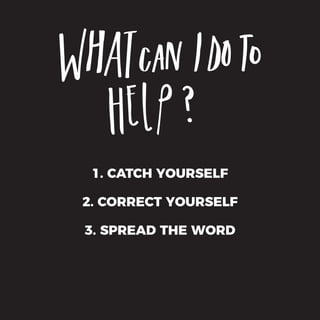
1. CATCH YOURSELF
2. CORRECT YOURSELF
3. SPREAD THE WORD
This project was created in partnership with Canadian
Cultural Mosaic Foundation and ActionDignity’s Youth PLACE
project. Canadian Cultural Mosaic Foundation is a not-for-profit
organization run by committed Millennials. The organization works
to improve Race Relations in Canada and also mitigate racism by
creating cultural understanding through multicultural education,
technology and arts. The Youth PLACE project engages racialized
youth to inform, create, incubate and implement approaches to
address the systemic racism and day to day barriers that they face.
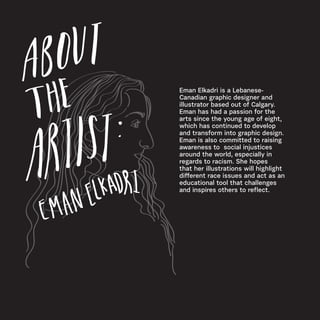
Eman Elkadri is a Lebanese-
Canadian graphic designer and
illustrator based out of Calgary.
Eman has had a passion for the
arts since the young age of eight,
which has continued to develop
and transform into graphic design.
Eman is also committed to raising
awareness to social injustices
around the world, especially in
regards to racism. She hopes
that her illustrations will highlight
different race issues and act as an
educational tool that challenges
and inspires others to reflect.
Presented by Canadian Cultural Mosaic Foundation © 2019

Race Issues - Comic Meme Series About Microaggressions

  • 1.
    A collection ofunique experiences of racialized youth in Canada
  • 2.
    The Canadian CulturalMosaic Foundation and all contributors who worked on this project would like to honour and acknowledge all that reside on the traditional Treaty 7 territory of the Blackfoot confederacy. This includes the Siksika, Kainai, Piikani as well as the Stoney Nakoda and Tsuut’ina nations. We further acknowledge that we are also home to many Métis communities and Region 3 of the Métis Nation. We conclude with honoring the city of Calgary’s indigenous roots, traditionally known as “Moh’Kinstsis”.
  • 3.
    This book ismade in memory of Octavio Ventura. Special thank you to Kerry Longpre for making this project a reality.
  • 4.
    mi·cro·ag·gres·sion: the casual degradationof any marginalized group #RaceIssues
  • 5.
    This relatable comicseries was created as a way of expressing the overlooked yet extremely common ways that people of colour are treated in a variety of social settings in our nation. We reached out to youth across the country, both in person and online, and asked them to share their unfiltered stories about how race plays a role in their daily interactions. Common themes emerged from the many responses we received, and the notion of micro-aggressions was included by each individual. Microaggressions can be hard to identify unless you’ve experienced them persoally, and that’s because they can manifest in so many ways. Essentially, a microaggression is any kind of behavior that emphasizes one’s “different-ness”-- usually a reference to their race or ethnicity. It can be projected through ignorant questions, avoidance, or even a backhanded compliment. While racist comments are normally blatantly obvious, micro-aggressions are much more difficult to recognize, which is why they occur so frequently. These subtle social cues are often unintentional; however, a lack of intent does not mean that these words and behaviors are harmless. The images and stories presented within these comics symbolize a disconnect between the perception of an equitable Canadian society and the very real experiences of Indigenous peoples of this land and racialized Canadians. Although diverse cultures do coexist and thrive within Canada, many individuals cannot help but feel that their identity is constantly compared and contrasted to whiteness. It is up to all of us to be more conscious of the ways we treat each other, and to avoid the use of microaggressions by being more aware of how biases, stereotypes, and misconceptions frame the way we interact with others. Differences are what make our country such a vibrant and unique place to live, and we all have to learn to embrace people that look, speak, and act differently than we do. When we choose to acknowledge that our personal experiences are not universally shared by everyone, we will no longer react in ways that “other” people for not being just like us. We exist within a time and generation where there is no one way to look or speak Canadian, and it is important that we continue to challenge the assumption that there is. The goal of this book is not only to highlight the impact of micro-aggressions, it was also developed with the hope to initiate a constructive dialogue on how we can better work together to make ALL Canadians feel welcome and worthy.
  • 51.
    1. CATCH YOURSELF 2.CORRECT YOURSELF 3. SPREAD THE WORD
  • 52.
    This project wascreated in partnership with Canadian Cultural Mosaic Foundation and ActionDignity’s Youth PLACE project. Canadian Cultural Mosaic Foundation is a not-for-profit organization run by committed Millennials. The organization works to improve Race Relations in Canada and also mitigate racism by creating cultural understanding through multicultural education, technology and arts. The Youth PLACE project engages racialized youth to inform, create, incubate and implement approaches to address the systemic racism and day to day barriers that they face.
  • 53.
    Eman Elkadri isa Lebanese- Canadian graphic designer and illustrator based out of Calgary. Eman has had a passion for the arts since the young age of eight, which has continued to develop and transform into graphic design. Eman is also committed to raising awareness to social injustices around the world, especially in regards to racism. She hopes that her illustrations will highlight different race issues and act as an educational tool that challenges and inspires others to reflect.
  • 54.
    Presented by CanadianCultural Mosaic Foundation © 2019