Single Camera Techniques
Intro;What is the essay about?
In this essay I will discuss the techniques and features of single camera productions. I will
cover all aspects of the production including camera use, lighting, sound and the editing
process. Also, I will discuss the production differences between single camera and multi
cameras.
Paragraph 1; Camera
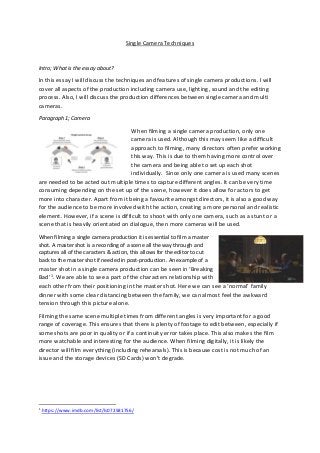
When filming a single camera production, only one
camera is used. Although this may seem like a difficult
approach to filming, many directors often prefer working
this way. This is due to them having more control over
the camera and being able to set up each shot
individually. Since only one camera is used many scenes
are needed to be acted out multiple times to capture different angles. It can be very time
consuming depending on the set up of the scene, however it does allow for actors to get
more into character. Apart from it being a favourite amongst directors, it is also a good way
for the audience to be more involved with the action, creating a more personal and realistic
element. However, if a scene is difficult to shoot with only one camera, such as a stunt or a
scene that is heavily orientated on dialogue, then more cameras will be used.
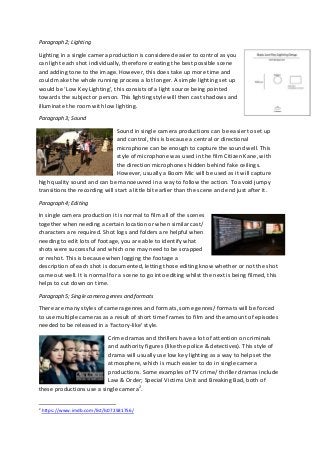
When filming a single camera production it is essential to film a master
shot. A master shot is a recording of a scene all the way through and
captures all of the caracters & action, this allows for the editor to cut
back to the master shot if needed in post-production. An example of a
master shot in a single camera production can be seen in ‘Breaking
Bad’1
. We are able to see a part of the characters relationship with
each other from their positioning in the master shot. Here we can see a ‘normal’ family
dinner with some clear distancing between the family, we can almost feel the awkward
tension through this picture alone.
Filming the same scene multiple times from different angles is very important for a good
range of coverage. This ensures that there is plenty of footage to edit between, especially if
some shots are poor in quality or if a continuity error takes place. This also makes the film
more watchable and interesting for the audience. When filming digitally, it is likely the
director will film everything (including rehearsals). This is because cost is not much of an
issue and the storage devices (SD Cards) won’t degrade.
1
https://www.imdb.com/list/ls072581756/
2.
Paragraph 2; Lighting
Lightingin a single camera production is considered easier to control as you
can light each shot individually, therefore creating the best possible scene
and adding tone to the image. However, this does take up more time and
could make the whole running process a lot longer. A simple lighting set up
would be ‘Low Key Lighting’, this consists of a light source being pointed
towards the subject or person. This lighting style will then cast shadows and
illuminate the room with low lighting.
Paragraph 3; Sound
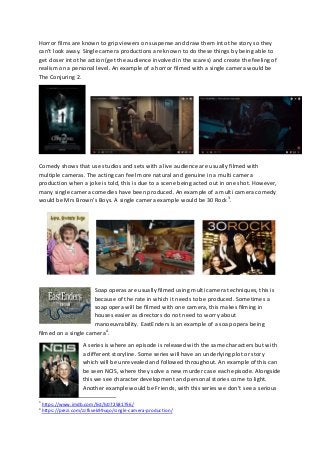
Sound in single camera productions can be easier to set up
and control, this is because a central or directional
microphone can be enough to capture the sound well. This
style of microphone was used in the film Citizen Kane, with
the direction microphones hidden behind fake ceilings.
However, usually a Boom Mic will be used as it will capture
high quality sound and can be manoeuvred in a way to follow the action. To avoid jumpy
transitions the recording will start a little bit earlier than the scene and end just after it.
Paragraph 4; Editing
In single camera production it is normal to film all of the scenes
together when needing a certain location or when similar cast/
characters are required. Shot logs and folders are helpful when
needing to edit lots of footage, you are able to identify what
shots were successful and which one may need to be scrapped
or reshot. This is because when logging the footage a
description of each shot is documented, letting those editing know whether or not the shot
came out well. It is normal for a scene to go into editing whilst the next is being filmed, this
helps to cut down on time.
Paragraph 5; Single camera genres and formats
There are many styles of camera genres and formats, some genres/ formats will be forced
to use multiple cameras as a result of short time frames to film and the amount of episodes
needed to be released in a ‘factory-like’ style.
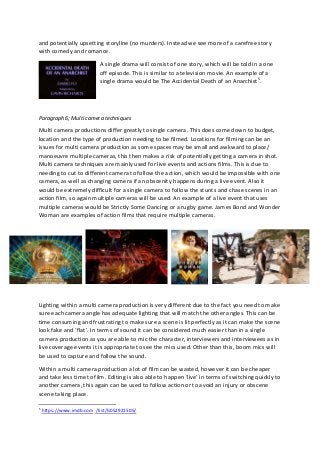
Crime dramas and thrillers have a lot of attention on criminals
and authority figures (like the police & detectives). This style of
drama will usually use low key lighting as a way to help set the
atmosphere, which is much easier to do in single camera
productions. Some examples of TV crime/ thriller dramas include
Law & Order; Special Victims Unit and Breaking Bad, both of
these productions use a single camera2
.
2
https://www.imdb.com/list/ls072581756/
3.
Horror films areknown to grip viewers on suspense and draw them into the story so they
can’t look away. Single camera productions are known to do these things by being able to
get closer into the action (get the audience involved in the scares) and create the feeling of
realism on a personal level. An example of a horror filmed with a single camera would be
The Conjuring 2.
Comedy shows that use studios and sets with a live audience are usually filmed with
multiple cameras. The acting can feel more natural and genuine in a multi camera
production when a joke is told, this is due to a scene being acted out in one shot. However,
many single camera comedies have been produced. An example of a multi camera comedy
would be Mrs Brown’s Boys. A single camera example would be 30 Rock3
.
Soap operas are usually filmed using multi camera techniques, this is
because of the rate in which it needs to be produced. Sometimes a
soap opera will be filmed with one camera, this makes filming in
houses easier as directors do not need to worry about
manoeuvrability. EastEnders is an example of a soap opera being
filmed on a single camera4
.
A series is where an episode is released with the same characters but with
a different storyline. Some series will have an underlying plot or story
which will be unrevealed and followed throughout. An example of this can
be seen NCIS, where they solve a new murder case each episode. Alongside
this we see character development and personal stories come to light.
Another example would be Friends, with this series we don’t see a serious
3
https://www.imdb.com/list/ls072581756/
4
https://prezi.com/zzfkvek99uqo/single-camera-production/
4.
and potentially upsettingstoryline (no murders). Instead we see more of a carefree story
with comedy and romance.
A single drama will consist of one story, which will be told in a one
off episode. This is similar to a television movie. An example of a
single drama would be The Accidental Death of an Anarchist5
.
Paragraph 6; Multi camera techniques
Multi camera productions differ greatly to single camera. This does come down to budget,
location and the type of production needing to be filmed. Locations for filming can be an
issues for multi camera production as some spaces may be small and awkward to place/
manoeuvre multiple cameras, this then makes a risk of potentially getting a camera in shot.
Multi camera techniques are mainly used for live events and actions films. This is due to
needing to cut to different camera to follow the action, which would be impossible with one
camera, as well as changing camera if an obscenity happens during a live event. Also it
would be extremely difficult for a single camera to follow the stunts and chase scenes in an
action film, so again multiple cameras will be used. An example of a live event that uses
multiple cameras would be Strictly Some Dancing or a rugby game. James Bond and Wonder
Woman are examples of action films that require multiple cameras.
Lighting within a multi camera production is very different due to the fact you need to make
sure each camera angle has adequate lighting that will match the other angles. This can be
time consuming and frustrating to make sure a scene is lit perfectly as it can make the scene
look fake and ‘flat’. In terms of sound it can be considered much easier than in a single
camera production as you are able to mic the character, interviewers and interviewees as in
live coverage events it is appropriate to see the mics used. Other than this, boom mics will
be used to capture and follow the sound.
Within a multi camera production a lot of film can be wasted, however it can be cheaper
and take less time to film. Editing is also able to happen ‘live’ in terms of switching quickly to
another camera, this again can be used to follow action or to avoid an injury or obscene
scene taking place.
5
https://www.imdb.com /list/ls052921505/