Harlem Renaissance
What It Was
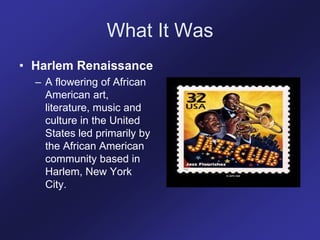
• Harlem Renaissance
– A flowering of African
American art,
literature, music and
culture in the United
States led primarily by
the African American
community based in
Harlem, New York
City.
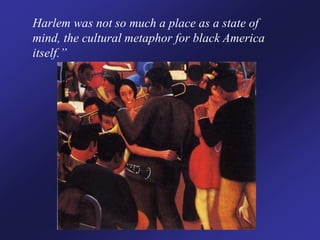
Harlem was not so much a place as a state of
mind, the cultural metaphor for black America
itself.”
When It Occurred
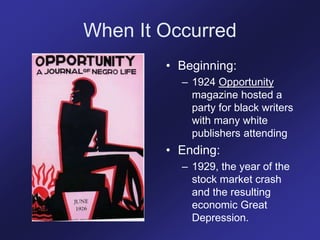
• Beginning:
– 1924 Opportunity
magazine hosted a
party for black writers
with many white
publishers attending
• Ending:
– 1929, the year of the
stock market crash
and the resulting
economic Great
Depression.
• The Harlem Renaissance, known also as the New Negro
Movement and the Negro Renaissance, was an
important cultural manifestation of the mid-twenties and
thirties.
• With Harlem as its center, the Renaissance was an
upsurge of new racial attitudes and ideals on the part of
Afro-Americans and an artistic and political awakening.
• It was partly inspired by the iconoclastic spirit of the
times.
• The Harlem writers and artists were, like their Modernist
white counterparts, in quest of new forms, images, and
techniques.
• They, too, were skeptical and disillusioned.
• What chiefly differentiated them, however, was their view
of artistic endeavor as an extension of the struggle
against oppression
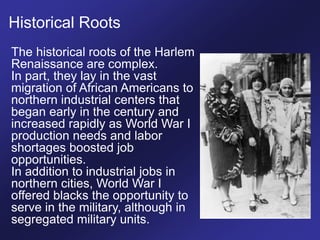
The historical roots of the Harlem
Renaissance are complex.
In part, they lay in the vast
migration of African Americans to
northern industrial centers that
began early in the century and
increased rapidly as World War I
production needs and labor
shortages boosted job
opportunities.
In addition to industrial jobs in
northern cities, World War I
offered blacks the opportunity to
serve in the military, although in
segregated military units.
Historical Roots
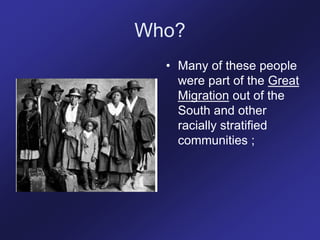
Who?
• Many of these people
were part of the Great
Migration out of the
South and other
racially stratified
communities ;
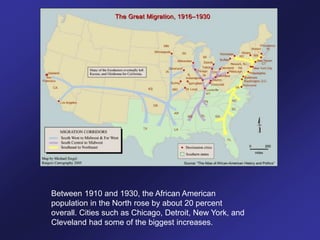
Between 1910 and 1930, the African American
population in the North rose by about 20 percent
overall. Cities such as Chicago, Detroit, New York, and
Cleveland had some of the biggest increases.
Factors behind the Great Migration
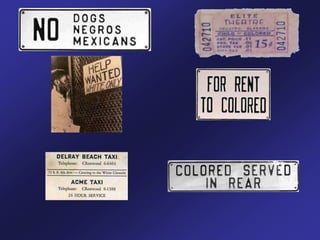
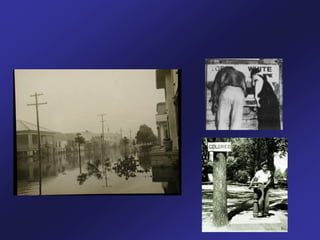
• Avoid the racial segregation of Jim Crow laws in the
South
• Boll weevil infestation in Southern cotton in the late
1910s forced people to search for other work
• Blacks could take the service jobs that new white factory
workers had vacated;
• The Immigration Act of 1924 stopped European
immigrants, causing a shortage of factory workers;
• The Great Mississippi Flood of 1927 displaced
thousands of African-American farm workers.
Effects of the Harlem Renaissance
• Music
• Literature
• Art
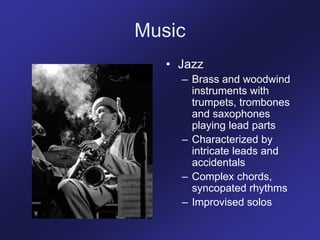
Music
• Jazz
– Brass and woodwind
instruments with
trumpets, trombones
and saxophones
playing lead parts
– Characterized by
intricate leads and
accidentals
– Complex chords,
syncopated rhythms
– Improvised solos
Music
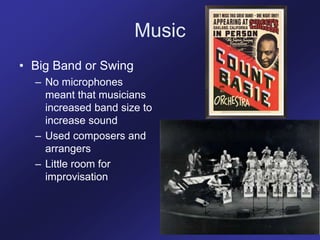
• Big Band or Swing
– No microphones
meant that musicians
increased band size to
increase sound
– Used composers and
arrangers
– Little room for
improvisation
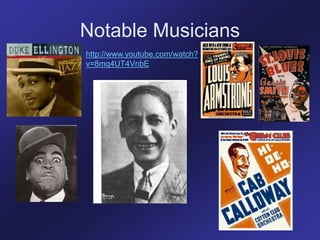
Notable Musicians
http://www.youtube.com/watch?
v=8mq4UT4VnbE
Influences on Literary Phase
Against the background of increasingly artistic activity, three events
occurred between 1924 and 1926 that launched the already
developing literary phase of the Harlem Renaissance into the
forefront:
1. Charles S. Johnson’s Civic Club dinner, which forged the link
among three major players in the literary renaissance: the black
literary-political intelligentsia, white publishers and critics, and
young black writers.
2. The publication in 1926 of Nigger Heaven, by white novelist Carl
Van Vechten. This book was a spectacularly popular expose of
Harlem life and helped create the “Negro Vogue” that drew
thousands of sophisticated New Yorkers to Harlem’s exotic
nightlife.
3. The publication of the literary magazine FIRE!! A group of talented
young black writers were spearheaded by Wallace Thurman.
These artists were declaring their intent to assume ownership of
the literary renaissance.
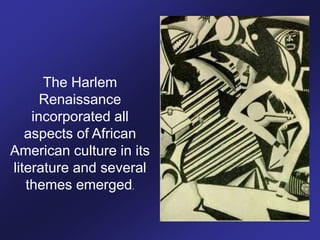
The Harlem
Renaissance
incorporated all
aspects of African
American culture in its
literature and several
themes emerged.
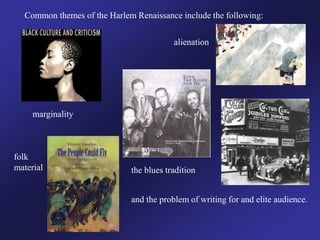
Common themes of the Harlem Renaissance include the following:
alienation
marginality
folk
material the blues tradition
and the problem of writing for and elite audience.
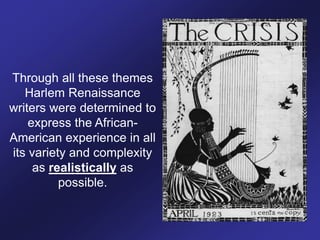
Through all these themes
Harlem Renaissance
writers were determined to
express the African-
American experience in all
its variety and complexity
as realistically as
possible.
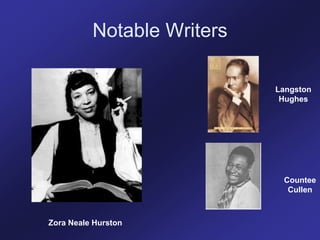
Notable Writers
Zora Neale Hurston
Langston
Hughes
Countee
Cullen
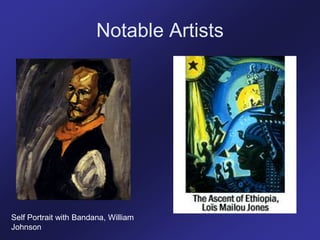
Notable Artists
Self Portrait with Bandana, William
Johnson
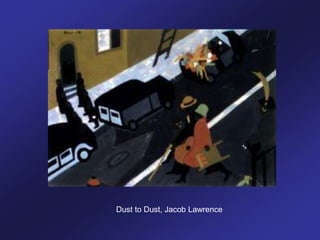
Dust to Dust, Jacob Lawrence
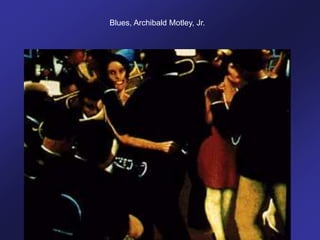
Blues, Archibald Motley, Jr.
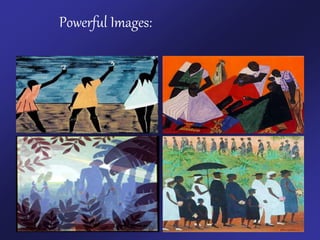
Powerful Images:
http://www.history.com/topics/harlem-renaissance/videos#the-
harlem-renaissance-an-artistic-explosion
Why Did the Harlem
Renaissance End?
• The Great Depression
• The Migration tones down and communities
settled
• Fundamentalists cursed the devil’s music and art
• It didn’t…it evolved
– Rock & Roll, Motown, Hip Hop, Rap
– Commercialization, Elvis, Gershwin, Sinatra
Legacy of the Harlem
Renaissance
• Paradox: art as a release of, and contributor to
tensions
• The white audience
• Glorification & sophistication of African-American
life and culture
• A perplexing sense of optimism in the HR art
• Black Pride and The Civil Rights Movement
• An International Phenomenon

harlem_renaissance_presentation.ppt

  • 1.
  • 2.
    What It Was •Harlem Renaissance – A flowering of African American art, literature, music and culture in the United States led primarily by the African American community based in Harlem, New York City.
  • 3.
    Harlem was notso much a place as a state of mind, the cultural metaphor for black America itself.”
  • 4.
    When It Occurred •Beginning: – 1924 Opportunity magazine hosted a party for black writers with many white publishers attending • Ending: – 1929, the year of the stock market crash and the resulting economic Great Depression.
  • 5.
    • The HarlemRenaissance, known also as the New Negro Movement and the Negro Renaissance, was an important cultural manifestation of the mid-twenties and thirties. • With Harlem as its center, the Renaissance was an upsurge of new racial attitudes and ideals on the part of Afro-Americans and an artistic and political awakening. • It was partly inspired by the iconoclastic spirit of the times. • The Harlem writers and artists were, like their Modernist white counterparts, in quest of new forms, images, and techniques. • They, too, were skeptical and disillusioned. • What chiefly differentiated them, however, was their view of artistic endeavor as an extension of the struggle against oppression
  • 6.
    The historical rootsof the Harlem Renaissance are complex. In part, they lay in the vast migration of African Americans to northern industrial centers that began early in the century and increased rapidly as World War I production needs and labor shortages boosted job opportunities. In addition to industrial jobs in northern cities, World War I offered blacks the opportunity to serve in the military, although in segregated military units. Historical Roots
  • 7.
    Who? • Many ofthese people were part of the Great Migration out of the South and other racially stratified communities ;
  • 9.
    Between 1910 and1930, the African American population in the North rose by about 20 percent overall. Cities such as Chicago, Detroit, New York, and Cleveland had some of the biggest increases.
  • 10.
    Factors behind theGreat Migration • Avoid the racial segregation of Jim Crow laws in the South • Boll weevil infestation in Southern cotton in the late 1910s forced people to search for other work • Blacks could take the service jobs that new white factory workers had vacated; • The Immigration Act of 1924 stopped European immigrants, causing a shortage of factory workers; • The Great Mississippi Flood of 1927 displaced thousands of African-American farm workers.
  • 12.
    Effects of theHarlem Renaissance • Music • Literature • Art
  • 13.
    Music • Jazz – Brassand woodwind instruments with trumpets, trombones and saxophones playing lead parts – Characterized by intricate leads and accidentals – Complex chords, syncopated rhythms – Improvised solos
  • 14.
    Music • Big Bandor Swing – No microphones meant that musicians increased band size to increase sound – Used composers and arrangers – Little room for improvisation
  • 15.
  • 17.
    Influences on LiteraryPhase Against the background of increasingly artistic activity, three events occurred between 1924 and 1926 that launched the already developing literary phase of the Harlem Renaissance into the forefront: 1. Charles S. Johnson’s Civic Club dinner, which forged the link among three major players in the literary renaissance: the black literary-political intelligentsia, white publishers and critics, and young black writers. 2. The publication in 1926 of Nigger Heaven, by white novelist Carl Van Vechten. This book was a spectacularly popular expose of Harlem life and helped create the “Negro Vogue” that drew thousands of sophisticated New Yorkers to Harlem’s exotic nightlife. 3. The publication of the literary magazine FIRE!! A group of talented young black writers were spearheaded by Wallace Thurman. These artists were declaring their intent to assume ownership of the literary renaissance.
  • 18.
    The Harlem Renaissance incorporated all aspectsof African American culture in its literature and several themes emerged.
  • 19.
    Common themes ofthe Harlem Renaissance include the following: alienation marginality folk material the blues tradition and the problem of writing for and elite audience.
  • 20.
    Through all thesethemes Harlem Renaissance writers were determined to express the African- American experience in all its variety and complexity as realistically as possible.
  • 21.
    Notable Writers Zora NealeHurston Langston Hughes Countee Cullen
  • 22.
    Notable Artists Self Portraitwith Bandana, William Johnson
  • 23.
    Dust to Dust,Jacob Lawrence
  • 24.
  • 25.
  • 26.
  • 27.
    Why Did theHarlem Renaissance End? • The Great Depression • The Migration tones down and communities settled • Fundamentalists cursed the devil’s music and art • It didn’t…it evolved – Rock & Roll, Motown, Hip Hop, Rap – Commercialization, Elvis, Gershwin, Sinatra
  • 28.
    Legacy of theHarlem Renaissance • Paradox: art as a release of, and contributor to tensions • The white audience • Glorification & sophistication of African-American life and culture • A perplexing sense of optimism in the HR art • Black Pride and The Civil Rights Movement • An International Phenomenon