Human Body Systems
Nervous Systems
Human Body Systems
• Humans have complex systems
• Cells are grouped for efficiency
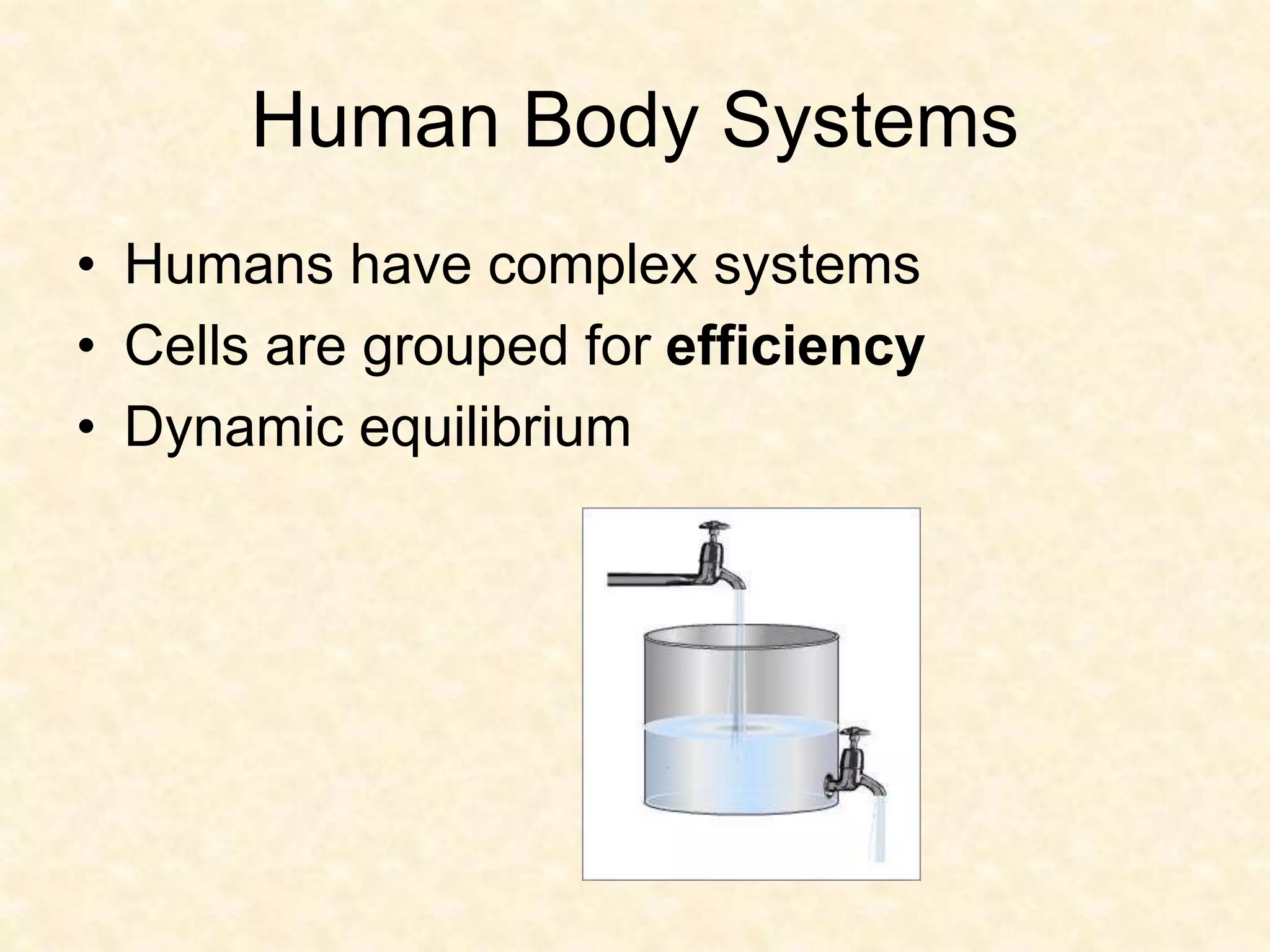
• Dynamic equilibrium
Levels of Organization
In a multicellular organism levels are:
cells  tissues organs organ
systems
tissues: group of similar cells that perform
same function
organ: group of tissues that work together to
perform complex function (ex: sight)
organ system: group of organs that perform
closely related functions
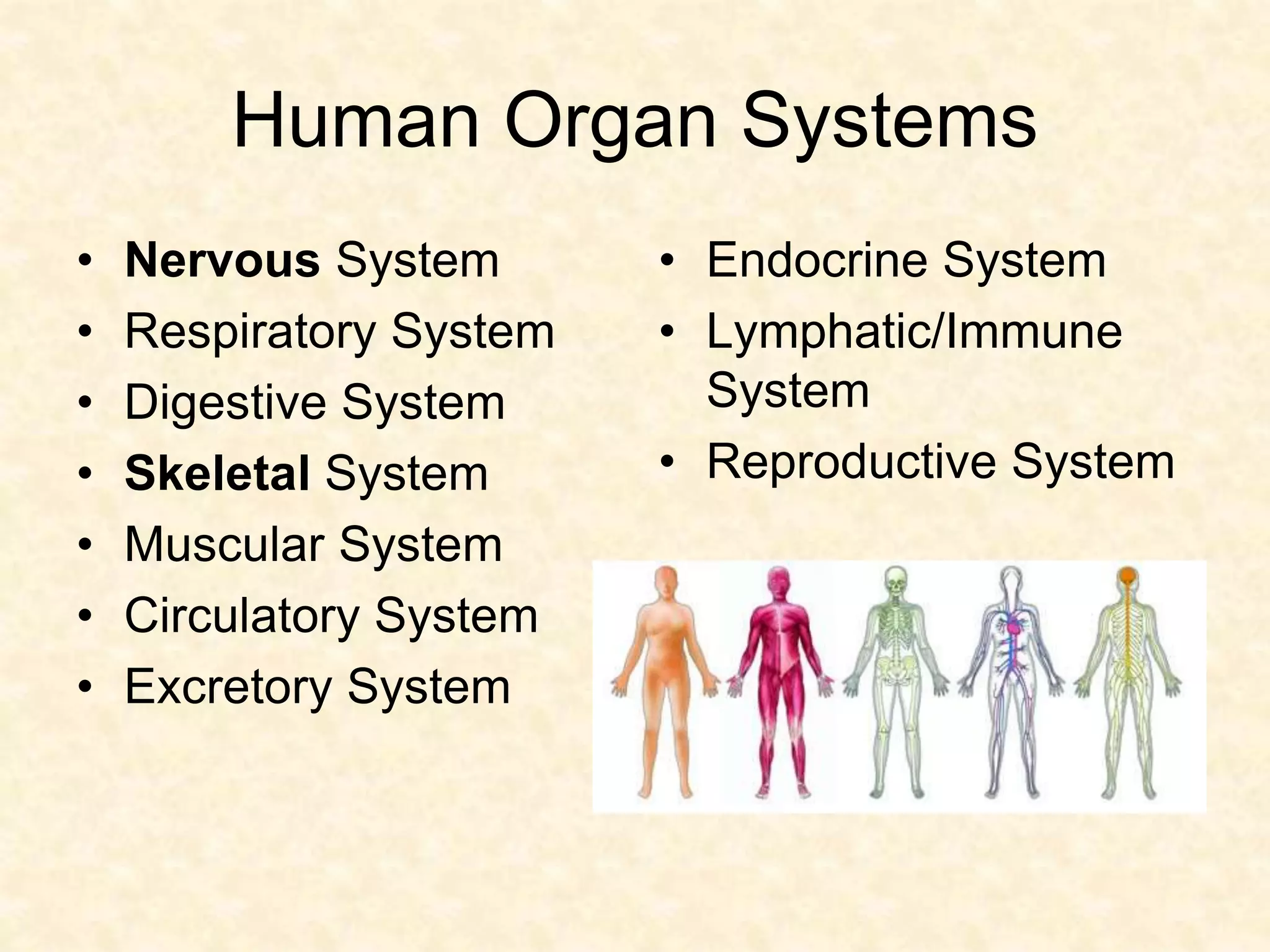
Human Organ Systems
• Nervous System
• Respiratory System
• Digestive System
• Skeletal System
• Muscular System
• Circulatory System
• Excretory System
• Endocrine System
• Lymphatic/Immune
System
• Reproductive System
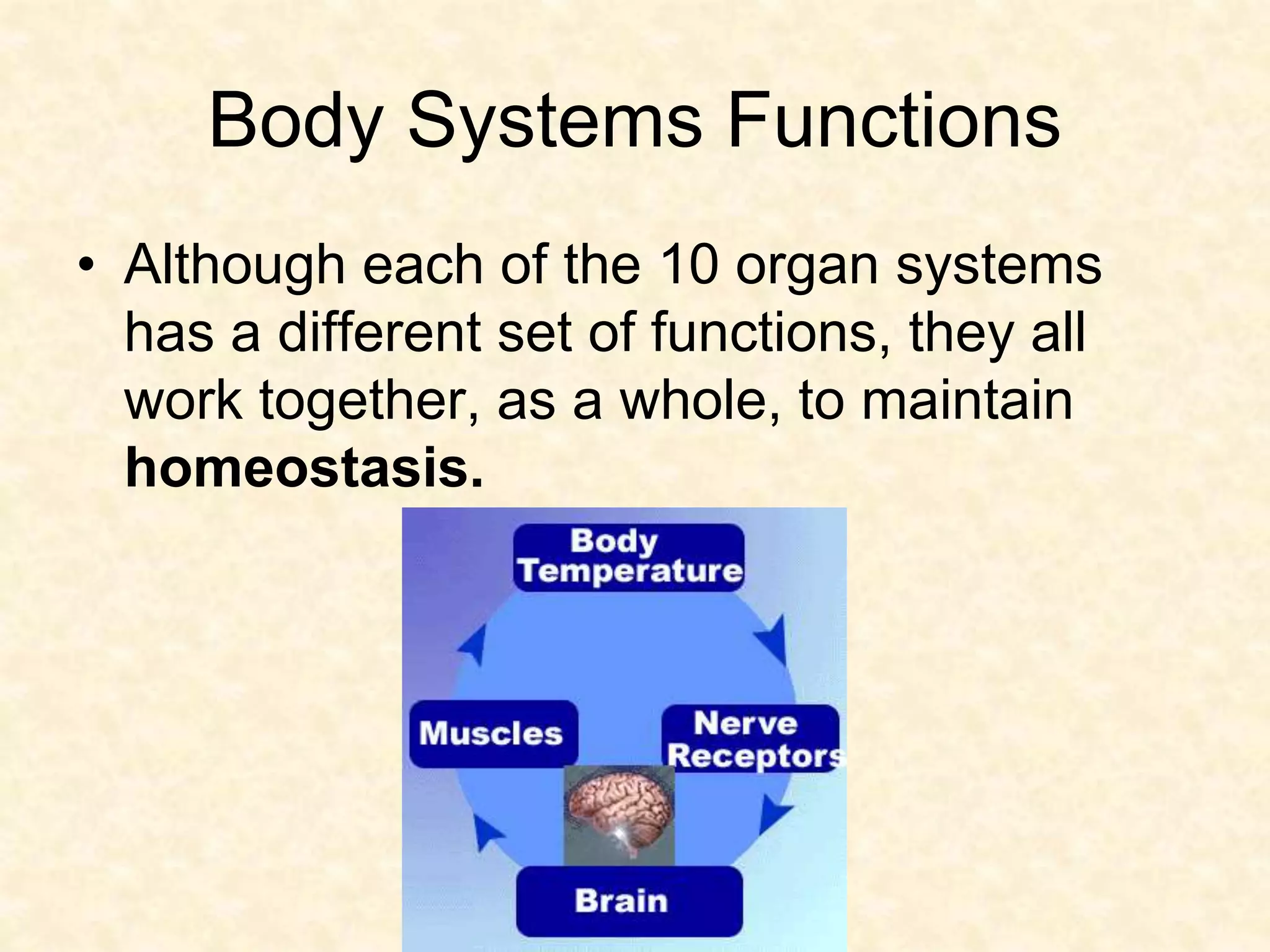
Body Systems Functions
• Although each of the 10 organ systems
has a different set of functions, they all
work together, as a whole, to maintain
homeostasis.
Nervous System
• The nervous system controls and
coordinates functions throughout the body
and responds to internal and external
stimuli
• Nearly all multicellular organisms have
communication systems
– Specialized cells carry messages from one
cell to another
– Smooth and efficient communication through
the body
Nervous System
• Messages carried by nervous system are
electrical signals called impulses
• Cells that transmit these impulses are
called neurons (basic units of nervous
system)
– 3 types of neurons
1. Sensory
2. Motor
3. Interneurons
Neurons
• Sensory: Carry impulses from sense
organs (eyes, ears, etc) to the spinal cord
and brain
• Motor: carry impulses from the brain and
spinal cord to muscles and glands
• Interneurons: connect sensory and motor
neurons and carry impulses between them
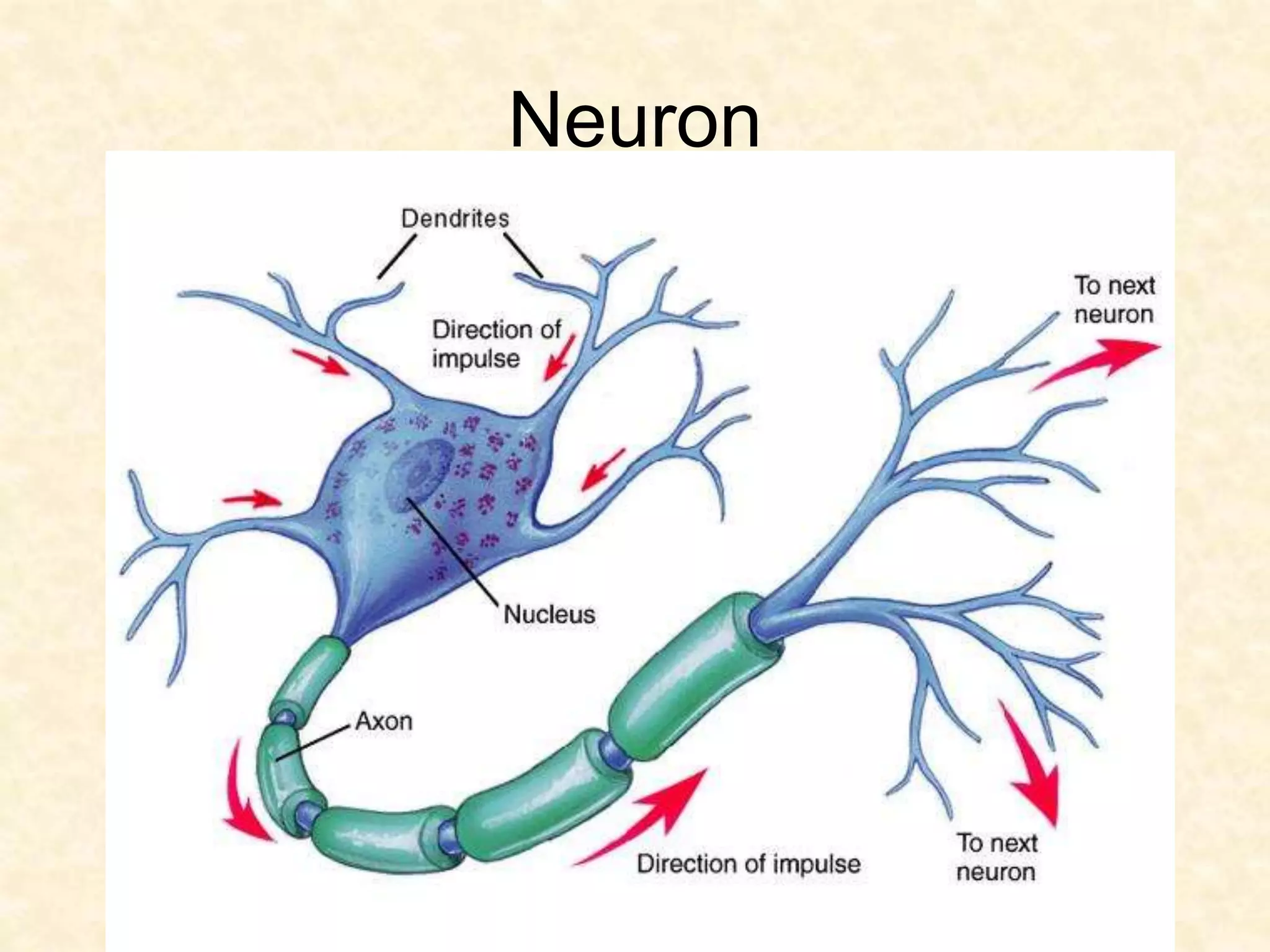
Parts of a Neuron
• Cell Body
– Largest part; contains nucleus and most of cytoplasm
– Most metabolic activities occur here
• Dendrites
– Short, branched extensions
– Carry impulses from environment or other neuron toward cell
body
– Neurons can have several dendrites
• Axon
– Long fiber which carries impulses away from cell body
– Ends in axon terminals, located a distance away from cell body
– Neurons only have one axon
• Myelin Sheath
– Insulating membrane surrounding axon
Neuron
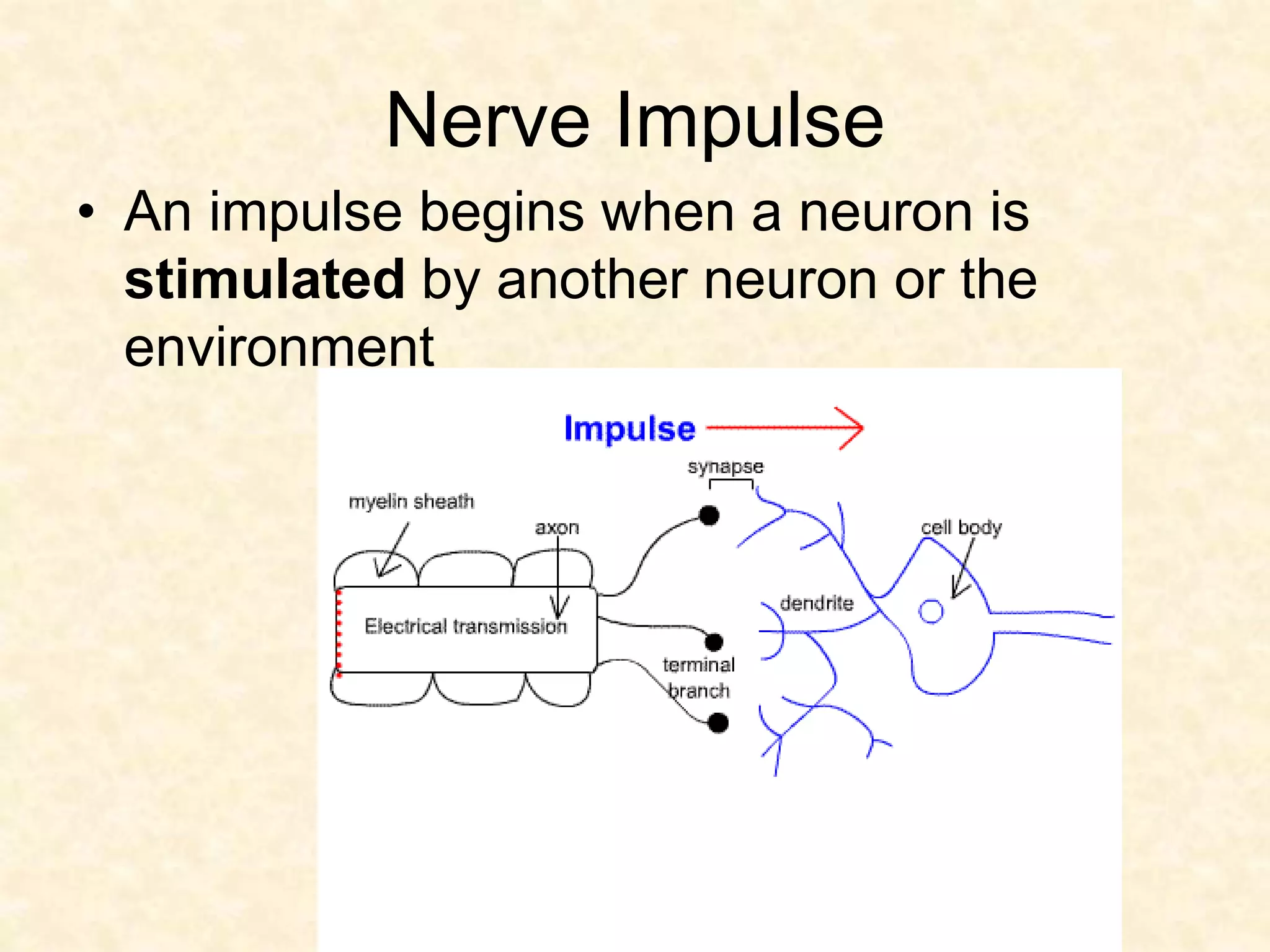
Nerve Impulse
• An impulse begins when a neuron is
stimulated by another neuron or the
environment
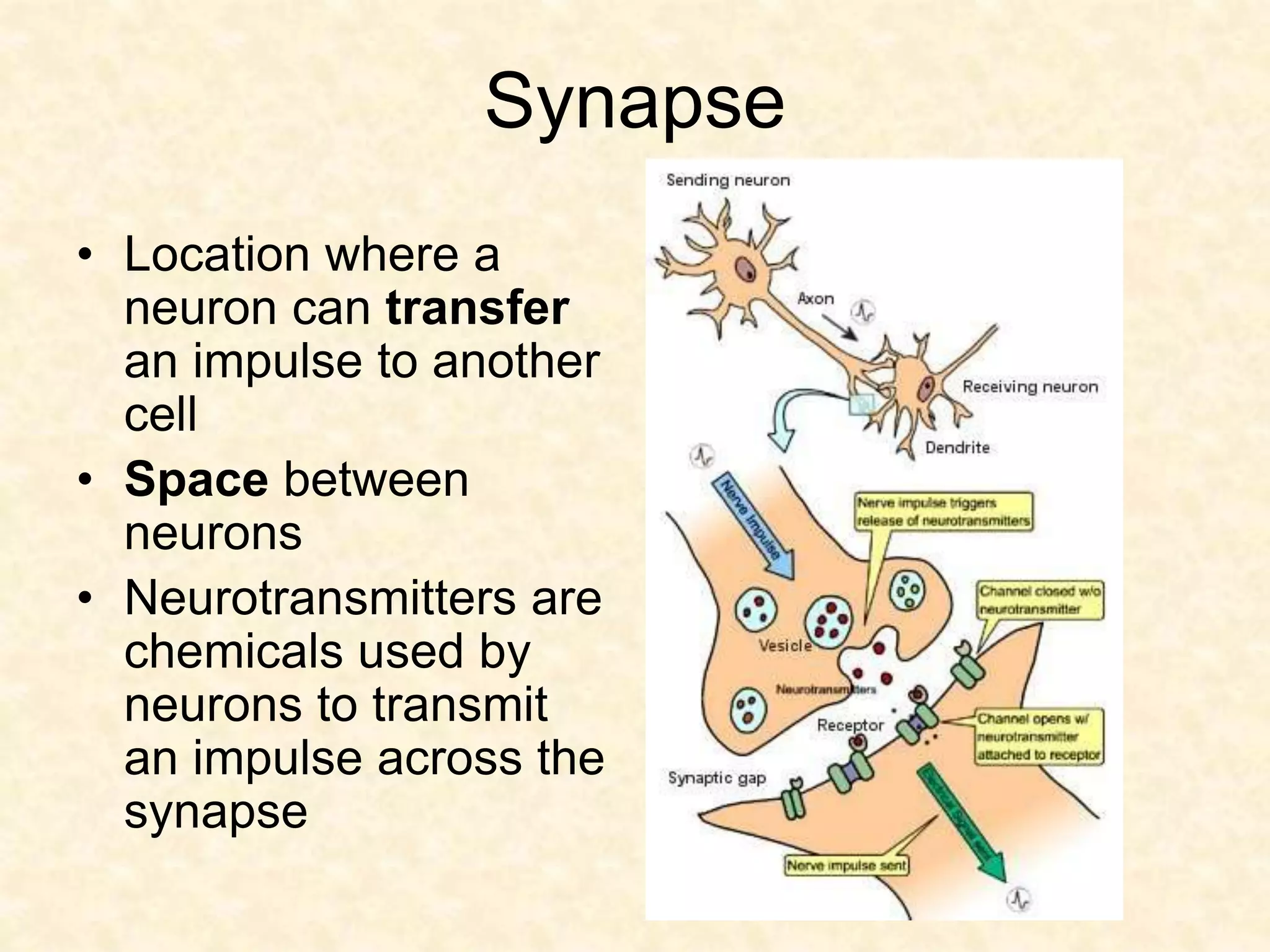
Synapse
• Location where a
neuron can transfer
an impulse to another
cell
• Space between
neurons
• Neurotransmitters are
chemicals used by
neurons to transmit
an impulse across the
synapse
Human Nervous System
• Divided into two major divisions:
– Central Nervous System (CNS)
• Relays messages, processes info and
analyzes info
– Peripheral Nervous System
• Receives information from the environment
and relays commands from the CNS to
organs and glands
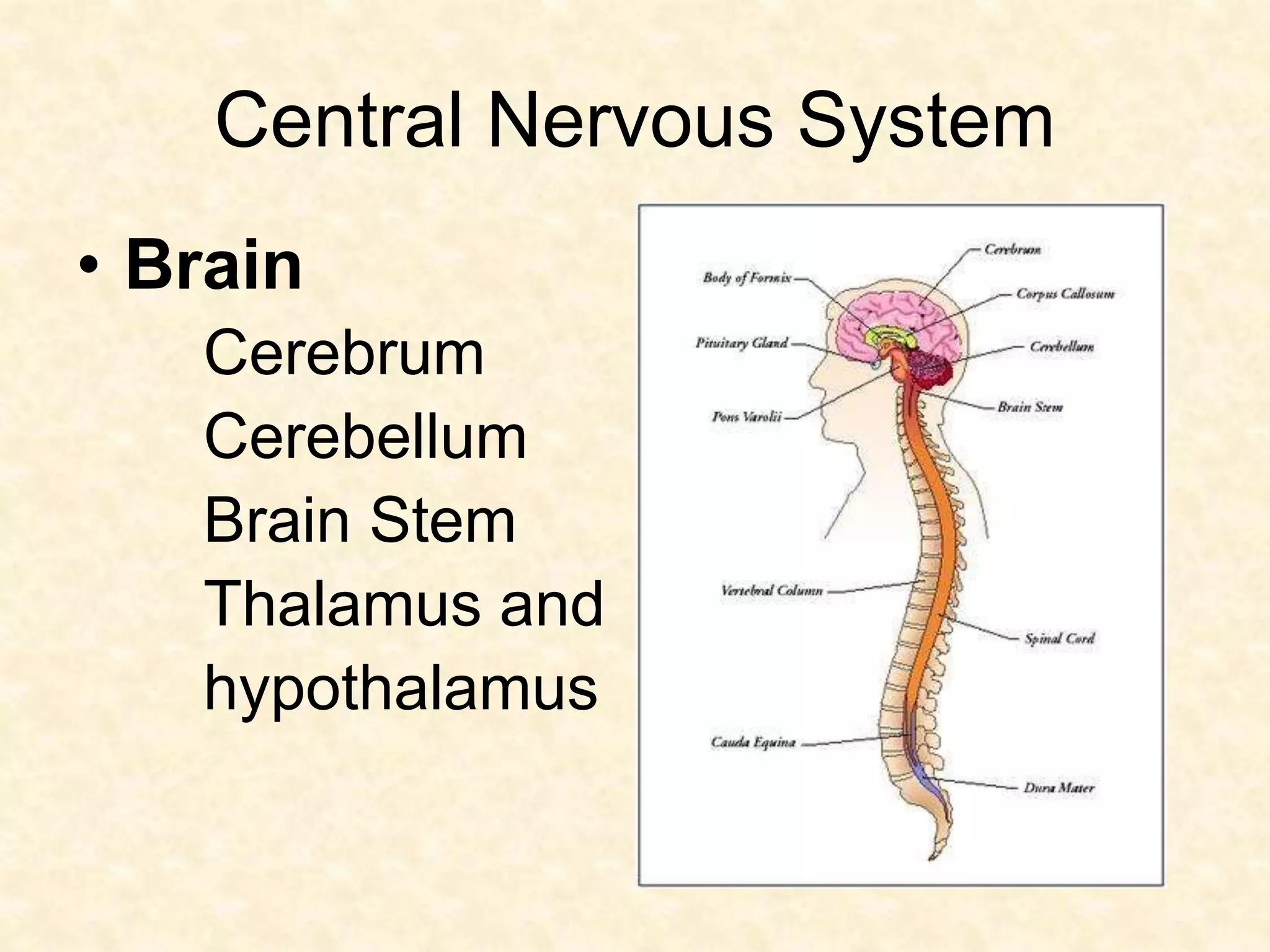
Central Nervous System
• Brain
Cerebrum
Cerebellum
Brain Stem
Thalamus and
hypothalamus
Brain
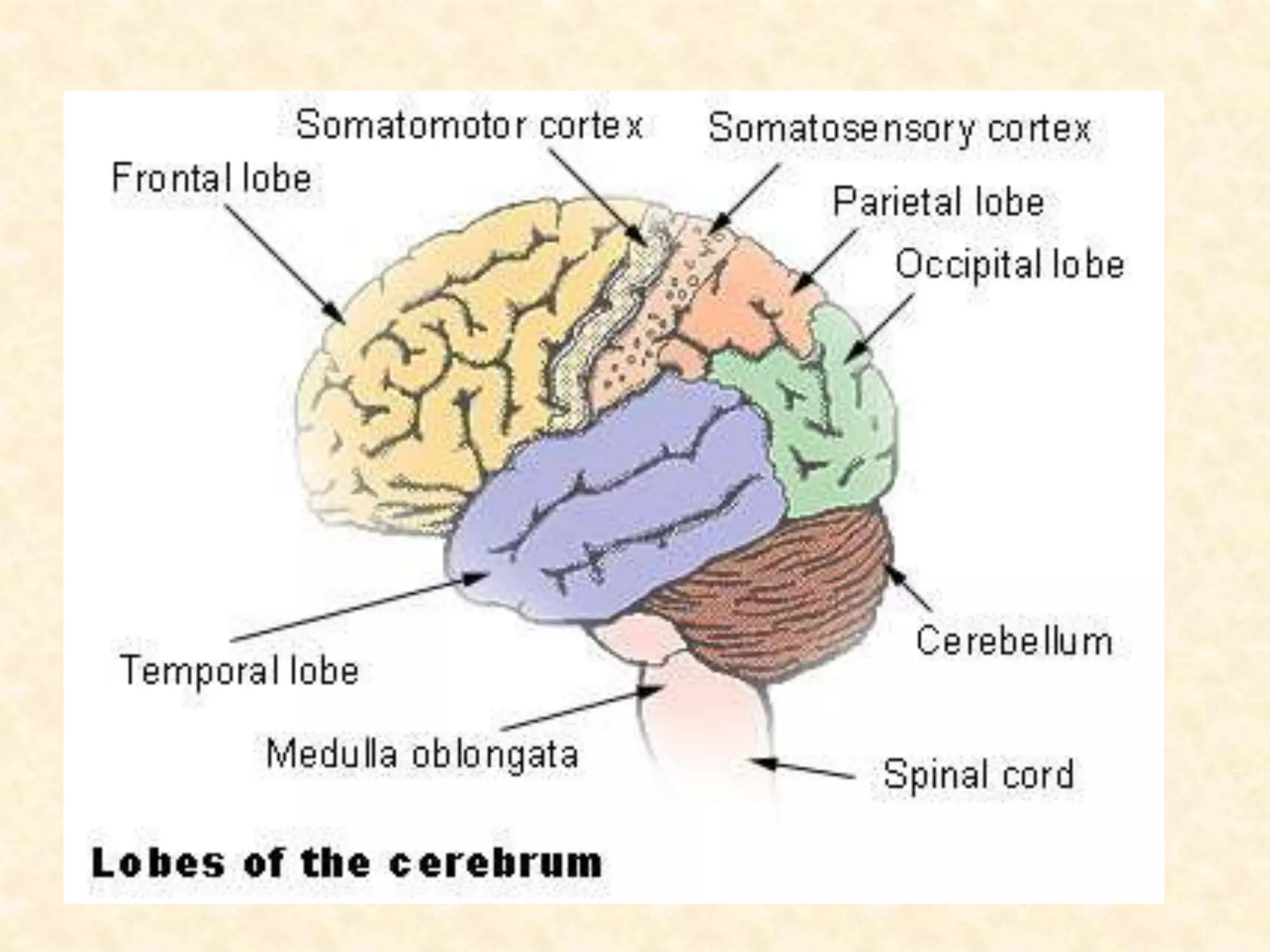
• Made of 50-100 billion neurons
• 4 lobes or regions
– Frontal Lobe- memory, judgment, inhibitions,
personality
– Temporal Lobe- Long term memory, auditory
processing
– Occipital Lobe- Vision processing
– Parietal Lobe- Sensory integration
Spinal Cord
• Main communications link between the
brain and the rest of the body
• Certain kinds of info (reflexes) are
processed in spinal cord
• Reflex is a quick, automatic response to a
stimulus
– Sneezing and blinking
– Allows your body to respond to danger
immediately without thinking
Peripheral Nervous System
• Lies outside of CNS
• Consists of all the nerves and cells that
are not a part of the brain or spinal cord
– Cranial nerves
– Divided into 2 divisions:
• Sensory
• Motor
Peripheral Nervous System
Sensory division:
transmits impulses from sense organs to the
CNS
Motor division:
transmits impulses from CNS to muscles and
glands
1. somatic nervous system- regulates
conscious controlled activities
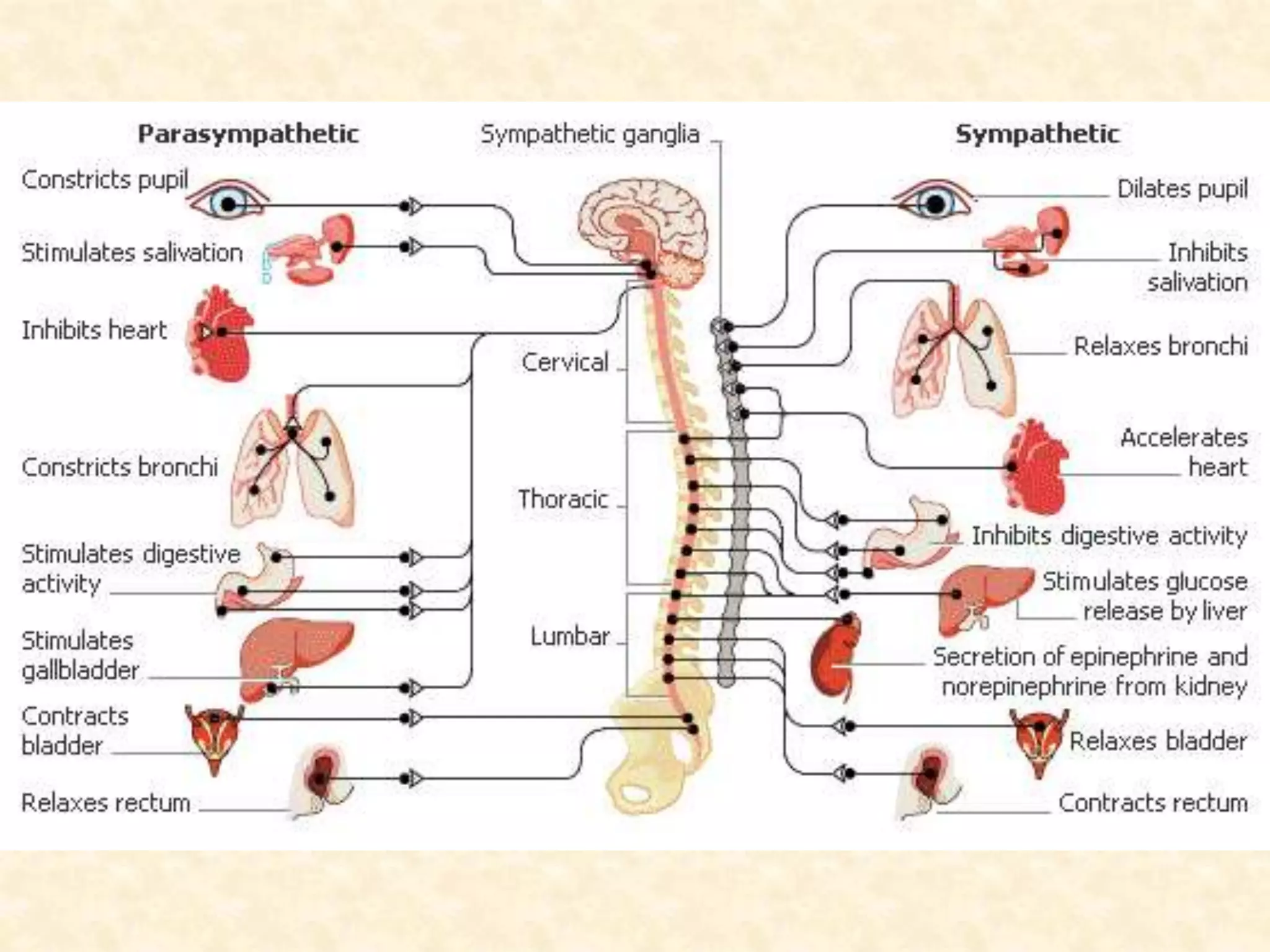
2. autonomic nervous system- regulates
activities that are automatic or involuntary
~Divided into sympathetic and
parasympathetic nervous system
Intro to anatomy.pptx

Intro to anatomy.pptx

  • 1.
  • 2.
    Human Body Systems •Humans have complex systems • Cells are grouped for efficiency • Dynamic equilibrium
  • 3.
    Levels of Organization Ina multicellular organism levels are: cells  tissues organs organ systems tissues: group of similar cells that perform same function organ: group of tissues that work together to perform complex function (ex: sight) organ system: group of organs that perform closely related functions
  • 4.
    Human Organ Systems •Nervous System • Respiratory System • Digestive System • Skeletal System • Muscular System • Circulatory System • Excretory System • Endocrine System • Lymphatic/Immune System • Reproductive System
  • 5.
    Body Systems Functions •Although each of the 10 organ systems has a different set of functions, they all work together, as a whole, to maintain homeostasis.
  • 6.
    Nervous System • Thenervous system controls and coordinates functions throughout the body and responds to internal and external stimuli • Nearly all multicellular organisms have communication systems – Specialized cells carry messages from one cell to another – Smooth and efficient communication through the body
  • 7.
    Nervous System • Messagescarried by nervous system are electrical signals called impulses • Cells that transmit these impulses are called neurons (basic units of nervous system) – 3 types of neurons 1. Sensory 2. Motor 3. Interneurons
  • 8.
    Neurons • Sensory: Carryimpulses from sense organs (eyes, ears, etc) to the spinal cord and brain • Motor: carry impulses from the brain and spinal cord to muscles and glands • Interneurons: connect sensory and motor neurons and carry impulses between them
  • 9.
    Parts of aNeuron • Cell Body – Largest part; contains nucleus and most of cytoplasm – Most metabolic activities occur here • Dendrites – Short, branched extensions – Carry impulses from environment or other neuron toward cell body – Neurons can have several dendrites • Axon – Long fiber which carries impulses away from cell body – Ends in axon terminals, located a distance away from cell body – Neurons only have one axon • Myelin Sheath – Insulating membrane surrounding axon
  • 10.
  • 11.
    Nerve Impulse • Animpulse begins when a neuron is stimulated by another neuron or the environment
  • 12.
    Synapse • Location wherea neuron can transfer an impulse to another cell • Space between neurons • Neurotransmitters are chemicals used by neurons to transmit an impulse across the synapse
  • 13.
    Human Nervous System •Divided into two major divisions: – Central Nervous System (CNS) • Relays messages, processes info and analyzes info – Peripheral Nervous System • Receives information from the environment and relays commands from the CNS to organs and glands
  • 14.
    Central Nervous System •Brain Cerebrum Cerebellum Brain Stem Thalamus and hypothalamus
  • 15.
    Brain • Made of50-100 billion neurons • 4 lobes or regions – Frontal Lobe- memory, judgment, inhibitions, personality – Temporal Lobe- Long term memory, auditory processing – Occipital Lobe- Vision processing – Parietal Lobe- Sensory integration
  • 17.
    Spinal Cord • Maincommunications link between the brain and the rest of the body • Certain kinds of info (reflexes) are processed in spinal cord • Reflex is a quick, automatic response to a stimulus – Sneezing and blinking – Allows your body to respond to danger immediately without thinking
  • 18.
    Peripheral Nervous System •Lies outside of CNS • Consists of all the nerves and cells that are not a part of the brain or spinal cord – Cranial nerves – Divided into 2 divisions: • Sensory • Motor
  • 19.
    Peripheral Nervous System Sensorydivision: transmits impulses from sense organs to the CNS Motor division: transmits impulses from CNS to muscles and glands 1. somatic nervous system- regulates conscious controlled activities 2. autonomic nervous system- regulates activities that are automatic or involuntary ~Divided into sympathetic and parasympathetic nervous system