
Download to read offline
![In Tahiti –French Polynesia
In 1891, Gauguin sailed to French Polynesia to escape European
civilization and "everything that is artificial and conventional".[15]
He wrote a book titled Noa Noa describing his experiences in
Tahiti.
There have been allegations by modern critics that the contents of
the book were fantasized and plagiarized.[16]](https://image.slidesharecdn.com/gauguin-190106164356/85/Gauguin-4-320.jpg)
![In 1891, Gauguin sailed to French Polynesia to
escape European civilization and "everything that is
artificial and conventional".[15] He wrote a book
titled Noa Noa describing his experiences in Tahiti.
There have been allegations by modern critics that
the contents of the book were fantasized and
plagiarized.[16]](https://image.slidesharecdn.com/gauguin-190106164356/85/Gauguin-5-320.jpg)
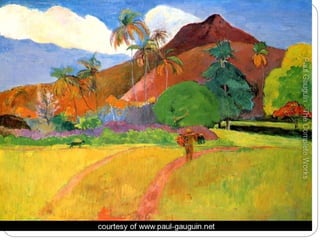
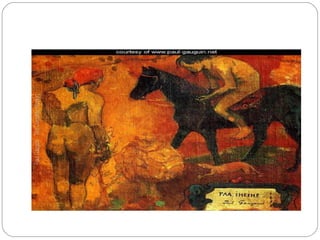
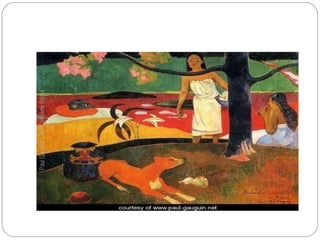
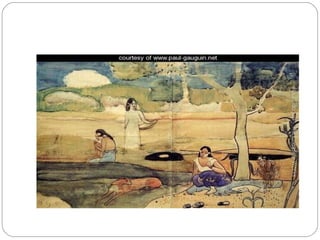
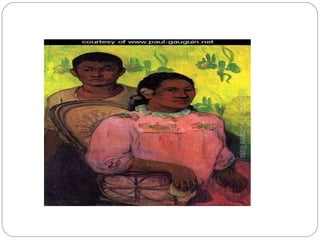
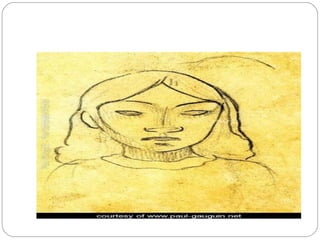
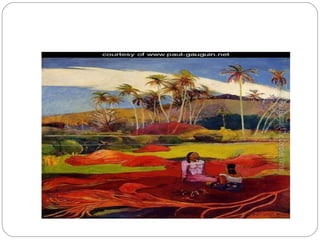
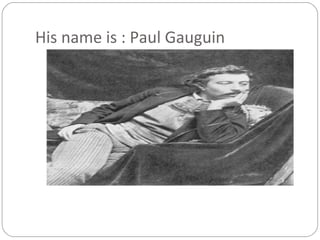
This document discusses the post-impressionist painter Paul Gauguin. It notes that in 1891, seeking to escape European civilization, Gauguin sailed to French Polynesia, where he produced paintings influenced by the local culture and wrote a book describing his experiences, though modern critics allege parts were fictionalized.


