




From legacy to WPF/SLMigrating applications from Windows Form to WPF/SilverlightRaffaele Garofalo
Who am I?Raffaele GarofaloNET Software ArchitectMCP (MCAD, MCSD, MCTS)Blog: http://blog.raffaeu.comTwitter: @raffaeuCompany: Nephila Capital Ltd. (www.nephila.com) I am Italian, sorry for my bad English
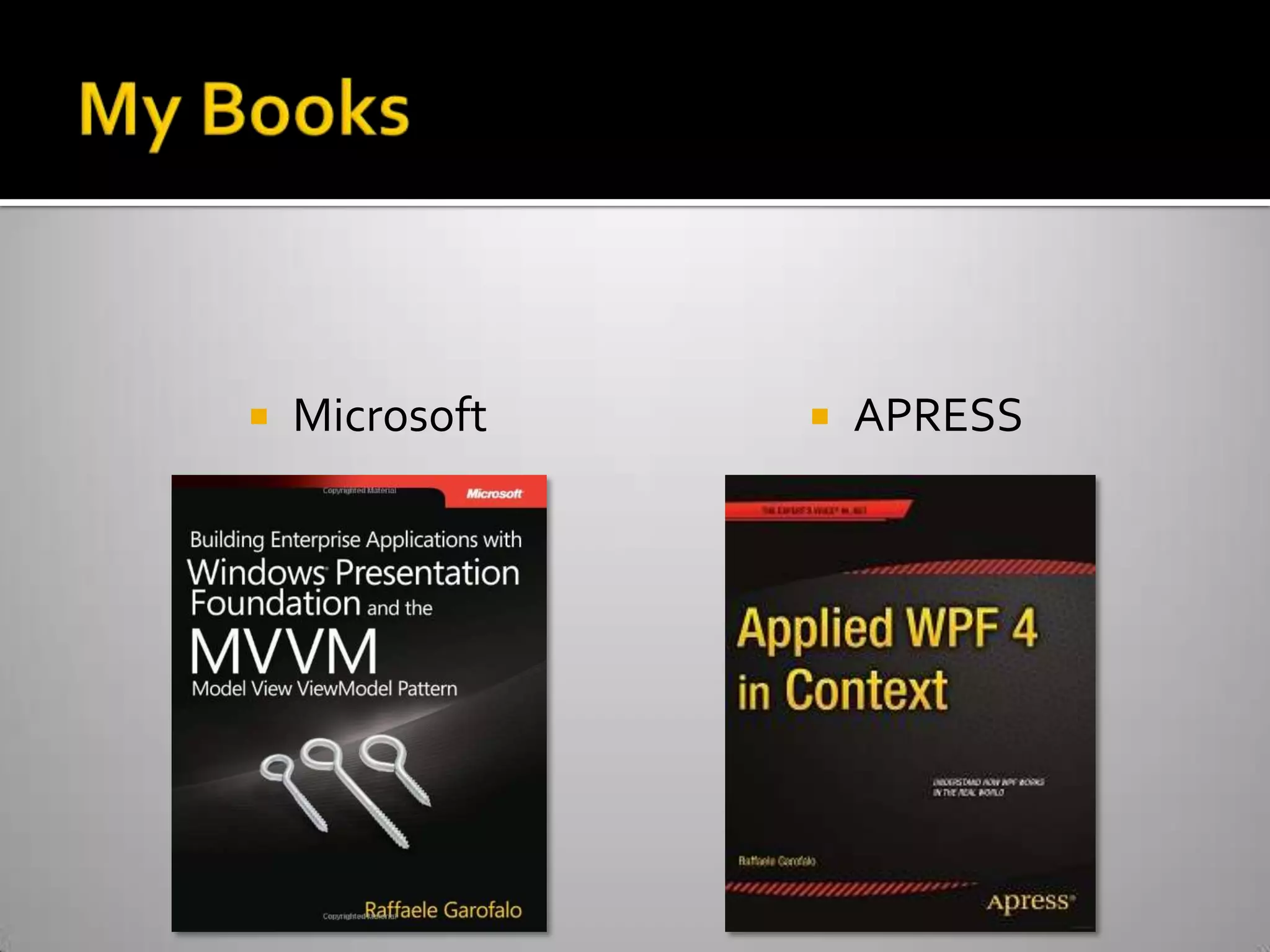
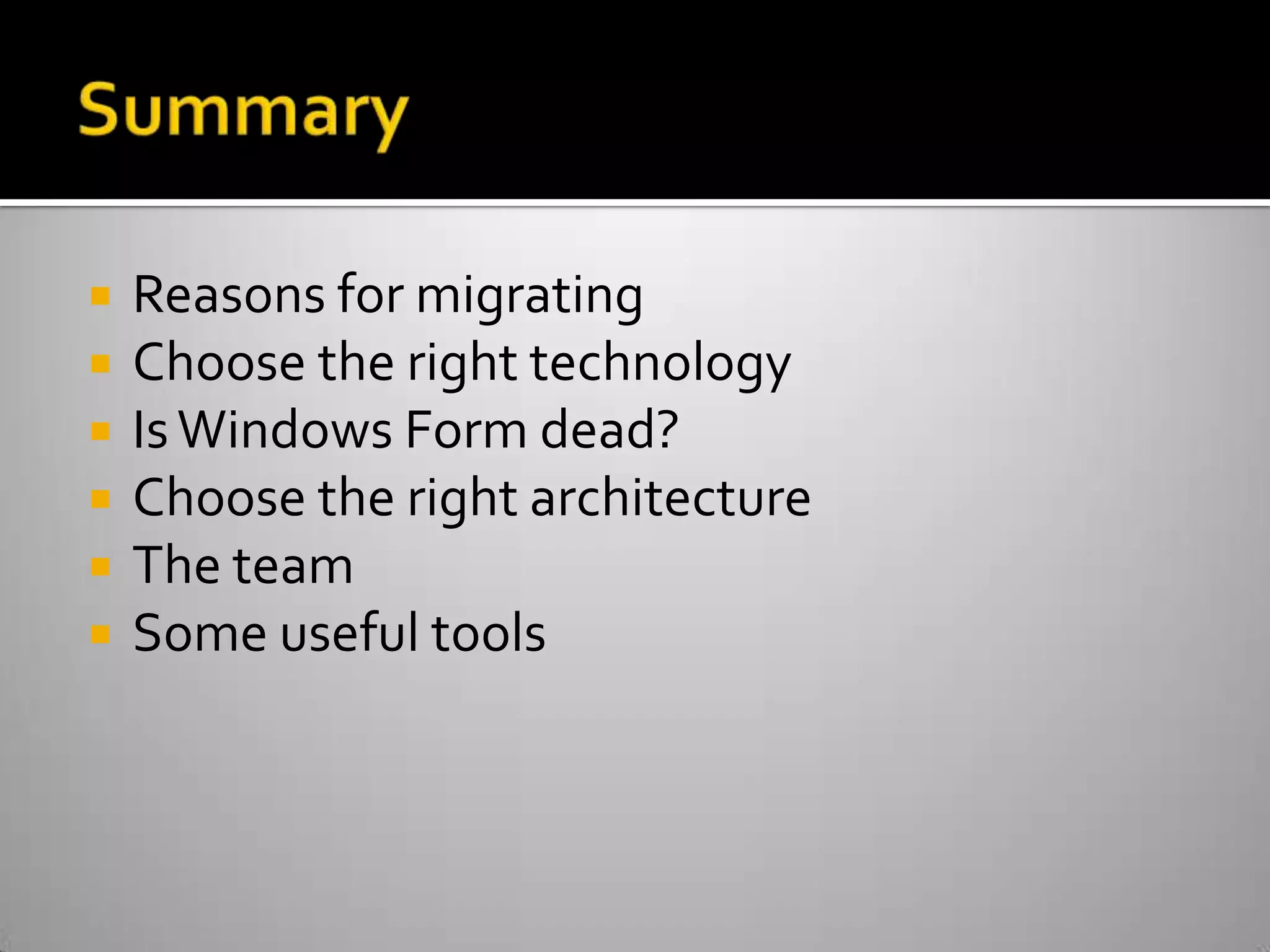
My BooksMicrosoftAPRESS
SummaryReasons for migratingChoose the right technologyIs Windows Form dead?Choose the right architectureThe teamSome useful tools
Reasons for migratingLegacy application that requires refactoring (partial)Legacy application developed with a very old technology (FoxPro, VB6, …) (re-write)Application that requires a more complex UI (User Interface) not sustainable with Windows Form (partial)Specific request from the Customer (at the end, he has the money …)New project (never start a new project with an old technology!)
Always consider the budget!You do not need to re-write everything, you can keep the existing UI and migrate only the new featuresWindows Form can live in parallel with WPF/SLYou can host Windows Form in WPF (WindowsFormHost) and WPF in Windows Form (ElementHost) or SL in Windows Form (embed browser)
Is Windows Form dead?No, it is not. There are still thousands of active projects done in Windows FormWin Form is still the following step after VB6 WPF is not intended to replace Windows FormsIt is not dead but it is an old technology. It is still available It does not separate UI from code, I can’t employ a designer for the UI
Choose the right technologyFirst rule: WPF is for Standalone, Silverlight is for Web, PhonesSecond rule: WPF works only on Windows OS, Silverlight works on Windows, MAC, LinuxThird rule: WPF is a more powerful technology, Silverlight uses a restricted version of the NET Framework but more feasible for Web and MediaWPF requires a knowledge of XAML for WPF, Silverlight requires XAML for SL, HTML and JS and WCF
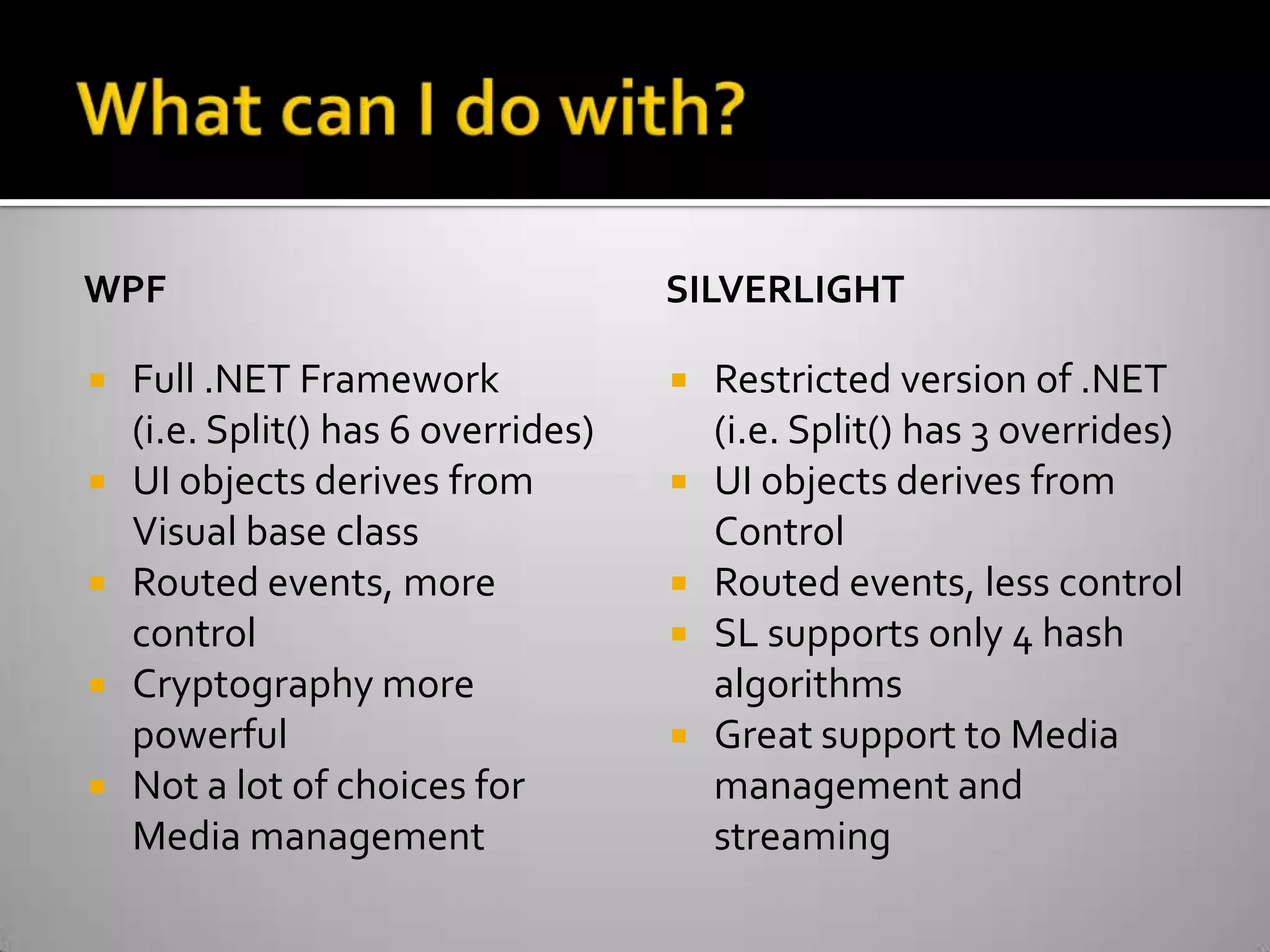
What can I do with?WPFFull .NET Framework(i.e. Split() has 6 overrides)UI objects derives from Visual base classRouted events, more controlCryptography more powerfulNot a lot of choices for Media managementSILVERLIGHTRestricted version of .NET(i.e. Split() has 3 overrides)UI objects derives from ControlRouted events, less controlSL supports only 4 hash algorithmsGreat support to Media management and streaming
What Microsoft suggests? SLIf you're just starting out, and there's a question as to which technology to choose (Silverlight or WPF) then start with Silverlight. It is generally easier to move up to WPF from Silverlight than it is to move the other way. Silverlight has a smaller API, and is therefore generally considered easier to learn.If you need a desktop application with only basic system integration, consider building a Silverlight Out-of-Browser application. Silverlight 4 Trusted Applications with IDispatch support provide access to many system resources previously unavailable to web technologies.If you need deep system integration, excellent multi-touch support, device access, local resources, and all the other things that go with a solid desktop application, then consider moving up to WPF.If you're a C++ developer, you can choose to go with C++ and MFC, or use C++ with WPF on the front end, like the Expression team did.
Still missing …WPFA good designer tool, VS is not cool as BlendThe Control toolkit is not exhaustive, you still need a third party control librarySilverlightSame thingInteraction with HTML and Javascript still lacks in some partsStill requires to recompile your .dlls
Composite FrameworksCreate an application using Modules (independent assemblies)Specialize teams in different areas (UI, Presentation, Business)Reusable architectureIncrease quality and usability by sharing common services and functionality
Composite for WPF/SLPrismRequires observer patterns (message broker)Cool navigation service in V4Only IoC with Unity (Microsoft)Astonishing resources and documentationcaliburnAuto-wiringTransitions between ViewsOpen source with less technology limitsAvailable also for Windows Phone
DemoWinForm demo application (MSDN, Telerik)WPF demo application (MSDN, Codeplex)Silverlight demo application (MSDN, Telerik)WPF showcasehttp://windowsclient.net/community/showcase.aspxSilverlight showcasehttp://www.silverlight.net/showcase/
Choose the right architectureLayered application or monolithic block?SOA or not SOA? If I work with Silverlight that’s the only choice …TDD or not TDD?What about an O/RM? Entity Framework, Nhibernate or what?What about security, especially if I am working with SL?Design patterns, is M-V-VM mandatory?
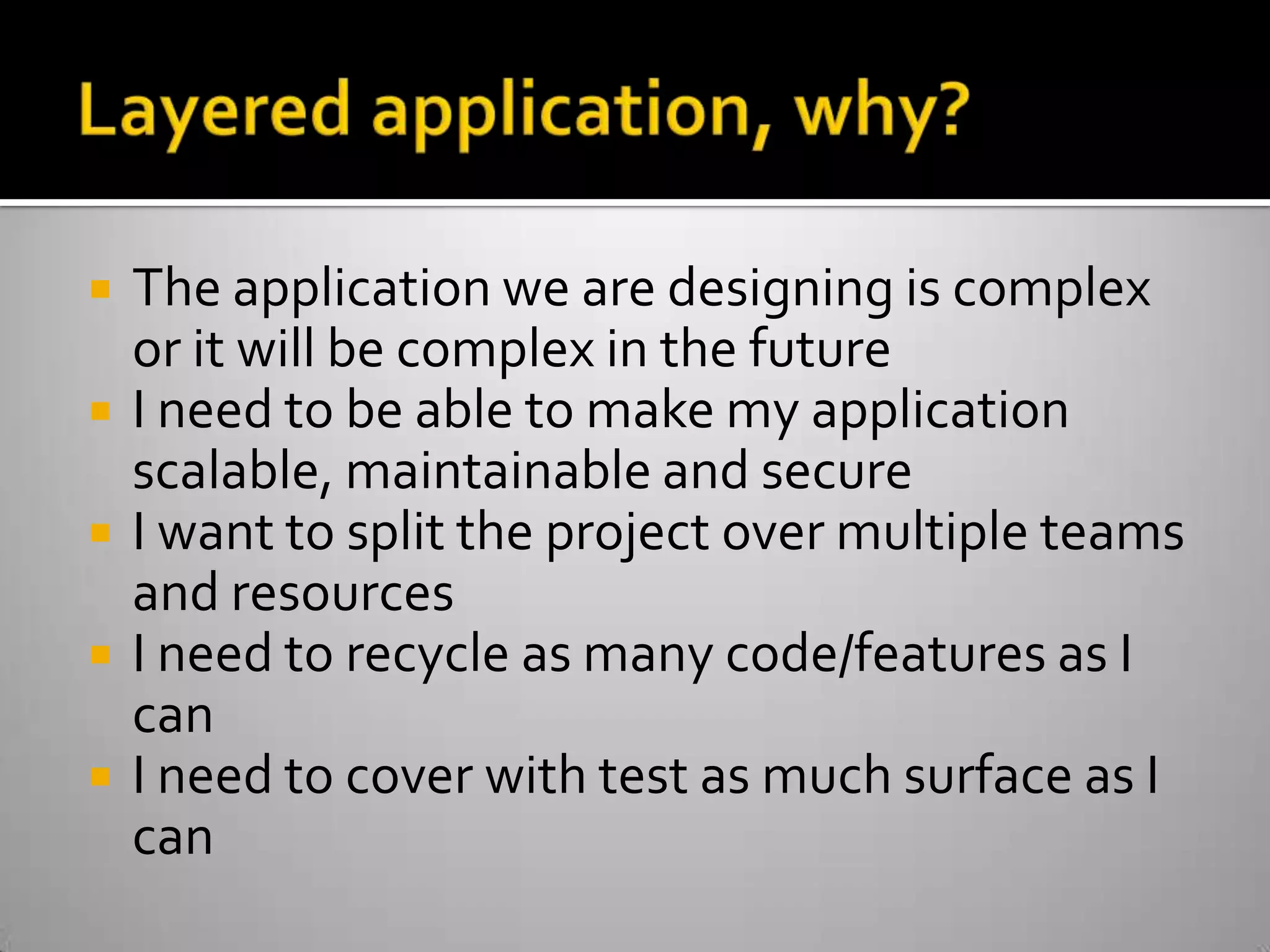
Layered application, why?Why should I use a layered application if it requires:More codeMore timeMore effortMore peopleMore money
Layered application, why?The application we are designing is complex or it will be complex in the futureI need to be able to make my application scalable, maintainable and secureI want to split the project over multiple teams and resourcesI need to recycle as many code/features as I canI need to cover with test as much surface as I can
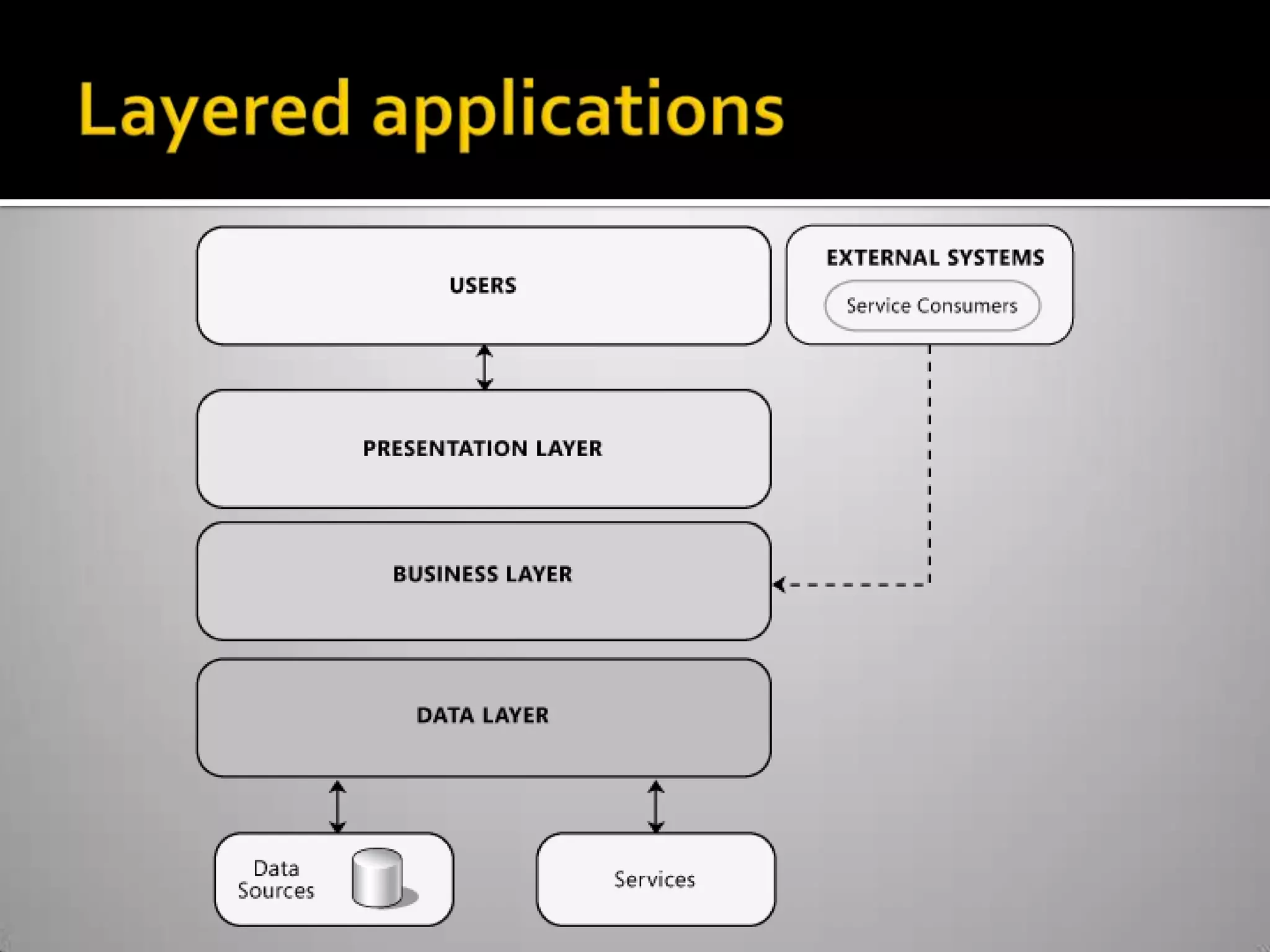
Layered applications
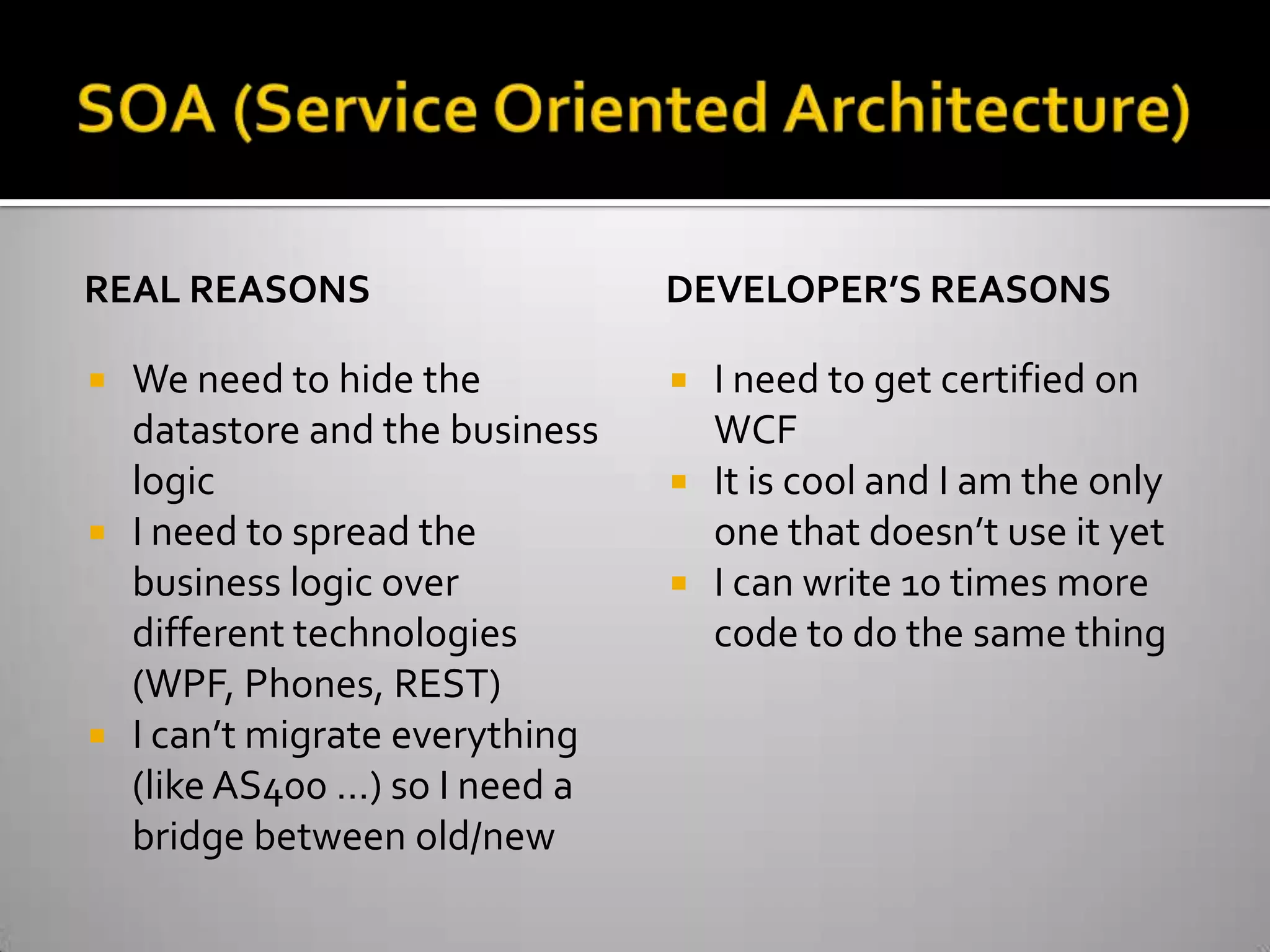
SOA (Service Oriented Architecture)Real reasonsWe need to hide the datastore and the business logicI need to spread the business logic over different technologies (WPF, Phones, REST)I can’t migrate everything (like AS400 …) so I need a bridge between old/newDeveloper’s reasonsI need to get certified on WCFIt is cool and I am the only one that doesn’t use it yetI can write 10 times more code to do the same thing
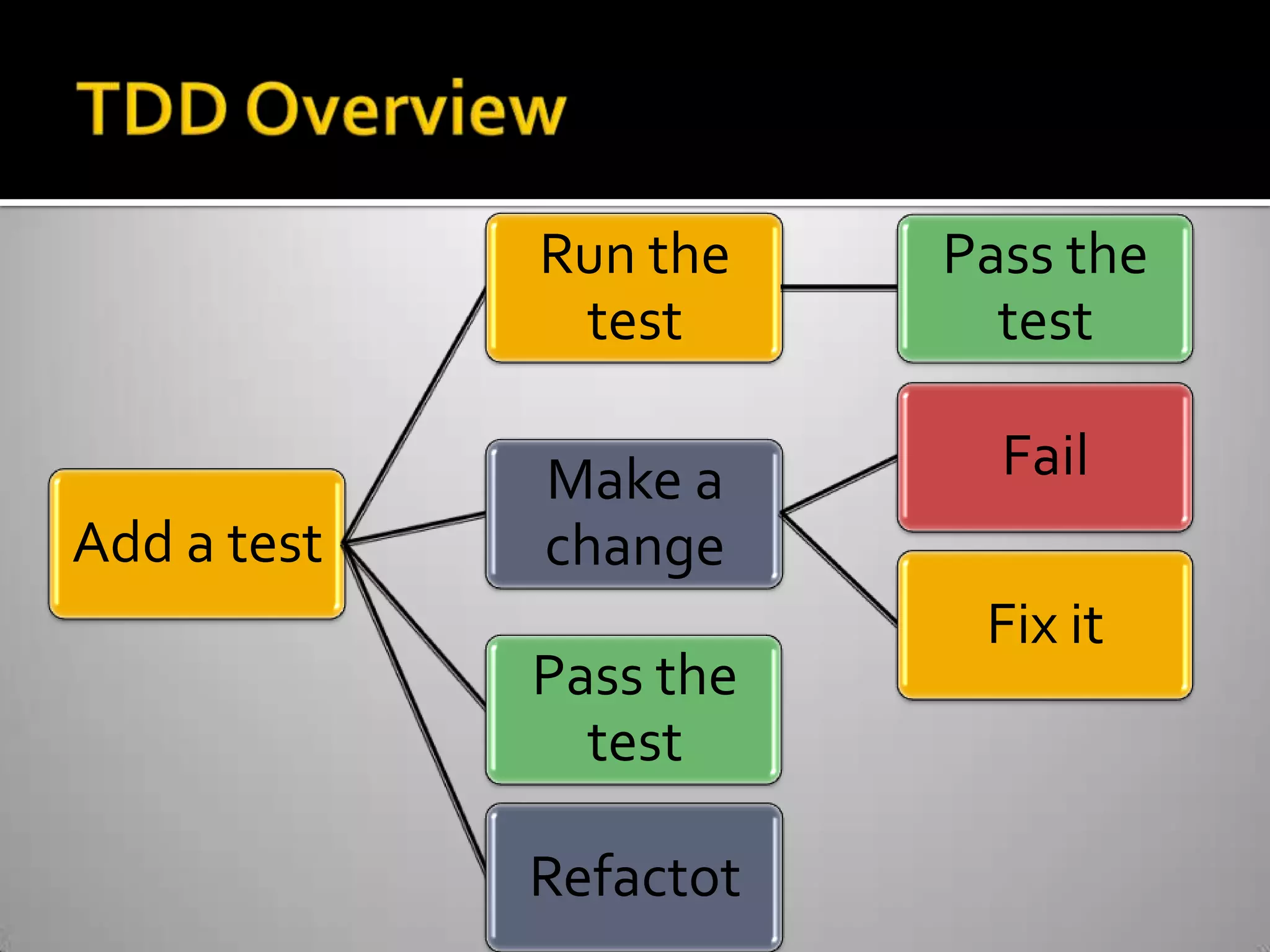
TDD Overview
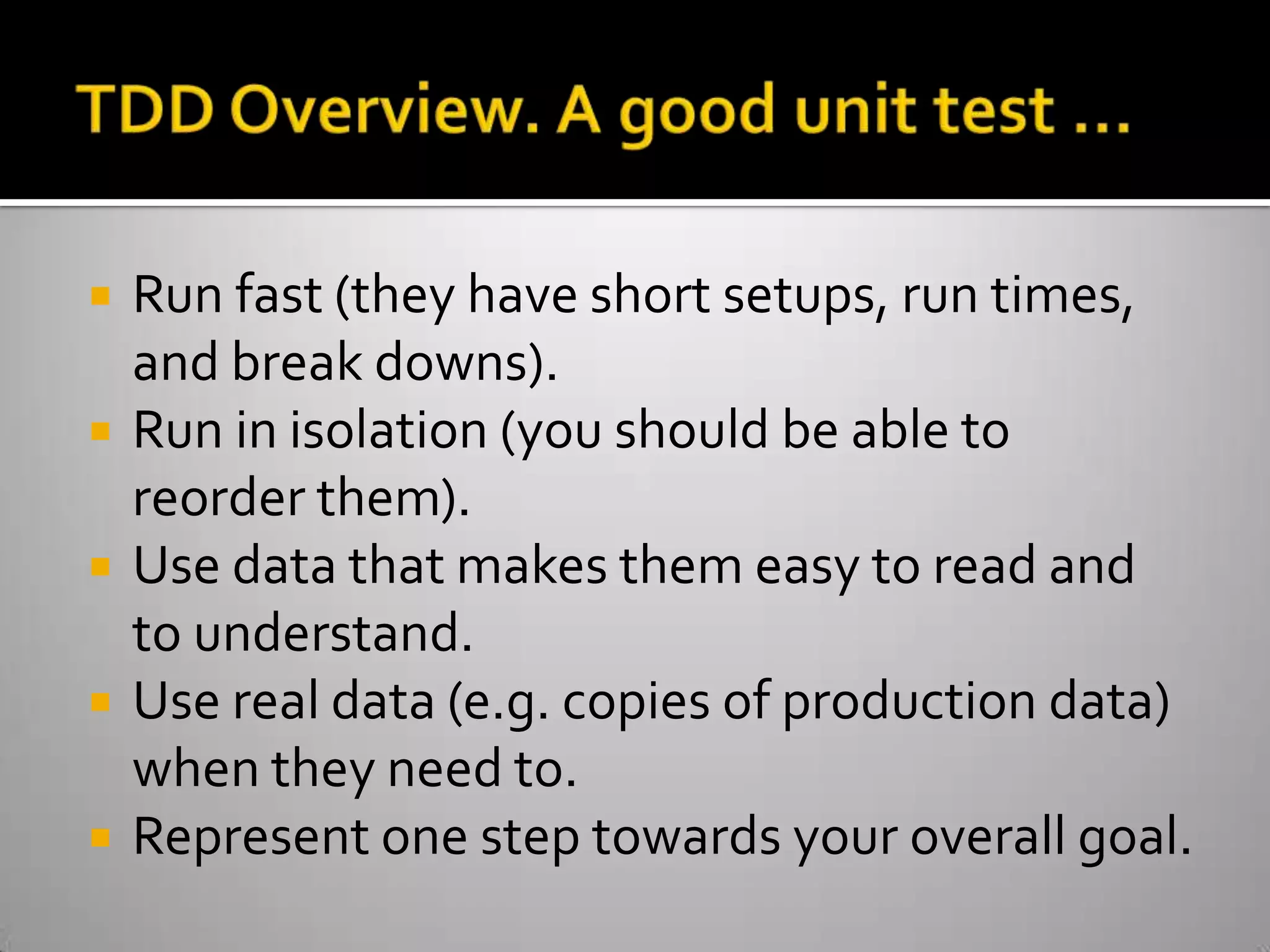
TDD Overview. A good unit test …Run fast (they have short setups, run times, and break downs).Run in isolation (you should be able to reorder them).Use data that makes them easy to read and to understand.Use real data (e.g. copies of production data) when they need to.Represent one step towards your overall goal.
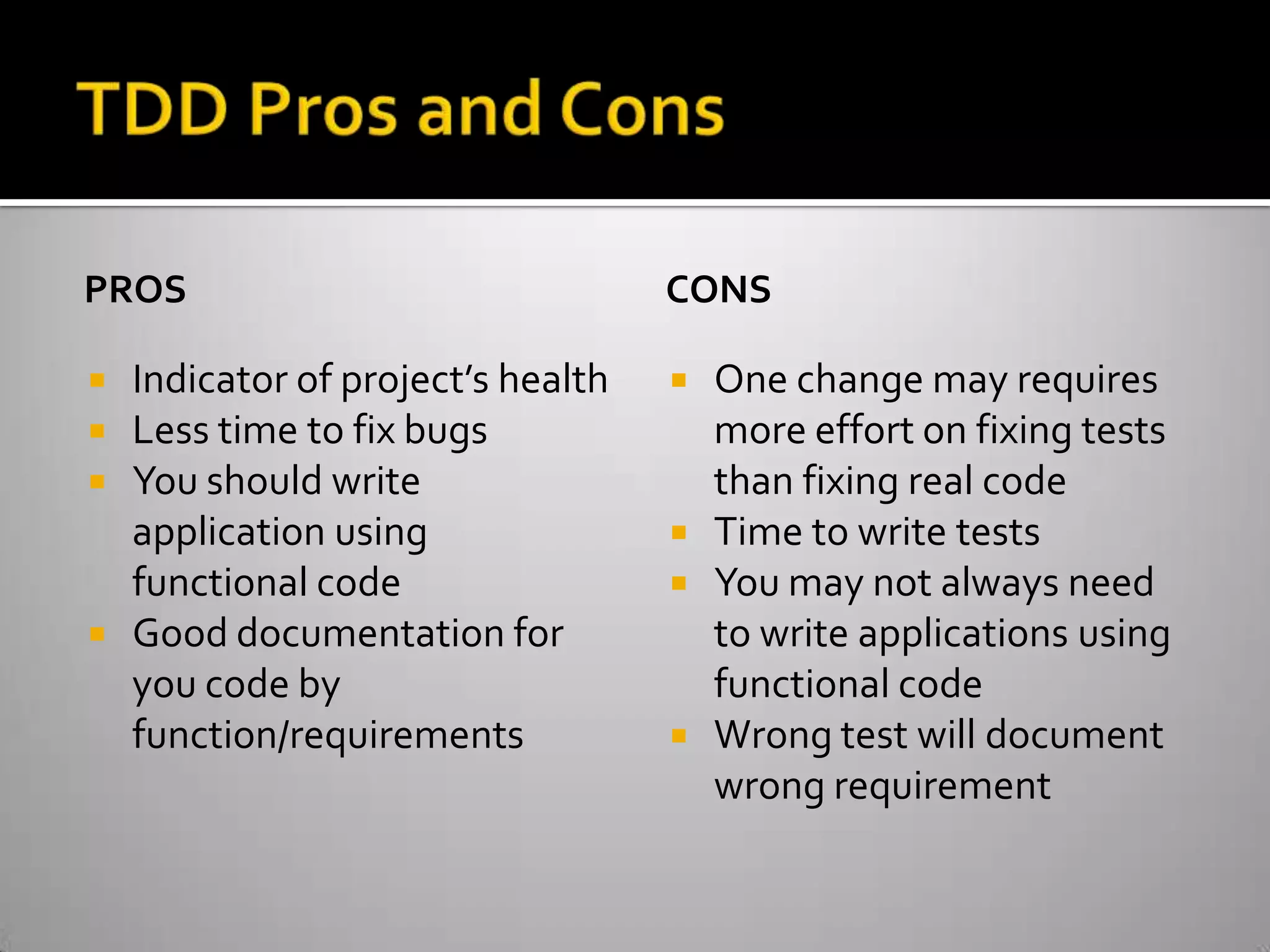
TDD Pros and ConsPROSIndicator of project’s healthLess time to fix bugsYou should write application using functional codeGood documentation for you code by function/requirementsCONSOne change may requires more effort on fixing tests than fixing real codeTime to write testsYou may not always need to write applications using functional codeWrong test will document wrong requirement
O/RM, which one?Nhibernate, Entity Framework are free, others are notNhibernate is 100% flexible but no IDEEF has an IDE but is not flexibleNhibernate has years and is open sourceEF is still not mature and it is not open sourceNhibernate requires more experience, it is not for newbie
O/RMPROSYou are not anymore Database technology drivenWrite applications faster, do not need ton of SQLEasier to test the data layerCONSLess flexibility because you can’t use all the power of a specific RDBMSDevs tend to forget T-SQL/PL-SQLThe database become a simple container of data, no more logic in it
Security real facts, did you know?Most developers have no clue about securityMost of the intranet applications are not secure at all, especially WinFormSOA implies an additional layer of securityThe database should also be encryptedA web application with “secret” data should be always SSLThe NET framework provides tons of utilities and facilities to apply security
Security concerns for my applicationAuthentication, how the user will authenticate against the applicationAuthentication with SOAAuthorization, are we applying also granular security rights?Logging, do we know what is going on? Do we have a trace?Data protection, is security applied also at the data tier or do we use SA in SQL?
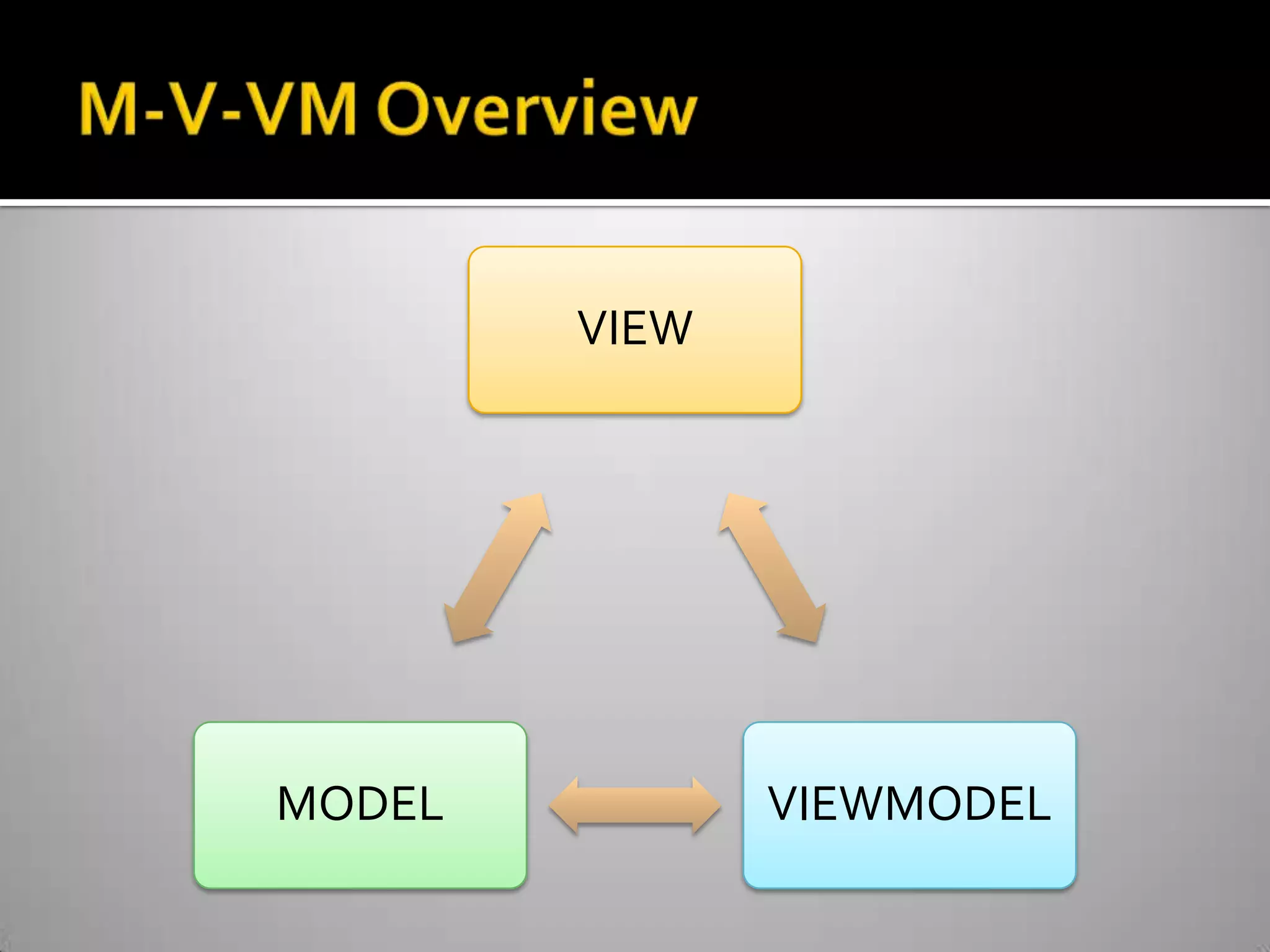
M-V-VM Overview
M-V-VM Main conceptsProvides separation of concernsIt is natural pattern for XAML platformsEnables the developer-designer workflowIncreases application testability
Resources on M-V-VMIn the Box Visual Studio integration (SEE DEMO)My BookGary McLean’s bookPRISM documentationhttp://compositewpf.codeplex.com/Josh Smith http://joshsmithonwpf.wordpress.com/Karl Shiffletthttp://karlshifflett.wordpress.com/
The TeamHow big is the team I will work with?How much experience do they have?Guru | Some exp. | newbieWhat was their previous project? Do they know the difference between Client (WPF) and Web (SL)?Is there a technology leader in the Team with some experience?
The right oneNever put too many seniors: “Too many cooks spoil the dinner”Never use big teams, lot of technical debates and few hours on writing code Put together devs that love the technology they are working with, negativity is a cancerTools make a developer life easier (documentation, books, controls, …)
Make your life easierChoose a set of Controls, learn it and use it! Apply one pattern for the UI, learn it and use it. Do not “experiment” with customer money, do what you know and avoid the unknownDo not over engineer, remember that the Customer can appreciate only what he can see … (a.k.a. no NASA web services)Small steps, small releases, small iterations
Some toolsBooksGuidanceBest practicesForums and Communities
BooksMy book Architecting Applications for the EnterprisePRISM’s Developer Guide (MS PRESS)WPF 4 Unleashed (Adam Nathan)Silverlight 4 Unleashed (L. Bugnion)
GuidanceCodeplexhttp://wpfslguidance.codeplex.com/MSDN“Developers Guide to Microsoft PRISM”WPFhttp://windowsclient.netSilverlighthttp://silverlight.net
QA?

NET Event - Migrating WinForm

  • 1.
    From legacy toWPF/SLMigrating applications from Windows Form to WPF/SilverlightRaffaele Garofalo
  • 2.
    Who am I?RaffaeleGarofaloNET Software ArchitectMCP (MCAD, MCSD, MCTS)Blog: http://blog.raffaeu.comTwitter: @raffaeuCompany: Nephila Capital Ltd. (www.nephila.com) I am Italian, sorry for my bad English
  • 3.
  • 4.
    SummaryReasons for migratingChoosethe right technologyIs Windows Form dead?Choose the right architectureThe teamSome useful tools
  • 5.
    Reasons for migratingLegacyapplication that requires refactoring (partial)Legacy application developed with a very old technology (FoxPro, VB6, …) (re-write)Application that requires a more complex UI (User Interface) not sustainable with Windows Form (partial)Specific request from the Customer (at the end, he has the money …)New project (never start a new project with an old technology!)
  • 6.
    Always consider thebudget!You do not need to re-write everything, you can keep the existing UI and migrate only the new featuresWindows Form can live in parallel with WPF/SLYou can host Windows Form in WPF (WindowsFormHost) and WPF in Windows Form (ElementHost) or SL in Windows Form (embed browser)
  • 7.
    Is Windows Formdead?No, it is not. There are still thousands of active projects done in Windows FormWin Form is still the following step after VB6 WPF is not intended to replace Windows FormsIt is not dead but it is an old technology. It is still available It does not separate UI from code, I can’t employ a designer for the UI
  • 8.
    Choose the righttechnologyFirst rule: WPF is for Standalone, Silverlight is for Web, PhonesSecond rule: WPF works only on Windows OS, Silverlight works on Windows, MAC, LinuxThird rule: WPF is a more powerful technology, Silverlight uses a restricted version of the NET Framework but more feasible for Web and MediaWPF requires a knowledge of XAML for WPF, Silverlight requires XAML for SL, HTML and JS and WCF
  • 9.
    What can Ido with?WPFFull .NET Framework(i.e. Split() has 6 overrides)UI objects derives from Visual base classRouted events, more controlCryptography more powerfulNot a lot of choices for Media managementSILVERLIGHTRestricted version of .NET(i.e. Split() has 3 overrides)UI objects derives from ControlRouted events, less controlSL supports only 4 hash algorithmsGreat support to Media management and streaming
  • 10.
    What Microsoft suggests?SLIf you're just starting out, and there's a question as to which technology to choose (Silverlight or WPF) then start with Silverlight. It is generally easier to move up to WPF from Silverlight than it is to move the other way. Silverlight has a smaller API, and is therefore generally considered easier to learn.If you need a desktop application with only basic system integration, consider building a Silverlight Out-of-Browser application. Silverlight 4 Trusted Applications with IDispatch support provide access to many system resources previously unavailable to web technologies.If you need deep system integration, excellent multi-touch support, device access, local resources, and all the other things that go with a solid desktop application, then consider moving up to WPF.If you're a C++ developer, you can choose to go with C++ and MFC, or use C++ with WPF on the front end, like the Expression team did.
  • 11.
    Still missing …WPFAgood designer tool, VS is not cool as BlendThe Control toolkit is not exhaustive, you still need a third party control librarySilverlightSame thingInteraction with HTML and Javascript still lacks in some partsStill requires to recompile your .dlls
  • 12.
    Composite FrameworksCreate anapplication using Modules (independent assemblies)Specialize teams in different areas (UI, Presentation, Business)Reusable architectureIncrease quality and usability by sharing common services and functionality
  • 13.
    Composite for WPF/SLPrismRequiresobserver patterns (message broker)Cool navigation service in V4Only IoC with Unity (Microsoft)Astonishing resources and documentationcaliburnAuto-wiringTransitions between ViewsOpen source with less technology limitsAvailable also for Windows Phone
  • 14.
    DemoWinForm demo application(MSDN, Telerik)WPF demo application (MSDN, Codeplex)Silverlight demo application (MSDN, Telerik)WPF showcasehttp://windowsclient.net/community/showcase.aspxSilverlight showcasehttp://www.silverlight.net/showcase/
  • 15.
    Choose the rightarchitectureLayered application or monolithic block?SOA or not SOA? If I work with Silverlight that’s the only choice …TDD or not TDD?What about an O/RM? Entity Framework, Nhibernate or what?What about security, especially if I am working with SL?Design patterns, is M-V-VM mandatory?
  • 16.
    Layered application, why?Whyshould I use a layered application if it requires:More codeMore timeMore effortMore peopleMore money
  • 17.
    Layered application, why?Theapplication we are designing is complex or it will be complex in the futureI need to be able to make my application scalable, maintainable and secureI want to split the project over multiple teams and resourcesI need to recycle as many code/features as I canI need to cover with test as much surface as I can
  • 18.
  • 19.
    SOA (Service OrientedArchitecture)Real reasonsWe need to hide the datastore and the business logicI need to spread the business logic over different technologies (WPF, Phones, REST)I can’t migrate everything (like AS400 …) so I need a bridge between old/newDeveloper’s reasonsI need to get certified on WCFIt is cool and I am the only one that doesn’t use it yetI can write 10 times more code to do the same thing
  • 20.
  • 21.
    TDD Overview. Agood unit test …Run fast (they have short setups, run times, and break downs).Run in isolation (you should be able to reorder them).Use data that makes them easy to read and to understand.Use real data (e.g. copies of production data) when they need to.Represent one step towards your overall goal.
  • 22.
    TDD Pros andConsPROSIndicator of project’s healthLess time to fix bugsYou should write application using functional codeGood documentation for you code by function/requirementsCONSOne change may requires more effort on fixing tests than fixing real codeTime to write testsYou may not always need to write applications using functional codeWrong test will document wrong requirement
  • 23.
    O/RM, which one?Nhibernate,Entity Framework are free, others are notNhibernate is 100% flexible but no IDEEF has an IDE but is not flexibleNhibernate has years and is open sourceEF is still not mature and it is not open sourceNhibernate requires more experience, it is not for newbie
  • 24.
    O/RMPROSYou are notanymore Database technology drivenWrite applications faster, do not need ton of SQLEasier to test the data layerCONSLess flexibility because you can’t use all the power of a specific RDBMSDevs tend to forget T-SQL/PL-SQLThe database become a simple container of data, no more logic in it
  • 25.
    Security real facts,did you know?Most developers have no clue about securityMost of the intranet applications are not secure at all, especially WinFormSOA implies an additional layer of securityThe database should also be encryptedA web application with “secret” data should be always SSLThe NET framework provides tons of utilities and facilities to apply security
  • 26.
    Security concerns formy applicationAuthentication, how the user will authenticate against the applicationAuthentication with SOAAuthorization, are we applying also granular security rights?Logging, do we know what is going on? Do we have a trace?Data protection, is security applied also at the data tier or do we use SA in SQL?
  • 27.
  • 28.
    M-V-VM Main conceptsProvidesseparation of concernsIt is natural pattern for XAML platformsEnables the developer-designer workflowIncreases application testability
  • 29.
    Resources on M-V-VMInthe Box Visual Studio integration (SEE DEMO)My BookGary McLean’s bookPRISM documentationhttp://compositewpf.codeplex.com/Josh Smith http://joshsmithonwpf.wordpress.com/Karl Shiffletthttp://karlshifflett.wordpress.com/
  • 30.
    The TeamHow bigis the team I will work with?How much experience do they have?Guru | Some exp. | newbieWhat was their previous project? Do they know the difference between Client (WPF) and Web (SL)?Is there a technology leader in the Team with some experience?
  • 31.
    The right oneNeverput too many seniors: “Too many cooks spoil the dinner”Never use big teams, lot of technical debates and few hours on writing code Put together devs that love the technology they are working with, negativity is a cancerTools make a developer life easier (documentation, books, controls, …)
  • 32.
    Make your lifeeasierChoose a set of Controls, learn it and use it! Apply one pattern for the UI, learn it and use it. Do not “experiment” with customer money, do what you know and avoid the unknownDo not over engineer, remember that the Customer can appreciate only what he can see … (a.k.a. no NASA web services)Small steps, small releases, small iterations
  • 33.
  • 34.
    BooksMy book ArchitectingApplications for the EnterprisePRISM’s Developer Guide (MS PRESS)WPF 4 Unleashed (Adam Nathan)Silverlight 4 Unleashed (L. Bugnion)
  • 35.
    GuidanceCodeplexhttp://wpfslguidance.codeplex.com/MSDN“Developers Guide toMicrosoft PRISM”WPFhttp://windowsclient.netSilverlighthttp://silverlight.net
  • 36.

Editor's Notes

  • #2 Topics that we will analyze in this workshop:Why we want to migrate an application? Do we really need to?Why we should use one technology instead of another one? Silverlight, WPF, what else?Is Windows Form dead? What about SL?Why we should choose one design instead of another one? Should I use an O/RM, shouldn’t I? Should I use SOA, shouldn’t I?Is my team ready for a new technology? If it’s not ready, what should I do?Some useful tools and links
  • #3 Who I am, what is my experience and my backgroundHow you can reach me, what I write in my blogWhere I work, what do I do thereDifferences between software developer and architect
  • #4 Why two different booksWhat do I talk about in the microsoft book?LayeringDesign patternsDALDDDTDDBLLMVVMWhat in the second one?WPFLayeringBlendEntity FrameworkWCFStylesDataTemplate
  • #5 Topics that we will analyze in this workshop:Why we want to migrate an application? Do we really need to?Why we should use one technology instead of another one? Silverlight, WPF, what else?Is Windows Form dead? What about SL?Why we should choose one design instead of another one? Should I use an O/RM, shouldn’t I? Should I use SOA, shouldn’t I?Is my team ready for a new technology? If it’s not ready, what should I do?Some useful tools and links
  • #6 I have a legacy application in Windows Form and I do not have the time to migrate or change itso it would be easier to add an additional component or module in WPF/SL and leave the old application as isI have a very old application that can’t be kept alive as is, so I need to re-write itThe technology I am using, like Windows Form, has some big limits and I can’t go over these limitsThe Customer wants an application using a new technology because it will guarantee a more durable lifeWhy should I use an old technology with a new project?
  • #7 Remember that the budget if fundamental. I can’t invest 6 months for an application that is already working just because I want to move into a new technology. The customer will not understand this business decision. I need to provide a real reason.Microsoft has designed WPF and SL and Windows Form in a way that the compatibility will be kept alive. This was the first target and this is the reason there isn’t an official tool to migrate from Win Form to WPF. You simply do not need it!
  • #8 There are tons of active projects written in Windows Form, in C++ and of course Microsoft can’t get rid of sucha technology in one shotRemember about VB6 to NET 2003If you were working with VBx before, Win Form is the natural next move. Same IDE, same way of handling methods, eventsJust more OOPIt is not dead but it won’t work forever. Consider what happened to Windows Phone. Windows CE 6 is not dead but the new phones will work on WP7 (Silverlight)Windows Form runs on Windows 7 but rumors say that in the future only WPF and SL will run on the next versions of Windows (they are rumors)At the PDC 2010 Microsoft didn’t talk at all about Windows Form. Guess why?It is an old technology and if you move to WPF you will have tons of advantages, right away
  • #9 Standalone means that it runs on a Client, it doesn’t need necessarily a web connection andit doesn’t need a browser and so on … Less security implied because it doesn’t use the internet. Less portable …SL is designed for the web and WP7 for the phones. SO different technology for different audience!WPF is a Windows technology while Silverlight is cross platform, cross device but with some limitationsWPF is more powerful but Silverlight is more feasible for Web and MediaWPF is for core developers, Silverlight is for web developers because it is a web technology
  • #15 Some demo with Windows Form. The UI loads slower because it takes more timeSome demo with WPF, better UI but more CPU usageSome silvelright demo, good but on IE they looks different than in chromeSHOW INSTALL SL LOCALLYSHOW WPF and SL showcases
  • #16 Should I stick the code inside the WPF view or should I use a layered architectureWhen it is the case of working with SOA, when it is not the caseTest Driven is a waste of time or it is notWhat are the advantages of using an O/RM and why we should use itWhat are the considerations about security that I should do especially with Silverlight and SOAAre design patterns mandatory?