CHOOSING THE RIGHT
OPTIONS FOR PROBLEM
PROPERTIES
ALAN MALLACH
CENTER FOR COMMUNITY PROGRESS
NJ FUTURE
2014 REDEVELOPMENT FORUM
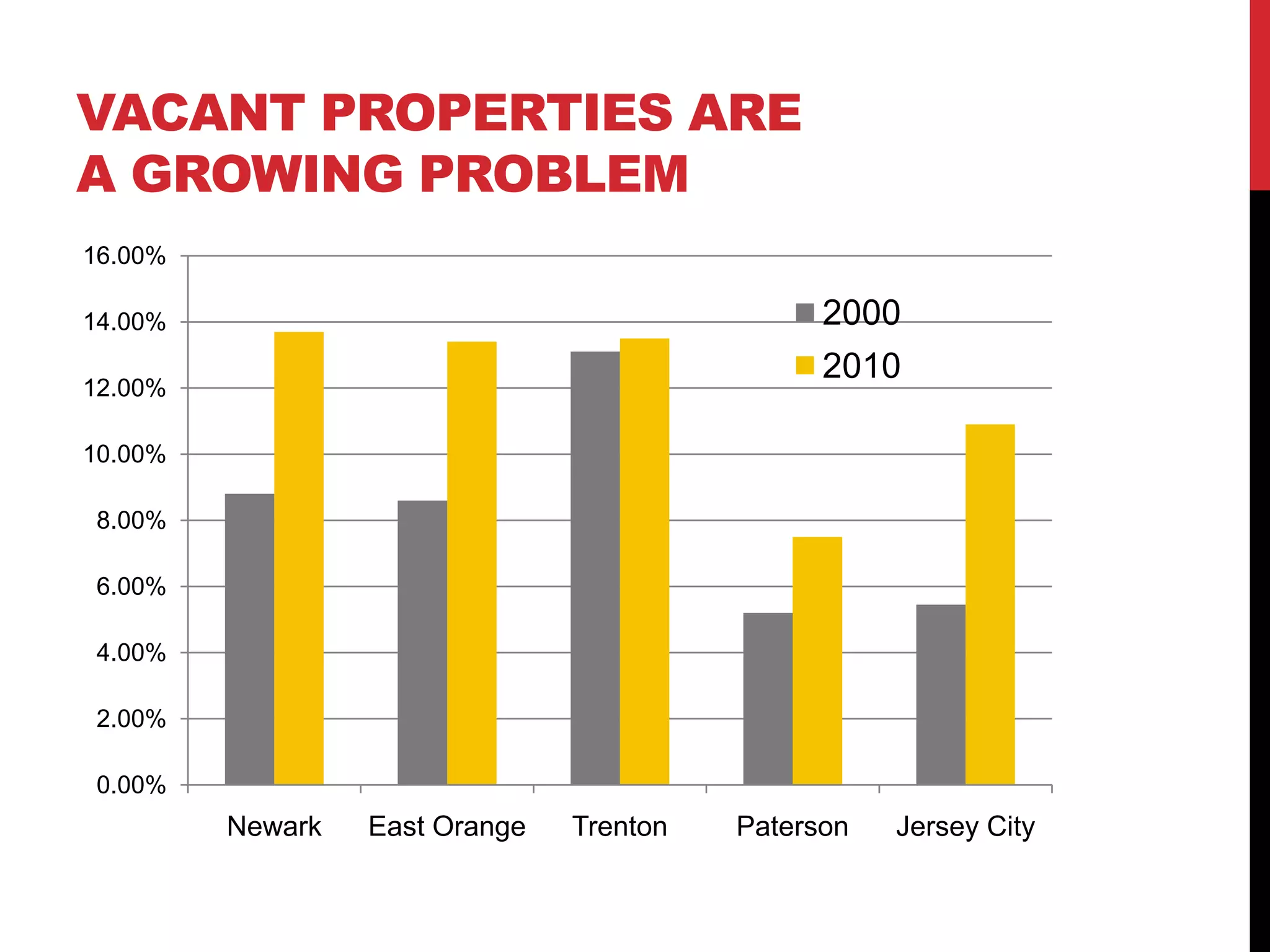
VACANT PROPERTIES ARE
A GROWING PROBLEM
0.00%
2.00%
4.00%
6.00%
8.00%
10.00%
12.00%
14.00%
16.00%
Newark East Orange Trenton Paterson Jersey City
2000
2010
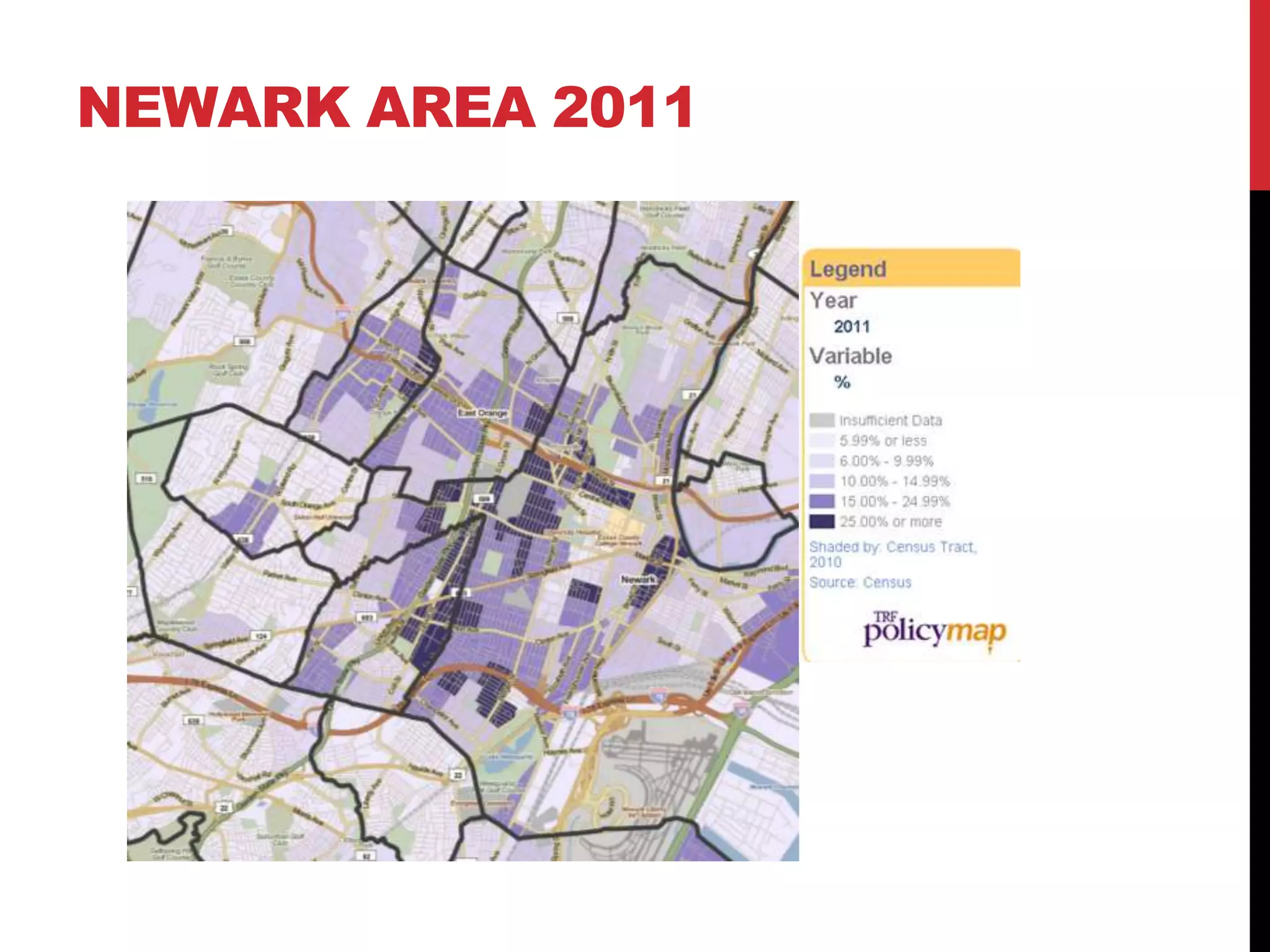
NEWARK AREA 2011
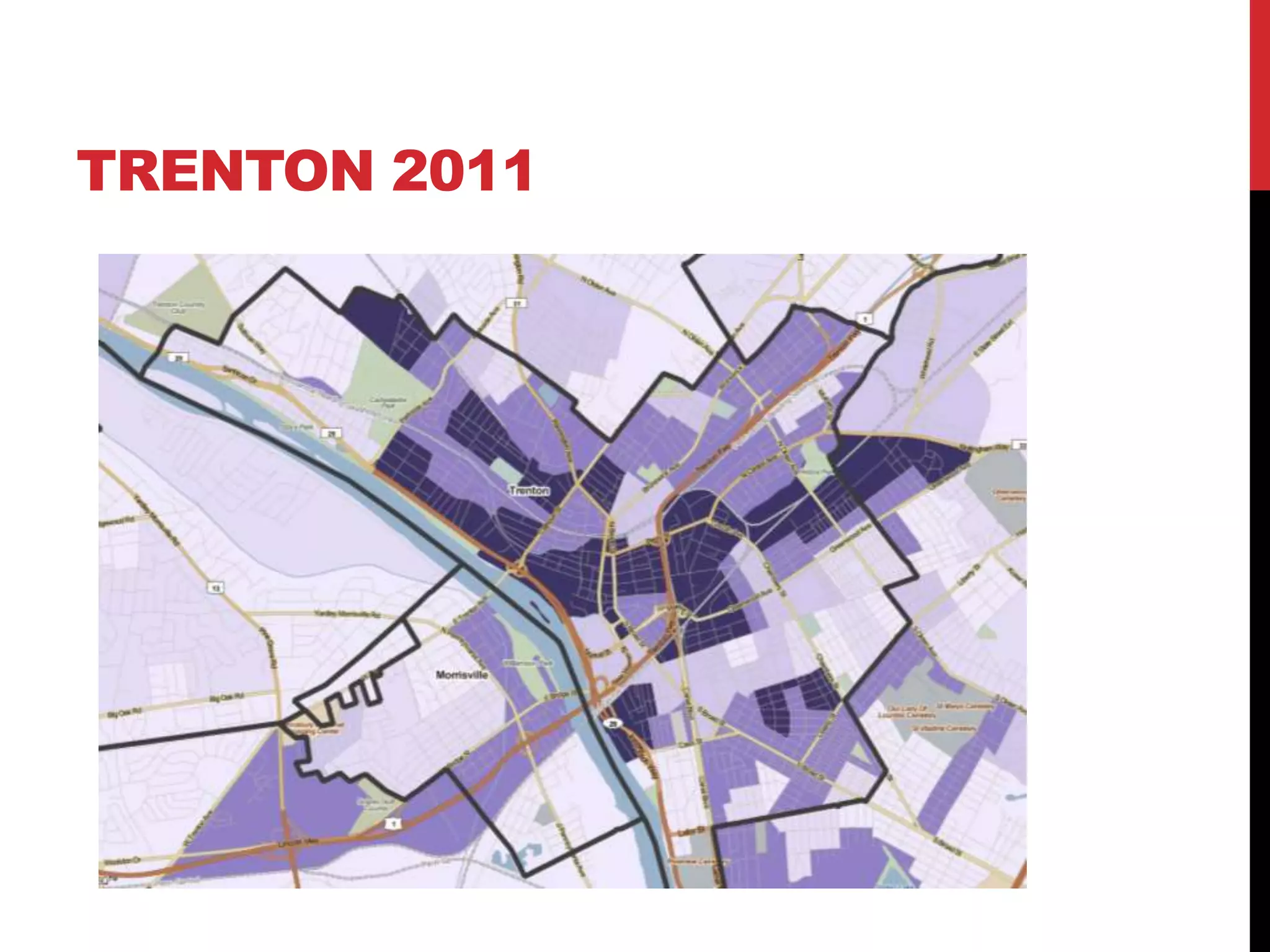
TRENTON 2011
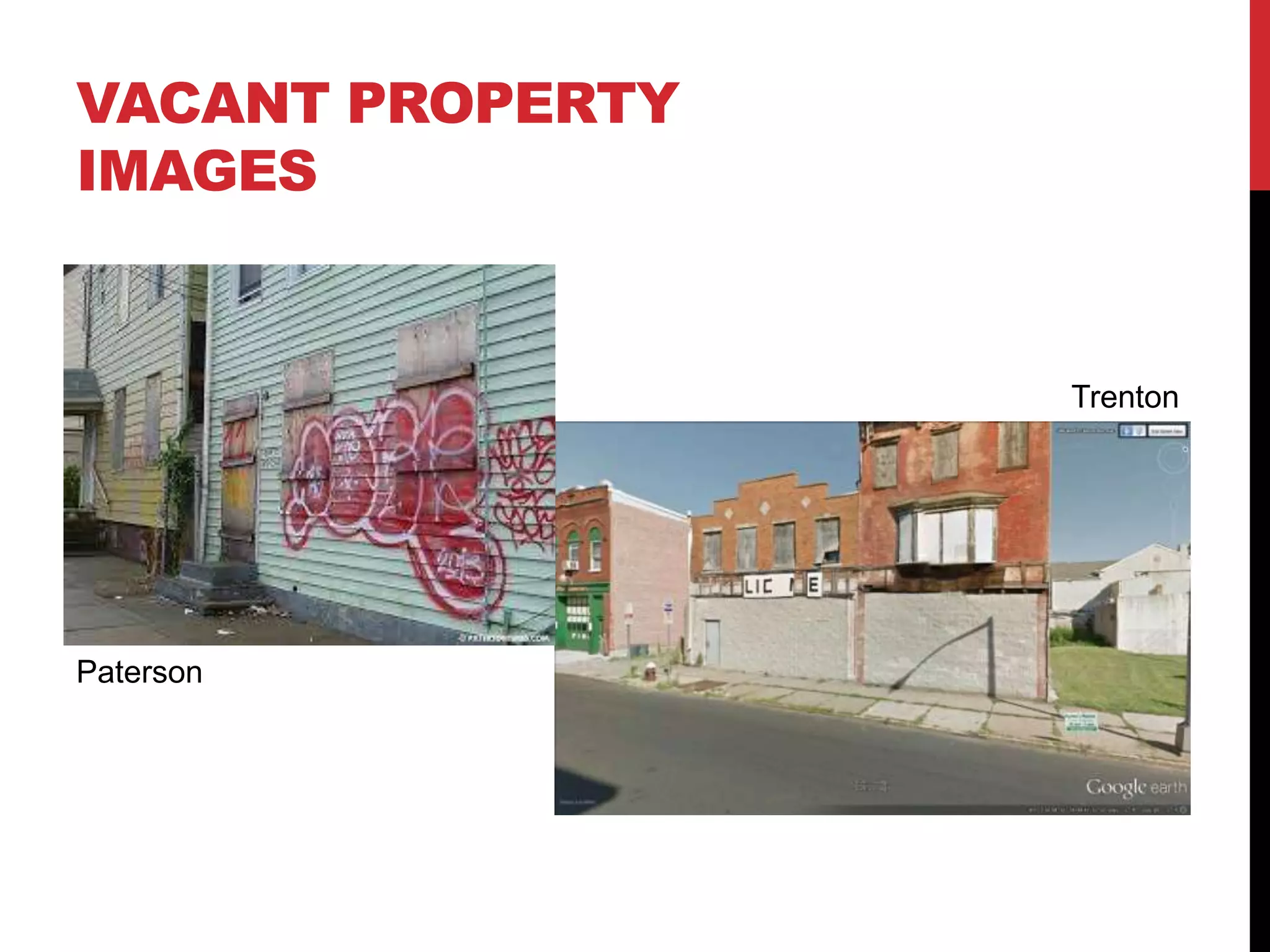
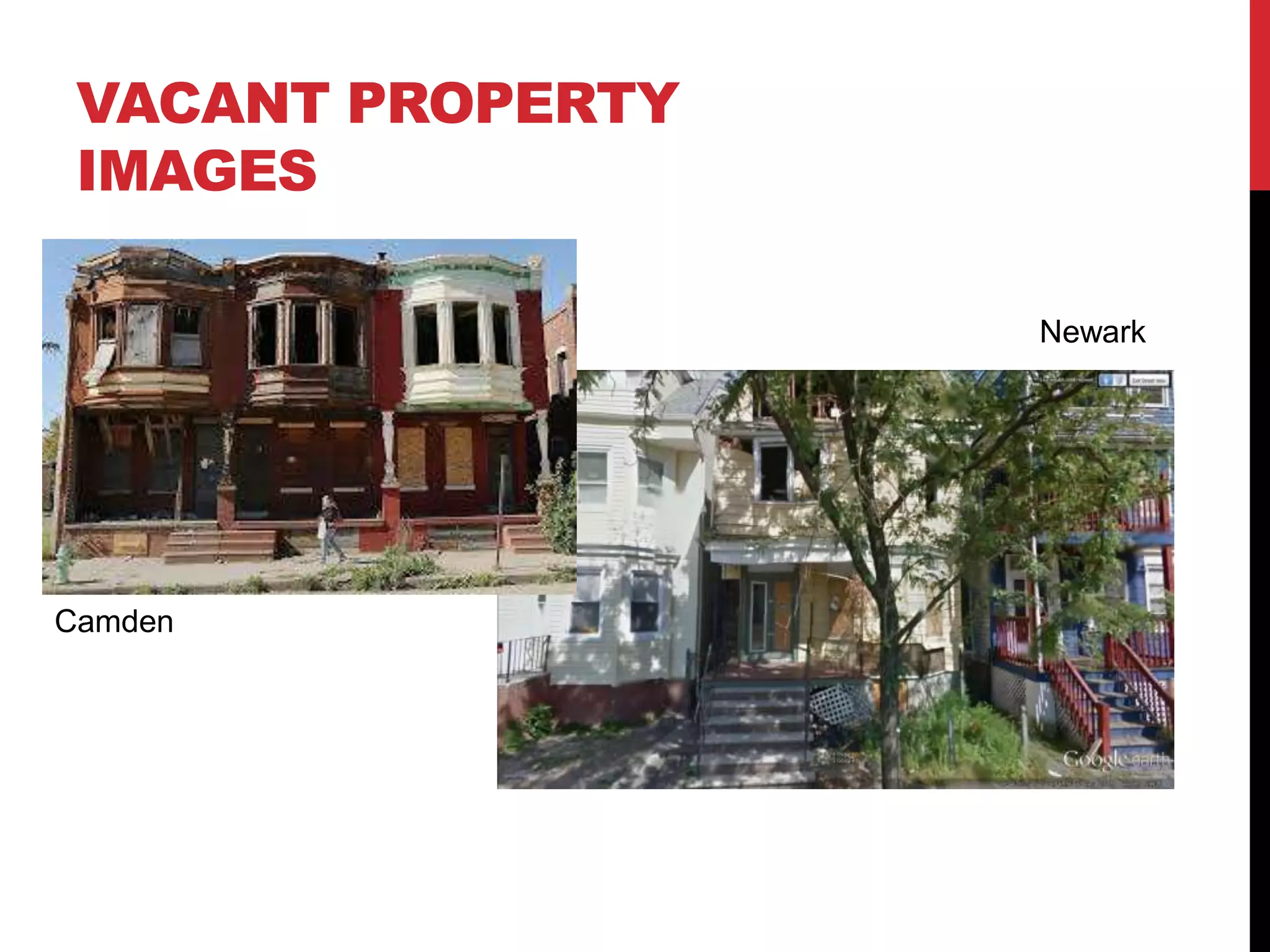
VACANT PROPERTY
IMAGES
Paterson
Trenton
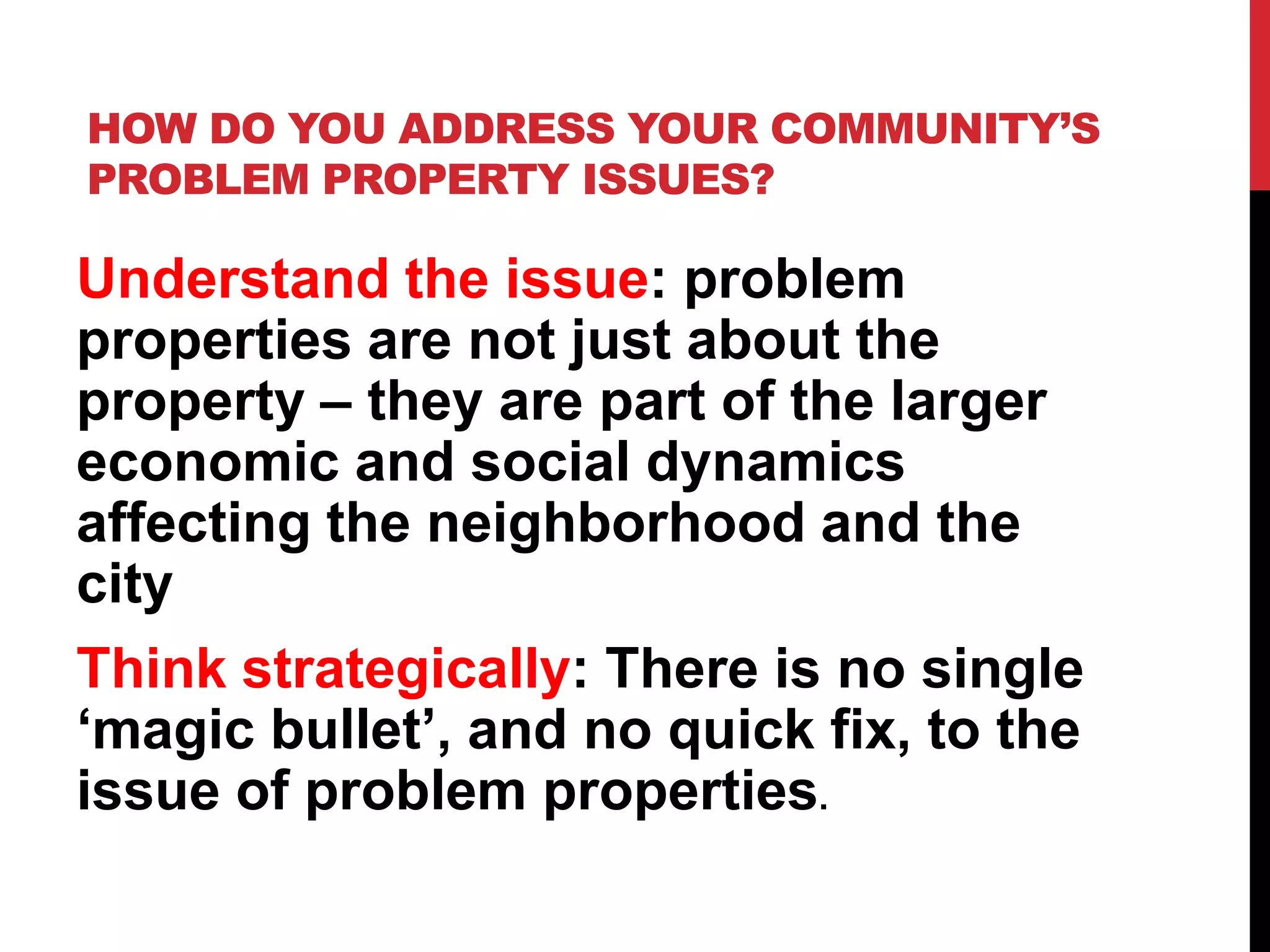
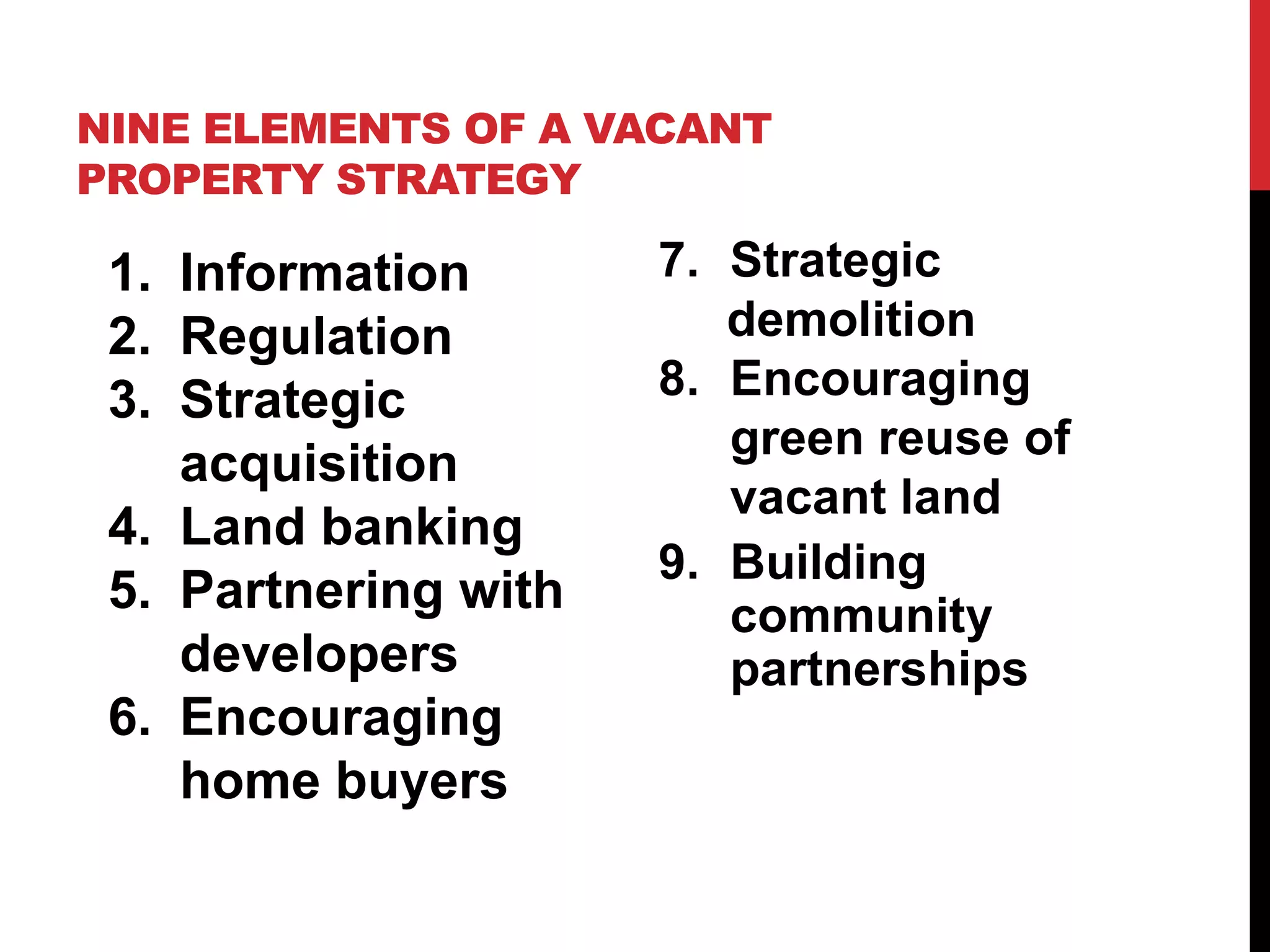
VACANT PROPERTY
IMAGES
Newark
Camden
HOW DO YOU ADDRESS YOUR COMMUNITY’S
PROBLEM PROPERTY ISSUES?
Understand the issue: problem
properties are not just about the
property – they are part of the larger
economic and social dynamics
affecting the neighborhood and the
city
Think strategically: There is no single
‘magic bullet’, and no quick fix, to the
issue of problem properties.
NINE ELEMENTS OF A VACANT
PROPERTY STRATEGY
1. Information
2. Regulation
3. Strategic
acquisition
4. Land banking
5. Partnering with
developers
6. Encouraging
home buyers
7. Strategic
demolition
8. Encouraging
green reuse of
vacant land
9. Building
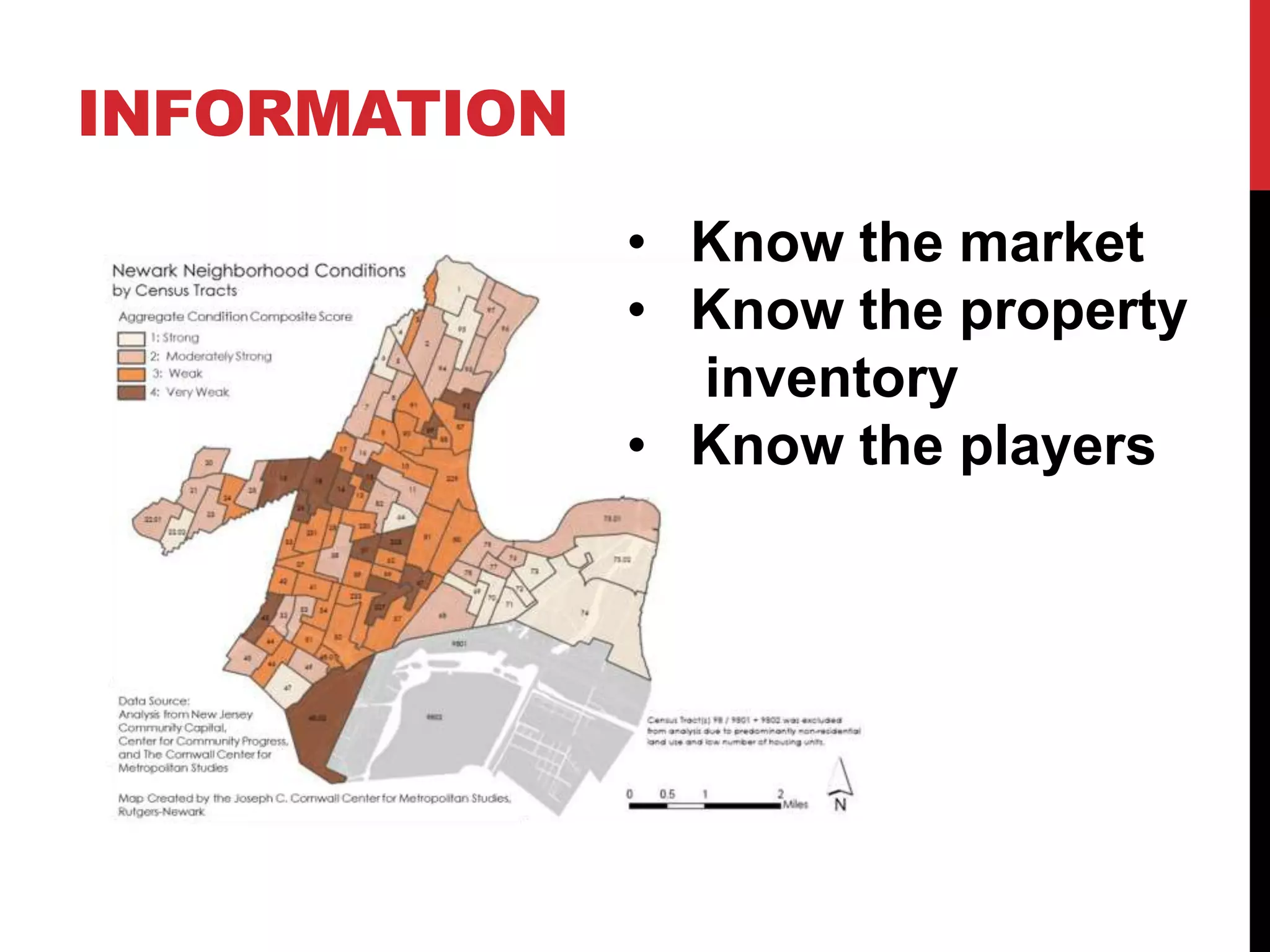
community
partnerships
INFORMATION
• Know the market
• Know the property
inventory
• Know the players
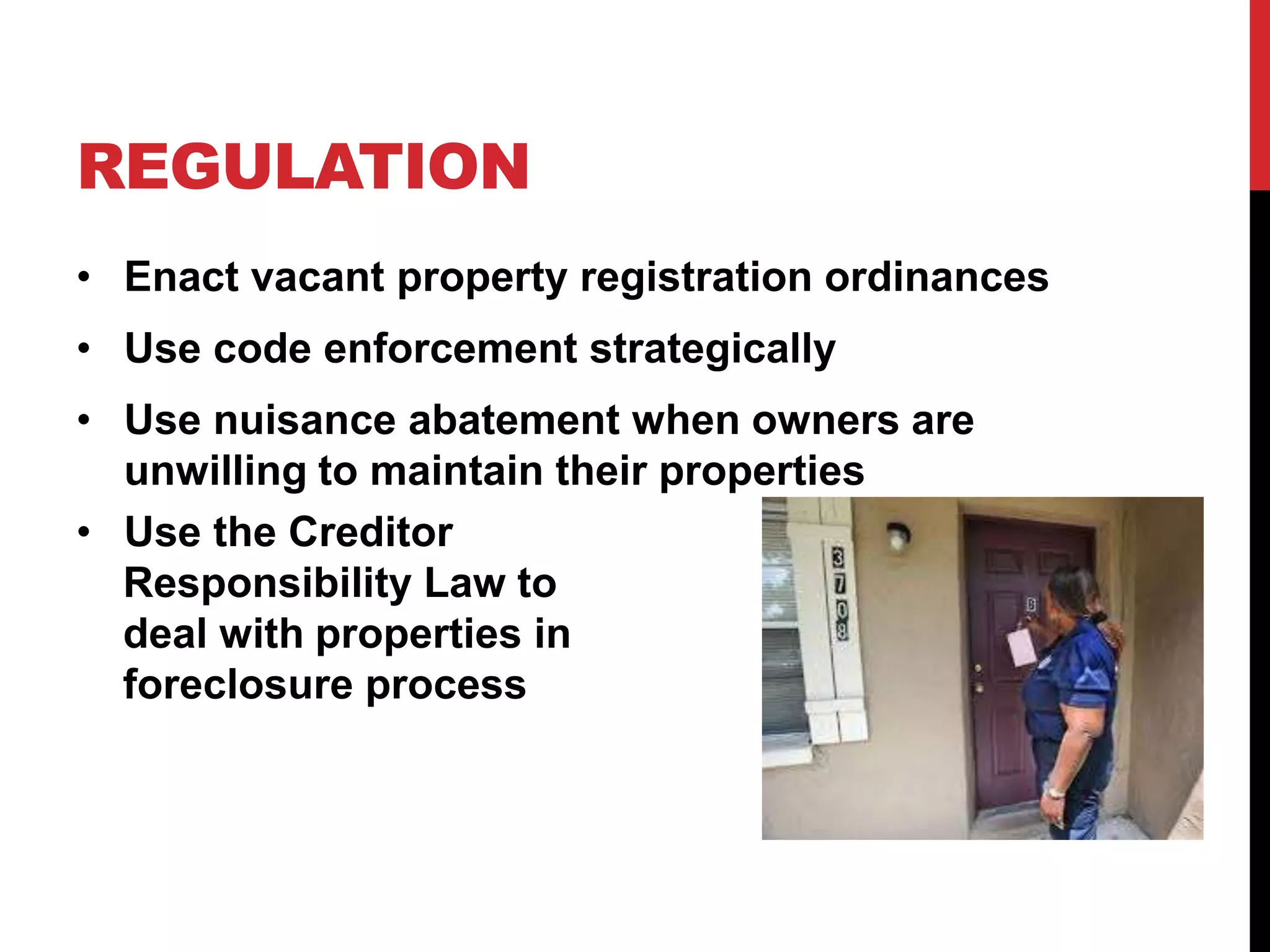
REGULATION
• Enact vacant property registration ordinances
• Use code enforcement strategically
• Use nuisance abatement when owners are
unwilling to maintain their properties
• Use the Creditor
Responsibility Law to
deal with properties in
foreclosure process
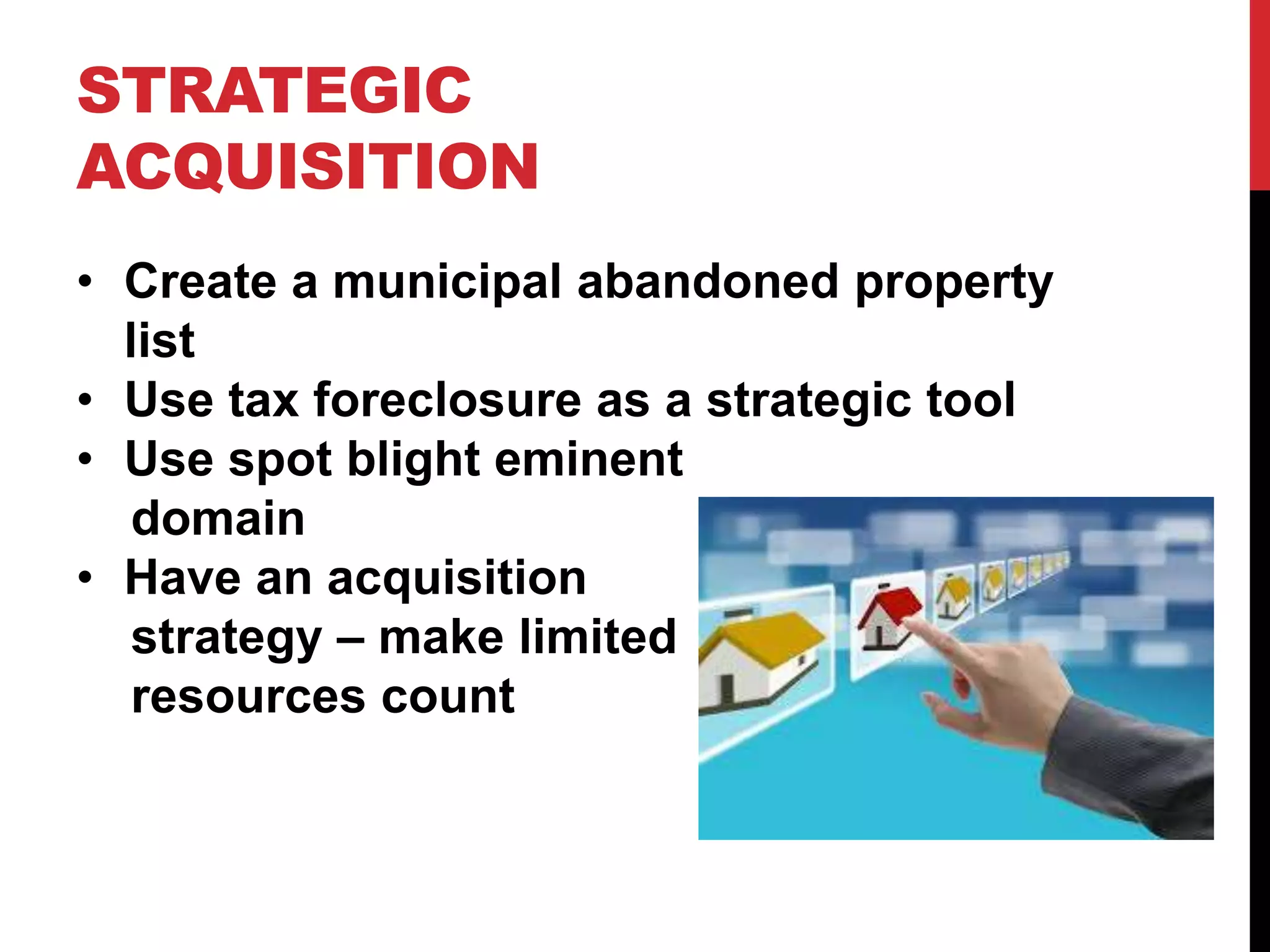
STRATEGIC
ACQUISITION
• Create a municipal abandoned property
list
• Use tax foreclosure as a strategic tool
• Use spot blight eminent
domain
• Have an acquisition
strategy – make limited
resources count
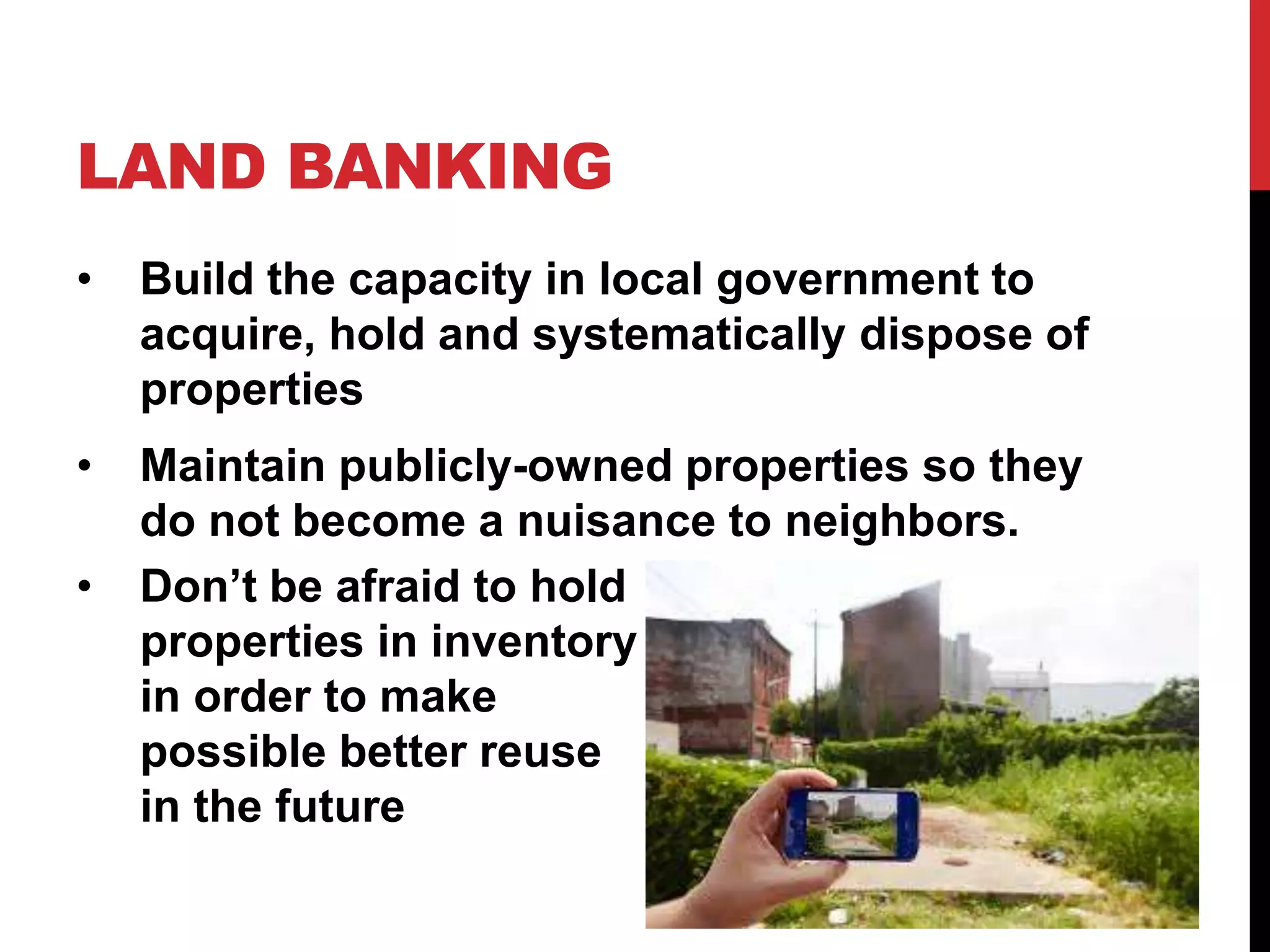
LAND BANKING
• Build the capacity in local government to
acquire, hold and systematically dispose of
properties
• Maintain publicly-owned properties so they
do not become a nuisance to neighbors.
• Don’t be afraid to hold
properties in inventory
in order to make
possible better reuse
in the future
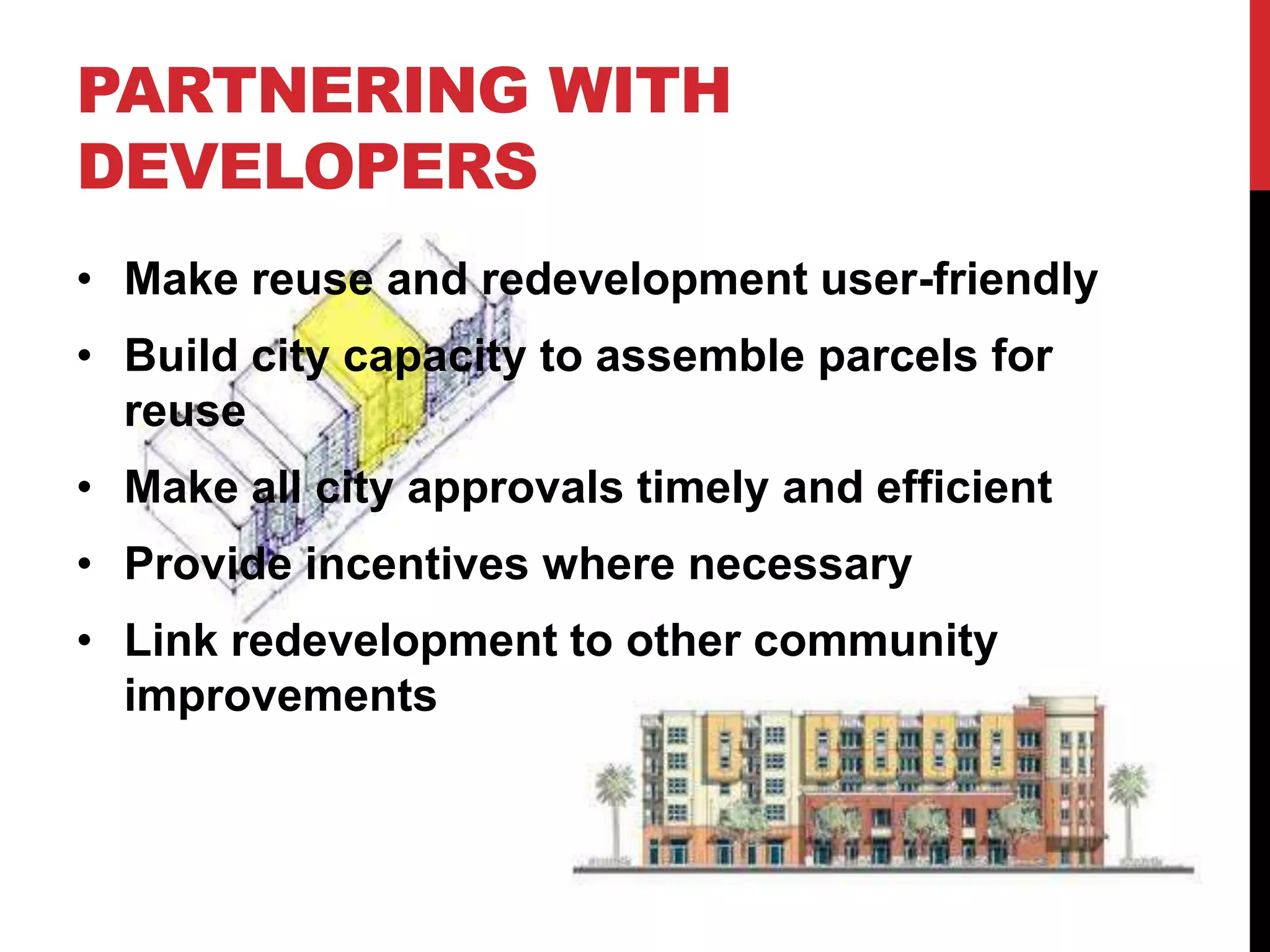
PARTNERING WITH
DEVELOPERS
• Make reuse and redevelopment user-friendly
• Build city capacity to assemble parcels for
reuse
• Make all city approvals timely and efficient
• Provide incentives where necessary
• Link redevelopment to other community
improvements
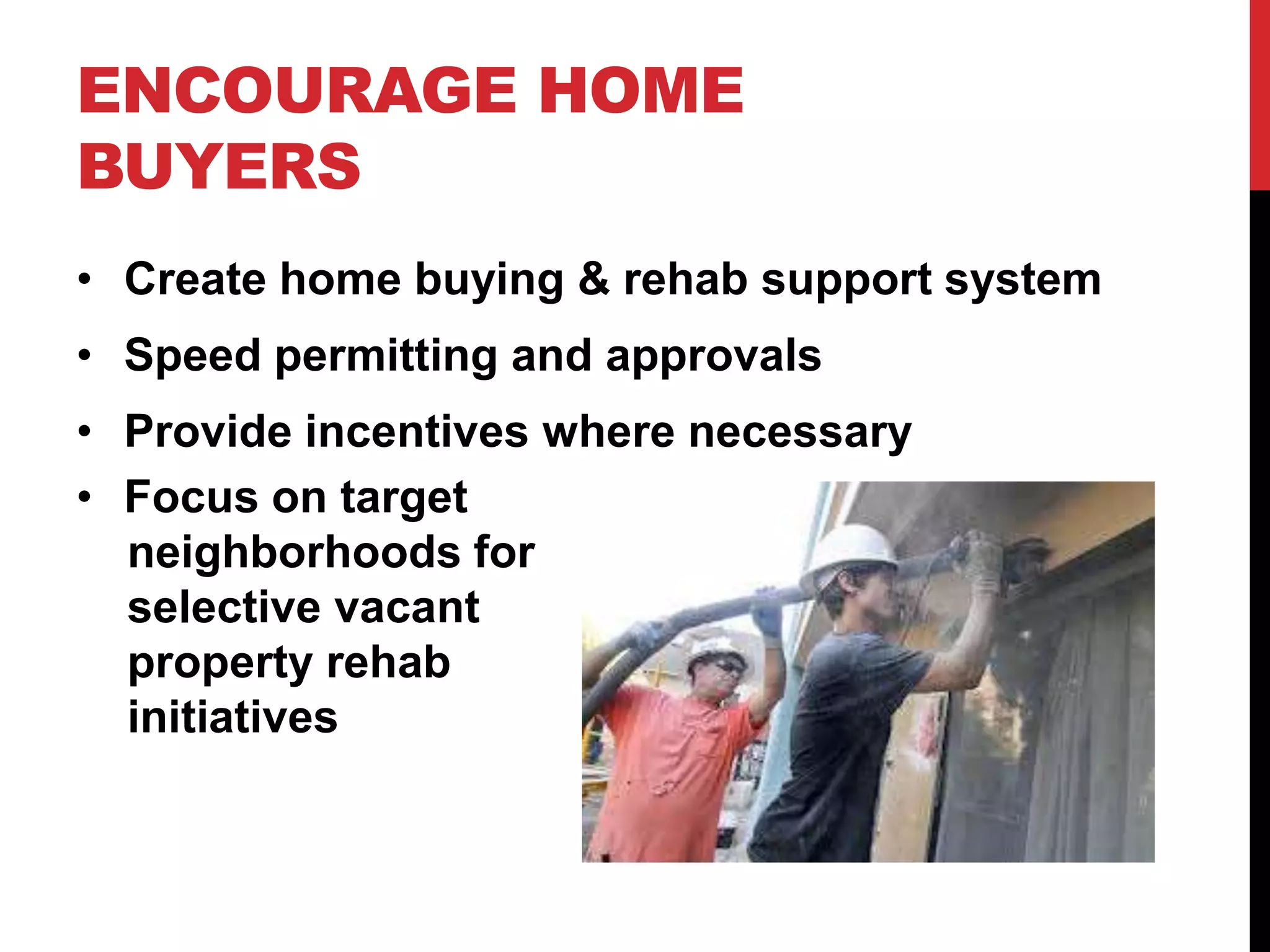
ENCOURAGE HOME
BUYERS
• Create home buying & rehab support system
• Speed permitting and approvals
• Provide incentives where necessary
• Focus on target
neighborhoods for
selective vacant
property rehab
initiatives
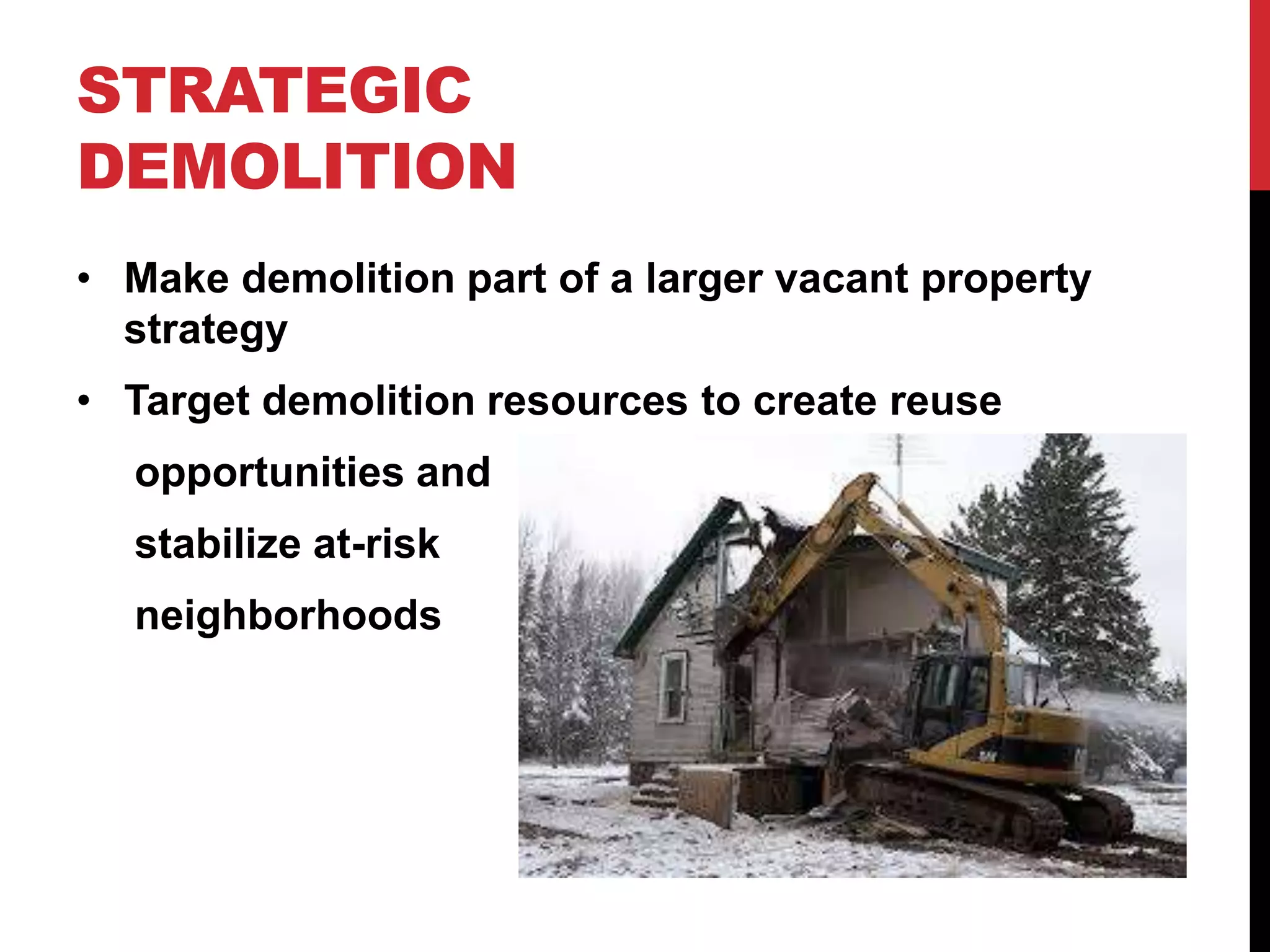
STRATEGIC
DEMOLITION
• Make demolition part of a larger vacant property
strategy
• Target demolition resources to create reuse
opportunities and
stabilize at-risk
neighborhoods
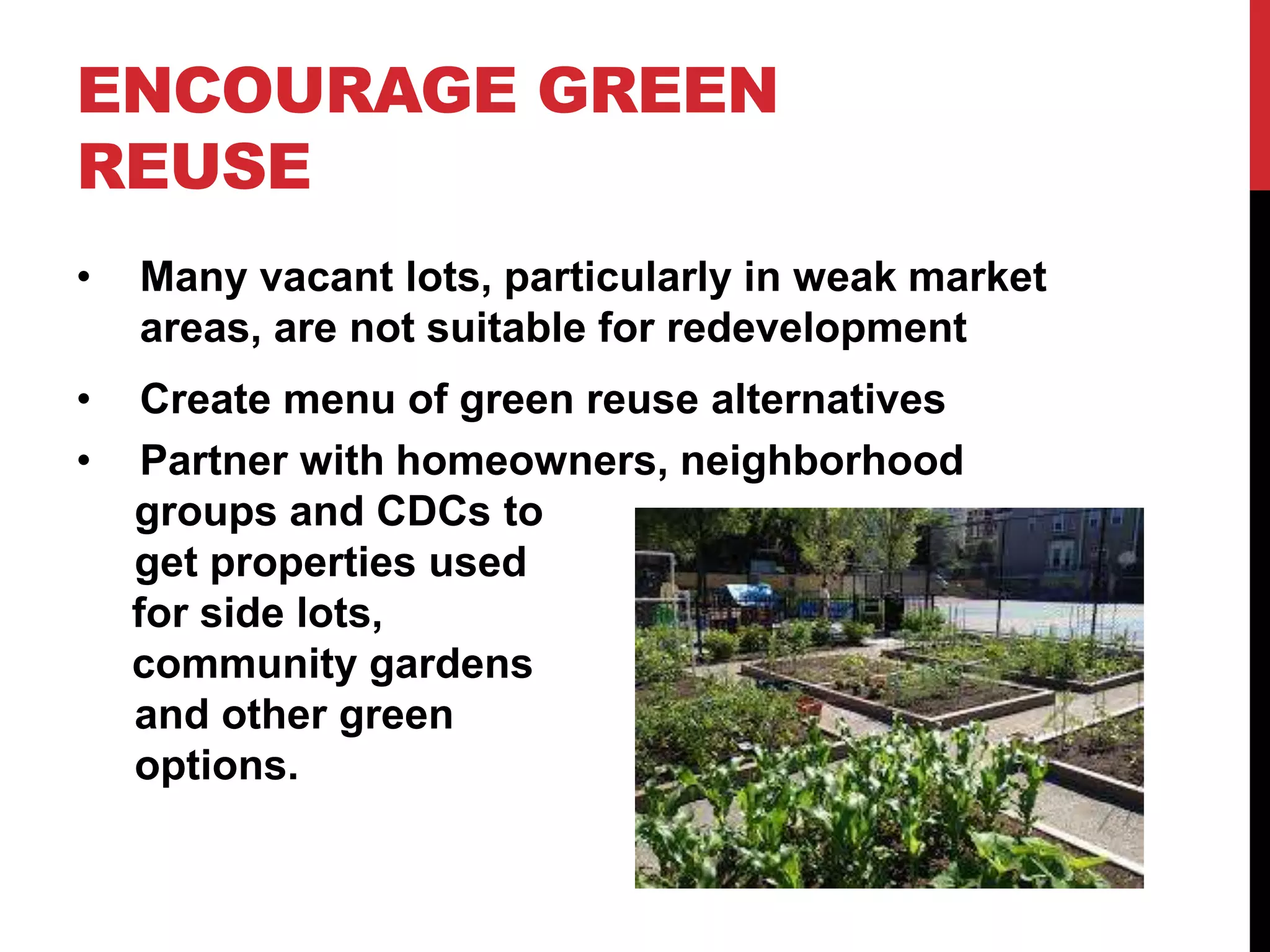
ENCOURAGE GREEN
REUSE
• Many vacant lots, particularly in weak market
areas, are not suitable for redevelopment
• Create menu of green reuse alternatives
• Partner with homeowners, neighborhood
groups and CDCs to
get properties used
for side lots,
community gardens
and other green
options.
BUILD COMMUNITY
PARTNERSHIPS
• Cities can’t do it by themselves – not
enough capacity or money
• Neighborhood associations and CDCs
are natural allies for city government –
they care about their communities
• Make everybody a partner in the process
of tackling the community’s problem
properties.

Nj future redevelopment forum 2014 problem properties mallach

  • 1.
    CHOOSING THE RIGHT OPTIONSFOR PROBLEM PROPERTIES ALAN MALLACH CENTER FOR COMMUNITY PROGRESS NJ FUTURE 2014 REDEVELOPMENT FORUM
  • 2.
    VACANT PROPERTIES ARE AGROWING PROBLEM 0.00% 2.00% 4.00% 6.00% 8.00% 10.00% 12.00% 14.00% 16.00% Newark East Orange Trenton Paterson Jersey City 2000 2010
  • 3.
  • 4.
  • 5.
  • 6.
  • 7.
    HOW DO YOUADDRESS YOUR COMMUNITY’S PROBLEM PROPERTY ISSUES? Understand the issue: problem properties are not just about the property – they are part of the larger economic and social dynamics affecting the neighborhood and the city Think strategically: There is no single ‘magic bullet’, and no quick fix, to the issue of problem properties.
  • 8.
    NINE ELEMENTS OFA VACANT PROPERTY STRATEGY 1. Information 2. Regulation 3. Strategic acquisition 4. Land banking 5. Partnering with developers 6. Encouraging home buyers 7. Strategic demolition 8. Encouraging green reuse of vacant land 9. Building community partnerships
  • 9.
    INFORMATION • Know themarket • Know the property inventory • Know the players
  • 10.
    REGULATION • Enact vacantproperty registration ordinances • Use code enforcement strategically • Use nuisance abatement when owners are unwilling to maintain their properties • Use the Creditor Responsibility Law to deal with properties in foreclosure process
  • 11.
    STRATEGIC ACQUISITION • Create amunicipal abandoned property list • Use tax foreclosure as a strategic tool • Use spot blight eminent domain • Have an acquisition strategy – make limited resources count
  • 12.
    LAND BANKING • Buildthe capacity in local government to acquire, hold and systematically dispose of properties • Maintain publicly-owned properties so they do not become a nuisance to neighbors. • Don’t be afraid to hold properties in inventory in order to make possible better reuse in the future
  • 13.
    PARTNERING WITH DEVELOPERS • Makereuse and redevelopment user-friendly • Build city capacity to assemble parcels for reuse • Make all city approvals timely and efficient • Provide incentives where necessary • Link redevelopment to other community improvements
  • 14.
    ENCOURAGE HOME BUYERS • Createhome buying & rehab support system • Speed permitting and approvals • Provide incentives where necessary • Focus on target neighborhoods for selective vacant property rehab initiatives
  • 15.
    STRATEGIC DEMOLITION • Make demolitionpart of a larger vacant property strategy • Target demolition resources to create reuse opportunities and stabilize at-risk neighborhoods
  • 16.
    ENCOURAGE GREEN REUSE • Manyvacant lots, particularly in weak market areas, are not suitable for redevelopment • Create menu of green reuse alternatives • Partner with homeowners, neighborhood groups and CDCs to get properties used for side lots, community gardens and other green options.
  • 17.
    BUILD COMMUNITY PARTNERSHIPS • Citiescan’t do it by themselves – not enough capacity or money • Neighborhood associations and CDCs are natural allies for city government – they care about their communities • Make everybody a partner in the process of tackling the community’s problem properties.