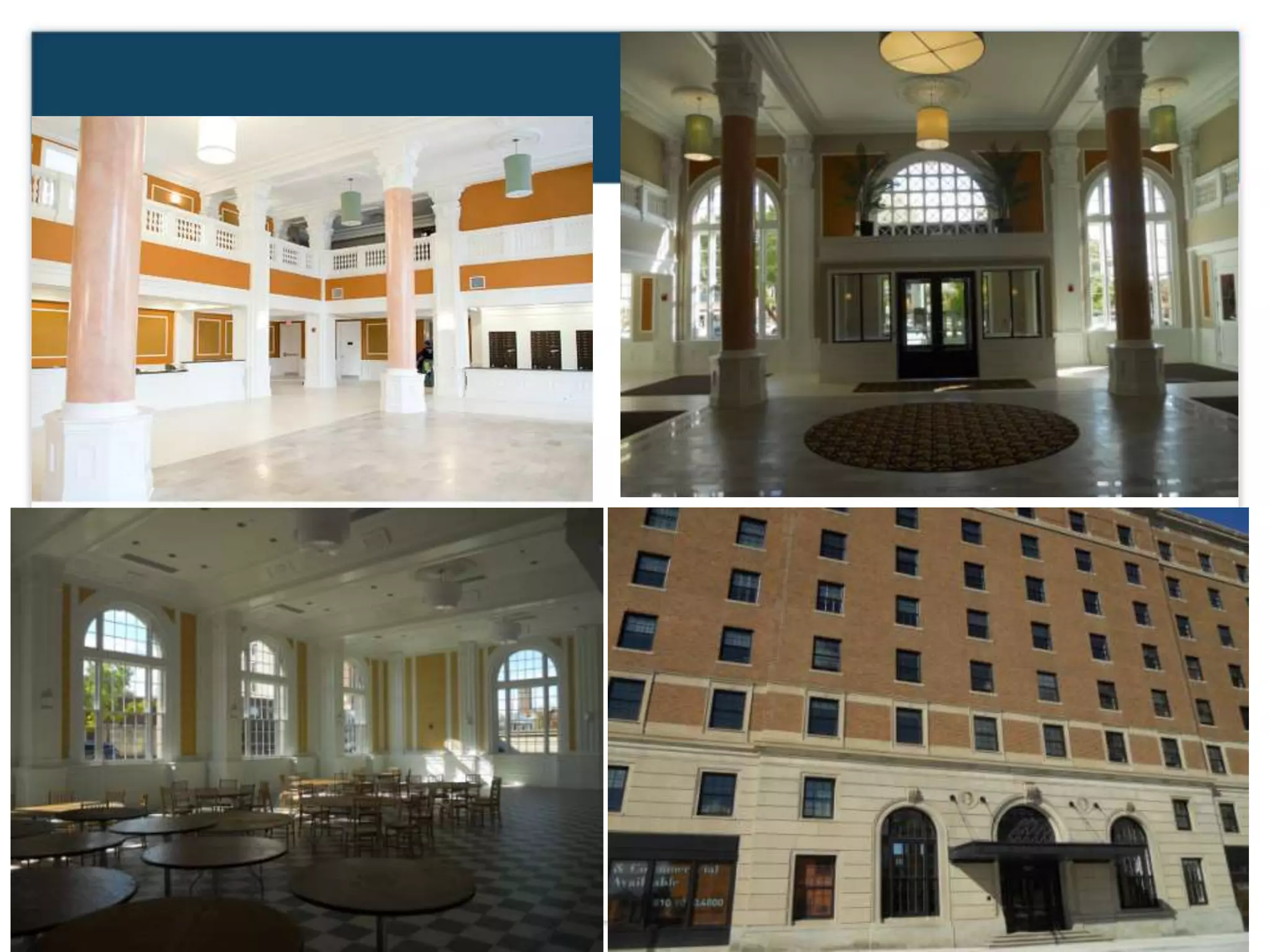
Re-imagining Communities: Discovering New Strategies to Confront Vacant, Abandoned, and Foreclosed PropertiesnAPA Florida 2011Dan Kildee, Co-founder and President Center for Community Progress
Community Progress Launched in 2010Takes to scale the efforts of the nation’s leading organizations and individuals on issues of revitalization and reuse of vacant, abandoned, and underutilized properties.The mission: to create vibrant communities through the reuse of vacant property in America’s cities and towns - to transform the systems that affect how the community development, government, and private development fields repurpose these properties and communities. Technical Assistance & Capacity Building, Policy & Research, Coalition Building, and Communications.
Center for Community ProgressLocated in Washington, DC; Flint, Michigan; New Orleans, Louisiana.
Currently engaged in over 50 cities across the country, including places in Michigan, Ohio, Pennsylvania, New York, Maryland, New Jersey, Tennessee, Georgia, Minnesota, Louisiana, Indiana, Illinois, Delaware.  Initial work in Florida, California, Colorado, Alabama, Arkansas.
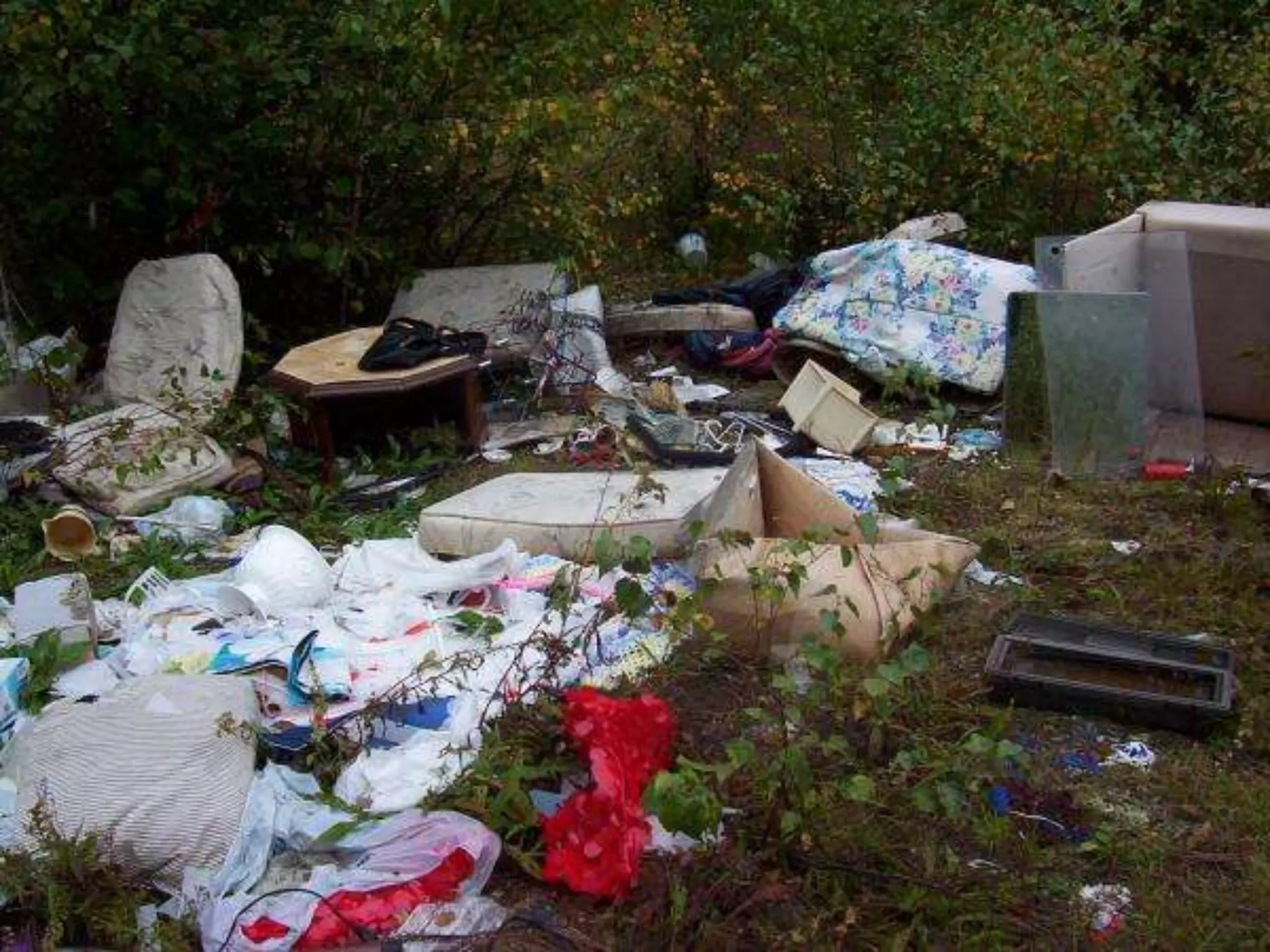
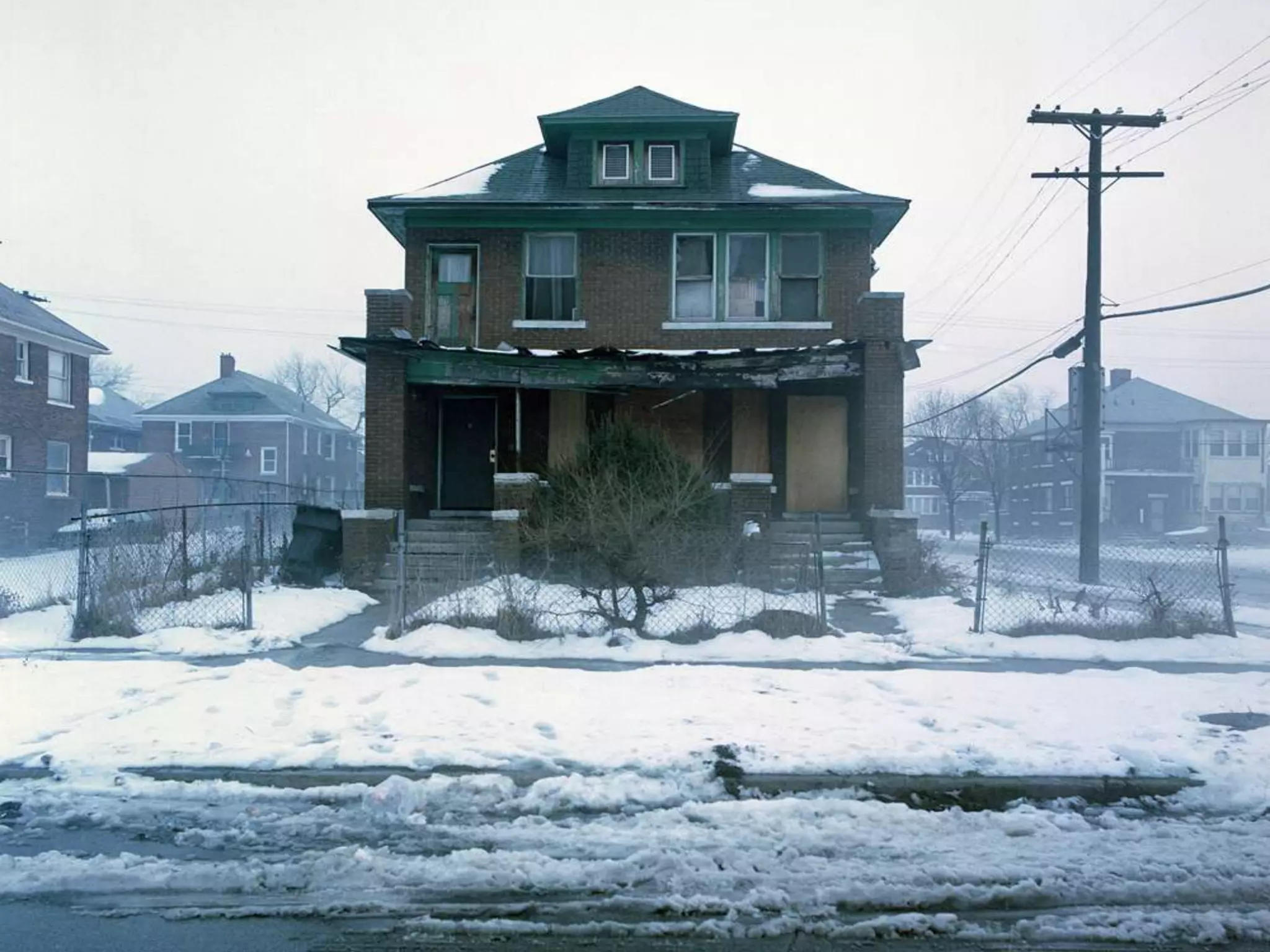
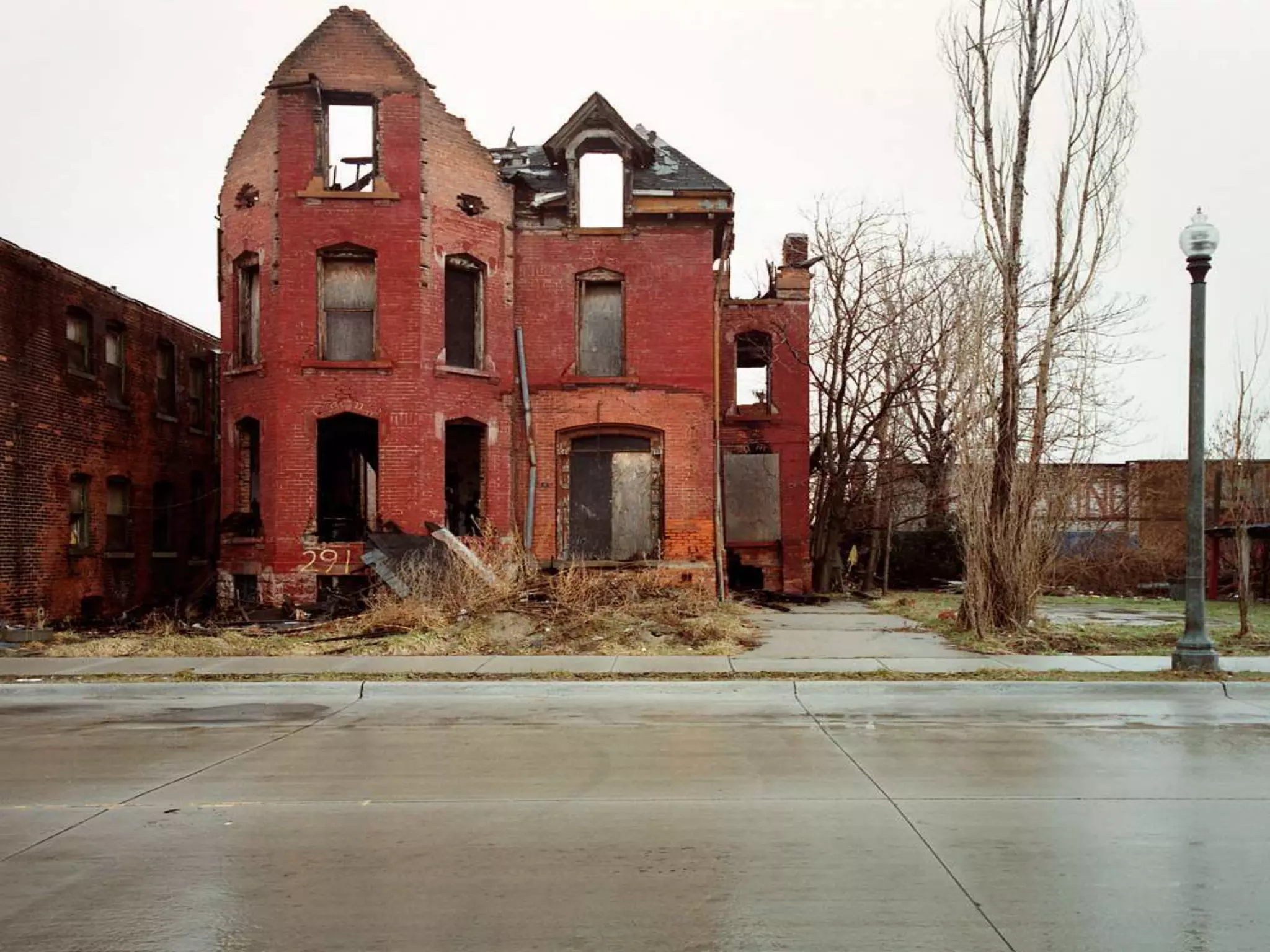
Strong emphasis on state policy and the role of public leadership to address vacant and abandoned properties as a key to economic recovery.Vacant, abandoned, forgotten properties and land Effective vacant property strategies require a systemic approach – simply taking a transactional approach is not sufficient in most places
Focus on the continuum of strategies and tactics – from planning and development – to regulation and enforcement – to acquisition and redevelopment.
Investment, not liquidation.  All land has value, if you treat land as real estate
Title of SlideBullets
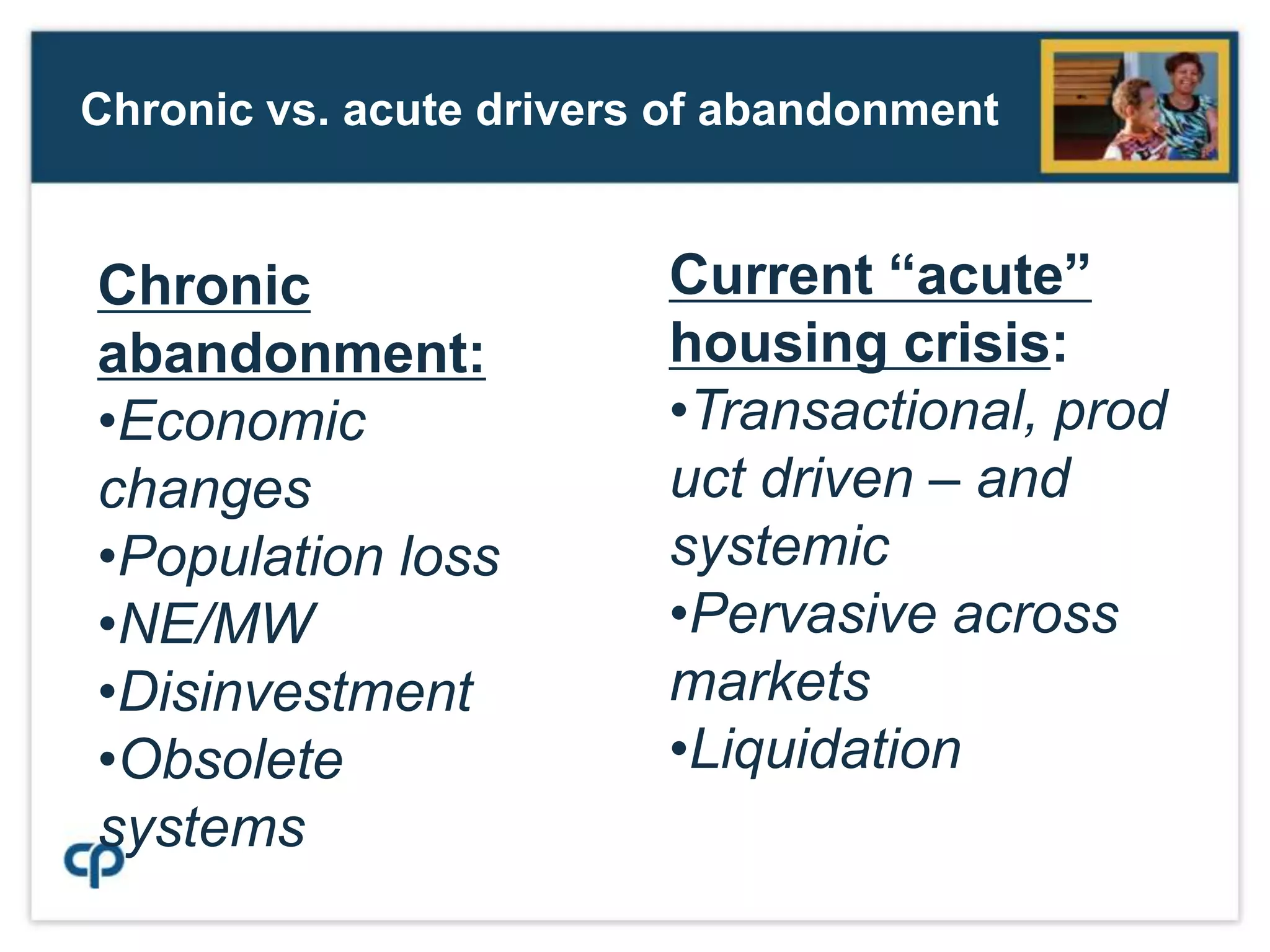
Chronic vs. acute drivers of abandonmentCurrent “acute” housing crisis:Transactional, product driven – and systemic
Pervasive across markets
LiquidationChronic abandonment:Economic changes
Population loss
NE/MW
Disinvestment
Obsolete systemsShrinking Cities – Legacy CitiesOf the 51 cities over that lost population from 1990-2000, 48 lost again from 2000-2010Economic recovery will not restore population in most of these citiesDesign matters.  Size doesn’t have to.Planning must move beyond growth
Comprehensive vacant property strategyRequires a change in orientation regarding vacant and abandoned (urban) landOld thinking: Nuisance, surplus, annoyance, police, regulate, enforce, liquidateEmerging thinking: Asset, opportunity, investment, real estateNew reality: Vacant land revitalization is essential to economy
Comprehensive vacant property strategy(contd.)Community engagementOngoing commitment to planningTax foreclosure reform Land BankingRedevelopment toolsAll of these strategies are empowered by willingness to take action to address vacant and abandoned property – and to take title
Key elements of regional approach:Tax foreclosure reform (1999)Genesee County Land Bank (2002)Scattered-site Brownfield redevelopment (2003) Genesee County, MI (Flint)
Tax foreclosure reformElimination of tax lien sales
County-wide collection process
Replace privatized system with DTAN/foreclosure How it works:County issues short-term bonds for back taxes
Tax collector collects principal and penalty
Collections generate public “profit”
On $50 million in delinquency, $3-5 million in surplus
Title and equity to foreclosed property is “public”Land Bank Authorities A land bank is a public authority  or nonprofit created to efficiently acquire, hold, manage and develop foreclosed property, as well as other vacant and abandoned properties.

9/9 FRI 4:15 | Reimaging Communities

  • 1.
    Re-imagining Communities: DiscoveringNew Strategies to Confront Vacant, Abandoned, and Foreclosed PropertiesnAPA Florida 2011Dan Kildee, Co-founder and President Center for Community Progress
  • 2.
    Community Progress Launchedin 2010Takes to scale the efforts of the nation’s leading organizations and individuals on issues of revitalization and reuse of vacant, abandoned, and underutilized properties.The mission: to create vibrant communities through the reuse of vacant property in America’s cities and towns - to transform the systems that affect how the community development, government, and private development fields repurpose these properties and communities. Technical Assistance & Capacity Building, Policy & Research, Coalition Building, and Communications.
  • 3.
    Center for CommunityProgressLocated in Washington, DC; Flint, Michigan; New Orleans, Louisiana.
  • 4.
    Currently engaged inover 50 cities across the country, including places in Michigan, Ohio, Pennsylvania, New York, Maryland, New Jersey, Tennessee, Georgia, Minnesota, Louisiana, Indiana, Illinois, Delaware. Initial work in Florida, California, Colorado, Alabama, Arkansas.
  • 5.
    Strong emphasis onstate policy and the role of public leadership to address vacant and abandoned properties as a key to economic recovery.Vacant, abandoned, forgotten properties and land Effective vacant property strategies require a systemic approach – simply taking a transactional approach is not sufficient in most places
  • 6.
    Focus on thecontinuum of strategies and tactics – from planning and development – to regulation and enforcement – to acquisition and redevelopment.
  • 7.
    Investment, not liquidation. All land has value, if you treat land as real estate
  • 8.
  • 10.
    Chronic vs. acutedrivers of abandonmentCurrent “acute” housing crisis:Transactional, product driven – and systemic
  • 11.
  • 12.
  • 13.
  • 14.
  • 15.
  • 16.
    Obsolete systemsShrinking Cities– Legacy CitiesOf the 51 cities over that lost population from 1990-2000, 48 lost again from 2000-2010Economic recovery will not restore population in most of these citiesDesign matters. Size doesn’t have to.Planning must move beyond growth
  • 17.
    Comprehensive vacant propertystrategyRequires a change in orientation regarding vacant and abandoned (urban) landOld thinking: Nuisance, surplus, annoyance, police, regulate, enforce, liquidateEmerging thinking: Asset, opportunity, investment, real estateNew reality: Vacant land revitalization is essential to economy
  • 18.
    Comprehensive vacant propertystrategy(contd.)Community engagementOngoing commitment to planningTax foreclosure reform Land BankingRedevelopment toolsAll of these strategies are empowered by willingness to take action to address vacant and abandoned property – and to take title
  • 19.
    Key elements ofregional approach:Tax foreclosure reform (1999)Genesee County Land Bank (2002)Scattered-site Brownfield redevelopment (2003) Genesee County, MI (Flint)
  • 20.
  • 21.
  • 22.
    Replace privatized systemwith DTAN/foreclosure How it works:County issues short-term bonds for back taxes
  • 23.
    Tax collector collectsprincipal and penalty
  • 24.
  • 25.
    On $50 millionin delinquency, $3-5 million in surplus
  • 26.
    Title and equityto foreclosed property is “public”Land Bank Authorities A land bank is a public authority or nonprofit created to efficiently acquire, hold, manage and develop foreclosed property, as well as other vacant and abandoned properties.
  • 27.
    Genesee LandBankTakes title to tax-foreclosed properties across county
  • 28.
  • 29.
    Sell land asREAL ESTATE based upon policies and local plans - $2.5 million in 2010 salesHow it works:Foreclosed property diverted from auction to Land Bank
  • 30.
  • 31.
  • 32.
  • 33.
  • 34.
  • 35.
  • 36.
    Internal subsidyLand BanksCan….Sell or convey property through locally developed policies that reflect the communities’ priorities
  • 37.
  • 38.
    Convey property forother than monetary consideration
  • 39.
    Sell, lease, manageproperty with terms deemed to be in the interest of the land bank
  • 40.
    Land bank financingtools for tax foreclosed and other targeted properties
  • 41.
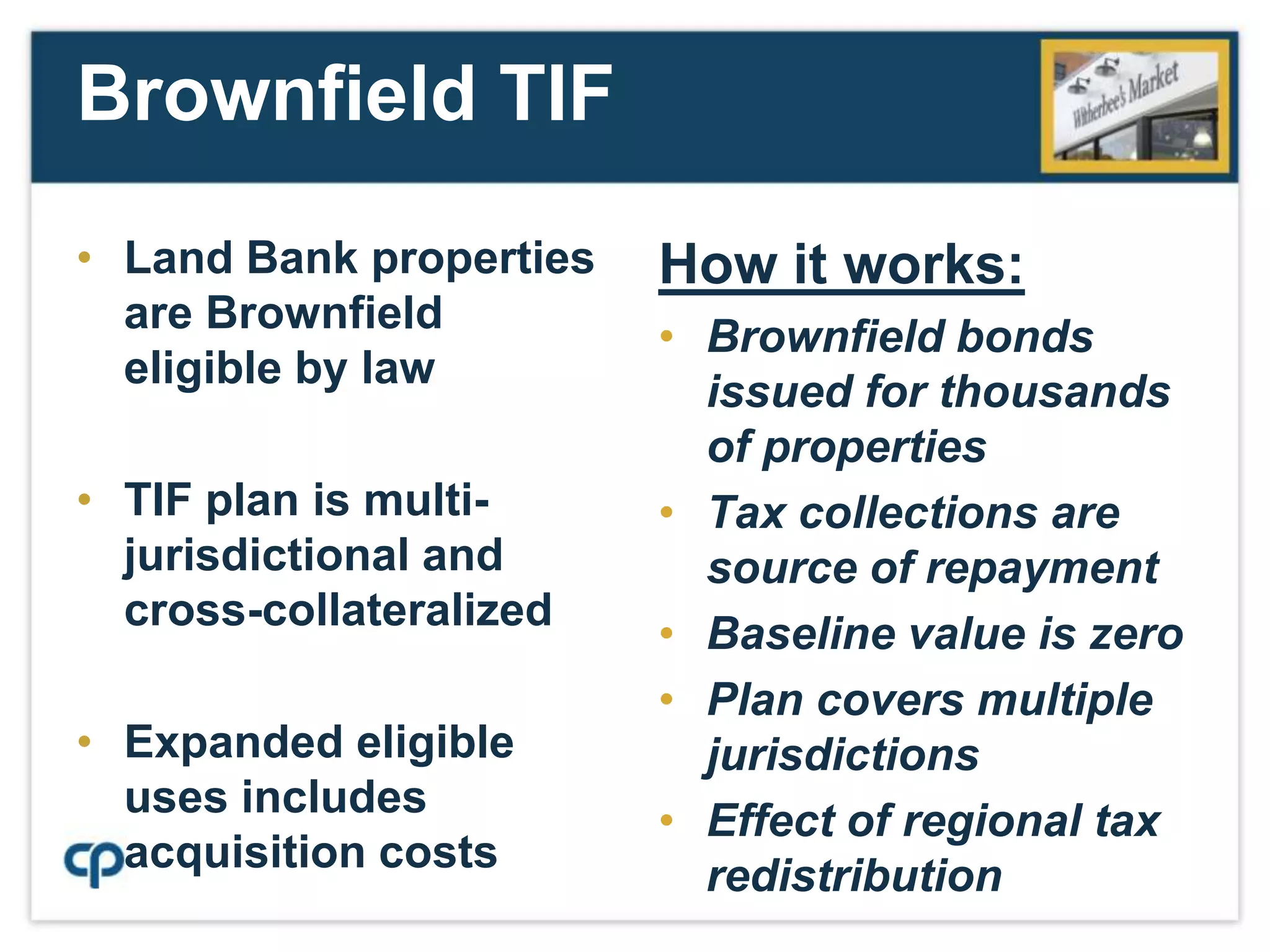
    Code enforcement andnuisance abatementBrownfield TIF Land Bank properties are Brownfield eligible by law
  • 42.
    TIF plan ismulti-jurisdictional and cross-collateralized
  • 43.
    Expanded eligible usesincludes acquisition costsHow it works:Brownfield bonds issued for thousands of properties
  • 44.
    Tax collections aresource of repayment
  • 45.
  • 46.
  • 47.
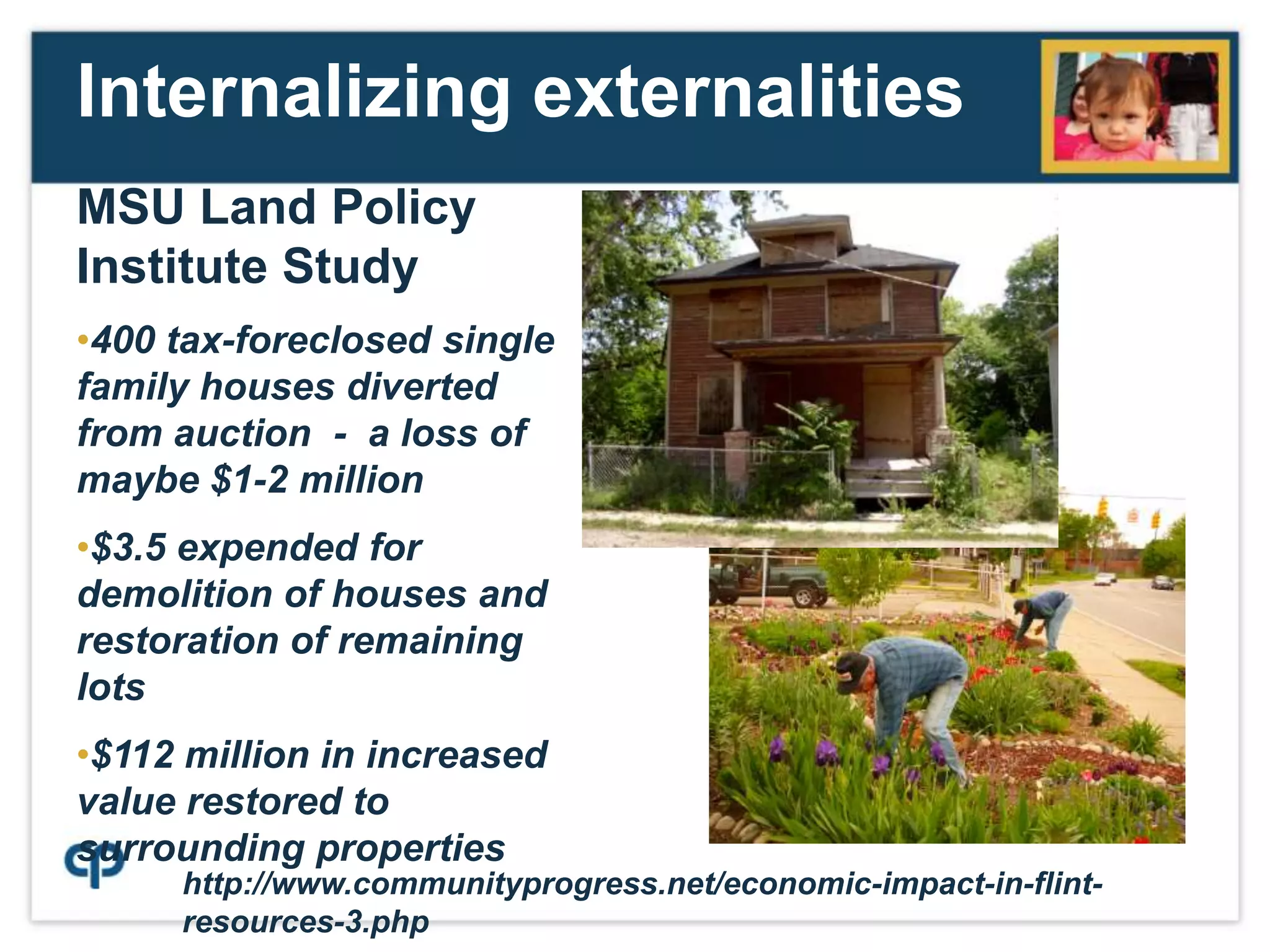
    Effect of regionaltax redistributionInternalizing externalitiesMSU Land Policy Institute Study400 tax-foreclosed single family houses diverted from auction - a loss of maybe $1-2 million
  • 48.
    $3.5 expended fordemolition of houses and restoration of remaining lots
  • 49.
    $112 million inincreased value restored to surrounding propertieshttp://www.communityprogress.net/economic-impact-in-flint-resources-3.php
  • 50.
  • 51.
  • 53.
  • 54.
  • 57.
    Center for CommunityProgress421 Garland Street • Suite A • Flint, Michigan • 48503P: 877-542-4842 • F: 810-233-73811001 Connecticut Avenue • Suite 1235 • Washington, D.C. • 20036P: 877-542-4842 • F: 202-223-21201050 S. Jefferson Davis Parkway • Suite 231 • New Orleans, LA • 70125P: 504-236-8333 • F: 504-821-7074www.communityprogress.net