Sanofi Project
Concept Ideation and
   Development
      Tuesday, April 3, 2012
    Some Thoughts from Andrea
Common Causes of
         Limitations in the Use of the Hands:
                   Age and Arthritis
 Loss of Strength and Dexterity in the Hands is Common,
  beginning at Age 50 – 59, and increasing in severity with
  more advanced age.
   With Age – Loss of strength in muscle tissue throughout
     body, including the hands.

 Prevalence of severe hand disability in the general
  population age 50 and older is 12%, with increased
  occurrence over the age of 70 and in the female gender.

 Arthritis – The leading cause of disability in the United
  States (Centers for Disease Control)
Age – Loss of Strength and
        Dexterity
               In Hand Weakness due to
                Age, the Lateral Pinch Grip
                weakens less than other
                pinch grips.
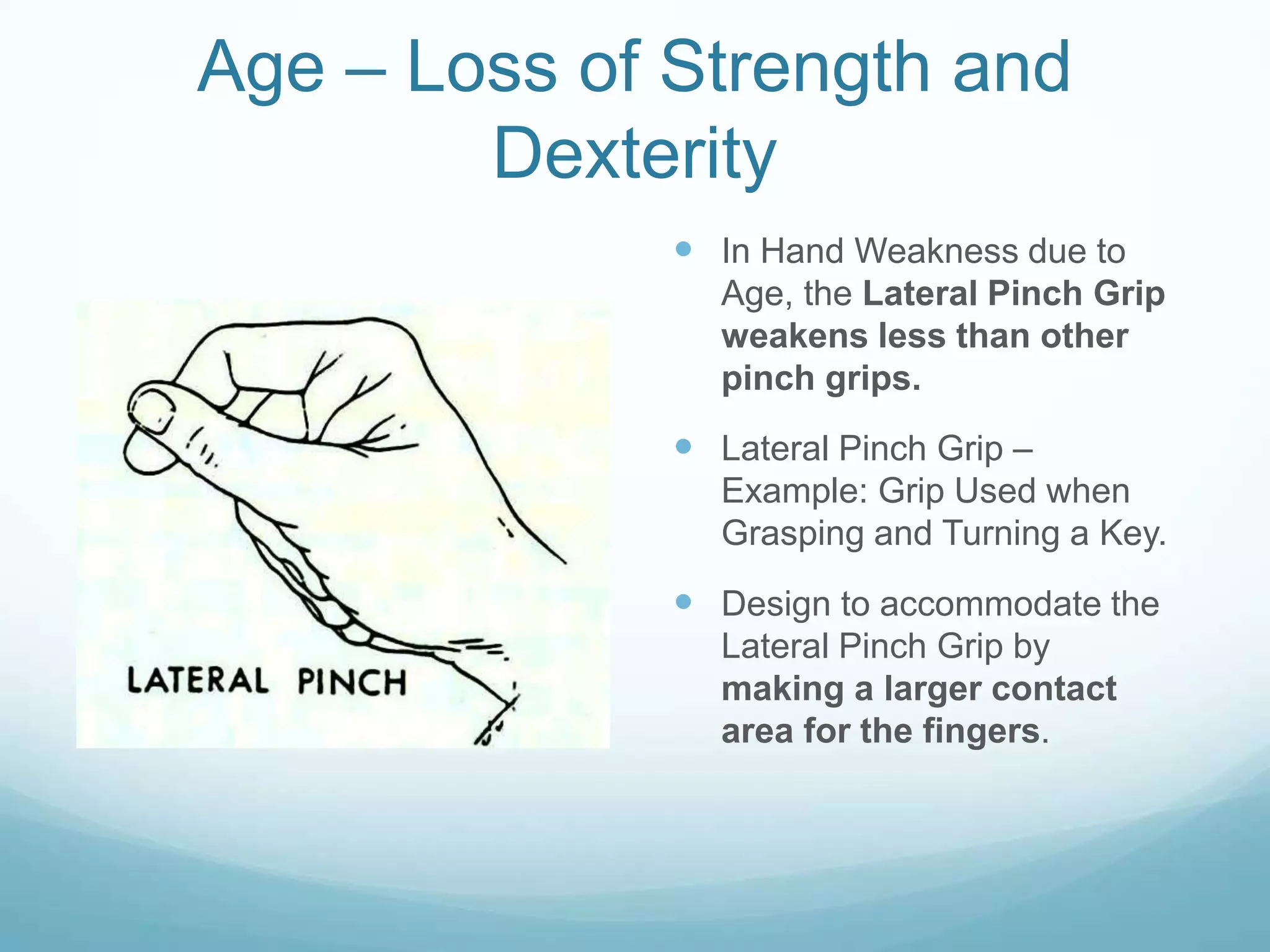
               Lateral Pinch Grip –
                Example: Grip Used when
                Grasping and Turning a Key.
               Design to accommodate the
                Lateral Pinch Grip by
                making a larger contact
                area for the fingers.
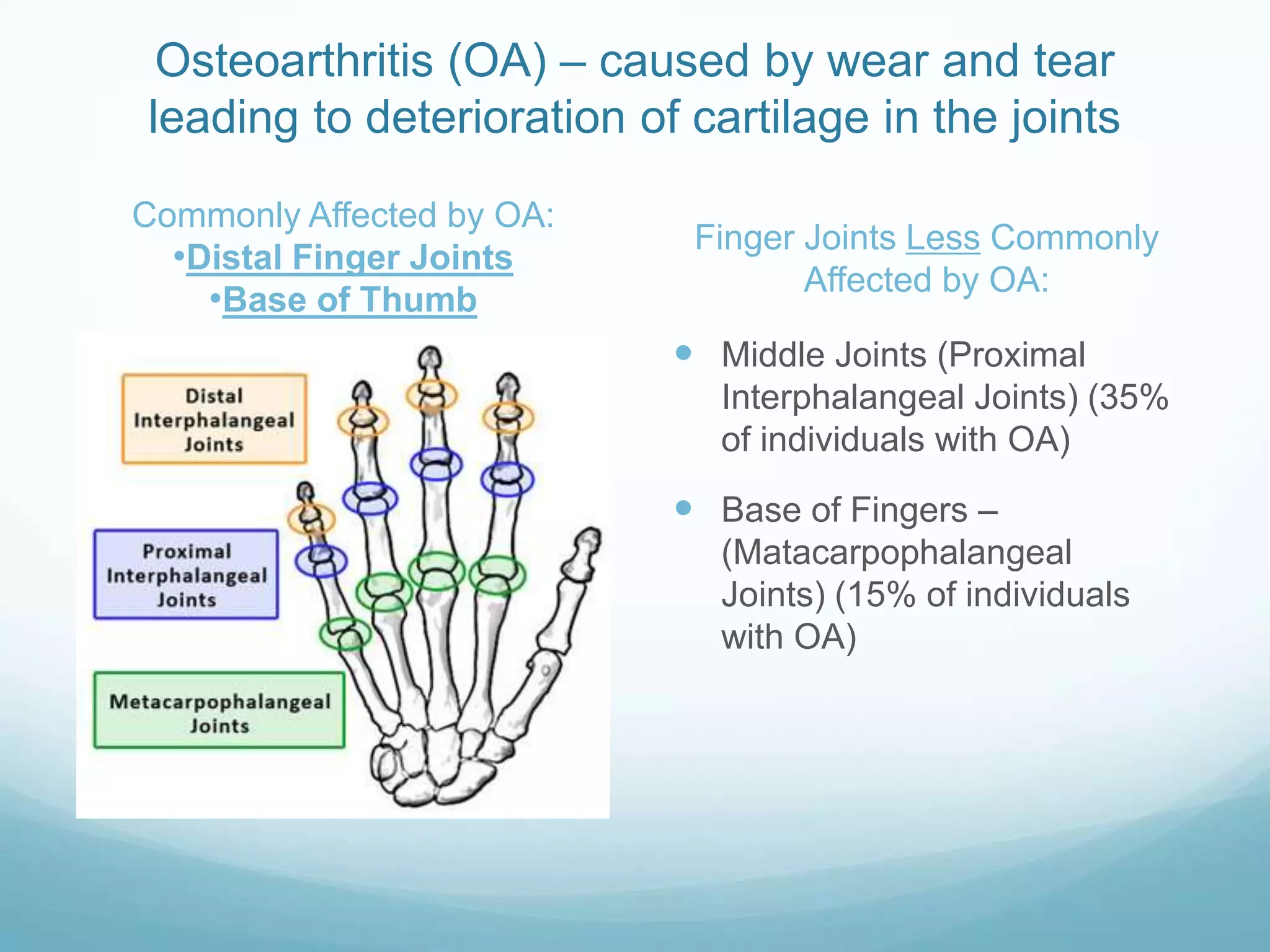
Osteoarthritis (OA) – caused by wear and tear
leading to deterioration of cartilage in the joints

Commonly Affected by OA:
                            Finger Joints Less Commonly
  •Distal Finger Joints
                                   Affected by OA:
    •Base of Thumb
                            Middle Joints (Proximal
                              Interphalangeal Joints) (35%
                              of individuals with OA)
                            Base of Fingers –
                              (Matacarpophalangeal
                              Joints) (15% of individuals
                              with OA)
Osteoarthritis
 Friction (due to cartilage deterioration) results in:
     Pain
     Stiffness
     Swelling
     Reduced Range of Motion
     Pieces of Bone may break off and float within the joint
      and the joint lining (synovium) and cause further
      inflammation.
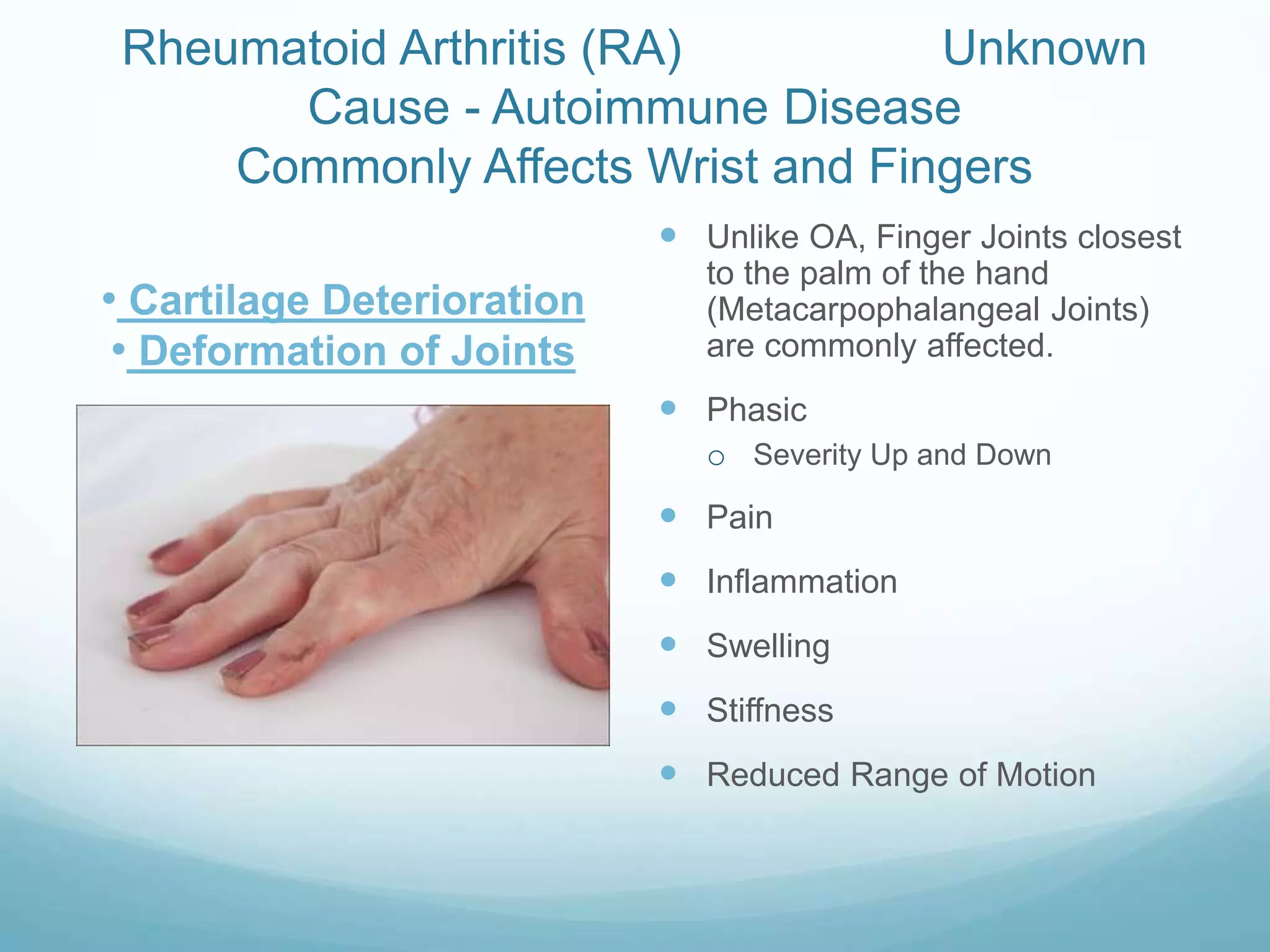
Rheumatoid Arthritis (RA)         Unknown
       Cause - Autoimmune Disease
     Commonly Affects Wrist and Fingers
                             Unlike OA, Finger Joints closest
                               to the palm of the hand
• Cartilage Deterioration      (Metacarpophalangeal Joints)
 • Deformation of Joints       are commonly affected.
                             Phasic
                               o Severity Up and Down
                             Pain
                             Inflammation
                             Swelling
                             Stiffness
                             Reduced Range of Motion
Examples of Accommodations for OA & RA
 Distal Finger Joints are used in most
  Pinch and Precision Grips.
o A small pinch or other precision grip will often cause pain in the
  distal finger joints with Osteoarthritis.
   Make grip larger or change type of grip.

 The Thumb is used in All Grip Types.
o A too wide grip will often cause pain in an arthritic joint at the
  base of the thumb
   Maximum Grip Span for OA (Osteoarthritis) and RA (Rheumatoid
     Arthritis) of moderate severity is not more than 2.5 to 3 inches.
Accommodation Examples - Continued:
 Rheumatoid Arthritis – Joint Deformation
  o Joint Deformation affects the types of grips
    that can be made.
   Example of Accommodation:
    Instead of using a pinch grip, a person with
      deformed finger joints may have to instead use
      a lateral key pinch grip.
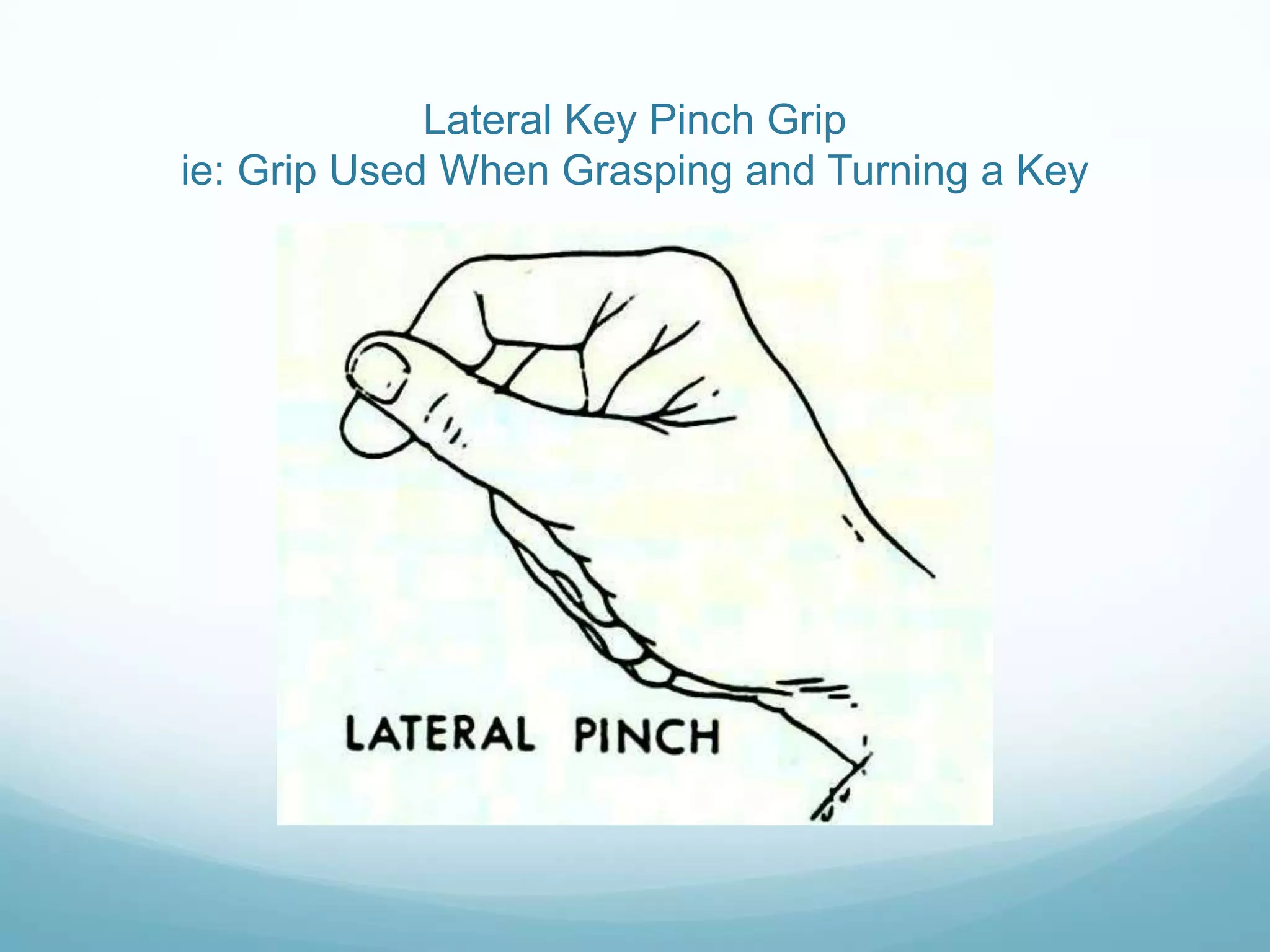
Lateral Key Pinch Grip
ie: Grip Used When Grasping and Turning a Key
Types of Hand Grasps
 There is no one standard classification of grasps.

 Names for specific grasps can vary.

 The following slides show examples of grasp
  classifications.
Napier (1956)
Prehensile – Where an object is held by the hand

    Power Grasp – Where an object is held in the palm of the hand
    The forces of the thumb are opposed by the forces of the fingers
        Muscular force is often high in the power grasp

    Precision Grasp – Where an object is held between the
    opposing fingers and thumb
    Muscular force is usually more limited in the Precision grasp than in
    the Power Grasp

Non-Prehensile – No seizing – The hand or finger applies pressure to an
object
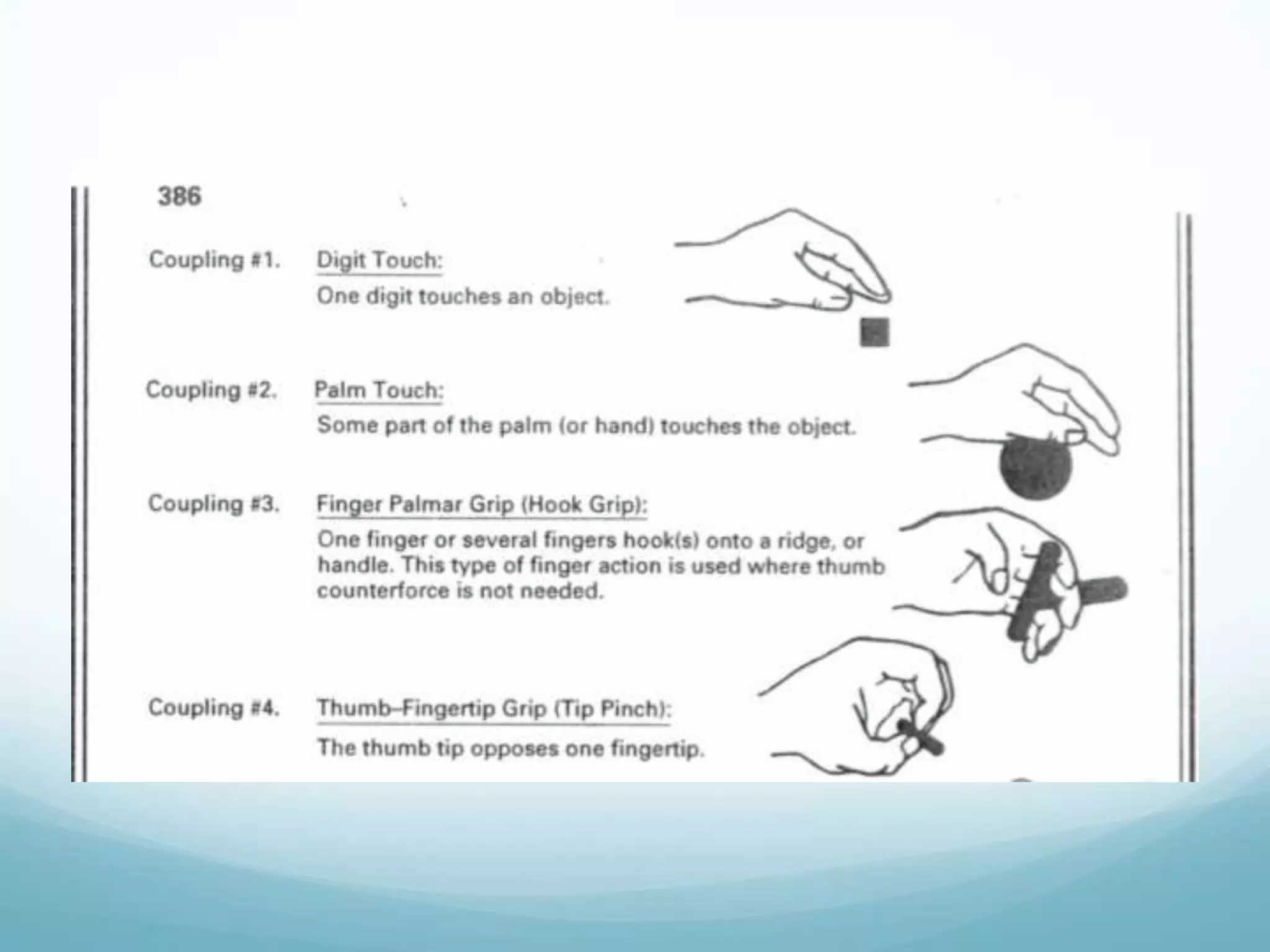
The following Three Slides
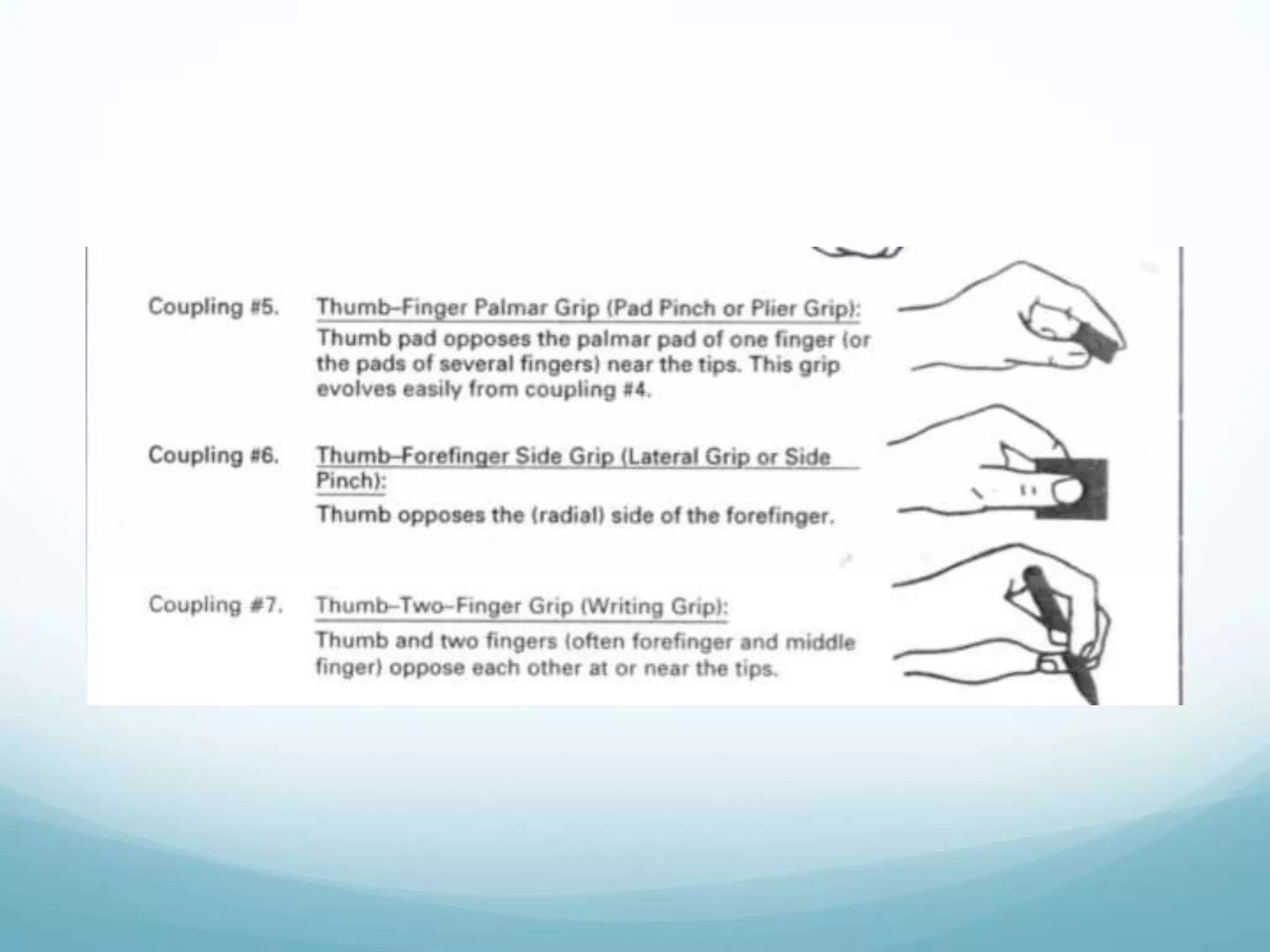
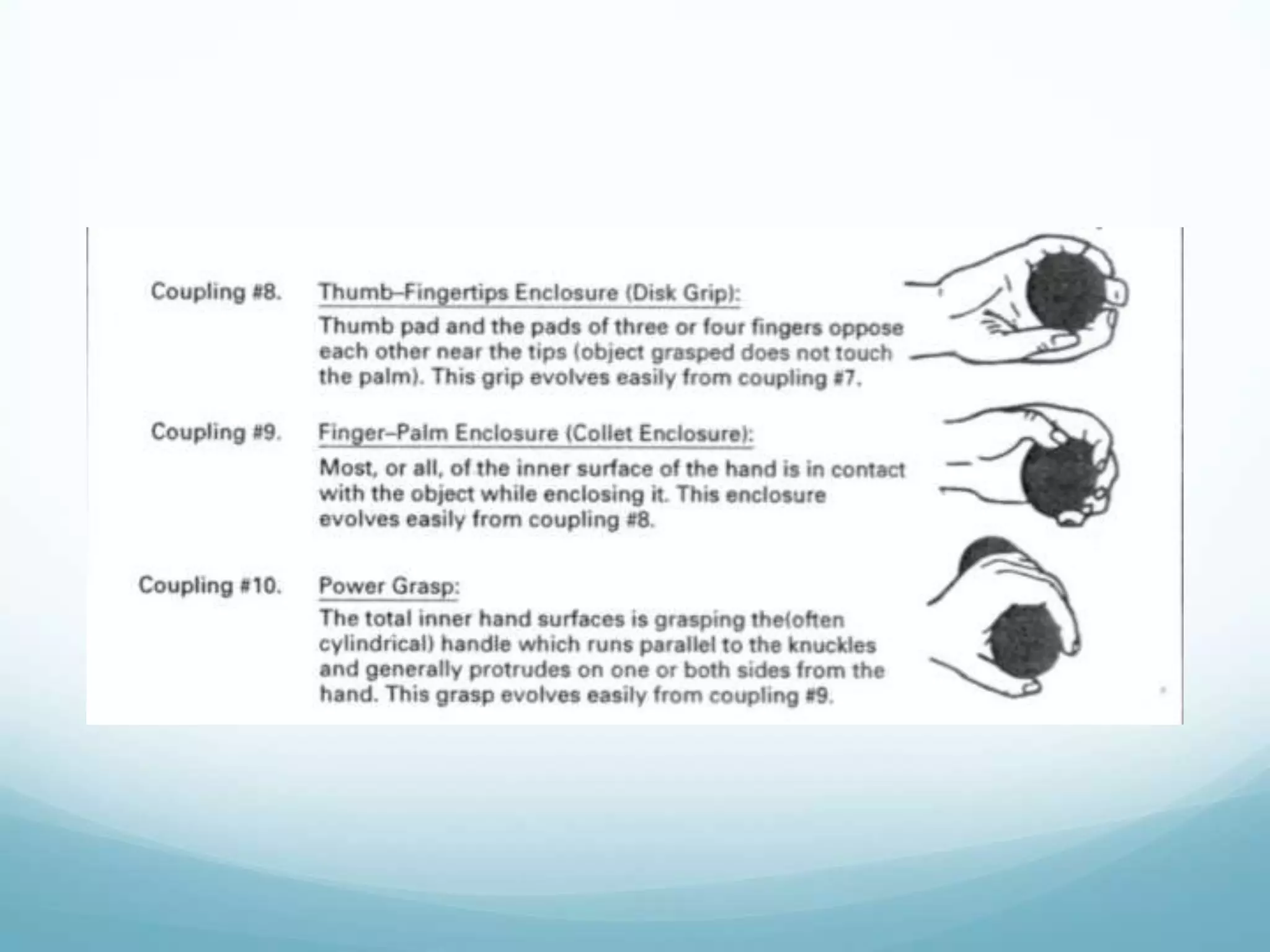
10 hand grasps Classified by Karl Kroemer
                  (1986)
    Coupling the Hand with the Handle
Prehensile Grasps
   Ayoub, MacKenaie, Deivanayagam, Smith, Kroemer, Napier,
                         Ladsmeern

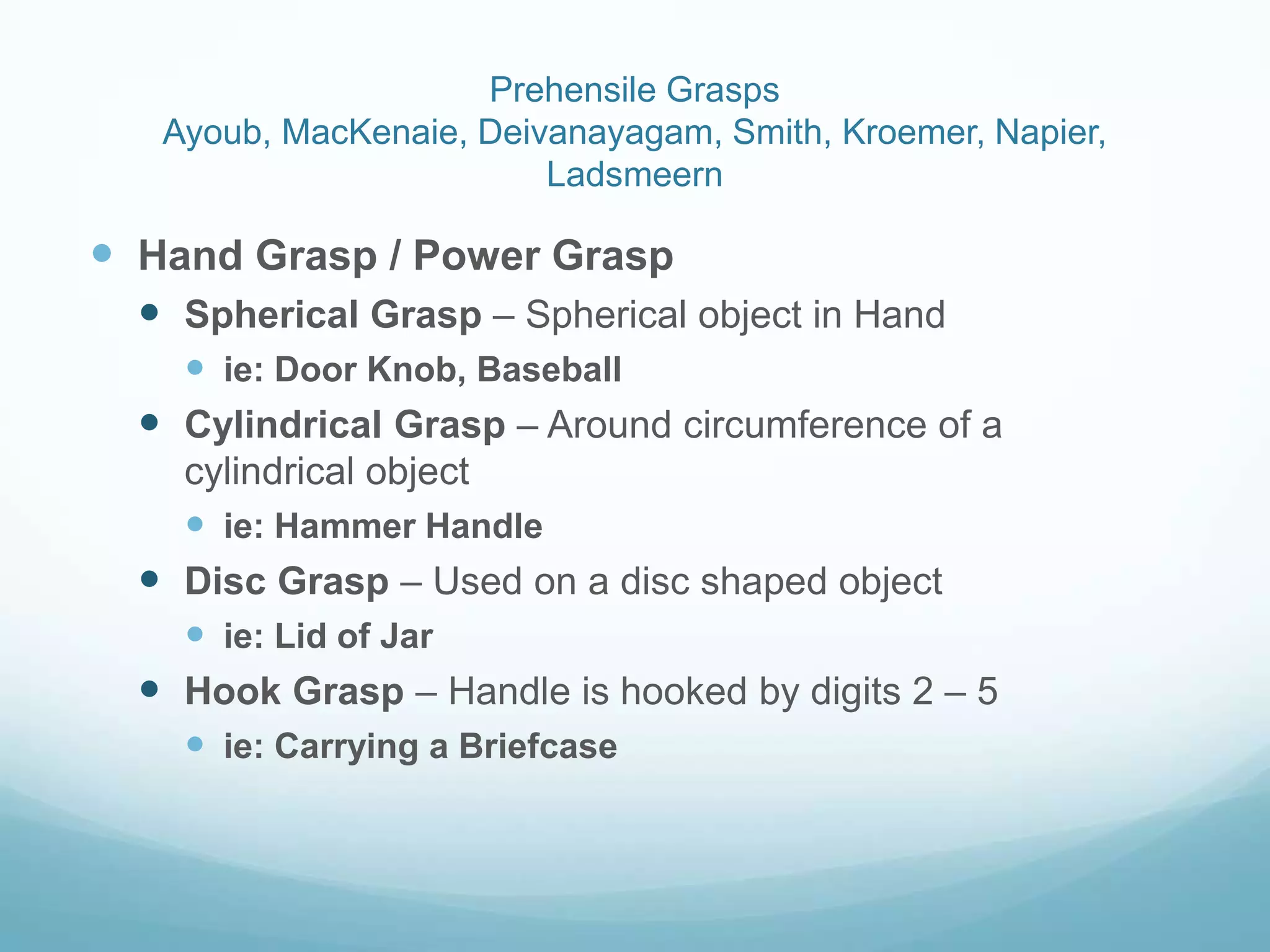
 Hand Grasp / Power Grasp
   Spherical Grasp – Spherical object in Hand
     ie: Door Knob, Baseball
   Cylindrical Grasp – Around circumference of a
    cylindrical object
     ie: Hammer Handle
   Disc Grasp – Used on a disc shaped object
     ie: Lid of Jar
   Hook Grasp – Handle is hooked by digits 2 – 5
     ie: Carrying a Briefcase
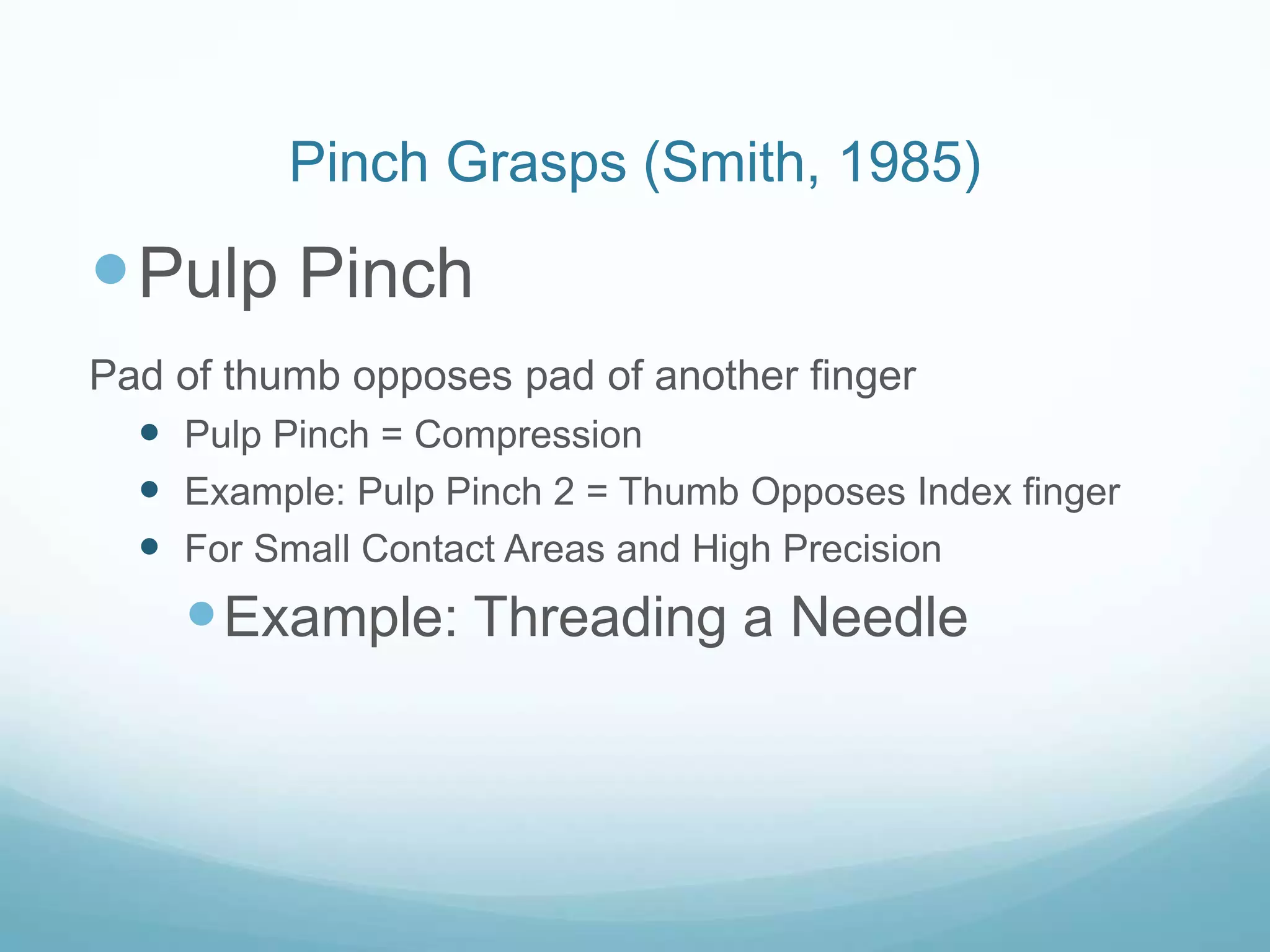
Pinch Grasps (Smith, 1985)

 Pulp Pinch
Pad of thumb opposes pad of another finger
   Pulp Pinch = Compression
   Example: Pulp Pinch 2 = Thumb Opposes Index finger
   For Small Contact Areas and High Precision
     Example: Threading a Needle
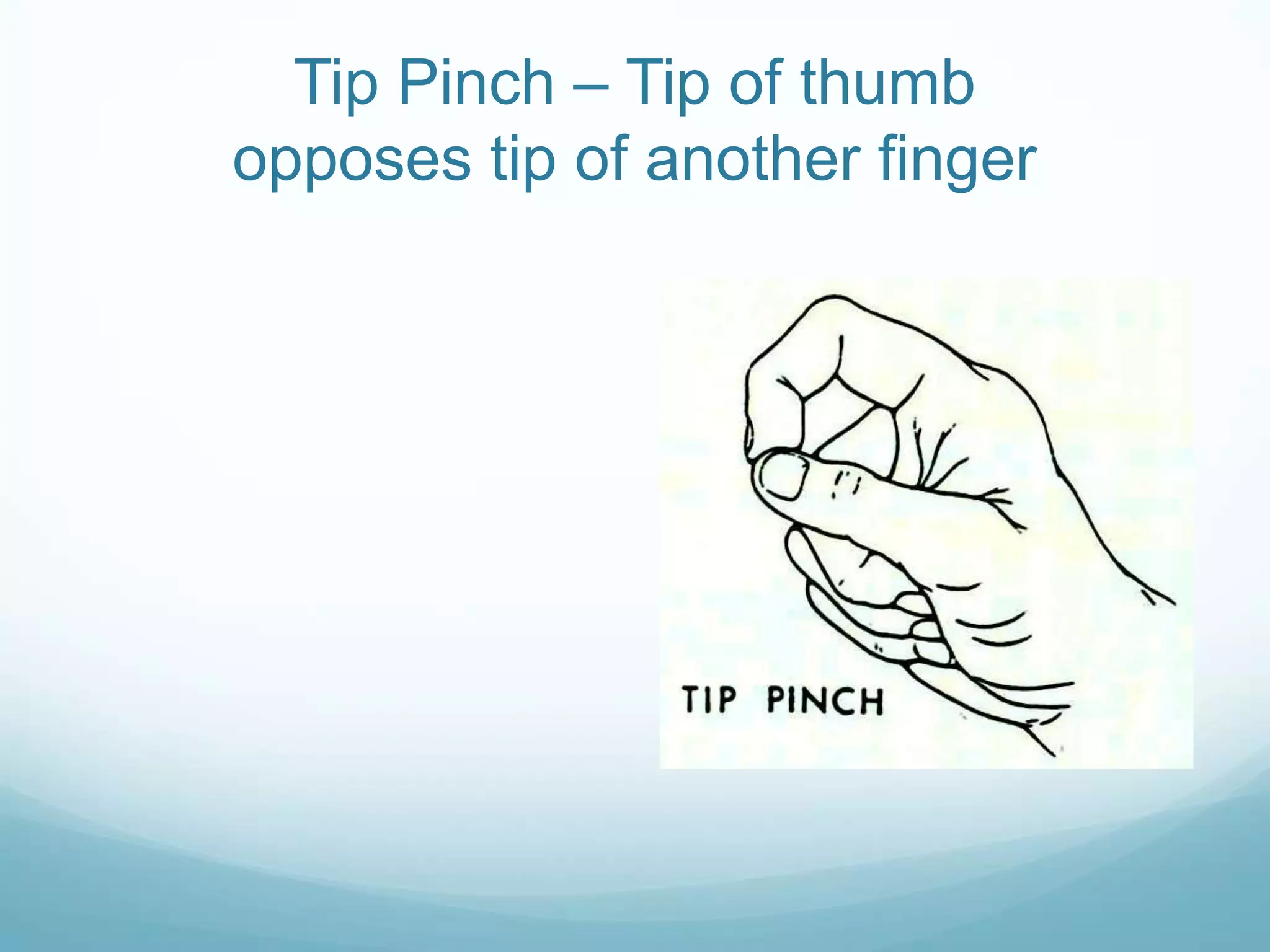
Tip Pinch – Tip of thumb
opposes tip of another finger
Gripping Larger Contact Areas and
          Applying Greater Force
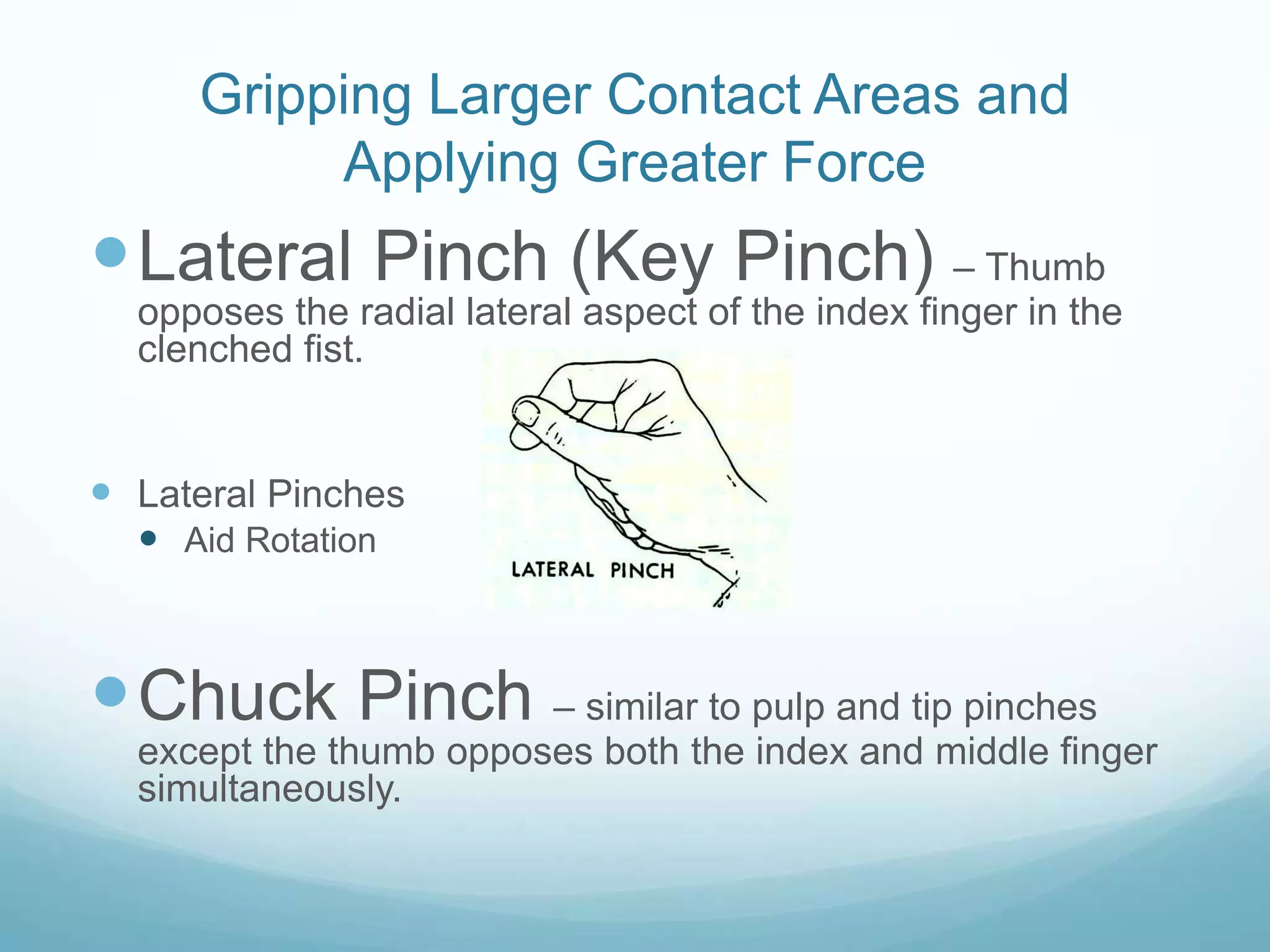
 Lateral Pinch (Key Pinch) – Thumb
  opposes the radial lateral aspect of the index finger in the
  clenched fist.


 Lateral Pinches
   Aid Rotation


 Chuck Pinch – similar to pulp and tip pinches
  except the thumb opposes both the index and middle finger
  simultaneously.
Pinch or Precision Grasps
 Tools that Require Precision Movements
   Surgical Instruments, Pens or Pencils
     Small Force
     Grip that Facilitates Precise Motions
     Fingers and Wrist Play a Prominent Role
Power Grasps
 Tools that Require More Muscular Force due to
     Use
     Weight
     Size
     Function

   Need Larger Surfaces for the Hand to Contact to Form
      More of a Power Grip
Ideas for a Better Grip
 Shape with Bulges and Indents for a better grip
   Avoid Cylindrical Grips
 Pinch Grips
   Provide Contact Surface Area that is as large as the entire
    surface of the pad of the thumb or fingertips to increase
    strength
   A Pinch Grip is Five Times More Stressful than a Power Grip
    (National Institute for Safety and Health)

 Power Grips
   Contact Surface Area large enough to allow contact with the
     entire palm of the hand
Better Grip Ideas continued:
 Eliminate Pressure Points - sharp edges and other
  surface features that will cause local tissue pressures.

 Padding can be added at Pressure Points of the palm
  and fingers

 Does the design work for left-handed people?
 Size and Shape Gripping Area to Allow Alternatives
  to the Standard Grip.
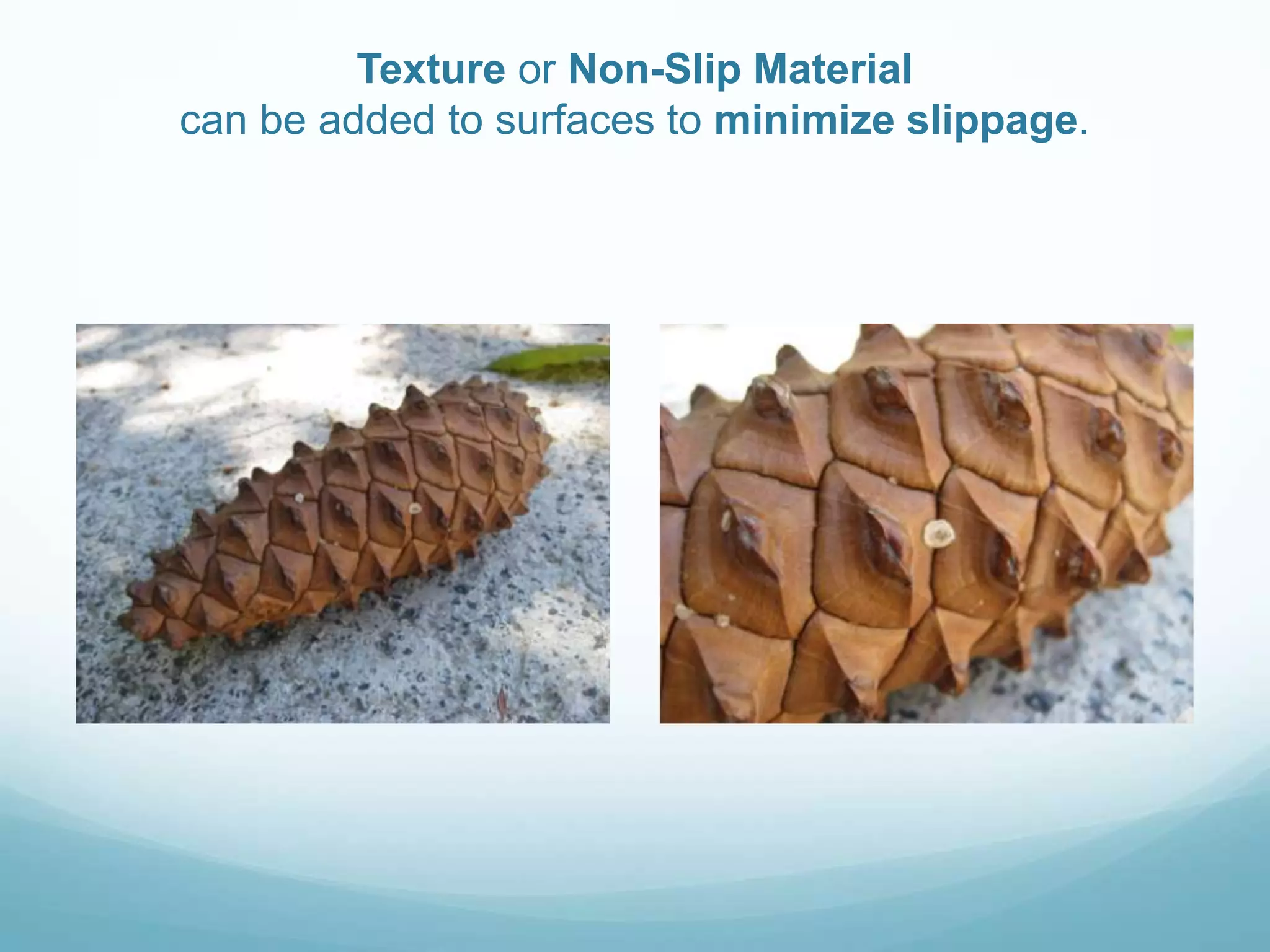
Texture or Non-Slip Material
can be added to surfaces to minimize slippage.
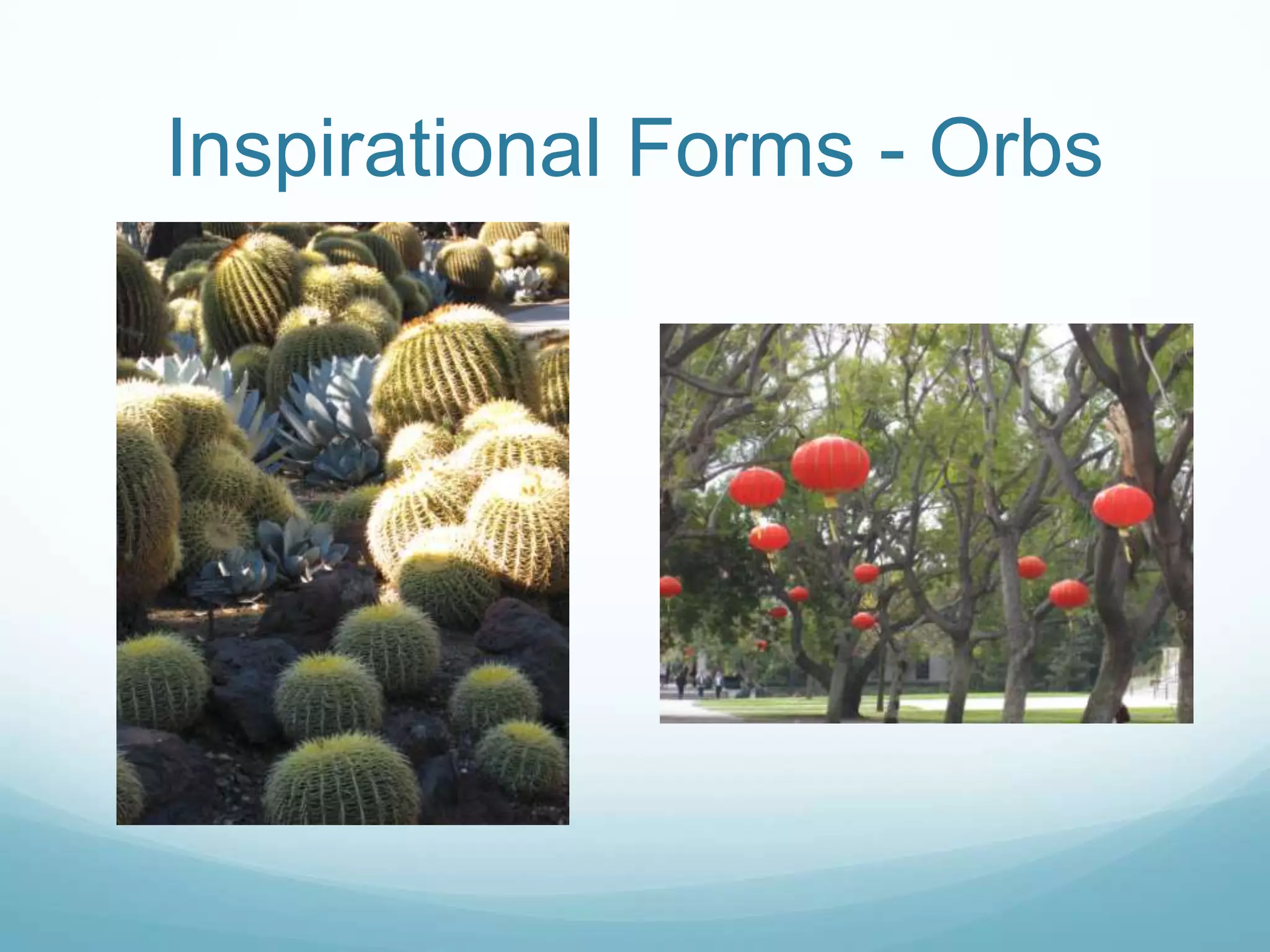
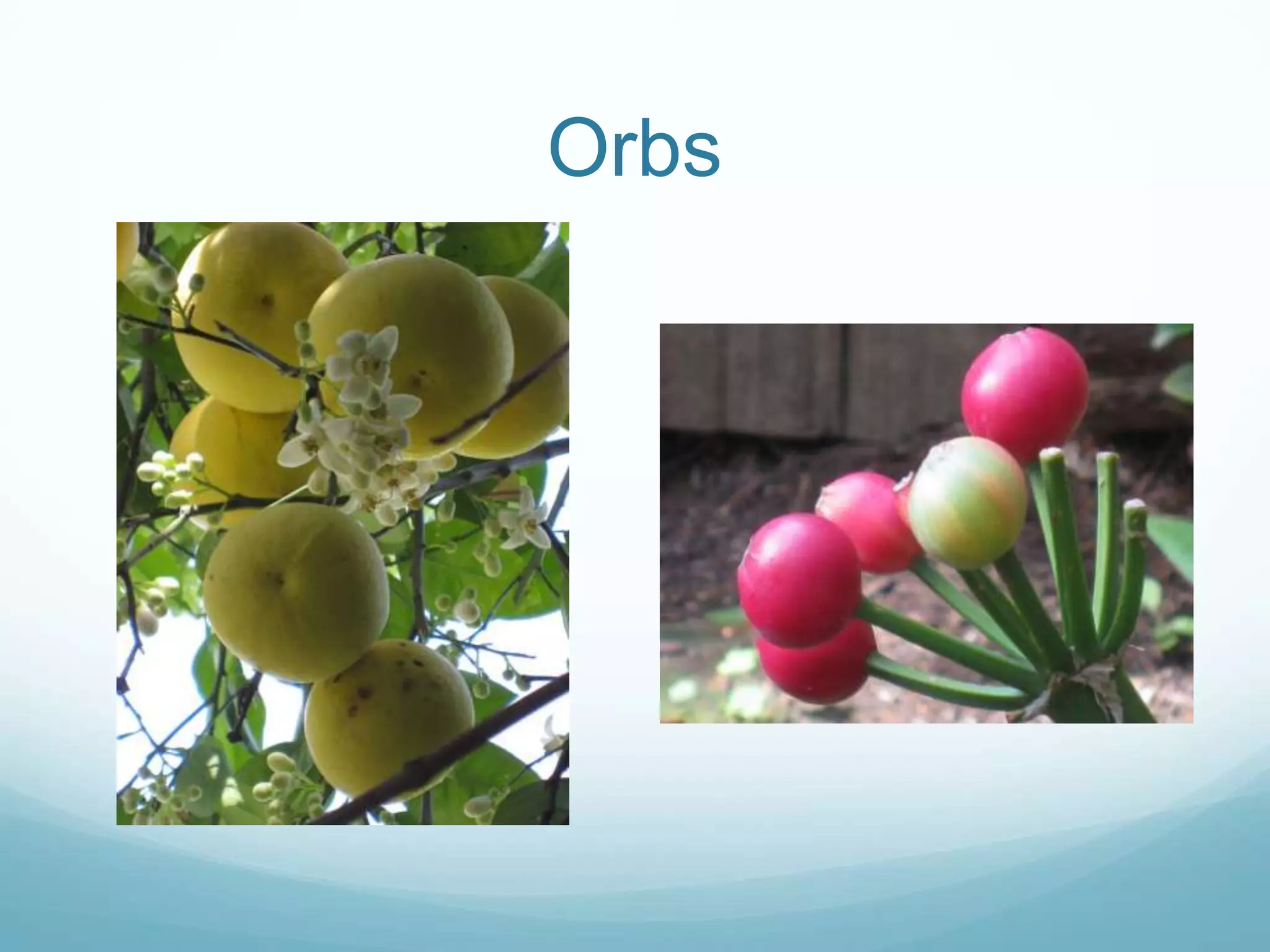
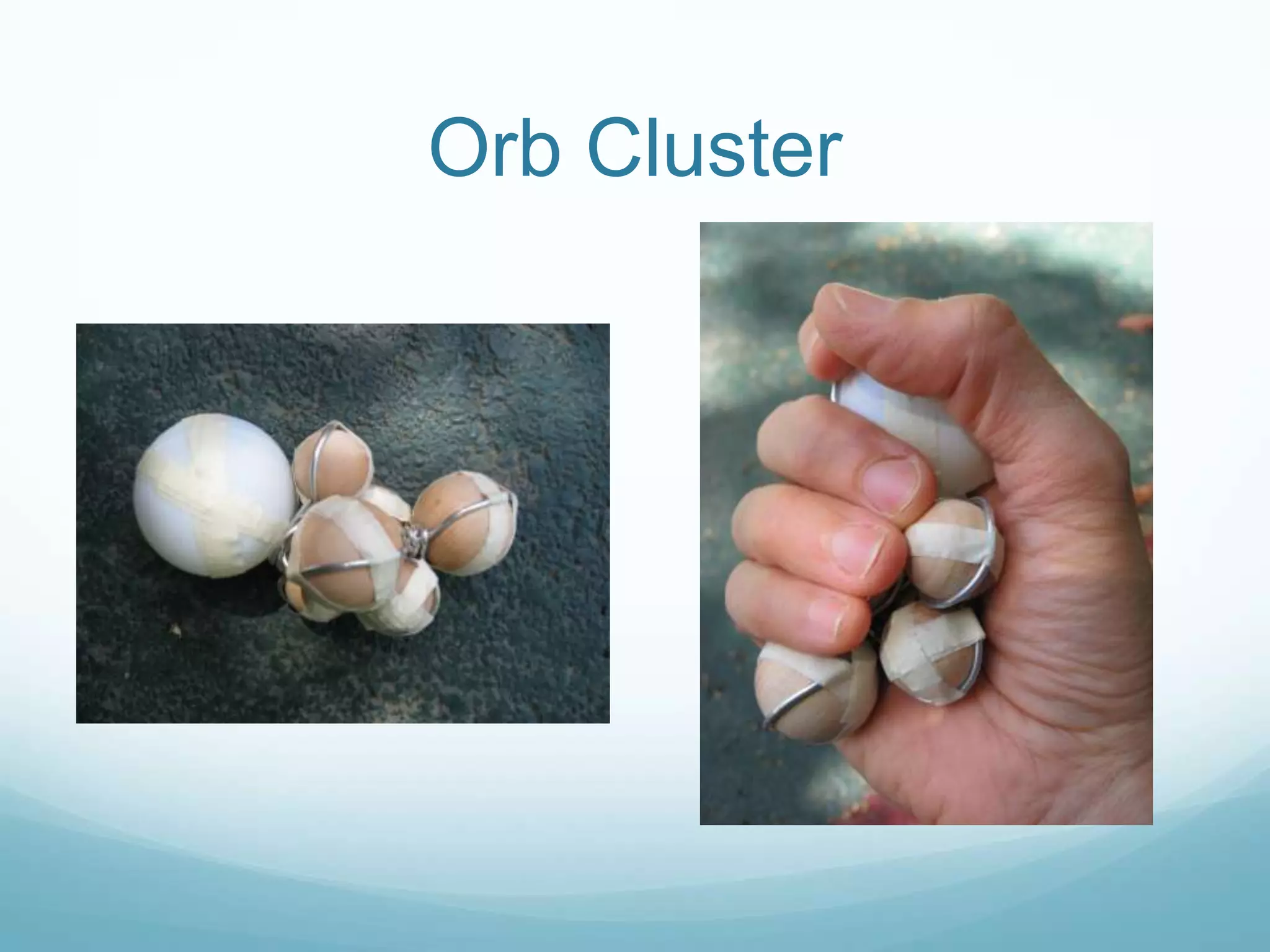
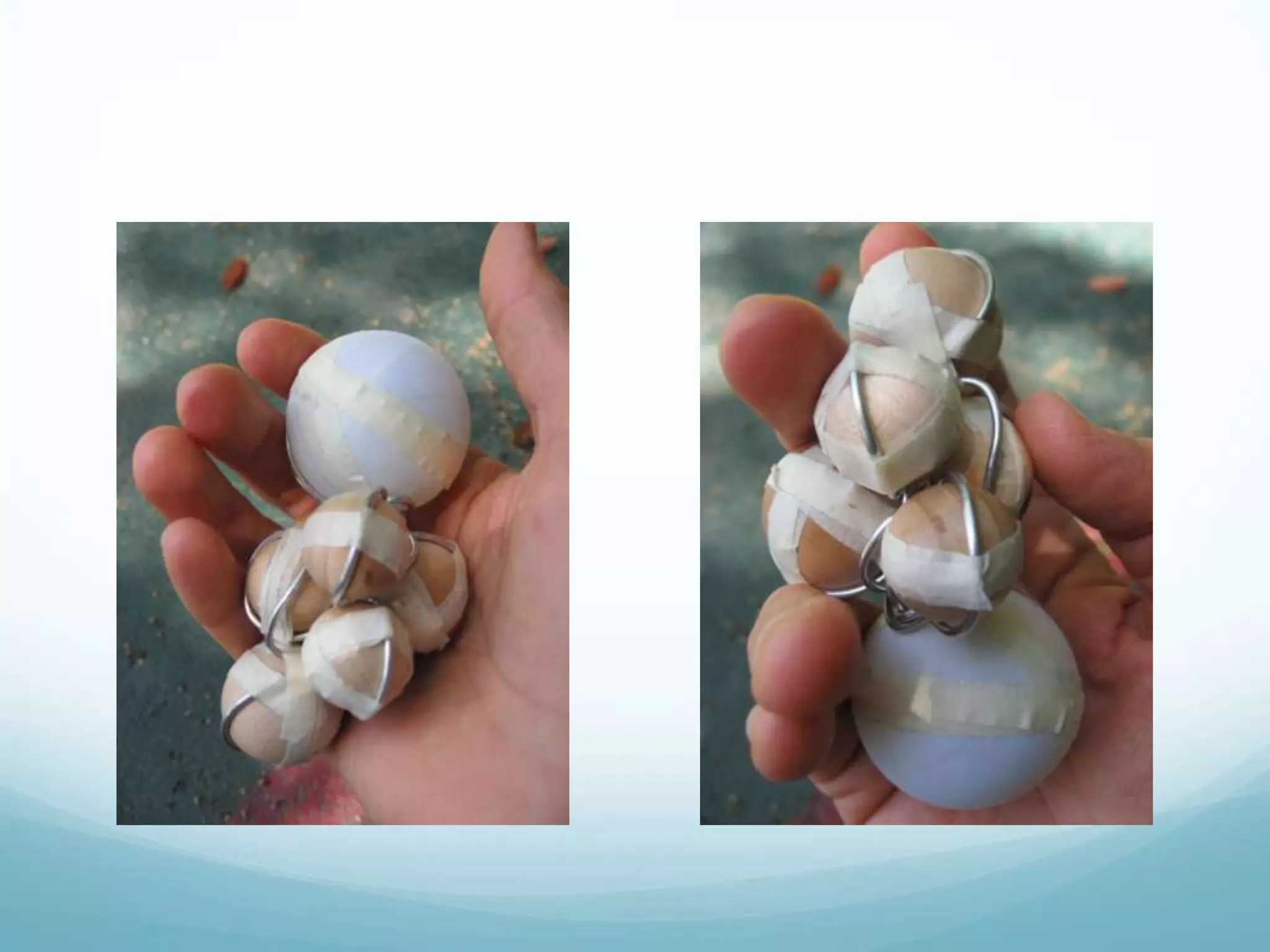
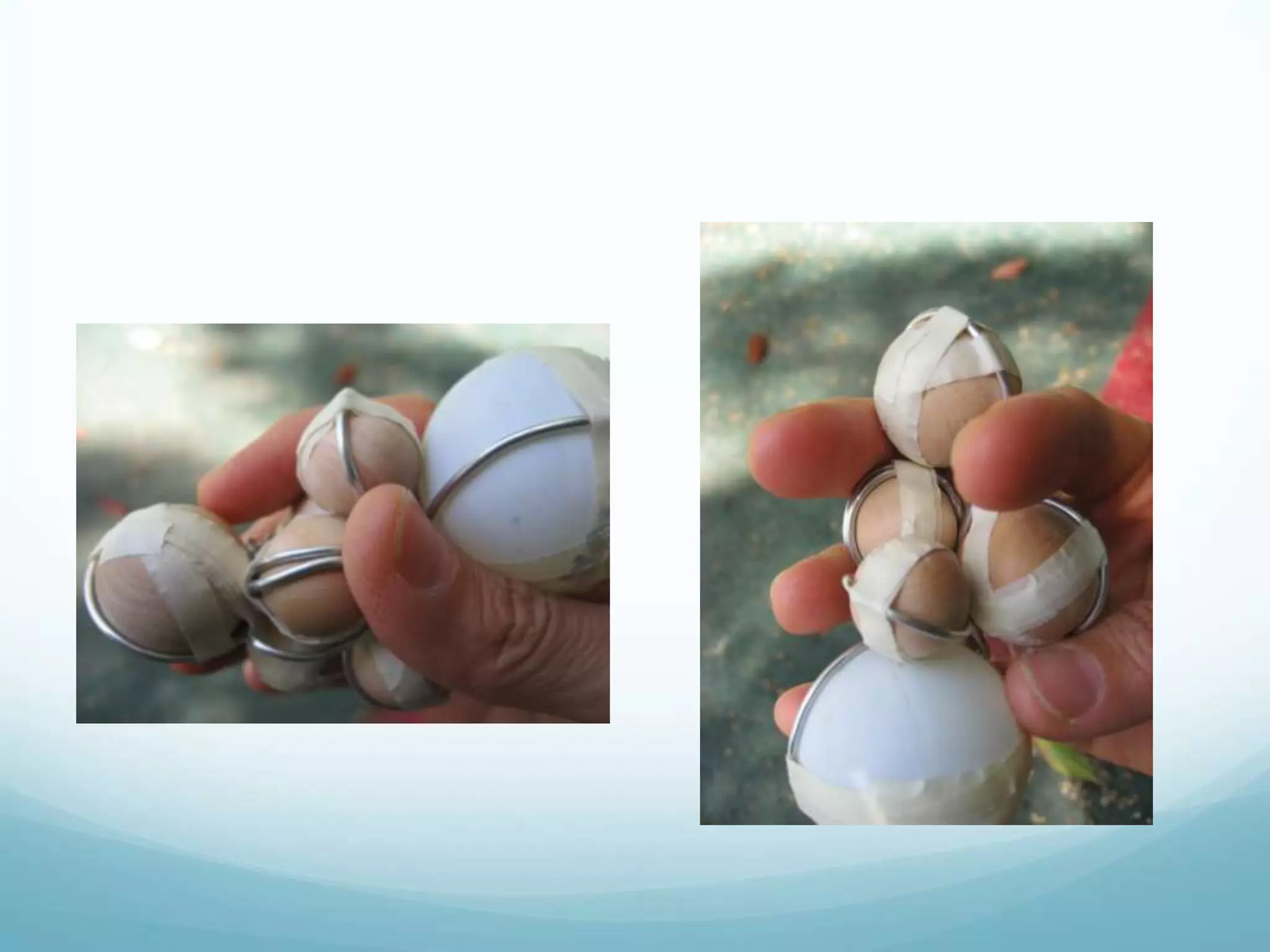
Inspirational Forms - Orbs
Orbs
Orb Cluster
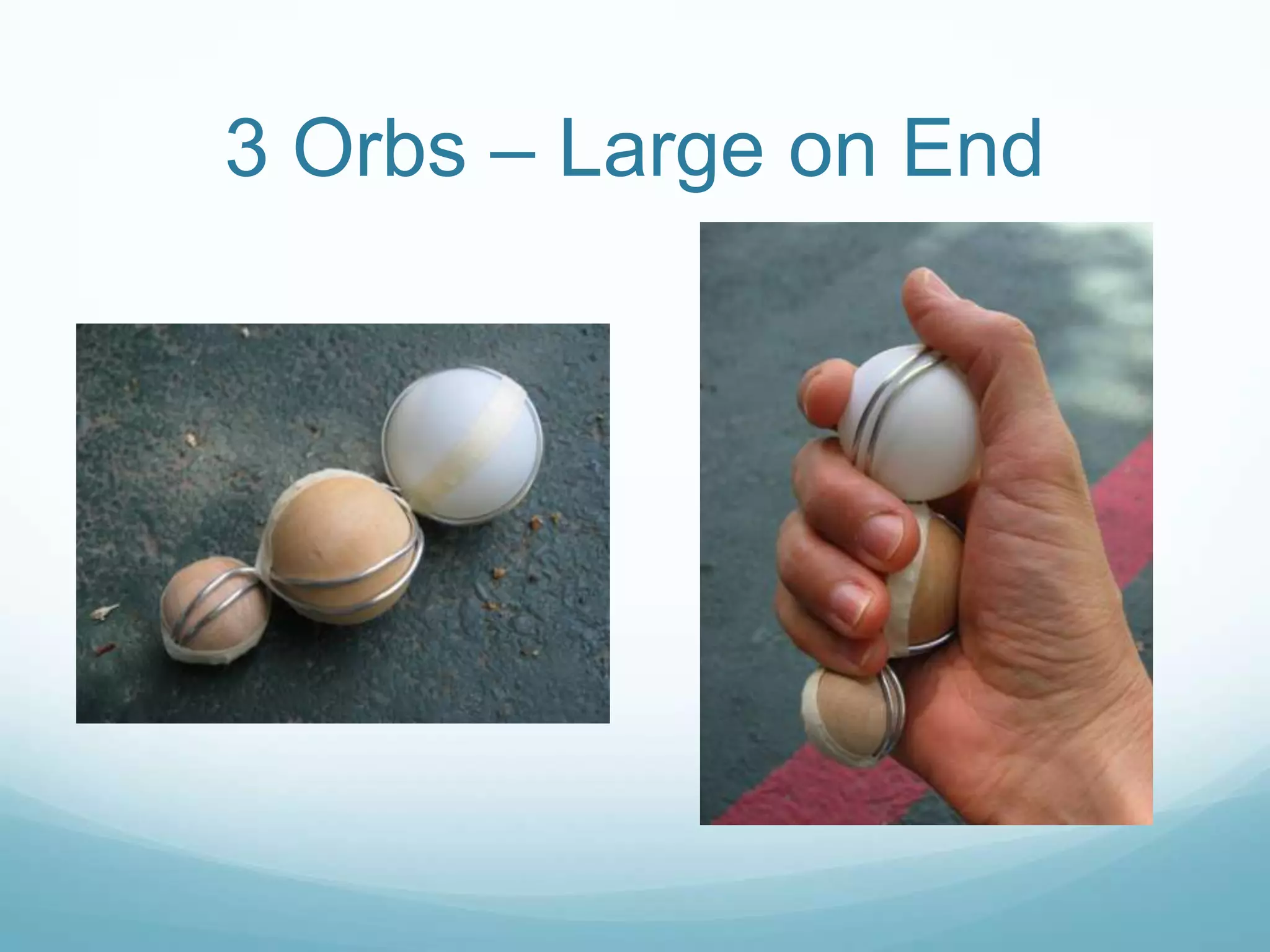
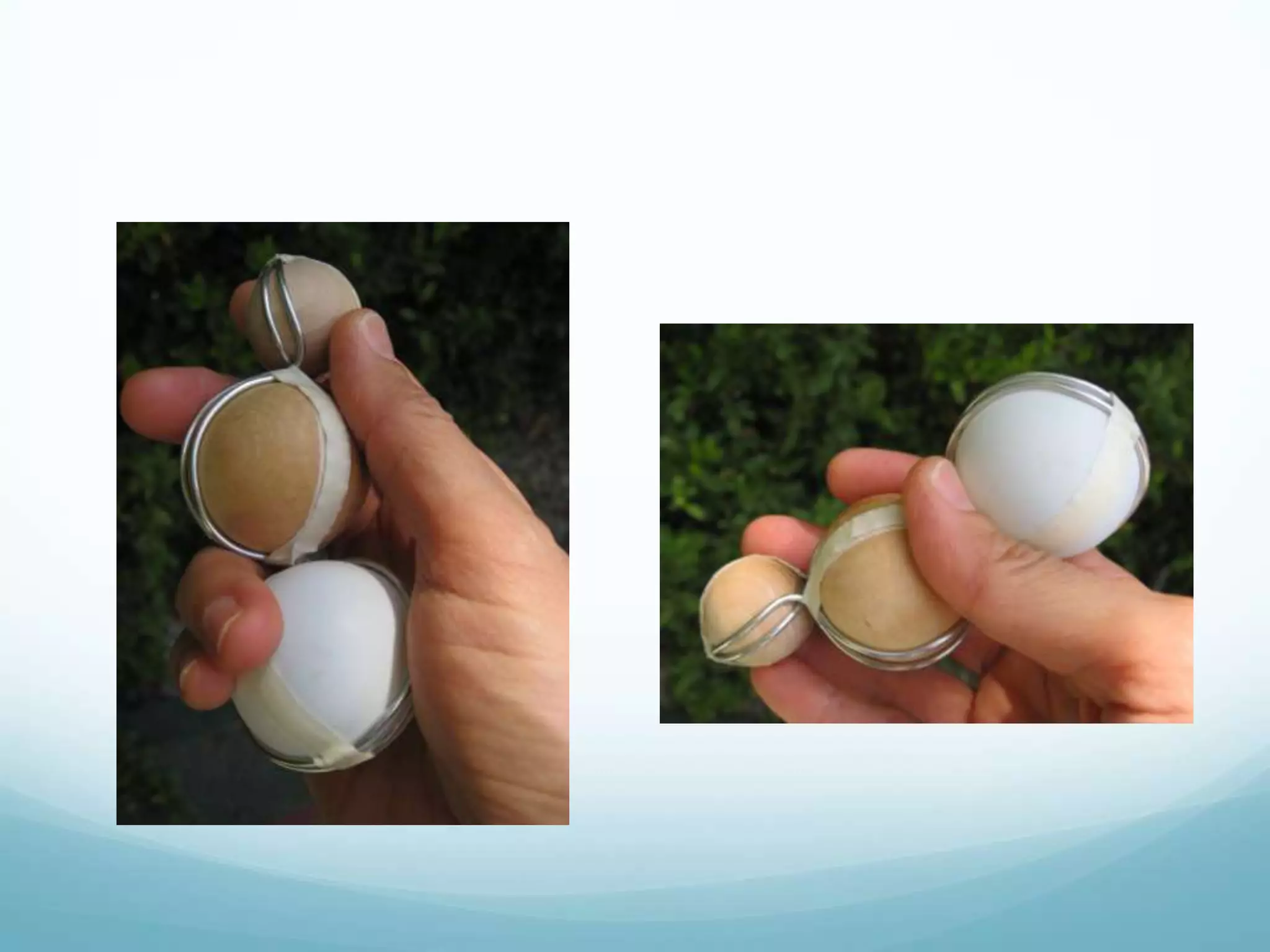
3 Orbs – Large on End
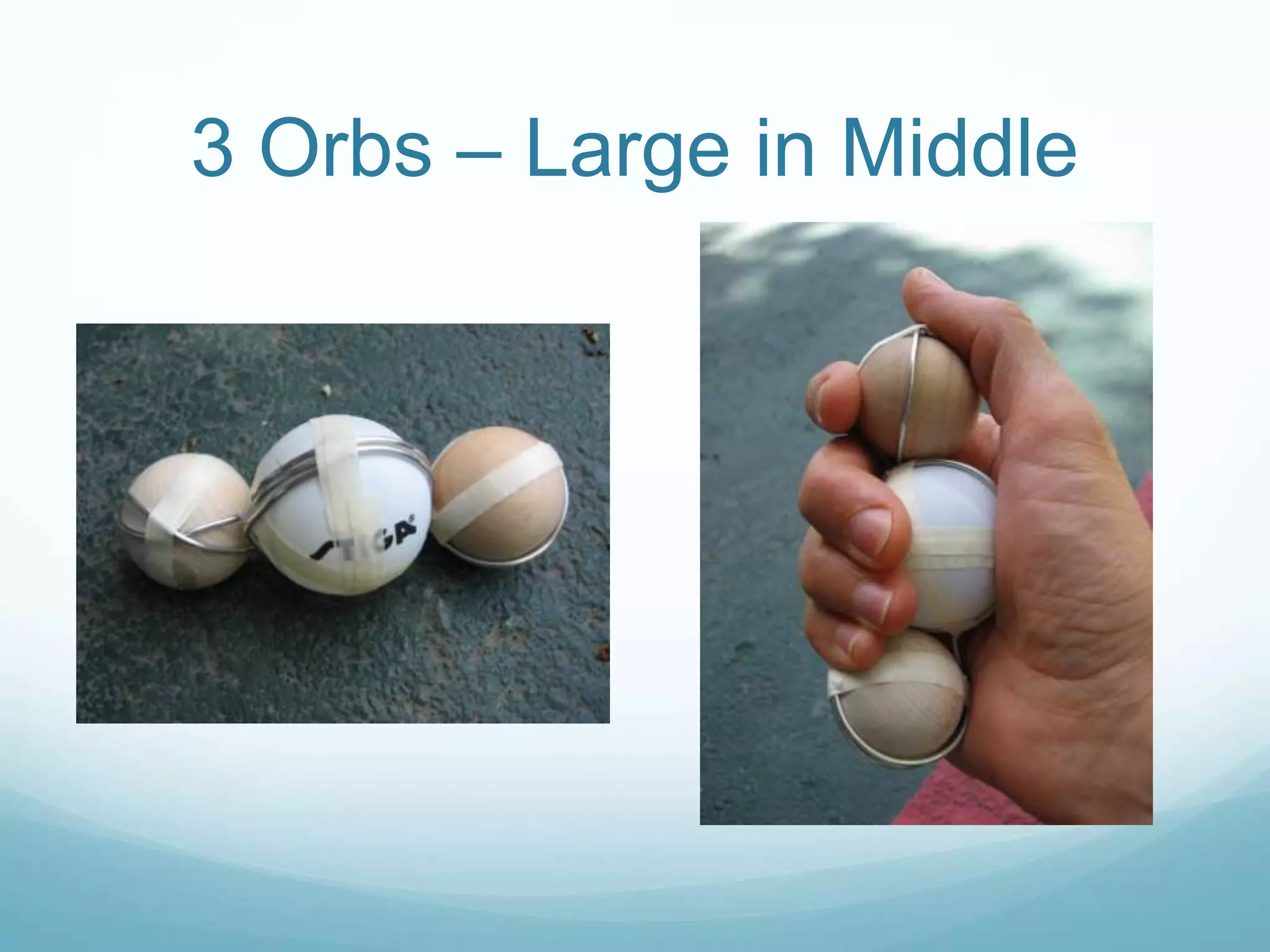
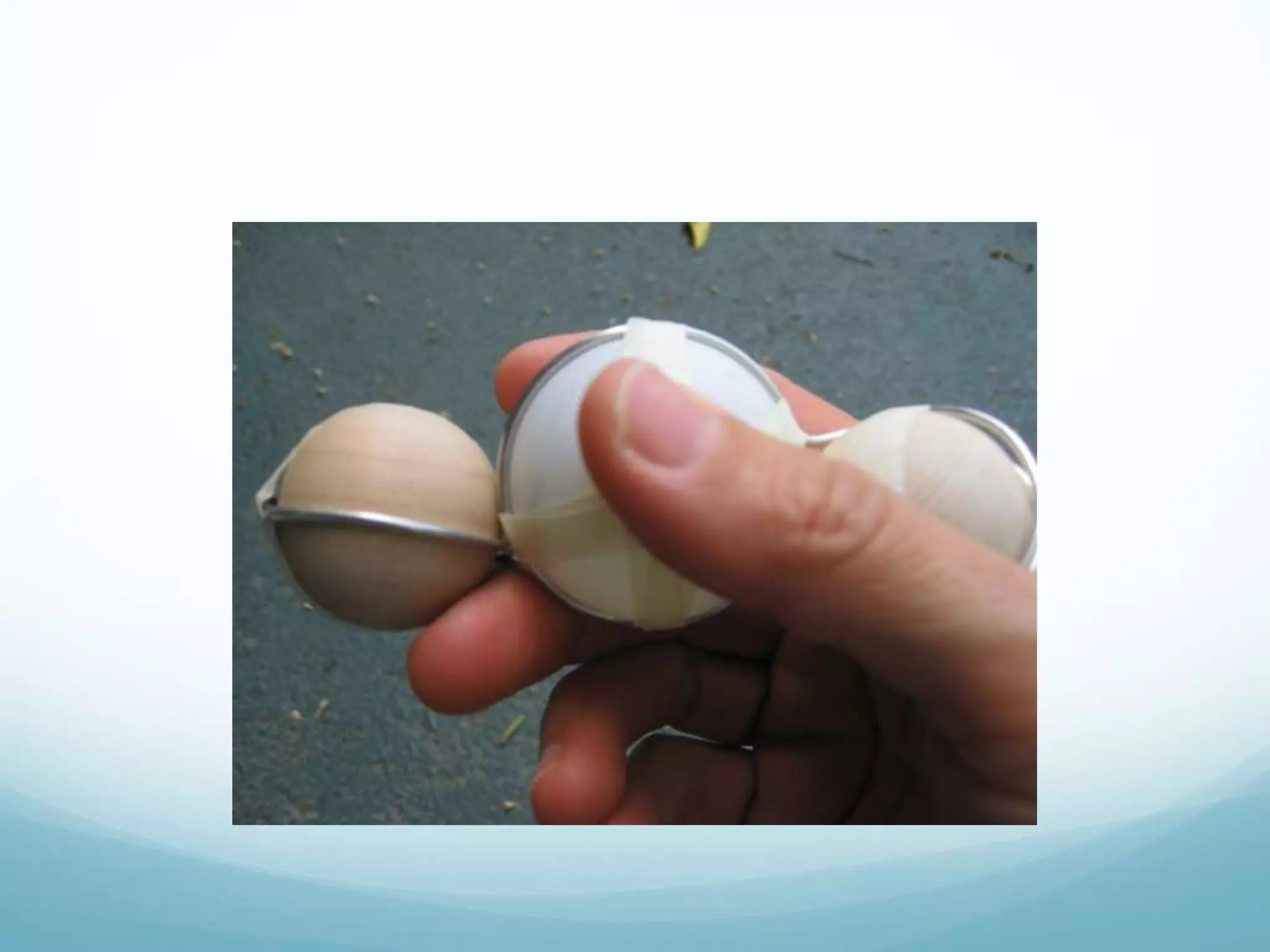
3 Orbs – Large in Middle
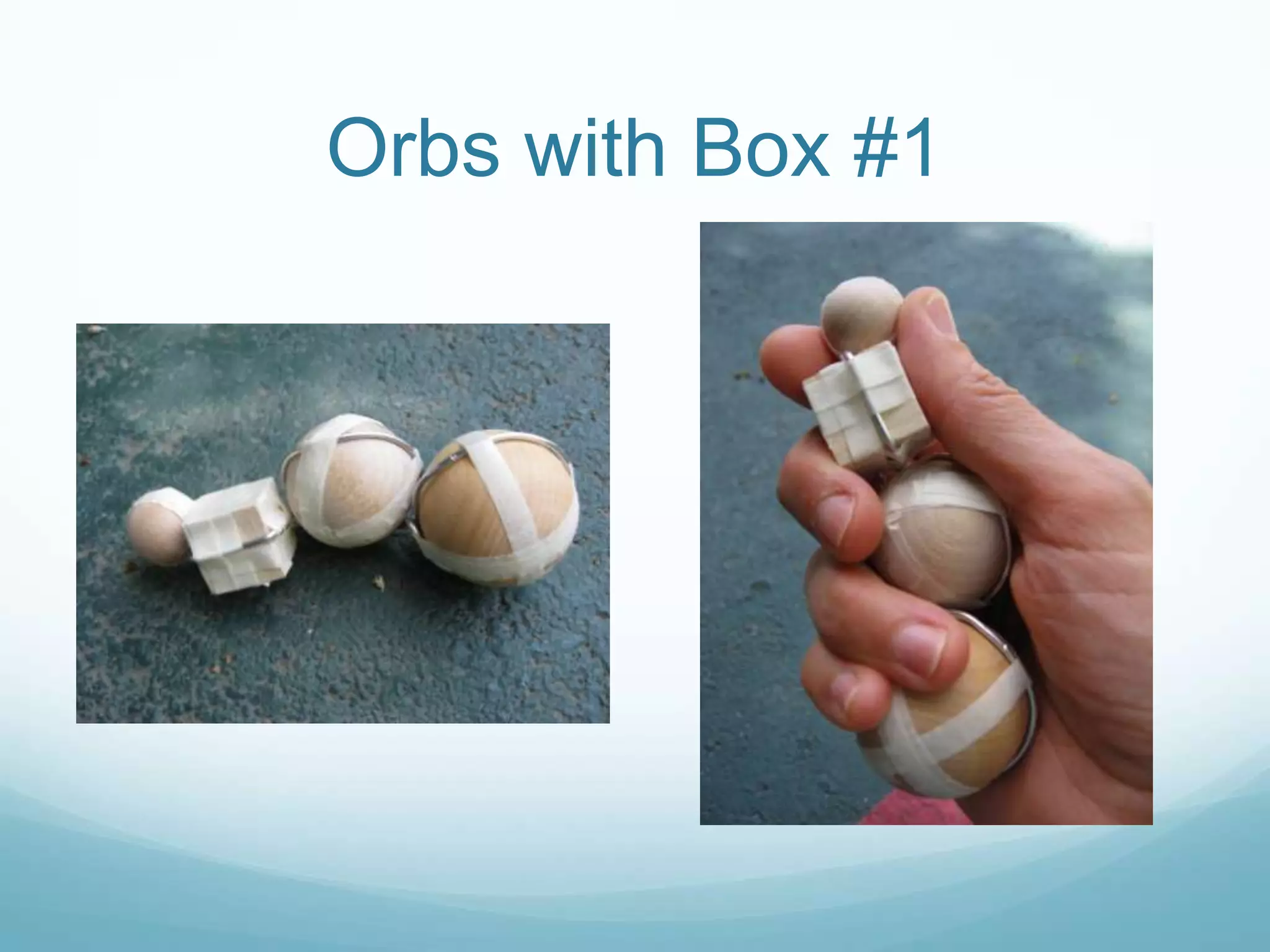
Orbs with Box #1
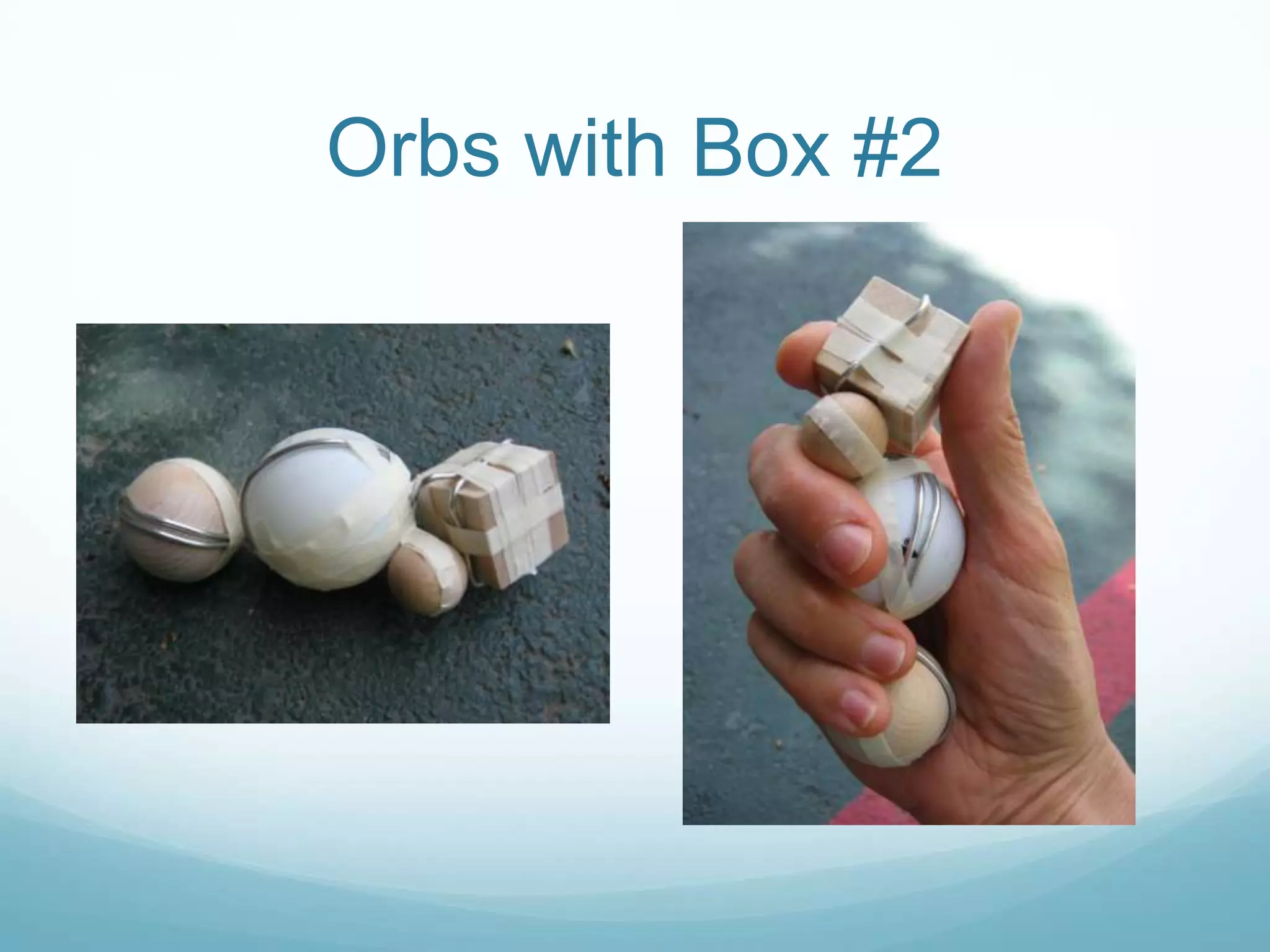
Orbs with Box #2
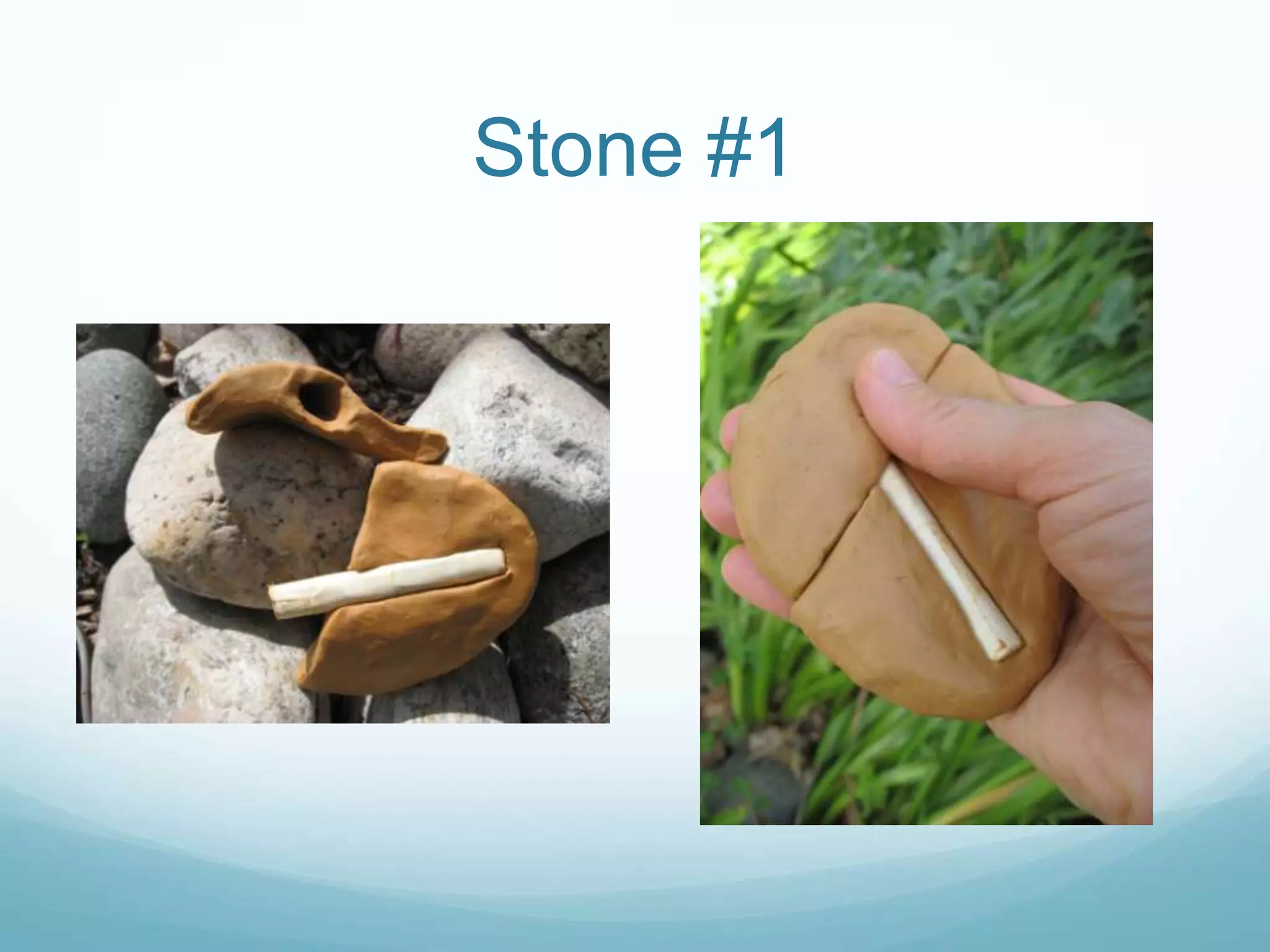
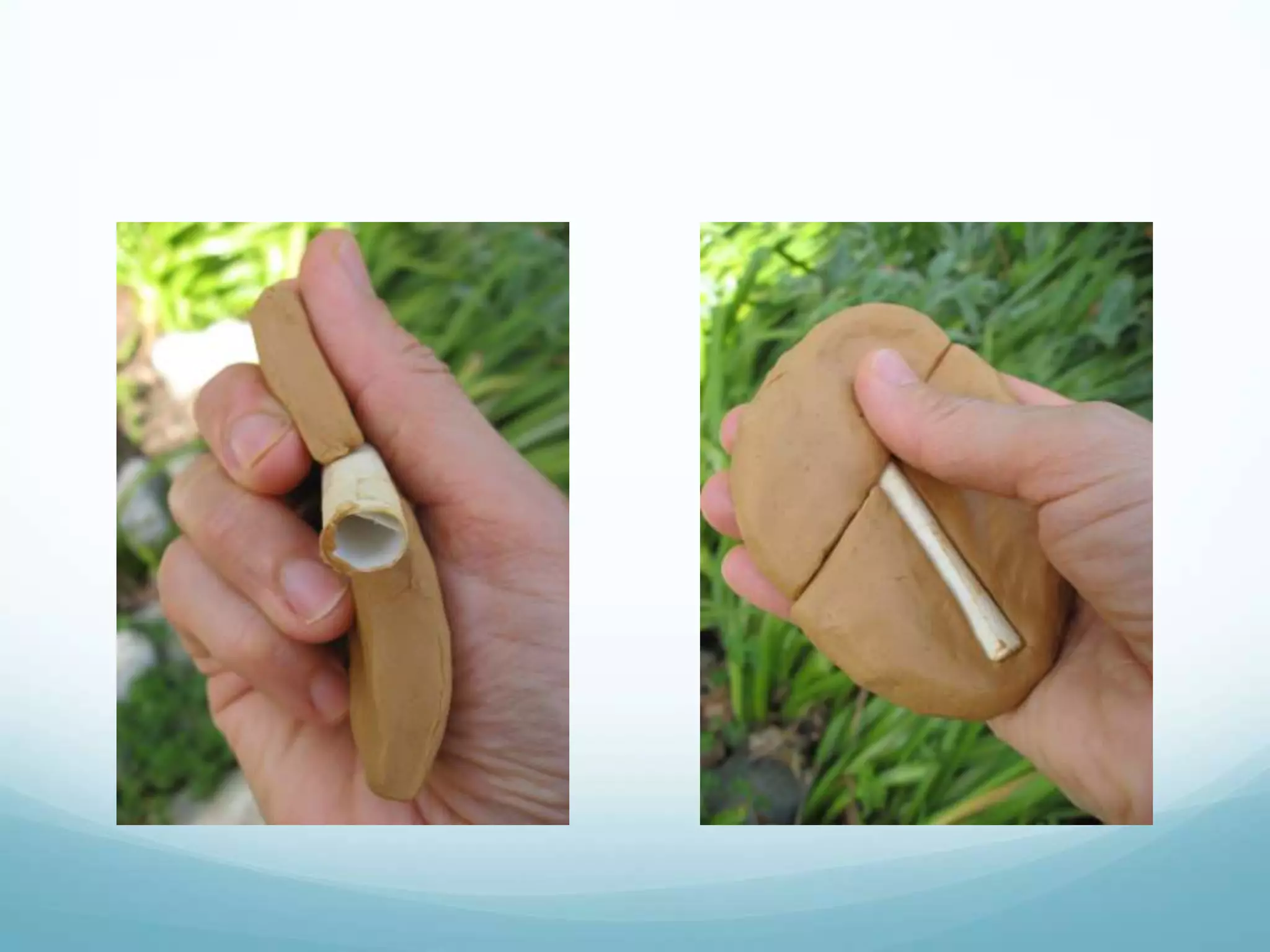
Stone #1
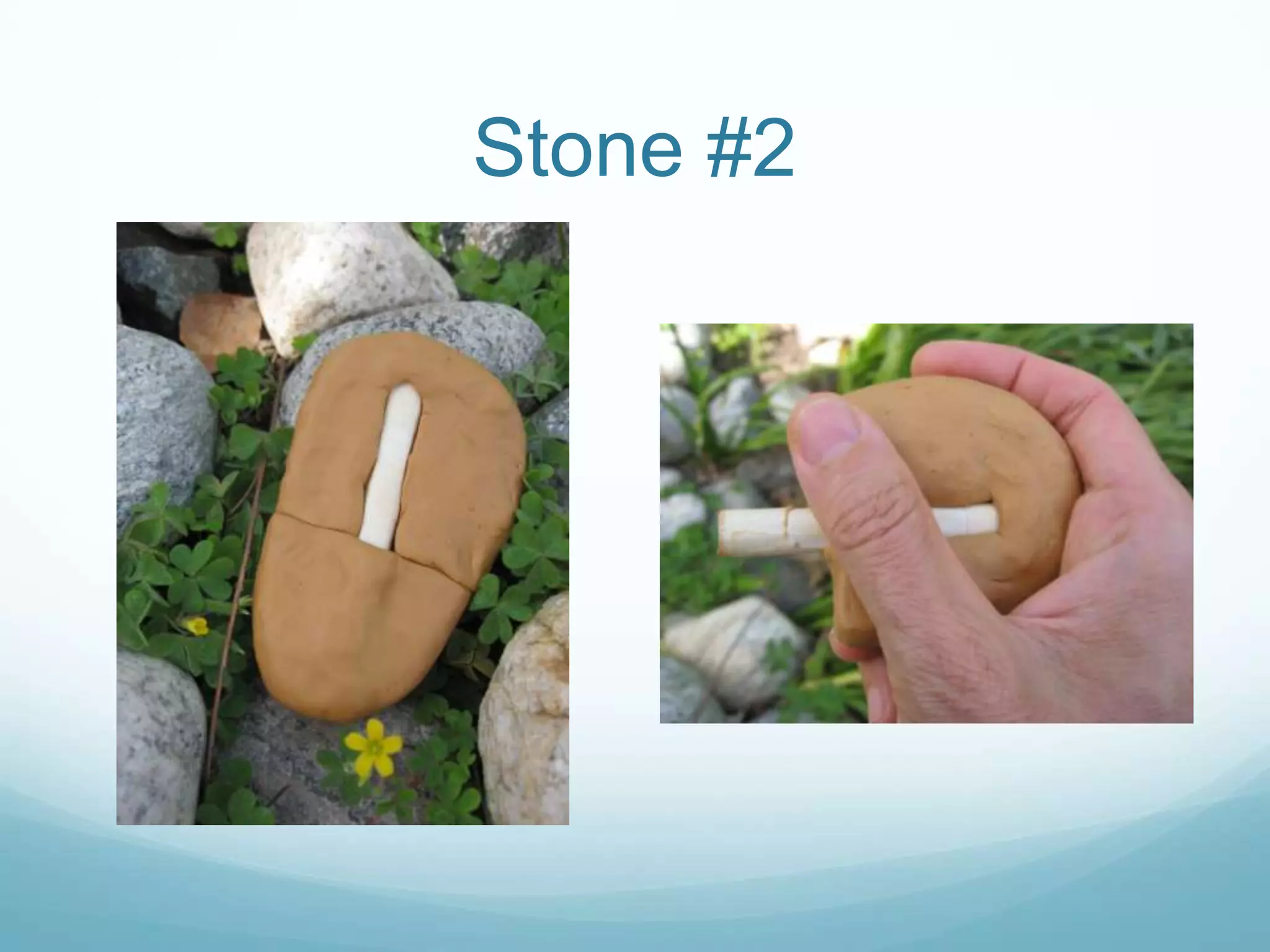
Stone #2
Andrea initial thoughts april 3

Andrea initial thoughts april 3

  • 1.
    Sanofi Project Concept Ideationand Development Tuesday, April 3, 2012 Some Thoughts from Andrea
  • 2.
    Common Causes of Limitations in the Use of the Hands: Age and Arthritis  Loss of Strength and Dexterity in the Hands is Common, beginning at Age 50 – 59, and increasing in severity with more advanced age.  With Age – Loss of strength in muscle tissue throughout body, including the hands.  Prevalence of severe hand disability in the general population age 50 and older is 12%, with increased occurrence over the age of 70 and in the female gender.  Arthritis – The leading cause of disability in the United States (Centers for Disease Control)
  • 3.
    Age – Lossof Strength and Dexterity  In Hand Weakness due to Age, the Lateral Pinch Grip weakens less than other pinch grips.  Lateral Pinch Grip – Example: Grip Used when Grasping and Turning a Key.  Design to accommodate the Lateral Pinch Grip by making a larger contact area for the fingers.
  • 4.
    Osteoarthritis (OA) –caused by wear and tear leading to deterioration of cartilage in the joints Commonly Affected by OA: Finger Joints Less Commonly •Distal Finger Joints Affected by OA: •Base of Thumb  Middle Joints (Proximal Interphalangeal Joints) (35% of individuals with OA)  Base of Fingers – (Matacarpophalangeal Joints) (15% of individuals with OA)
  • 5.
    Osteoarthritis  Friction (dueto cartilage deterioration) results in:  Pain  Stiffness  Swelling  Reduced Range of Motion  Pieces of Bone may break off and float within the joint and the joint lining (synovium) and cause further inflammation.
  • 6.
    Rheumatoid Arthritis (RA) Unknown Cause - Autoimmune Disease Commonly Affects Wrist and Fingers  Unlike OA, Finger Joints closest to the palm of the hand • Cartilage Deterioration (Metacarpophalangeal Joints) • Deformation of Joints are commonly affected.  Phasic o Severity Up and Down  Pain  Inflammation  Swelling  Stiffness  Reduced Range of Motion
  • 7.
    Examples of Accommodationsfor OA & RA  Distal Finger Joints are used in most Pinch and Precision Grips. o A small pinch or other precision grip will often cause pain in the distal finger joints with Osteoarthritis.  Make grip larger or change type of grip.  The Thumb is used in All Grip Types. o A too wide grip will often cause pain in an arthritic joint at the base of the thumb  Maximum Grip Span for OA (Osteoarthritis) and RA (Rheumatoid Arthritis) of moderate severity is not more than 2.5 to 3 inches.
  • 8.
    Accommodation Examples -Continued:  Rheumatoid Arthritis – Joint Deformation o Joint Deformation affects the types of grips that can be made.  Example of Accommodation: Instead of using a pinch grip, a person with deformed finger joints may have to instead use a lateral key pinch grip.
  • 9.
    Lateral Key PinchGrip ie: Grip Used When Grasping and Turning a Key
  • 10.
    Types of HandGrasps  There is no one standard classification of grasps.  Names for specific grasps can vary.  The following slides show examples of grasp classifications.
  • 11.
    Napier (1956) Prehensile –Where an object is held by the hand Power Grasp – Where an object is held in the palm of the hand The forces of the thumb are opposed by the forces of the fingers Muscular force is often high in the power grasp Precision Grasp – Where an object is held between the opposing fingers and thumb Muscular force is usually more limited in the Precision grasp than in the Power Grasp Non-Prehensile – No seizing – The hand or finger applies pressure to an object
  • 12.
    The following ThreeSlides 10 hand grasps Classified by Karl Kroemer (1986) Coupling the Hand with the Handle
  • 16.
    Prehensile Grasps Ayoub, MacKenaie, Deivanayagam, Smith, Kroemer, Napier, Ladsmeern  Hand Grasp / Power Grasp  Spherical Grasp – Spherical object in Hand  ie: Door Knob, Baseball  Cylindrical Grasp – Around circumference of a cylindrical object  ie: Hammer Handle  Disc Grasp – Used on a disc shaped object  ie: Lid of Jar  Hook Grasp – Handle is hooked by digits 2 – 5  ie: Carrying a Briefcase
  • 17.
    Pinch Grasps (Smith,1985)  Pulp Pinch Pad of thumb opposes pad of another finger  Pulp Pinch = Compression  Example: Pulp Pinch 2 = Thumb Opposes Index finger  For Small Contact Areas and High Precision  Example: Threading a Needle
  • 18.
    Tip Pinch –Tip of thumb opposes tip of another finger
  • 19.
    Gripping Larger ContactAreas and Applying Greater Force  Lateral Pinch (Key Pinch) – Thumb opposes the radial lateral aspect of the index finger in the clenched fist.  Lateral Pinches  Aid Rotation  Chuck Pinch – similar to pulp and tip pinches except the thumb opposes both the index and middle finger simultaneously.
  • 20.
    Pinch or PrecisionGrasps  Tools that Require Precision Movements  Surgical Instruments, Pens or Pencils  Small Force  Grip that Facilitates Precise Motions  Fingers and Wrist Play a Prominent Role
  • 21.
    Power Grasps  Toolsthat Require More Muscular Force due to  Use  Weight  Size  Function  Need Larger Surfaces for the Hand to Contact to Form More of a Power Grip
  • 22.
    Ideas for aBetter Grip  Shape with Bulges and Indents for a better grip  Avoid Cylindrical Grips  Pinch Grips  Provide Contact Surface Area that is as large as the entire surface of the pad of the thumb or fingertips to increase strength  A Pinch Grip is Five Times More Stressful than a Power Grip (National Institute for Safety and Health)  Power Grips  Contact Surface Area large enough to allow contact with the entire palm of the hand
  • 23.
    Better Grip Ideascontinued:  Eliminate Pressure Points - sharp edges and other surface features that will cause local tissue pressures.  Padding can be added at Pressure Points of the palm and fingers  Does the design work for left-handed people?  Size and Shape Gripping Area to Allow Alternatives to the Standard Grip.
  • 24.
    Texture or Non-SlipMaterial can be added to surfaces to minimize slippage.
  • 25.
  • 26.
  • 27.
  • 30.
    3 Orbs –Large on End
  • 32.
    3 Orbs –Large in Middle
  • 34.
  • 36.
  • 37.
  • 39.