Chapter 1
Elements of the
Communication Process

“You can have brilliant ideas, but if you can’t get
them across, your brains won’t get you anywhere.”
---Lee Iacocca
Former president of Chrysler
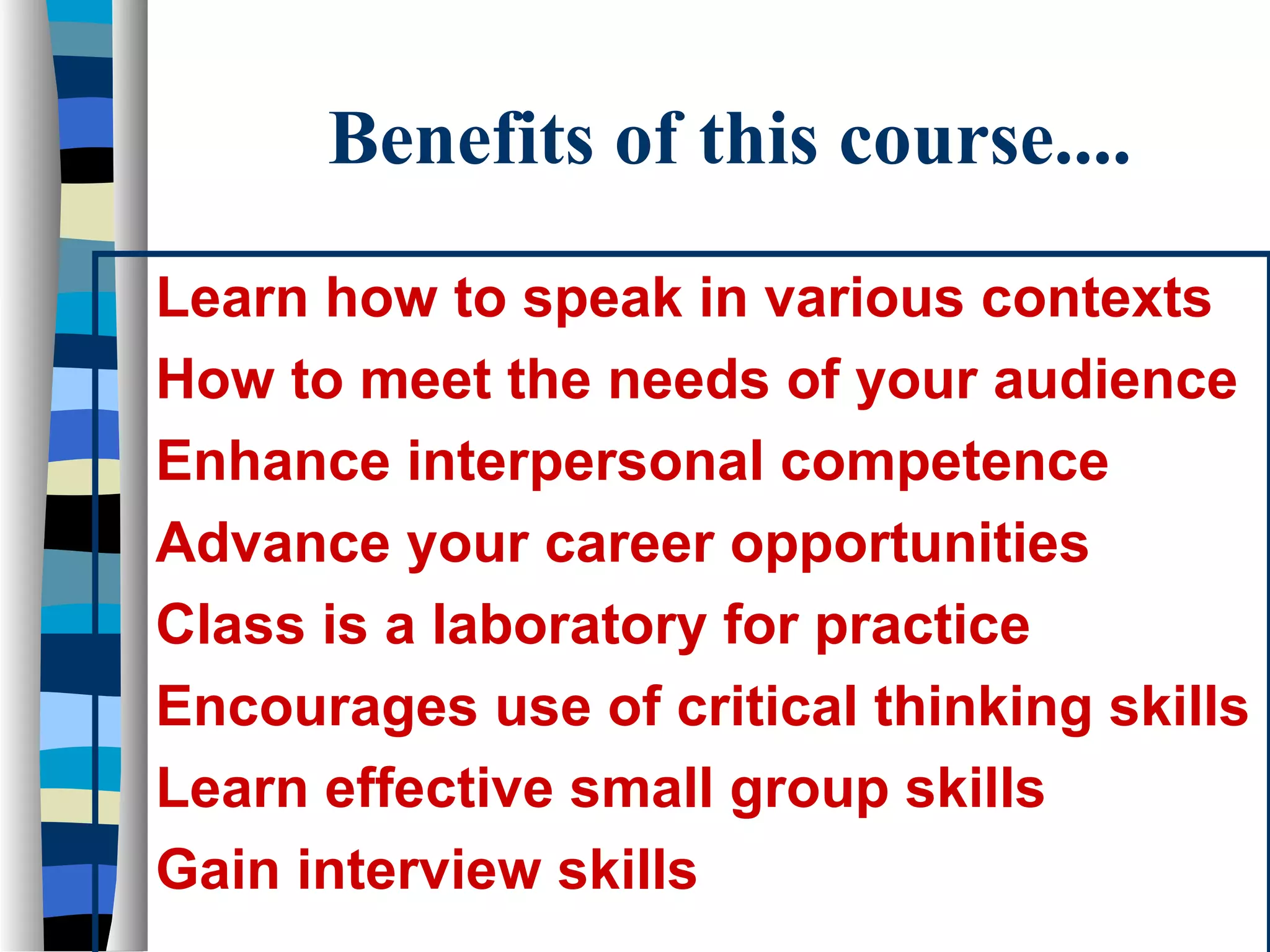
Benefits of this course....
Learn how to speak in various contexts
How to meet the needs of your audience
Enhance interpersonal competence
Advance your career opportunities
Class is a laboratory for practice
Encourages use of critical thinking skills
Learn effective small group skills
Gain interview skills
Your Name:

Major:

E-Mail Address:

Phone Number:

Where you work:

Hours per week:

Hobbies/Interest:
# Children:

Married/Single:

Previous Communication courses:
What you hope to gain from this course:
Identify any fears related to speaking in public:
List any special accommodations you may need:
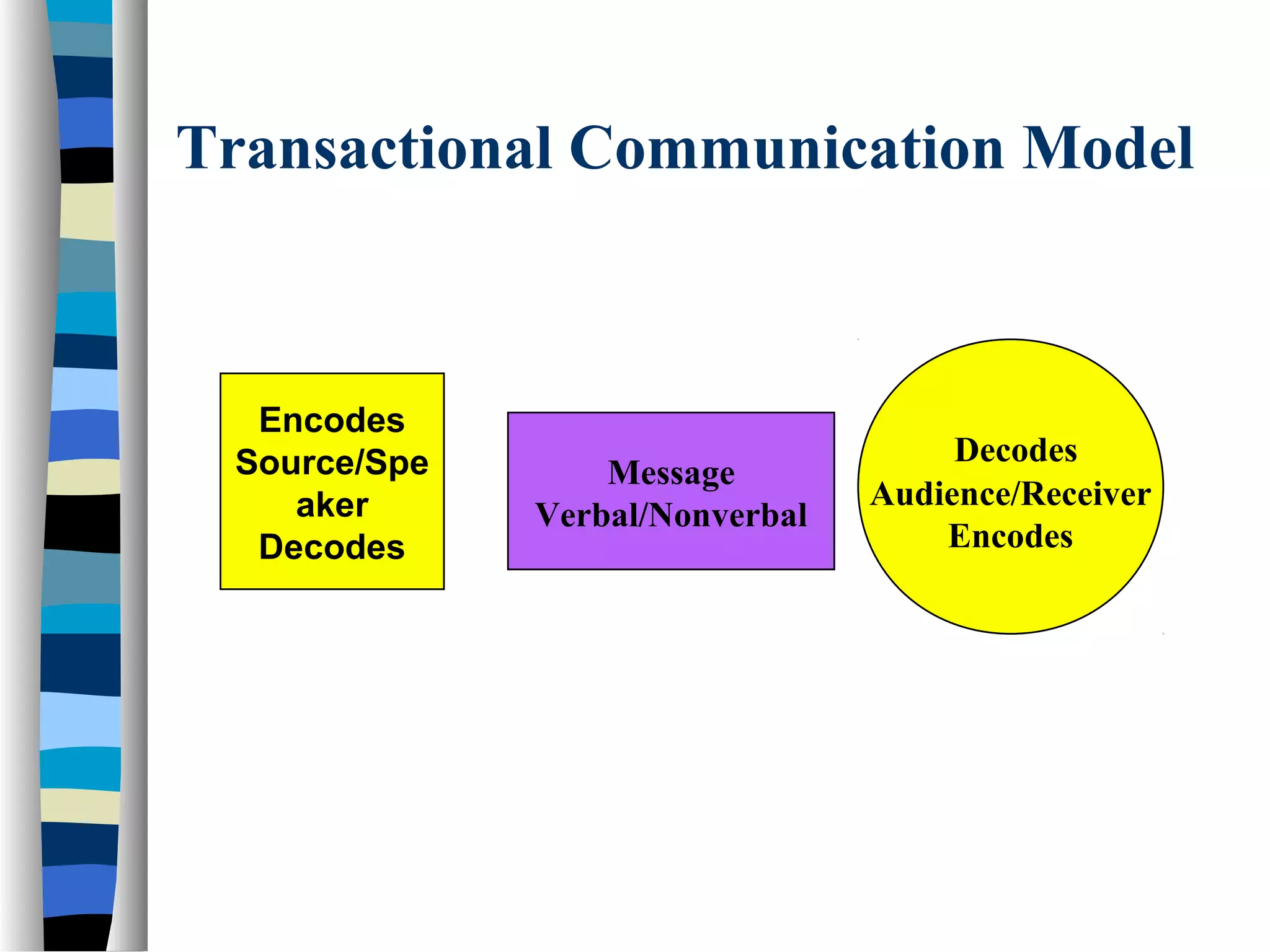
Transactional Communication Model

Encodes
Source/Spe
aker
Decodes

Message
Verbal/Nonverbal

Decodes
Audience/Receiver
Encodes
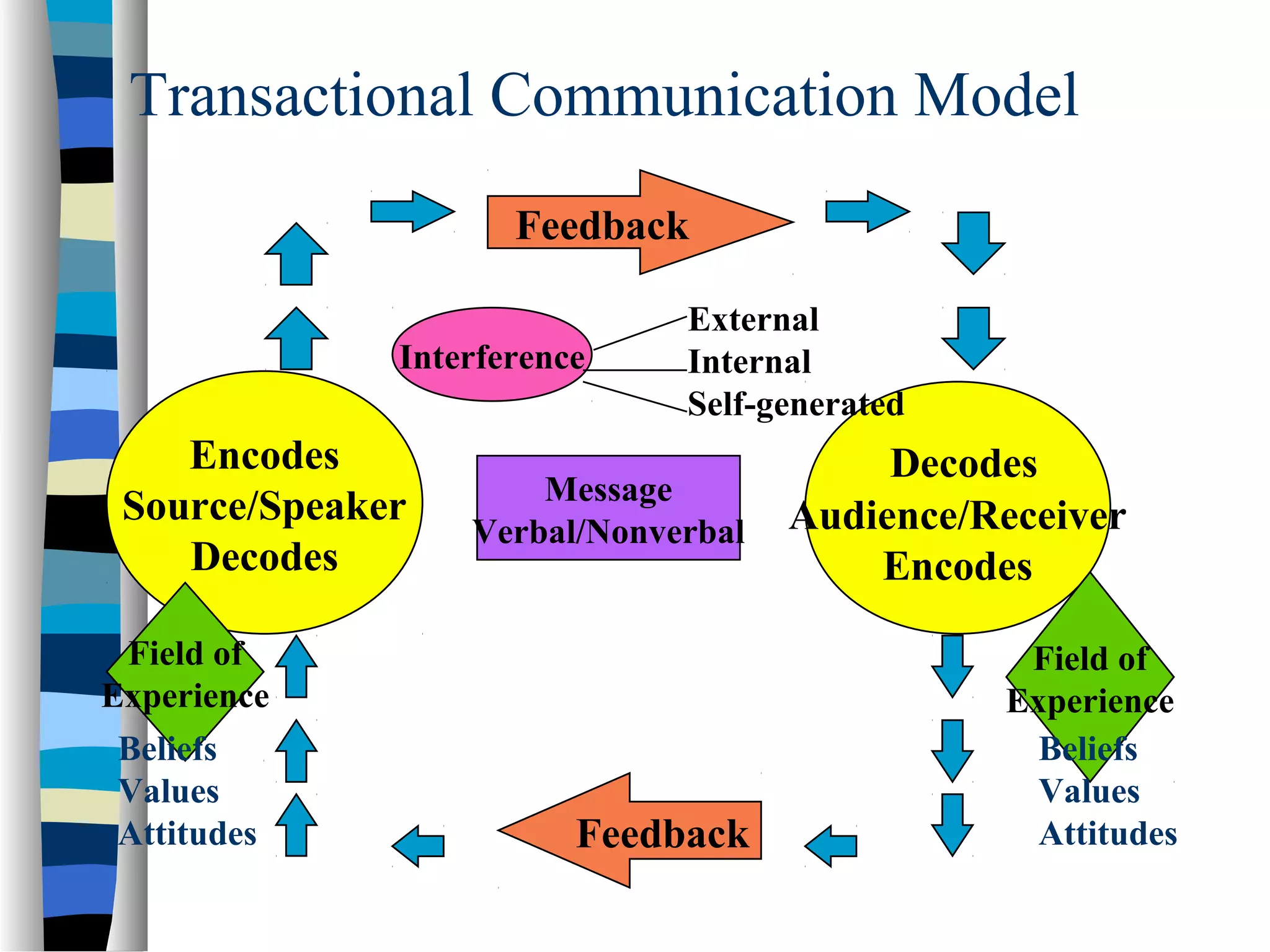
Transactional Communication Model
Feedback
Interference

Encodes
Source/Speaker
Decodes

External
Internal
Self-generated

Message
Verbal/Nonverbal

Field of
Experience
Beliefs
Values
Attitudes

Feedback

Decodes
Audience/Receiver
Encodes
Field of
Experience
Beliefs
Values
Attitudes
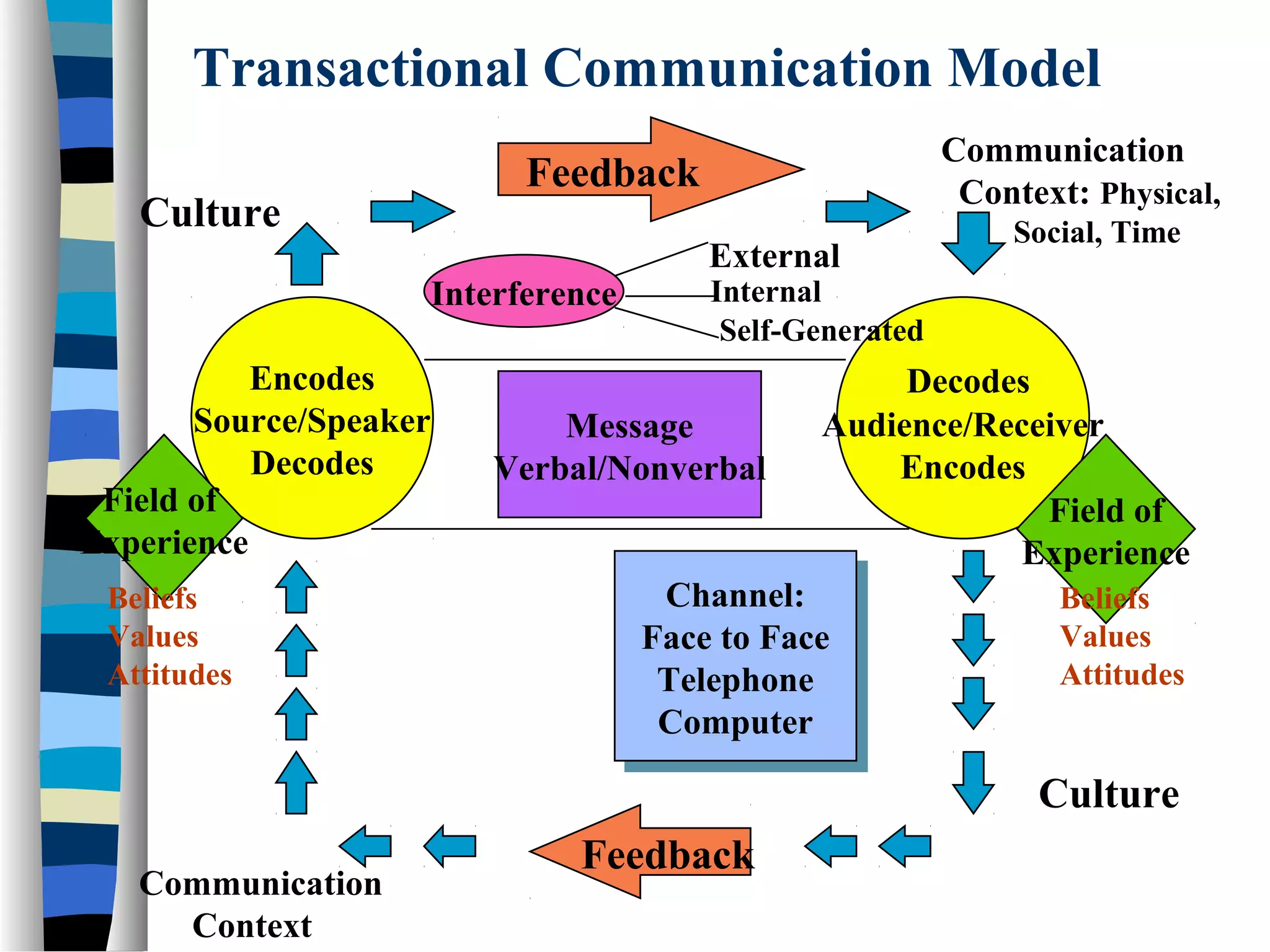
Transactional Communication Model
Culture

Feedback
Interference

Encodes
Source/Speaker
Decodes
Field of
Experience
Beliefs
Values
Attitudes

Communication
Context: Physical,
External

Social, Time

Internal
Self-Generated

Message
Verbal/Nonverbal

Decodes
Audience/Receiver
Encodes
Field of
Experience

Channel:
Channel:
Face to Face
Face to Face
Telephone
Telephone
Computer
Computer

Beliefs
Values
Attitudes

Culture
Communication
Context

Feedback
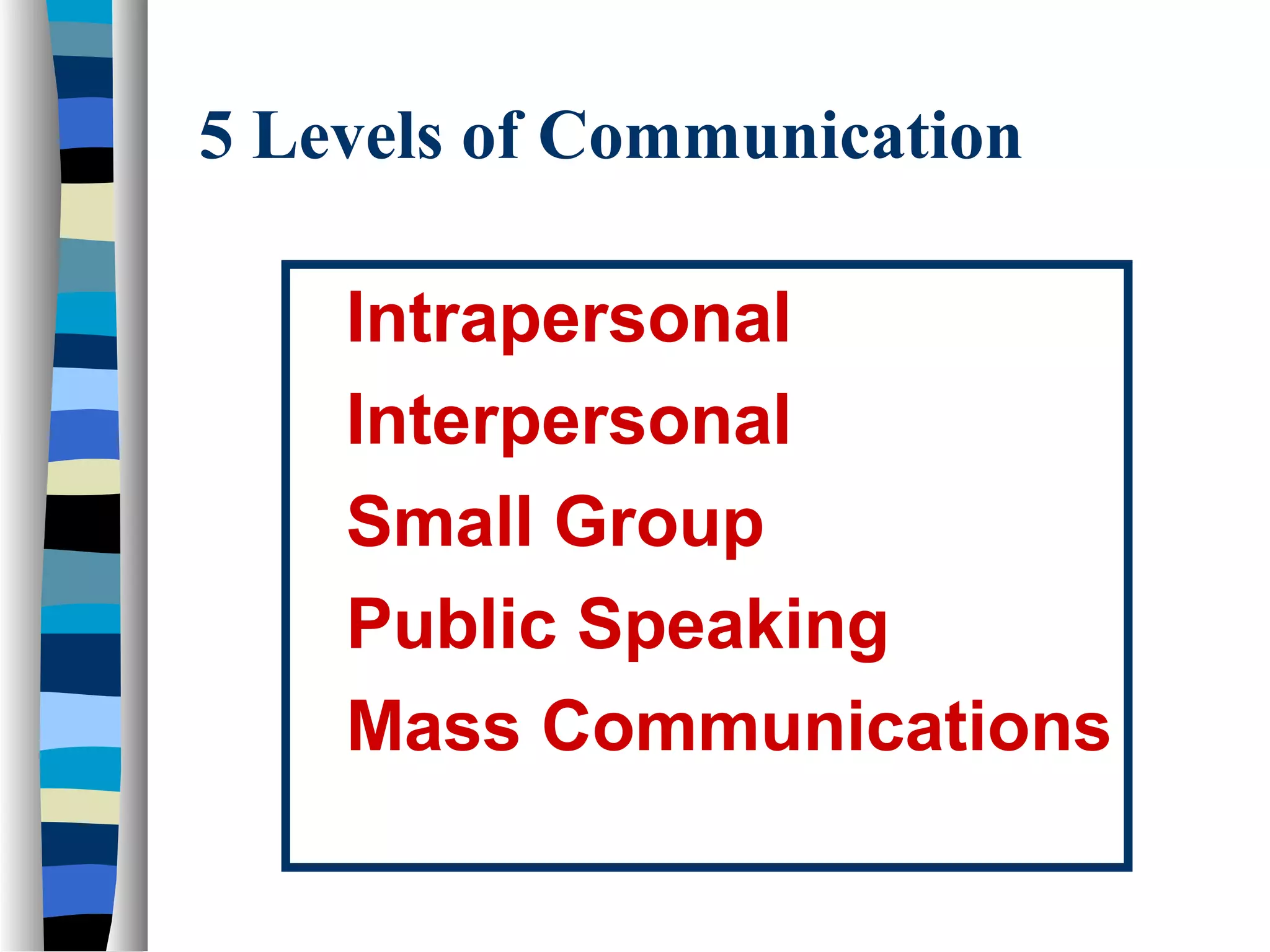
5 Levels of Communication
Intrapersonal
Interpersonal
Small Group
Public Speaking
Mass Communications

ch 1 - speech