Web
Authentication
with Shibboleth
 A view from the Flat East


      Jon Warbrick
   Computing Service
 University of Cambridge
    jw35@cam.ac.uk
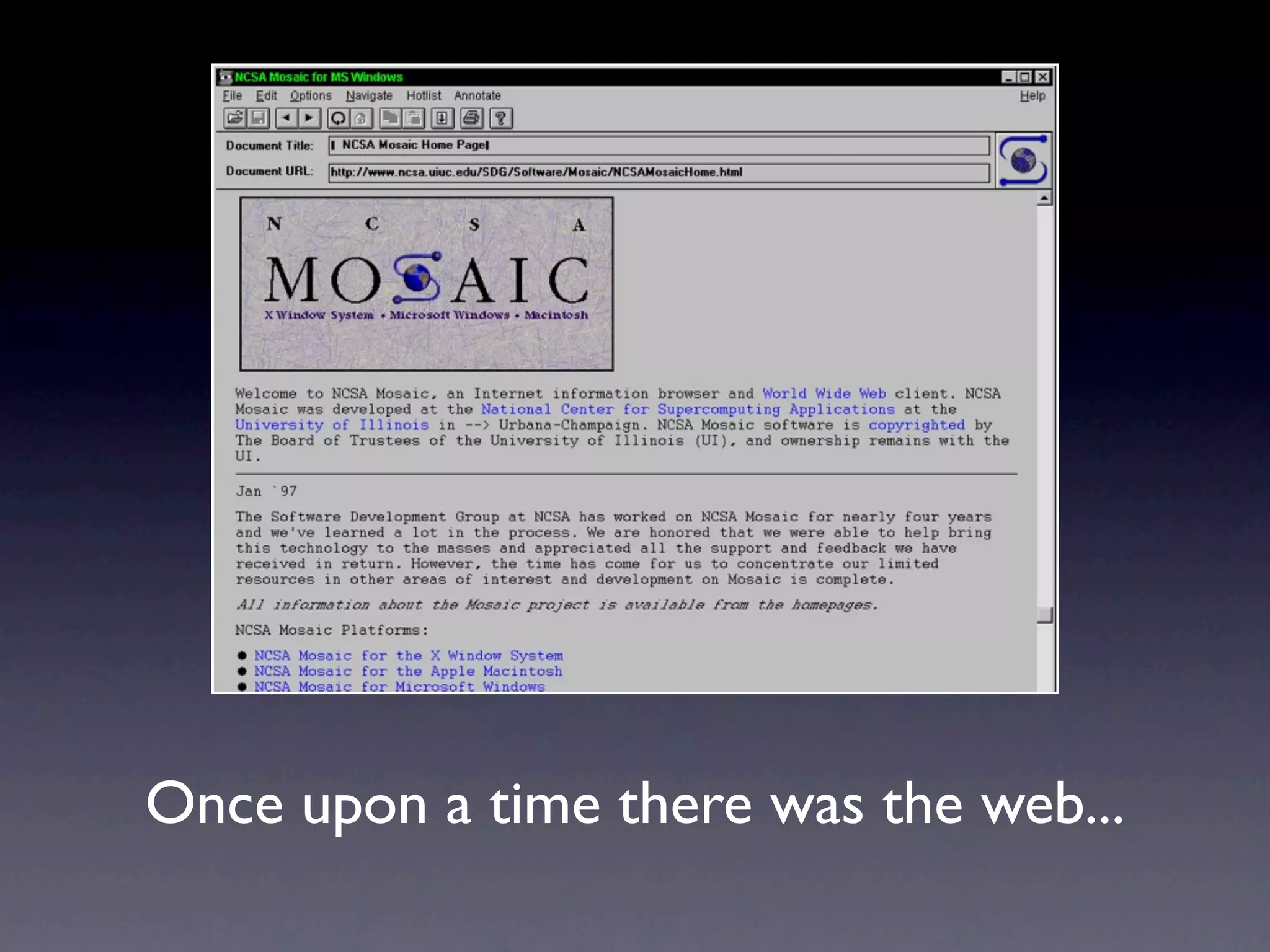
Once upon a time there was the web...
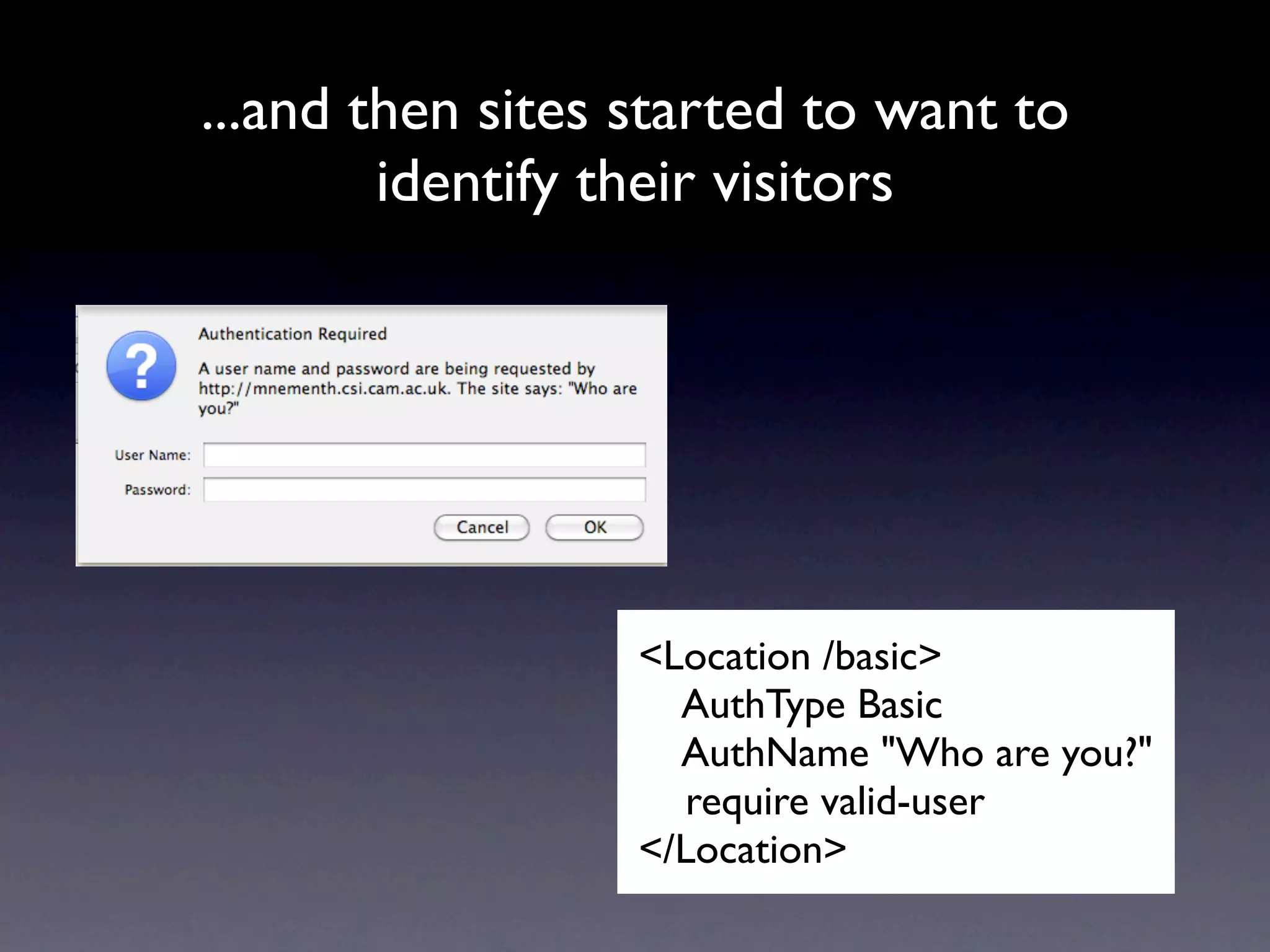
...and then sites started to want to
        identify their visitors


                  <Location /basic>
                    AuthType Basic
                    AuthName "Who are you?"
                     require valid-user
                  </Location>
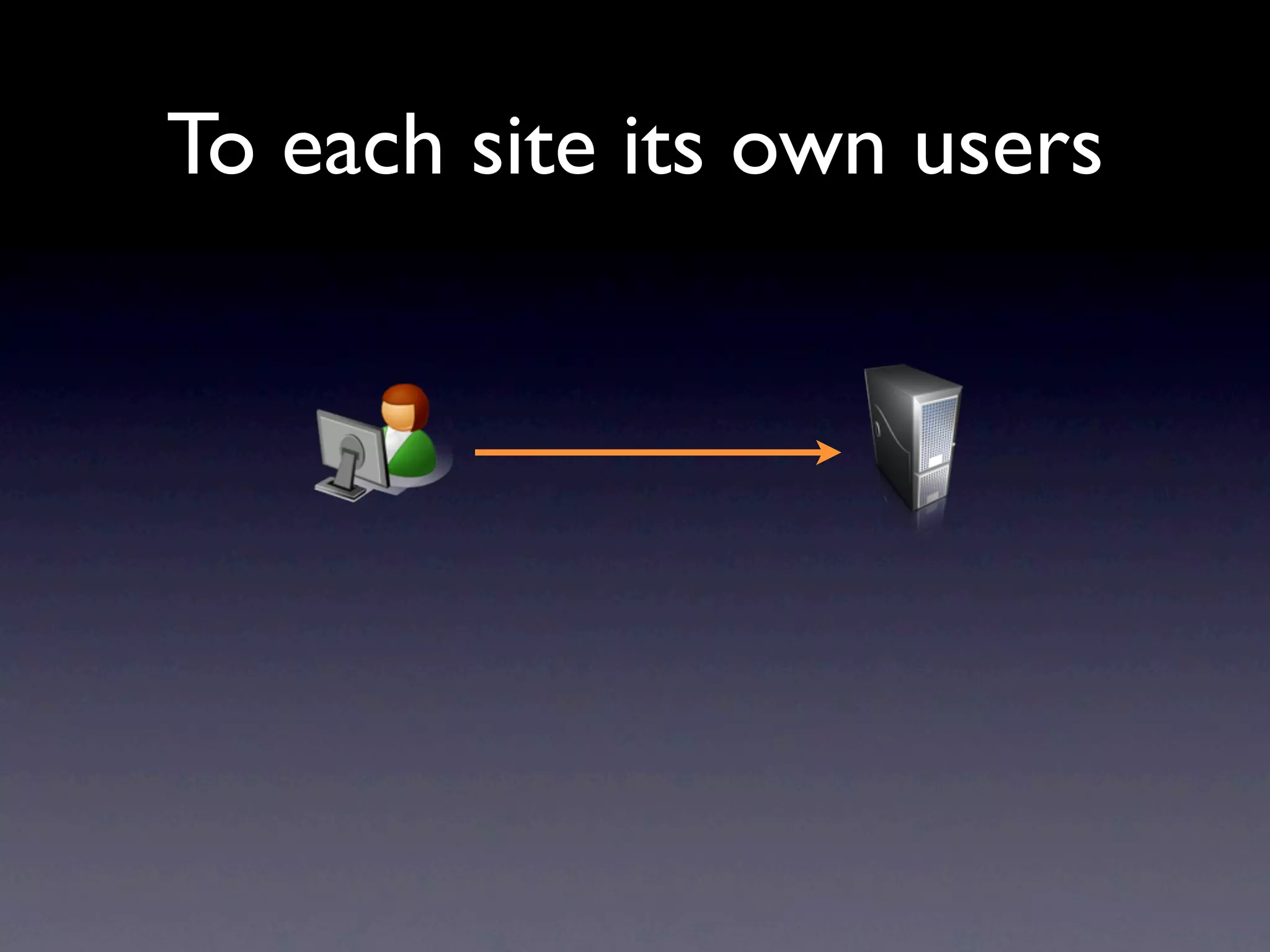
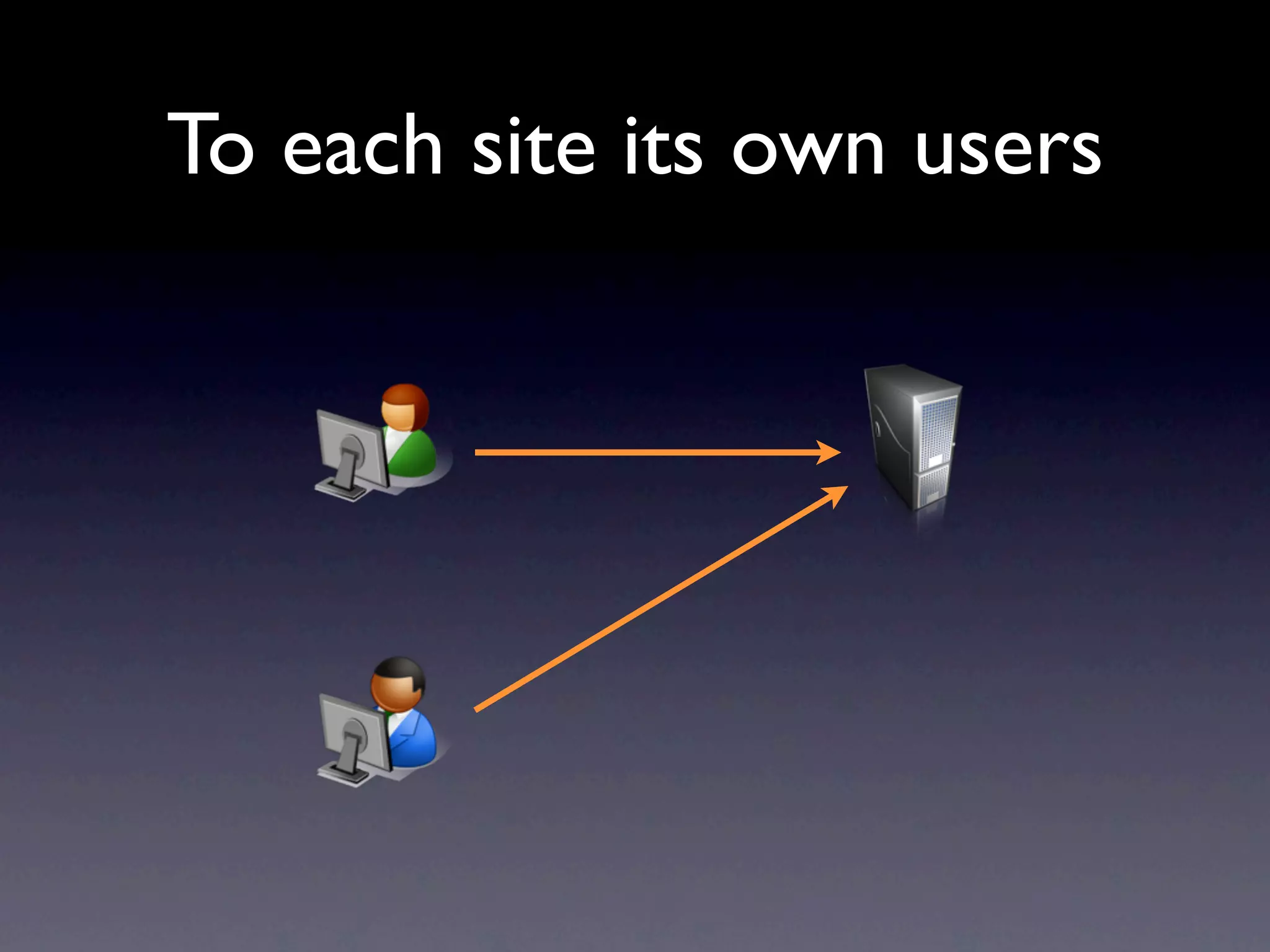
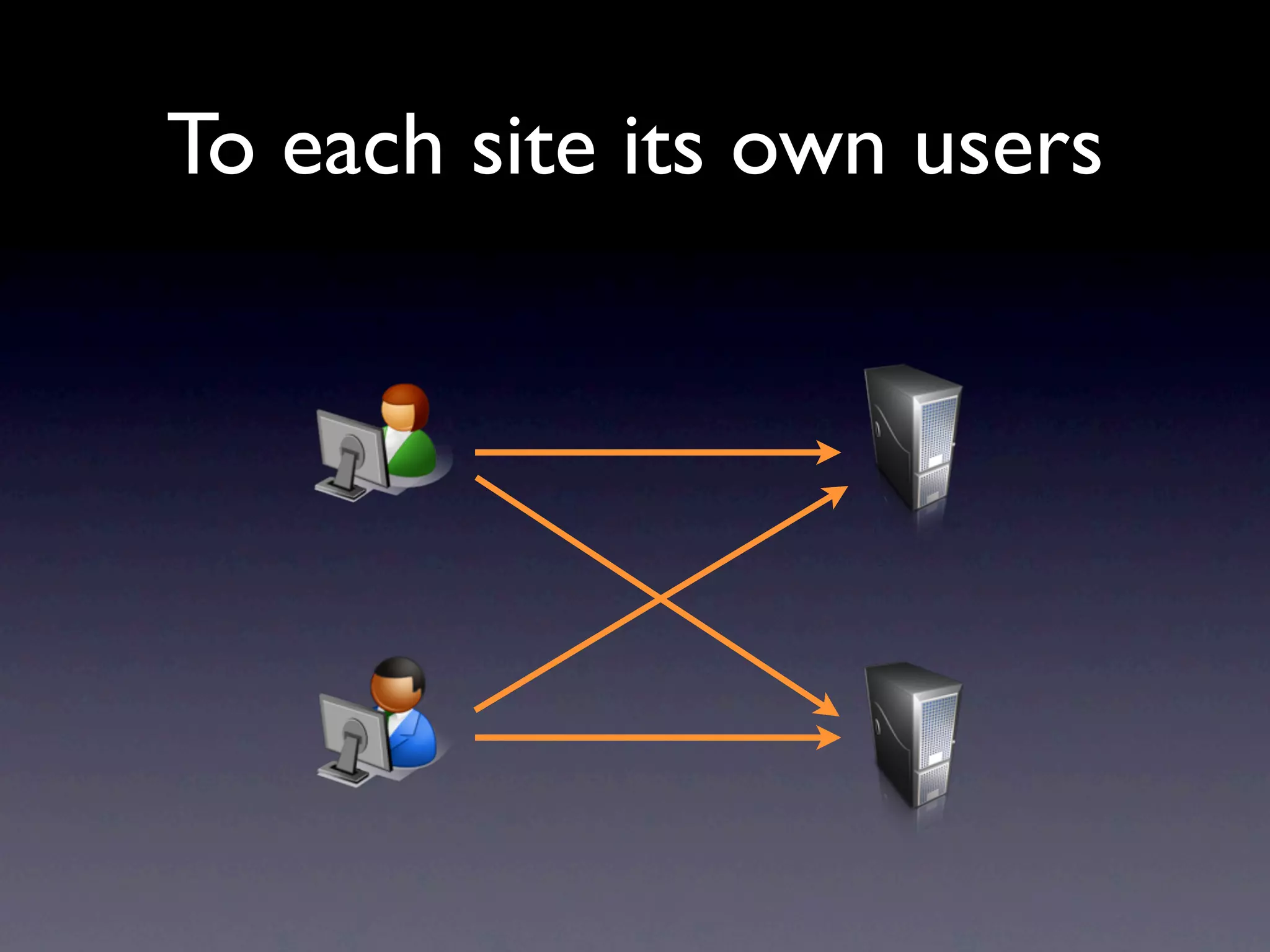
To each site its own users
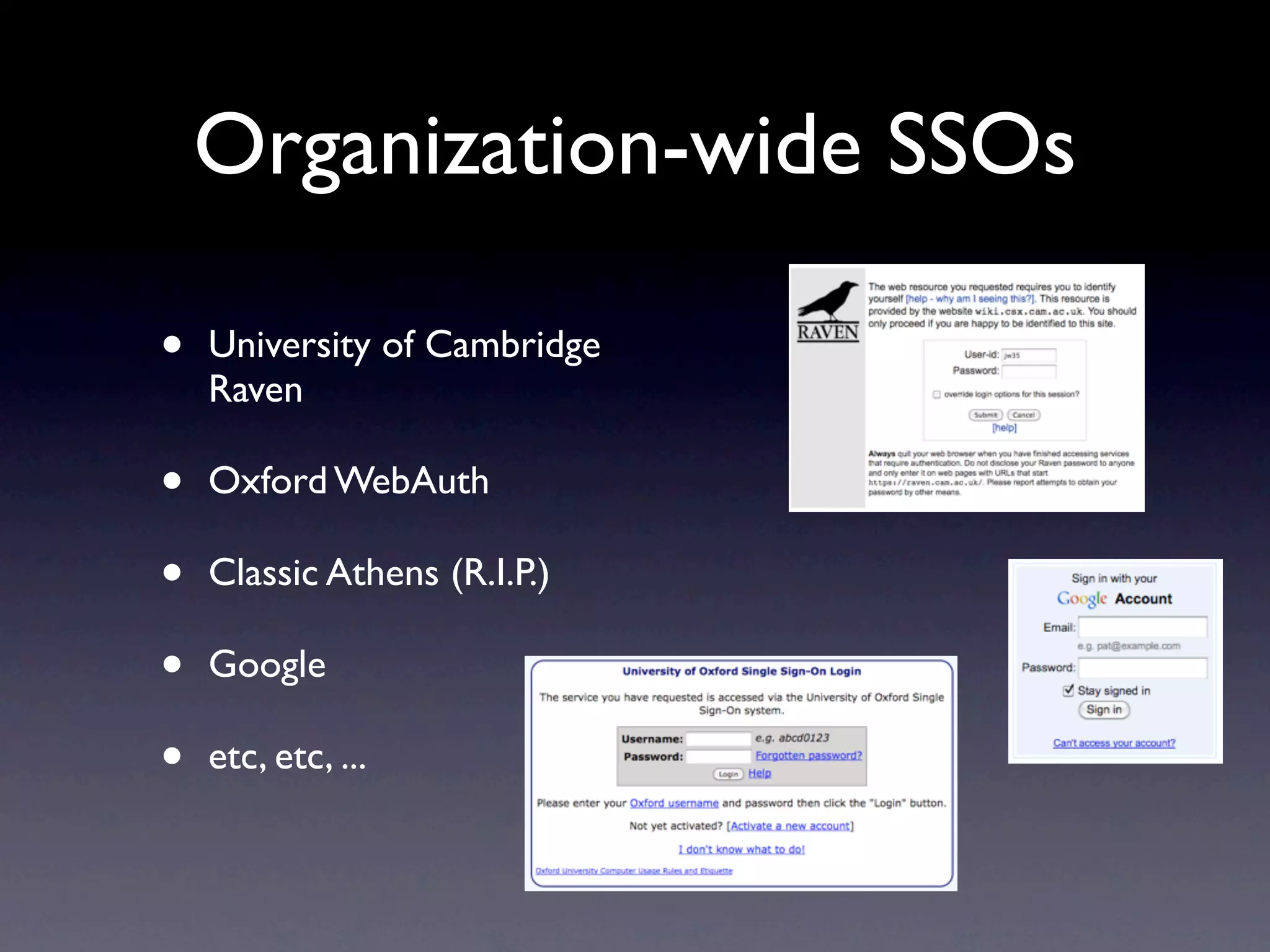
Organization-wide SSOs

•   University of Cambridge
    Raven

•   Oxford WebAuth

•   Classic Athens (R.I.P.)

•   Google

•   etc, etc, ...
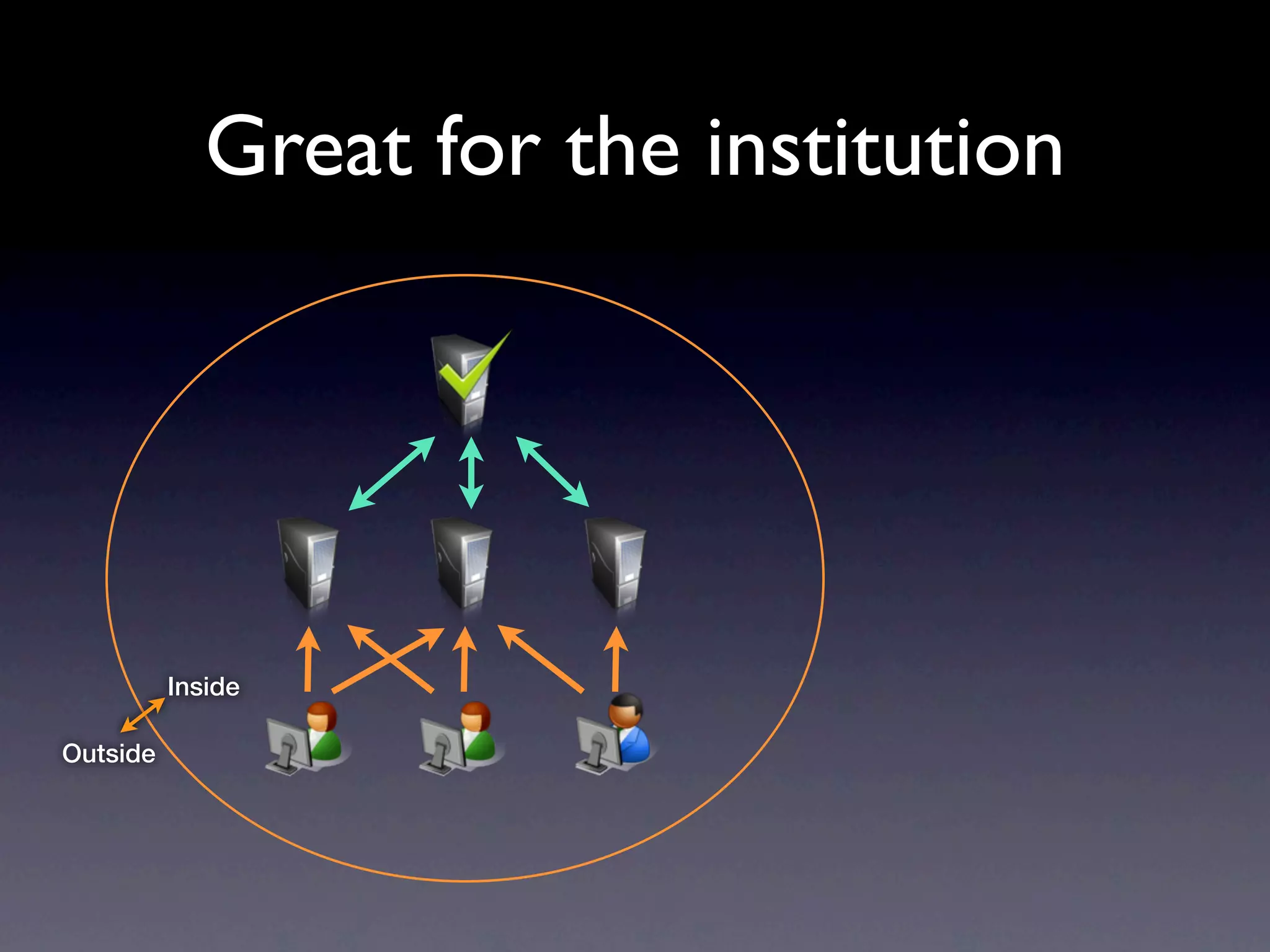
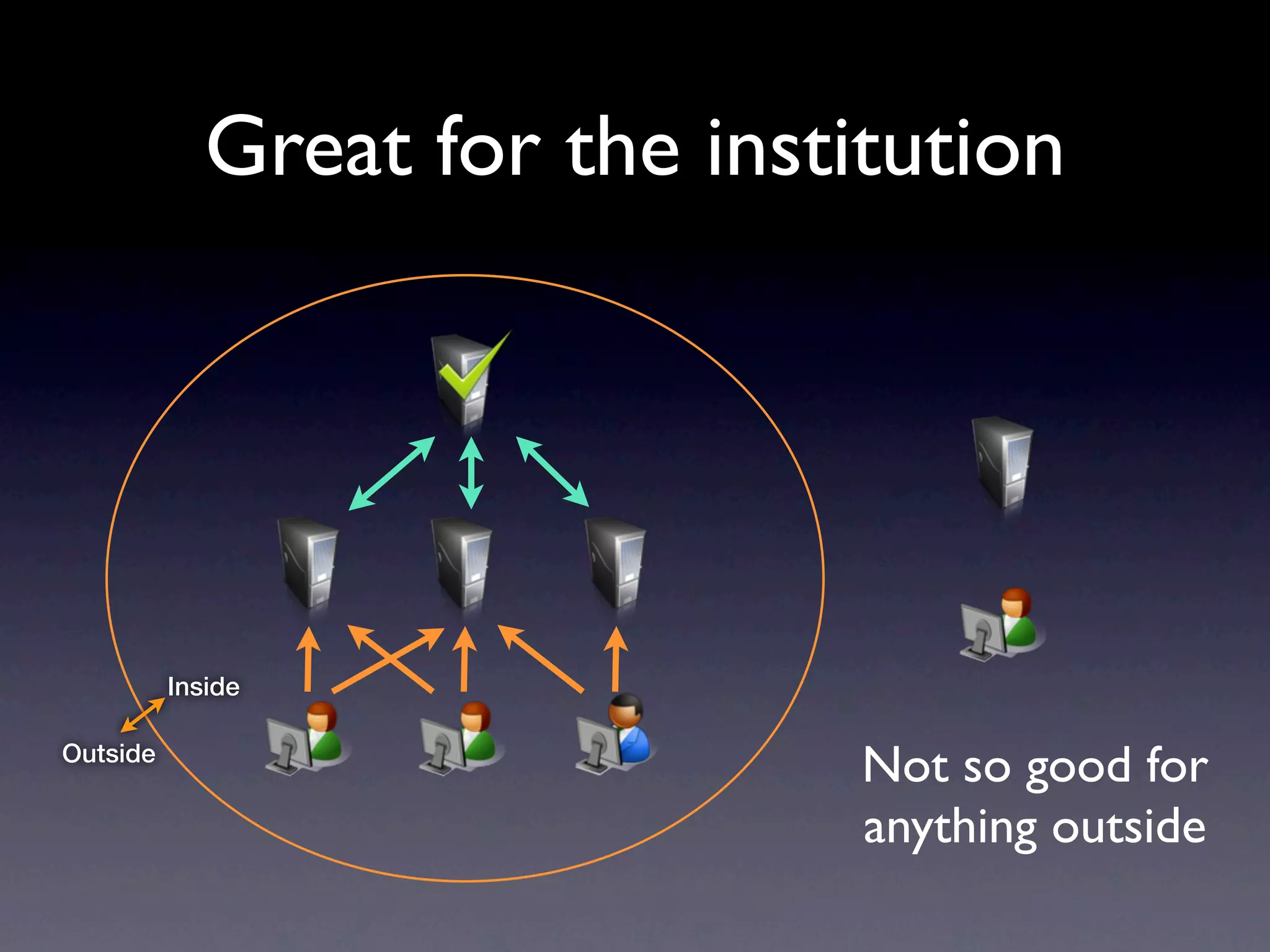
Great for the institution


          Inside

Outside
Great for the institution


          Inside

Outside
                                Not so good for
                                anything outside
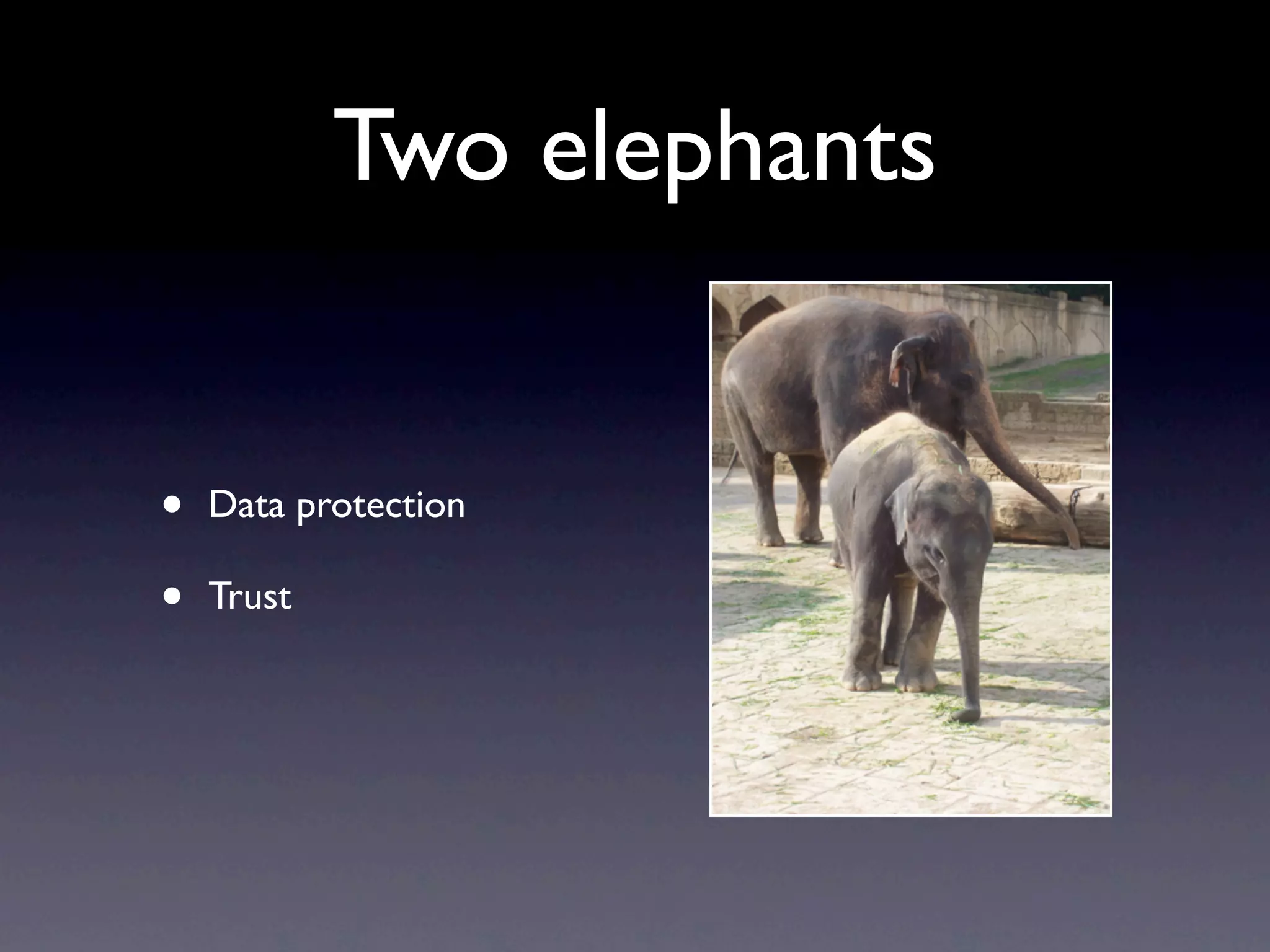
Two elephants


•   Data protection

•   Trust
Enter the Griffin
•   AKA Shibboleth
•   A Web Auth system
    designed to support
    (though not to require)
    •  multiple IdPs
    •  inter-organization use
    •  privacy and anonymity
    •  multiple attributes
Myth and Legends
•   Shib is only for e-
    Journals

•   Only supports anonymity

•   Only supplied by
    Internet2

•   Doesn’t do standards

•   Is really hard
So, what can we do
      with it?
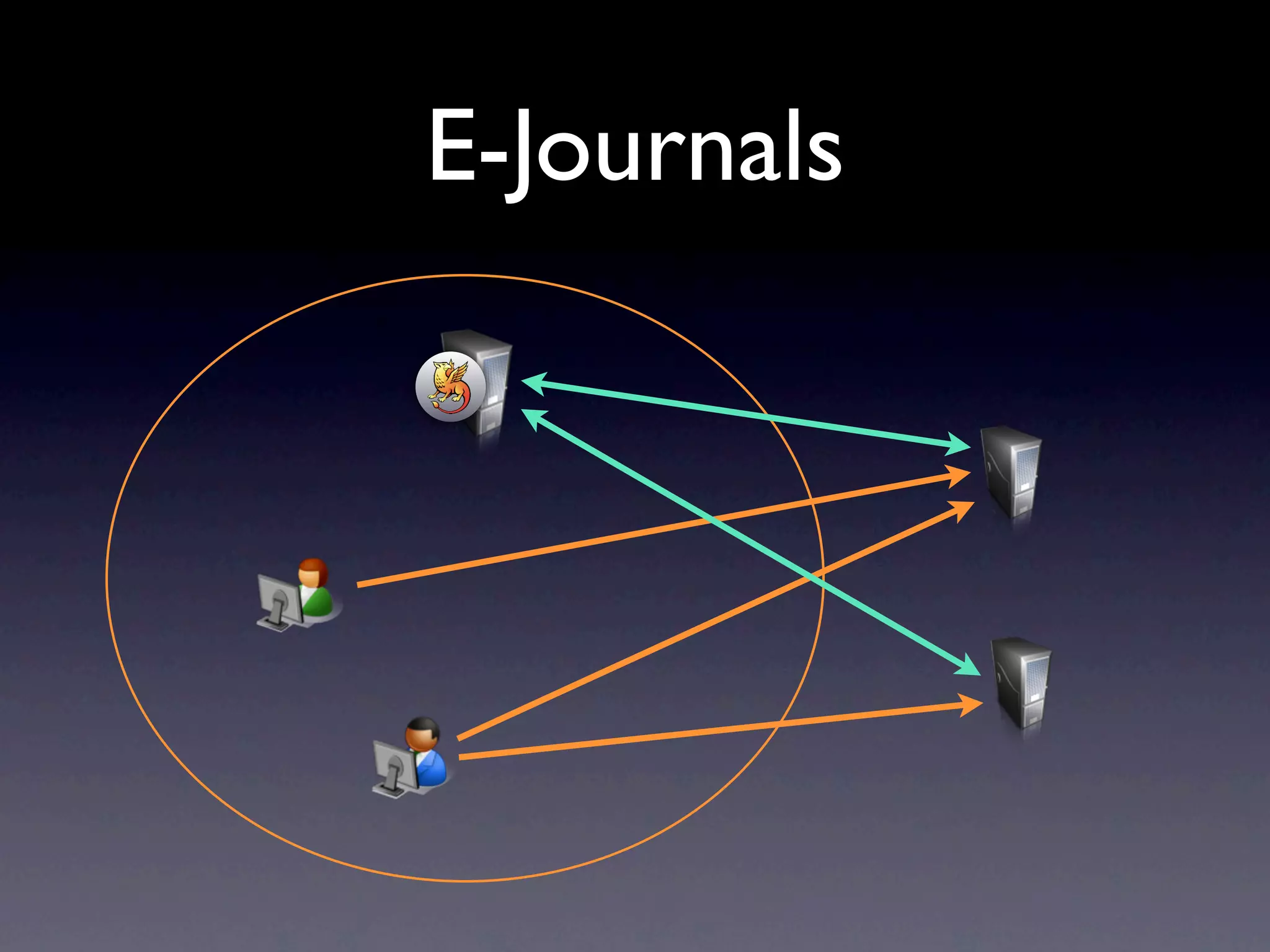
E-Journals
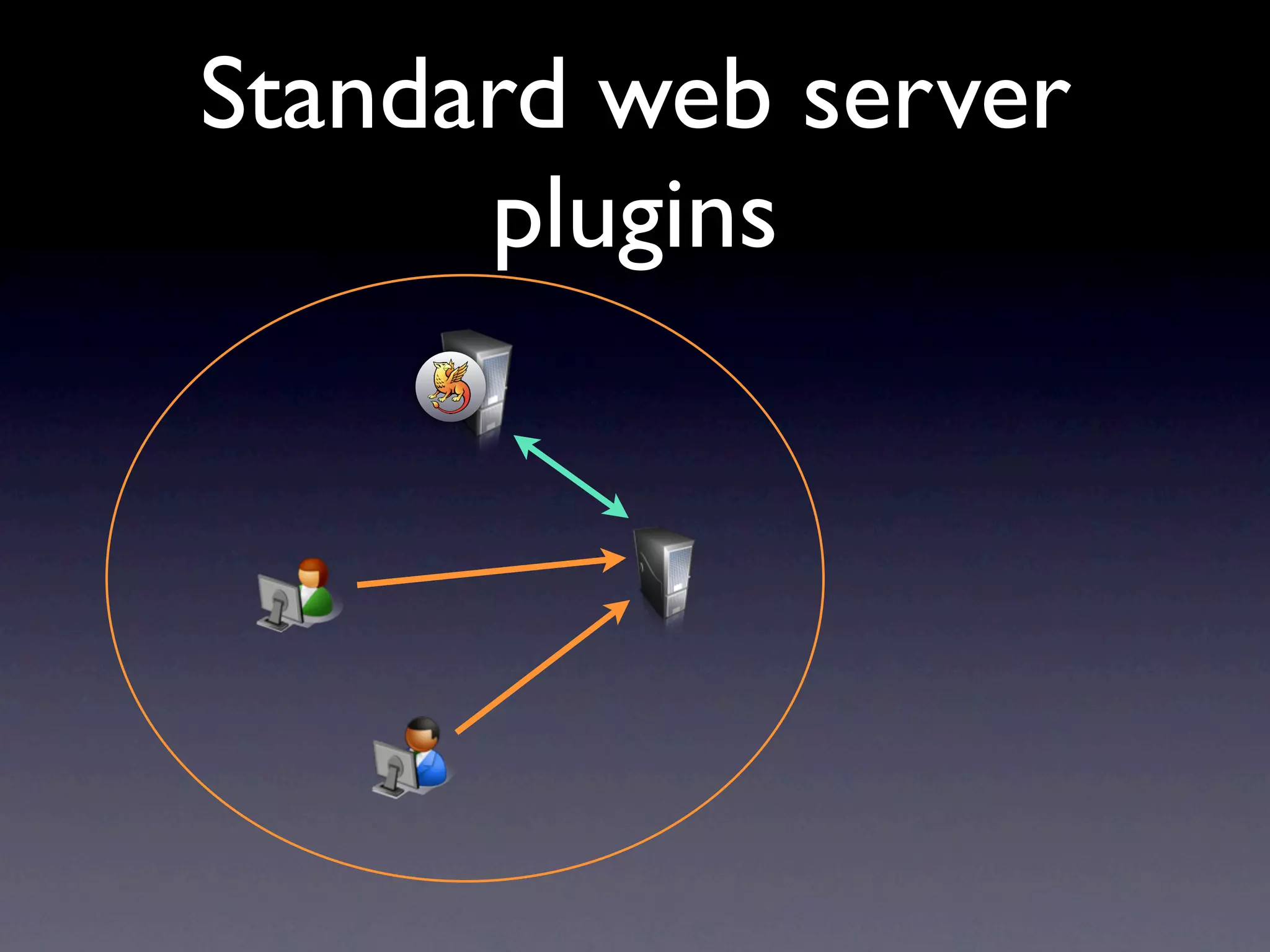
Standard web server
      plugins
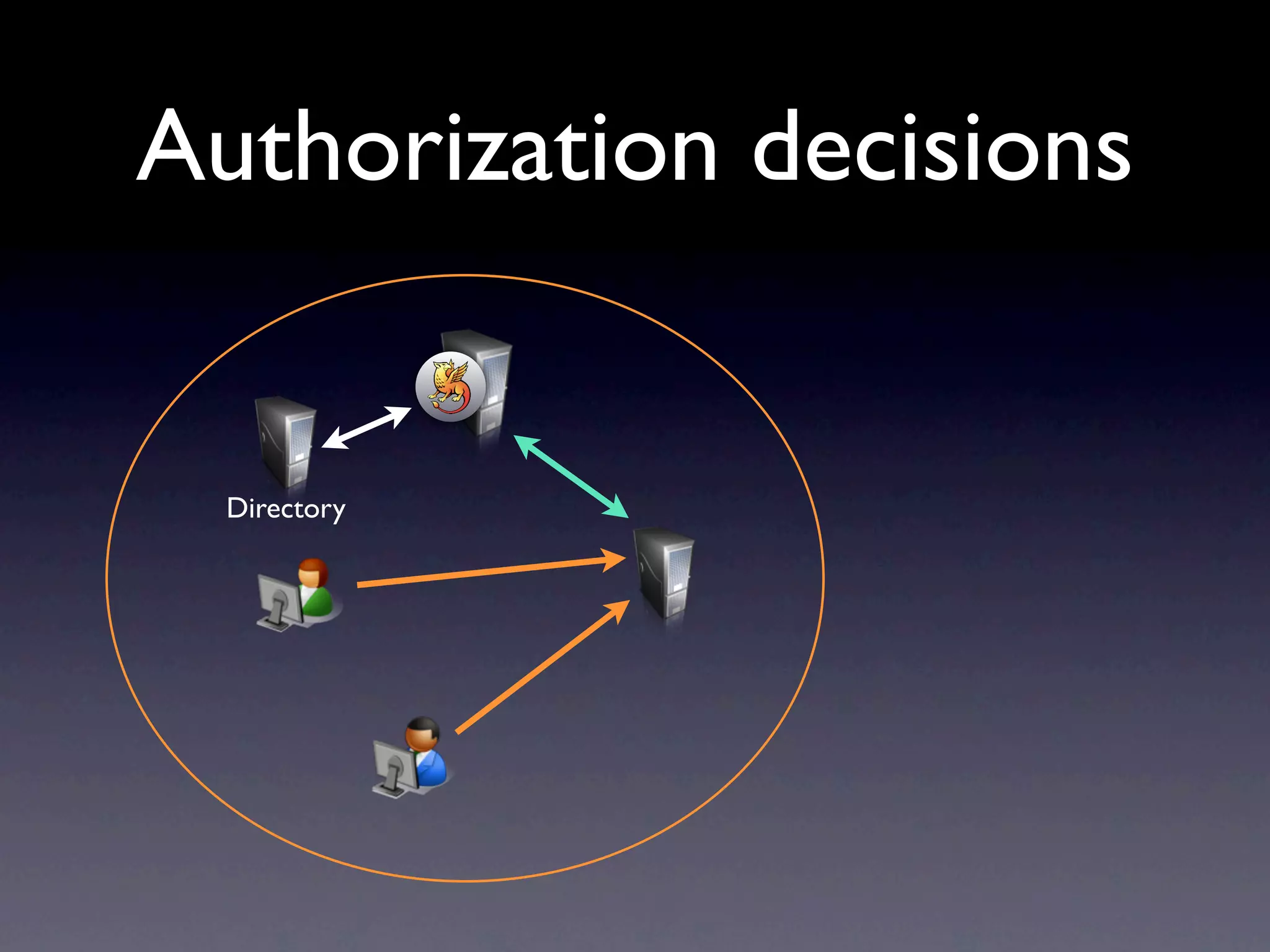
Authorization decisions


  Directory
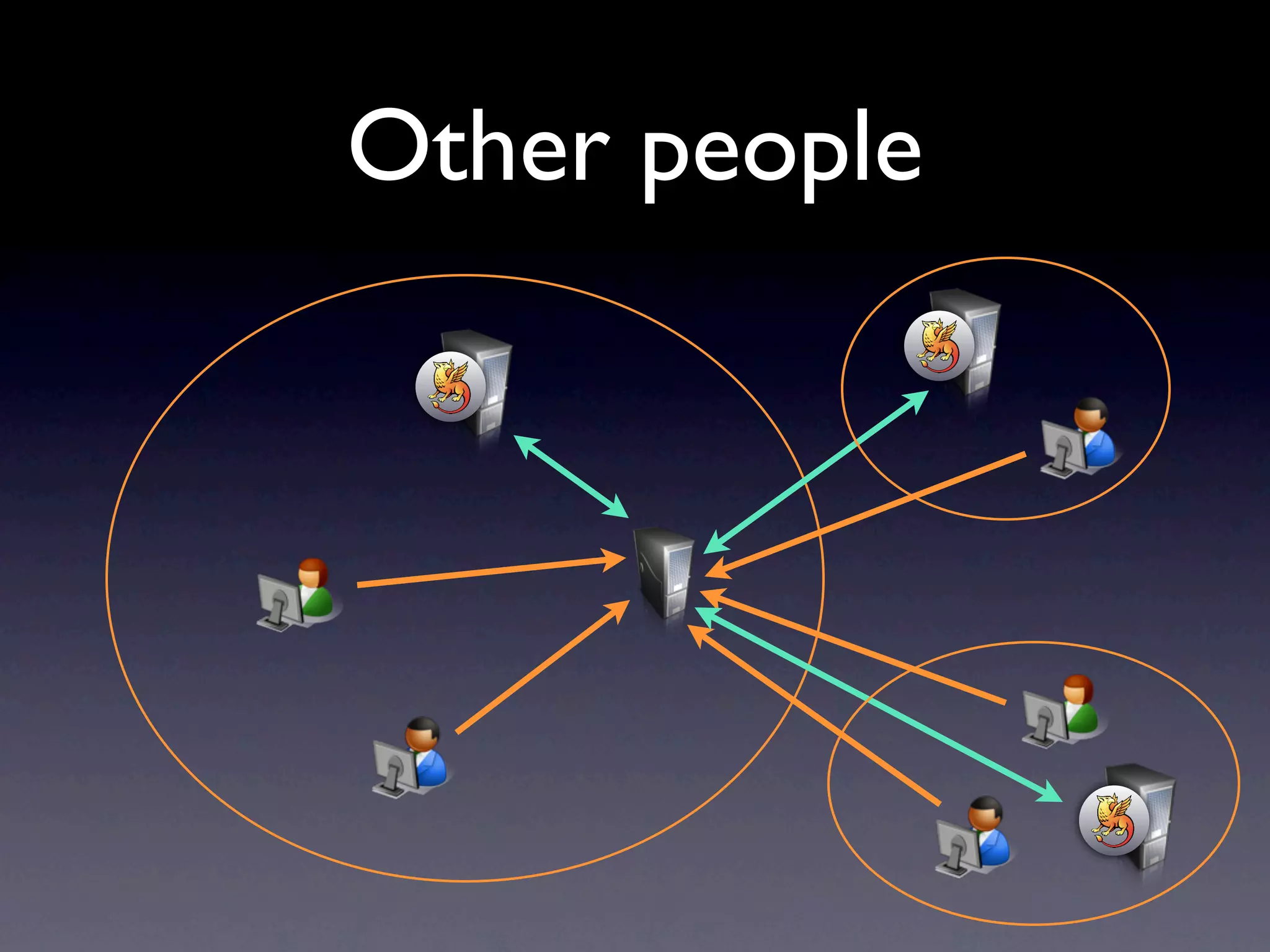
Other people
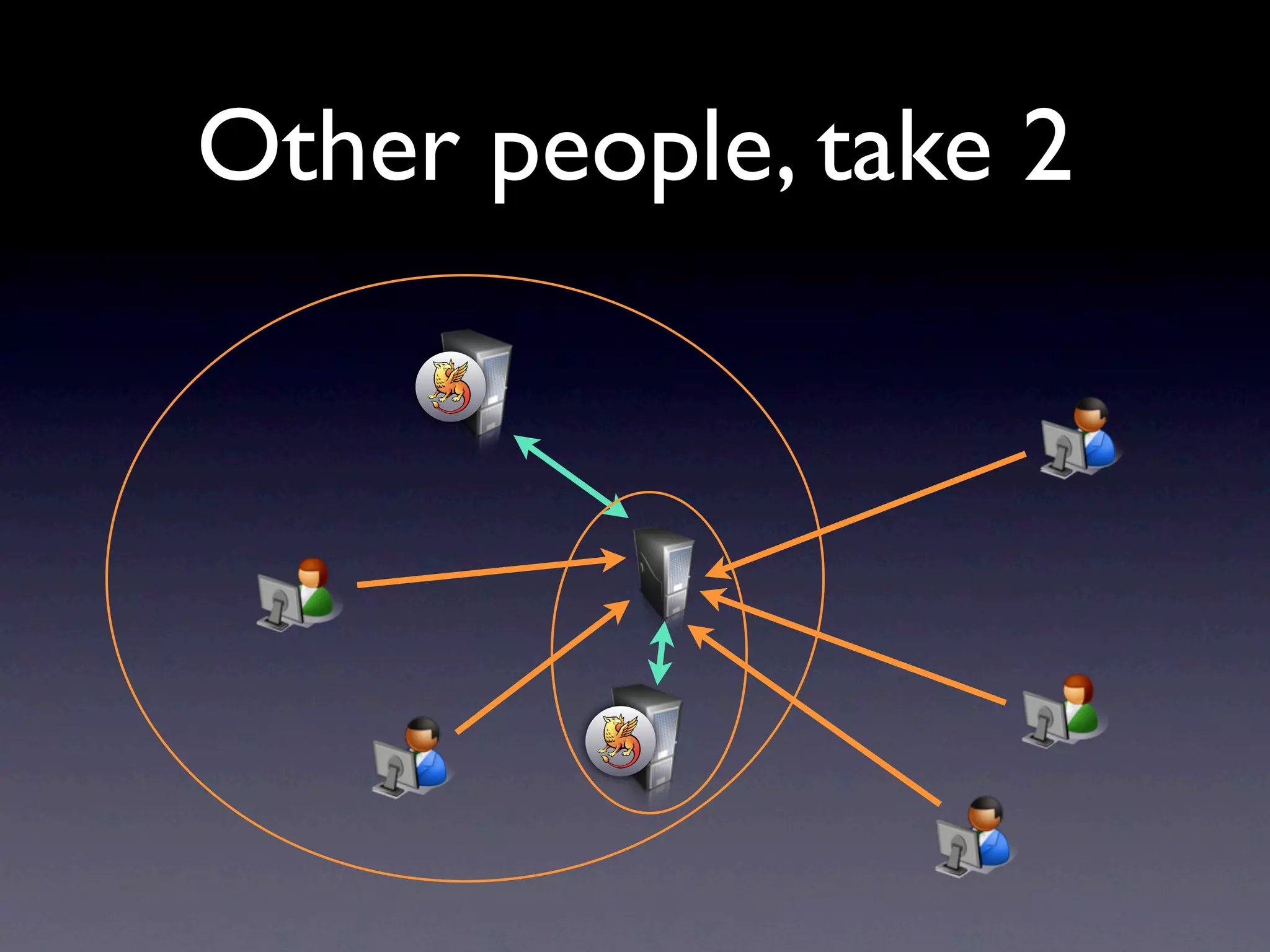
Other people, take 2
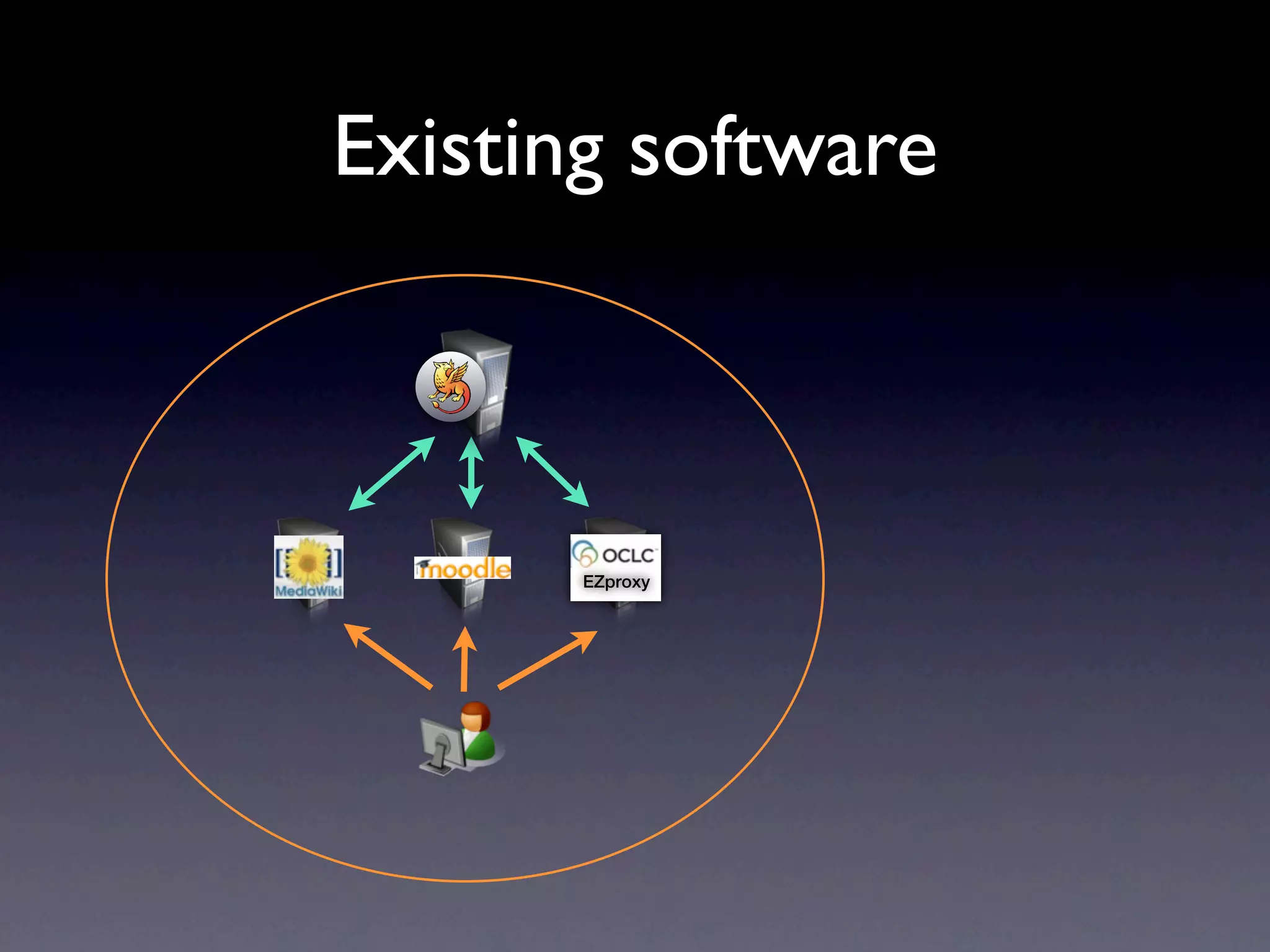
Existing software


       EZproxy
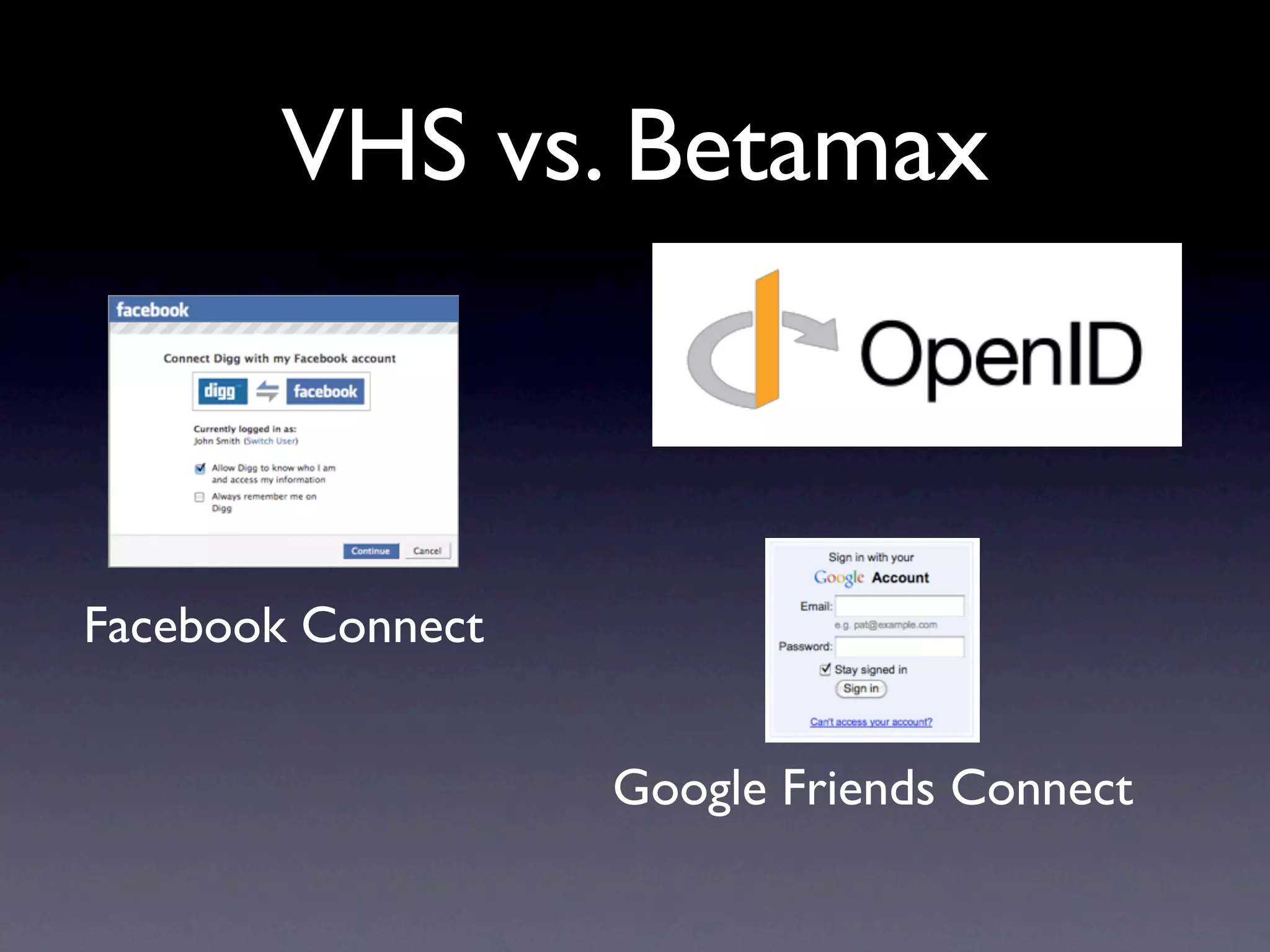
VHS vs. Betamax


Facebook Connect


                   Google Friends Connect
Thanks for listening...

• There may be questions...

• ...including perhaps ‘Why “Shibboleth?”’
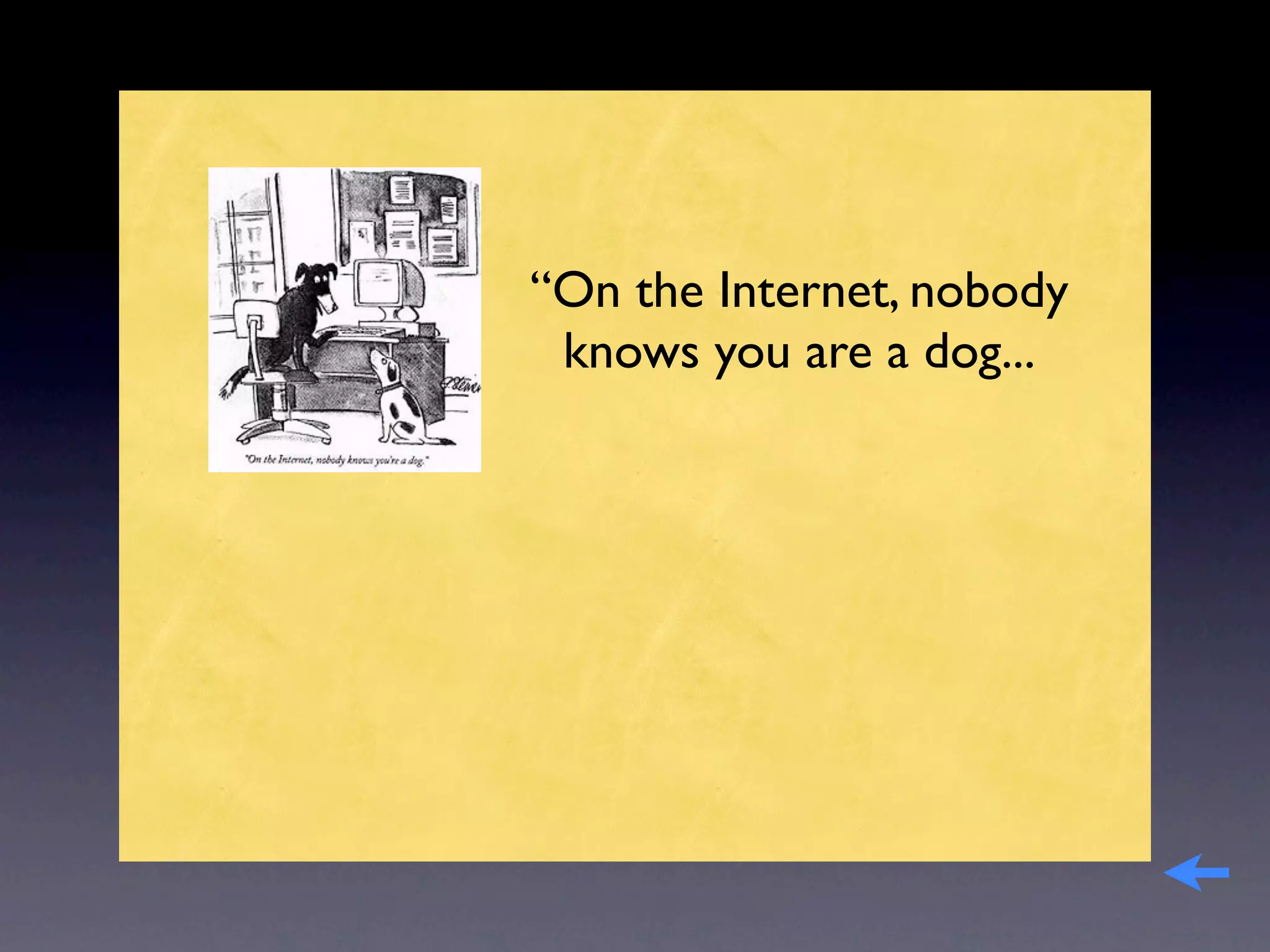
“On the Internet, nobody
 knows you are a dog...
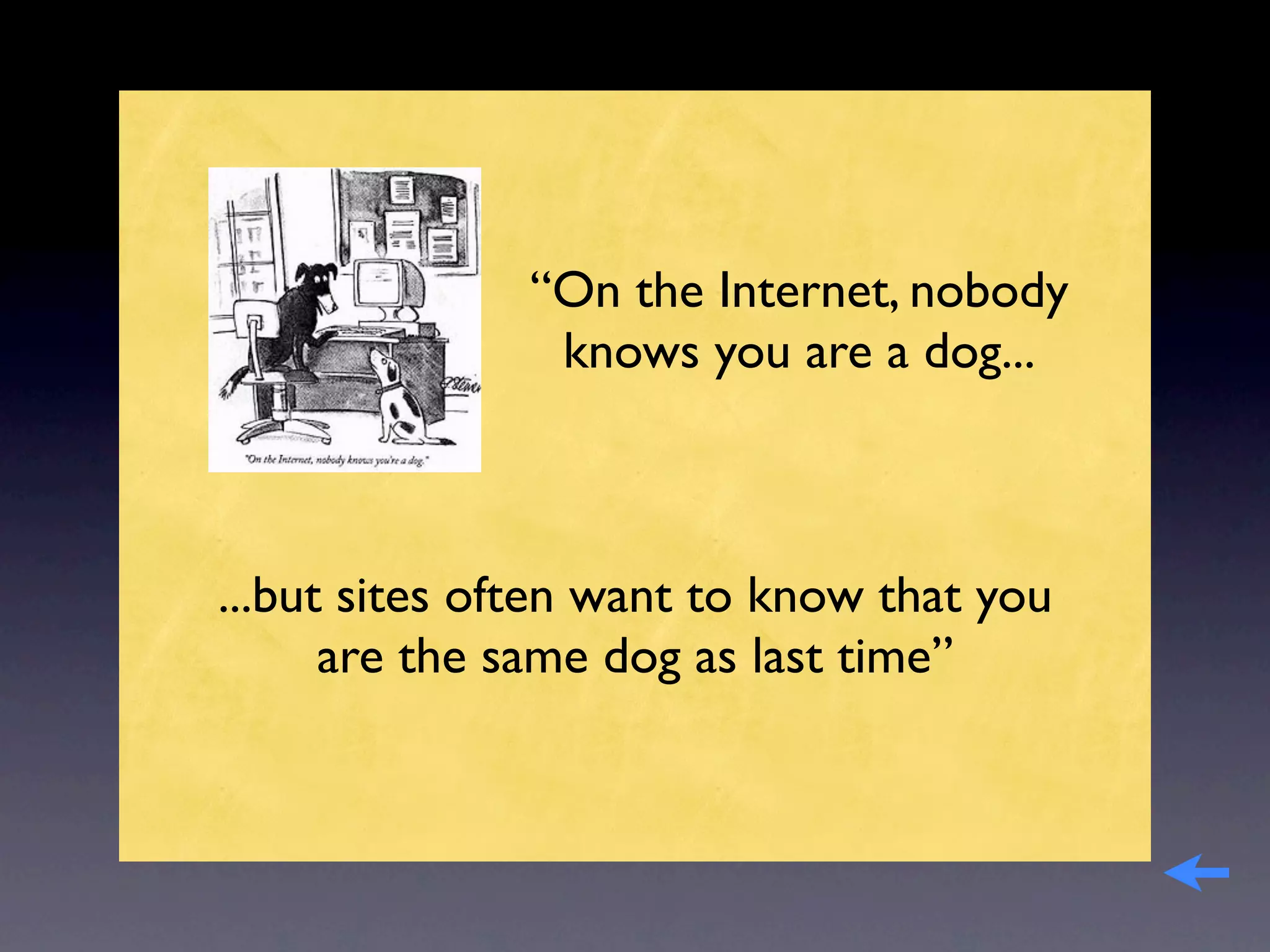
“On the Internet, nobody
               knows you are a dog...


...but sites often want to know that you
      are the same dog as last time”
Credits
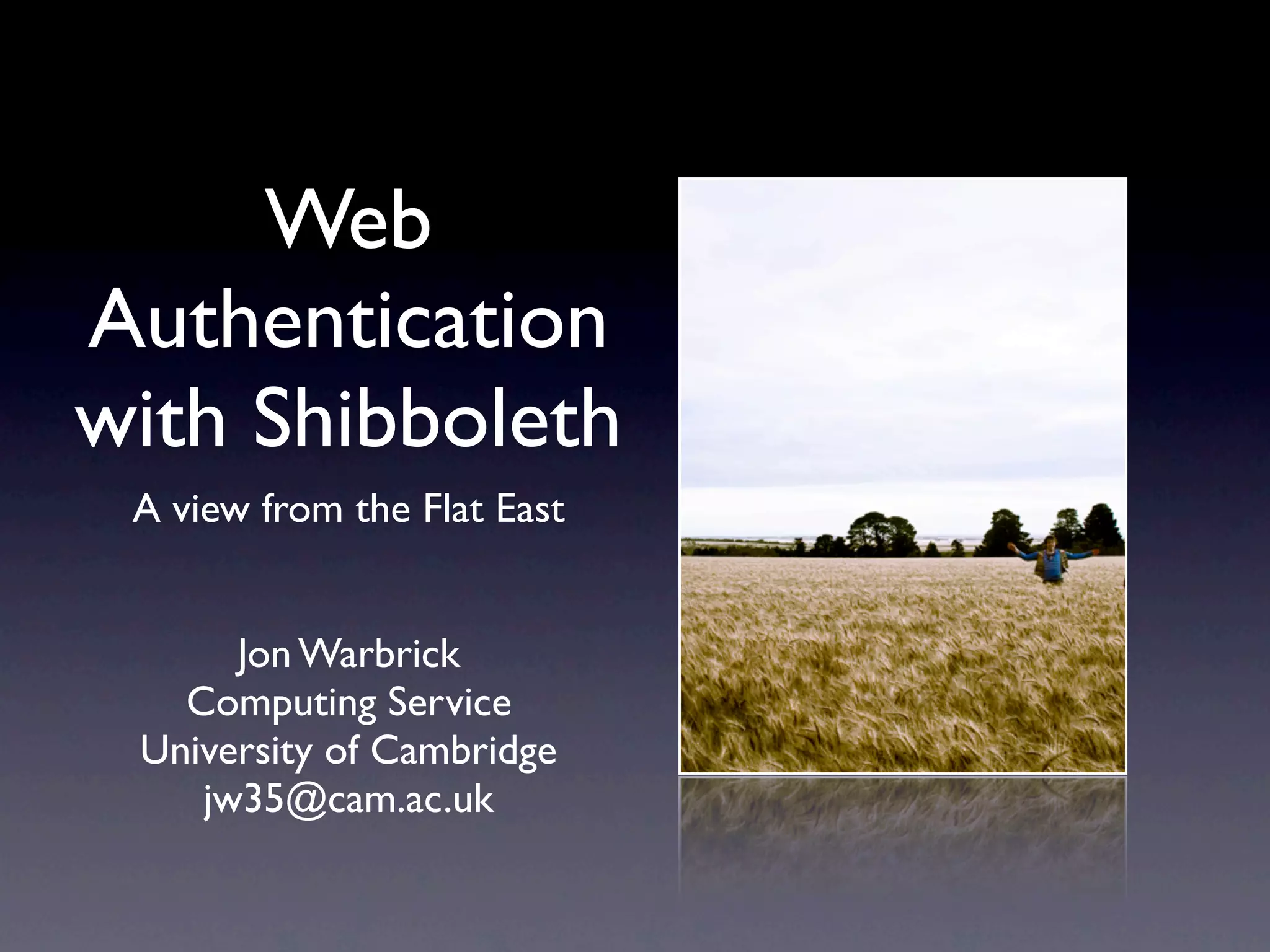
•   ‘In the Field’, Julian Wearne, http://www.flickr.com/photos/ikaink/
    4184787380
•   Mosaic screen shot courtesy of NCSA/University of Illinois http://
    www.ncsa.illinois.edu/News/Images/
•   two elephants, Timo Heuer, http://www.flickr.com/photos/upim/
    293676365/
•   Fire Breathing Mythical Dragon, Wili Hybird, http://www.flickr.com/
    photos/walkadog/3484426248/
•   “On the Internet”, by Peter Steiner, page 61 of July 5, 1993 issue of
    The New Yorker, (Vol.69 (LXIX) no. 20). Reproduced only for
    academic discussion, evaluation, and research.
•   “Same dog as before”: “Tofu, online trust, and spiritual wisdom”
    from the Pushing Strings” blog by Eve Maler.

Web Authenication with Shibboleth - a view from the Flat East

  • 1.
    Web Authentication with Shibboleth Aview from the Flat East Jon Warbrick Computing Service University of Cambridge jw35@cam.ac.uk
  • 2.
    Once upon atime there was the web...
  • 3.
    ...and then sitesstarted to want to identify their visitors <Location /basic> AuthType Basic AuthName "Who are you?" require valid-user </Location>
  • 4.
    To each siteits own users
  • 5.
    To each siteits own users
  • 6.
    To each siteits own users
  • 7.
    Organization-wide SSOs • University of Cambridge Raven • Oxford WebAuth • Classic Athens (R.I.P.) • Google • etc, etc, ...
  • 8.
    Great for theinstitution Inside Outside
  • 9.
    Great for theinstitution Inside Outside Not so good for anything outside
  • 10.
    Two elephants • Data protection • Trust
  • 11.
    Enter the Griffin • AKA Shibboleth • A Web Auth system designed to support (though not to require) • multiple IdPs • inter-organization use • privacy and anonymity • multiple attributes
  • 12.
    Myth and Legends • Shib is only for e- Journals • Only supports anonymity • Only supplied by Internet2 • Doesn’t do standards • Is really hard
  • 13.
    So, what canwe do with it?
  • 14.
  • 15.
  • 16.
  • 17.
  • 18.
  • 19.
  • 20.
    VHS vs. Betamax FacebookConnect Google Friends Connect
  • 21.
    Thanks for listening... •There may be questions... • ...including perhaps ‘Why “Shibboleth?”’
  • 23.
    “On the Internet,nobody knows you are a dog...
  • 24.
    “On the Internet,nobody knows you are a dog... ...but sites often want to know that you are the same dog as last time”
  • 26.
    Credits • ‘In the Field’, Julian Wearne, http://www.flickr.com/photos/ikaink/ 4184787380 • Mosaic screen shot courtesy of NCSA/University of Illinois http:// www.ncsa.illinois.edu/News/Images/ • two elephants, Timo Heuer, http://www.flickr.com/photos/upim/ 293676365/ • Fire Breathing Mythical Dragon, Wili Hybird, http://www.flickr.com/ photos/walkadog/3484426248/ • “On the Internet”, by Peter Steiner, page 61 of July 5, 1993 issue of The New Yorker, (Vol.69 (LXIX) no. 20). Reproduced only for academic discussion, evaluation, and research. • “Same dog as before”: “Tofu, online trust, and spiritual wisdom” from the Pushing Strings” blog by Eve Maler.

Editor's Notes

  • #2 &amp;#x201C;Shibboleth, as a way to authenticate people to web sites, has been around in the UK for several years and yet many people don&apos;t know what it really does and some people still haven&apos;t heard of it. This session will take a quick look at the web authentication landscape, briefly consider what Shibboleth is and how it fits into this landscape, and take a look at what it has, is, and perhaps one day might be used for within the University of Cambridge.&amp;#x201D;\n
  • #3 Once upon a time there was the web...and it was free and open and everyone was happy (and probably wore sandals and had beards).\n
  • #4 Obviously there are lots of good reasons for doing this:\nMaking money\nKeeping things secret\nProviding personalisaion\nThe joys of HTTP basic auth.\n
  • #5 But you are heading for a n-squared problem - password hell for users and administrators.\n
  • #6 But you are heading for a n-squared problem - password hell for users and administrators.\n
  • #7 But you are heading for a n-squared problem - password hell for users and administrators.\n
  • #8 But you are heading for a n-squared problem - password hell for users and administrators.\n
  • #9 But you are heading for a n-squared problem - password hell for users and administrators.\n
  • #10 So to address that, organizations all move to some sort of central authentication, probably doing some sort of SSO while you are at it. \n\nNote that most of these leverage HTTP redirects so that passwords are only ever given to one recognizable service. This is at least a reasonable way to use passwords, despite the fact that PASSWORDS DON&amp;#x2019;T WORK, but that&amp;#x2019;s another story.\n
  • #11 In this and subsequent slides, the orange line represents your institution&amp;#x2019;s &amp;#x2018;organizational&amp;#x2019; boundary\n\nAll this works quite well for people and servers within the organization, but isn&amp;#x2019;t so good for people outside, nor for external servers. And note that people on the inside may not really notice this...\n\nNote the assumption about one IdP.\n
  • #12 Once you start dealing with things outside the institution border you rapidly run into two big problems.\n\nEU data protection legislation, and so our DPA, makes transferring &amp;#x2018;personal&amp;#x2019; data somewhere between hard and impossible. Interesting in an education context the US have it if anything worse then we do (even though in all other contexts privacy may be non-existent).\n\nThe other problem is one of establishing trust. How can an external site know to trust you (and remember they will be dealing with us too)? If they promise to use your data &amp;#x2018;fairly&amp;#x2019;, how do you know you can trust them?\n\nThere &amp;#x2018;s an n-squared problem lurking here too.\n
  • #13 A possible solution is Shib. Not quite clear what Shib is - potentially a protocol (though less so now with the move to SAML2), a reference implementation written by Internet2, or an architecture and policy framework.\n\nEmerging chicken-and-egg situation - is Shib based on SAML, or SAML based on Shib?\n
  • #14 E-Journals an early use case, and the one widely deployed in the UK\nThe e-journals case tends to take advantage of the anonymity features, but you don&amp;#x2019;t have to\nThe reference implementation is by Internet2, but other implementations are springing up. The move to SAML2 in Shib2 opens up increased posibilities for interworkong with generic SAML S/W\nShib 1 invented some new protocols and flows to support SP-first authentication. Everything that Shib needs is now part of SAML2\nIt&amp;#x2019;s not that hard. Really.\n
  • #15 \n
  • #16 \n
  • #17 e.g. UofC have discontinued our Ucam WebAuth IIS plugin\n
  • #18 \n
  • #19 No man institution is an island\n
  • #20 Anyone can run their own idP\n
  • #21 This slide is almost with out doubt out of date\n
  • #22 \n
  • #23 \n
  • #24 \n
  • #25 \n
  • #26 \n
  • #27 \n