Coverage of Clinical Medicine:
A Diagnosis and Treatment Plan
Ivan Oransky, MD
Global Editorial Director, MedPage Today
Vice President, Association of Health Care Journalists
Adjunct Associate Professor (Journalism), New York University
@ivanoransky
Second International Conference on Health Journalism
Coventry
May 15, 2014
How Are The Media Doing?
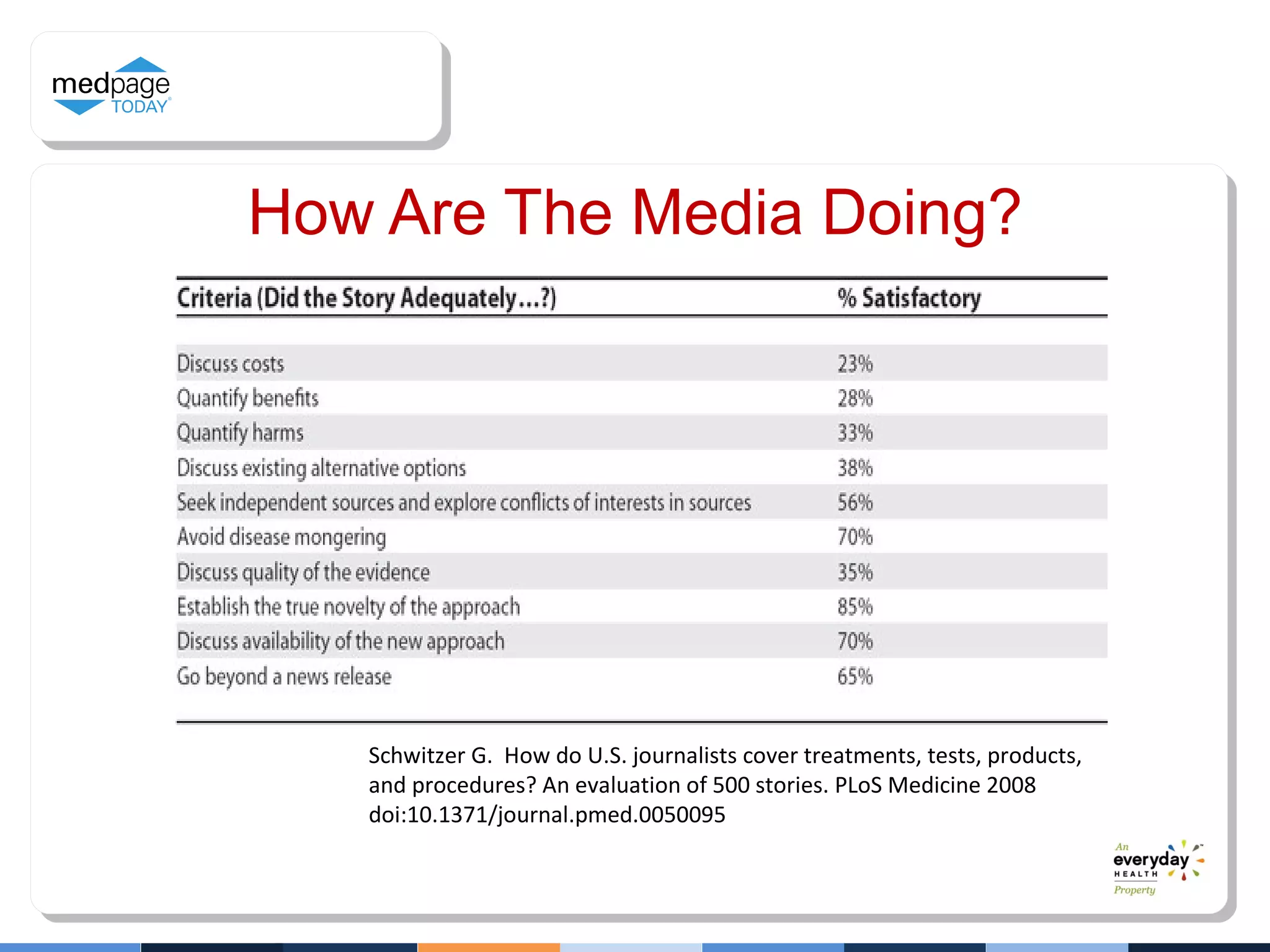
Schwitzer G. How do U.S. journalists cover treatments, tests, products,
and procedures? An evaluation of 500 stories. PLoS Medicine 2008
doi:10.1371/journal.pmed.0050095
How Are The Media Doing?
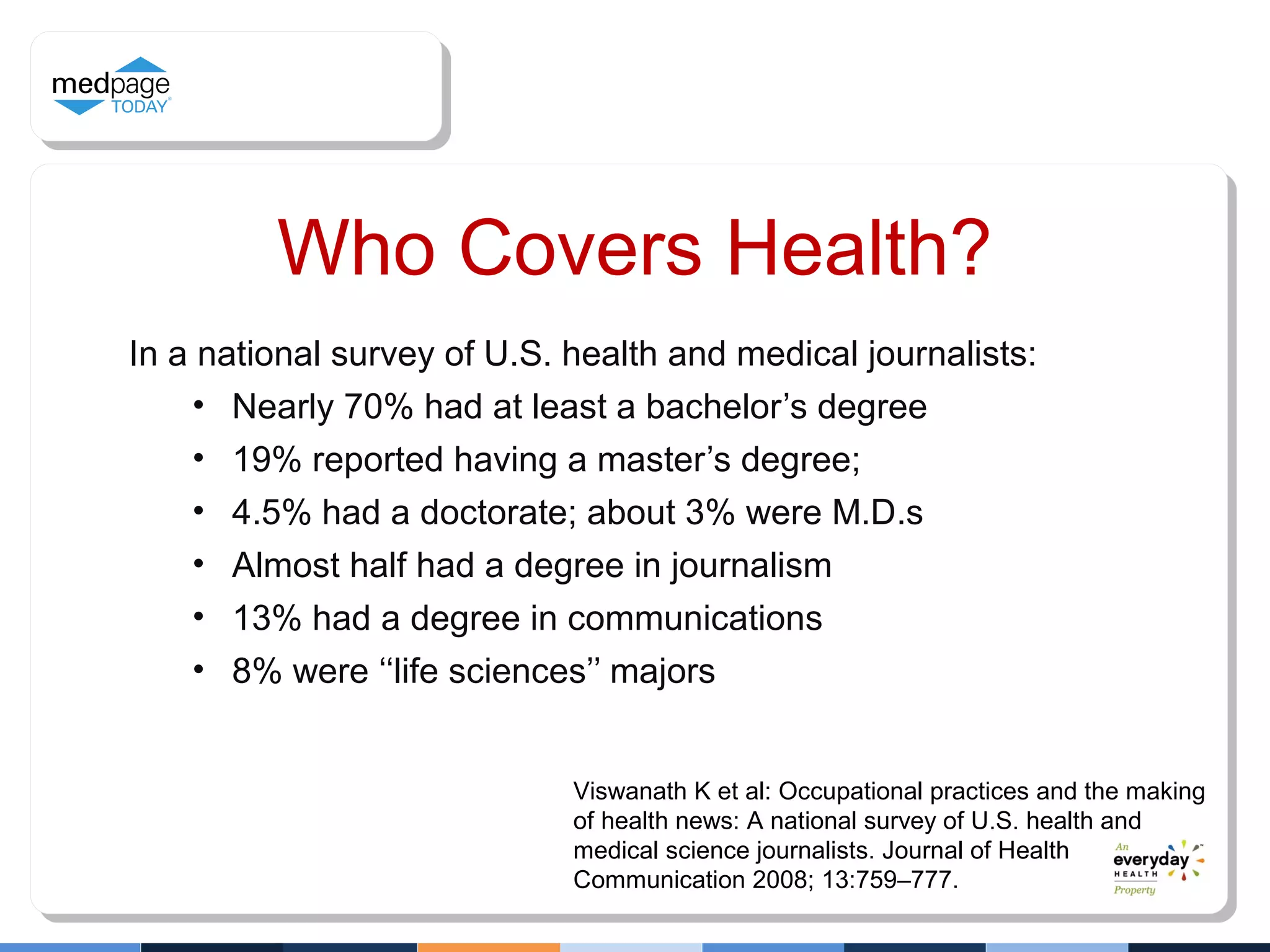
In a national survey of U.S. health and medical journalists:
• Nearly 70% had at least a bachelor’s degree
• 19% reported having a master’s degree;
• 4.5% had a doctorate; about 3% were M.D.s
• Almost half had a degree in journalism
• 13% had a degree in communications
• 8% were ‘‘life sciences’’ majors
Viswanath K et al: Occupational practices and the making
of health news: A national survey of U.S. health and
medical science journalists. Journal of Health
Communication 2008; 13:759–777.
Who Covers Health?
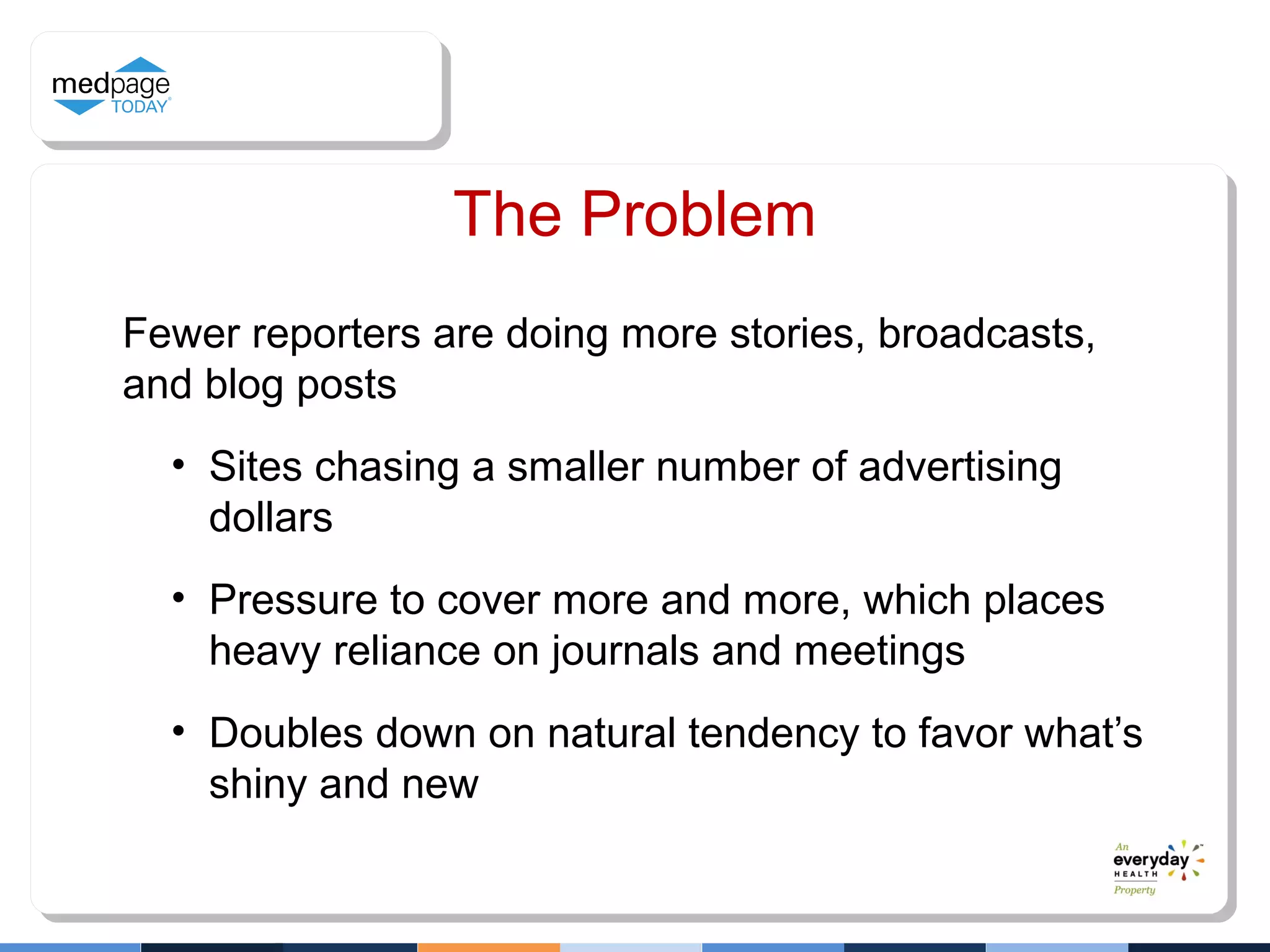
The Problem
Fewer reporters are doing more stories, broadcasts,
and blog posts
• Sites chasing a smaller number of advertising
dollars
• Pressure to cover more and more, which places
heavy reliance on journals and meetings
• Doubles down on natural tendency to favor what’s
shiny and new
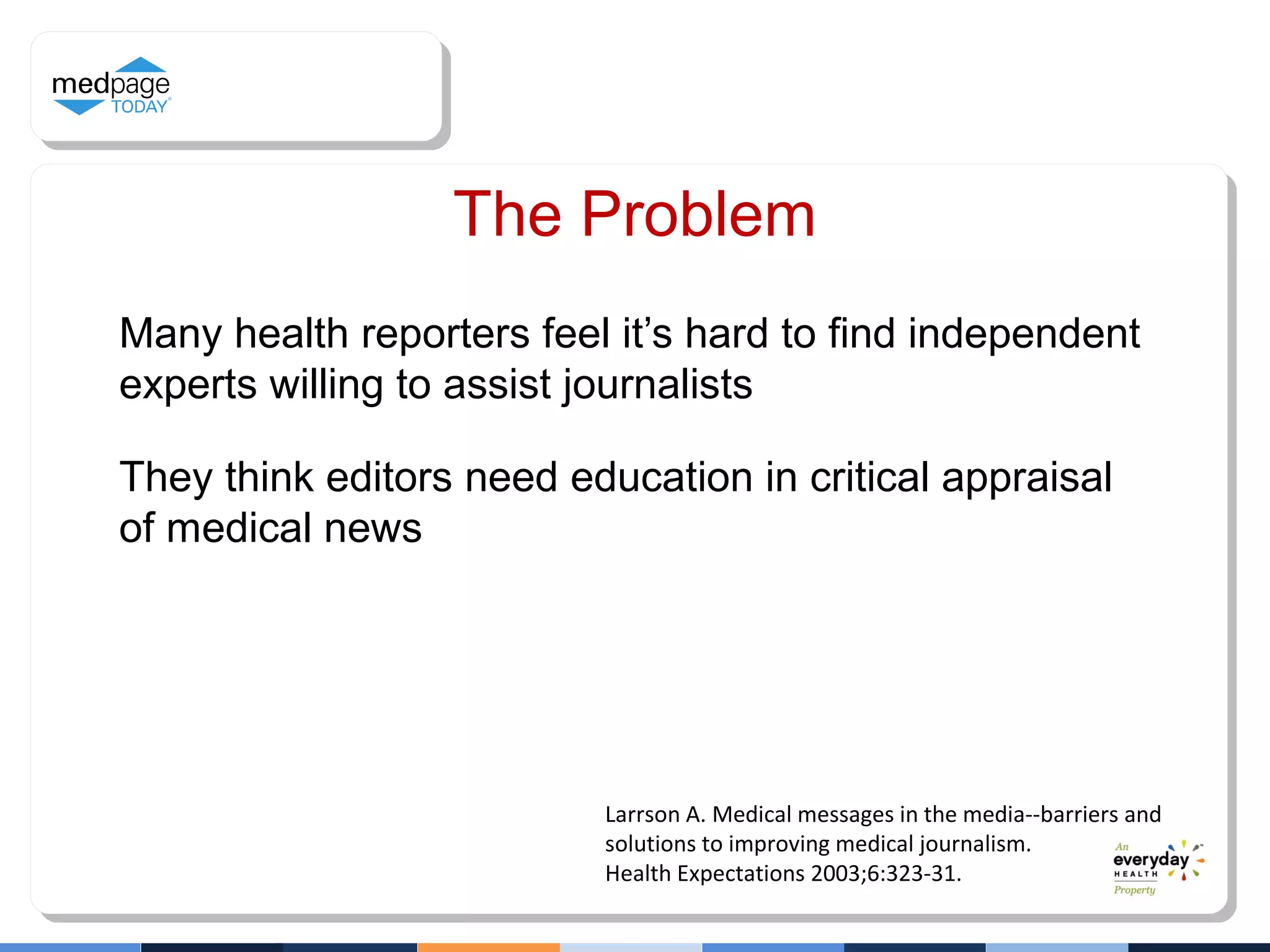
Many health reporters feel it’s hard to find independent
experts willing to assist journalists
They think editors need education in critical appraisal
of medical news
Larrson A. Medical messages in the media--barriers and
solutions to improving medical journalism.
Health Expectations 2003;6:323-31.
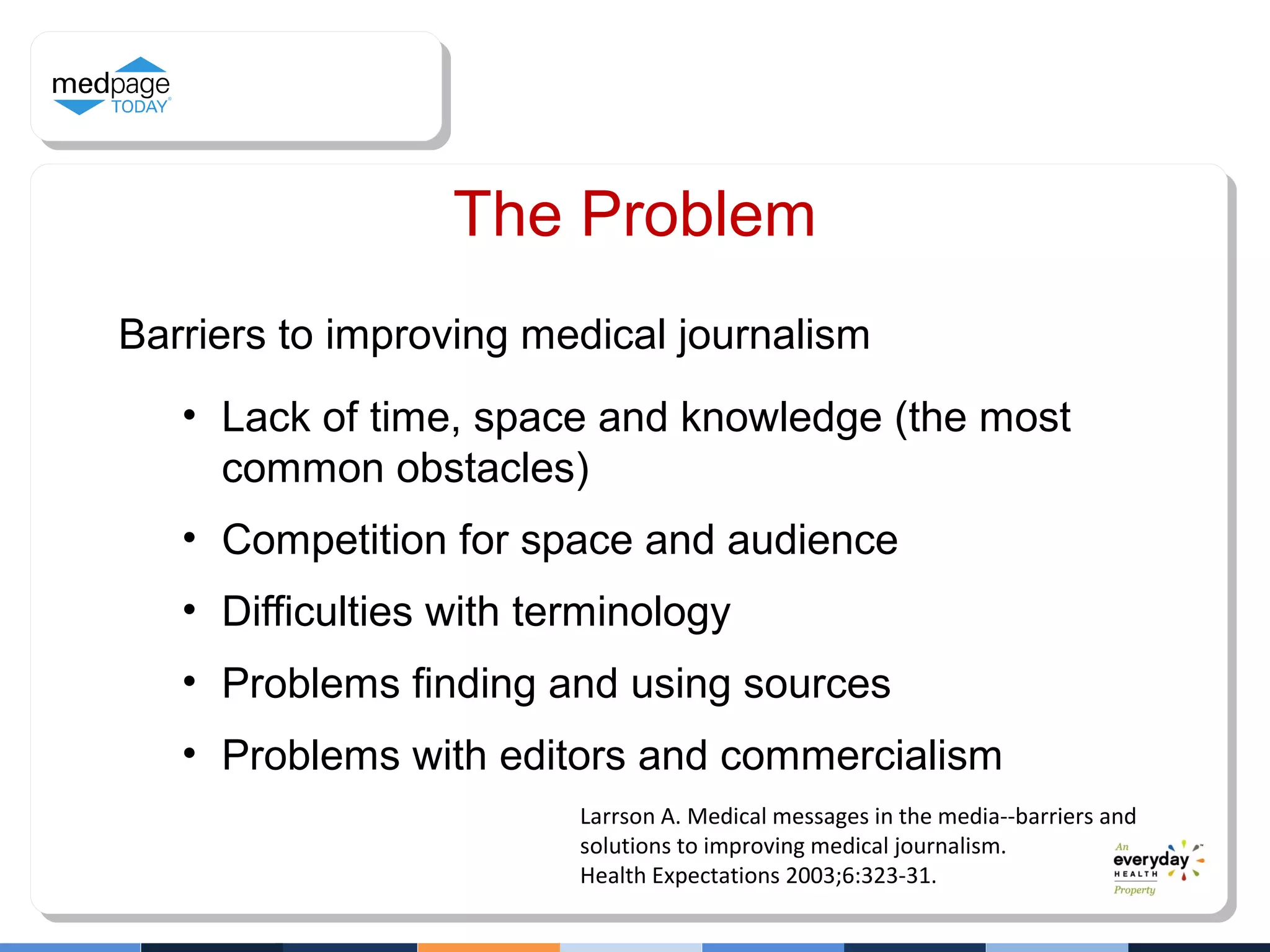
The Problem
Barriers to improving medical journalism
• Lack of time, space and knowledge (the most
common obstacles)
• Competition for space and audience
• Difficulties with terminology
• Problems finding and using sources
• Problems with editors and commercialism
Larrson A. Medical messages in the media--barriers and
solutions to improving medical journalism.
Health Expectations 2003;6:323-31.
The Problem
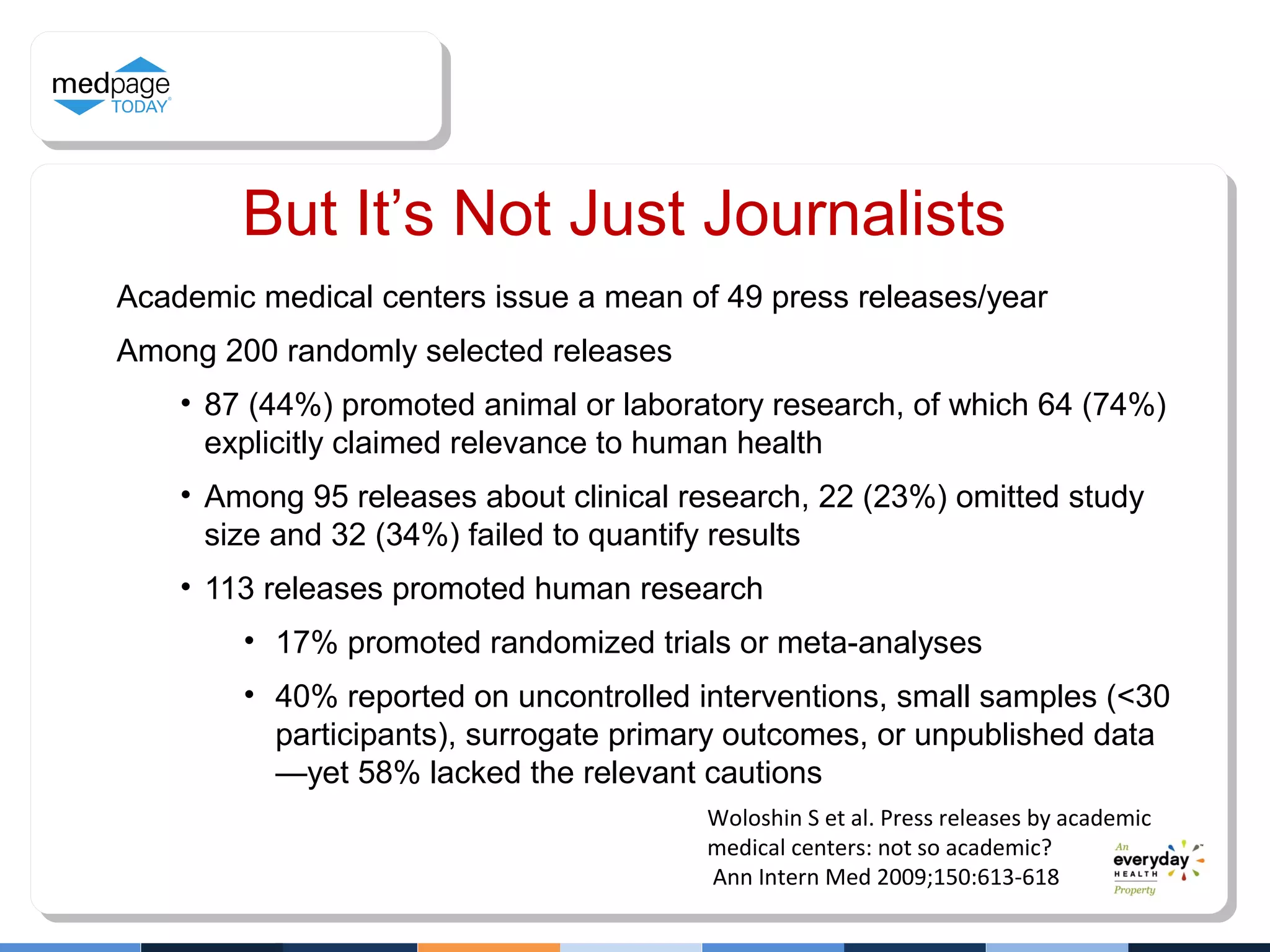
But It’s Not Just Journalists
Academic medical centers issue a mean of 49 press releases/year
Among 200 randomly selected releases
• 87 (44%) promoted animal or laboratory research, of which 64 (74%)
explicitly claimed relevance to human health
• Among 95 releases about clinical research, 22 (23%) omitted study
size and 32 (34%) failed to quantify results
• 113 releases promoted human research
• 17% promoted randomized trials or meta-analyses
• 40% reported on uncontrolled interventions, small samples (<30
participants), surrogate primary outcomes, or unpublished data
—yet 58% lacked the relevant cautions
Woloshin S et al. Press releases by academic
medical centers: not so academic?
Ann Intern Med 2009;150:613-618
A Challenging Time
Do we chase traffic, or add value?
(And no, the two aren't mutually exclusive)
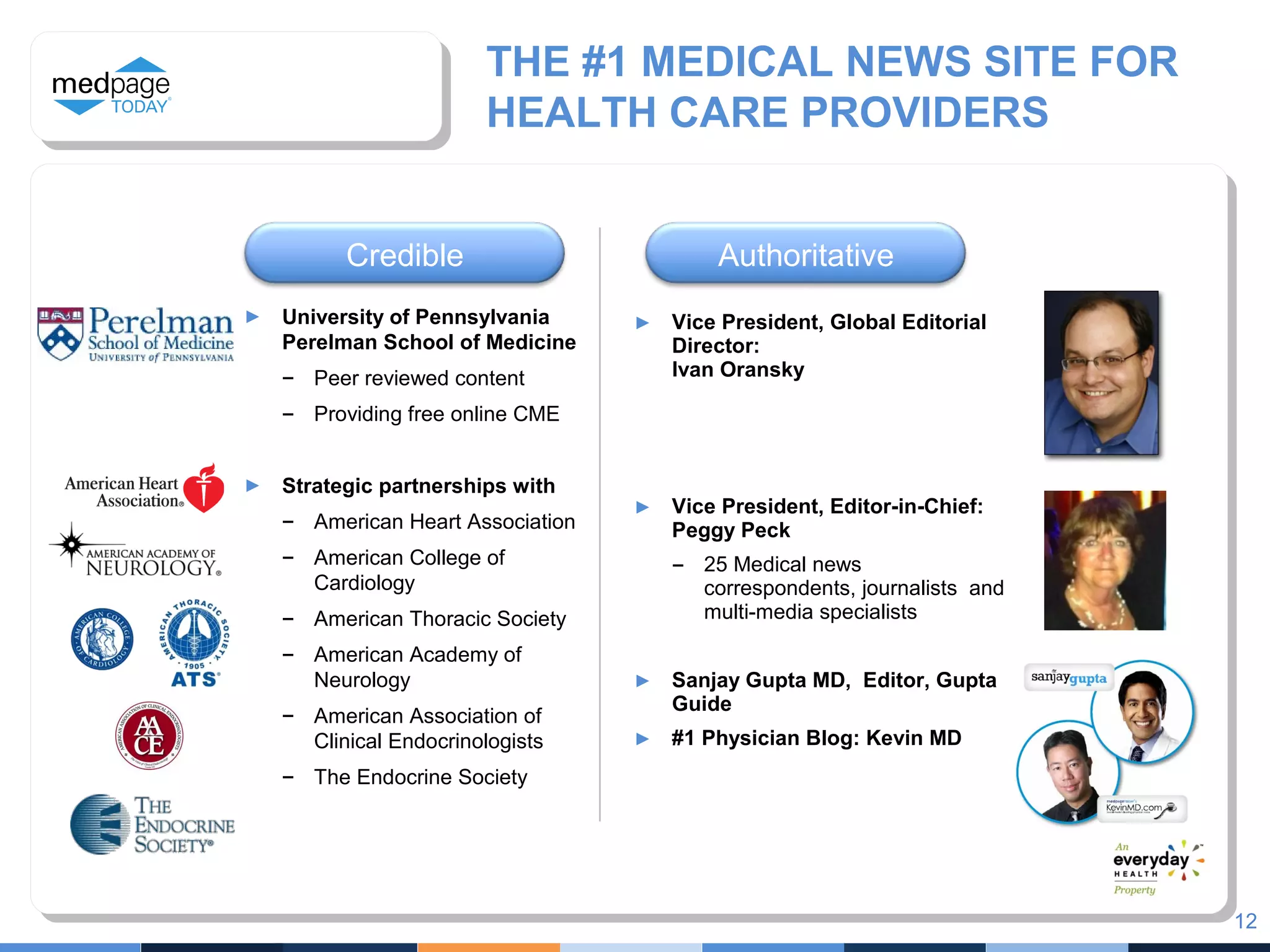
A Challenging Time
► University of Pennsylvania
Perelman School of Medicine
– Peer reviewed content
– Providing free online CME
► Strategic partnerships with
– American Heart Association
– American College of
Cardiology
– American Thoracic Society
– American Academy of
Neurology
– American Association of
Clinical Endocrinologists
– The Endocrine Society
THE #1 MEDICAL NEWS SITE FOR
HEALTH CARE PROVIDERS
Credible Authoritative
► Vice President, Global Editorial
Director:
Ivan Oransky
► Vice President, Editor-in-Chief:
Peggy Peck
– 25 Medical news
correspondents, journalists and
multi-media specialists
► Sanjay Gupta MD, Editor, Gupta
Guide
► #1 Physician Blog: Kevin MD
12
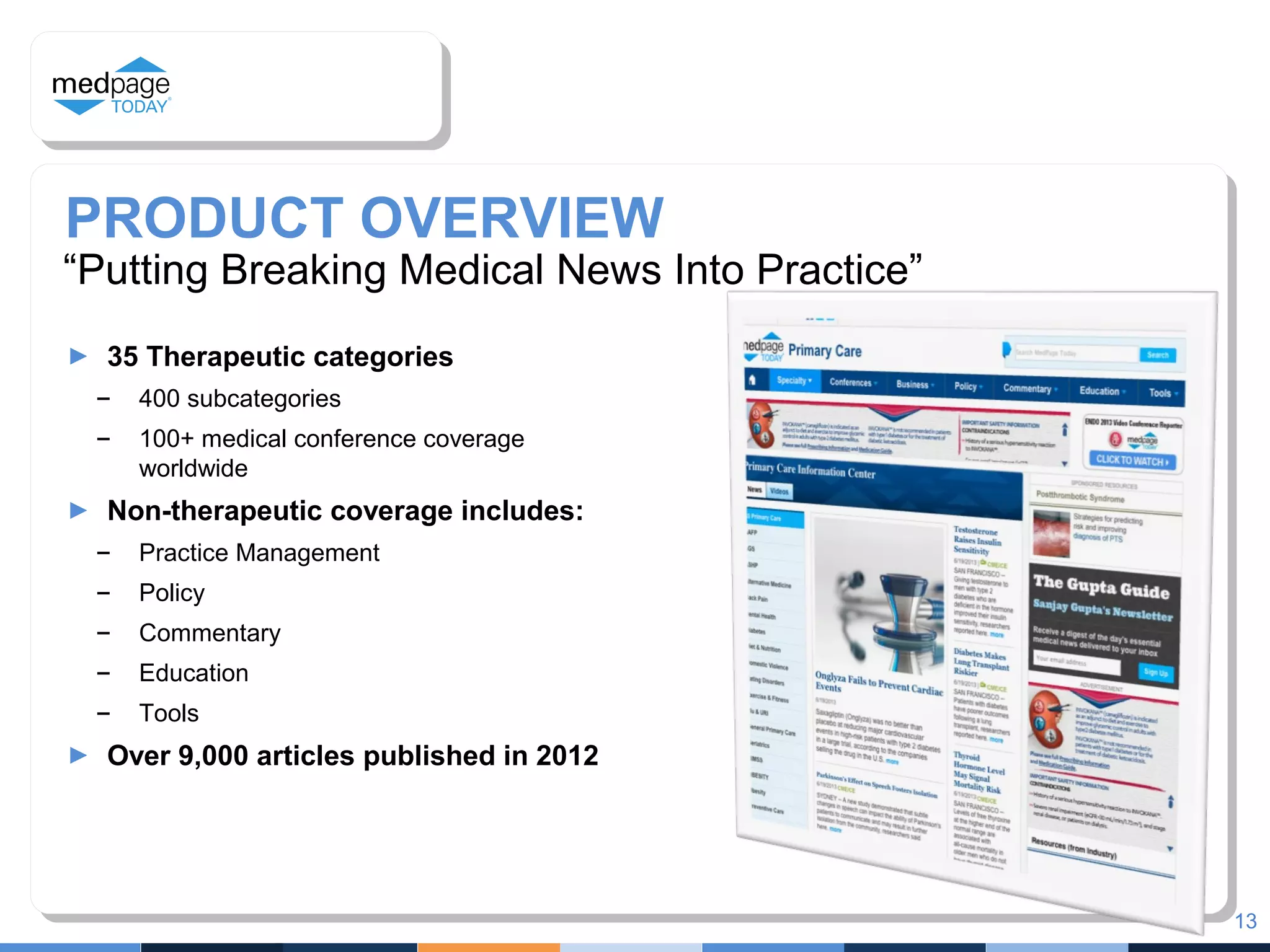
PRODUCT OVERVIEW
“Putting Breaking Medical News Into Practice”
► 35 Therapeutic categories
– 400 subcategories
– 100+ medical conference coverage
worldwide
► Non-therapeutic coverage includes:
– Practice Management
– Policy
– Commentary
– Education
– Tools
► Over 9,000 articles published in 2012
13
How MedPage Today Chooses Stories
• Impact factor
• Likelihood of changing behavior/clinical practice
• Strength of evidence
• Novelty
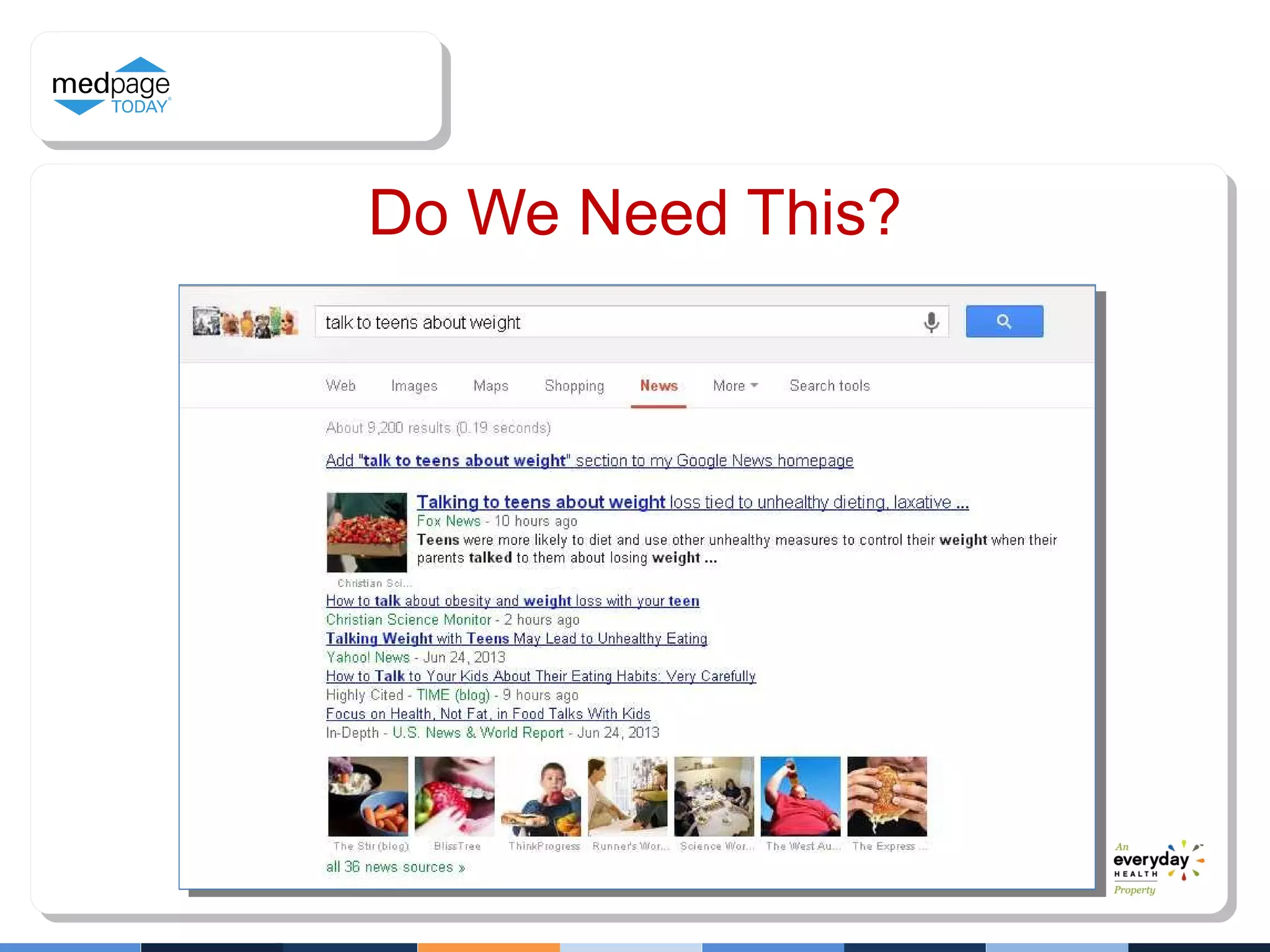
Do We Need This?
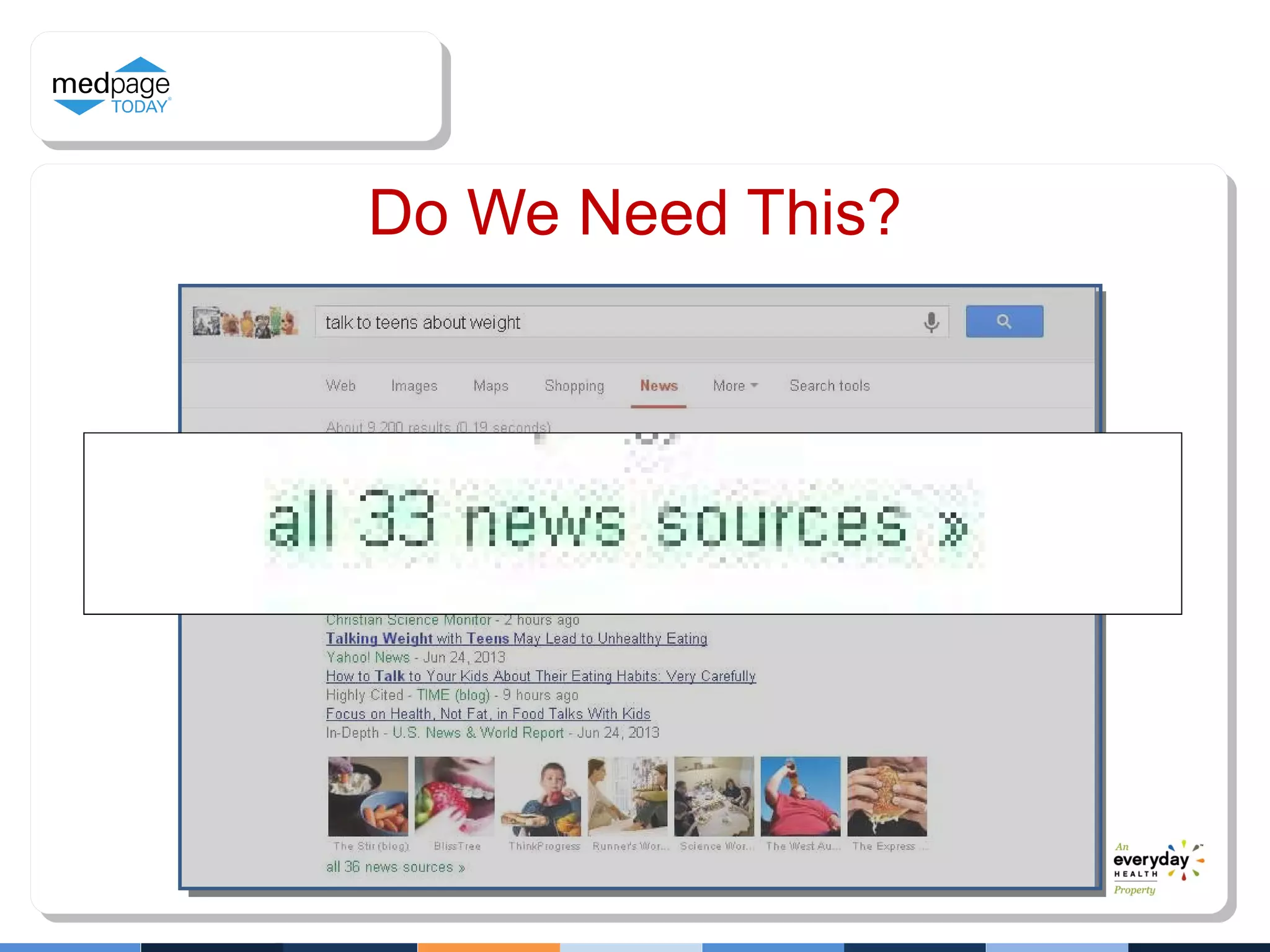
Do We Need This?
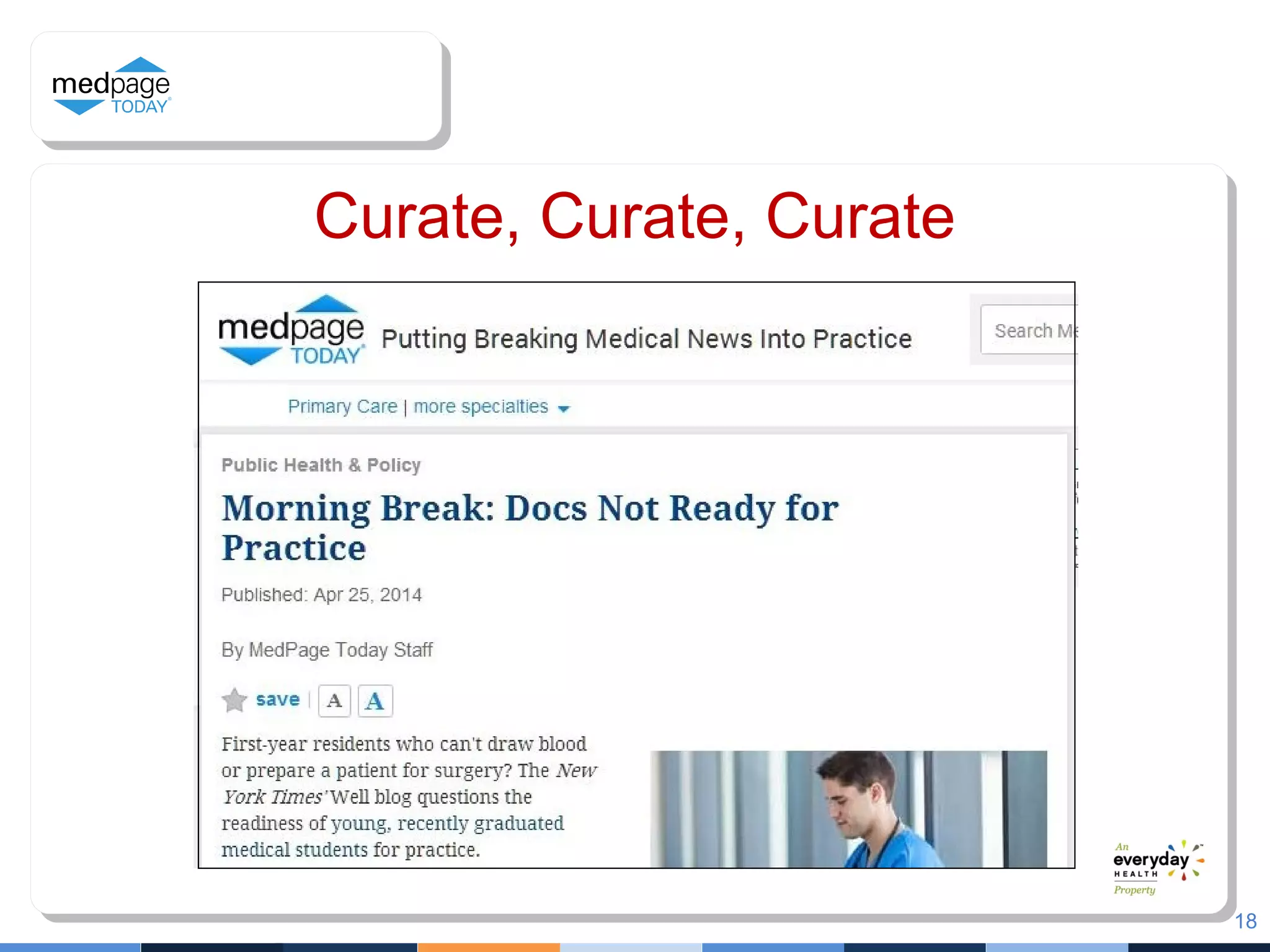
Curate, Curate, Curate
There's a lot of great stuff out there.
As Jeff Jarvis says, do what you do best, link
to the rest
18
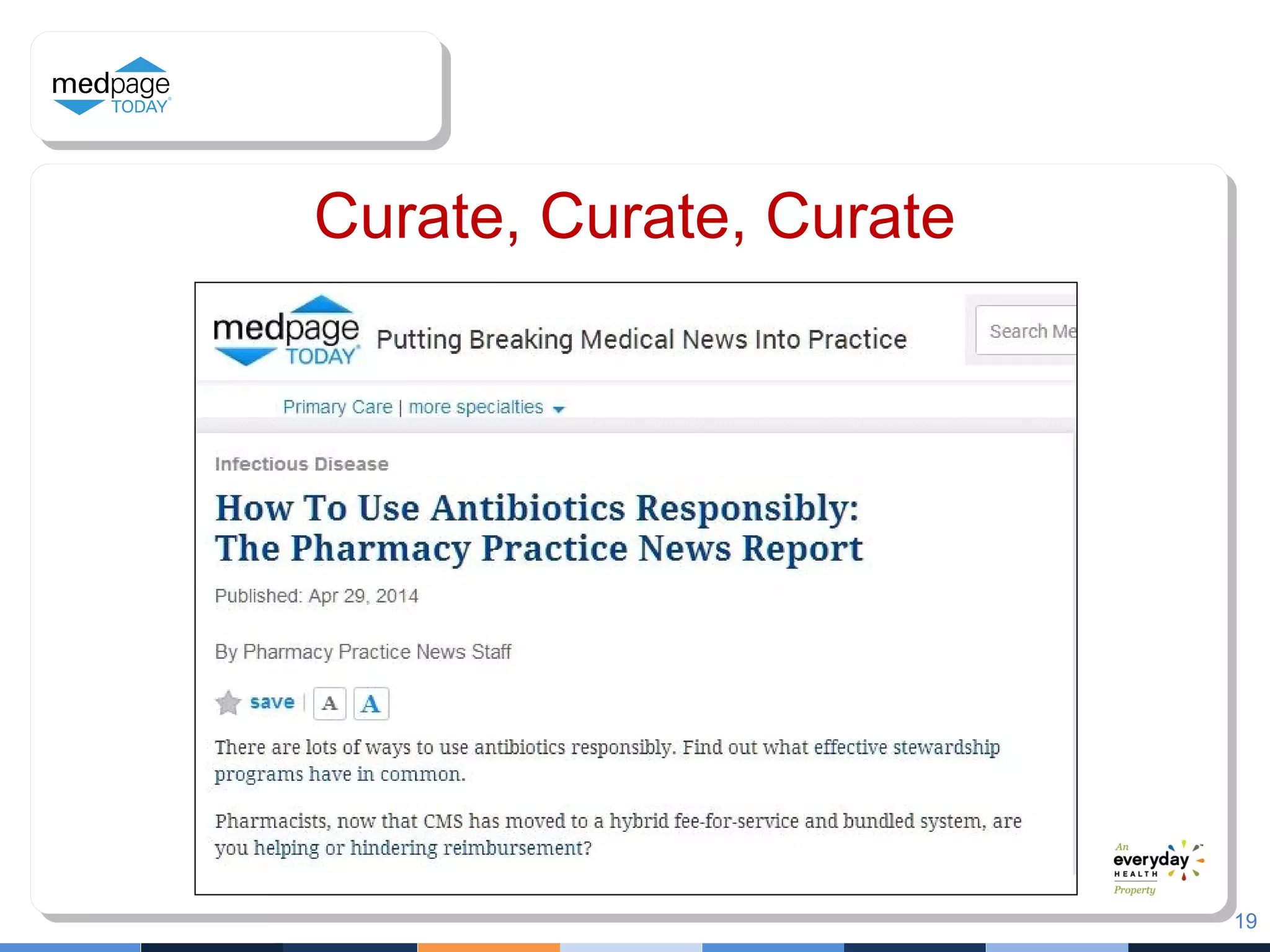
Curate, Curate, Curate
19
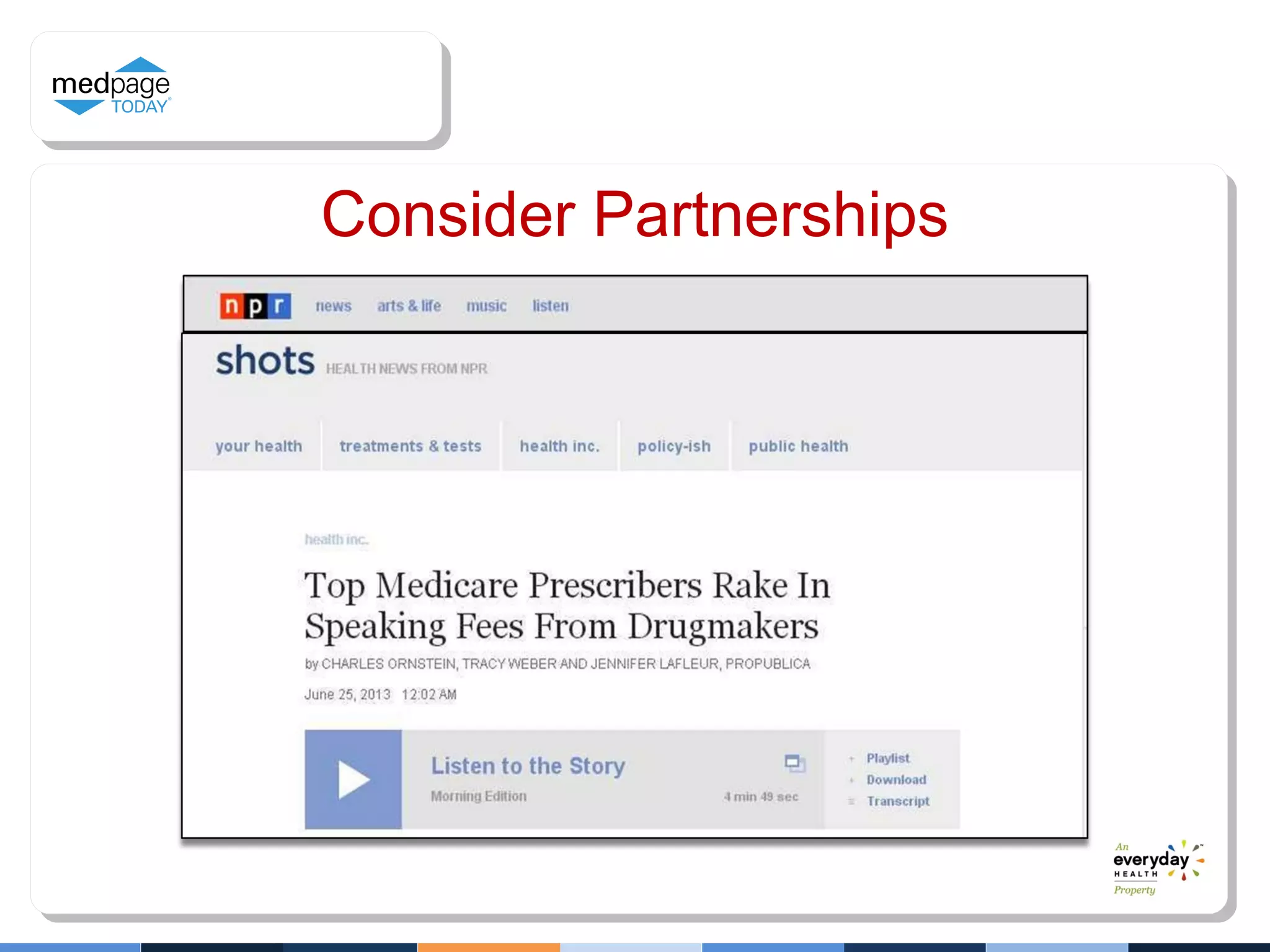
Curate, Curate, Curate
Consider Partnerships
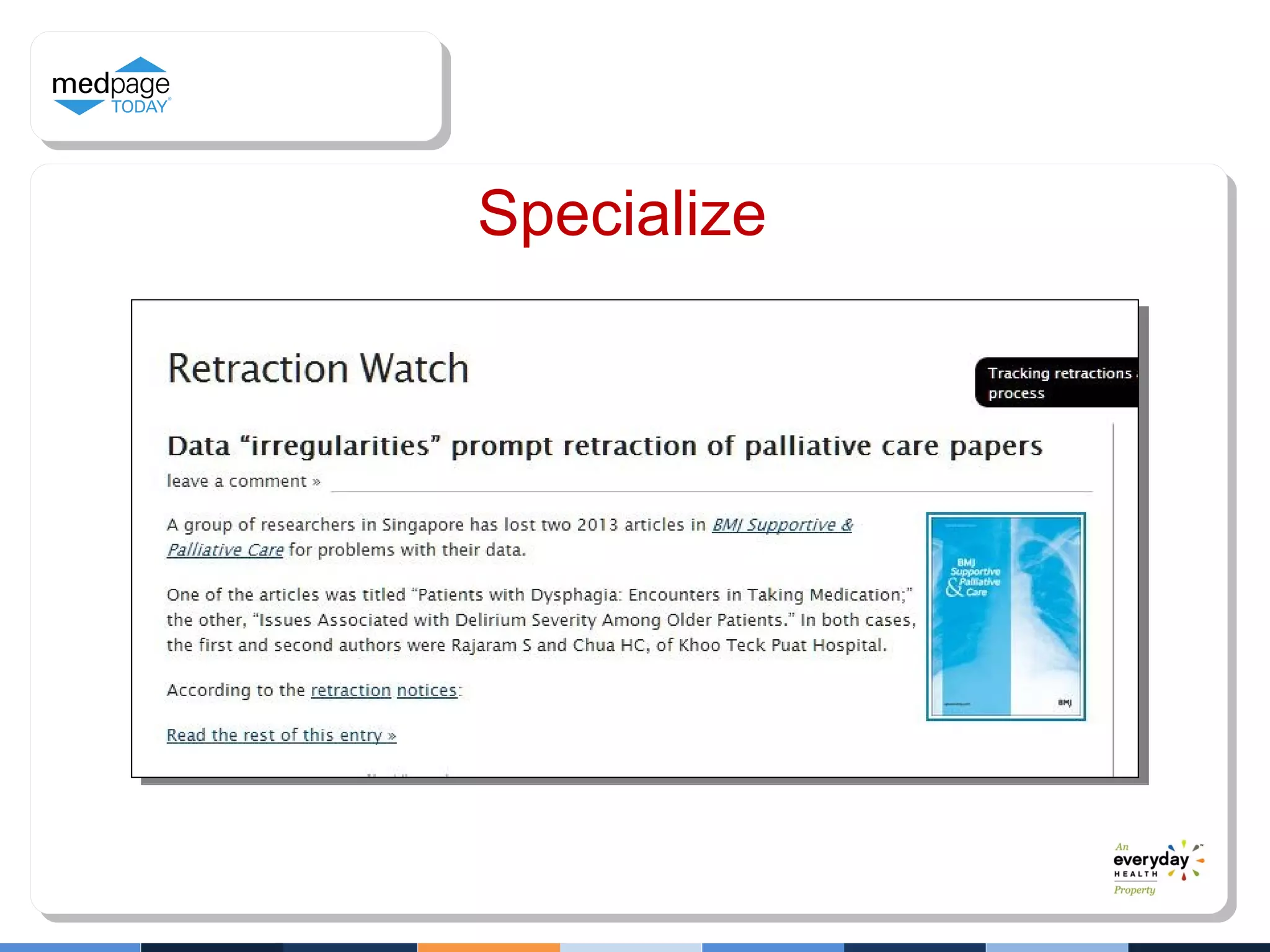
Specialize
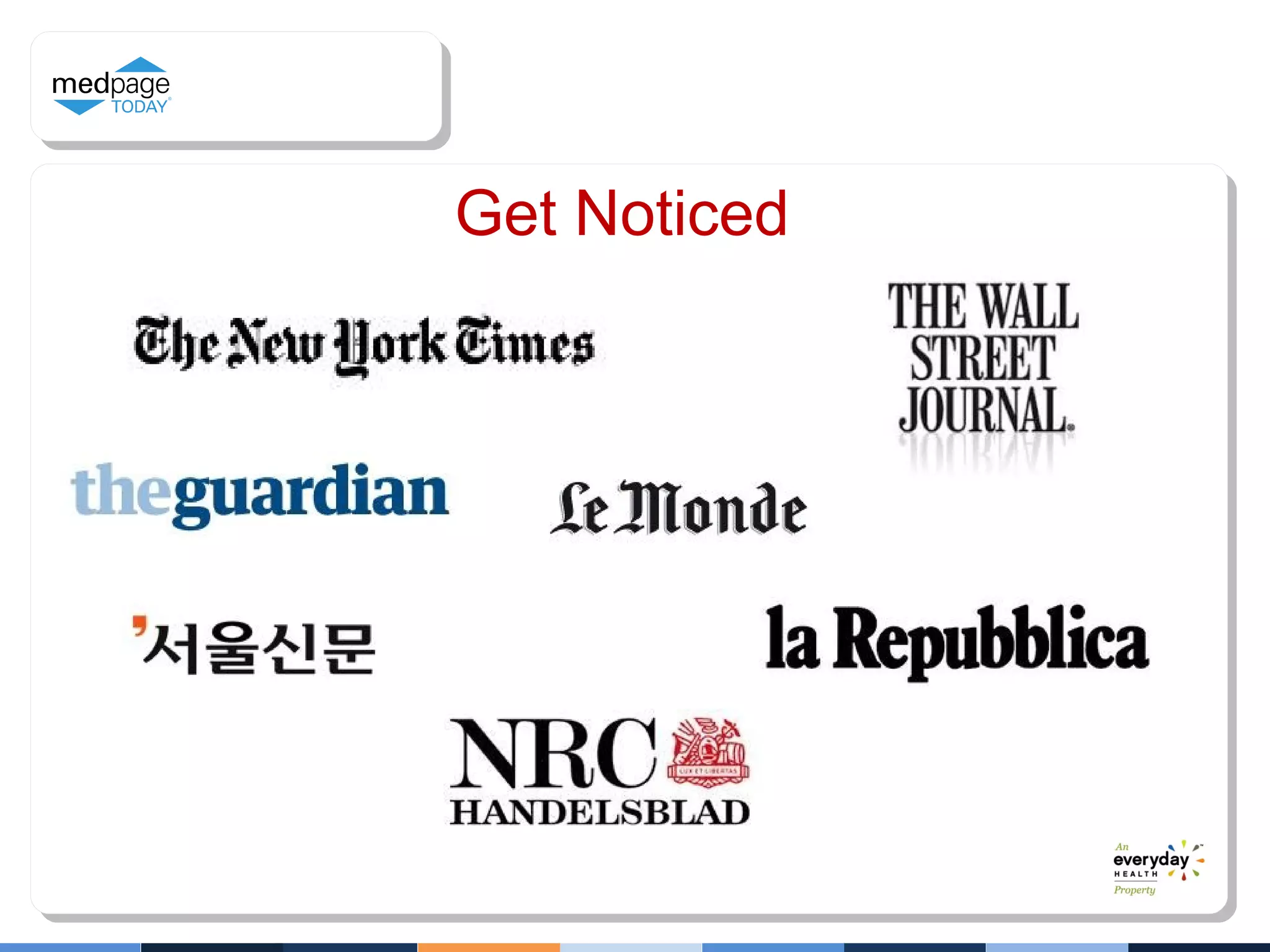
Get Noticed
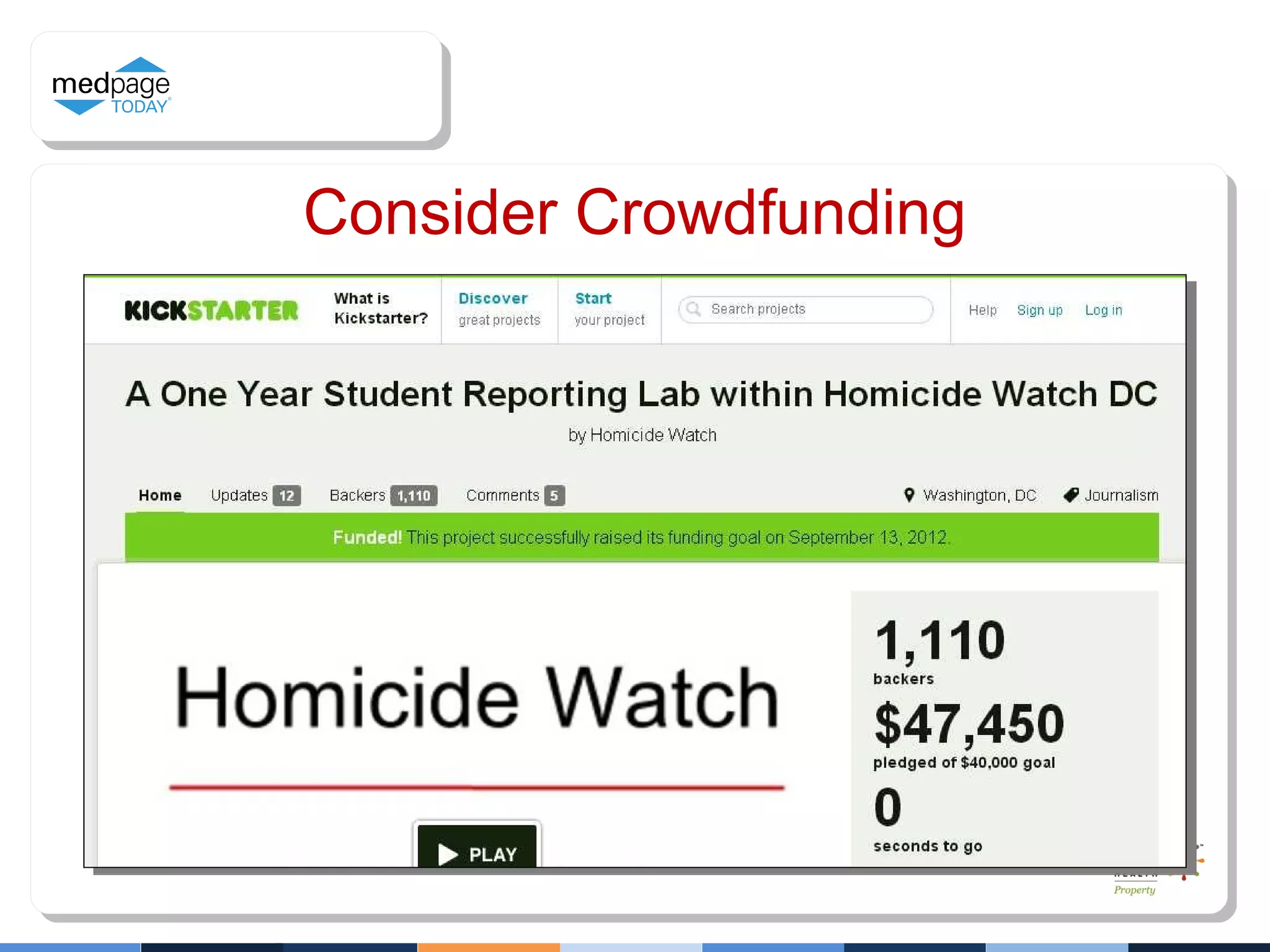
Consider Crowdfunding
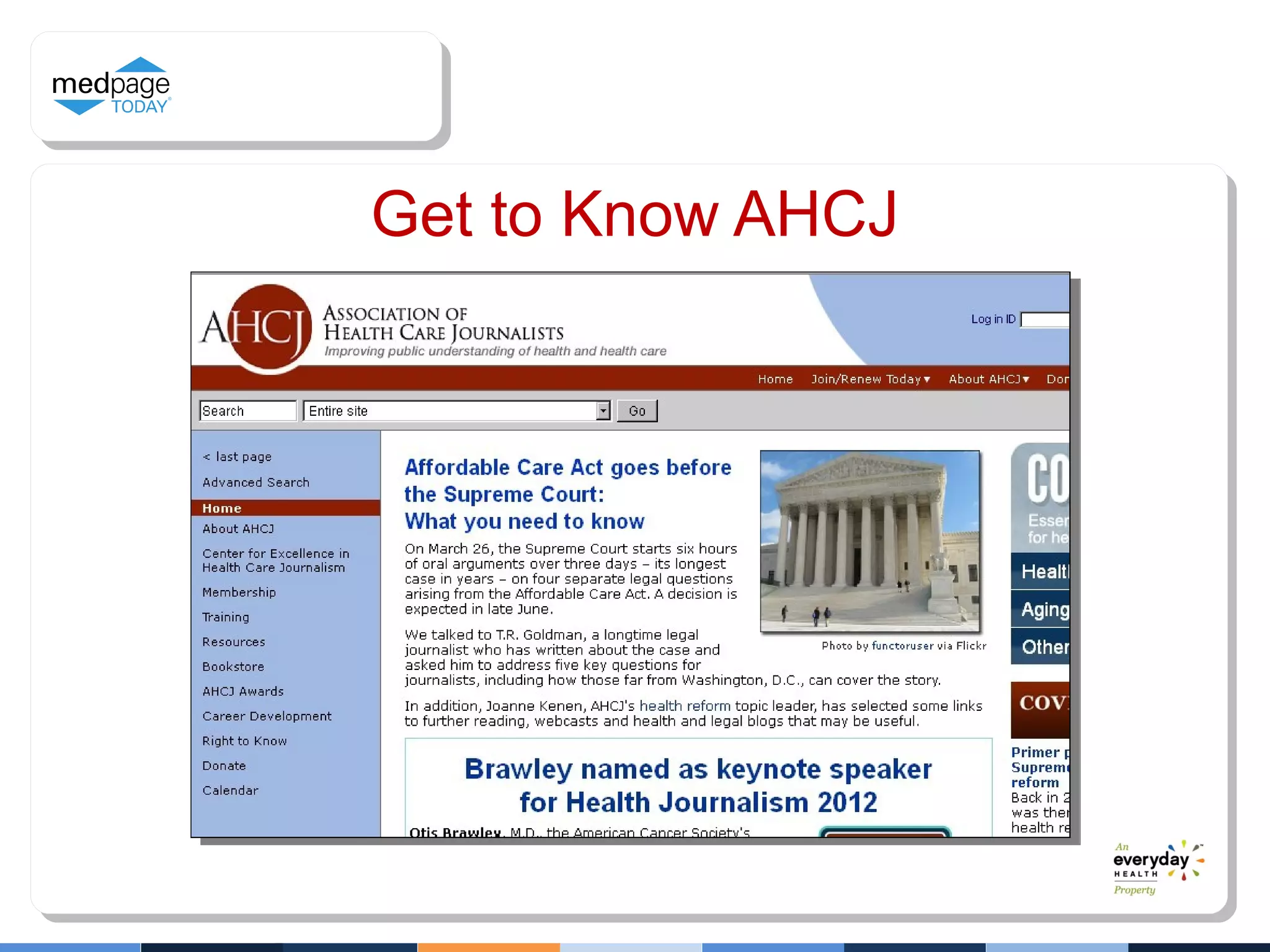
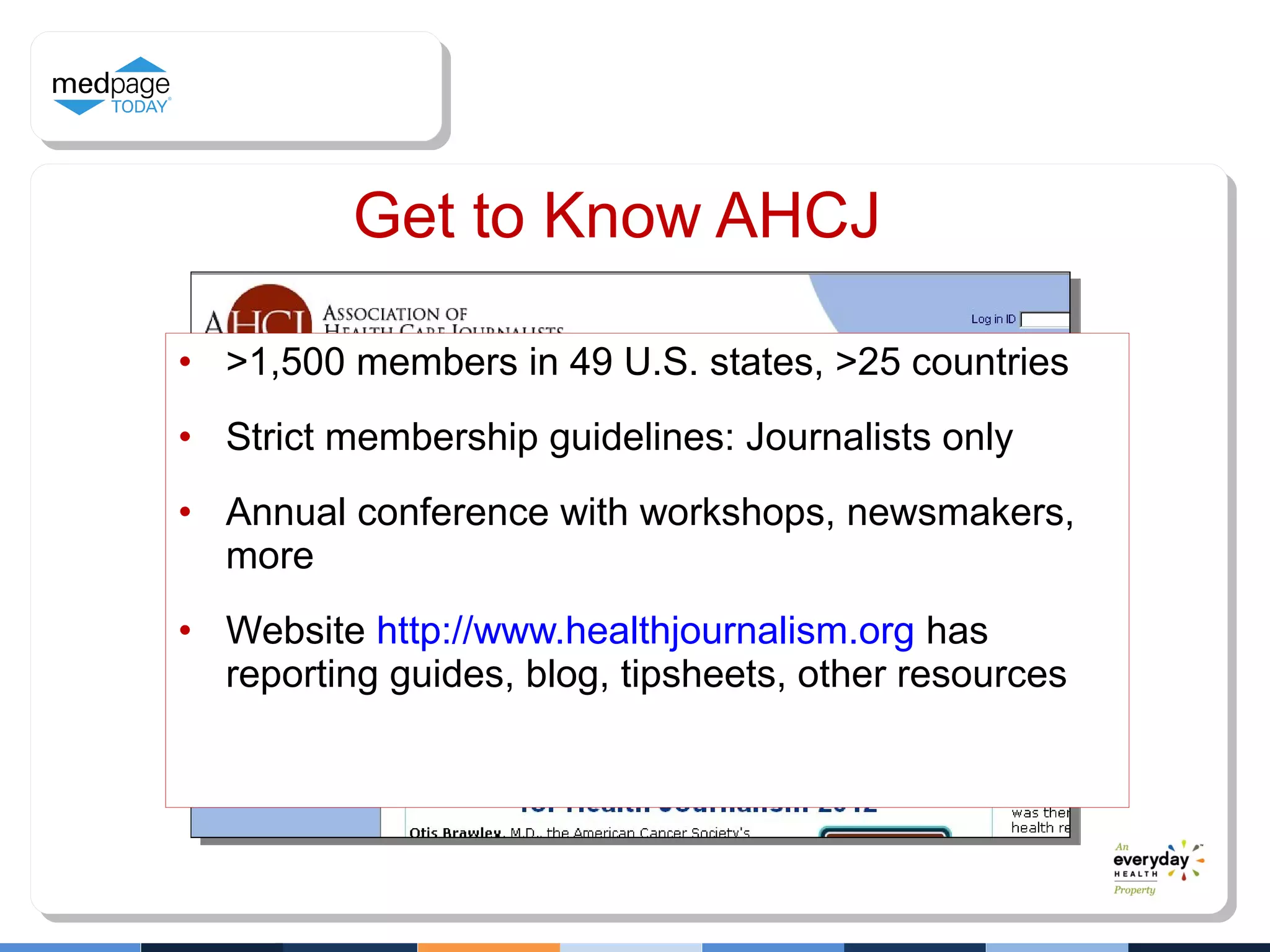
Get to Know AHCJ
Get to Know AHCJ
• >1,500 members in 49 U.S. states, >25 countries
• Strict membership guidelines: Journalists only
• Annual conference with workshops, newsmakers,
more
• Website http://www.healthjournalism.org has
reporting guides, blog, tipsheets, other resources
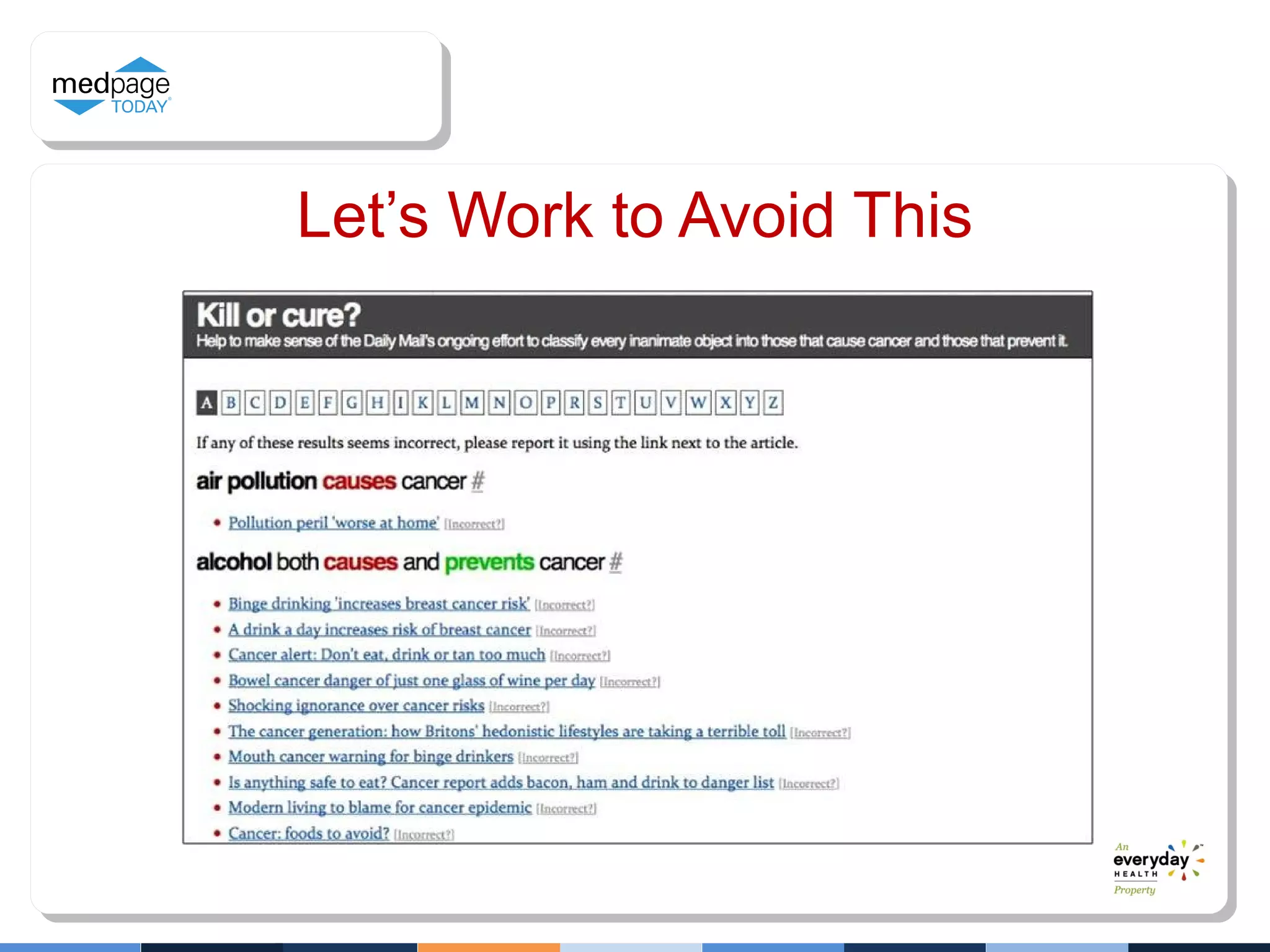
Let’s Work to Avoid This

Coverage of Clinical Medicine: A Diagnosis and Treatment Plan

  • 1.
    Coverage of ClinicalMedicine: A Diagnosis and Treatment Plan Ivan Oransky, MD Global Editorial Director, MedPage Today Vice President, Association of Health Care Journalists Adjunct Associate Professor (Journalism), New York University @ivanoransky Second International Conference on Health Journalism Coventry May 15, 2014
  • 3.
    How Are TheMedia Doing?
  • 4.
    Schwitzer G. Howdo U.S. journalists cover treatments, tests, products, and procedures? An evaluation of 500 stories. PLoS Medicine 2008 doi:10.1371/journal.pmed.0050095 How Are The Media Doing?
  • 5.
    In a nationalsurvey of U.S. health and medical journalists: • Nearly 70% had at least a bachelor’s degree • 19% reported having a master’s degree; • 4.5% had a doctorate; about 3% were M.D.s • Almost half had a degree in journalism • 13% had a degree in communications • 8% were ‘‘life sciences’’ majors Viswanath K et al: Occupational practices and the making of health news: A national survey of U.S. health and medical science journalists. Journal of Health Communication 2008; 13:759–777. Who Covers Health?
  • 6.
    The Problem Fewer reportersare doing more stories, broadcasts, and blog posts • Sites chasing a smaller number of advertising dollars • Pressure to cover more and more, which places heavy reliance on journals and meetings • Doubles down on natural tendency to favor what’s shiny and new
  • 7.
    Many health reportersfeel it’s hard to find independent experts willing to assist journalists They think editors need education in critical appraisal of medical news Larrson A. Medical messages in the media--barriers and solutions to improving medical journalism. Health Expectations 2003;6:323-31. The Problem
  • 8.
    Barriers to improvingmedical journalism • Lack of time, space and knowledge (the most common obstacles) • Competition for space and audience • Difficulties with terminology • Problems finding and using sources • Problems with editors and commercialism Larrson A. Medical messages in the media--barriers and solutions to improving medical journalism. Health Expectations 2003;6:323-31. The Problem
  • 9.
    But It’s NotJust Journalists Academic medical centers issue a mean of 49 press releases/year Among 200 randomly selected releases • 87 (44%) promoted animal or laboratory research, of which 64 (74%) explicitly claimed relevance to human health • Among 95 releases about clinical research, 22 (23%) omitted study size and 32 (34%) failed to quantify results • 113 releases promoted human research • 17% promoted randomized trials or meta-analyses • 40% reported on uncontrolled interventions, small samples (<30 participants), surrogate primary outcomes, or unpublished data —yet 58% lacked the relevant cautions Woloshin S et al. Press releases by academic medical centers: not so academic? Ann Intern Med 2009;150:613-618
  • 10.
  • 11.
    Do we chasetraffic, or add value? (And no, the two aren't mutually exclusive) A Challenging Time
  • 12.
    ► University ofPennsylvania Perelman School of Medicine – Peer reviewed content – Providing free online CME ► Strategic partnerships with – American Heart Association – American College of Cardiology – American Thoracic Society – American Academy of Neurology – American Association of Clinical Endocrinologists – The Endocrine Society THE #1 MEDICAL NEWS SITE FOR HEALTH CARE PROVIDERS Credible Authoritative ► Vice President, Global Editorial Director: Ivan Oransky ► Vice President, Editor-in-Chief: Peggy Peck – 25 Medical news correspondents, journalists and multi-media specialists ► Sanjay Gupta MD, Editor, Gupta Guide ► #1 Physician Blog: Kevin MD 12
  • 13.
    PRODUCT OVERVIEW “Putting BreakingMedical News Into Practice” ► 35 Therapeutic categories – 400 subcategories – 100+ medical conference coverage worldwide ► Non-therapeutic coverage includes: – Practice Management – Policy – Commentary – Education – Tools ► Over 9,000 articles published in 2012 13
  • 14.
    How MedPage TodayChooses Stories • Impact factor • Likelihood of changing behavior/clinical practice • Strength of evidence • Novelty
  • 15.
  • 16.
  • 17.
    Curate, Curate, Curate There'sa lot of great stuff out there. As Jeff Jarvis says, do what you do best, link to the rest
  • 18.
  • 19.
  • 20.
  • 21.
  • 22.
  • 23.
  • 24.
  • 25.
    Get to KnowAHCJ • >1,500 members in 49 U.S. states, >25 countries • Strict membership guidelines: Journalists only • Annual conference with workshops, newsmakers, more • Website http://www.healthjournalism.org has reporting guides, blog, tipsheets, other resources
  • 26.
    Let’s Work toAvoid This