How to effectively learn
   Medical English

     Grzegorz Chodkowski (MD)
          Riga, Radisson SAS
                 2009
Information
     is
POWER
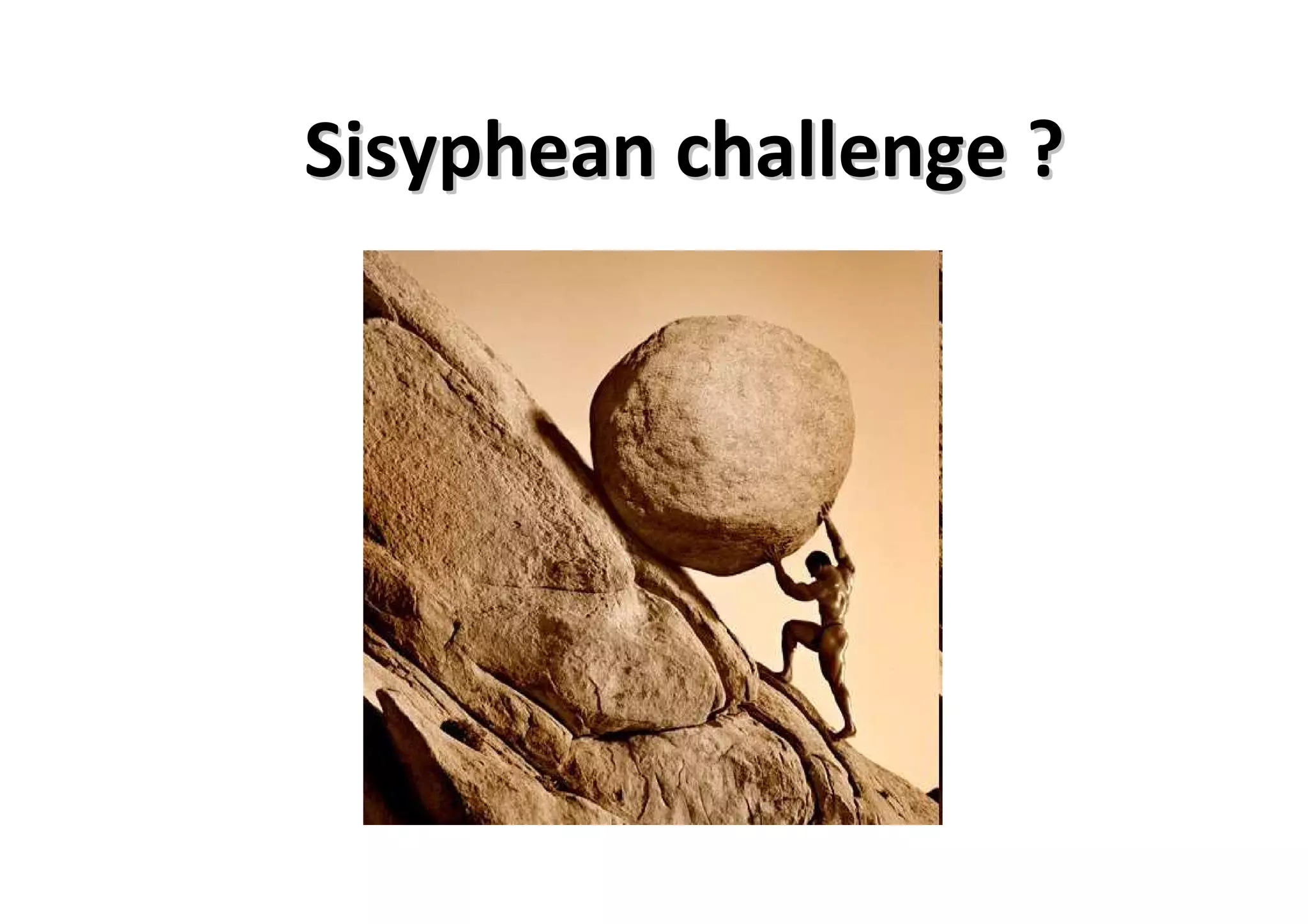
Sisyphean challenge ?
"Never, never, never quit.“
      Winston Churchill
Today’s Agenda
1. Medical Collocations
2. Medical vs. Colloquial English

3. Abbreviations

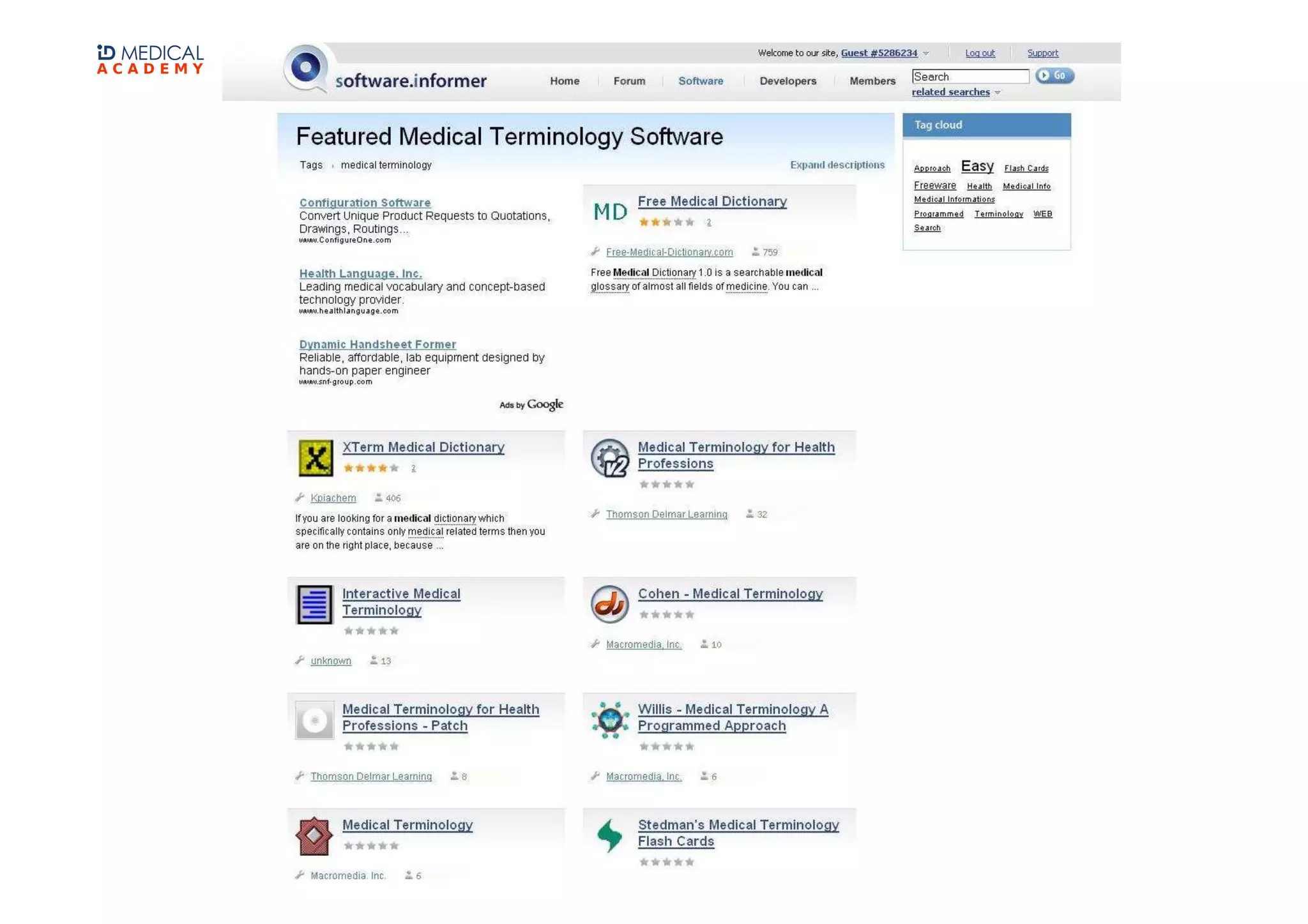
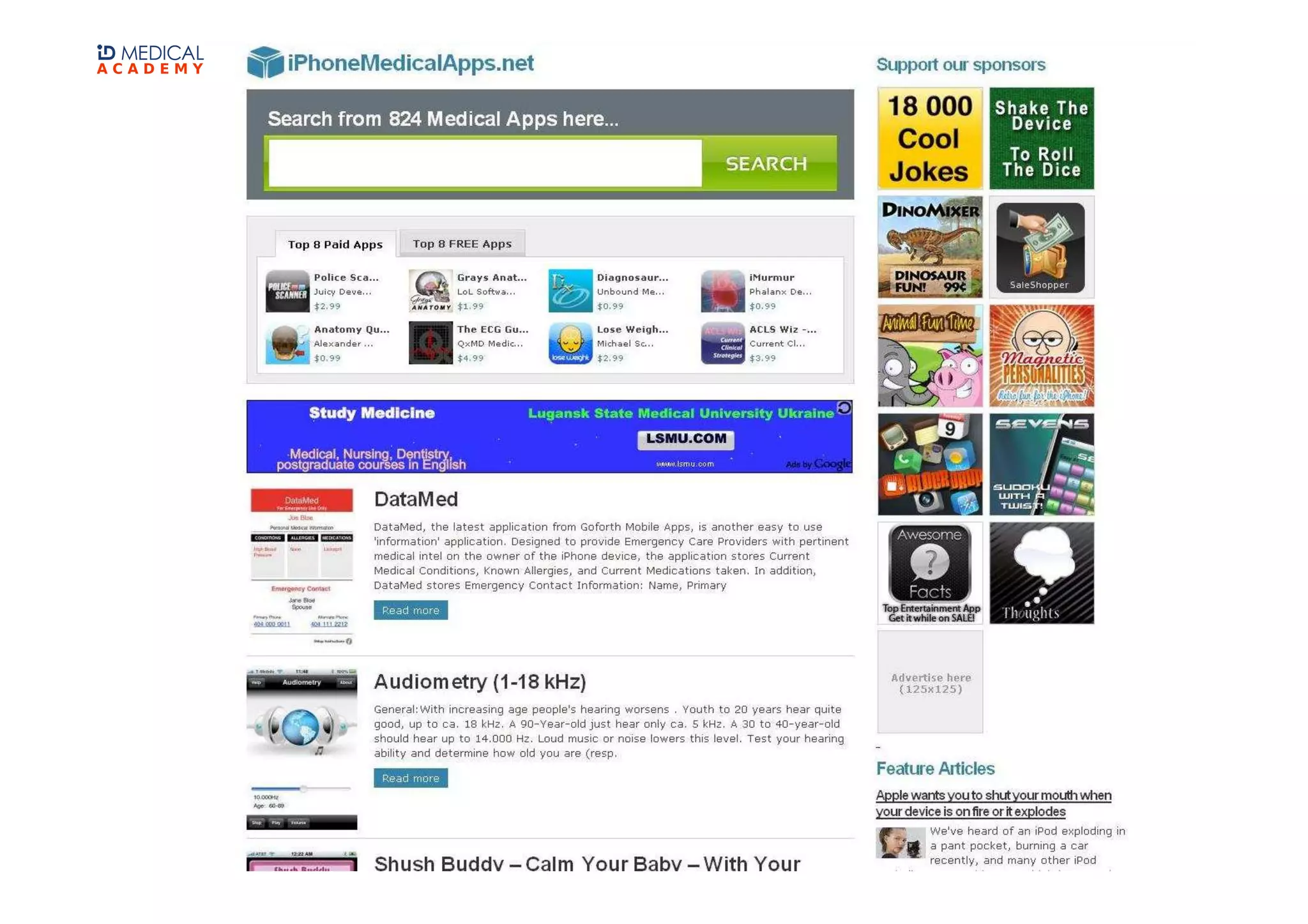
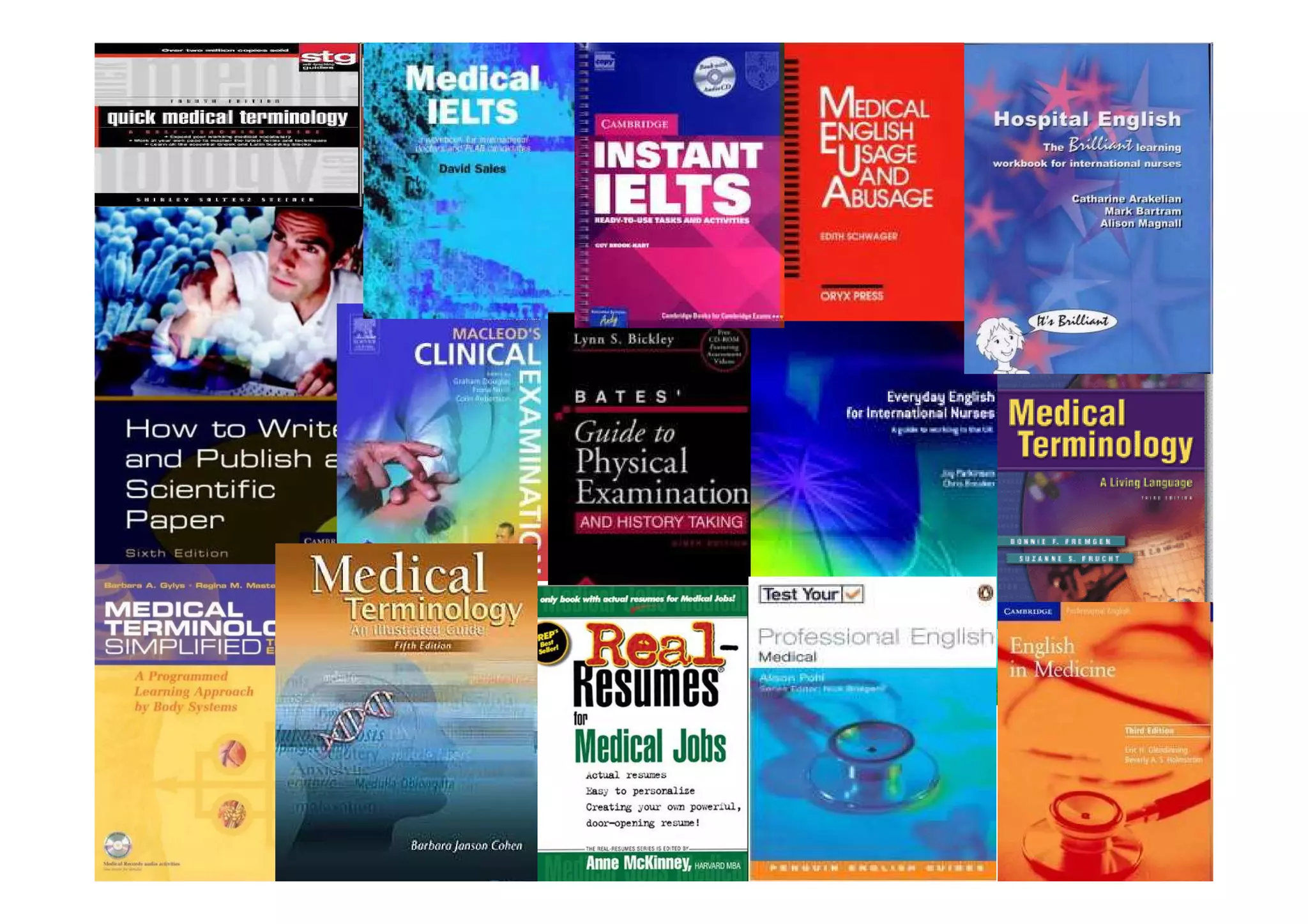
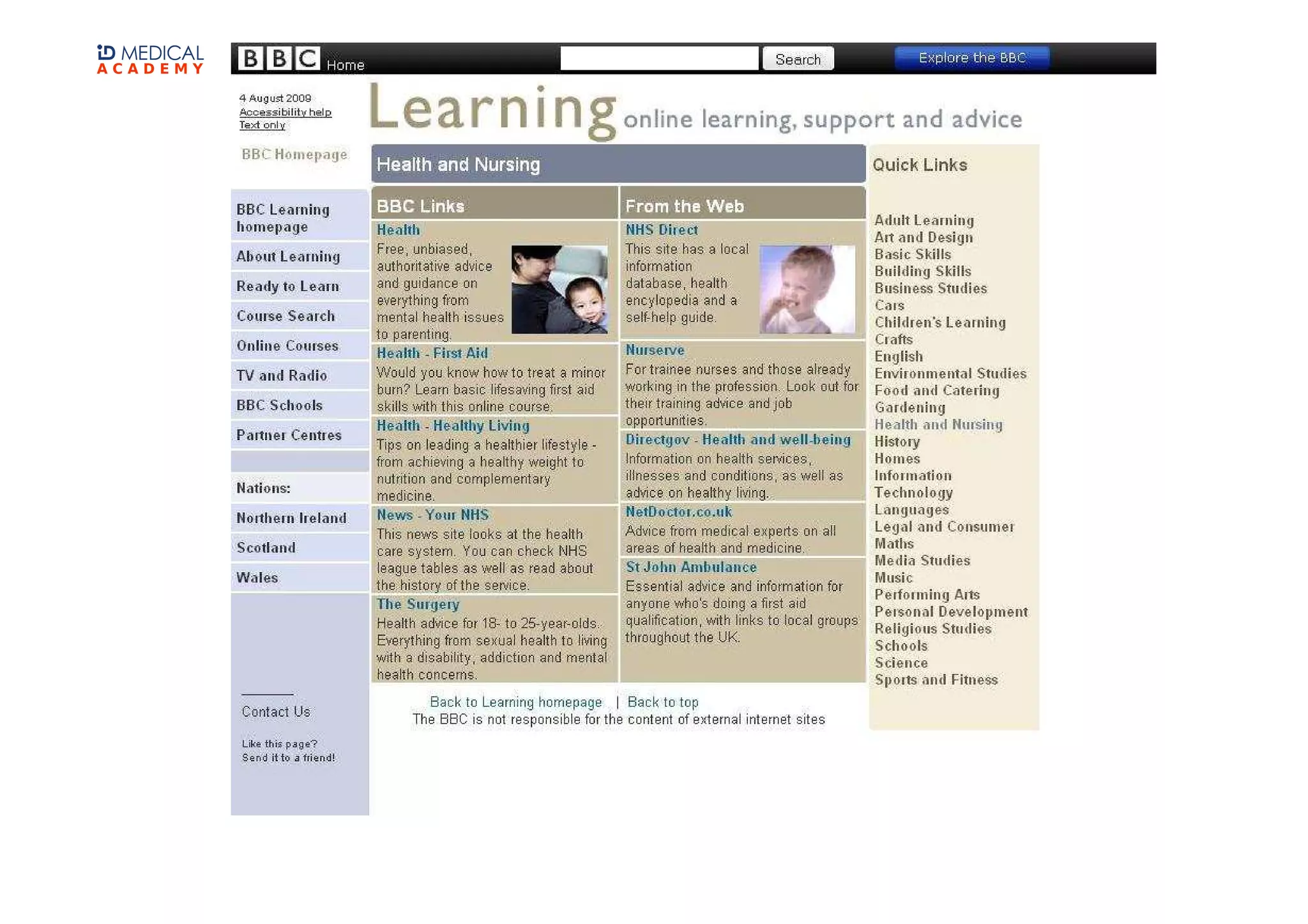
4. Internet resources / cultural context
Medical Collocations
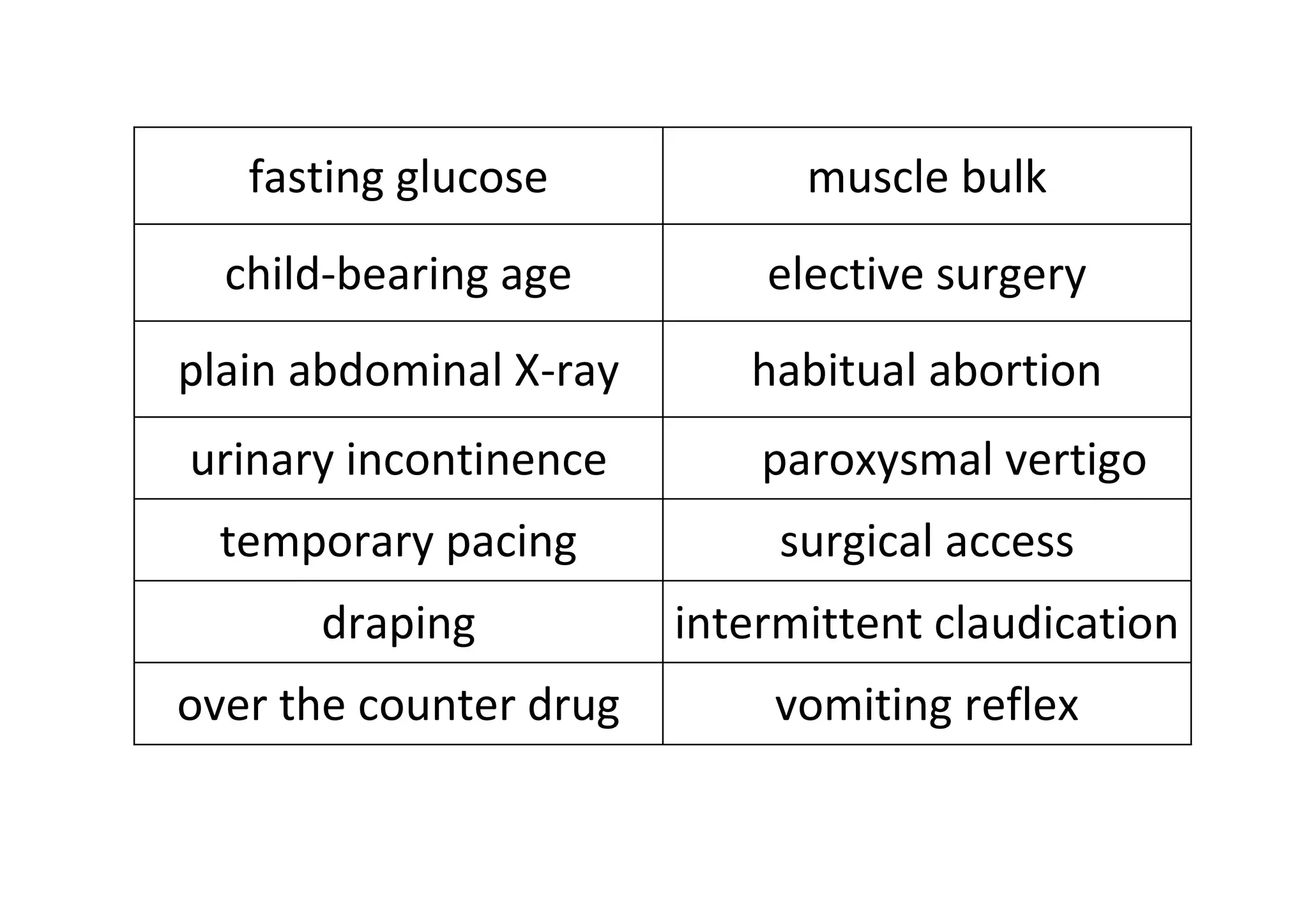
fasting glucose            muscle bulk
  child-bearing age         elective surgery
plain abdominal X-ray      habitual abortion
urinary incontinence        paroxysmal vertigo
  temporary pacing           surgical access
      draping           intermittent claudication
over the counter drug       vomiting reflex
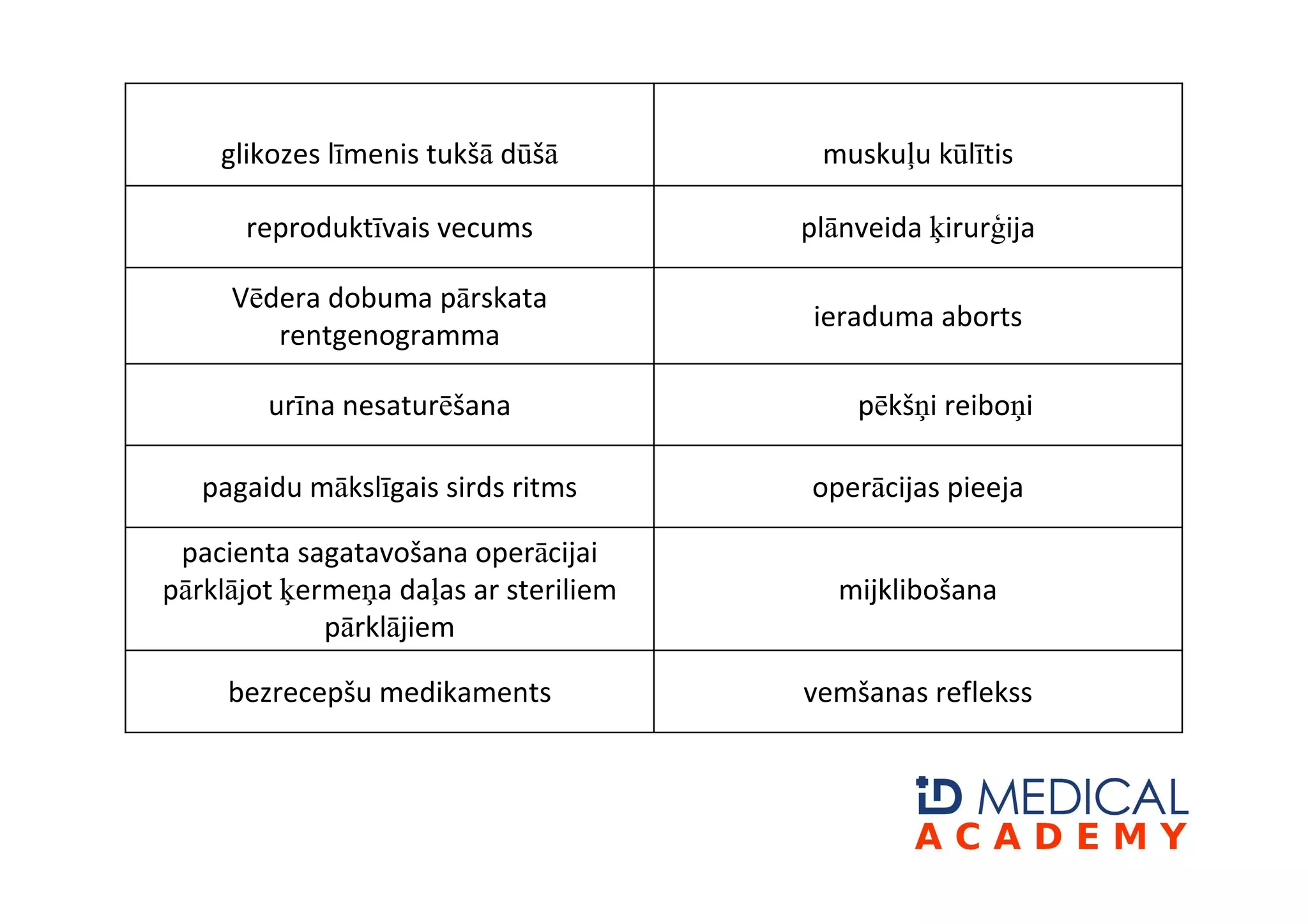
glikozes līmenis tukšā dūšā         muskuĜu kūlītis

      reproduktīvais vecums            plānveida ėirurăija

     Vēdera dobuma pārskata
                                        ieraduma aborts
        rentgenogramma

        urīna nesaturēšana                 pēkšĦi reiboĦi

   pagaidu mākslīgais sirds ritms      operācijas pieeja

 pacienta sagatavošana operācijai
pārklājot ėermeĦa daĜas ar steriliem      mijklibošana
             pārklājiem

     bezrecepšu medikaments            vemšanas reflekss
Medical vs. Colloquial English
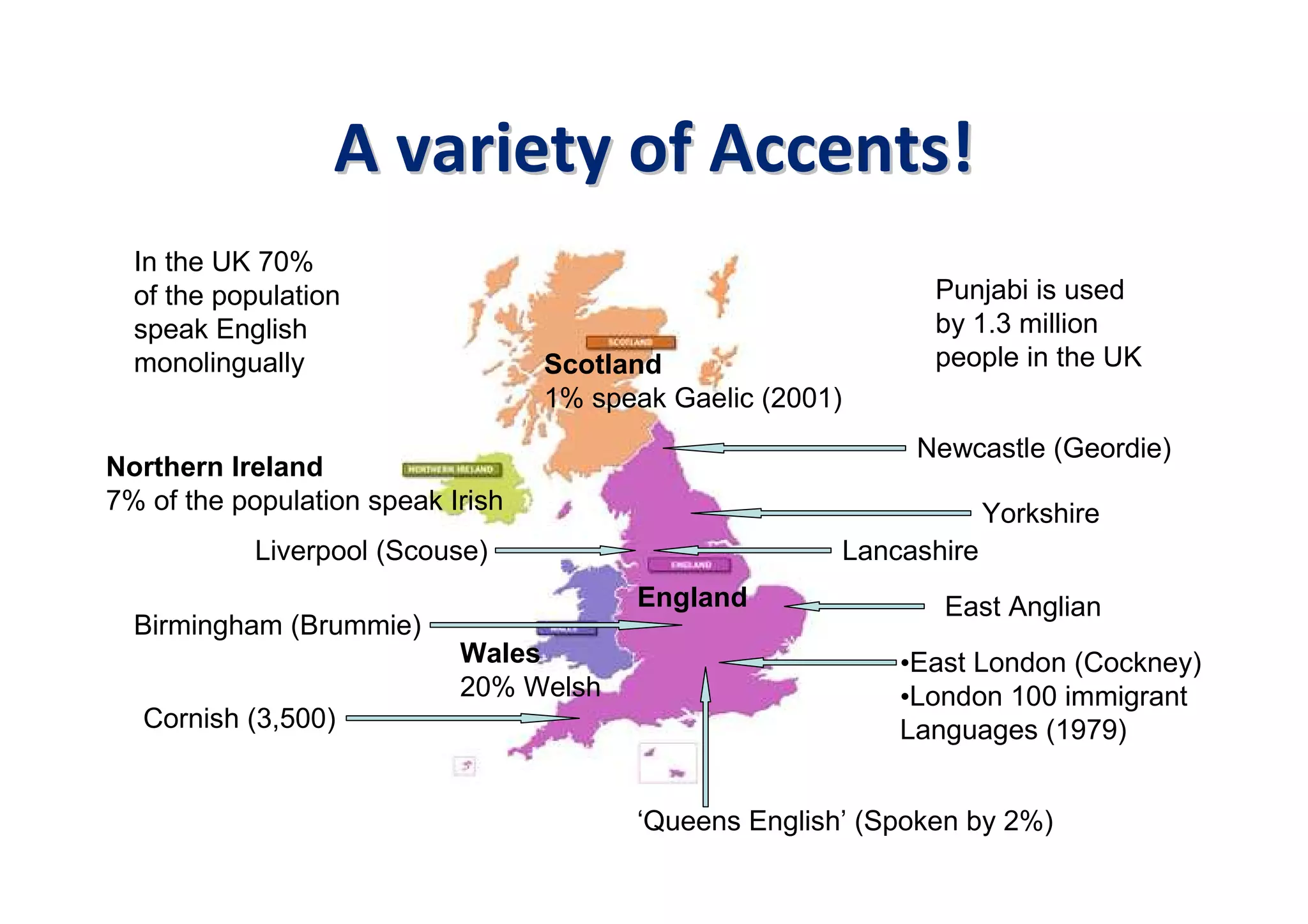
A variety of Accents!
  In the UK 70%
  of the population                                               Punjabi is used
  speak English                                                   by 1.3 million
  monolingually                    Scotland                       people in the UK
                                   1% speak Gaelic (2001)
                                                                 Newcastle (Geordie)
Northern Ireland
7% of the population speak Irish                                         Yorkshire
            Liverpool (Scouse)                              Lancashire
                                         England                   East Anglian
  Birmingham (Brummie)
                            Wales                               •East London (Cockney)
                            20% Welsh                           •London 100 immigrant
   Cornish (3,500)                                              Languages (1979)


                                         ‘Queens English’ (Spoken by 2%)
Good Communication
• Improves patient care
• Creates a good rapport (relationship) with
  your patient
• Use effective body language (eye contact)
• Allow enough consultation time
• Listen well
• The GMC & NMC ‘Code of Conduct’ states:
  “always use language that your patient
  understands” - Avoid medical jargon
What the Patient says!
• “Ooh, I’ve got really bad guts Dr!”
  = “I‘ve got pain in my abdomen”
• “I’ve been puking for 2 days!”
  = “I’ve been vomiting for 2 days”
• “I broke my collar bone 6 months ago”
  = “I broke my clavicle…..”
• “I’m having trouble down below!”
  = “I’m having trouble with my genitals”
• “I’ve been bleeding from my back passage”
  = “I’ve been bleeding from my anus”
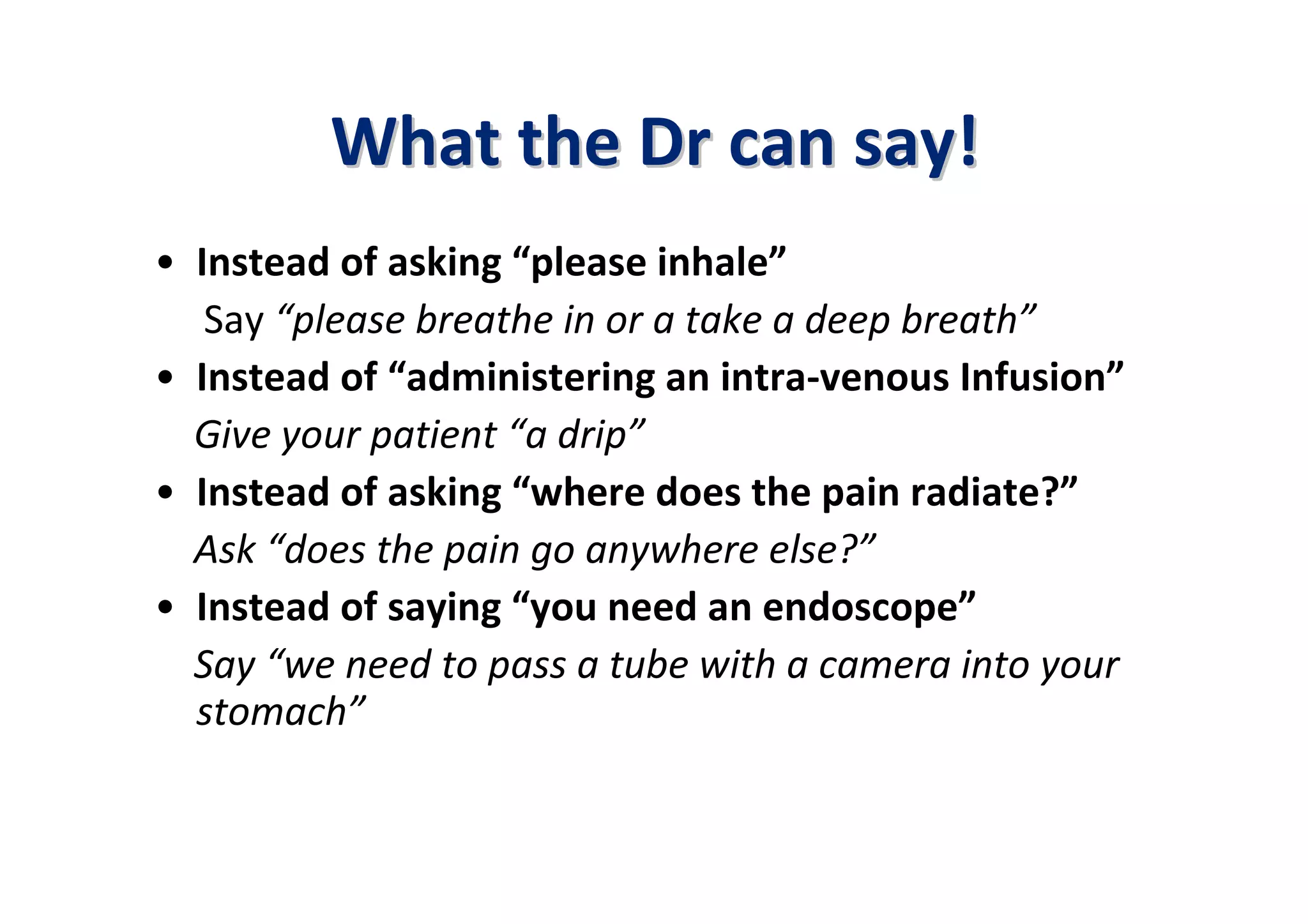
What the Dr can say!
• Instead of asking “please inhale”
   Say “please breathe in or a take a deep breath”
• Instead of “administering an intra-venous Infusion”
  Give your patient “a drip”
• Instead of asking “where does the pain radiate?”
  Ask “does the pain go anywhere else?”
• Instead of saying “you need an endoscope”
  Say “we need to pass a tube with a camera into your
  stomach”
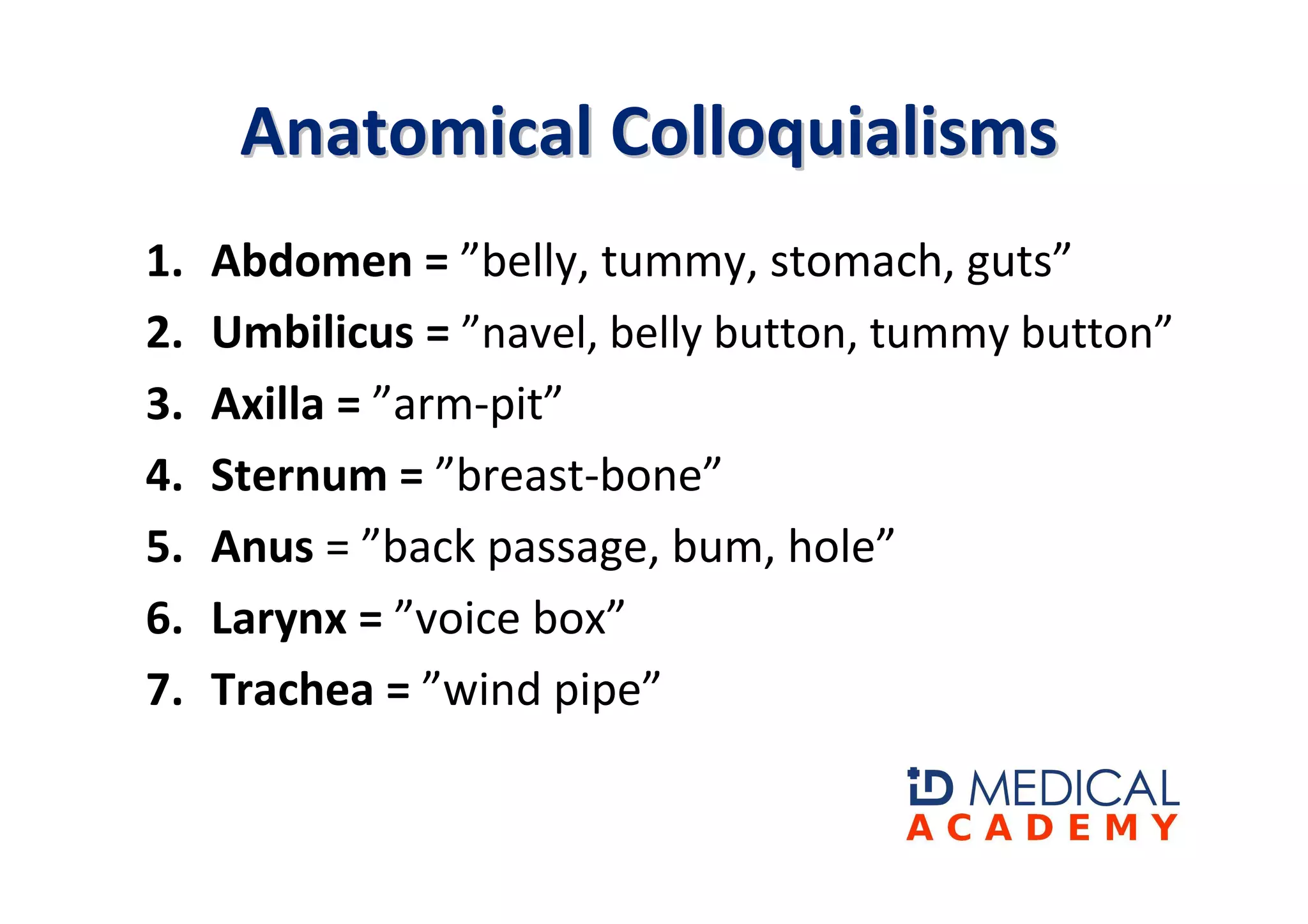
Anatomical Colloquialisms
1.   Abdomen = ”belly, tummy, stomach, guts”
2.   Umbilicus = ”navel, belly button, tummy button”
3.   Axilla = ”arm-pit”
4.   Sternum = ”breast-bone”
5.   Anus = ”back passage, bum, hole”
6.   Larynx = ”voice box”
7.   Trachea = ”wind pipe”
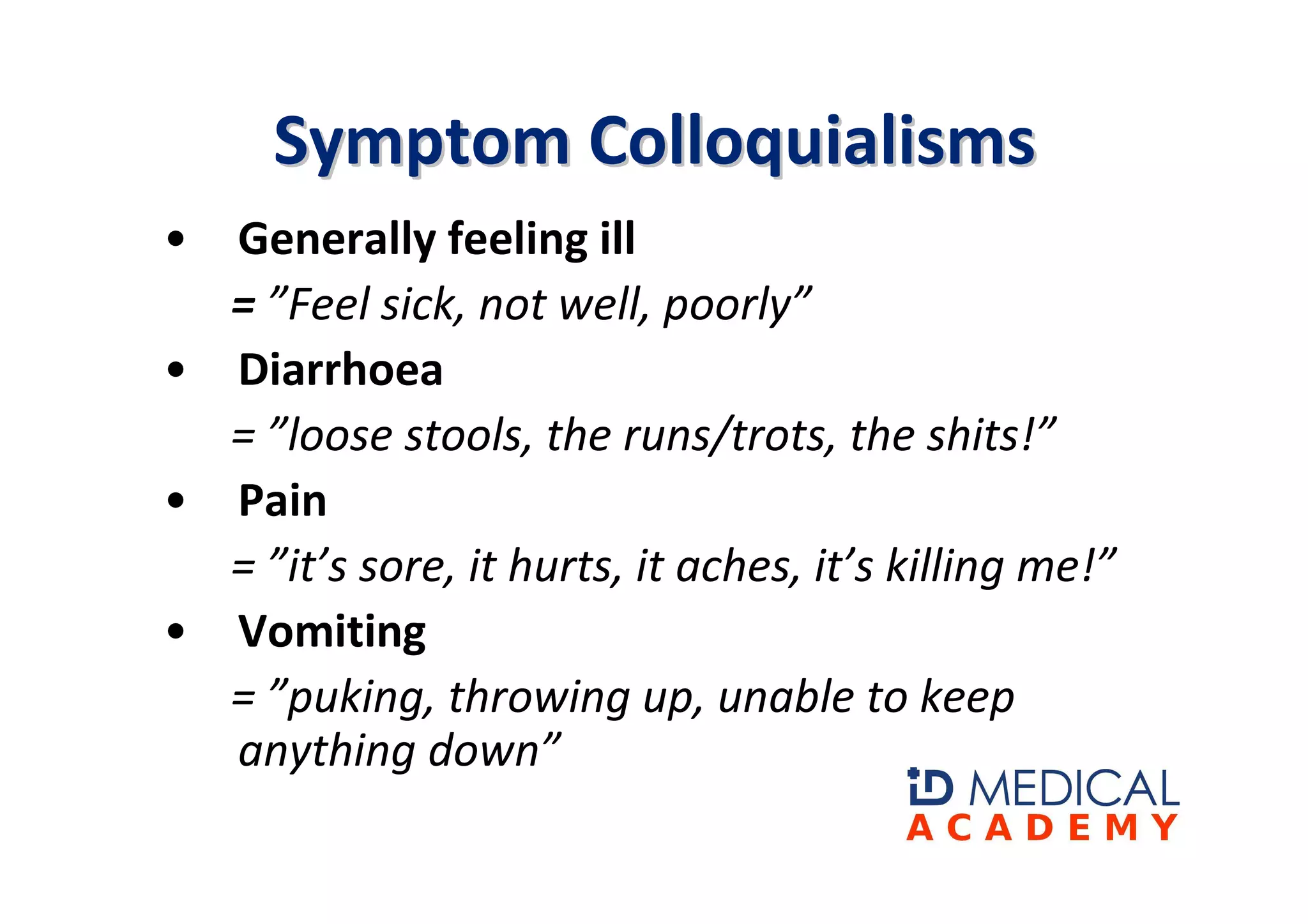
Symptom Colloquialisms
• Generally feeling ill
  = ”Feel sick, not well, poorly”
• Diarrhoea
  = ”loose stools, the runs/trots, the shits!”
• Pain
  = ”it’s sore, it hurts, it aches, it’s killing me!”
• Vomiting
  = ”puking, throwing up, unable to keep
  anything down”
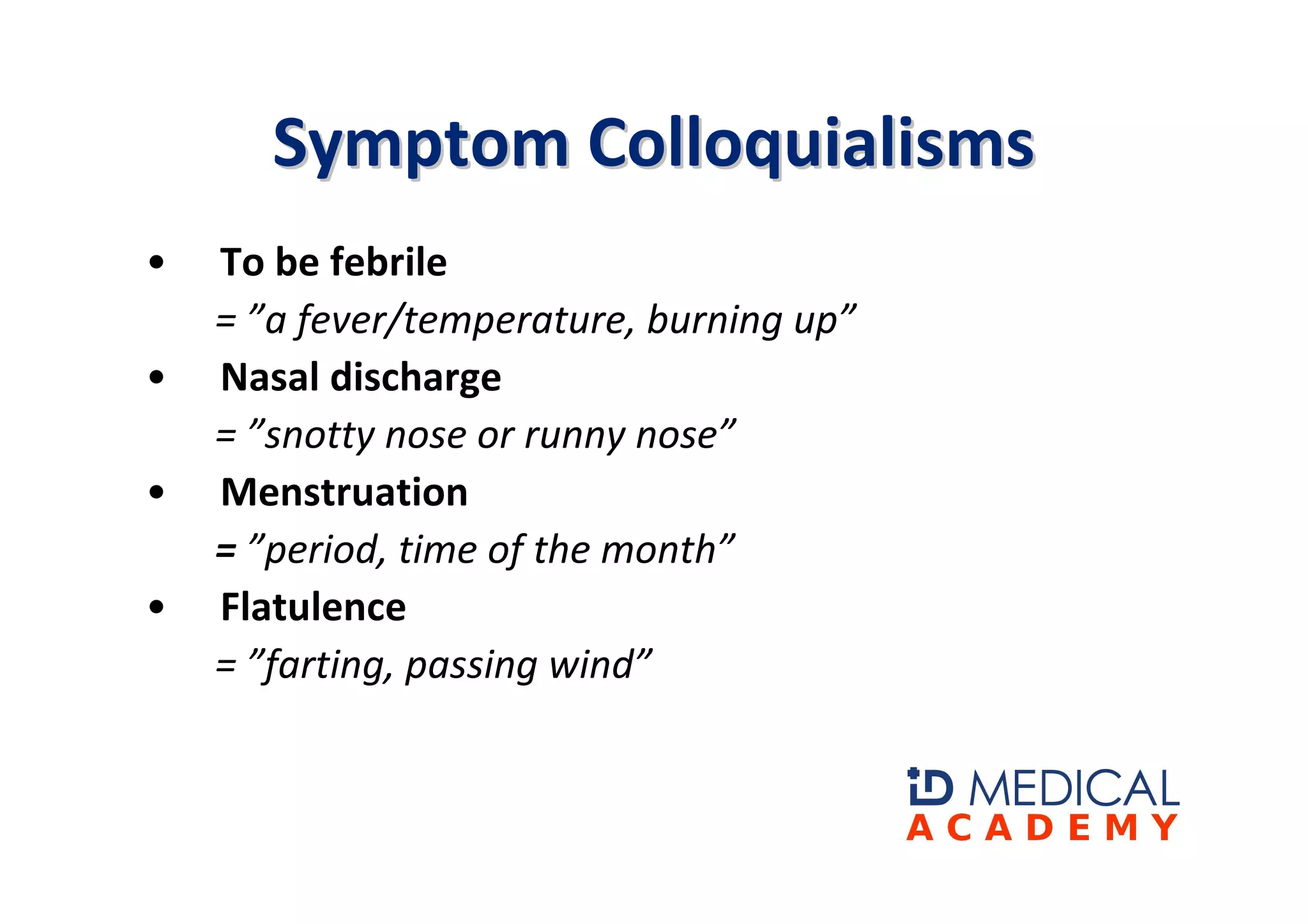
Symptom Colloquialisms
•   To be febrile
    = ”a fever/temperature, burning up”
•   Nasal discharge
    = ”snotty nose or runny nose”
•   Menstruation
    = ”period, time of the month”
•   Flatulence
    = ”farting, passing wind”
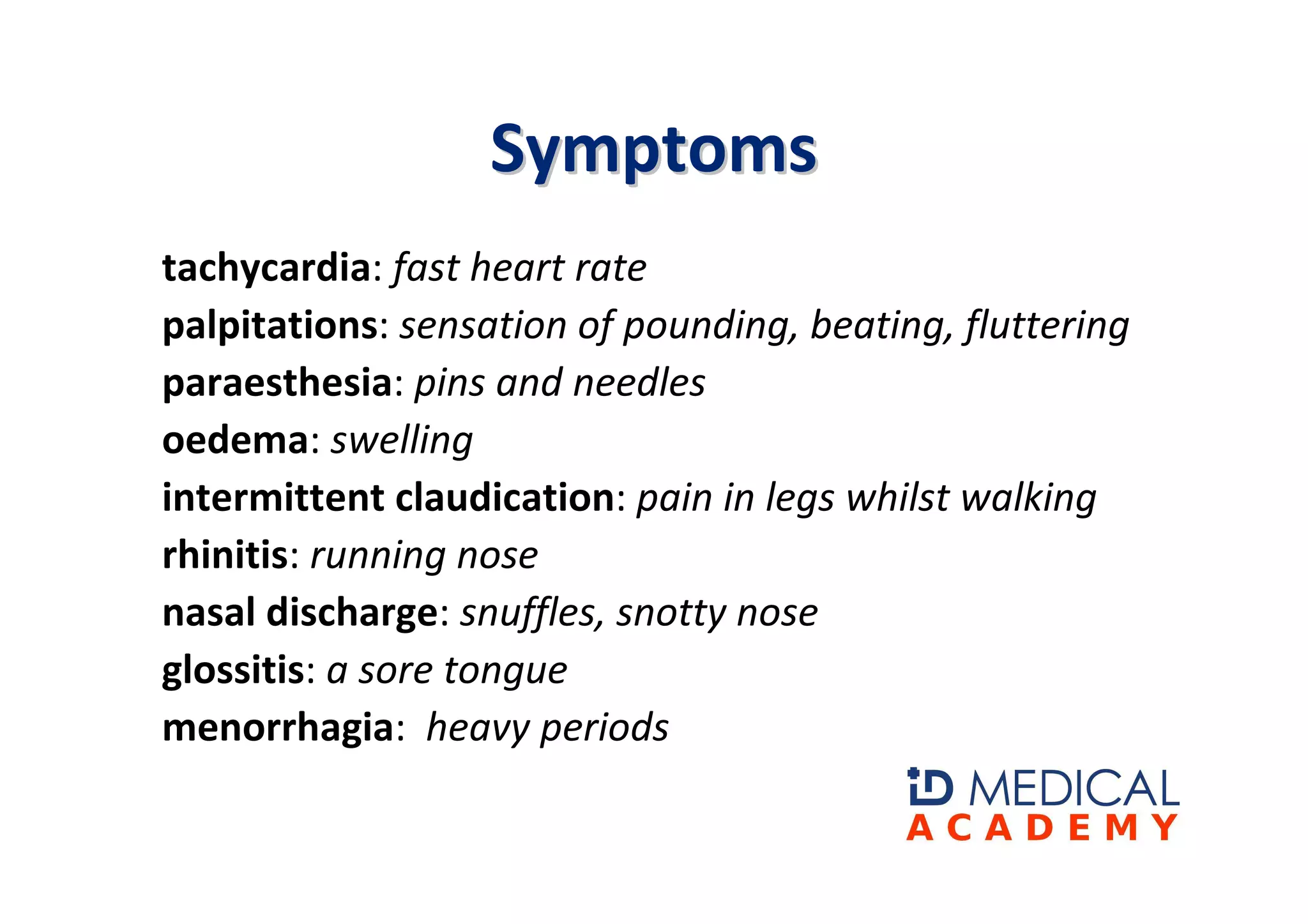
Symptoms
tachycardia: fast heart rate
palpitations: sensation of pounding, beating, fluttering
paraesthesia: pins and needles
oedema: swelling
intermittent claudication: pain in legs whilst walking
rhinitis: running nose
nasal discharge: snuffles, snotty nose
glossitis: a sore tongue
menorrhagia: heavy periods
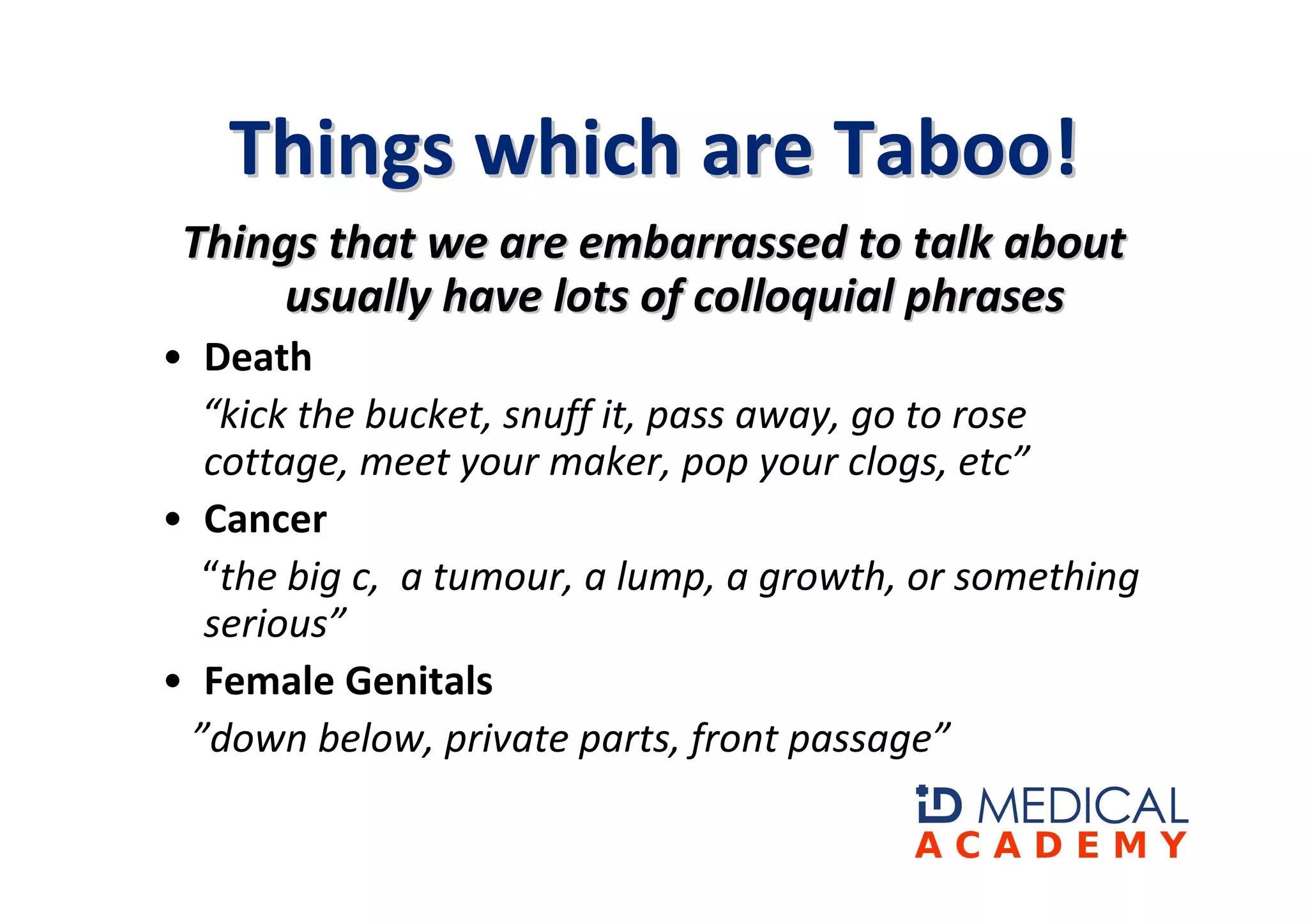
Things which are Taboo!
 Things that we are embarrassed to talk about
      usually have lots of colloquial phrases
• Death
  “kick the bucket, snuff it, pass away, go to rose
  cottage, meet your maker, pop your clogs, etc”
• Cancer
  “the big c, a tumour, a lump, a growth, or something
  serious”
• Female Genitals
 ”down below, private parts, front passage”
Medical Abbreviations
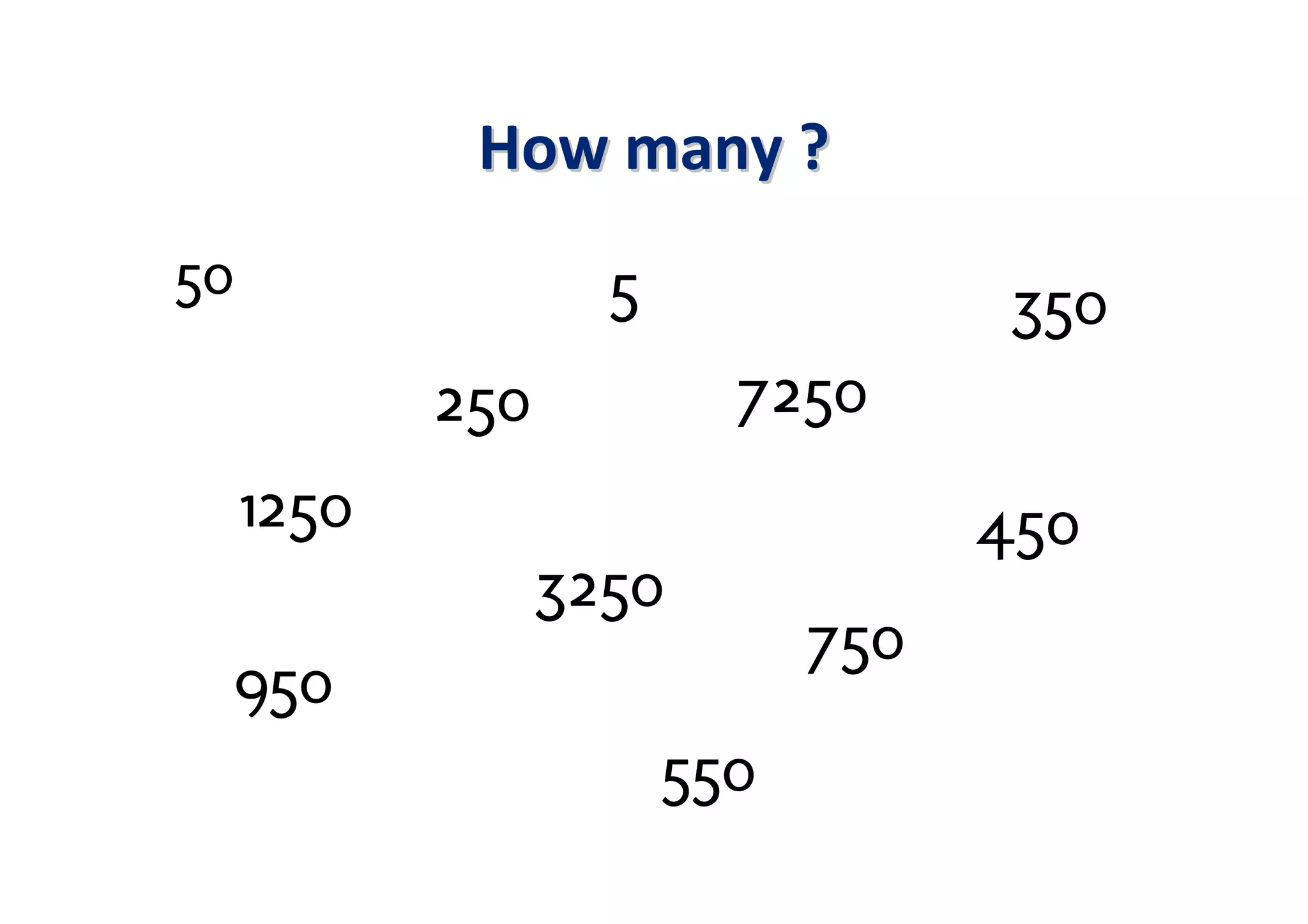
How many ?
50                  5               350
            250           7250
     1250                           450
                  3250
                              750
     950
                        550
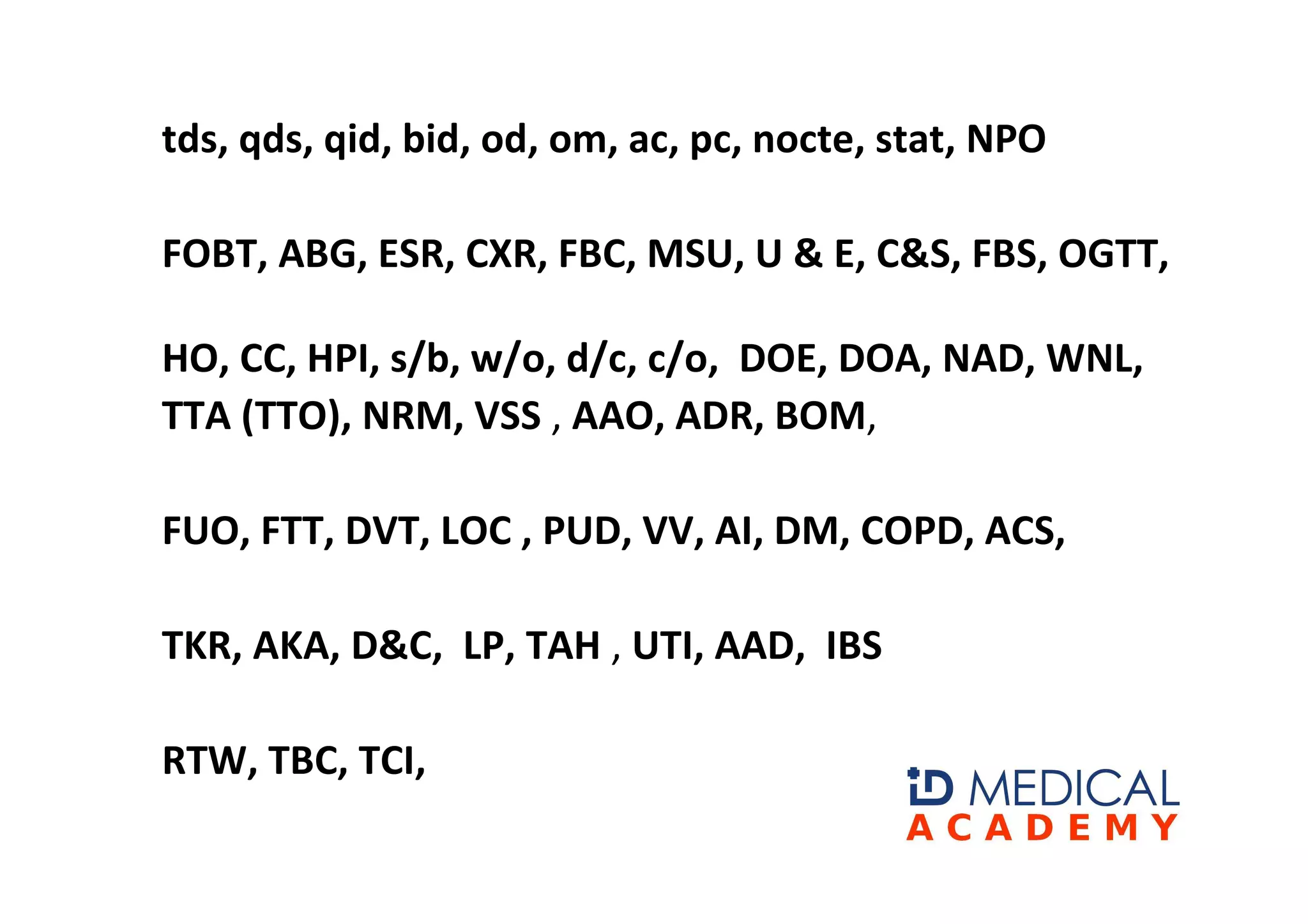
tds, qds, qid, bid, od, om, ac, pc, nocte, stat, NPO

FOBT, ABG, ESR, CXR, FBC, MSU, U & E, C&S, FBS, OGTT,

HO, CC, HPI, s/b, w/o, d/c, c/o, DOE, DOA, NAD, WNL,
TTA (TTO), NRM, VSS , AAO, ADR, BOM,

FUO, FTT, DVT, LOC , PUD, VV, AI, DM, COPD, ACS,

TKR, AKA, D&C, LP, TAH , UTI, AAD, IBS

RTW, TBC, TCI,
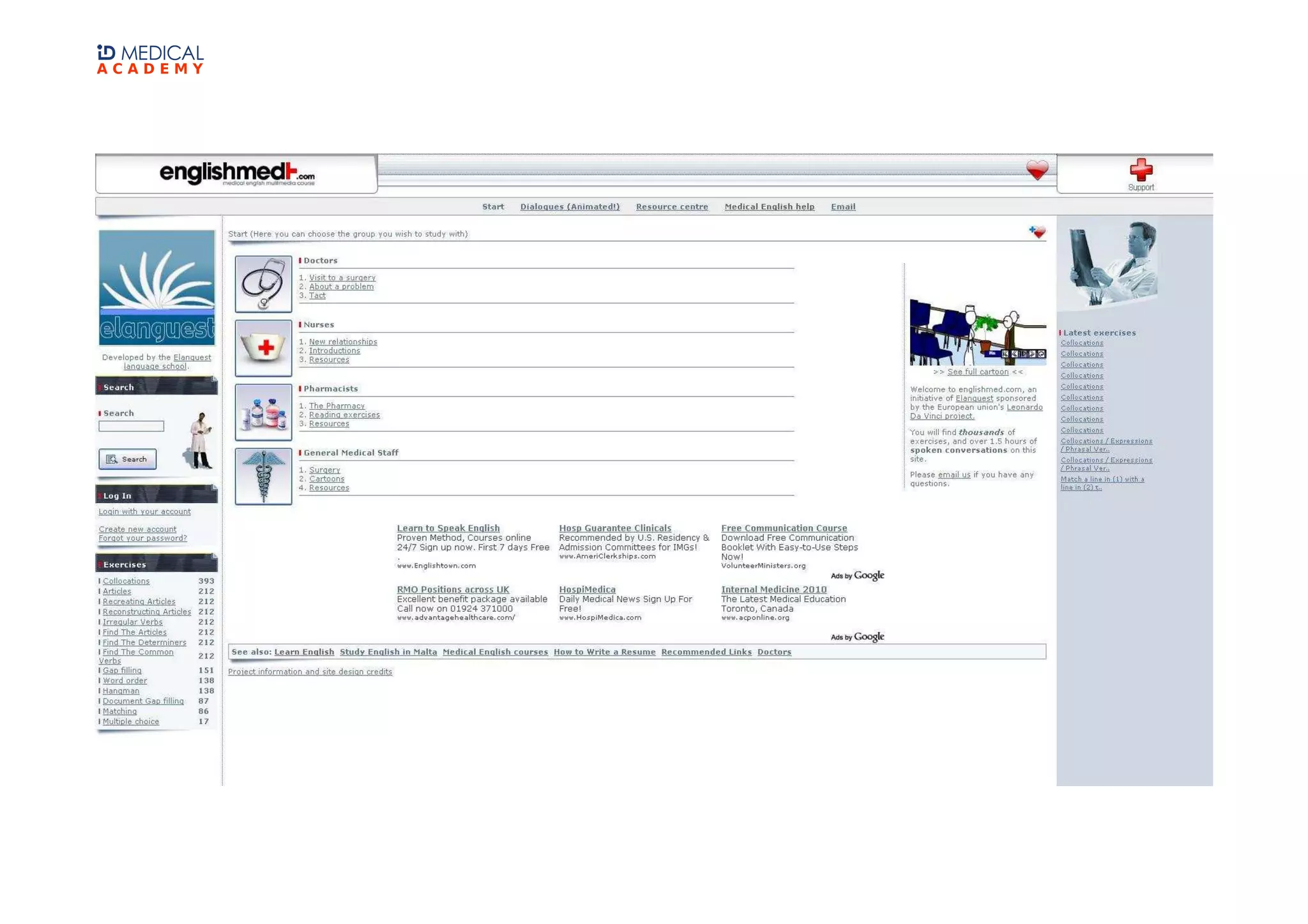
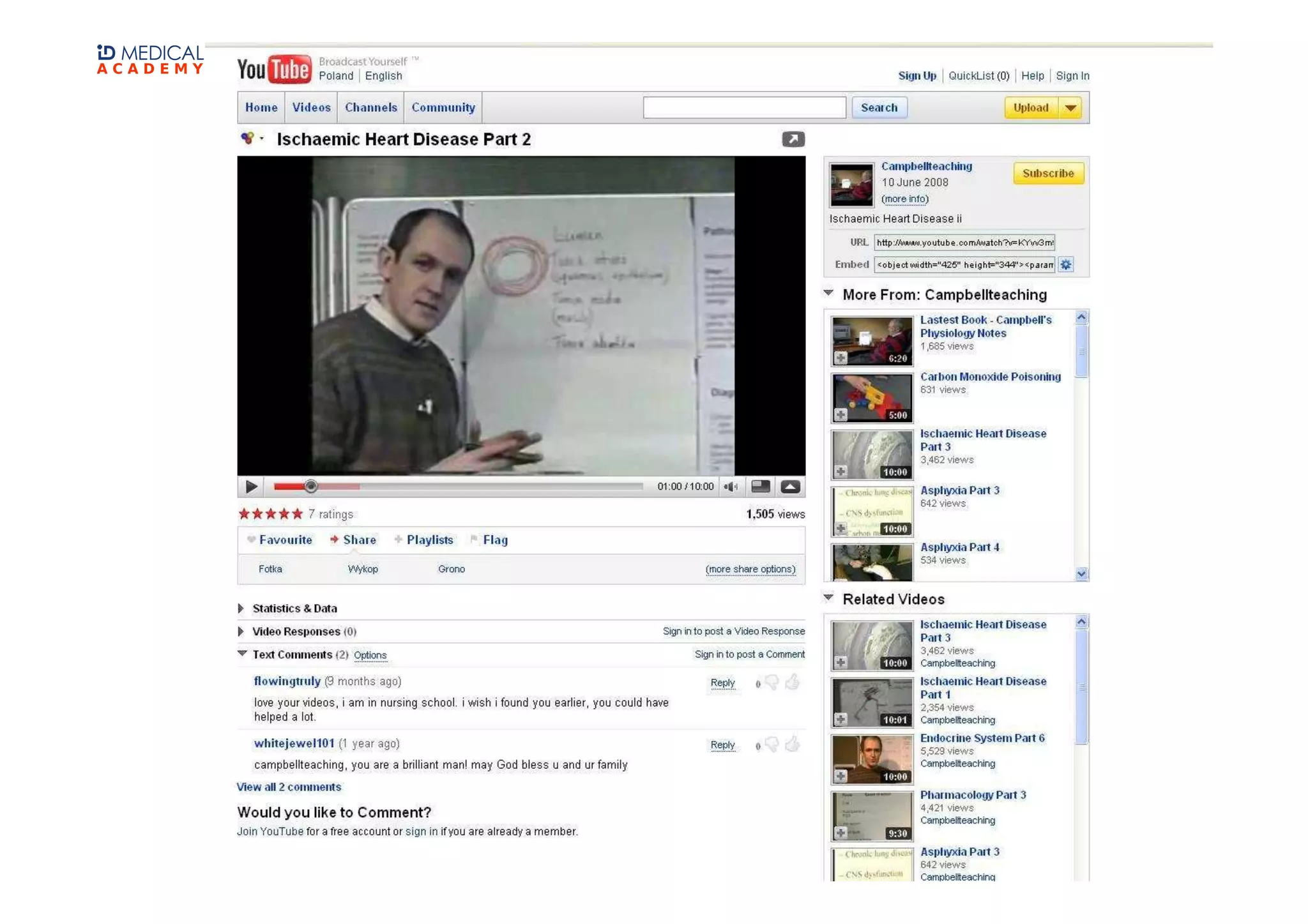
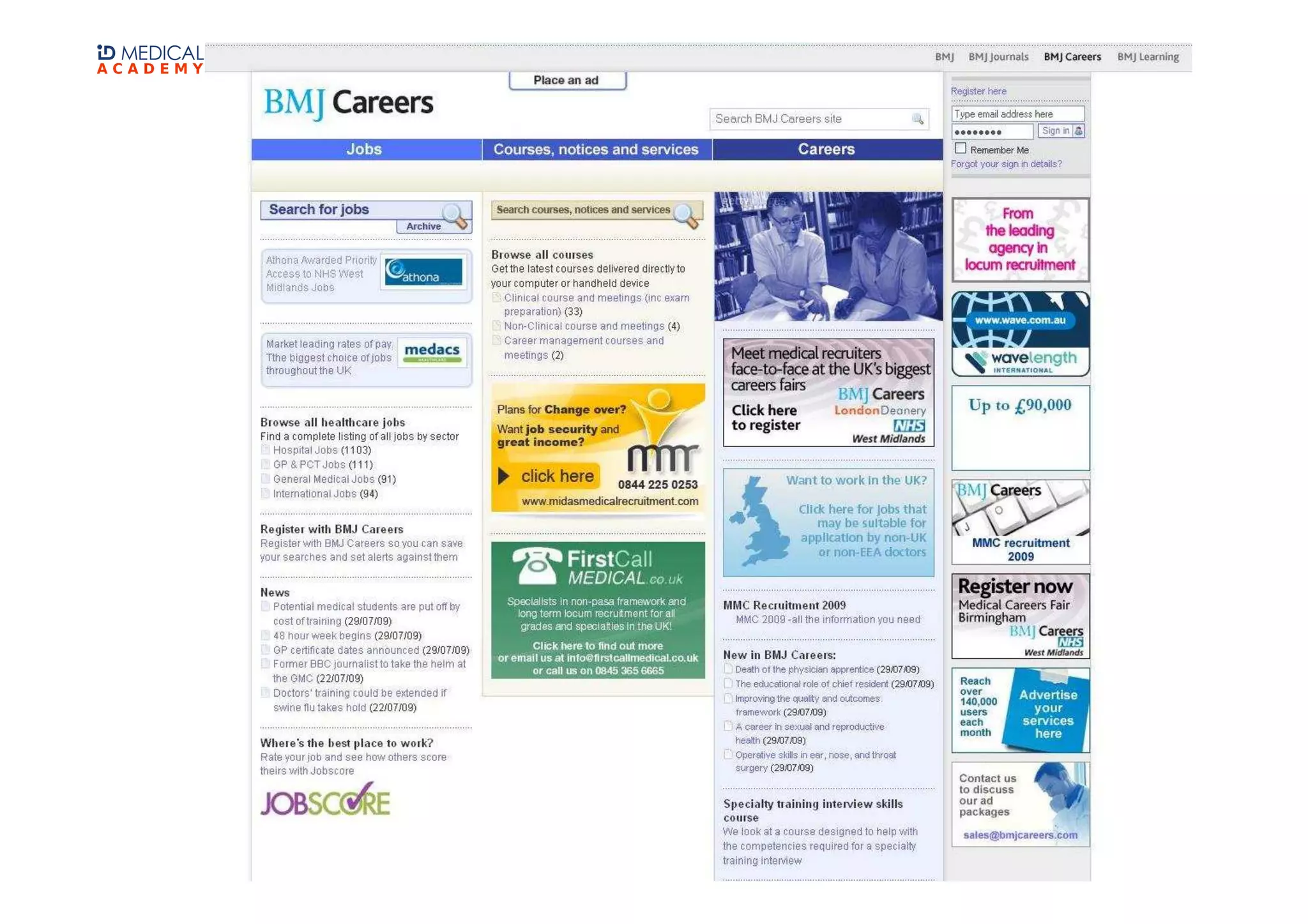
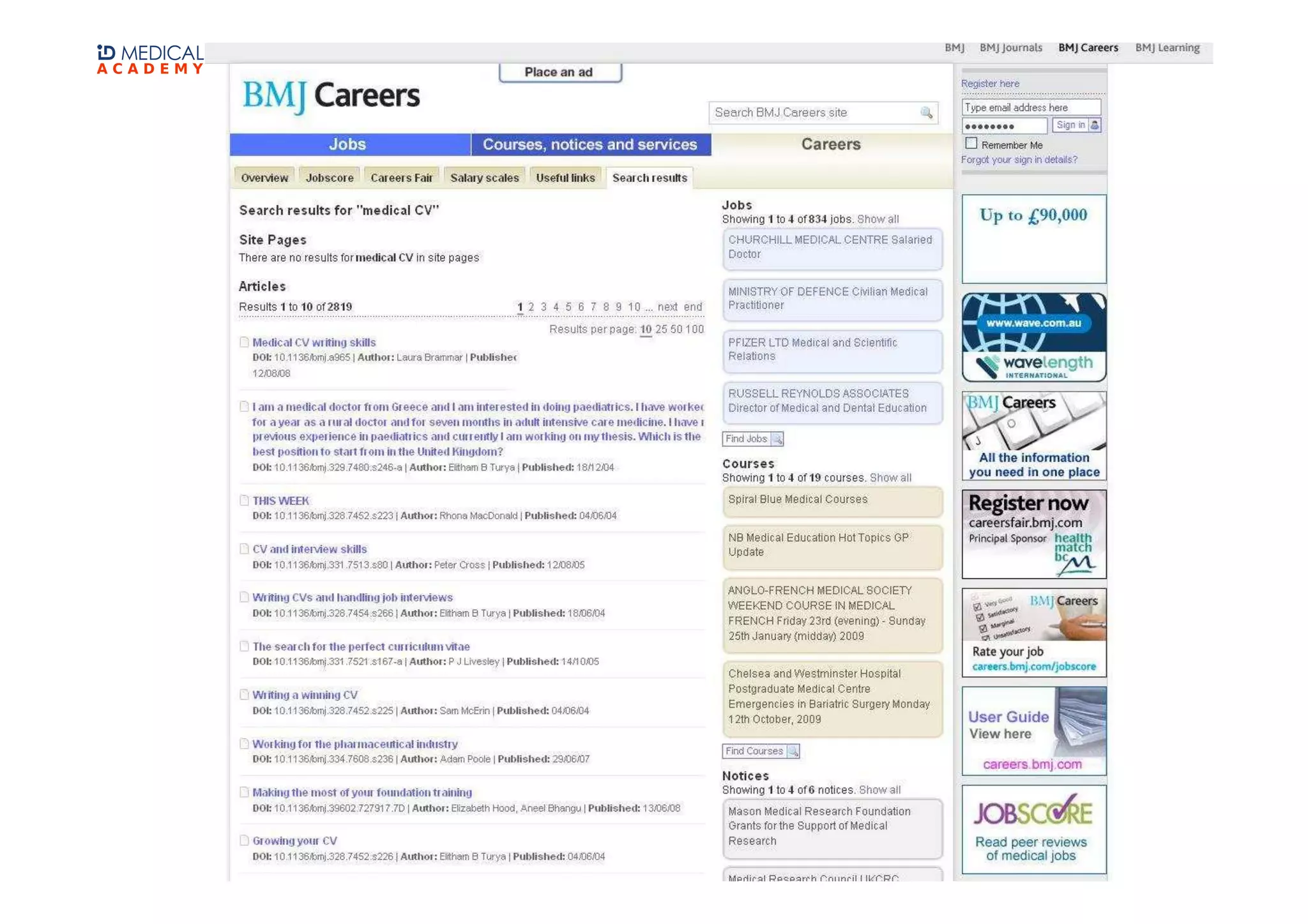
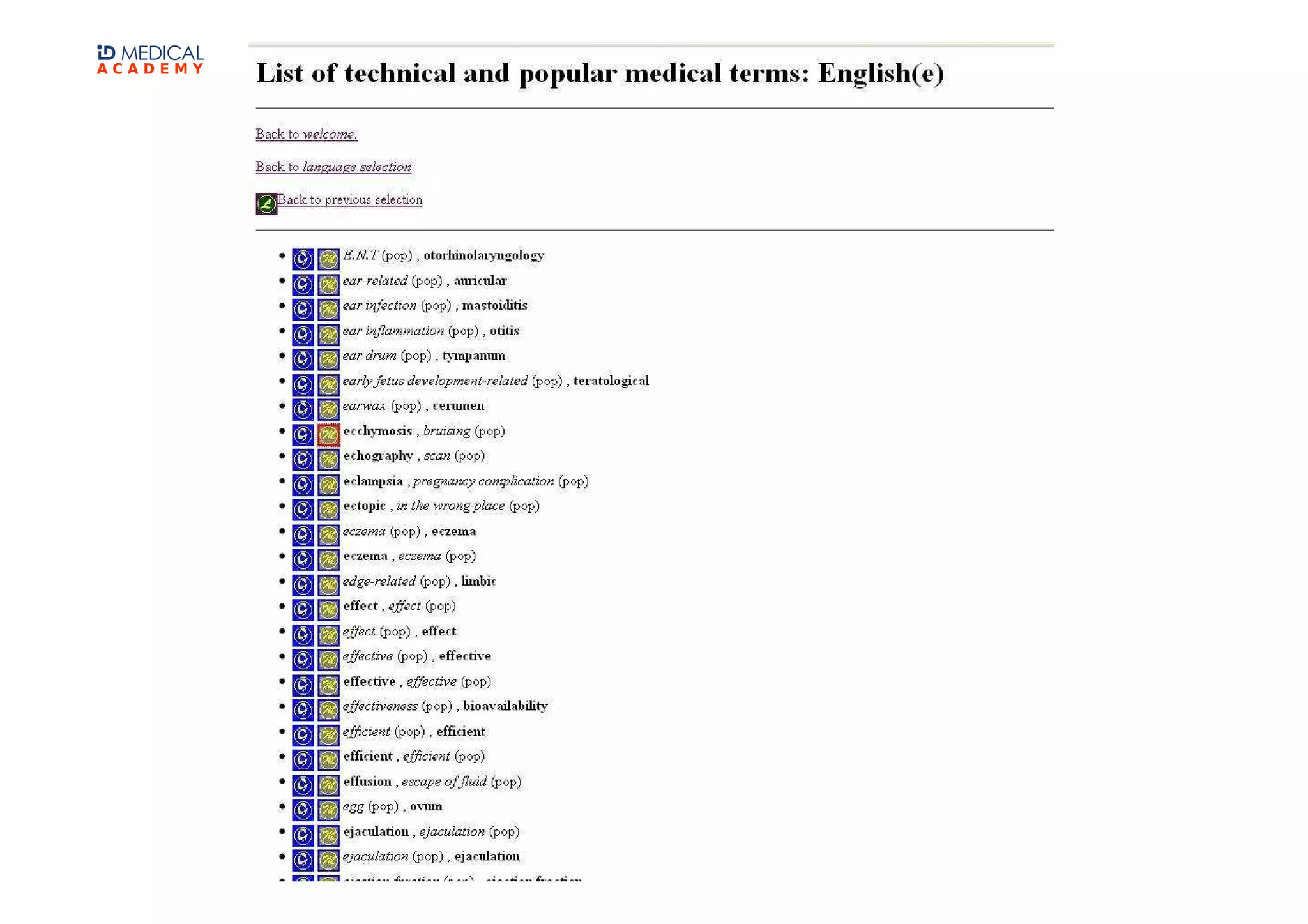
Internet Resources
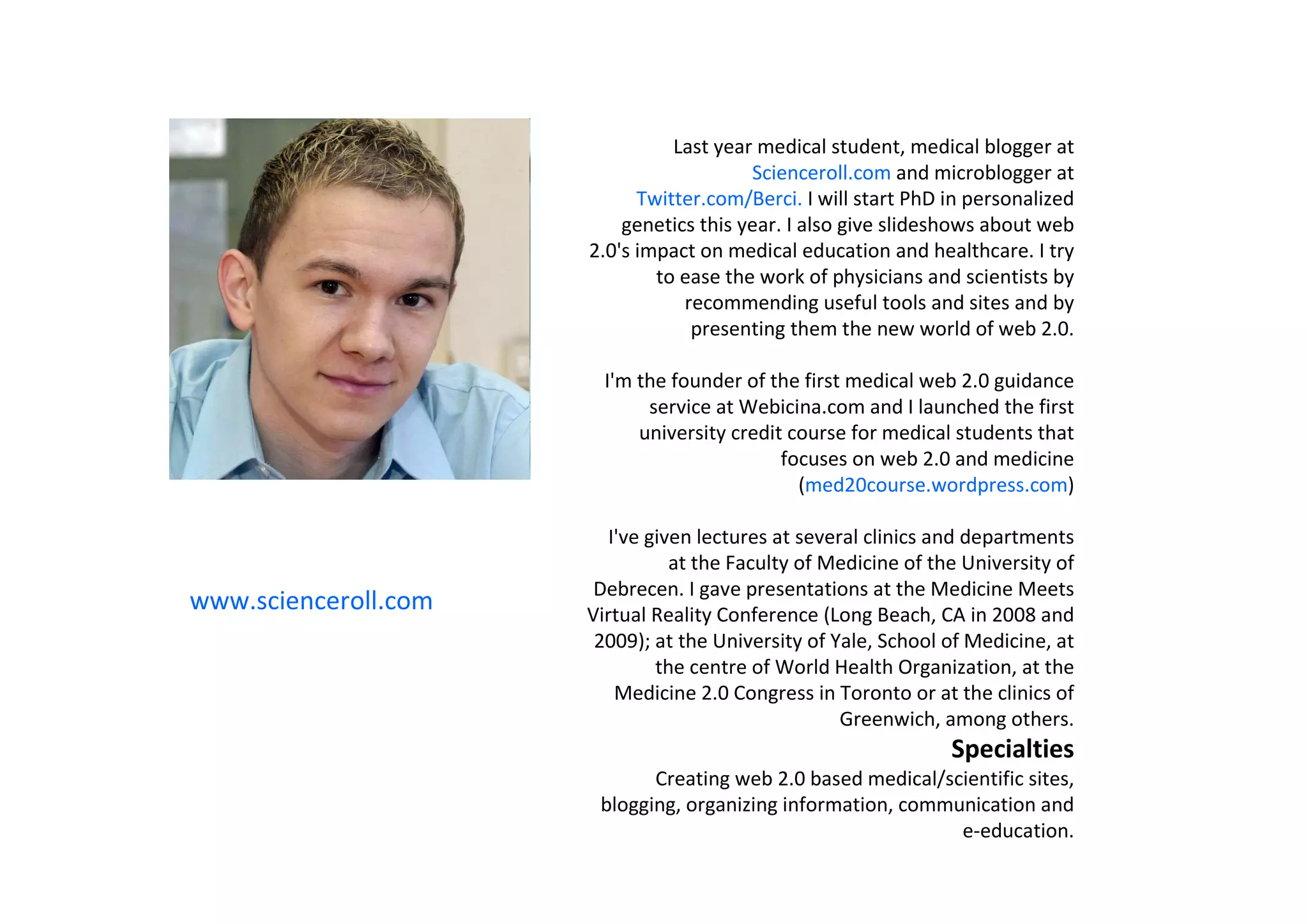
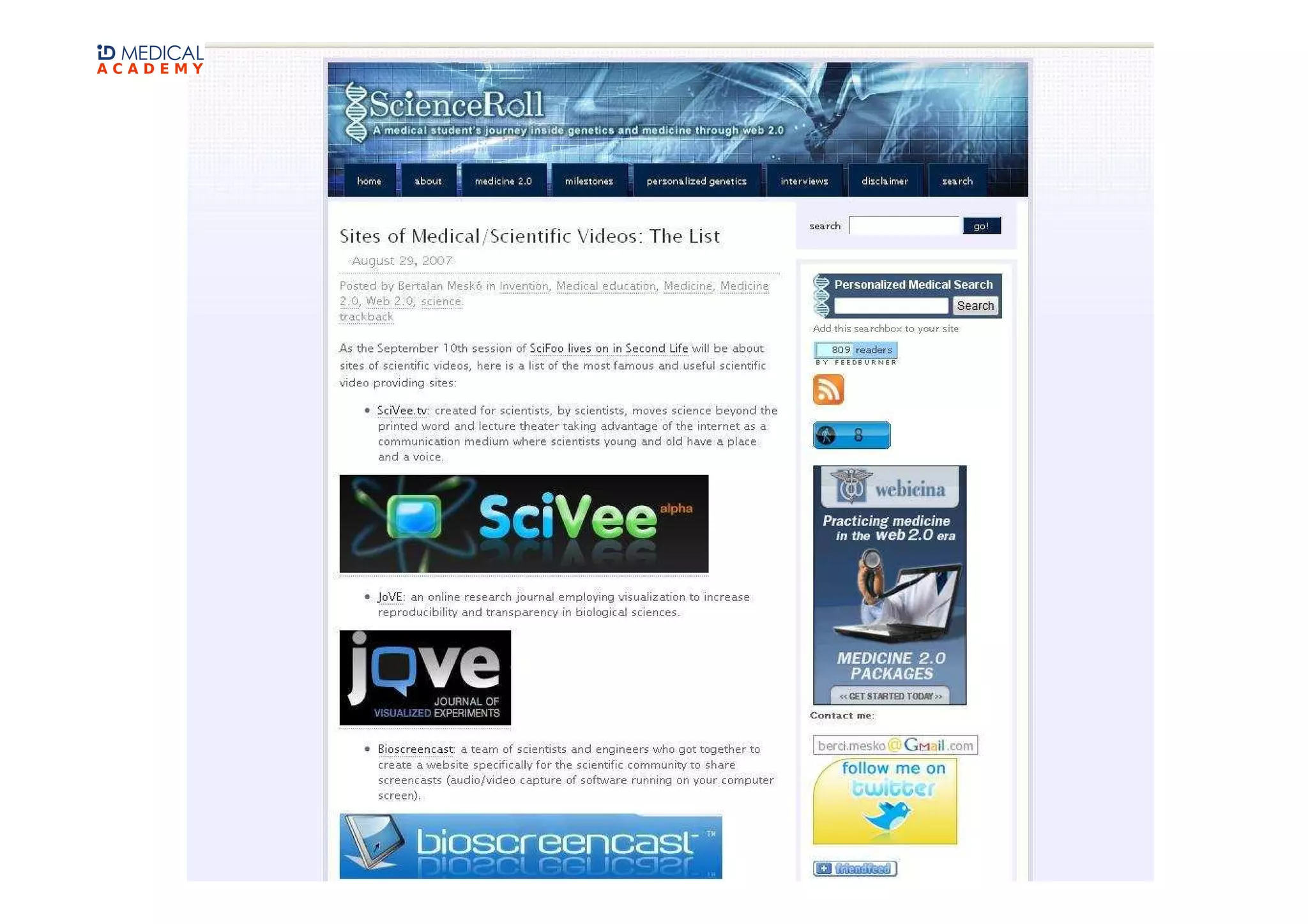
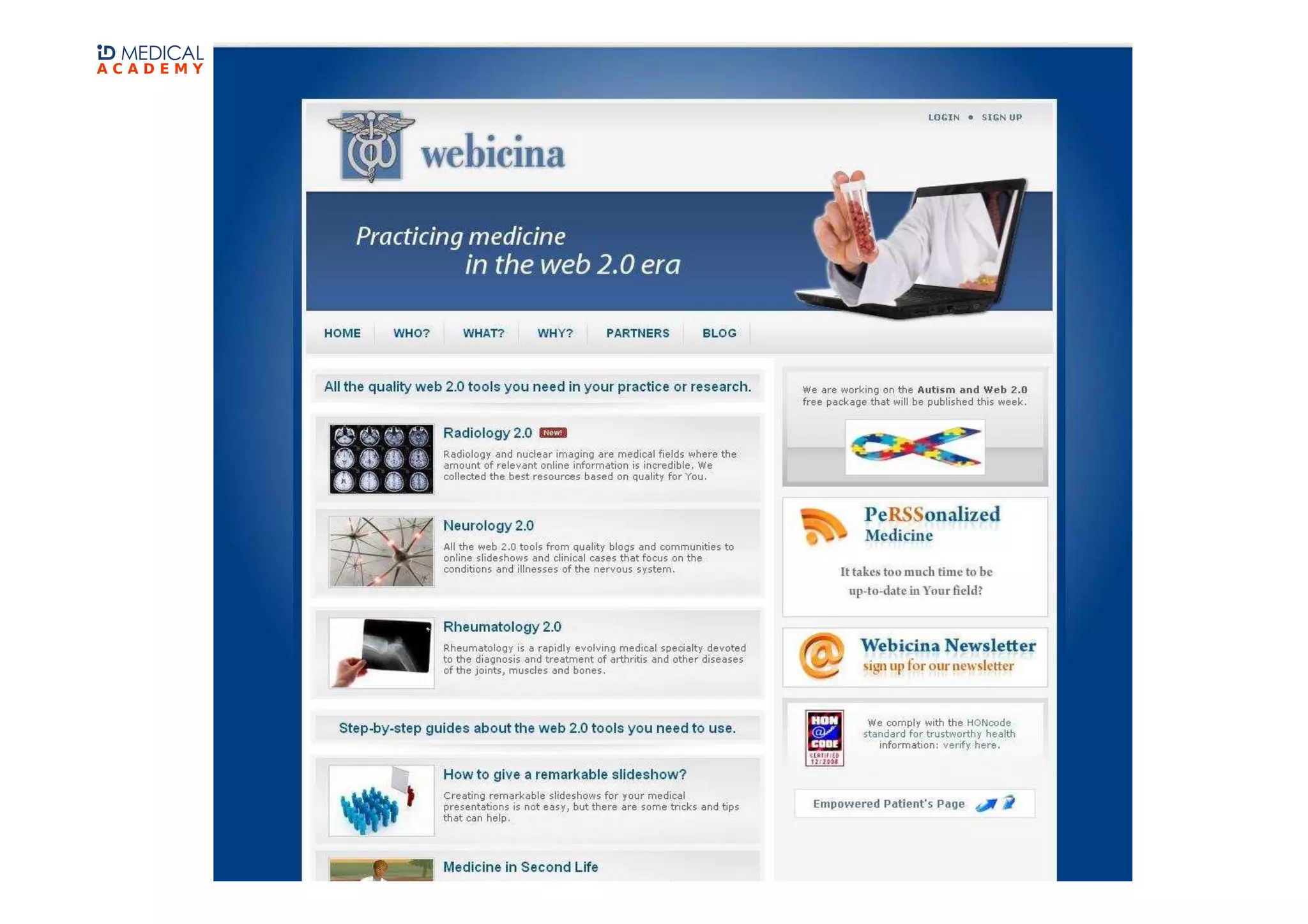
Last year medical student, medical blogger at
                                         Scienceroll.com and microblogger at
                            Twitter.com/Berci. I will start PhD in personalized
                          genetics this year. I also give slideshows about web
                      2.0's impact on medical education and healthcare. I try
                              to ease the work of physicians and scientists by
                                 recommending useful tools and sites and by
                                  presenting them the new world of web 2.0.

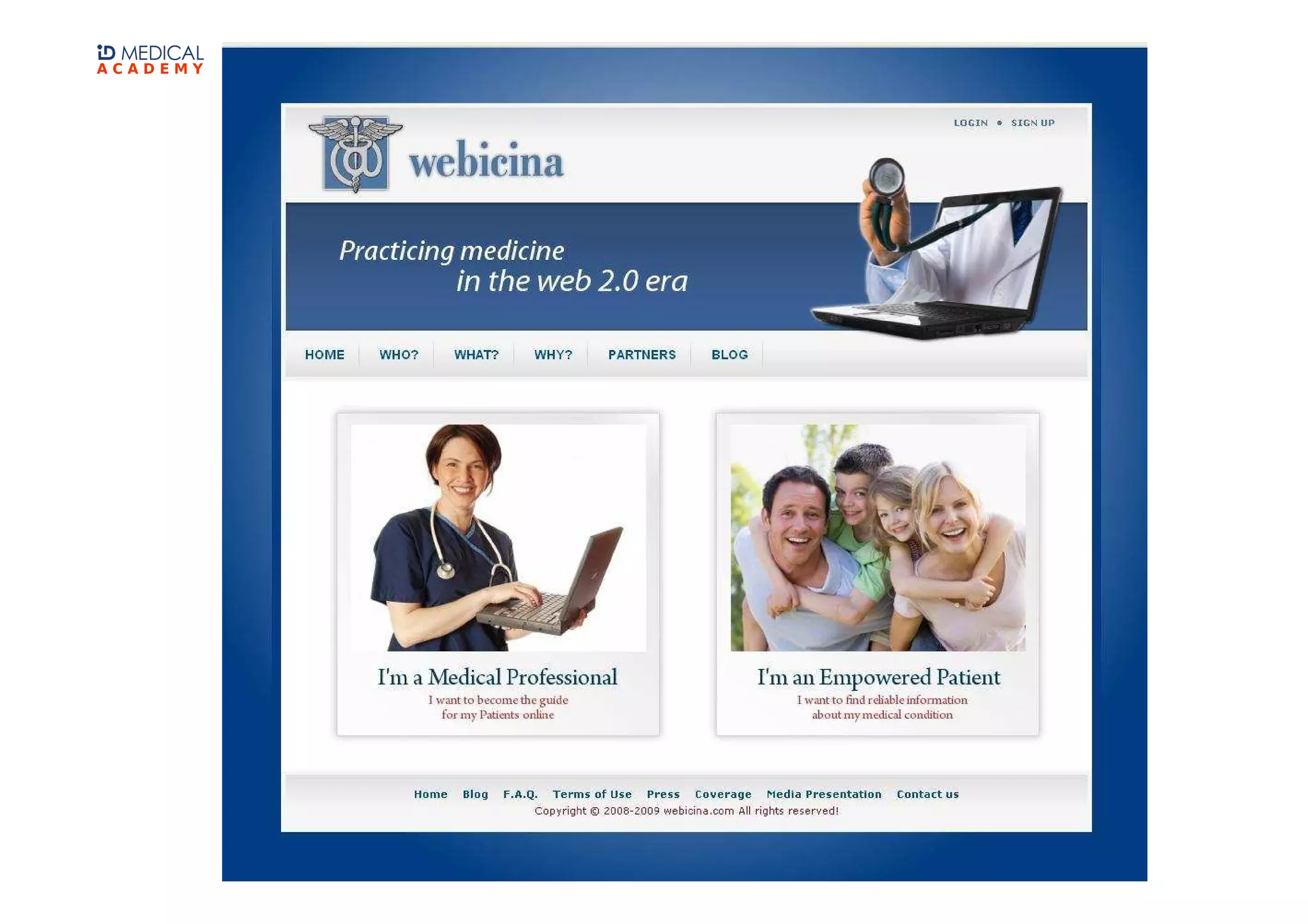
                        I'm the founder of the first medical web 2.0 guidance
                             service at Webicina.com and I launched the first
                            university credit course for medical students that
                                             focuses on web 2.0 and medicine
                                               (med20course.wordpress.com)

                         I've given lectures at several clinics and departments
                                 at the Faculty of Medicine of the University of
                       Debrecen. I gave presentations at the Medicine Meets
www.scienceroll.com   Virtual Reality Conference (Long Beach, CA in 2008 and
                       2009); at the University of Yale, School of Medicine, at
                               the centre of World Health Organization, at the
                          Medicine 2.0 Congress in Toronto or at the clinics of
                                                     Greenwich, among others.
                                                                 Specialties
                             Creating web 2.0 based medical/scientific sites,
                       blogging, organizing information, communication and
                                                              e-education.
Thank You!

Any Questions?

How To Effectively Learn Medical English

  • 1.
    How to effectivelylearn Medical English Grzegorz Chodkowski (MD) Riga, Radisson SAS 2009
  • 2.
    Information is POWER
  • 3.
  • 4.
    "Never, never, neverquit.“ Winston Churchill
  • 5.
    Today’s Agenda 1. MedicalCollocations 2. Medical vs. Colloquial English 3. Abbreviations 4. Internet resources / cultural context
  • 6.
  • 7.
    fasting glucose muscle bulk child-bearing age elective surgery plain abdominal X-ray habitual abortion urinary incontinence paroxysmal vertigo temporary pacing surgical access draping intermittent claudication over the counter drug vomiting reflex
  • 8.
    glikozes līmenis tukšādūšā muskuĜu kūlītis reproduktīvais vecums plānveida ėirurăija Vēdera dobuma pārskata ieraduma aborts rentgenogramma urīna nesaturēšana pēkšĦi reiboĦi pagaidu mākslīgais sirds ritms operācijas pieeja pacienta sagatavošana operācijai pārklājot ėermeĦa daĜas ar steriliem mijklibošana pārklājiem bezrecepšu medikaments vemšanas reflekss
  • 9.
  • 10.
    A variety ofAccents! In the UK 70% of the population Punjabi is used speak English by 1.3 million monolingually Scotland people in the UK 1% speak Gaelic (2001) Newcastle (Geordie) Northern Ireland 7% of the population speak Irish Yorkshire Liverpool (Scouse) Lancashire England East Anglian Birmingham (Brummie) Wales •East London (Cockney) 20% Welsh •London 100 immigrant Cornish (3,500) Languages (1979) ‘Queens English’ (Spoken by 2%)
  • 11.
    Good Communication • Improvespatient care • Creates a good rapport (relationship) with your patient • Use effective body language (eye contact) • Allow enough consultation time • Listen well • The GMC & NMC ‘Code of Conduct’ states: “always use language that your patient understands” - Avoid medical jargon
  • 12.
    What the Patientsays! • “Ooh, I’ve got really bad guts Dr!” = “I‘ve got pain in my abdomen” • “I’ve been puking for 2 days!” = “I’ve been vomiting for 2 days” • “I broke my collar bone 6 months ago” = “I broke my clavicle…..” • “I’m having trouble down below!” = “I’m having trouble with my genitals” • “I’ve been bleeding from my back passage” = “I’ve been bleeding from my anus”
  • 13.
    What the Drcan say! • Instead of asking “please inhale” Say “please breathe in or a take a deep breath” • Instead of “administering an intra-venous Infusion” Give your patient “a drip” • Instead of asking “where does the pain radiate?” Ask “does the pain go anywhere else?” • Instead of saying “you need an endoscope” Say “we need to pass a tube with a camera into your stomach”
  • 14.
    Anatomical Colloquialisms 1. Abdomen = ”belly, tummy, stomach, guts” 2. Umbilicus = ”navel, belly button, tummy button” 3. Axilla = ”arm-pit” 4. Sternum = ”breast-bone” 5. Anus = ”back passage, bum, hole” 6. Larynx = ”voice box” 7. Trachea = ”wind pipe”
  • 15.
    Symptom Colloquialisms • Generallyfeeling ill = ”Feel sick, not well, poorly” • Diarrhoea = ”loose stools, the runs/trots, the shits!” • Pain = ”it’s sore, it hurts, it aches, it’s killing me!” • Vomiting = ”puking, throwing up, unable to keep anything down”
  • 16.
    Symptom Colloquialisms • To be febrile = ”a fever/temperature, burning up” • Nasal discharge = ”snotty nose or runny nose” • Menstruation = ”period, time of the month” • Flatulence = ”farting, passing wind”
  • 17.
    Symptoms tachycardia: fast heartrate palpitations: sensation of pounding, beating, fluttering paraesthesia: pins and needles oedema: swelling intermittent claudication: pain in legs whilst walking rhinitis: running nose nasal discharge: snuffles, snotty nose glossitis: a sore tongue menorrhagia: heavy periods
  • 18.
    Things which areTaboo! Things that we are embarrassed to talk about usually have lots of colloquial phrases • Death “kick the bucket, snuff it, pass away, go to rose cottage, meet your maker, pop your clogs, etc” • Cancer “the big c, a tumour, a lump, a growth, or something serious” • Female Genitals ”down below, private parts, front passage”
  • 19.
  • 20.
    How many ? 50 5 350 250 7250 1250 450 3250 750 950 550
  • 21.
    tds, qds, qid,bid, od, om, ac, pc, nocte, stat, NPO FOBT, ABG, ESR, CXR, FBC, MSU, U & E, C&S, FBS, OGTT, HO, CC, HPI, s/b, w/o, d/c, c/o, DOE, DOA, NAD, WNL, TTA (TTO), NRM, VSS , AAO, ADR, BOM, FUO, FTT, DVT, LOC , PUD, VV, AI, DM, COPD, ACS, TKR, AKA, D&C, LP, TAH , UTI, AAD, IBS RTW, TBC, TCI,
  • 22.
  • 25.
    Last year medicalstudent, medical blogger at Scienceroll.com and microblogger at Twitter.com/Berci. I will start PhD in personalized genetics this year. I also give slideshows about web 2.0's impact on medical education and healthcare. I try to ease the work of physicians and scientists by recommending useful tools and sites and by presenting them the new world of web 2.0. I'm the founder of the first medical web 2.0 guidance service at Webicina.com and I launched the first university credit course for medical students that focuses on web 2.0 and medicine (med20course.wordpress.com) I've given lectures at several clinics and departments at the Faculty of Medicine of the University of Debrecen. I gave presentations at the Medicine Meets www.scienceroll.com Virtual Reality Conference (Long Beach, CA in 2008 and 2009); at the University of Yale, School of Medicine, at the centre of World Health Organization, at the Medicine 2.0 Congress in Toronto or at the clinics of Greenwich, among others. Specialties Creating web 2.0 based medical/scientific sites, blogging, organizing information, communication and e-education.
  • 46.