Understanding Three Scripts of Personality
           Billy Barnett M.S. LMHC
 The drama triangle was conceptualized in the 1960’s by
  Dr. Steven Carpman.
 It is also called the Victim Triangle.
 It is a communication pattern that people use to try to
  avoid responsibility for internalizing (learning)
  responsibility for their behaviors.
 Let’s imagine our friend for a moment. Our friend is
  constantly struggling with learning lessons and
  accepting responsibility for his…or her actions.
 He seems to think that other people are the reason
  why he has problems. They are always “bailing out” on
  him.
 He tends to project “a bad feeling” that others just
  can’t quite figure out, and we usually feel like he is
  manipulating us. Many people say it’s like walking on
  eggshells around him.
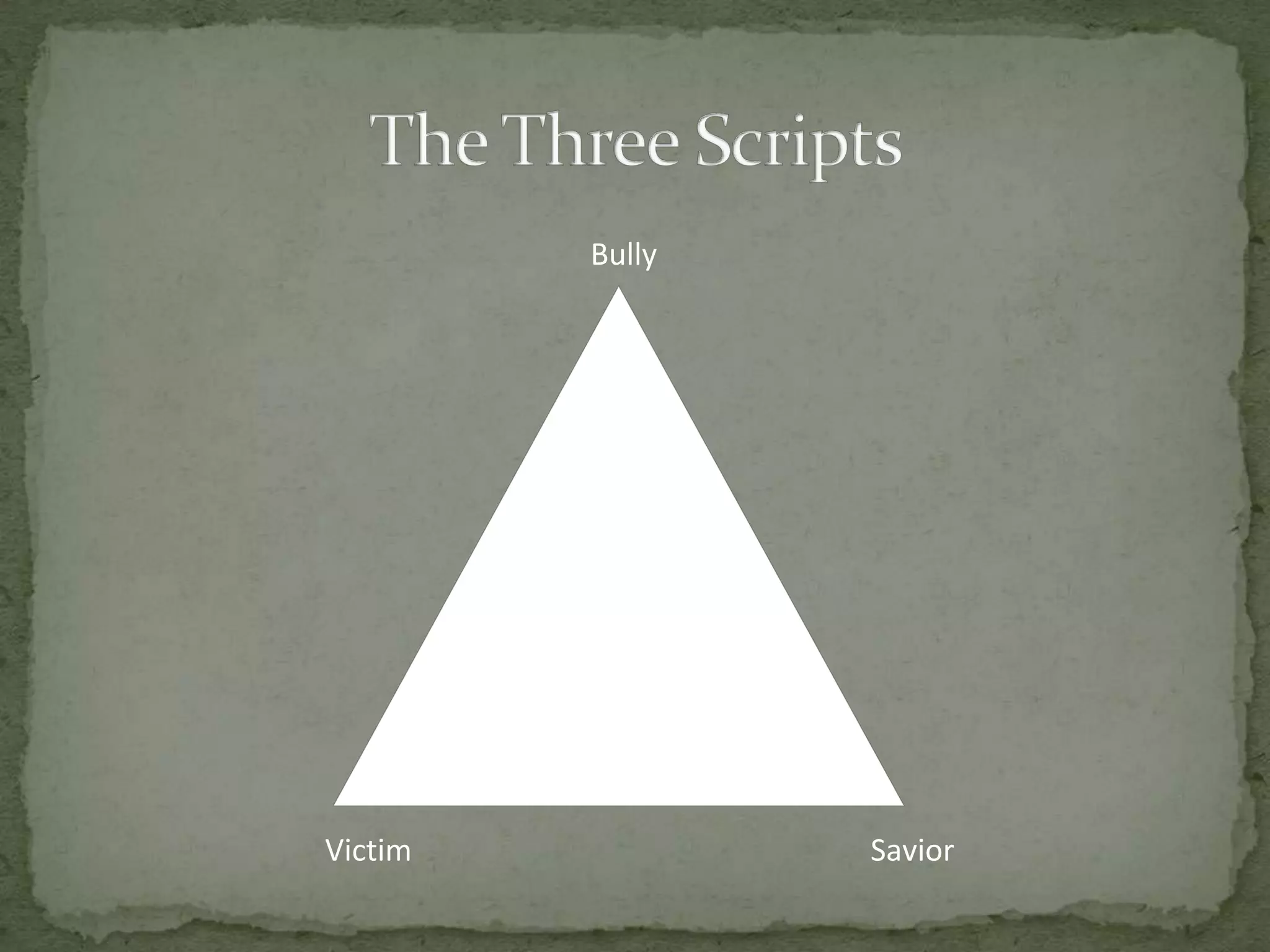
Bully


Victim           Savior
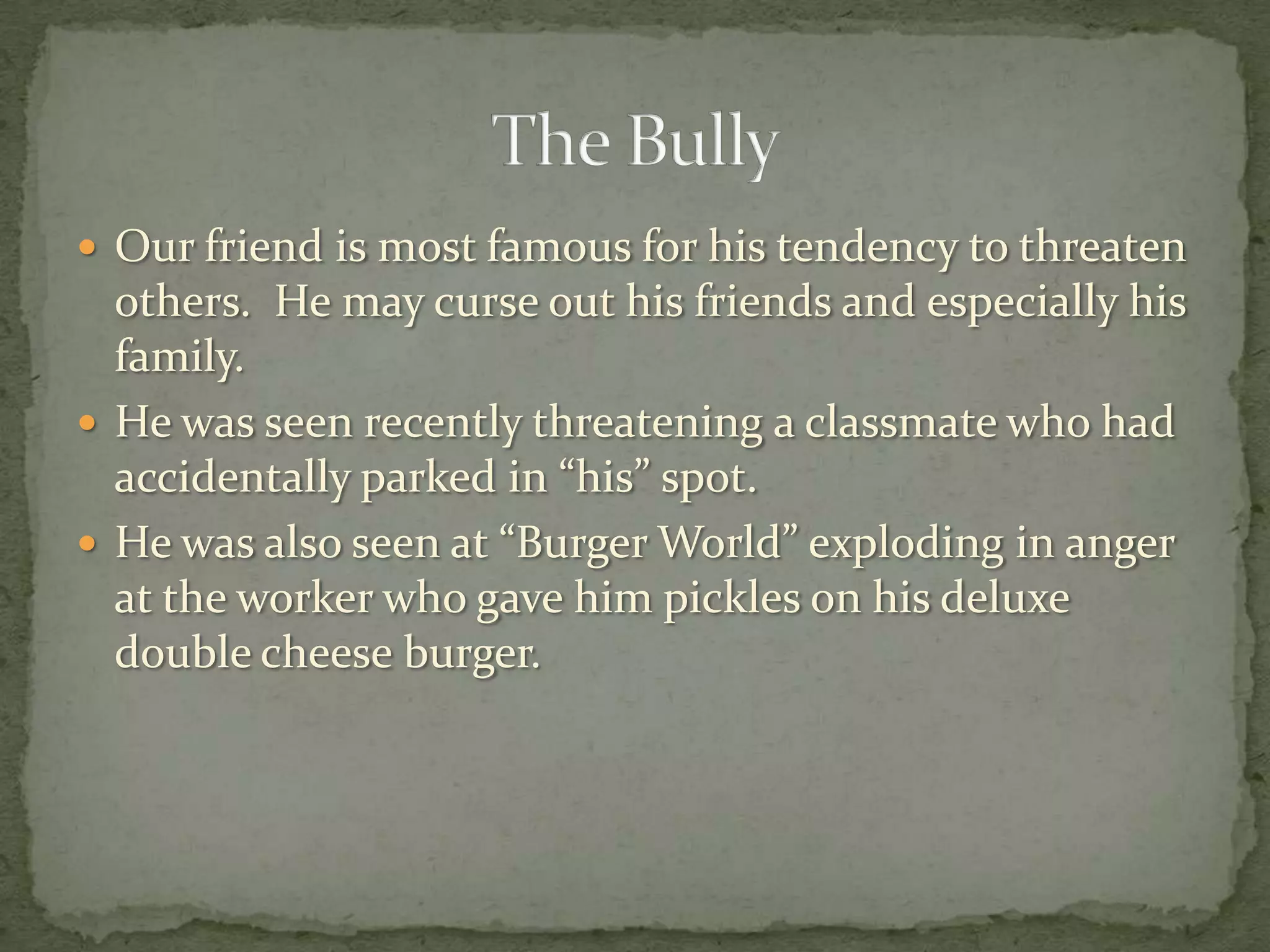
 Our friend is most famous for his tendency to threaten
  others. He may curse out his friends and especially his
  family.
 He was seen recently threatening a classmate who had
  accidentally parked in “his” spot.
 He was also seen at “Burger World” exploding in anger
  at the worker who gave him pickles on his deluxe
  double cheese burger.
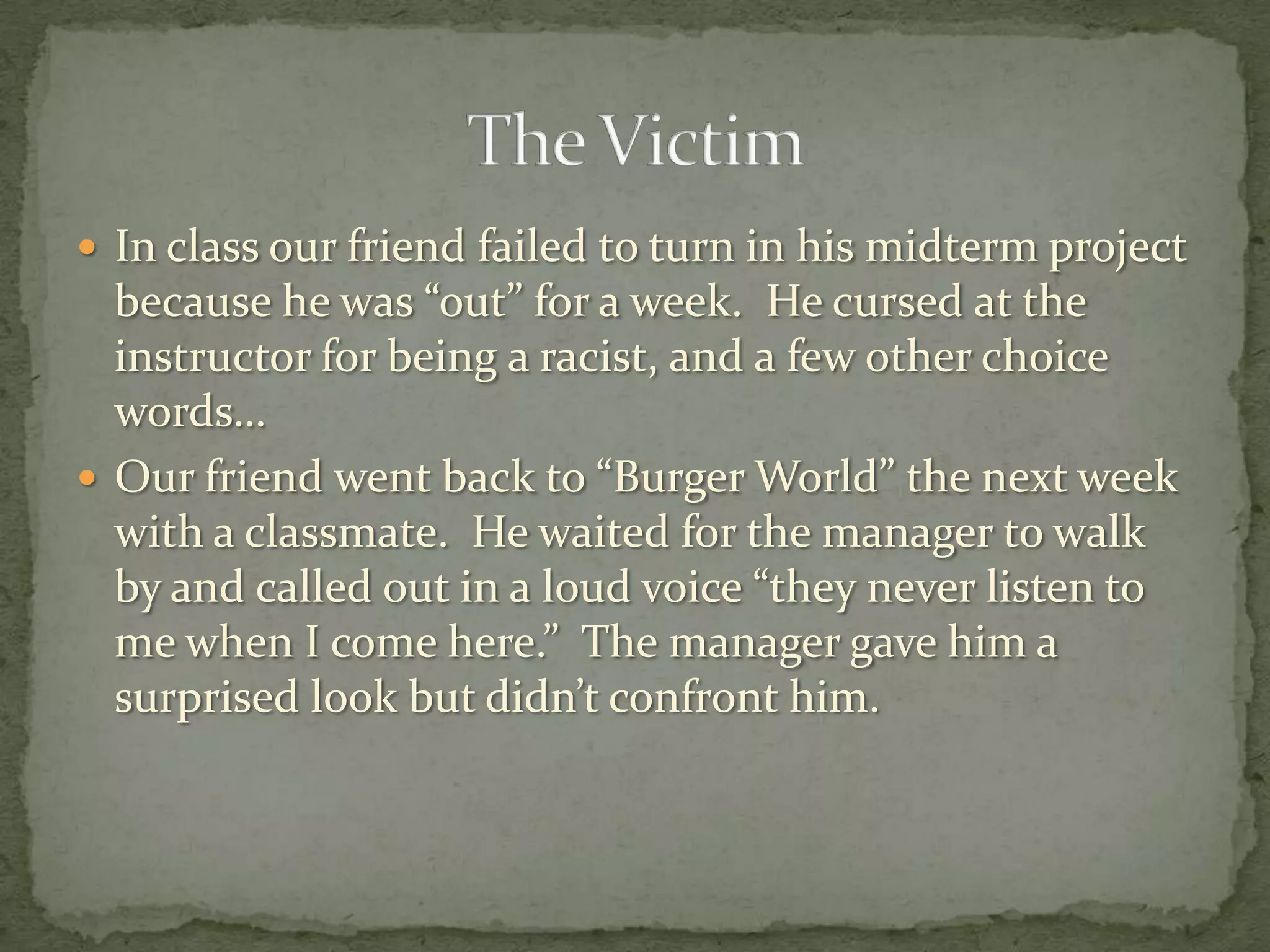
 In class our friend failed to turn in his midterm project
  because he was “out” for a week. He cursed at the
  instructor for being a racist, and a few other choice
  words…
 Our friend went back to “Burger World” the next week
  with a classmate. He waited for the manager to walk
  by and called out in a loud voice “they never listen to
  me when I come here.” The manager gave him a
  surprised look but didn’t confront him.
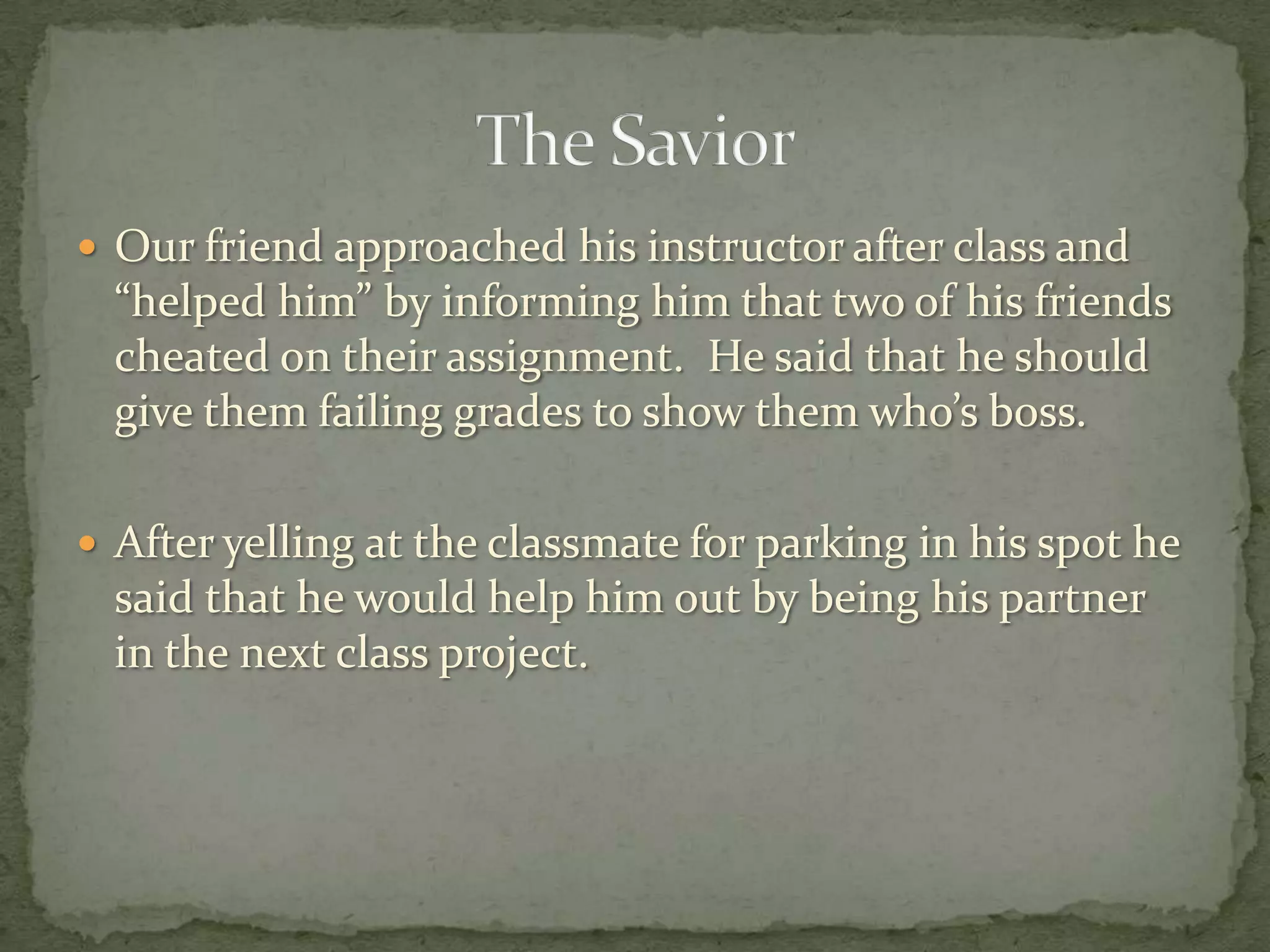
 Our friend approached his instructor after class and
  “helped him” by informing him that two of his friends
  cheated on their assignment. He said that he should
  give them failing grades to show them who’s boss.

 After yelling at the classmate for parking in his spot he
  said that he would help him out by being his partner
  in the next class project.
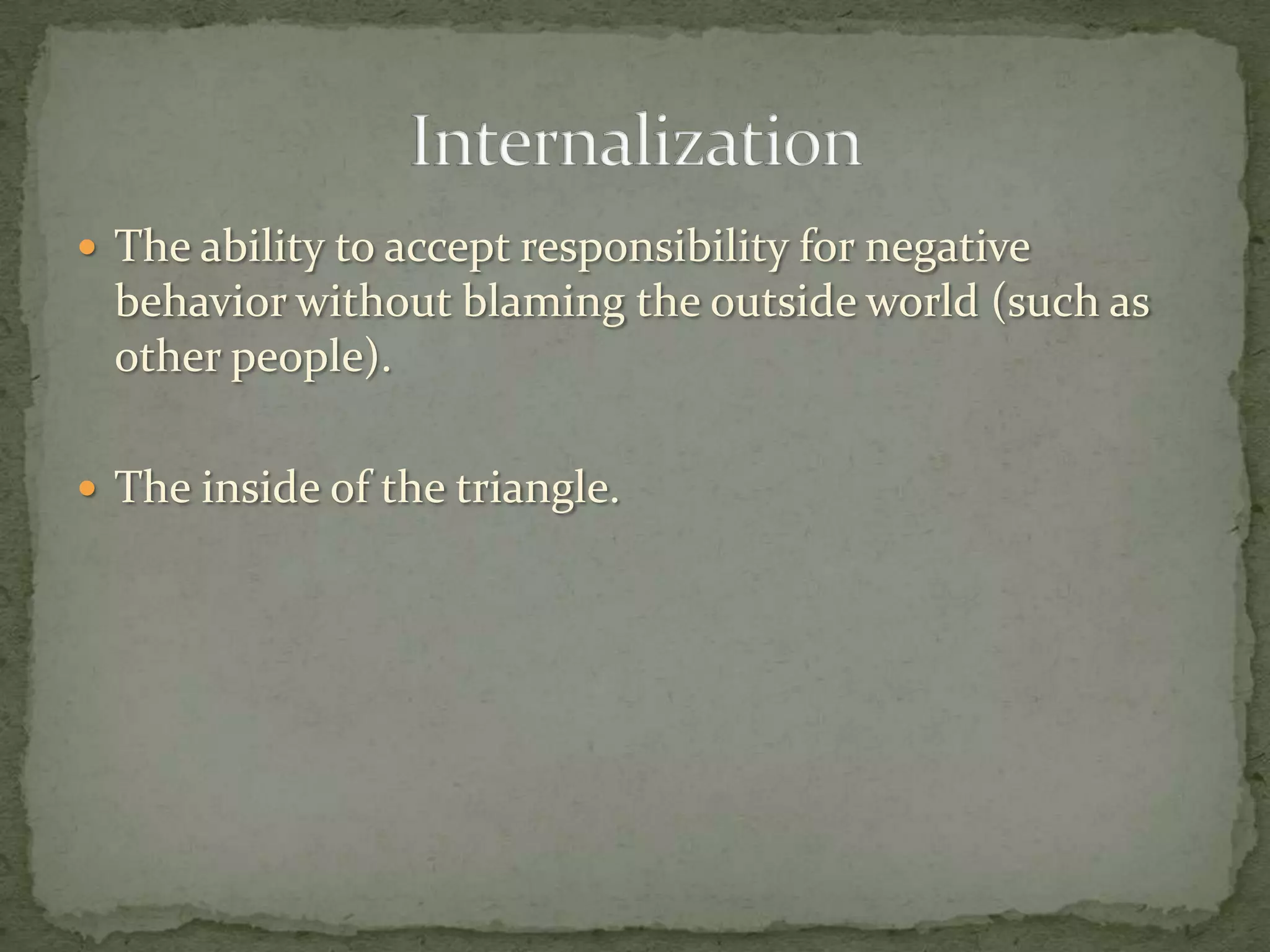
 The ability to accept responsibility for negative
  behavior without blaming the outside world (such as
  other people).

 The inside of the triangle.
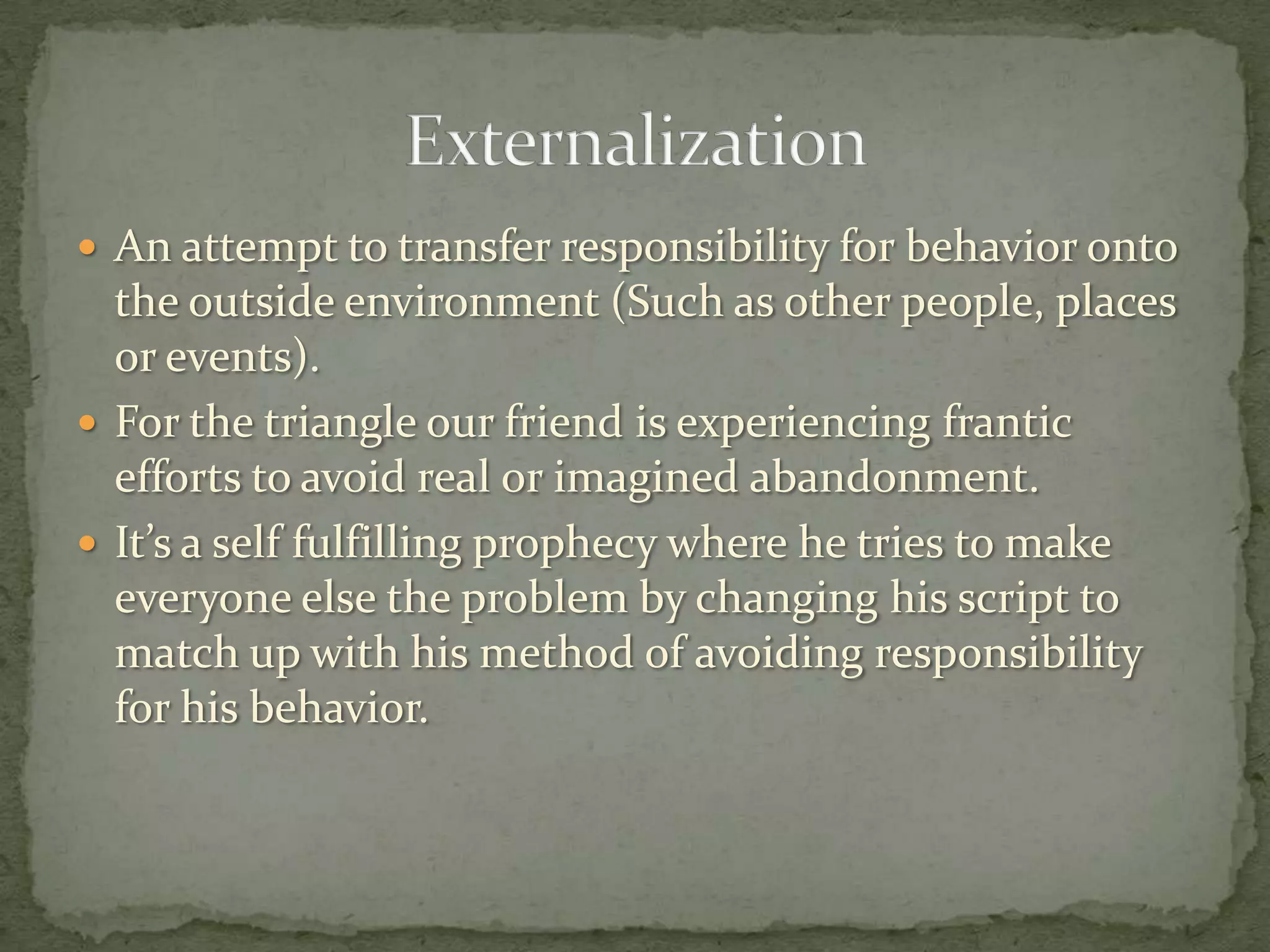
 An attempt to transfer responsibility for behavior onto
  the outside environment (Such as other people, places
  or events).
 For the triangle our friend is experiencing frantic
  efforts to avoid real or imagined abandonment.
 It’s a self fulfilling prophecy where he tries to make
  everyone else the problem by changing his script to
  match up with his method of avoiding responsibility
  for his behavior.
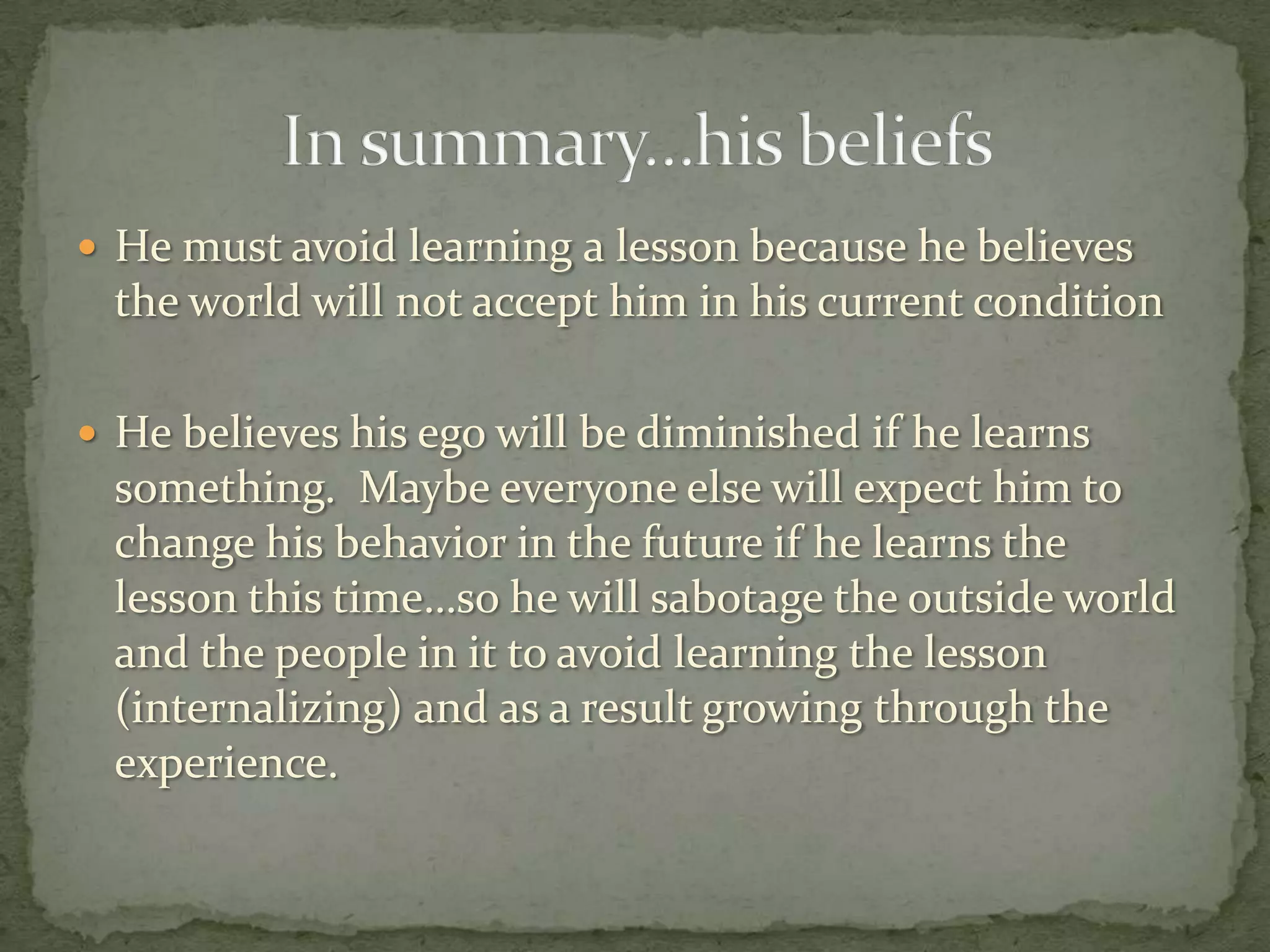
 He must avoid learning a lesson because he believes
 the world will not accept him in his current condition

 He believes his ego will be diminished if he learns
 something. Maybe everyone else will expect him to
 change his behavior in the future if he learns the
 lesson this time…so he will sabotage the outside world
 and the people in it to avoid learning the lesson
 (internalizing) and as a result growing through the
 experience.

The triangle

  • 1.
    Understanding Three Scriptsof Personality Billy Barnett M.S. LMHC
  • 2.
     The dramatriangle was conceptualized in the 1960’s by Dr. Steven Carpman.  It is also called the Victim Triangle.  It is a communication pattern that people use to try to avoid responsibility for internalizing (learning) responsibility for their behaviors.
  • 3.
     Let’s imagineour friend for a moment. Our friend is constantly struggling with learning lessons and accepting responsibility for his…or her actions.  He seems to think that other people are the reason why he has problems. They are always “bailing out” on him.  He tends to project “a bad feeling” that others just can’t quite figure out, and we usually feel like he is manipulating us. Many people say it’s like walking on eggshells around him.
  • 4.
  • 5.
     Our friendis most famous for his tendency to threaten others. He may curse out his friends and especially his family.  He was seen recently threatening a classmate who had accidentally parked in “his” spot.  He was also seen at “Burger World” exploding in anger at the worker who gave him pickles on his deluxe double cheese burger.
  • 6.
     In classour friend failed to turn in his midterm project because he was “out” for a week. He cursed at the instructor for being a racist, and a few other choice words…  Our friend went back to “Burger World” the next week with a classmate. He waited for the manager to walk by and called out in a loud voice “they never listen to me when I come here.” The manager gave him a surprised look but didn’t confront him.
  • 7.
     Our friendapproached his instructor after class and “helped him” by informing him that two of his friends cheated on their assignment. He said that he should give them failing grades to show them who’s boss.  After yelling at the classmate for parking in his spot he said that he would help him out by being his partner in the next class project.
  • 8.
     The abilityto accept responsibility for negative behavior without blaming the outside world (such as other people).  The inside of the triangle.
  • 9.
     An attemptto transfer responsibility for behavior onto the outside environment (Such as other people, places or events).  For the triangle our friend is experiencing frantic efforts to avoid real or imagined abandonment.  It’s a self fulfilling prophecy where he tries to make everyone else the problem by changing his script to match up with his method of avoiding responsibility for his behavior.
  • 10.
     He mustavoid learning a lesson because he believes the world will not accept him in his current condition  He believes his ego will be diminished if he learns something. Maybe everyone else will expect him to change his behavior in the future if he learns the lesson this time…so he will sabotage the outside world and the people in it to avoid learning the lesson (internalizing) and as a result growing through the experience.