Seven core issues for water demand
    management under CC and
 uncertainty: Reflection on practice
    and sociological approaches

                 Dr Alison L Browne
            Lancaster Environment Centre

 With Dr Will Medd (LEC) and Dr Ben Anderson (Essex)
1. Why do some approaches to demand seem so
formulaic and others so fluffy?
And can these differences be resolved?

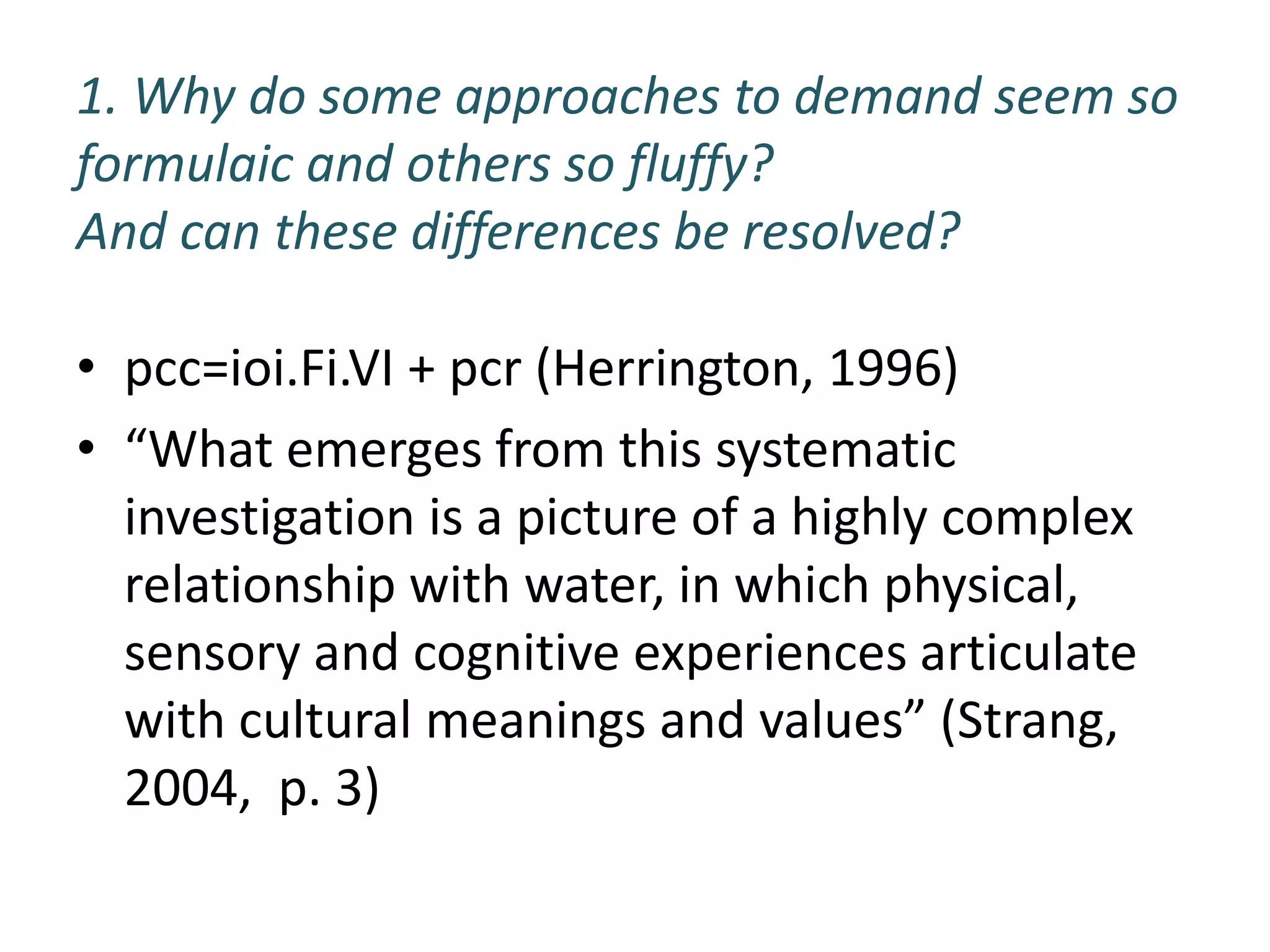
• pcc=ioi.Fi.VI + pcr (Herrington, 1996)
• “What emerges from this systematic
  investigation is a picture of a highly complex
  relationship with water, in which physical,
  sensory and cognitive experiences articulate
  with cultural meanings and values” (Strang,
  2004, p. 3)
2. Embracing Complexity and an Idea of
DISTRIBUTED DEMAND: Different lenses see
different things
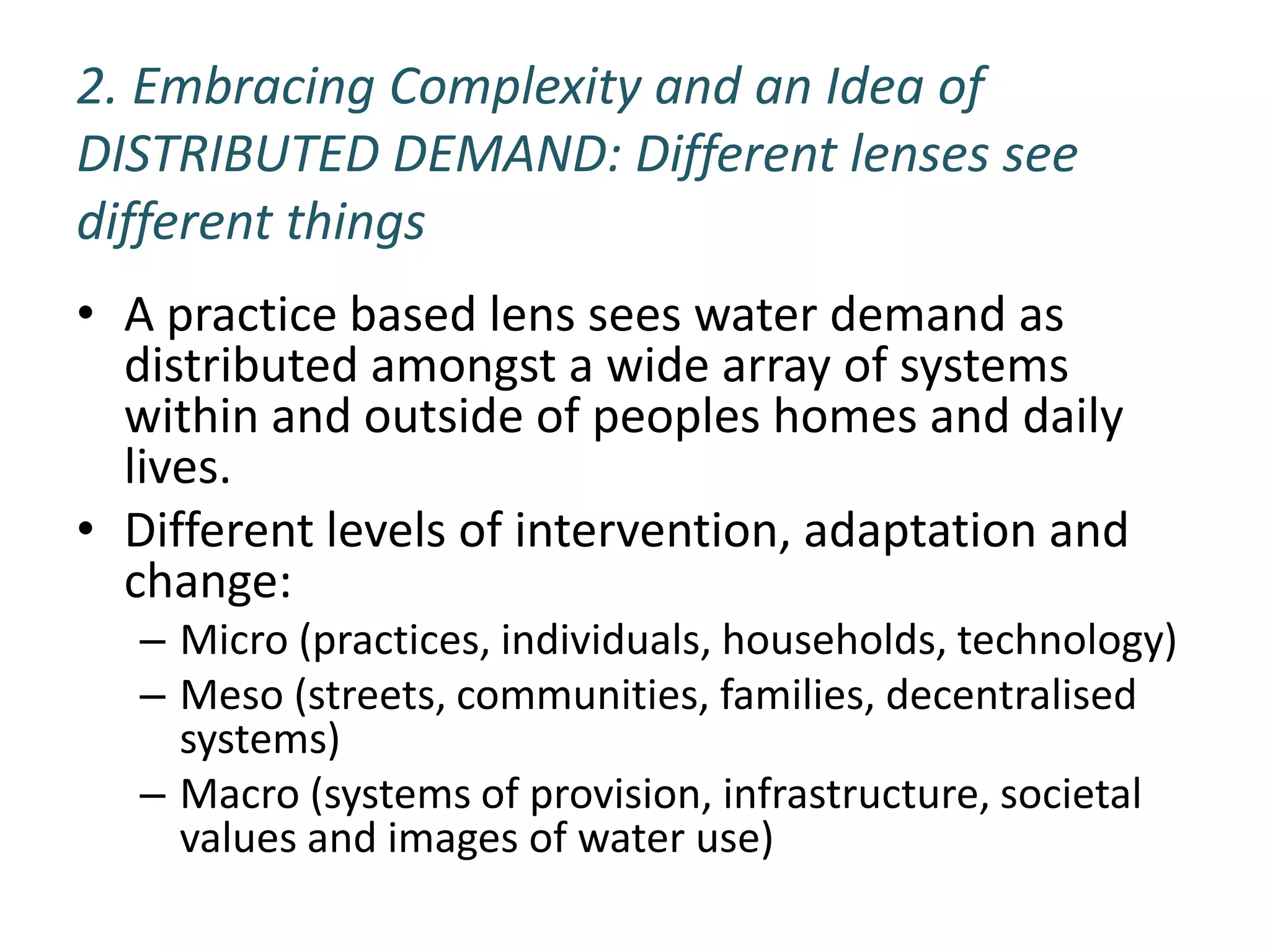
• A practice based lens sees water demand as
  distributed amongst a wide array of systems
  within and outside of peoples homes and daily
  lives.
• Different levels of intervention, adaptation and
  change:
   – Micro (practices, individuals, households, technology)
   – Meso (streets, communities, families, decentralised
     systems)
   – Macro (systems of provision, infrastructure, societal
     values and images of water use)
3. If we recognise complexity as important is there
anyway we can quantify it? We want numbers!

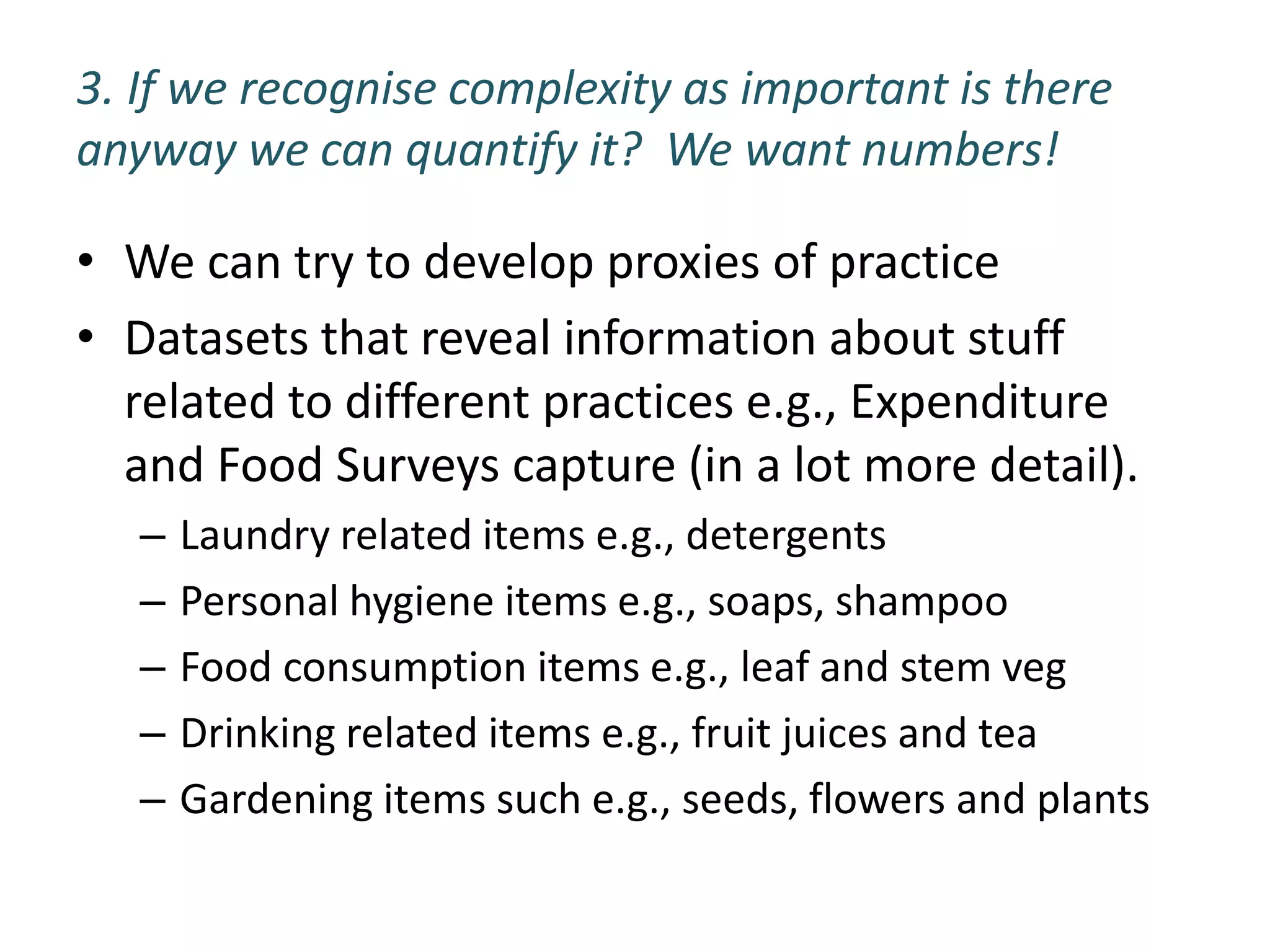
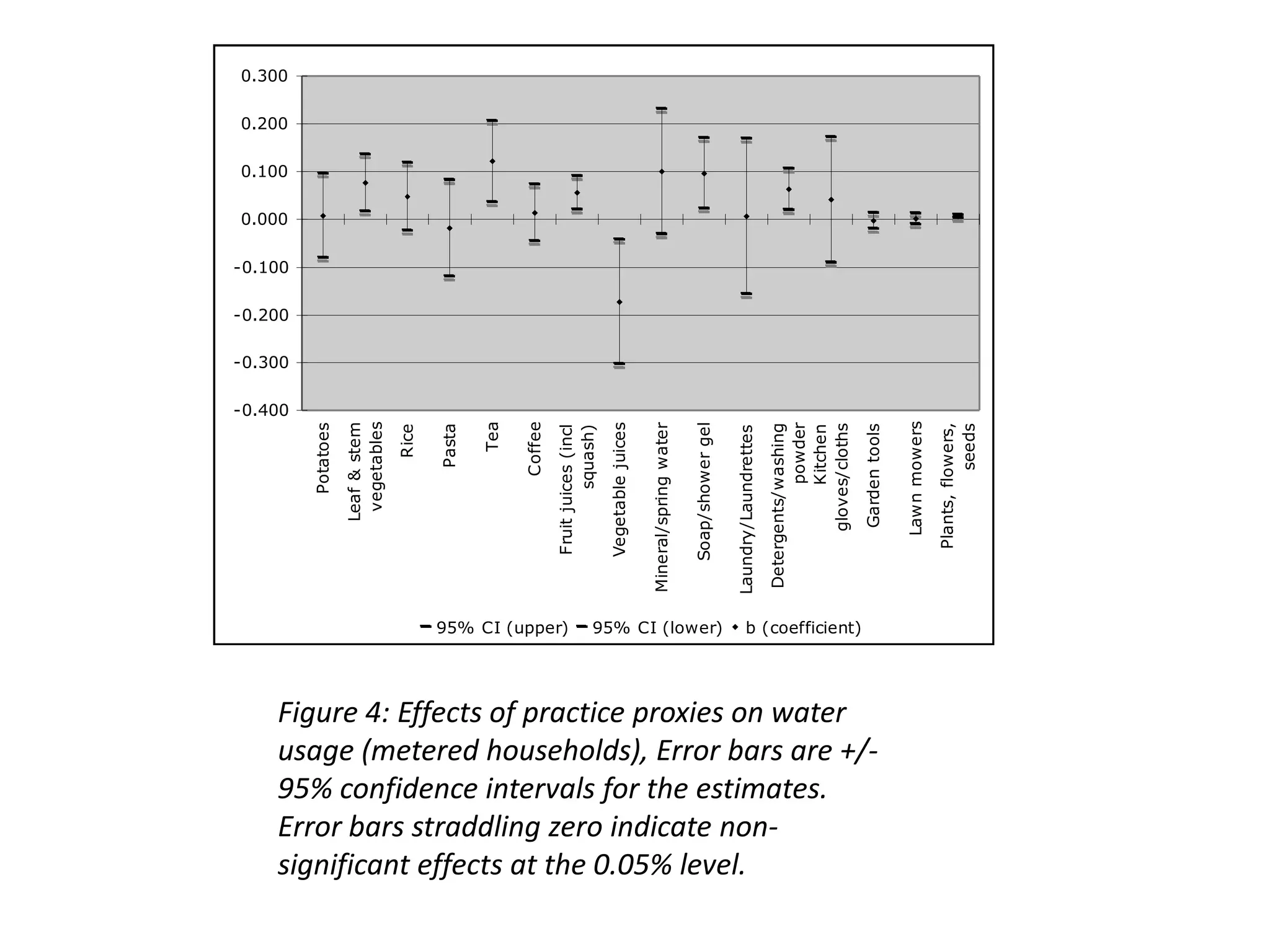
• We can try to develop proxies of practice
• Datasets that reveal information about stuff
  related to different practices e.g., Expenditure
  and Food Surveys capture (in a lot more detail).
   –   Laundry related items e.g., detergents
   –   Personal hygiene items e.g., soaps, shampoo
   –   Food consumption items e.g., leaf and stem veg
   –   Drinking related items e.g., fruit juices and tea
   –   Gardening items such e.g., seeds, flowers and plants
0.300

0.200

0.100

0.000

-0.100

-0.200

-0.300

-0.400


                                                                                                                                                                                                            Lawn mowers
                     vegetables


                                                 Tea

                                                       Coffee


                                                                                                                               Soap/shower gel
                    Leaf & stem


                                                                                     Vegetable juices

                                                                                                        Mineral/spring water
         Potatoes


                                                                                                                                                                                  powder


                                                                                                                                                                                                                          Plants, flowers,
                                                                                                                                                                       Detergents/washing


                                                                                                                                                                             gloves/cloths


                                                                                                                                                                                                                                     seeds
                                         Pasta


                                                                                                                                                                                             Garden tools
                                  Rice


                                                                                                                                                                                  Kitchen
                                                                Fruit juices (incl
                                                                         squash)


                                                                                                                                                 Laundry/Laundrettes
                                         95% CI (upper)                         95% CI (lower)                                                            b (coefficient)


    Figure 4: Effects of practice proxies on water
    usage (metered households), Error bars are +/-
    95% confidence intervals for the estimates.
    Error bars straddling zero indicate non-
    significant effects at the 0.05% level.
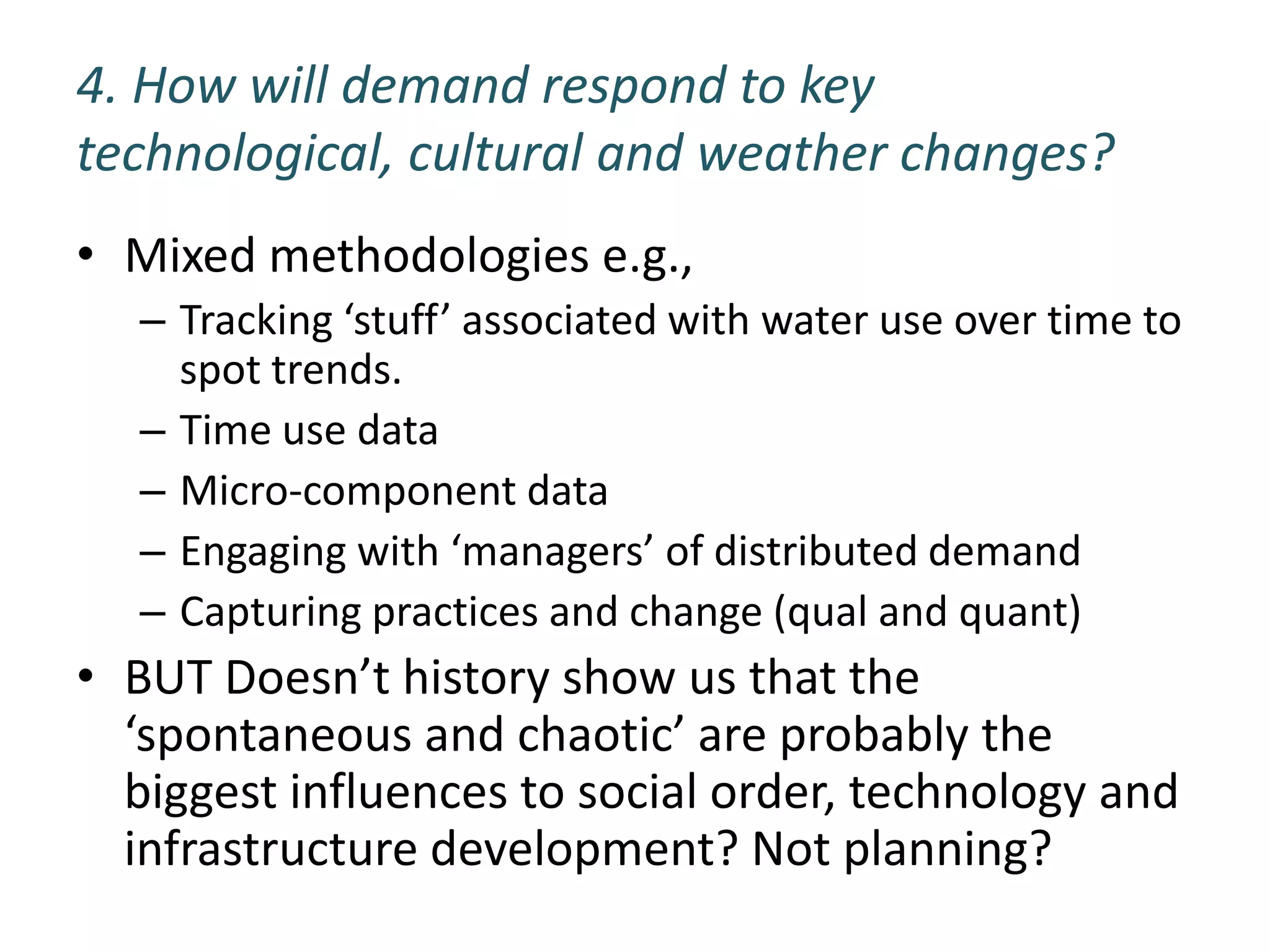
4. How will demand respond to key
technological, cultural and weather changes?
• Mixed methodologies e.g.,
  – Tracking ‘stuff’ associated with water use over time to
    spot trends.
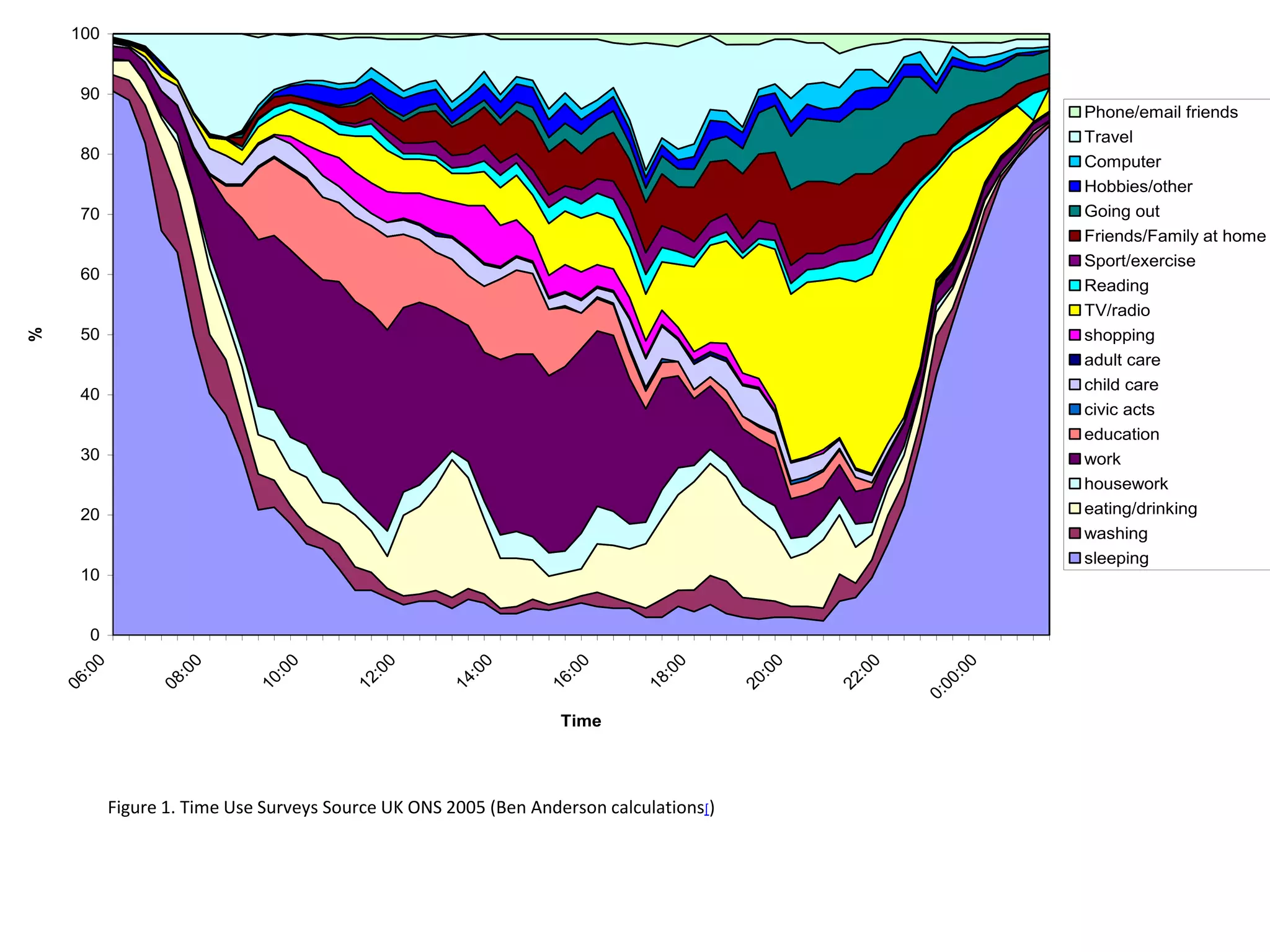
  – Time use data
  – Micro-component data
  – Engaging with ‘managers’ of distributed demand
  – Capturing practices and change (qual and quant)
• BUT Doesn’t history show us that the
  ‘spontaneous and chaotic’ are probably the
  biggest influences to social order, technology and
  infrastructure development? Not planning?
100


      90
                                                                                                                Phone/email friends
                                                                                                                Travel
      80                                                                                                        Computer
                                                                                                                Hobbies/other
      70                                                                                                        Going out
                                                                                                                Friends/Family at home
                                                                                                                Sport/exercise
      60
                                                                                                                Reading
                                                                                                                TV/radio
%


      50                                                                                                        shopping
                                                                                                                adult care
                                                                                                                child care
      40
                                                                                                                civic acts
                                                                                                                education
      30                                                                                                        work
                                                                                                                housework
      20                                                                                                        eating/drinking
                                                                                                                washing
                                                                                                                sleeping
      10


       0
      0


                    0


                                0


                                           0


                                                       0


                                                                   0


                                                                               0


                                                                                          0


                                                                                                 0


                                                                                                           00
      :0


                   :0


                               :0


                                          :0


                                                      :0


                                                                  :0


                                                                              :0


                                                                                          :0


                                                                                                 :0


                                                                                                         :
    06


                 08


                             10


                                        12


                                                    14


                                                                16


                                                                            18


                                                                                        20


                                                                                               22


                                                                                                      00
                                                                                                      0:
                                                                  Time


           Figure 1. Time Use Surveys Source UK ONS 2005 (Ben Anderson calculations[)
5. Managing drought as crisis (not as increasing
 variability under CC scenarios and conditions)
• Role of crisis definition in communication
• Role of crisis definition for legislation
• Does this definition restrict adaptive options?
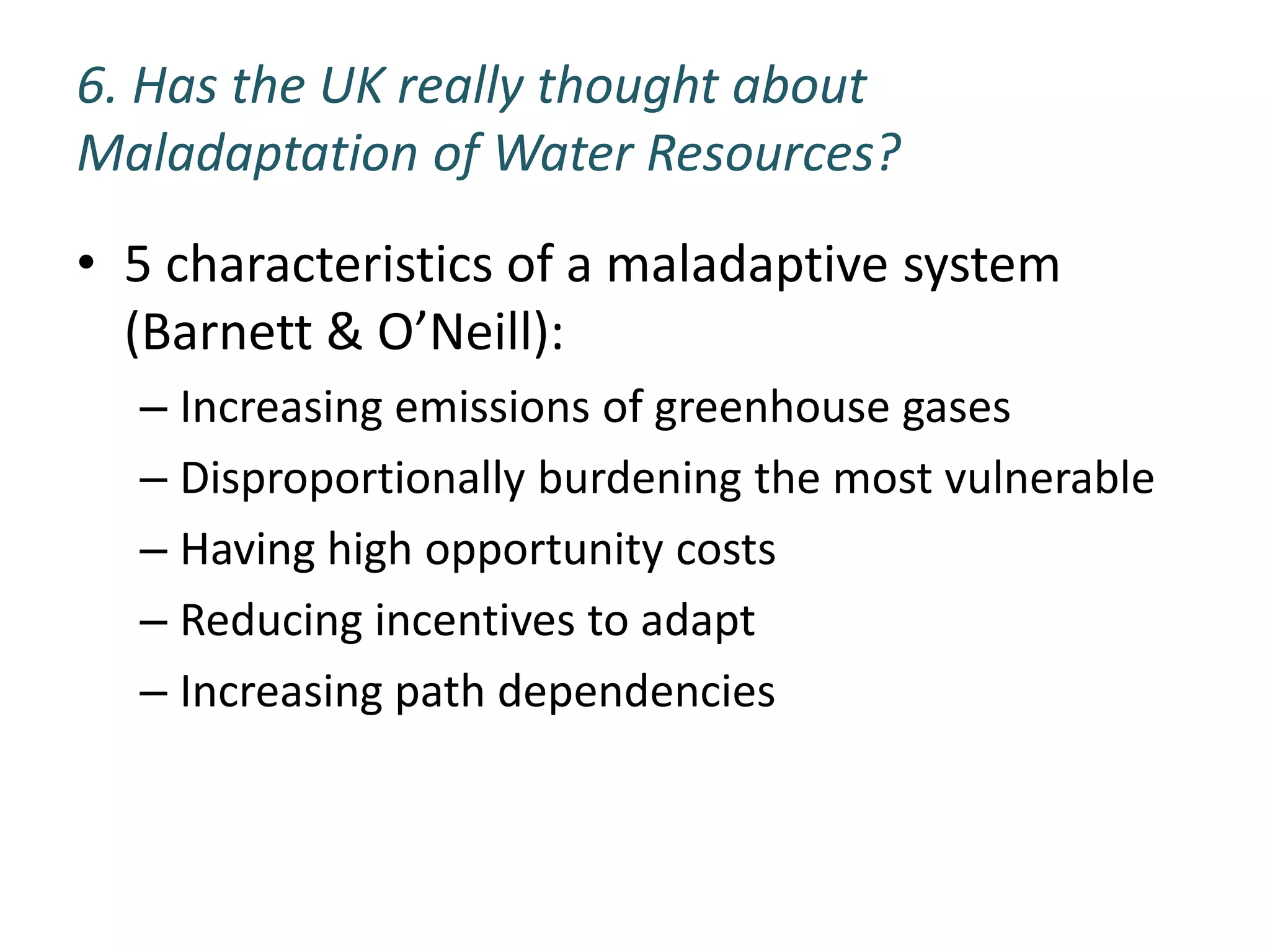
6. Has the UK really thought about
Maladaptation of Water Resources?
• 5 characteristics of a maladaptive system
  (Barnett & O’Neill):
  – Increasing emissions of greenhouse gases
  – Disproportionally burdening the most vulnerable
  – Having high opportunity costs
  – Reducing incentives to adapt
  – Increasing path dependencies
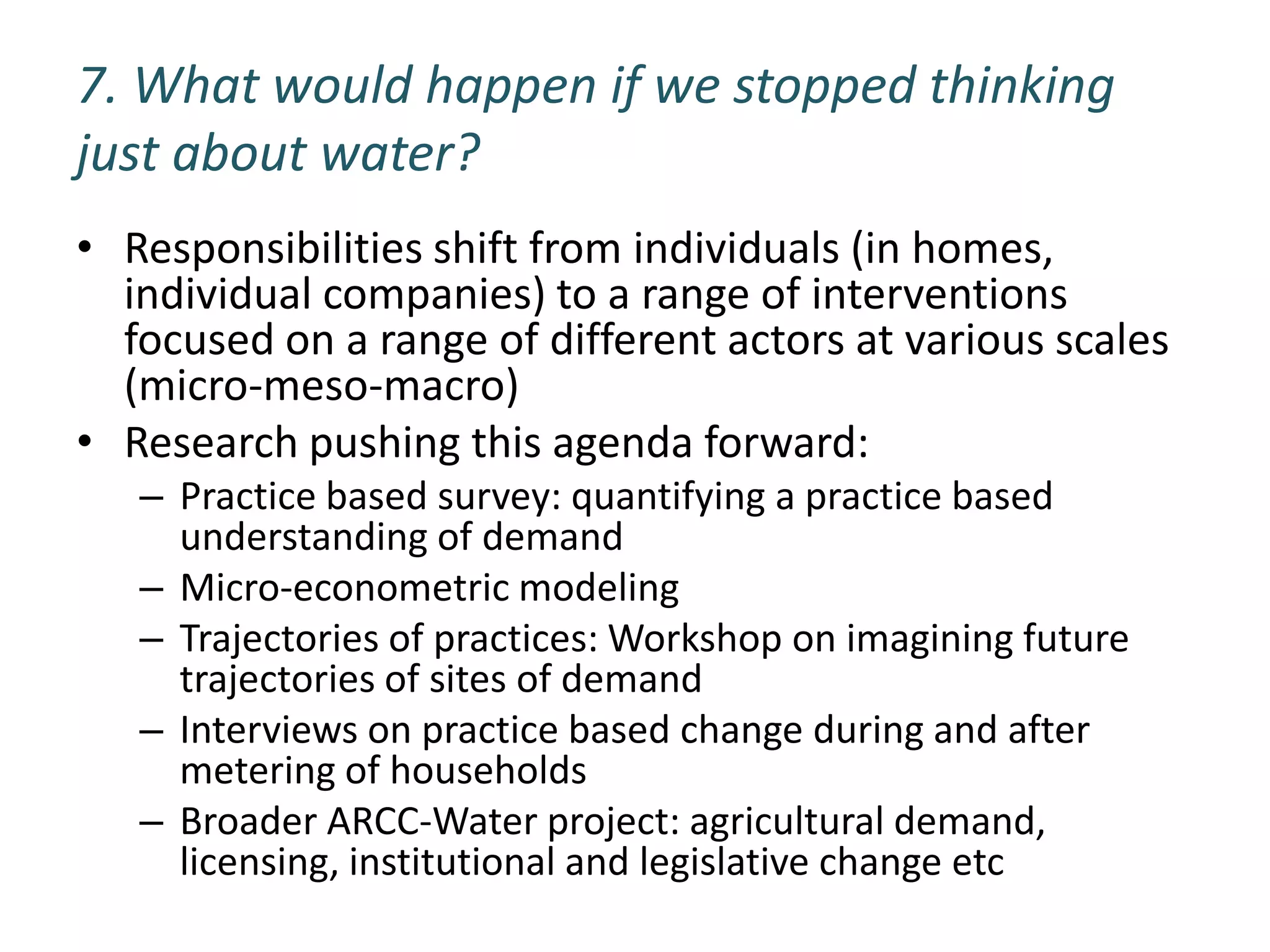
7. What would happen if we stopped thinking
just about water?
• Responsibilities shift from individuals (in homes,
  individual companies) to a range of interventions
  focused on a range of different actors at various scales
  (micro-meso-macro)
• Research pushing this agenda forward:
   – Practice based survey: quantifying a practice based
     understanding of demand
   – Micro-econometric modeling
   – Trajectories of practices: Workshop on imagining future
     trajectories of sites of demand
   – Interviews on practice based change during and after
     metering of households
   – Broader ARCC-Water project: agricultural demand,
     licensing, institutional and legislative change etc

Seven core issues for water demand management under CC and uncertainty: Reflection on practice and sociological approaches

  • 1.
    Seven core issuesfor water demand management under CC and uncertainty: Reflection on practice and sociological approaches Dr Alison L Browne Lancaster Environment Centre With Dr Will Medd (LEC) and Dr Ben Anderson (Essex)
  • 2.
    1. Why dosome approaches to demand seem so formulaic and others so fluffy? And can these differences be resolved? • pcc=ioi.Fi.VI + pcr (Herrington, 1996) • “What emerges from this systematic investigation is a picture of a highly complex relationship with water, in which physical, sensory and cognitive experiences articulate with cultural meanings and values” (Strang, 2004, p. 3)
  • 3.
    2. Embracing Complexityand an Idea of DISTRIBUTED DEMAND: Different lenses see different things • A practice based lens sees water demand as distributed amongst a wide array of systems within and outside of peoples homes and daily lives. • Different levels of intervention, adaptation and change: – Micro (practices, individuals, households, technology) – Meso (streets, communities, families, decentralised systems) – Macro (systems of provision, infrastructure, societal values and images of water use)
  • 4.
    3. If werecognise complexity as important is there anyway we can quantify it? We want numbers! • We can try to develop proxies of practice • Datasets that reveal information about stuff related to different practices e.g., Expenditure and Food Surveys capture (in a lot more detail). – Laundry related items e.g., detergents – Personal hygiene items e.g., soaps, shampoo – Food consumption items e.g., leaf and stem veg – Drinking related items e.g., fruit juices and tea – Gardening items such e.g., seeds, flowers and plants
  • 5.
    0.300 0.200 0.100 0.000 -0.100 -0.200 -0.300 -0.400 Lawn mowers vegetables Tea Coffee Soap/shower gel Leaf & stem Vegetable juices Mineral/spring water Potatoes powder Plants, flowers, Detergents/washing gloves/cloths seeds Pasta Garden tools Rice Kitchen Fruit juices (incl squash) Laundry/Laundrettes 95% CI (upper) 95% CI (lower) b (coefficient) Figure 4: Effects of practice proxies on water usage (metered households), Error bars are +/- 95% confidence intervals for the estimates. Error bars straddling zero indicate non- significant effects at the 0.05% level.
  • 6.
    4. How willdemand respond to key technological, cultural and weather changes? • Mixed methodologies e.g., – Tracking ‘stuff’ associated with water use over time to spot trends. – Time use data – Micro-component data – Engaging with ‘managers’ of distributed demand – Capturing practices and change (qual and quant) • BUT Doesn’t history show us that the ‘spontaneous and chaotic’ are probably the biggest influences to social order, technology and infrastructure development? Not planning?
  • 7.
    100 90 Phone/email friends Travel 80 Computer Hobbies/other 70 Going out Friends/Family at home Sport/exercise 60 Reading TV/radio % 50 shopping adult care child care 40 civic acts education 30 work housework 20 eating/drinking washing sleeping 10 0 0 0 0 0 0 0 0 0 0 00 :0 :0 :0 :0 :0 :0 :0 :0 :0 : 06 08 10 12 14 16 18 20 22 00 0: Time Figure 1. Time Use Surveys Source UK ONS 2005 (Ben Anderson calculations[)
  • 8.
    5. Managing droughtas crisis (not as increasing variability under CC scenarios and conditions) • Role of crisis definition in communication • Role of crisis definition for legislation • Does this definition restrict adaptive options?
  • 9.
    6. Has theUK really thought about Maladaptation of Water Resources? • 5 characteristics of a maladaptive system (Barnett & O’Neill): – Increasing emissions of greenhouse gases – Disproportionally burdening the most vulnerable – Having high opportunity costs – Reducing incentives to adapt – Increasing path dependencies
  • 10.
    7. What wouldhappen if we stopped thinking just about water? • Responsibilities shift from individuals (in homes, individual companies) to a range of interventions focused on a range of different actors at various scales (micro-meso-macro) • Research pushing this agenda forward: – Practice based survey: quantifying a practice based understanding of demand – Micro-econometric modeling – Trajectories of practices: Workshop on imagining future trajectories of sites of demand – Interviews on practice based change during and after metering of households – Broader ARCC-Water project: agricultural demand, licensing, institutional and legislative change etc