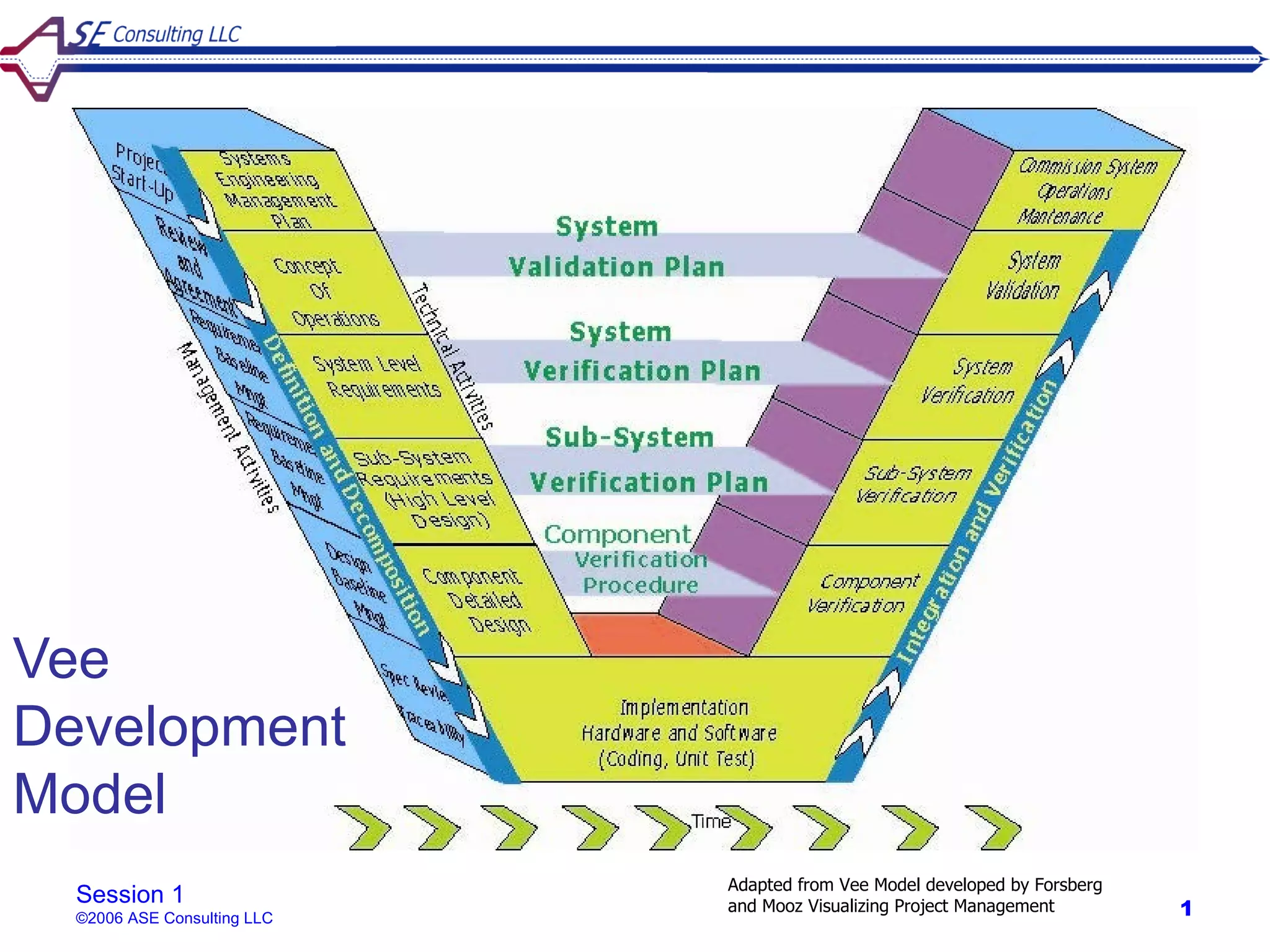
Vee
Development
Model
                             Adapted from Vee Model developed by Forsberg
  Session 1
  ©2006 ASE Consulting LLC
                             and Mooz Visualizing Project Management        1
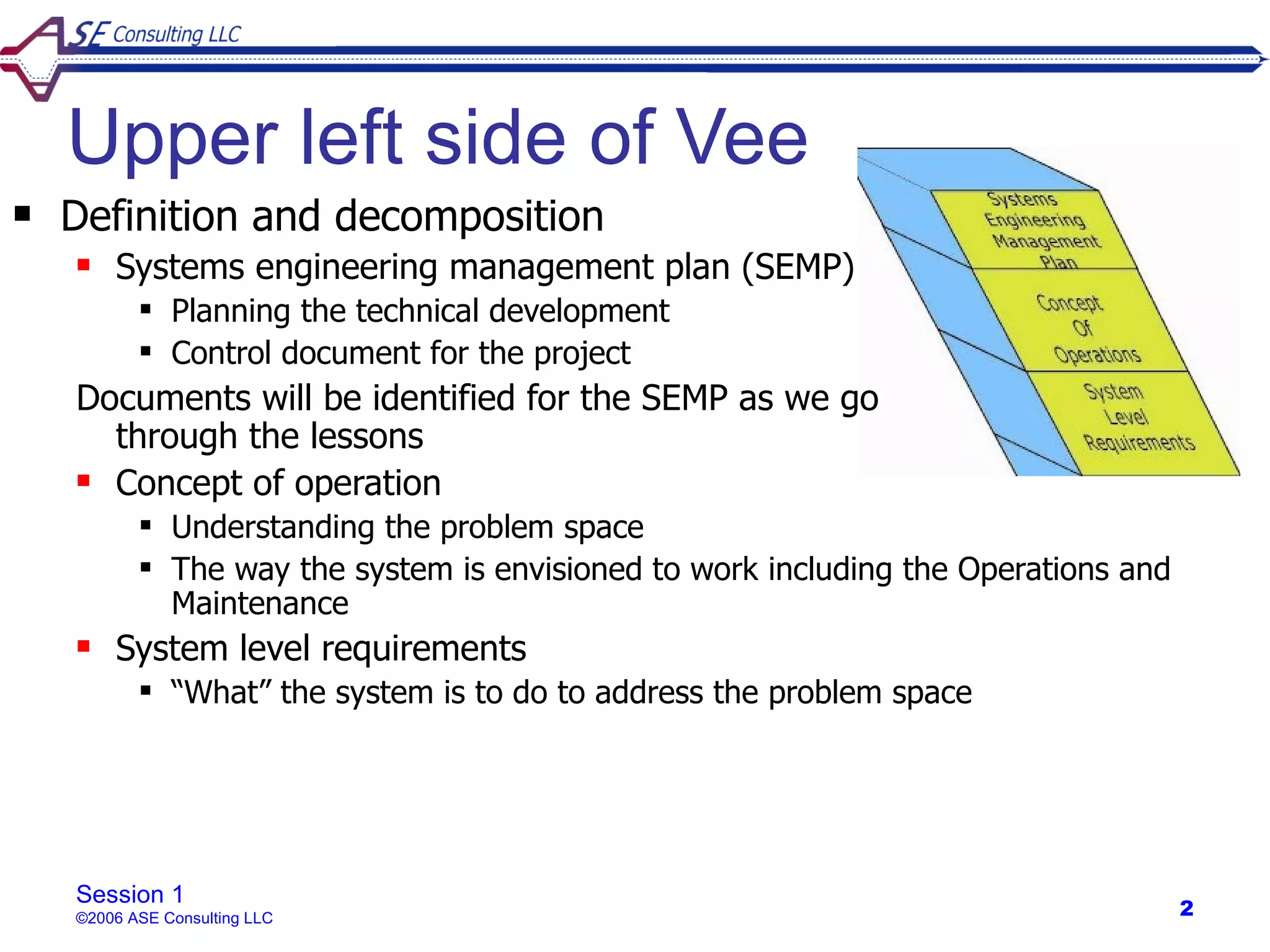
Upper left side of Vee
   Definition and decomposition
       Systems engineering management plan (SEMP)
              Planning the technical development
              Control document for the project
    Documents will be identified for the SEMP as we go
      through the lessons
     Concept of operation

              Understanding the problem space
              The way the system is envisioned to work including the Operations and
               Maintenance
       System level requirements
              “What” the system is to do to address the problem space


    Session 1
    ©2006 ASE Consulting LLC                                                           2
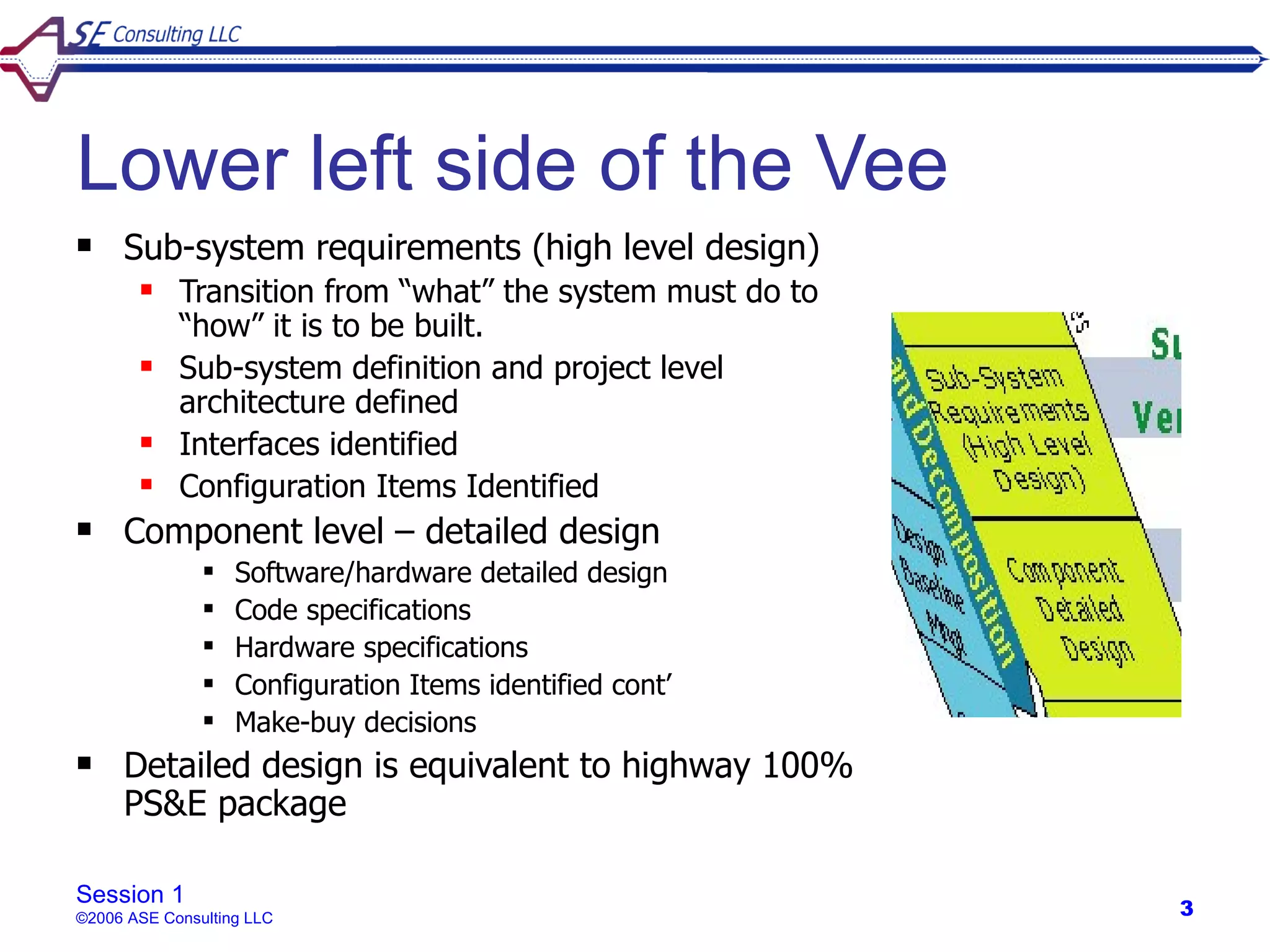
Lower left side of the Vee
    Sub-system requirements (high level design)
           Transition from “what” the system must do to
            “how” it is to be built.
           Sub-system definition and project level
            architecture defined
           Interfaces identified
           Configuration Items Identified
    Component level – detailed design
                  Software/hardware detailed design
                  Code specifications
                  Hardware specifications
                  Configuration Items identified cont’
                  Make-buy decisions
    Detailed design is equivalent to highway 100%
     PS&E package

Session 1
©2006 ASE Consulting LLC                                   3
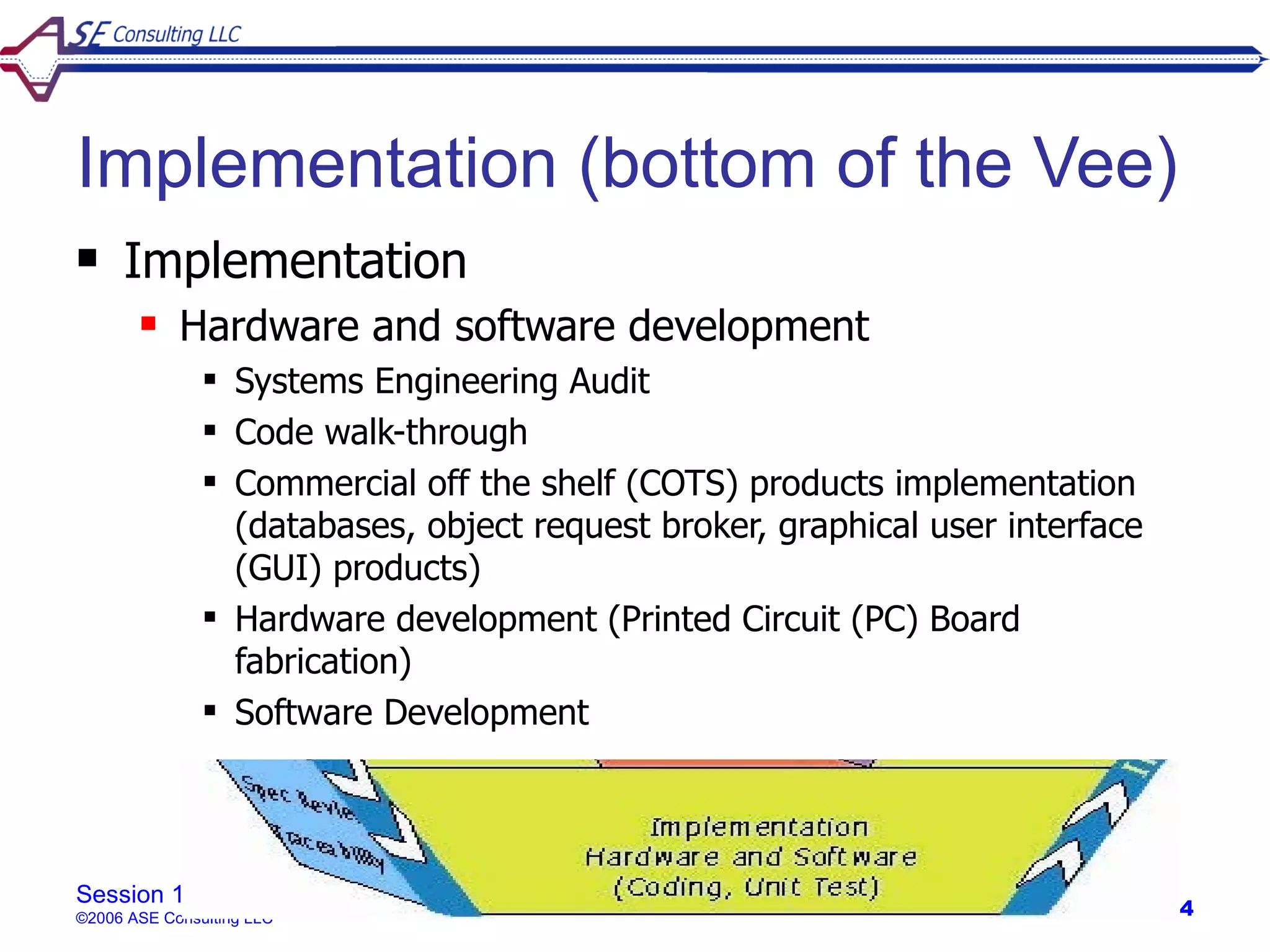
Implementation (bottom of the Vee)
    Implementation
           Hardware and software development
                  Systems Engineering Audit
                  Code walk-through
                  Commercial off the shelf (COTS) products implementation
                   (databases, object request broker, graphical user interface
                   (GUI) products)
                  Hardware development (Printed Circuit (PC) Board
                   fabrication)
                  Software Development


Session 1
©2006 ASE Consulting LLC                                                         4
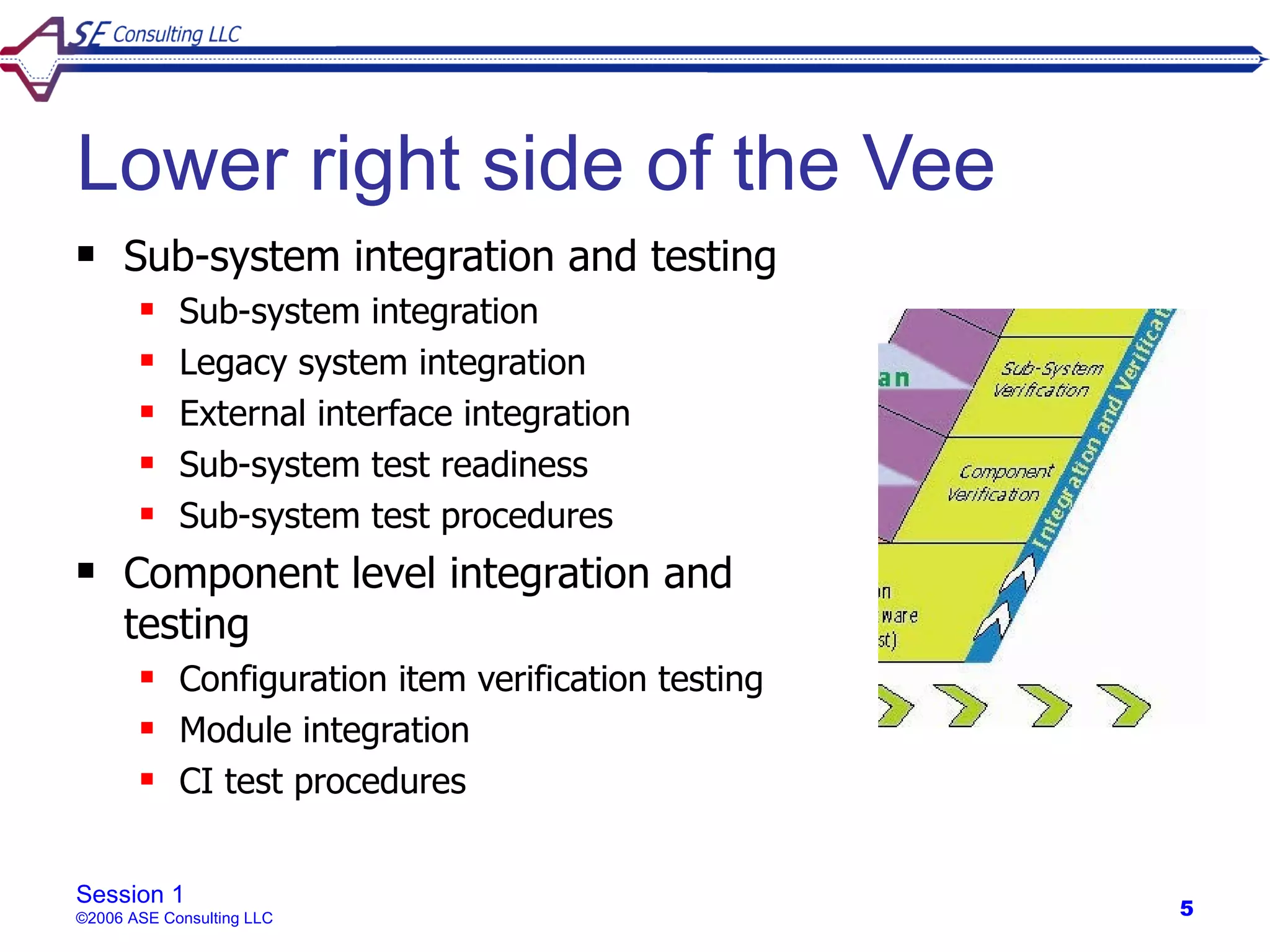
Lower right side of the Vee
    Sub-system integration and testing
           Sub-system integration
           Legacy system integration
           External interface integration
           Sub-system test readiness
           Sub-system test procedures
    Component level integration and
     testing
           Configuration item verification testing
           Module integration
           CI test procedures


Session 1
©2006 ASE Consulting LLC                              5
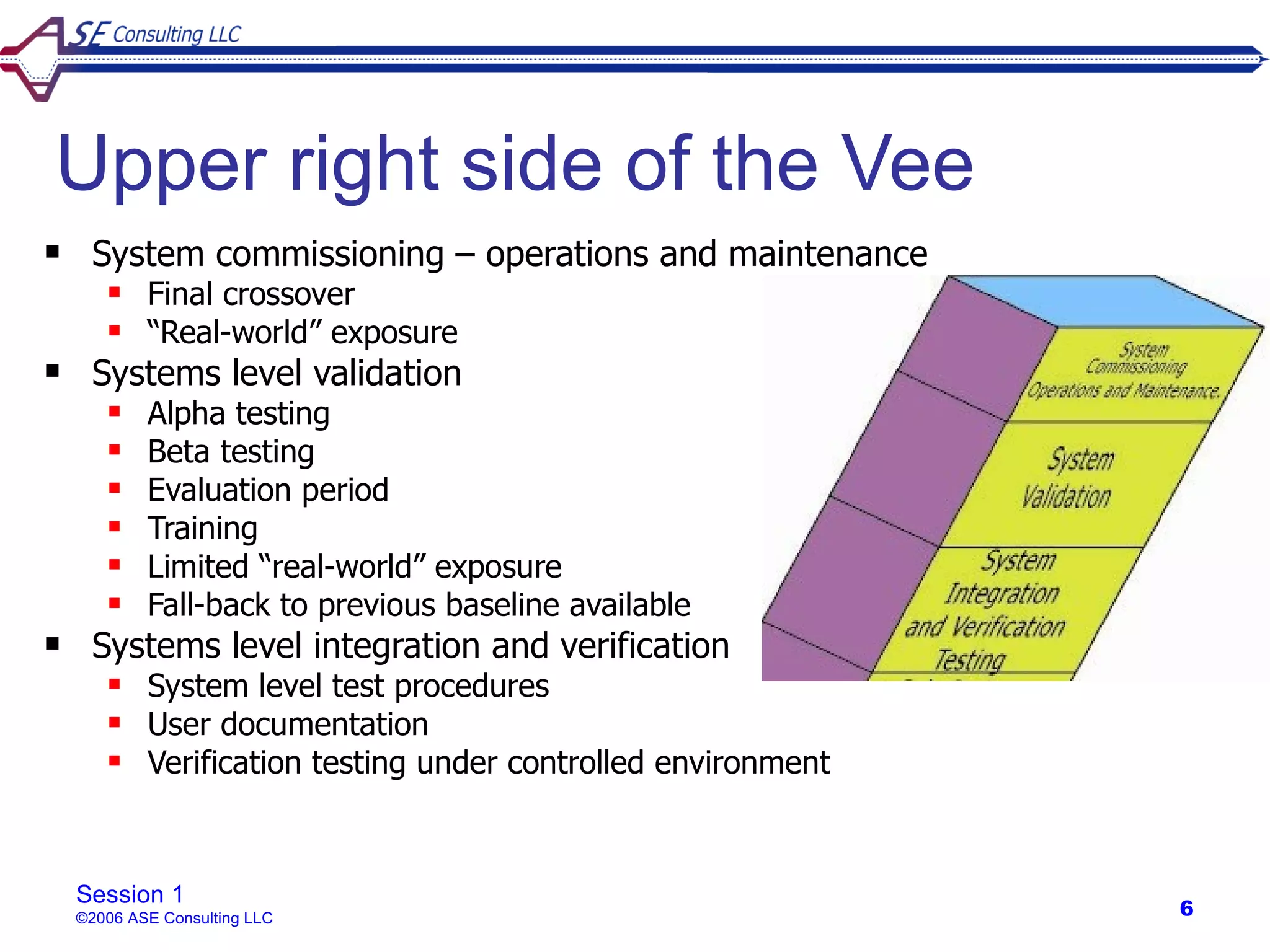
Upper right side of the Vee
    System commissioning – operations and maintenance
           Final crossover
           “Real-world” exposure
    Systems level validation
           Alpha testing
           Beta testing
           Evaluation period
           Training
           Limited “real-world” exposure
           Fall-back to previous baseline available
    Systems level integration and verification
           System level test procedures
           User documentation
           Verification testing under controlled environment


    Session 1
    ©2006 ASE Consulting LLC                                    6
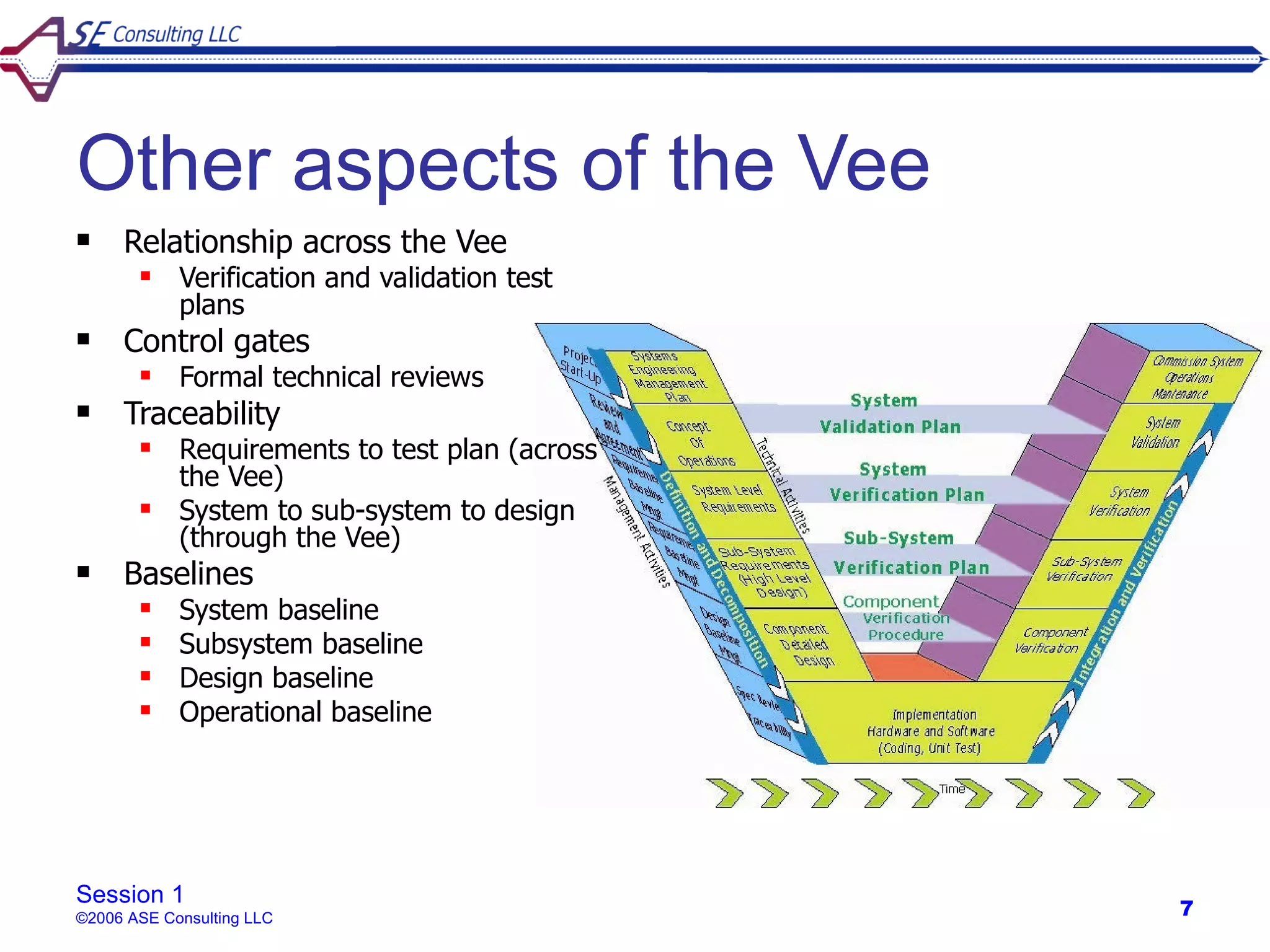
Other aspects of the Vee
    Relationship across the Vee
           Verification and validation test
            plans
    Control gates
           Formal technical reviews
    Traceability
           Requirements to test plan (across
            the Vee)
           System to sub-system to design
            (through the Vee)
    Baselines
           System baseline
           Subsystem baseline
           Design baseline
           Operational baseline


Session 1
©2006 ASE Consulting LLC                        7
The Vee Model View, Observations
    Has commercial and international acceptance
    Used by NHI for the Systems Engineering
     Training
    Recommended for ITS Development
    Relationships of the Early phases of a project
     to the End Results are clearly illustrated – A
     powerful reality!


    Session 1
    ©2006 ASE Consulting LLC                     8

ASE Consulting Vee Model

  • 1.
    Vee Development Model Adapted from Vee Model developed by Forsberg Session 1 ©2006 ASE Consulting LLC and Mooz Visualizing Project Management 1
  • 2.
    Upper left sideof Vee  Definition and decomposition  Systems engineering management plan (SEMP)  Planning the technical development  Control document for the project Documents will be identified for the SEMP as we go through the lessons  Concept of operation  Understanding the problem space  The way the system is envisioned to work including the Operations and Maintenance  System level requirements  “What” the system is to do to address the problem space Session 1 ©2006 ASE Consulting LLC 2
  • 3.
    Lower left sideof the Vee  Sub-system requirements (high level design)  Transition from “what” the system must do to “how” it is to be built.  Sub-system definition and project level architecture defined  Interfaces identified  Configuration Items Identified  Component level – detailed design  Software/hardware detailed design  Code specifications  Hardware specifications  Configuration Items identified cont’  Make-buy decisions  Detailed design is equivalent to highway 100% PS&E package Session 1 ©2006 ASE Consulting LLC 3
  • 4.
    Implementation (bottom ofthe Vee)  Implementation  Hardware and software development  Systems Engineering Audit  Code walk-through  Commercial off the shelf (COTS) products implementation (databases, object request broker, graphical user interface (GUI) products)  Hardware development (Printed Circuit (PC) Board fabrication)  Software Development Session 1 ©2006 ASE Consulting LLC 4
  • 5.
    Lower right sideof the Vee  Sub-system integration and testing  Sub-system integration  Legacy system integration  External interface integration  Sub-system test readiness  Sub-system test procedures  Component level integration and testing  Configuration item verification testing  Module integration  CI test procedures Session 1 ©2006 ASE Consulting LLC 5
  • 6.
    Upper right sideof the Vee  System commissioning – operations and maintenance  Final crossover  “Real-world” exposure  Systems level validation  Alpha testing  Beta testing  Evaluation period  Training  Limited “real-world” exposure  Fall-back to previous baseline available  Systems level integration and verification  System level test procedures  User documentation  Verification testing under controlled environment Session 1 ©2006 ASE Consulting LLC 6
  • 7.
    Other aspects ofthe Vee  Relationship across the Vee  Verification and validation test plans  Control gates  Formal technical reviews  Traceability  Requirements to test plan (across the Vee)  System to sub-system to design (through the Vee)  Baselines  System baseline  Subsystem baseline  Design baseline  Operational baseline Session 1 ©2006 ASE Consulting LLC 7
  • 8.
    The Vee ModelView, Observations  Has commercial and international acceptance  Used by NHI for the Systems Engineering Training  Recommended for ITS Development  Relationships of the Early phases of a project to the End Results are clearly illustrated – A powerful reality! Session 1 ©2006 ASE Consulting LLC 8