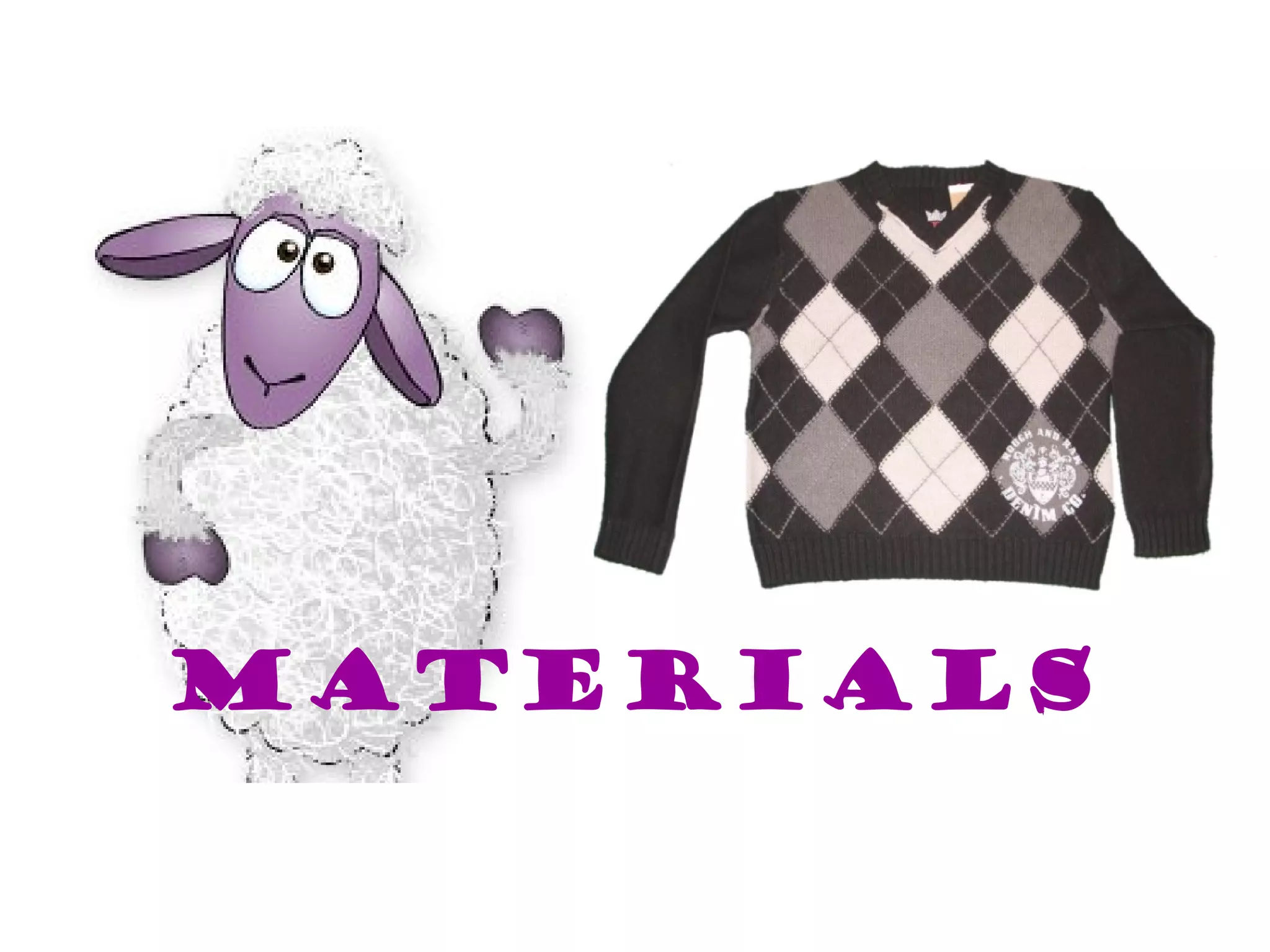
MATERIALS
Class contents:


1. MATERIALS AND RAW MATERIALS

2. PROPERTIES OF MATERIALS

3. CHOICE OF MATERIALS
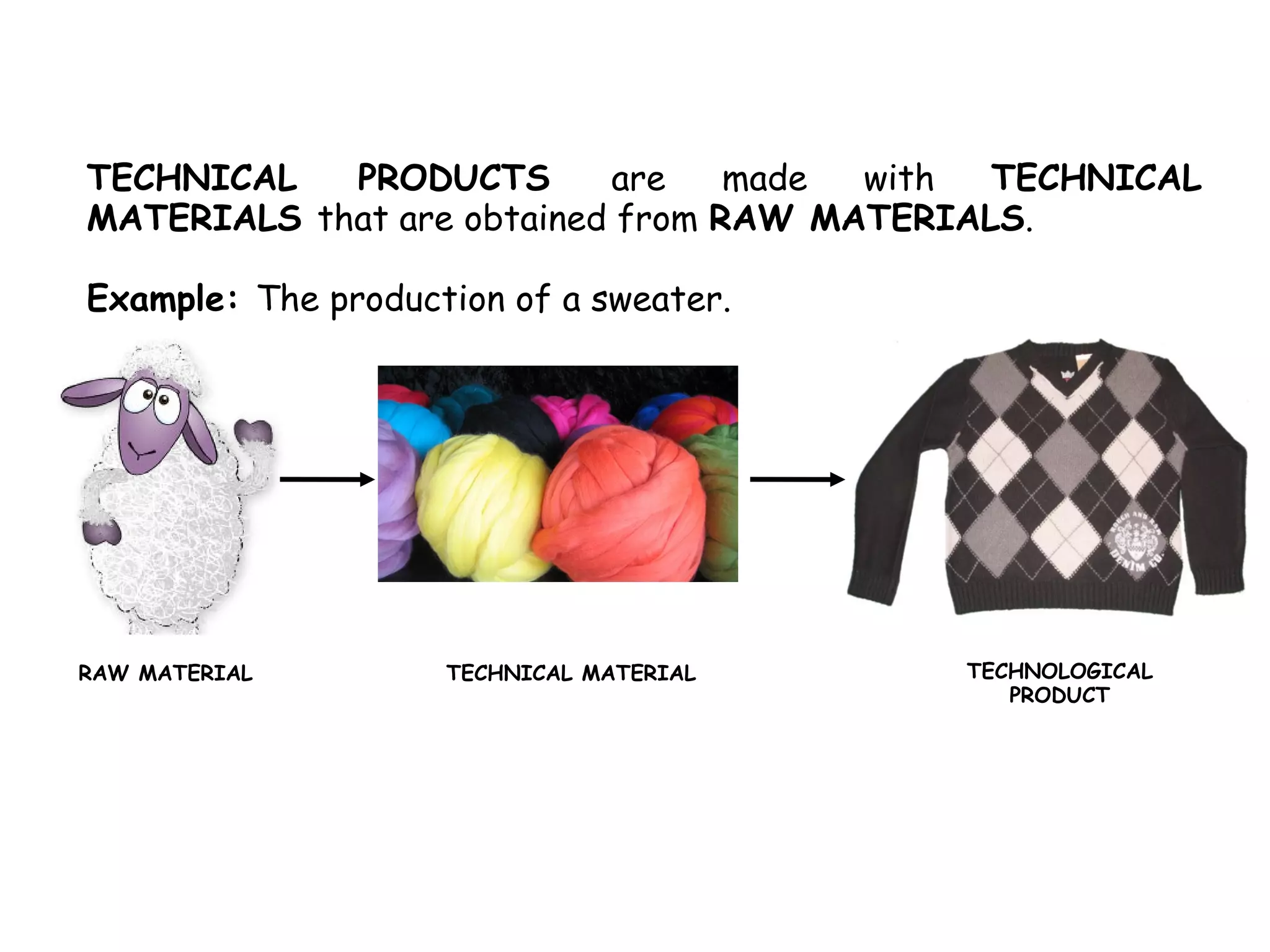
TECHNICAL   PRODUCTS       are    made with  TECHNICAL
MATERIALS that are obtained from RAW MATERIALS.

Example: The production of a sweater.


RAW MATERIAL        TECHNICAL MATERIAL    TECHNOLOGICAL
                                             PRODUCT
1. Materials and raw materials
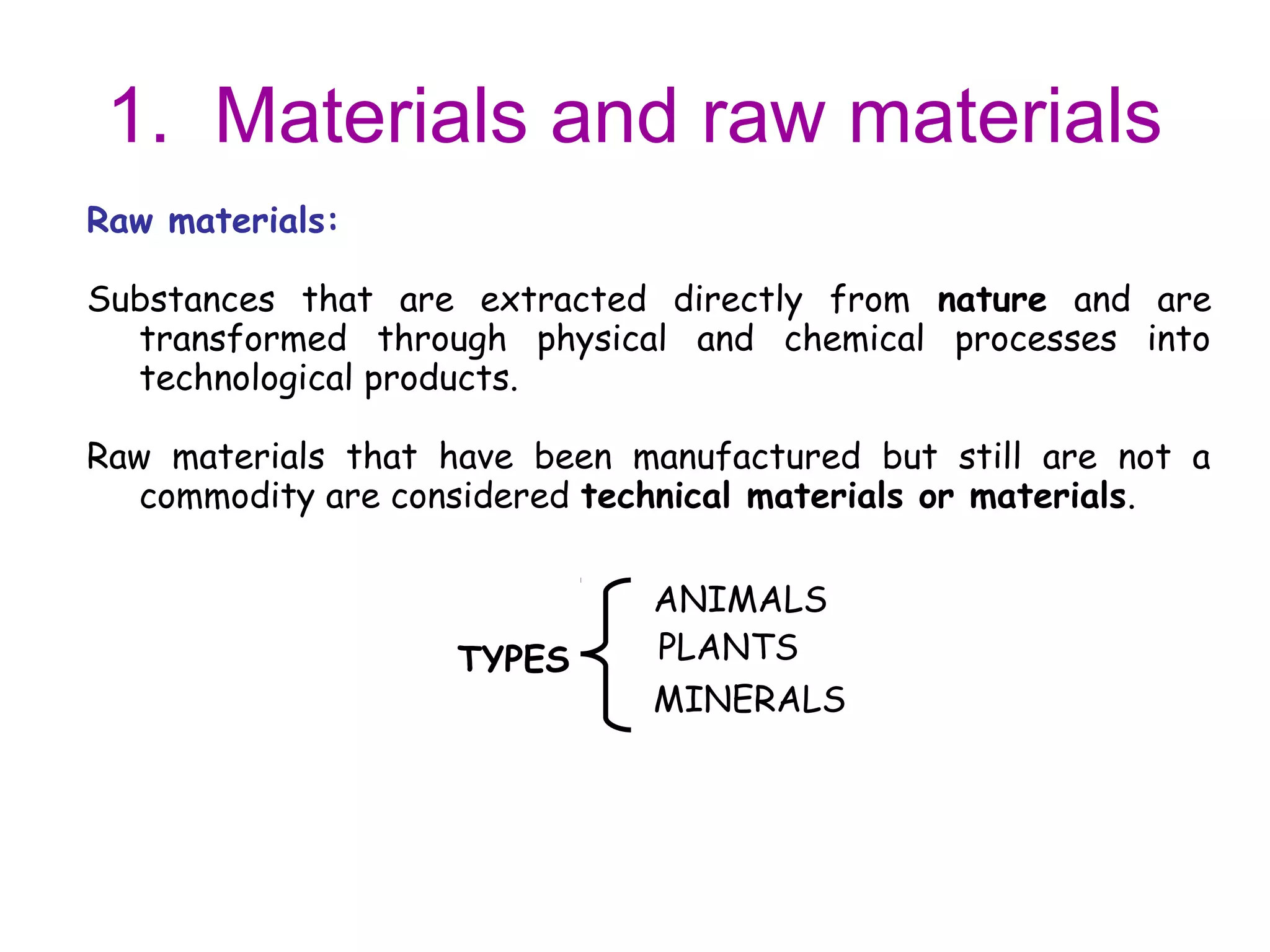
Raw materials:

Substances that are extracted directly from nature and are
  transformed through physical and chemical processes into
  technological products.

Raw materials that have been manufactured but still are not a
   commodity are considered technical materials or materials.

                              ANIMALS
                    TYPES     PLANTS
                              MINERALS
Technical Materials

Those materials that are used directly in the production of
  technological products. They are obtained from raw materials.


Among the most highly used materials:
a)   Wood: Obtained from the woody part of trees.
     It is used as a combustible, for making paper, furniture, construction
     and decorative elements, etc.

b)   Plastics: Obtained artificially from oil. Plastics are used to make tubes,
     toys, recepticles, electrical insulators, etc.

c)   Metals: Extracted from minerals that form rocks. Metals are used for
     structures and pieces of equipment, tools, welding, electronic
     components, furniture, etc.
d) Stone (including ceramics and glass). Extracted from rocks. Some
examples are marble, chalkboard, plaster, cement, and concrete.
Normally, these are used as construction materials.

e) Textiles. These materials are used in the form of string to make
cloth/fabric. They can be natural or synthetic. Examples are wool, cotton,
silk, nylon, etc.


f) Composite materials and alloys. Sometimes we want to combine the
properties of various materials into one. For those, we use composite
materials. For example: red-brick, plywood, fiber-glass.

Normally, metals are not used in pure state. Instead, they are mixed
with other metals to form alloys. Examples are bronze, brass and steel.
2. Properties of materials
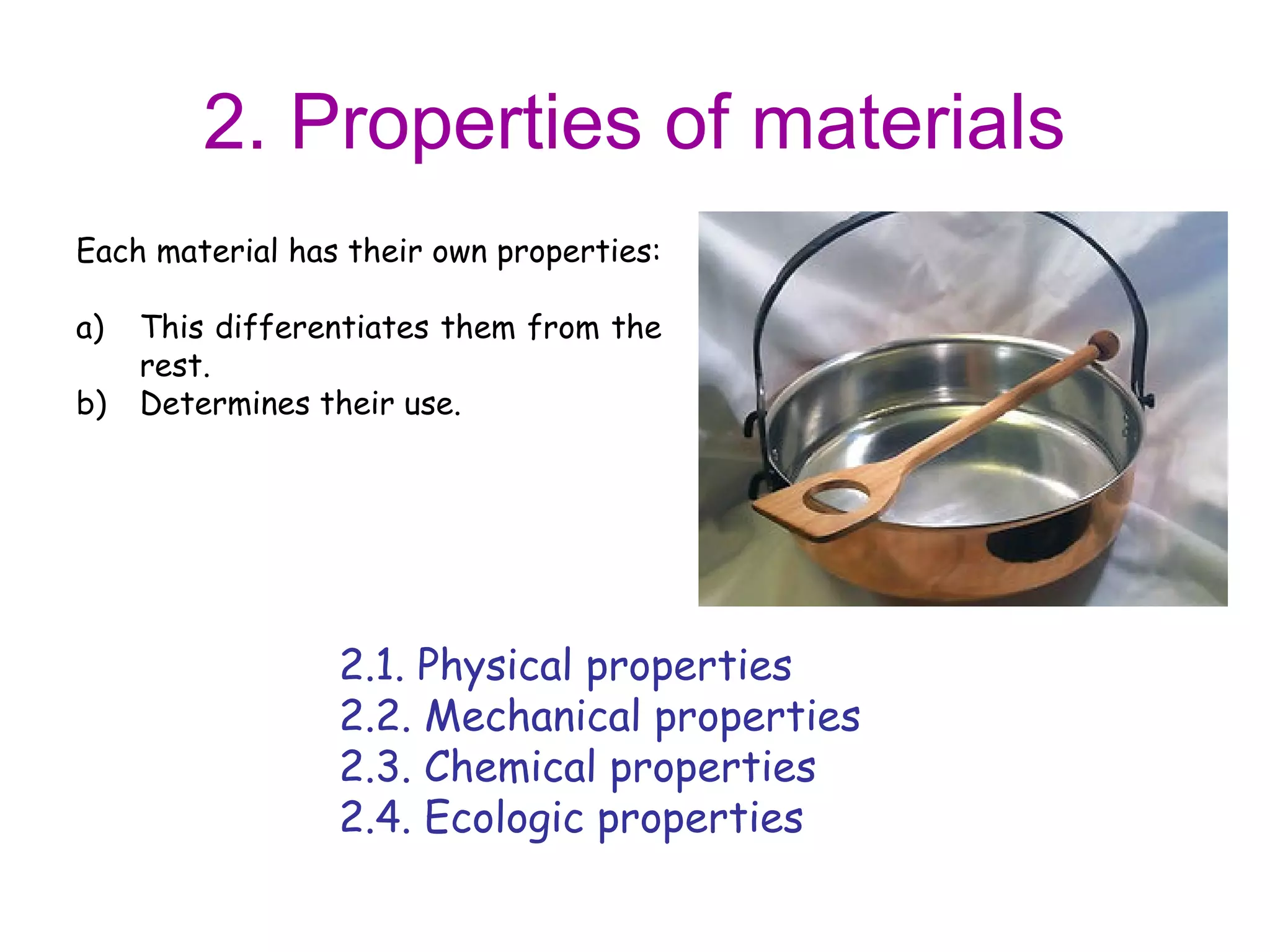
Each material has their own properties:

a)   This differentiates them from the
     rest.
b)   Determines their use.


                 2.1. Physical properties
                 2.2. Mechanical properties
                 2.3. Chemical properties
                 2.4. Ecologic properties
2.1. Physical properties:
 Physical properties indicate how a material is and how it behaves
 when exposed to external stimuli like light, heat or electricity.


      a) Density

      b) Electrical, thermal or acoustic conductivity

      c) Optical properties

      d) Porosity
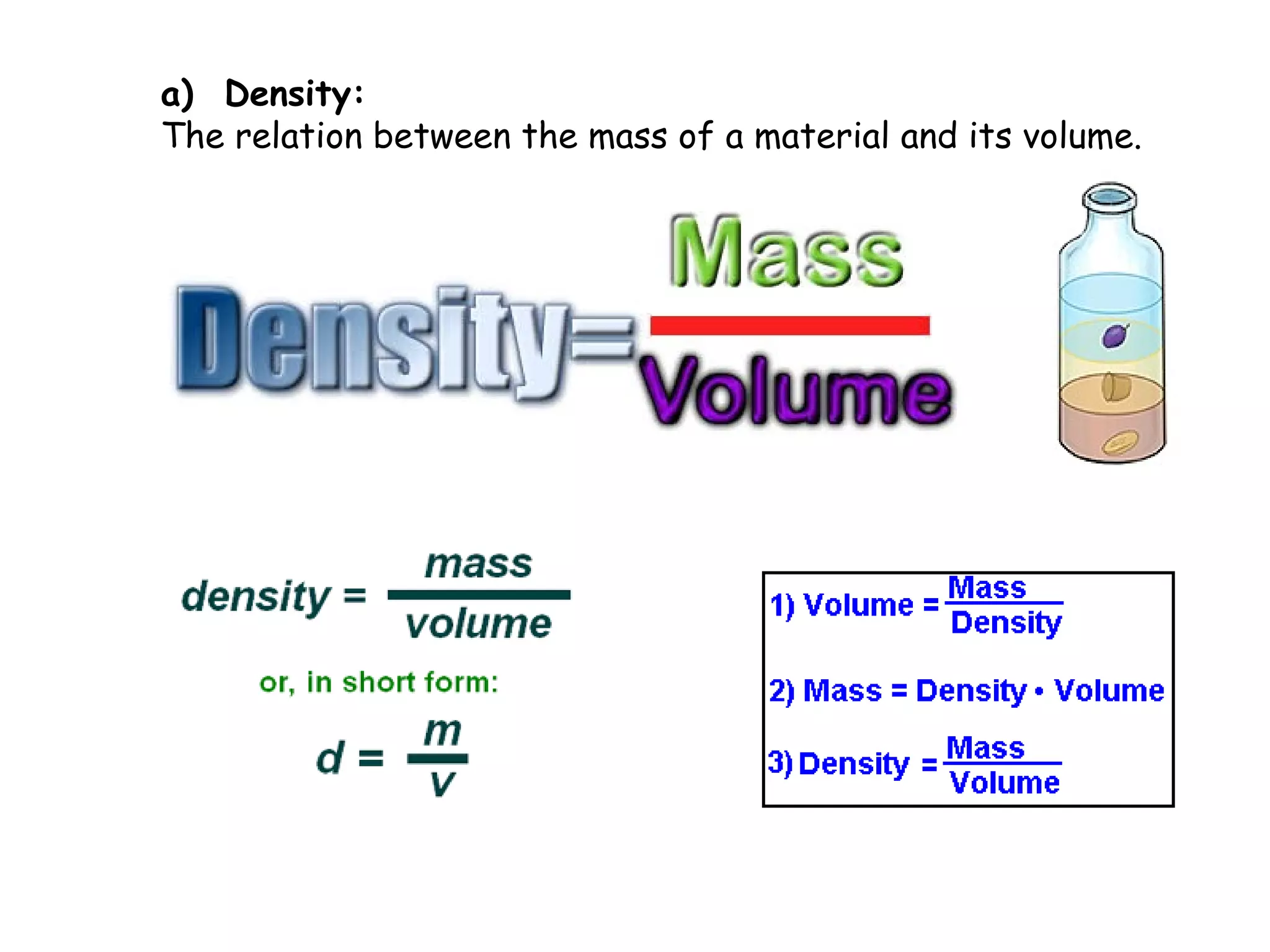
a) Density:
The relation between the mass of a material and its volume.
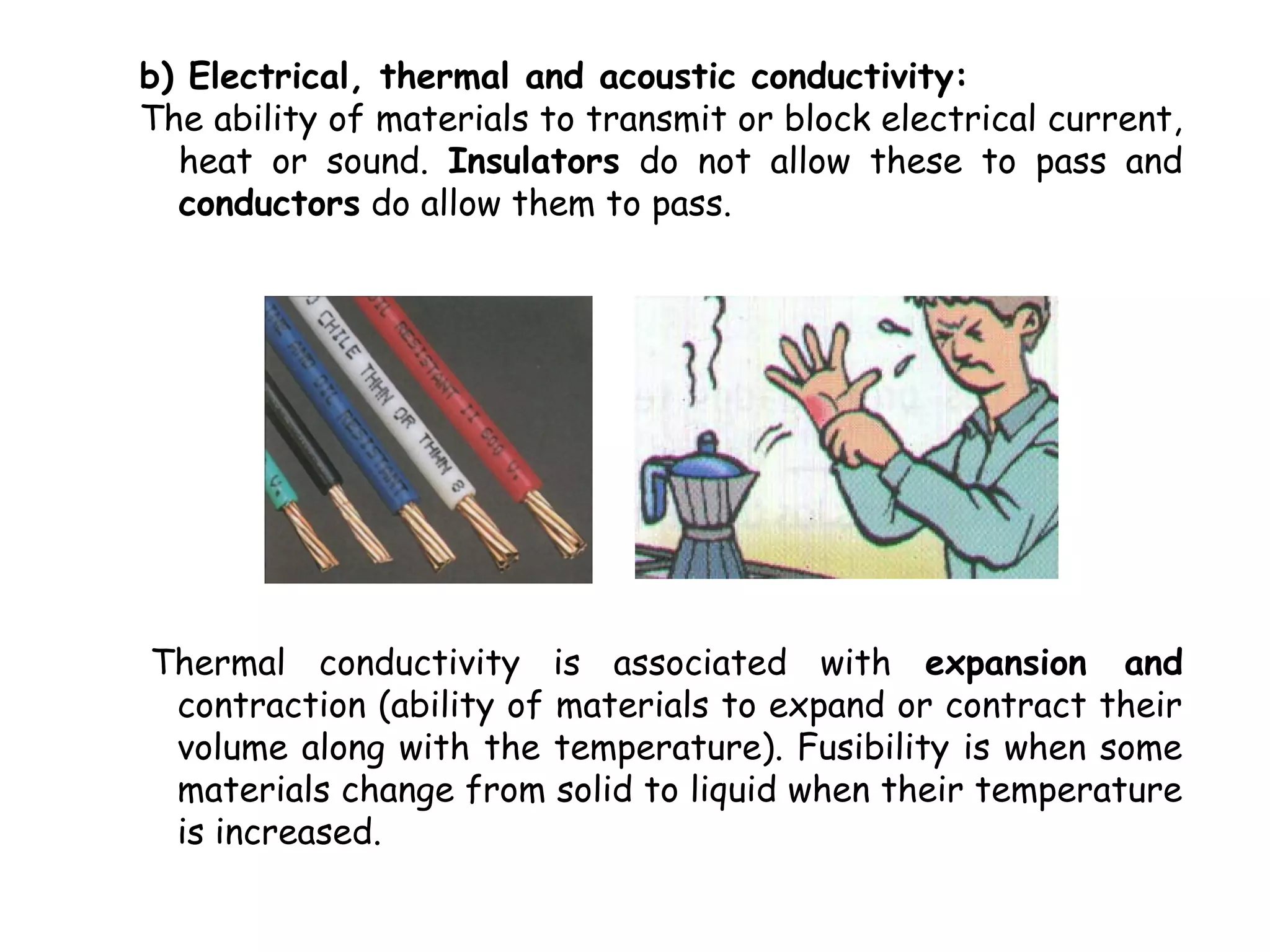
b) Electrical, thermal and acoustic conductivity:
The ability of materials to transmit or block electrical current,
  heat or sound. Insulators do not allow these to pass and
  conductors do allow them to pass.


Thermal conductivity is associated with expansion and
 contraction (ability of materials to expand or contract their
 volume along with the temperature). Fusibility is when some
 materials change from solid to liquid when their temperature
 is increased.
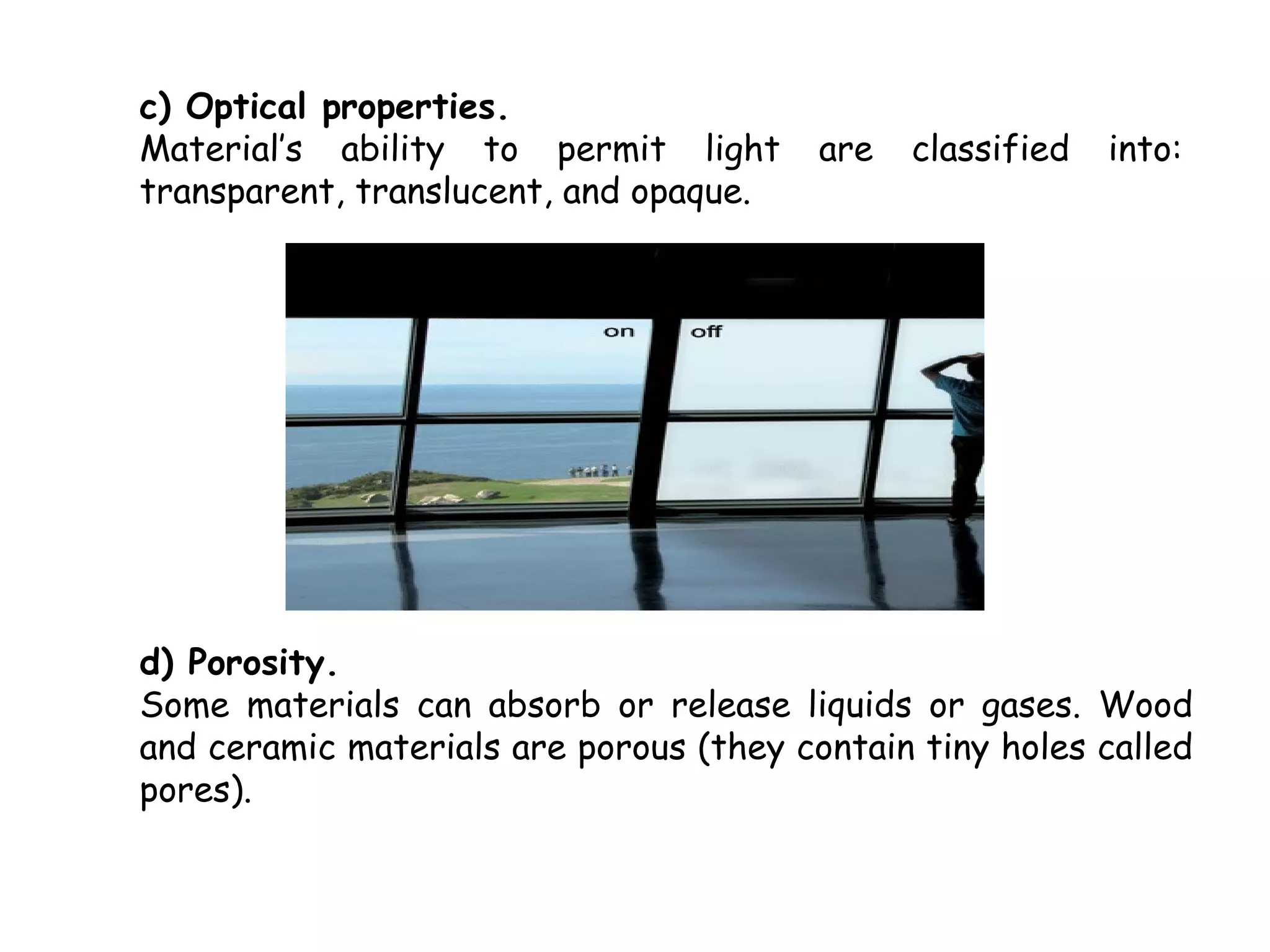
c) Optical properties.
Material’s ability to permit light       are   classified   into:
transparent, translucent, and opaque.


d) Porosity.
Some materials can absorb or release liquids or gases. Wood
and ceramic materials are porous (they contain tiny holes called
pores).
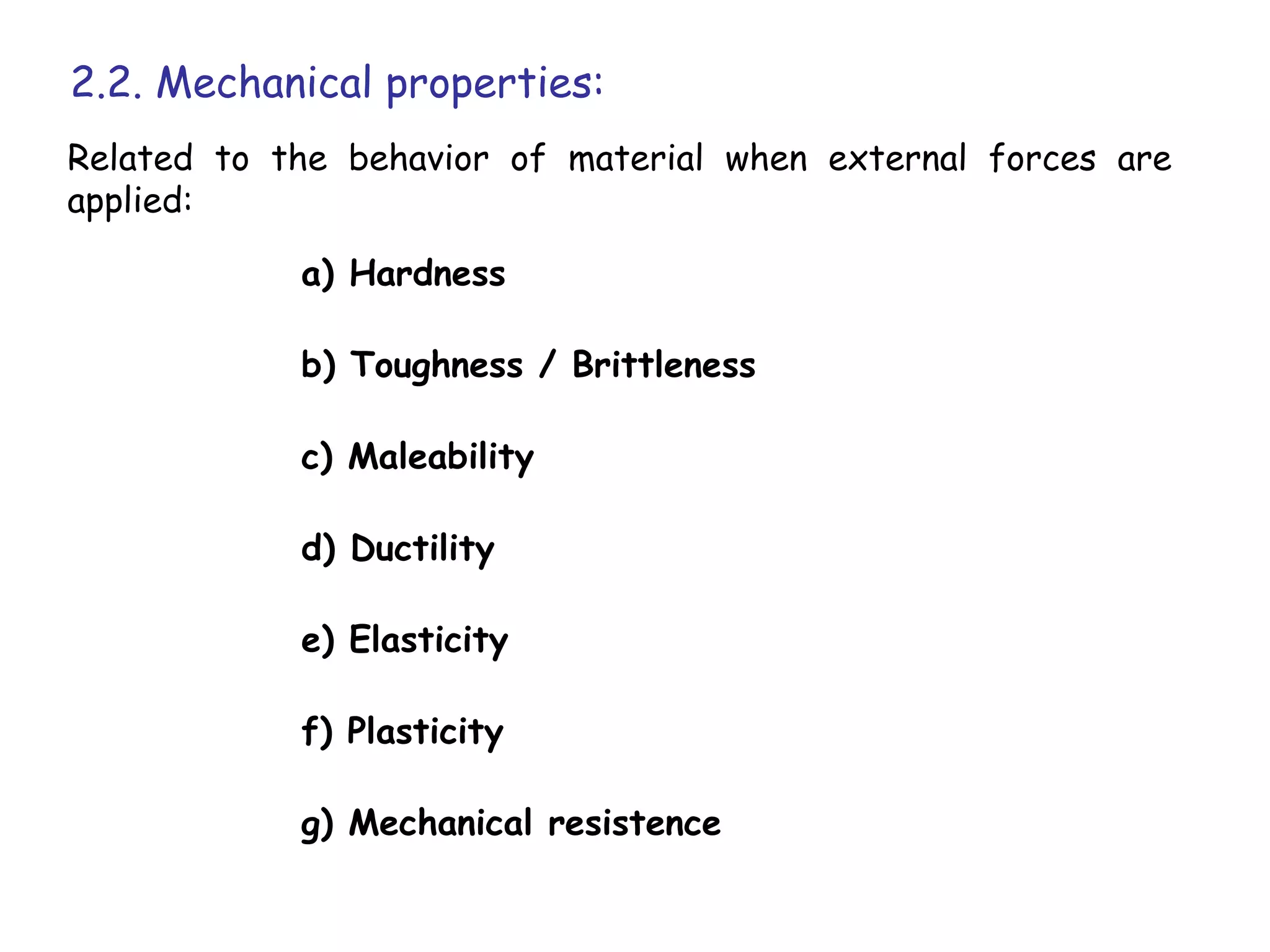
2.2. Mechanical properties:
Related to the behavior of material when external forces are
applied:

            a) Hardness

            b) Toughness / Brittleness

            c) Maleability

            d) Ductility

            e) Elasticity

            f) Plasticity

            g) Mechanical resistence
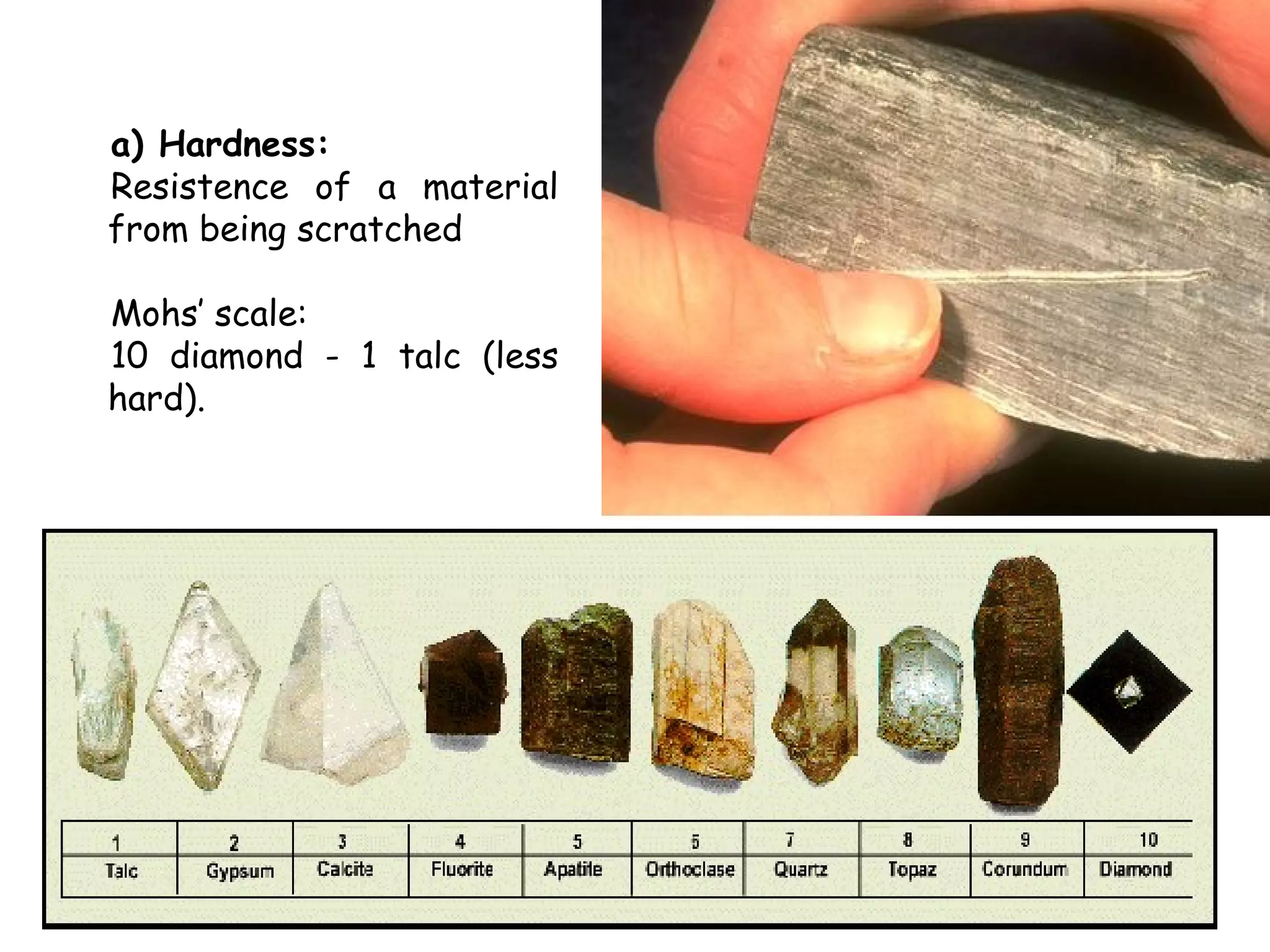
a) Hardness:
Resistence of a material
from being scratched

Mohs’ scale:
10 diamond - 1 talc (less
hard).
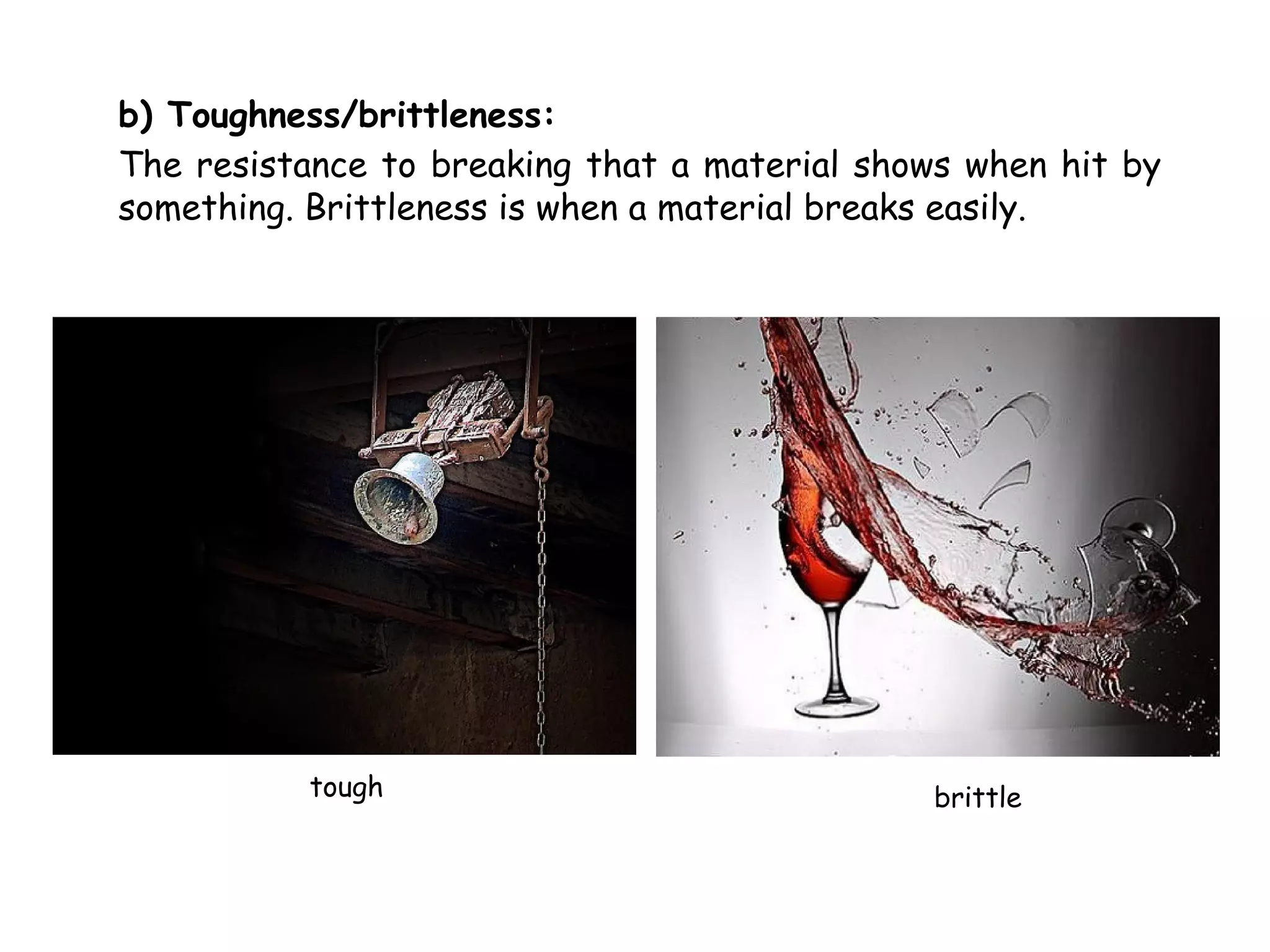
b) Toughness/brittleness:
The resistance to breaking that a material shows when hit by
something. Brittleness is when a material breaks easily.


           tough                              brittle
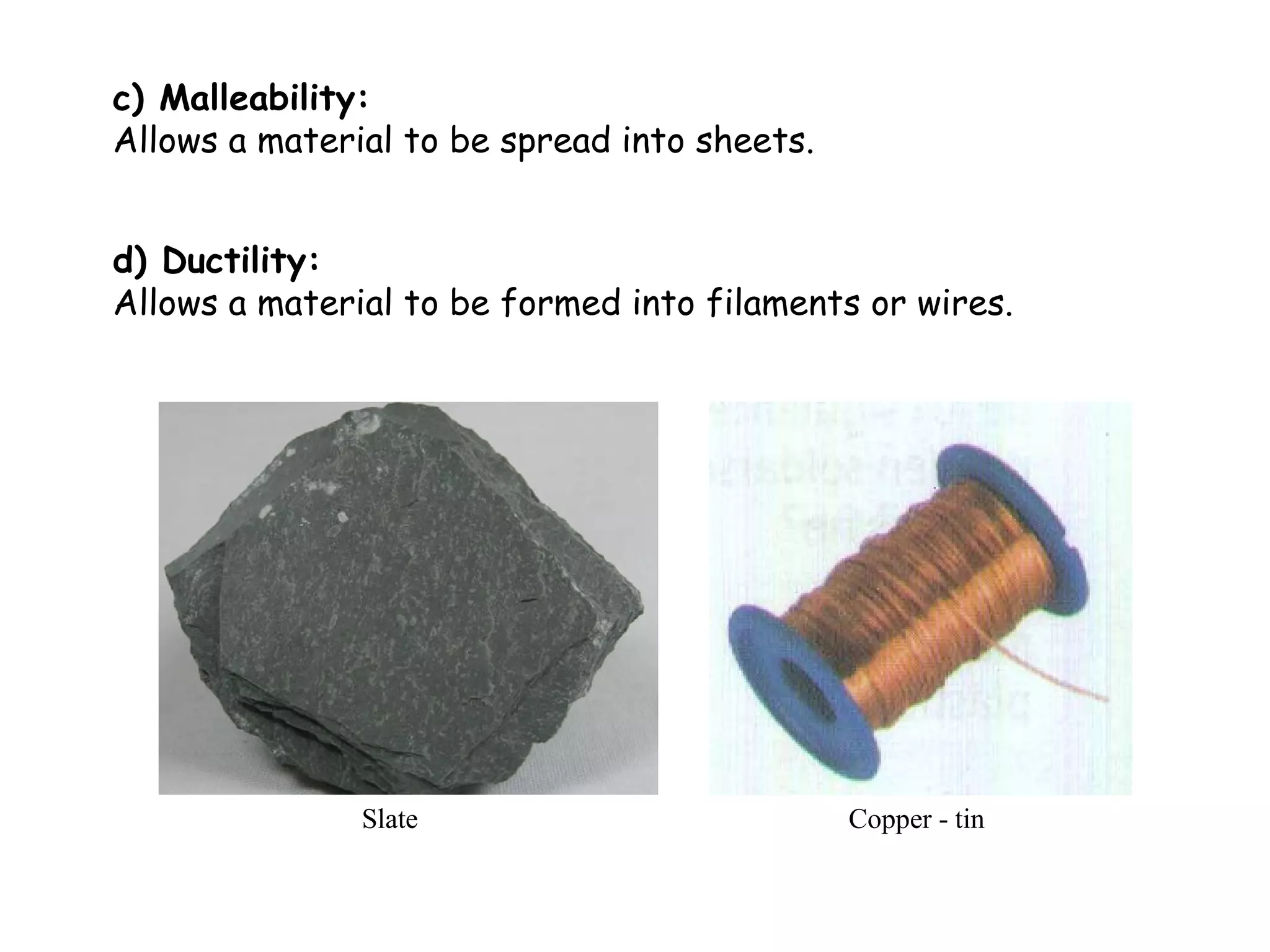
c) Malleability:
Allows a material to be spread into sheets.


d) Ductility:
Allows a material to be formed into filaments or wires.


               Slate                          Copper - tin
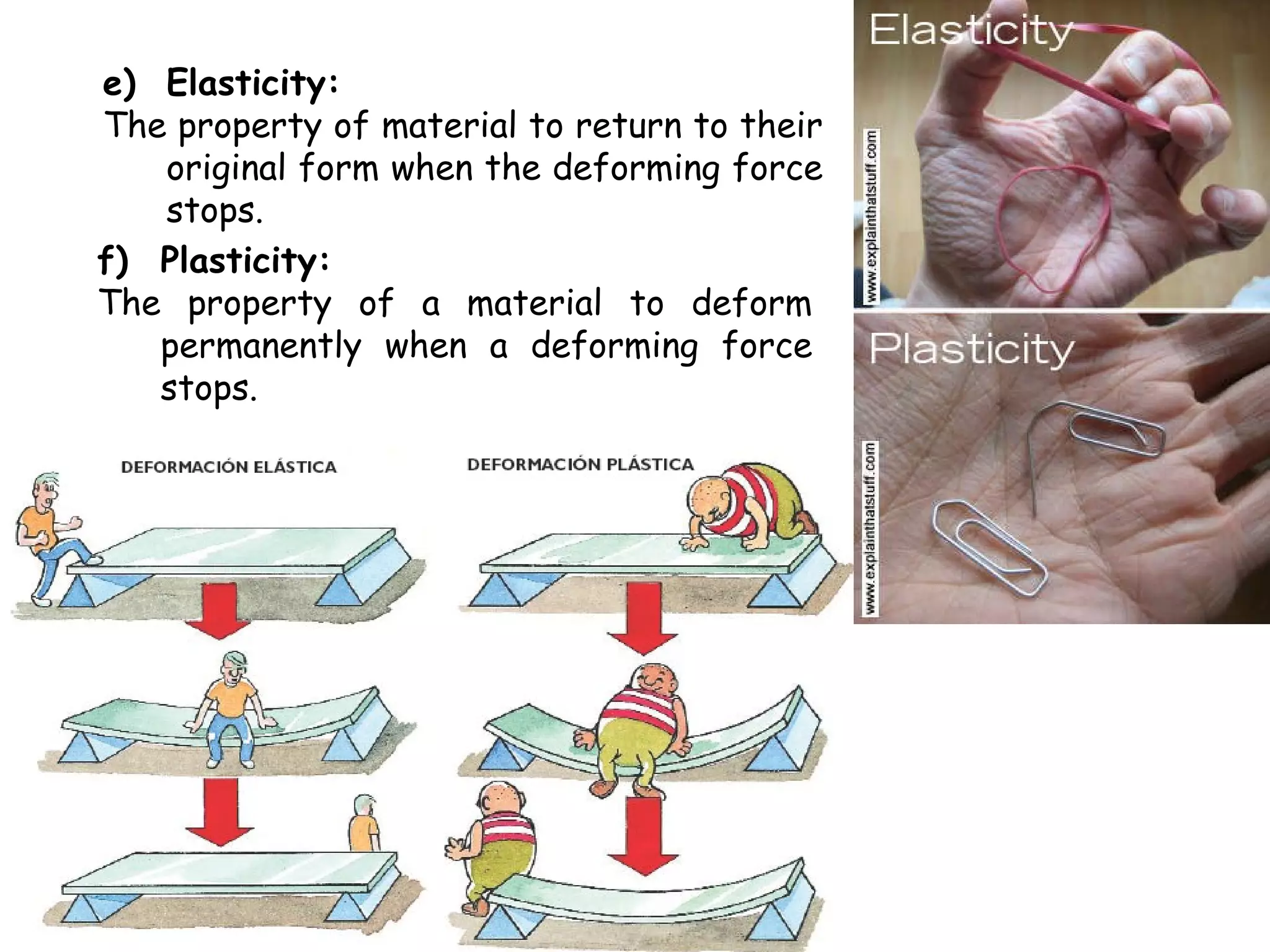
e) Elasticity:
The property of material to return to their
   original form when the deforming force
   stops.
f) Plasticity:
The property of a material to deform
   permanently when a deforming force
   stops.
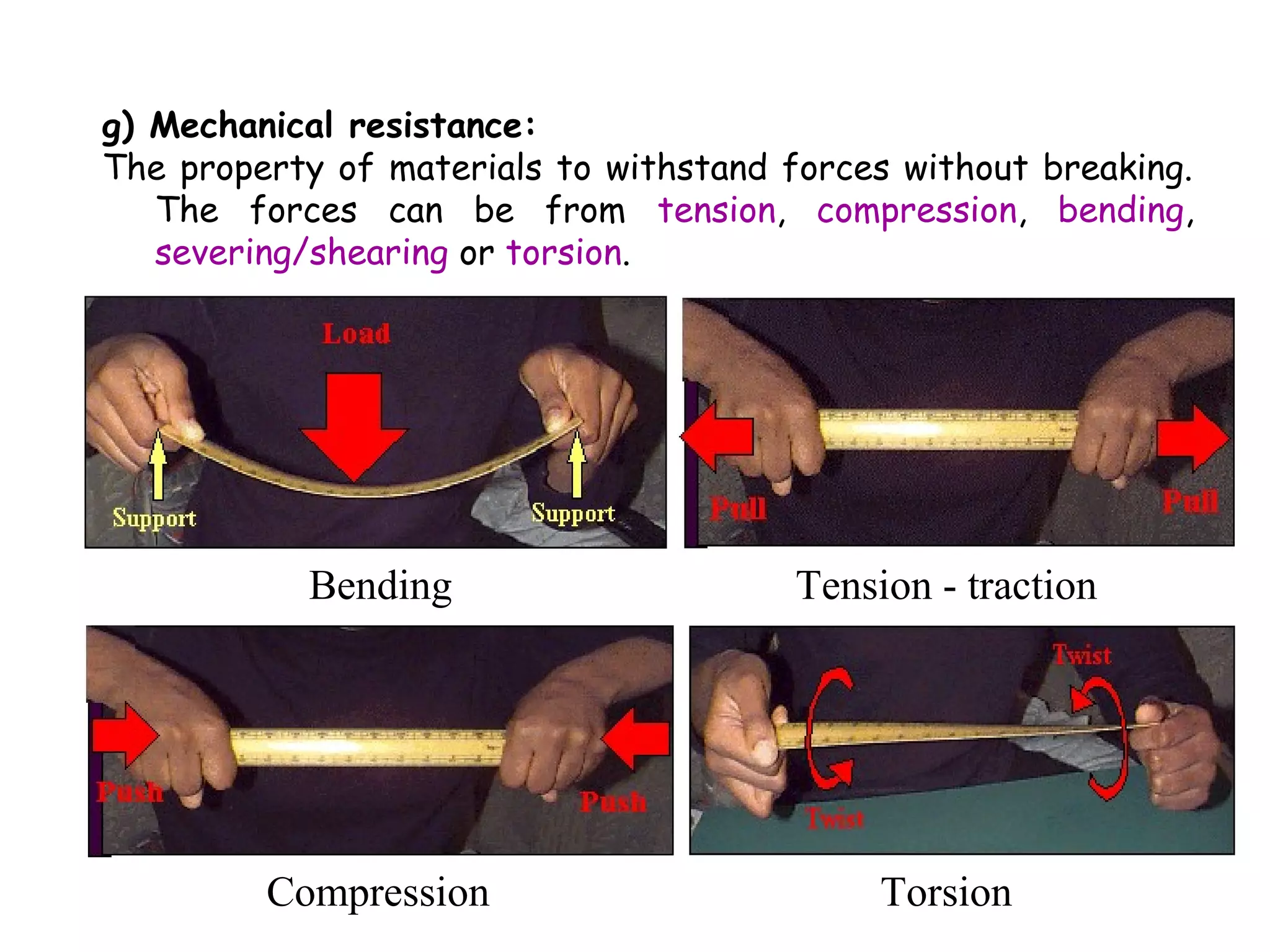
g) Mechanical resistance:
The property of materials to withstand forces without breaking.
   The forces can be from tension, compression, bending,
   severing/shearing or torsion.


           Bending                      Tension - traction


         Compression                         Torsion
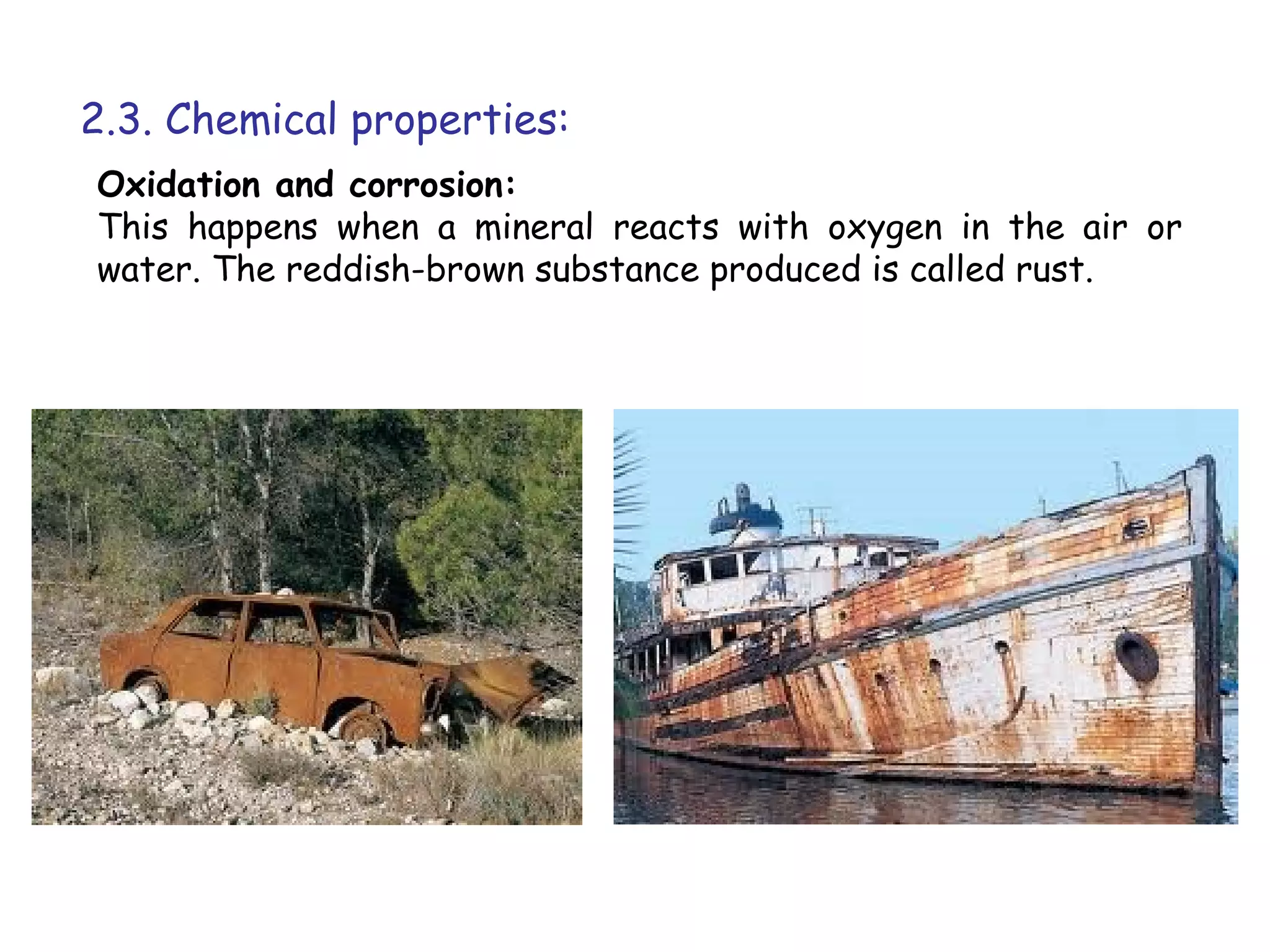
2.3. Chemical properties:
Oxidation and corrosion:
This happens when a mineral reacts with oxygen in the air or
water. The reddish-brown substance produced is called rust.
2.4. Ecological properties:
Those properties related to the harmfulness of materials to the
environment.
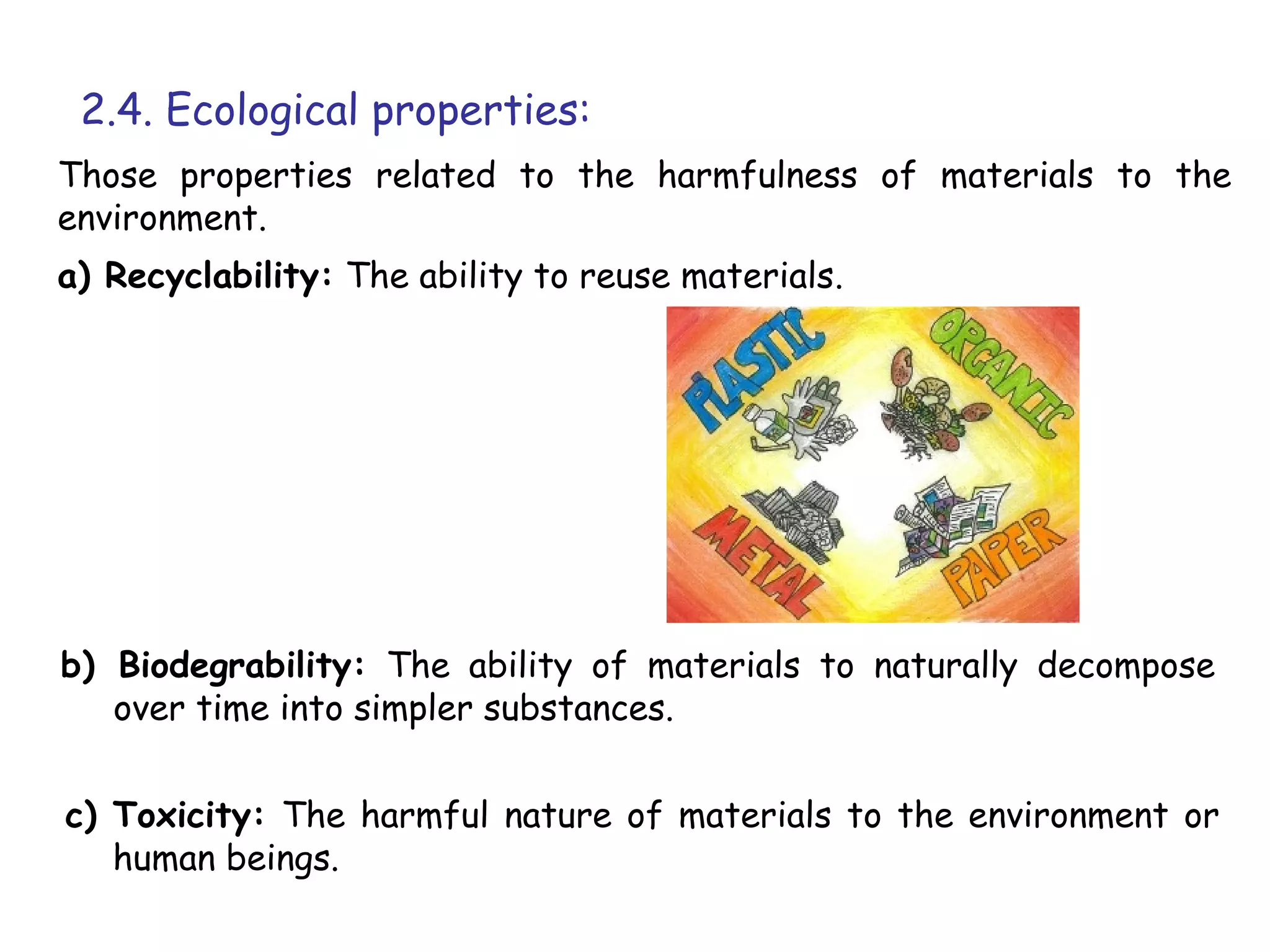
a) Recyclability: The ability to reuse materials.


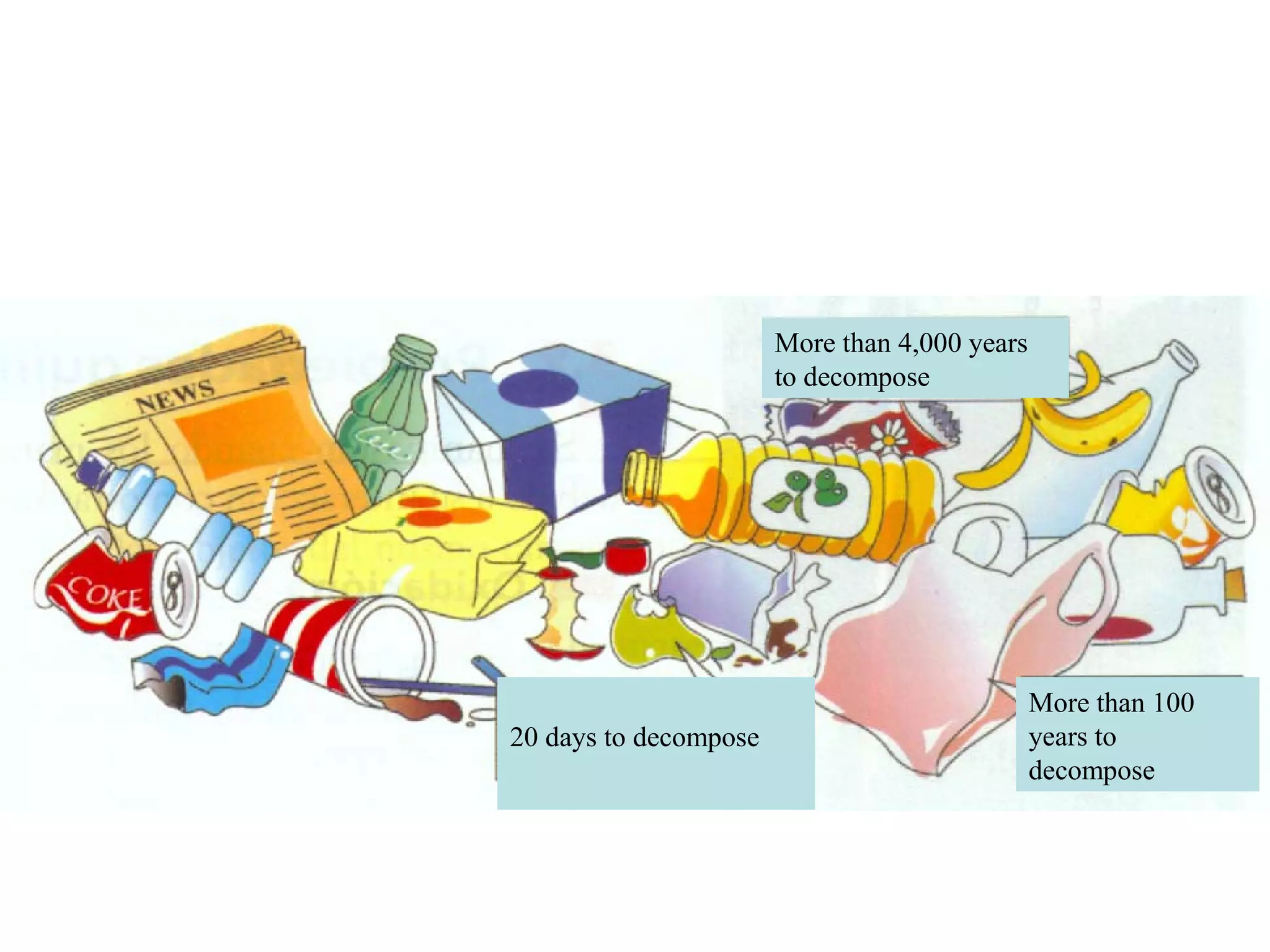
b) Biodegrability: The ability of materials to naturally decompose
   over time into simpler substances.


c) Toxicity: The harmful nature of materials to the environment or
   human beings.
More than 4,000 years
                       to decompose


                                               More than 100
20 days to decompose                           years to
                                               decompose
3. Selection of materials
To choose a material, you must take into account certain factors:


   a) Price.

   b)      Its properties:    Resistance,   hardness,    flexibility,
        conductivity, etc…

   c)    Production possibilities: the machines and tools that you
        can use and the ease of the work…

   d)    Its ease of obtaining: the abundance of the material, its
        proximity to where it is needed…

   e) Its impact on the natural environment: if it pollutes, if it
     is biodegradable, etc…
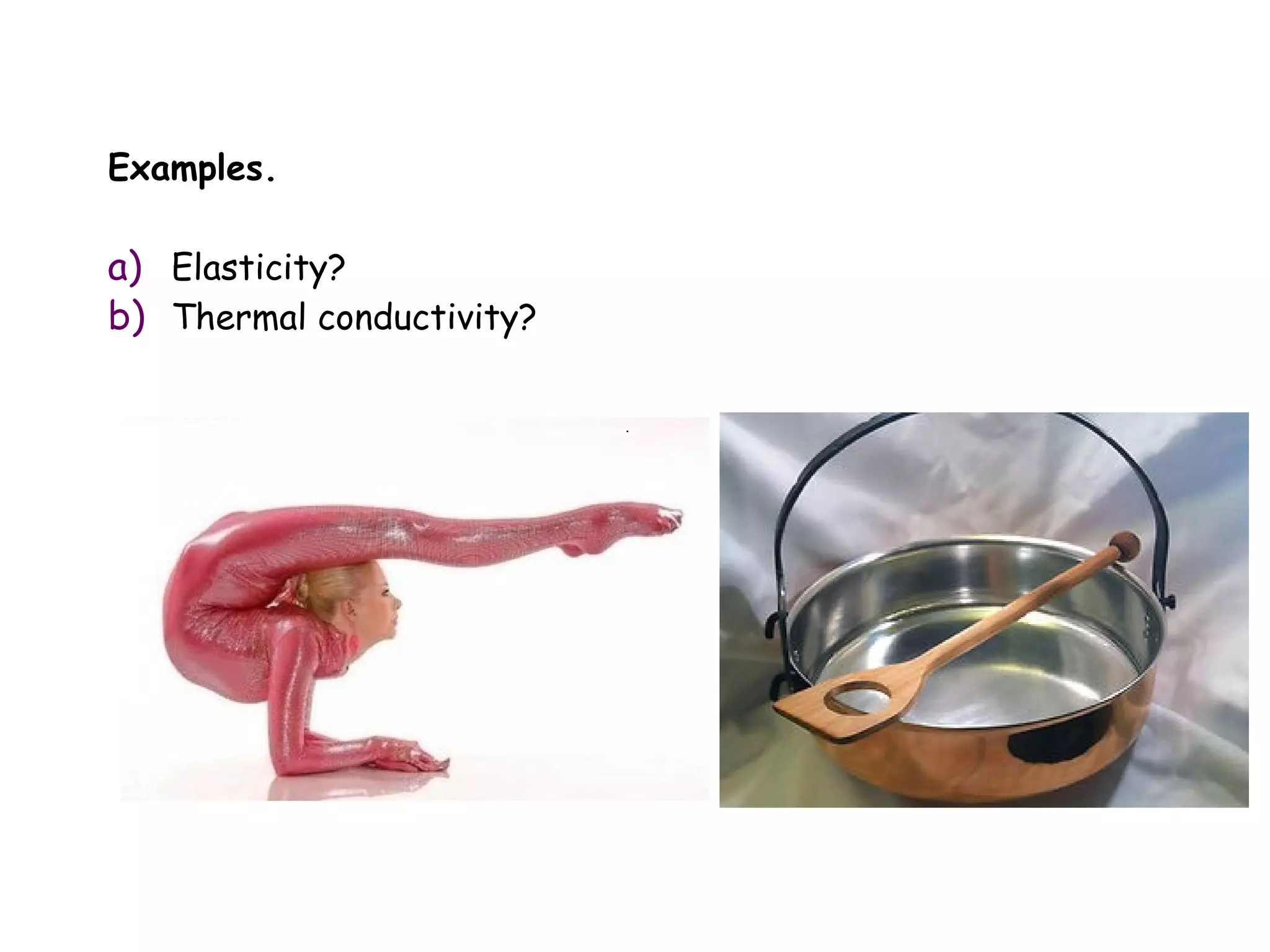
Examples.

a) Elasticity?
b) Thermal conductivity?
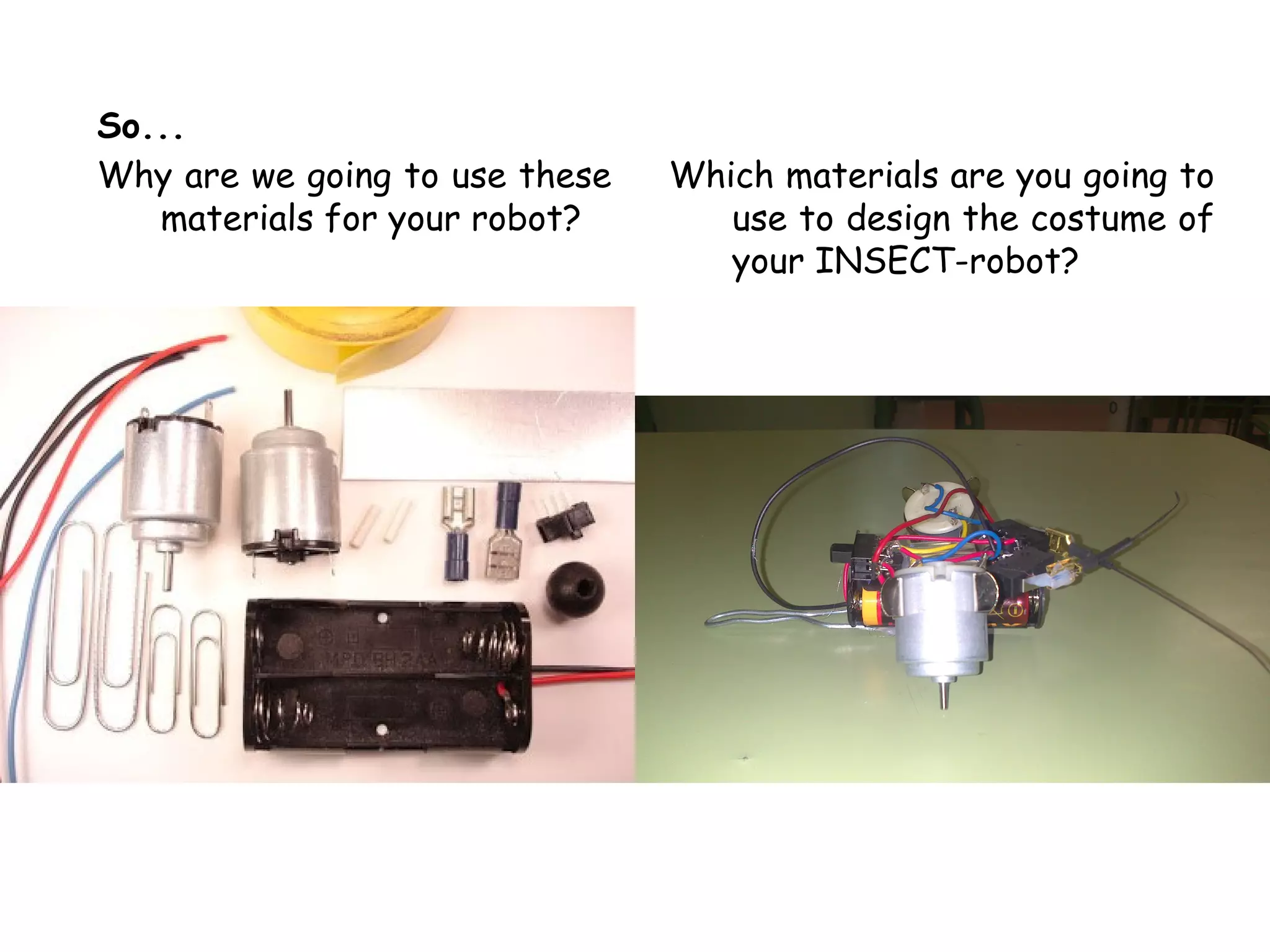
So...
Why are we going to use these   Which materials are you going to
   materials for your robot?       use to design the costume of
                                   your INSECT-robot?
Documentación original (Propiedades y materiales.pdf en tecnodesvanprimeroeso) preparada por:
•Jesús Álvarez


Adaptada y traducida por:
•Kostyn Tyksinski
•Rosa Fernández

Technologies Materials and Properties

  • 1.
  • 2.
    Class contents: 1. MATERIALSAND RAW MATERIALS 2. PROPERTIES OF MATERIALS 3. CHOICE OF MATERIALS
  • 3.
    TECHNICAL PRODUCTS are made with TECHNICAL MATERIALS that are obtained from RAW MATERIALS. Example: The production of a sweater. RAW MATERIAL TECHNICAL MATERIAL TECHNOLOGICAL PRODUCT
  • 4.
    1. Materials andraw materials Raw materials: Substances that are extracted directly from nature and are transformed through physical and chemical processes into technological products. Raw materials that have been manufactured but still are not a commodity are considered technical materials or materials. ANIMALS TYPES PLANTS MINERALS
  • 5.
    Technical Materials Those materialsthat are used directly in the production of technological products. They are obtained from raw materials. Among the most highly used materials: a) Wood: Obtained from the woody part of trees. It is used as a combustible, for making paper, furniture, construction and decorative elements, etc. b) Plastics: Obtained artificially from oil. Plastics are used to make tubes, toys, recepticles, electrical insulators, etc. c) Metals: Extracted from minerals that form rocks. Metals are used for structures and pieces of equipment, tools, welding, electronic components, furniture, etc.
  • 6.
    d) Stone (includingceramics and glass). Extracted from rocks. Some examples are marble, chalkboard, plaster, cement, and concrete. Normally, these are used as construction materials. e) Textiles. These materials are used in the form of string to make cloth/fabric. They can be natural or synthetic. Examples are wool, cotton, silk, nylon, etc. f) Composite materials and alloys. Sometimes we want to combine the properties of various materials into one. For those, we use composite materials. For example: red-brick, plywood, fiber-glass. Normally, metals are not used in pure state. Instead, they are mixed with other metals to form alloys. Examples are bronze, brass and steel.
  • 7.
    2. Properties ofmaterials Each material has their own properties: a) This differentiates them from the rest. b) Determines their use. 2.1. Physical properties 2.2. Mechanical properties 2.3. Chemical properties 2.4. Ecologic properties
  • 8.
    2.1. Physical properties: Physical properties indicate how a material is and how it behaves when exposed to external stimuli like light, heat or electricity. a) Density b) Electrical, thermal or acoustic conductivity c) Optical properties d) Porosity
  • 9.
    a) Density: The relationbetween the mass of a material and its volume.
  • 10.
    b) Electrical, thermaland acoustic conductivity: The ability of materials to transmit or block electrical current, heat or sound. Insulators do not allow these to pass and conductors do allow them to pass. Thermal conductivity is associated with expansion and contraction (ability of materials to expand or contract their volume along with the temperature). Fusibility is when some materials change from solid to liquid when their temperature is increased.
  • 11.
    c) Optical properties. Material’sability to permit light are classified into: transparent, translucent, and opaque. d) Porosity. Some materials can absorb or release liquids or gases. Wood and ceramic materials are porous (they contain tiny holes called pores).
  • 12.
    2.2. Mechanical properties: Relatedto the behavior of material when external forces are applied: a) Hardness b) Toughness / Brittleness c) Maleability d) Ductility e) Elasticity f) Plasticity g) Mechanical resistence
  • 13.
    a) Hardness: Resistence ofa material from being scratched Mohs’ scale: 10 diamond - 1 talc (less hard).
  • 14.
    b) Toughness/brittleness: The resistanceto breaking that a material shows when hit by something. Brittleness is when a material breaks easily. tough brittle
  • 15.
    c) Malleability: Allows amaterial to be spread into sheets. d) Ductility: Allows a material to be formed into filaments or wires. Slate Copper - tin
  • 16.
    e) Elasticity: The propertyof material to return to their original form when the deforming force stops. f) Plasticity: The property of a material to deform permanently when a deforming force stops.
  • 17.
    g) Mechanical resistance: Theproperty of materials to withstand forces without breaking. The forces can be from tension, compression, bending, severing/shearing or torsion. Bending Tension - traction Compression Torsion
  • 18.
    2.3. Chemical properties: Oxidationand corrosion: This happens when a mineral reacts with oxygen in the air or water. The reddish-brown substance produced is called rust.
  • 19.
    2.4. Ecological properties: Thoseproperties related to the harmfulness of materials to the environment. a) Recyclability: The ability to reuse materials. b) Biodegrability: The ability of materials to naturally decompose over time into simpler substances. c) Toxicity: The harmful nature of materials to the environment or human beings.
  • 20.
    More than 4,000years to decompose More than 100 20 days to decompose years to decompose
  • 21.
    3. Selection ofmaterials To choose a material, you must take into account certain factors: a) Price. b) Its properties: Resistance, hardness, flexibility, conductivity, etc… c) Production possibilities: the machines and tools that you can use and the ease of the work… d) Its ease of obtaining: the abundance of the material, its proximity to where it is needed… e) Its impact on the natural environment: if it pollutes, if it is biodegradable, etc…
  • 22.
  • 23.
    So... Why are wegoing to use these Which materials are you going to materials for your robot? use to design the costume of your INSECT-robot?
  • 24.
    Documentación original (Propiedadesy materiales.pdf en tecnodesvanprimeroeso) preparada por: •Jesús Álvarez Adaptada y traducida por: •Kostyn Tyksinski •Rosa Fernández