Using Formative and Summative Evaluation to Improve Field Trip Programs Kimberly M. Burtnyk Amgen Center for Science Learning California Science Center
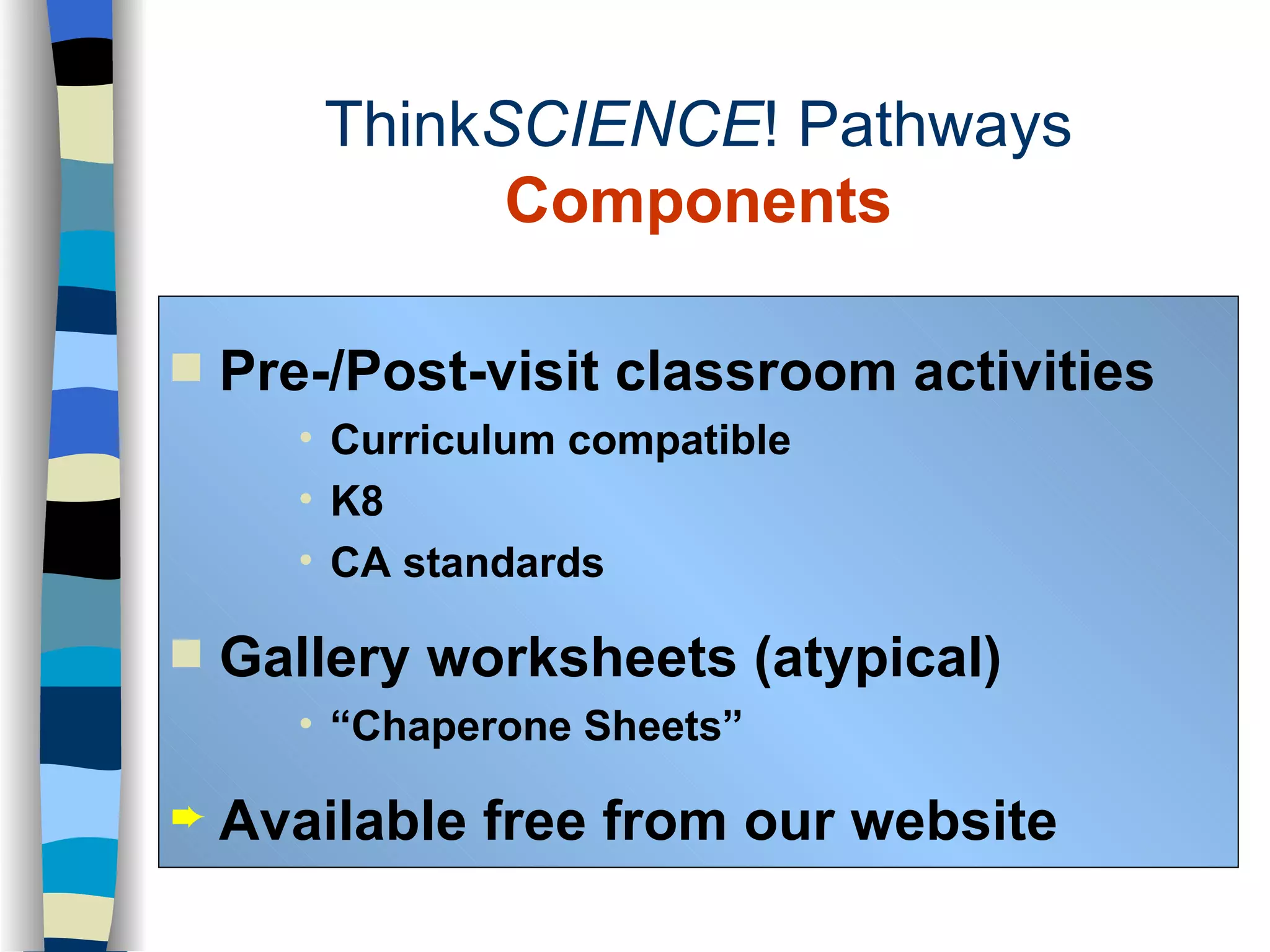
Pre-/Post-visit classroom activities Curriculum compatible K8  CA standards Gallery worksheets (atypical) “ Chaperone Sheets” Available free from our website Think SCIENCE ! Pathways Components
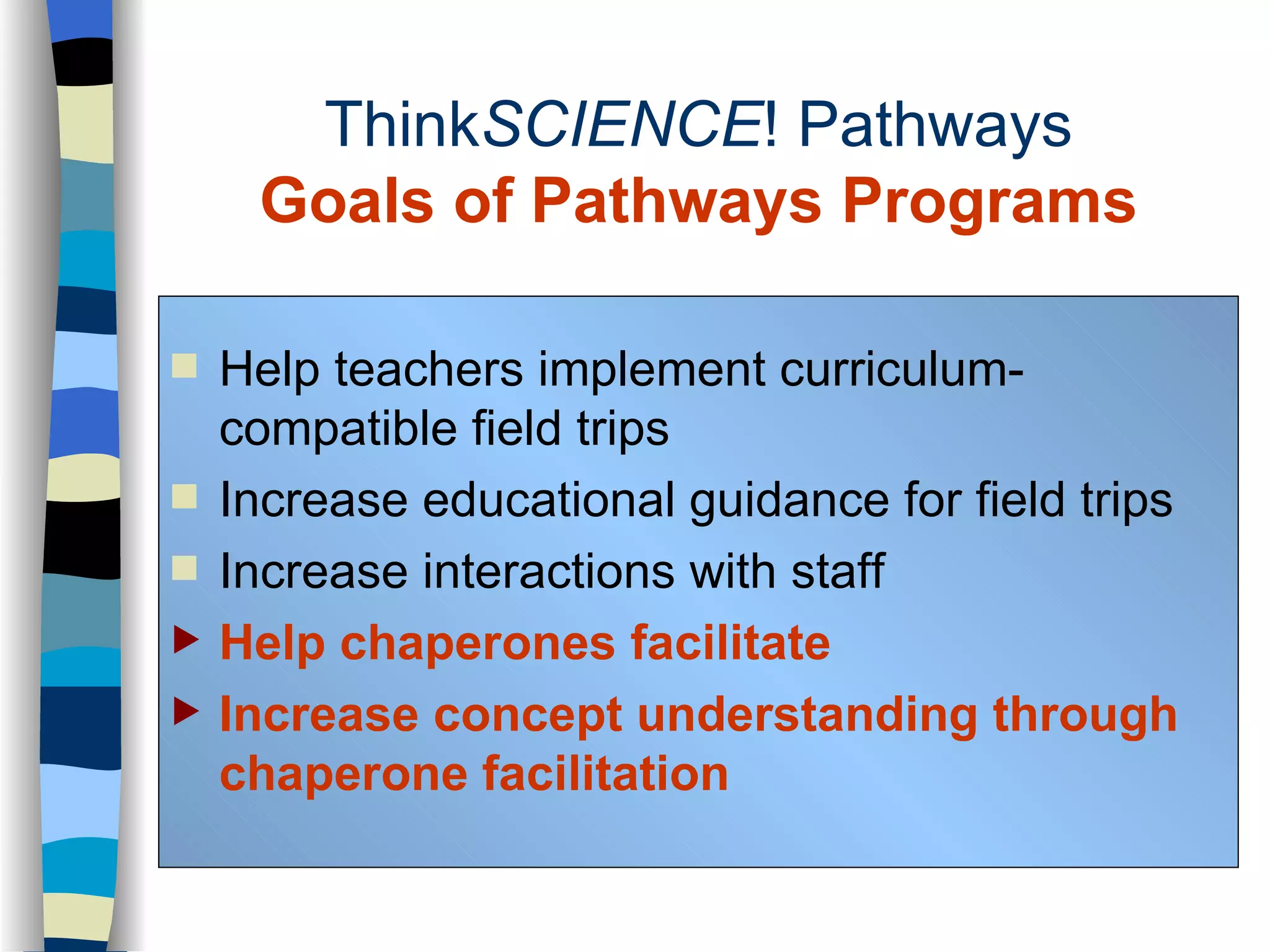
Think SCIENCE ! Pathways Goals of Pathways Programs Help teachers implement curriculum-compatible field trips Increase educational guidance for field trips Increase interactions with staff   Help chaperones facilitate Increase concept understanding through chaperone facilitation
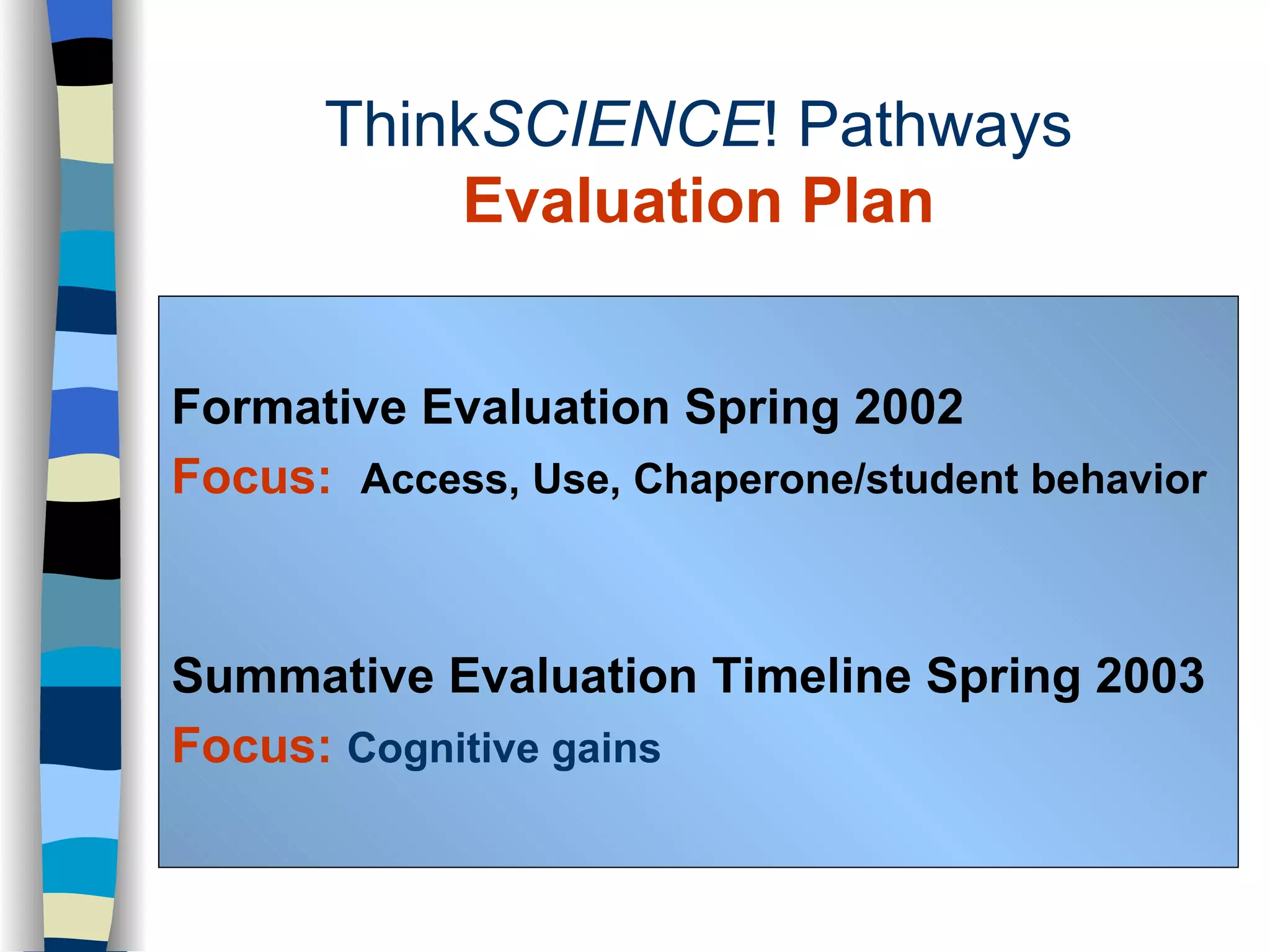
Formative Evaluation   Spring 2002 Focus:  Access, Use, Chaperone/student behavior Summative Evaluation   Timeline Spring 2003 Focus:  Cognitive gains Think SCIENCE ! Pathways Evaluation Plan
Recruiting Groups with existing reservations Questionnaires Pathways usage issues Field trip planning and behavior Chaperone roles Observations Stopped/didn’t stop Time spent--we want Pathways groups to stay longer Panels Read, Discussions, Gestures Evaluation Method
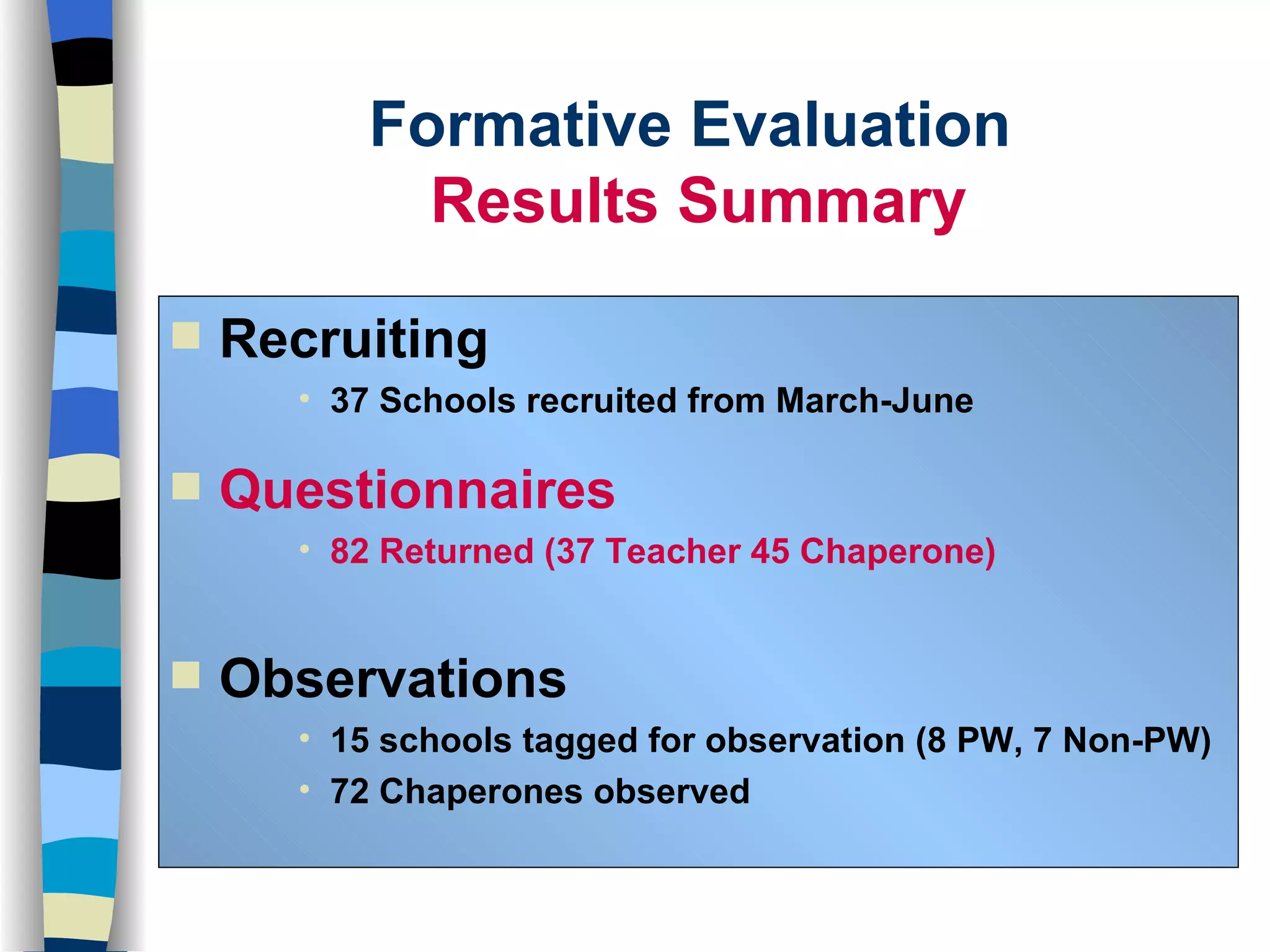
Recruiting  37 Schools recruited from March-June Questionnaires 82 Returned (37 Teacher 45 Chaperone) Observations 15 schools tagged for observation (8 PW, 7 Non-PW) 72 Chaperones observed Formative Evaluation  Results Summary
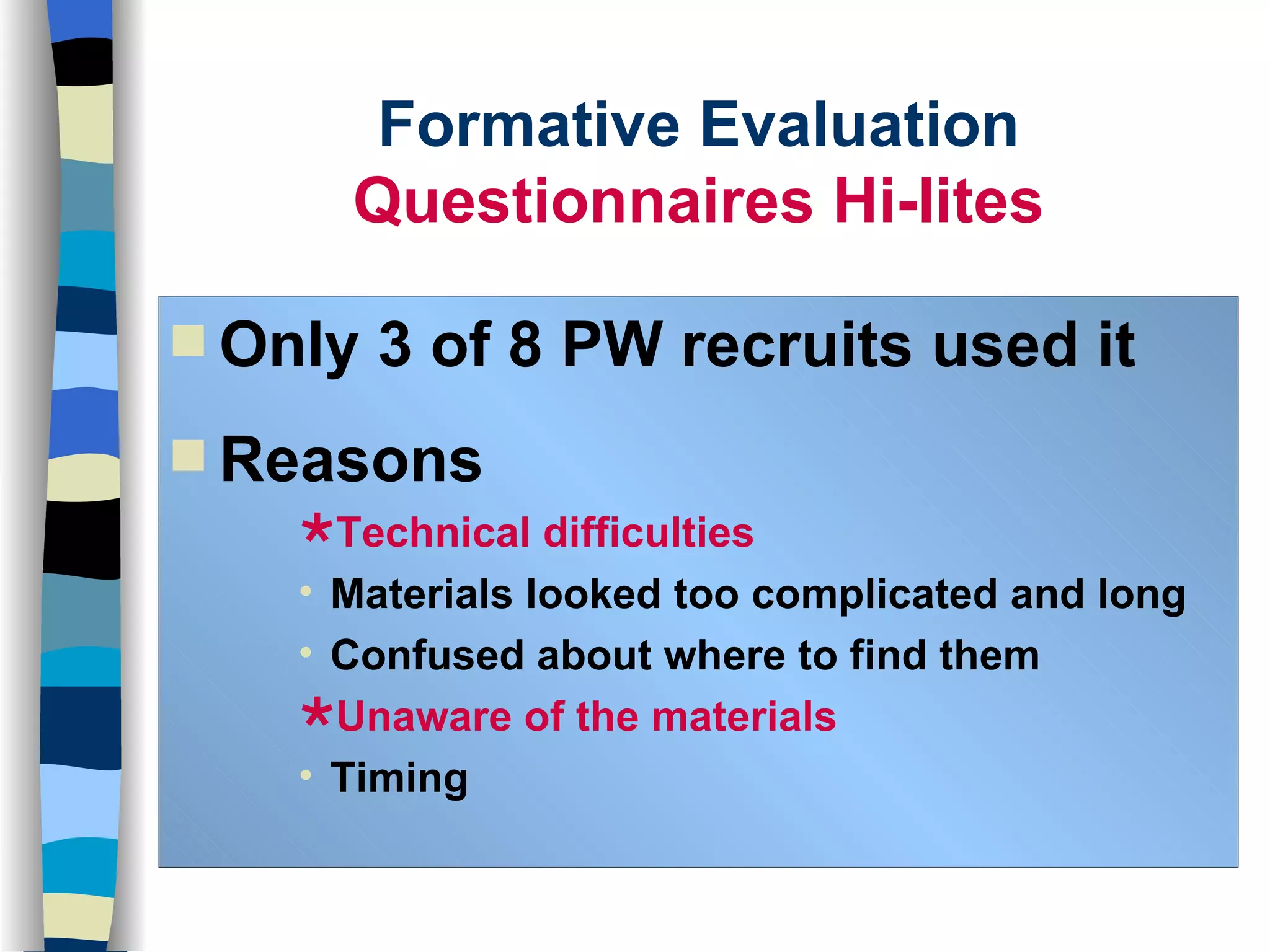
Only 3 of 8 PW recruits used it Reasons Technical difficulties Materials looked too complicated and long Confused about where to find them Unaware of the materials Timing Formative Evaluation Questionnaires Hi-lites
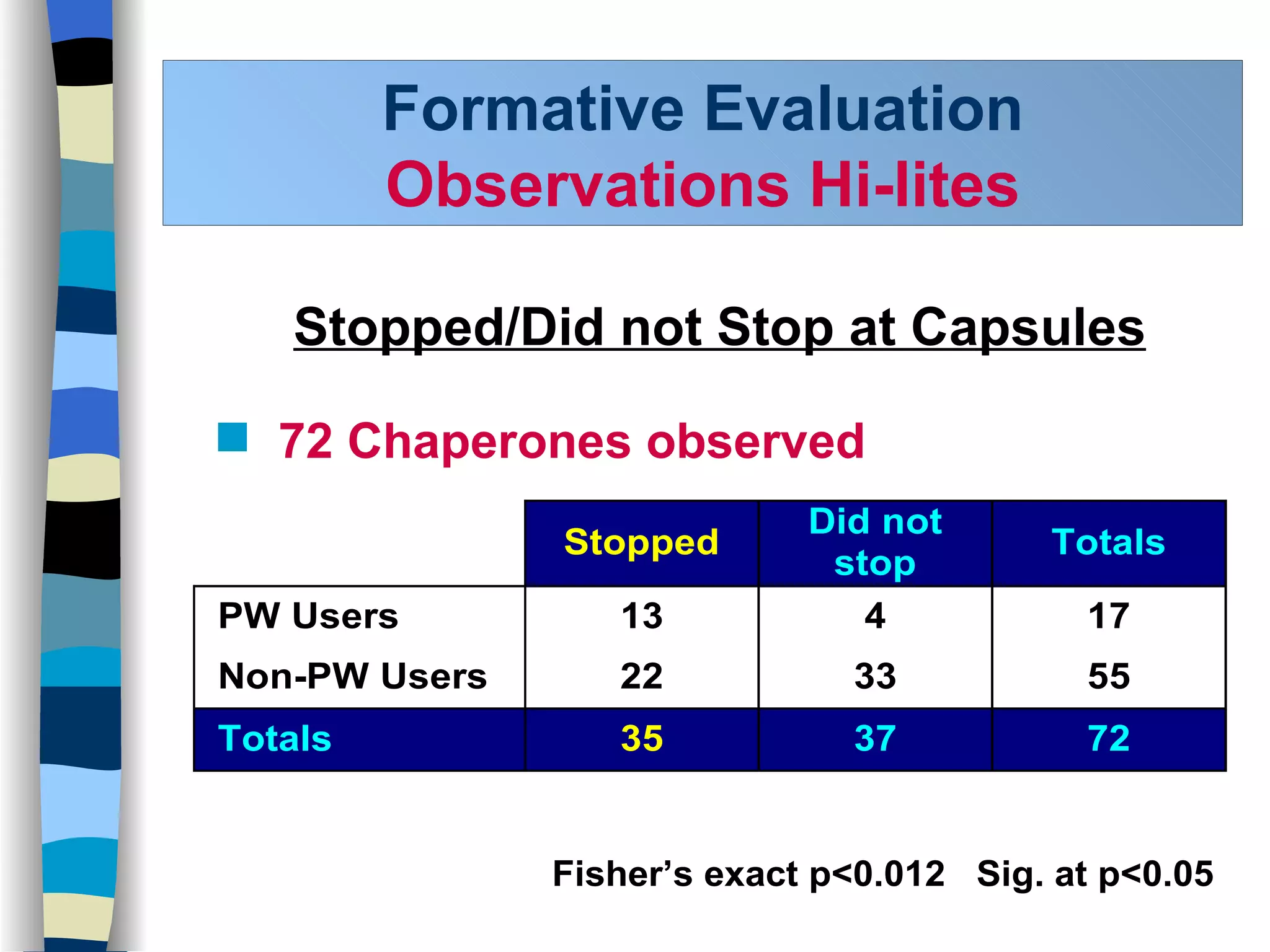
Formative Evaluation  Observations Hi-lites 72 Chaperones observed Stopped/Did not Stop at Capsules
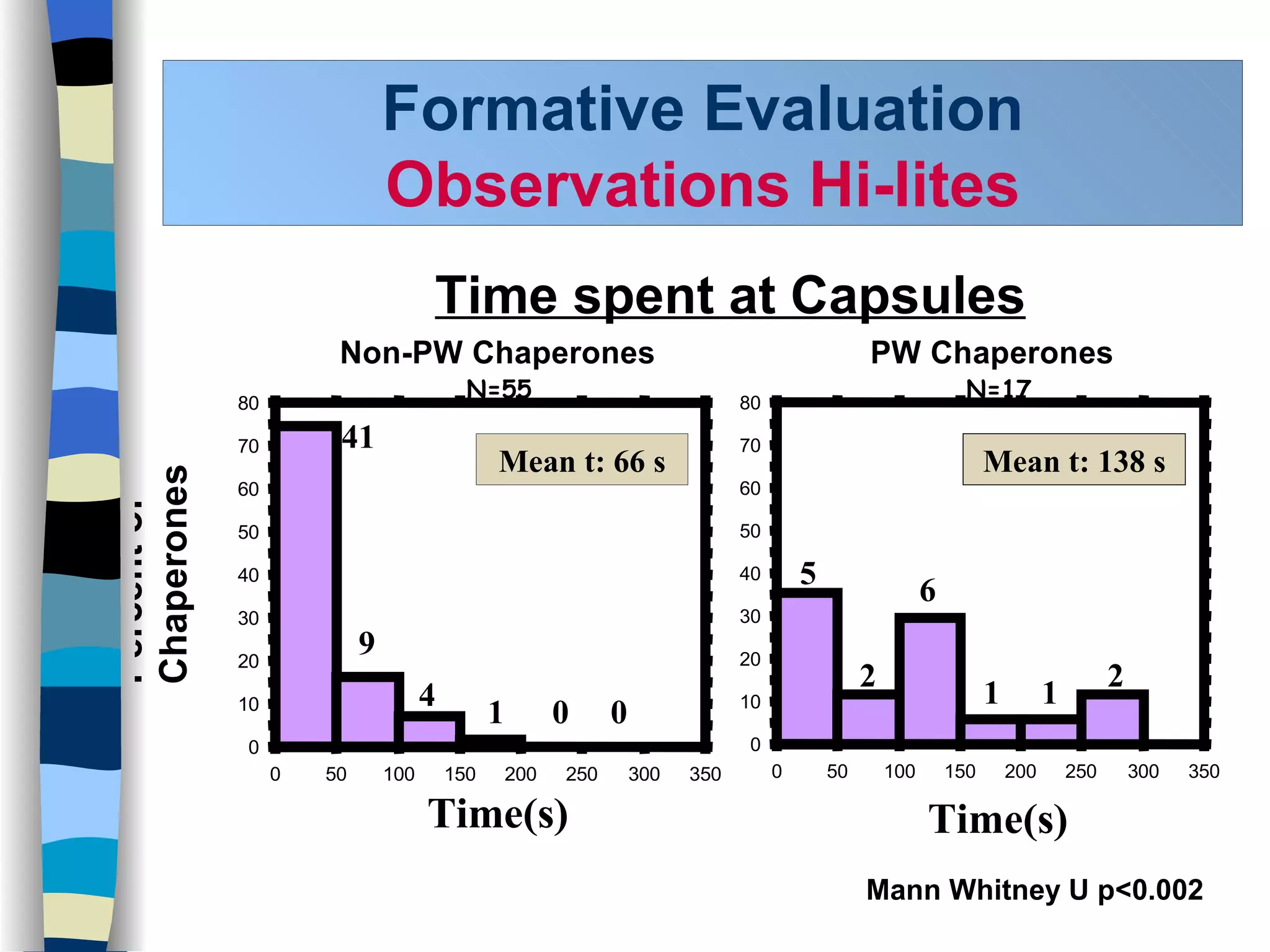
Formative Evaluation  Observations Hi-lites Mean t: 66 s Mean t: 138 s Time spent at Capsules
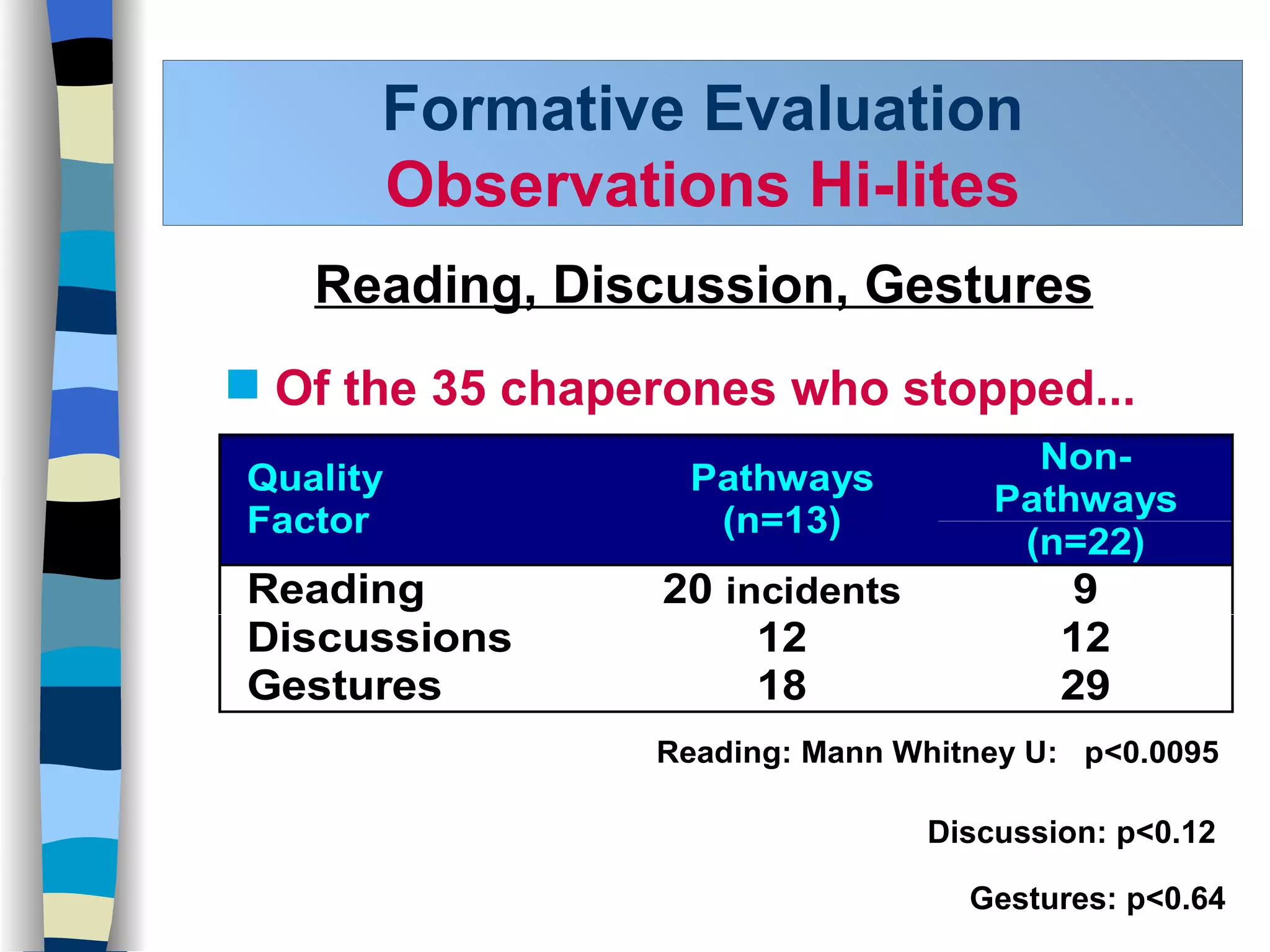
Formative Evaluation  Observations Hi-lites Of the 35 chaperones who stopped... Reading, Discussion, Gestures
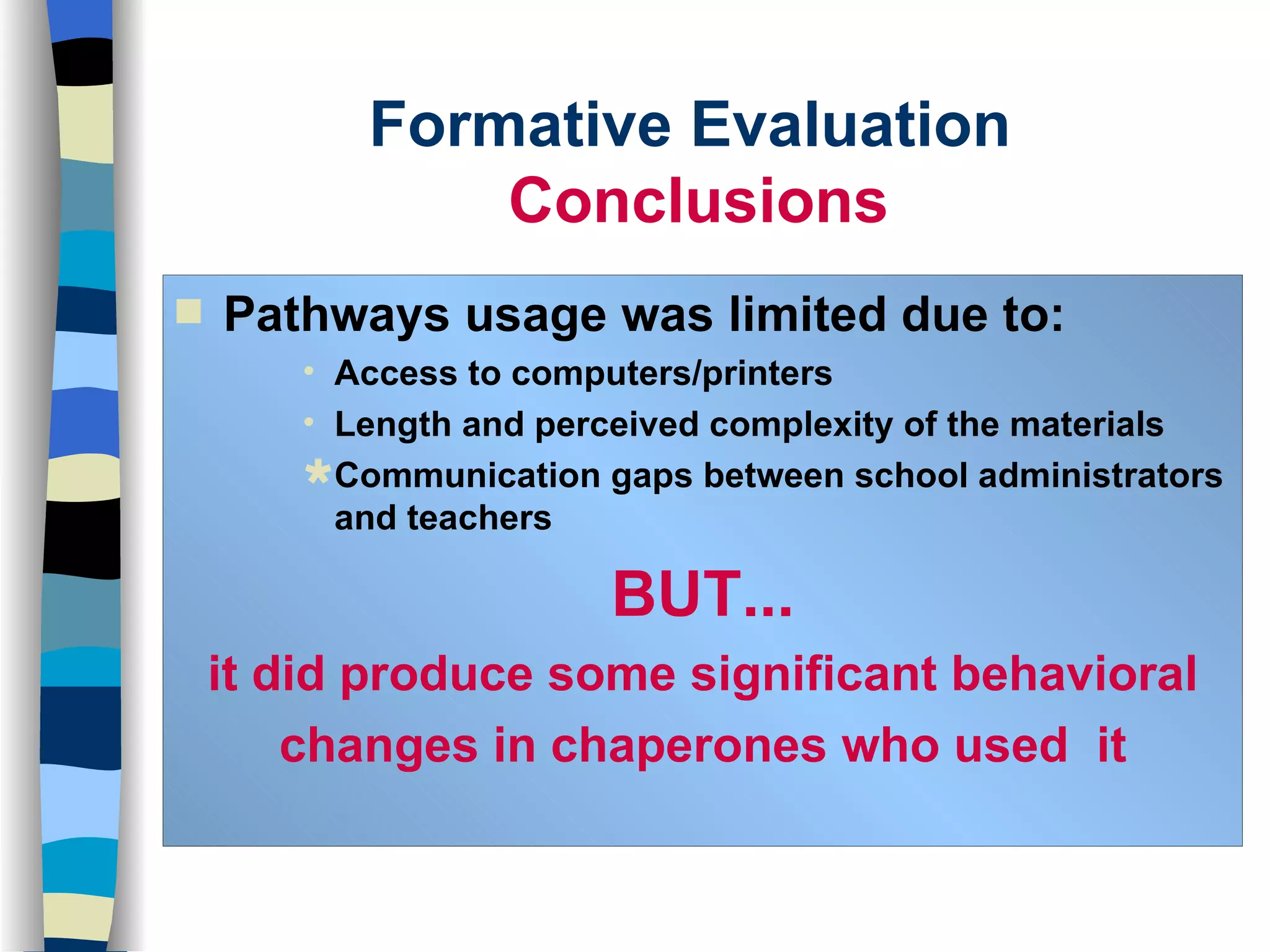
Formative Evaluation  Conclusions Pathways usage was limited due to: Access to computers/printers Length and perceived complexity of the materials Communication gaps between school administrators and teachers BUT... it did produce some significant behavioral changes in chaperones who used  it
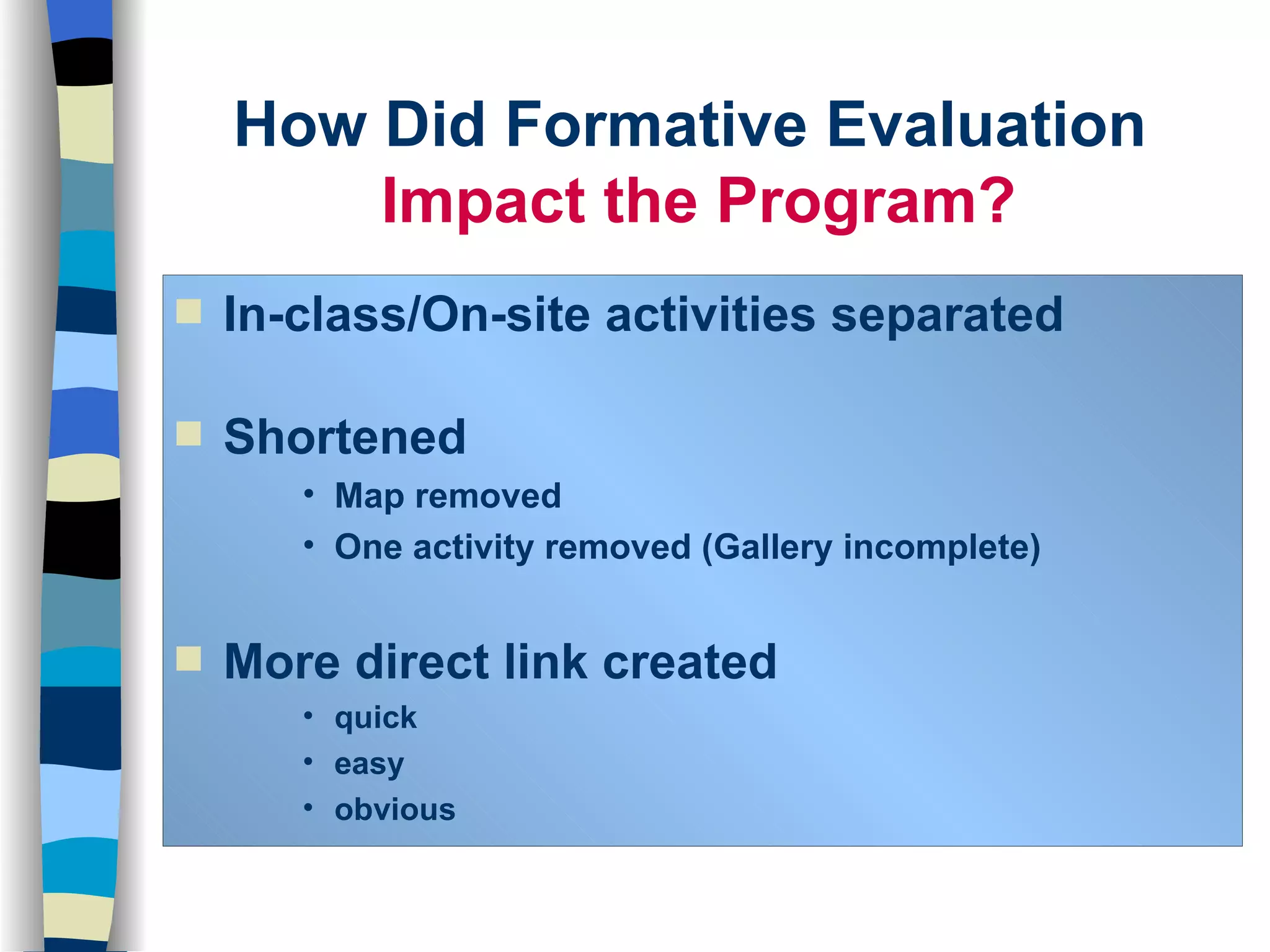
How Did Formative Evaluation  Impact the Program? In-class/On-site activities separated  Shortened Map removed One activity removed (Gallery incomplete) More direct link created quick easy obvious
Summative Evaluation  Method Recruiting Talked directly to lead teacher Materials sent to groups In-class visit prior to field trip Pre/Post Test Questionnaires --dropped Observations Gestures dropped
Summative Evaluation  Results Summary 298 Students Recruited 217 had in-class visit 254 Pre-  and  Post-tests completed 28 PW 226 Non-PW Observations 26 chaperones observed ONLY 4 CHAPERONES USED PATHWAYS
Summative Evaluation  Conclusions Jury still out on cognitive impact of Pathways The numbers are too small Will resume attempts next year Pre/Post test shows impact of In-class Visit Micrometeoroid question Chi Square p<0.004 for those who had visit vs those who did not
1. Even with intensive intervention and support, teachers did not use PW There were special circumstances in the A&S Gallery And timing, curriculum, age groups were an issue too BUT: Are such materials worth spending $$ developing? What do teachers really want/need, if anything?  We don’t yet know. 2. Whether or not PW improves learning outcomes as the lit. suggests is still unknown Warrants further testing and refinement of good and USEFUL field trip practices.  What did Formative and Summative  Evaluation Teach us About Pathways?
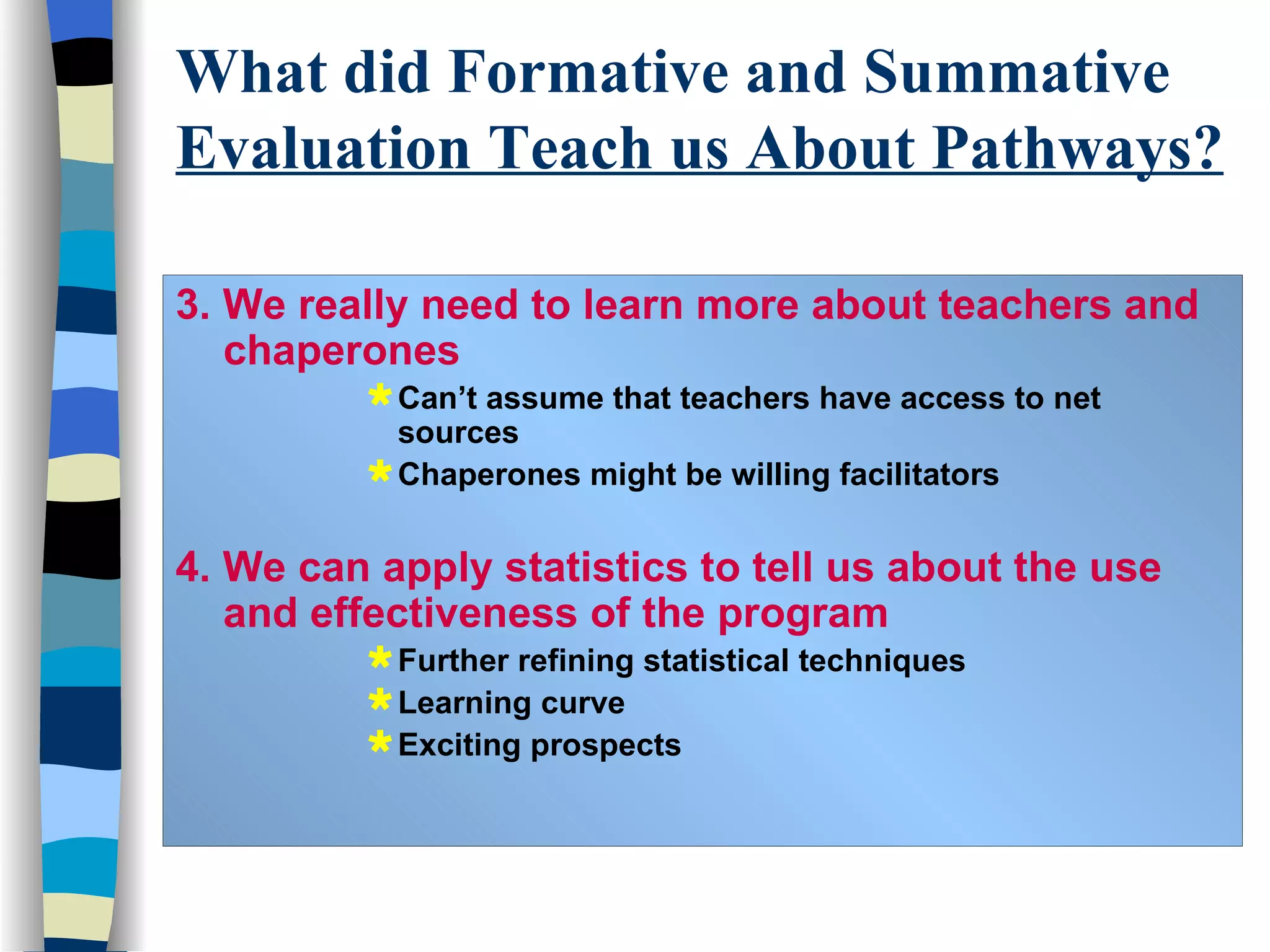
3. We really need to learn more about teachers and chaperones   Can’t assume that teachers have access to net sources Chaperones might be willing facilitators 4. We can apply statistics to tell us about the use and effectiveness of the program Further refining statistical techniques Learning curve Exciting prospects What did Formative and Summative  Evaluation Teach us About Pathways?

Pathways Evaluation

  • 1.
    Using Formative andSummative Evaluation to Improve Field Trip Programs Kimberly M. Burtnyk Amgen Center for Science Learning California Science Center
  • 2.
    Pre-/Post-visit classroom activitiesCurriculum compatible K8 CA standards Gallery worksheets (atypical) “ Chaperone Sheets” Available free from our website Think SCIENCE ! Pathways Components
  • 3.
    Think SCIENCE !Pathways Goals of Pathways Programs Help teachers implement curriculum-compatible field trips Increase educational guidance for field trips Increase interactions with staff Help chaperones facilitate Increase concept understanding through chaperone facilitation
  • 4.
    Formative Evaluation Spring 2002 Focus: Access, Use, Chaperone/student behavior Summative Evaluation Timeline Spring 2003 Focus: Cognitive gains Think SCIENCE ! Pathways Evaluation Plan
  • 5.
    Recruiting Groups withexisting reservations Questionnaires Pathways usage issues Field trip planning and behavior Chaperone roles Observations Stopped/didn’t stop Time spent--we want Pathways groups to stay longer Panels Read, Discussions, Gestures Evaluation Method
  • 6.
    Recruiting 37Schools recruited from March-June Questionnaires 82 Returned (37 Teacher 45 Chaperone) Observations 15 schools tagged for observation (8 PW, 7 Non-PW) 72 Chaperones observed Formative Evaluation Results Summary
  • 7.
    Only 3 of8 PW recruits used it Reasons Technical difficulties Materials looked too complicated and long Confused about where to find them Unaware of the materials Timing Formative Evaluation Questionnaires Hi-lites
  • 8.
    Formative Evaluation Observations Hi-lites 72 Chaperones observed Stopped/Did not Stop at Capsules
  • 9.
    Formative Evaluation Observations Hi-lites Mean t: 66 s Mean t: 138 s Time spent at Capsules
  • 10.
    Formative Evaluation Observations Hi-lites Of the 35 chaperones who stopped... Reading, Discussion, Gestures
  • 11.
    Formative Evaluation Conclusions Pathways usage was limited due to: Access to computers/printers Length and perceived complexity of the materials Communication gaps between school administrators and teachers BUT... it did produce some significant behavioral changes in chaperones who used it
  • 12.
    How Did FormativeEvaluation Impact the Program? In-class/On-site activities separated Shortened Map removed One activity removed (Gallery incomplete) More direct link created quick easy obvious
  • 13.
    Summative Evaluation Method Recruiting Talked directly to lead teacher Materials sent to groups In-class visit prior to field trip Pre/Post Test Questionnaires --dropped Observations Gestures dropped
  • 14.
    Summative Evaluation Results Summary 298 Students Recruited 217 had in-class visit 254 Pre- and Post-tests completed 28 PW 226 Non-PW Observations 26 chaperones observed ONLY 4 CHAPERONES USED PATHWAYS
  • 15.
    Summative Evaluation Conclusions Jury still out on cognitive impact of Pathways The numbers are too small Will resume attempts next year Pre/Post test shows impact of In-class Visit Micrometeoroid question Chi Square p<0.004 for those who had visit vs those who did not
  • 16.
    1. Even withintensive intervention and support, teachers did not use PW There were special circumstances in the A&S Gallery And timing, curriculum, age groups were an issue too BUT: Are such materials worth spending $$ developing? What do teachers really want/need, if anything? We don’t yet know. 2. Whether or not PW improves learning outcomes as the lit. suggests is still unknown Warrants further testing and refinement of good and USEFUL field trip practices. What did Formative and Summative Evaluation Teach us About Pathways?
  • 17.
    3. We reallyneed to learn more about teachers and chaperones Can’t assume that teachers have access to net sources Chaperones might be willing facilitators 4. We can apply statistics to tell us about the use and effectiveness of the program Further refining statistical techniques Learning curve Exciting prospects What did Formative and Summative Evaluation Teach us About Pathways?

Editor's Notes

  • #2 When I began preparing this talk, deciding what was relevant what was not, I realized that there are really two stories here that I could tell you. The first story is that which is described by my title: Using evaluation to improve field trip programs. Methodological, about evaluation practices and techniques, and of course results. But the other story is about teachers, and field trips, and communication between the people who design field trip programs and the people who use them. For the sake of clarity, I will talk about the first story, and I believe that Dr. David Anderson will talk more about the second story--that of teachers and field trips.