



Time and Ordering in
Streaming Distributed Systems
Zhenzhong Xu
Real-time Data Infrastructure
Netflix
@ZhenzhongXu
Time and Ordering in
Streaming Distributed Systems
Zhenzhong Xu
Real-time Data Infrastructure
.
@ZhenzhongXu
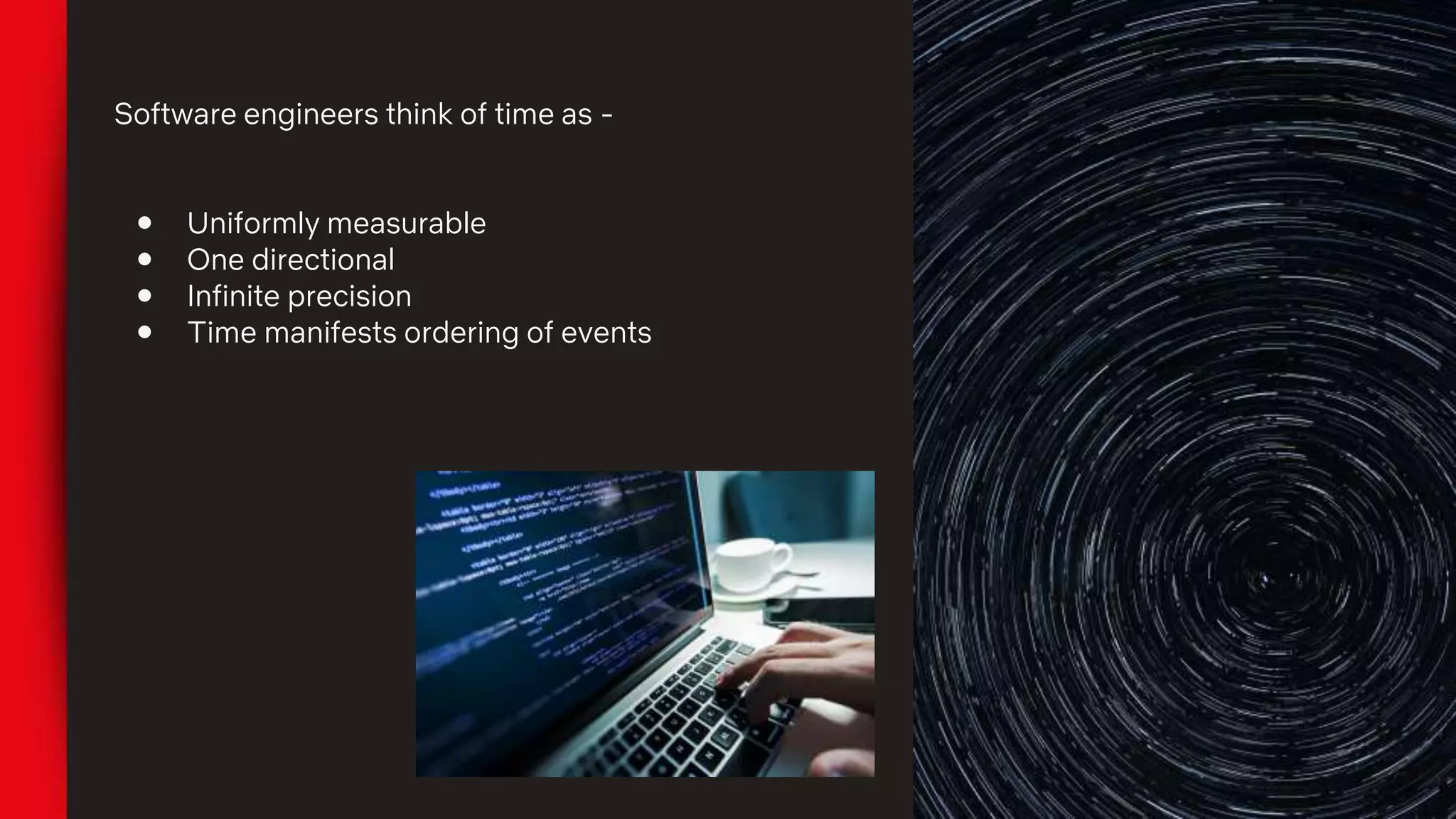
Software engineers think of time as -
● Uniformly measurable
● One directional
● Infinite precision
● Time manifests ordering of events
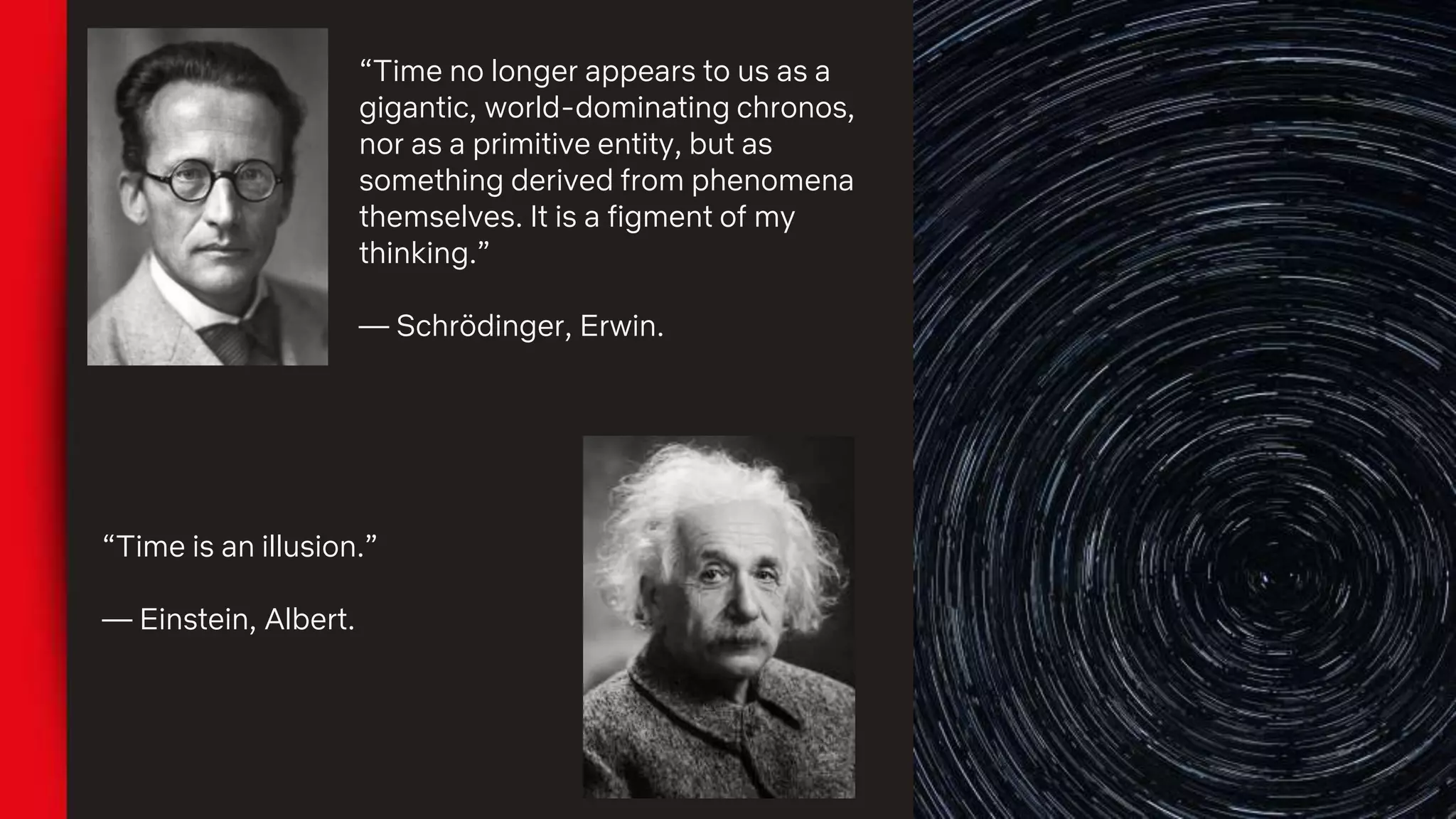
“Time no longer appears to us as a
gigantic, world-dominating chronos,
nor as a primitive entity, but as
something derived from phenomena
themselves. It is a figment of my
thinking.”
— Schrödinger, Erwin.
“Time is an illusion.”
— Einstein, Albert.
Distributed System
No shared memory, only message
passing via unreliable network with
variable delays, and the system may
suffer from partial failures, unreliable
clocks and processing pauses.
Stream processing connects
distributed systems together, over
space and time, designed with
unbounded data set in mind.
Stream Processing at Netflix
● Keystone Data Pipeline
● Operation insights
● Business analytics
● Event sourcing pattern
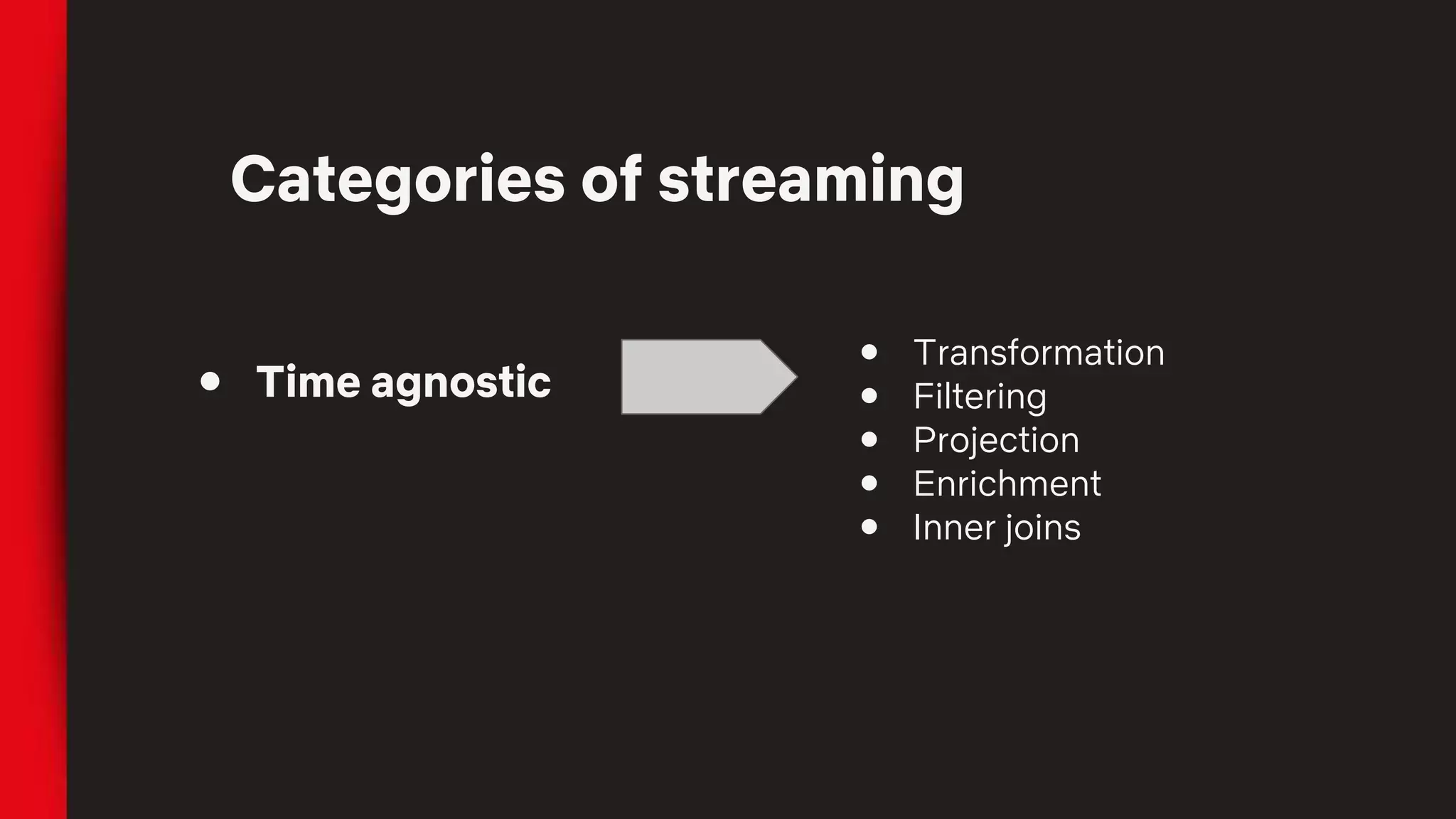
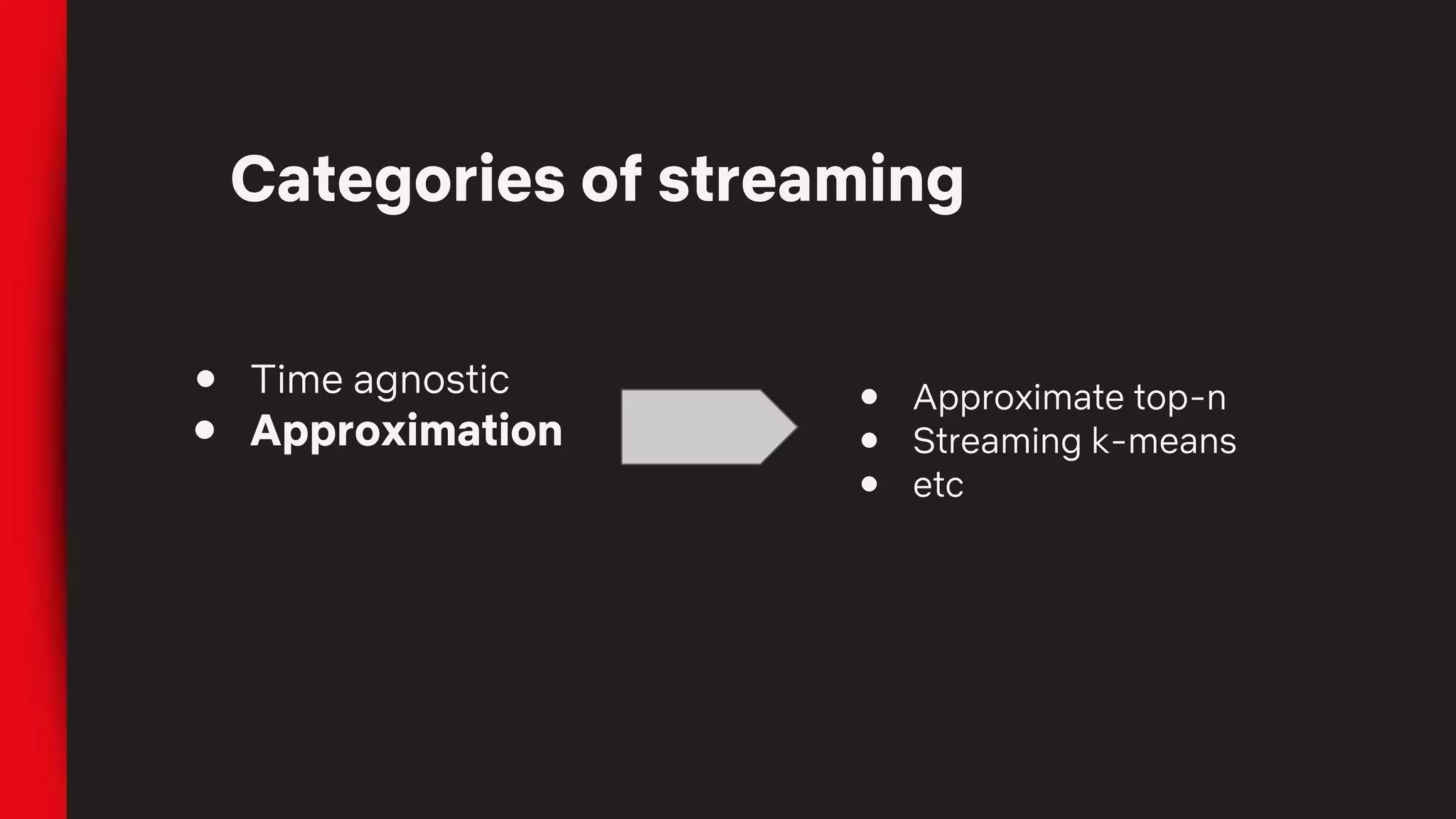
Categories of streaming
● Time agnostic
● Transformation
● Filtering
● Projection
● Enrichment
● Inner joins
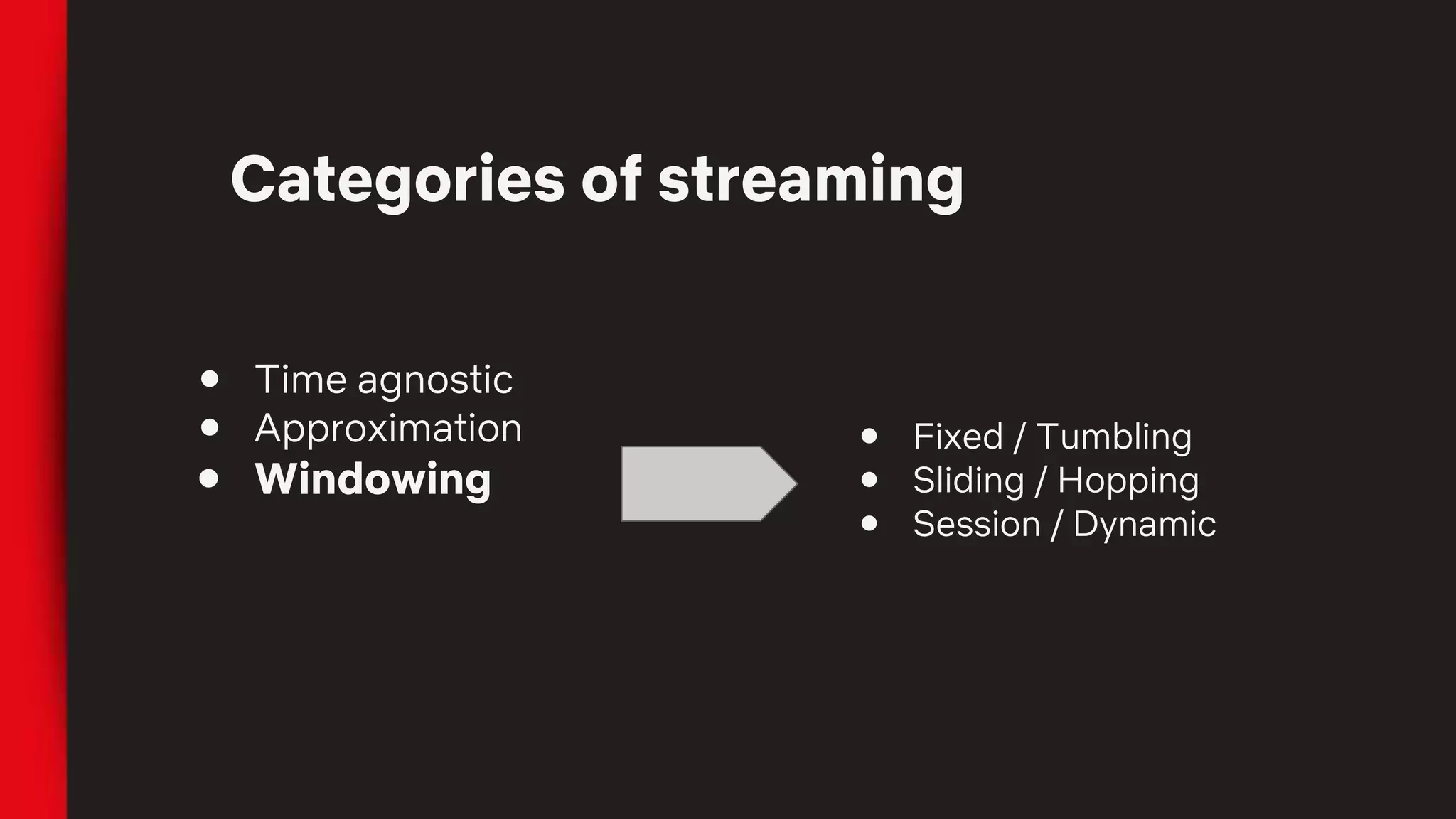
Categories of streaming
● Time agnostic
● Approximation
● Approximate top-n
● Streaming k-means
● etc
Categories of streaming
● Time agnostic
● Approximation
● Windowing
● Fixed / Tumbling
● Sliding / Hopping
● Session / Dynamic
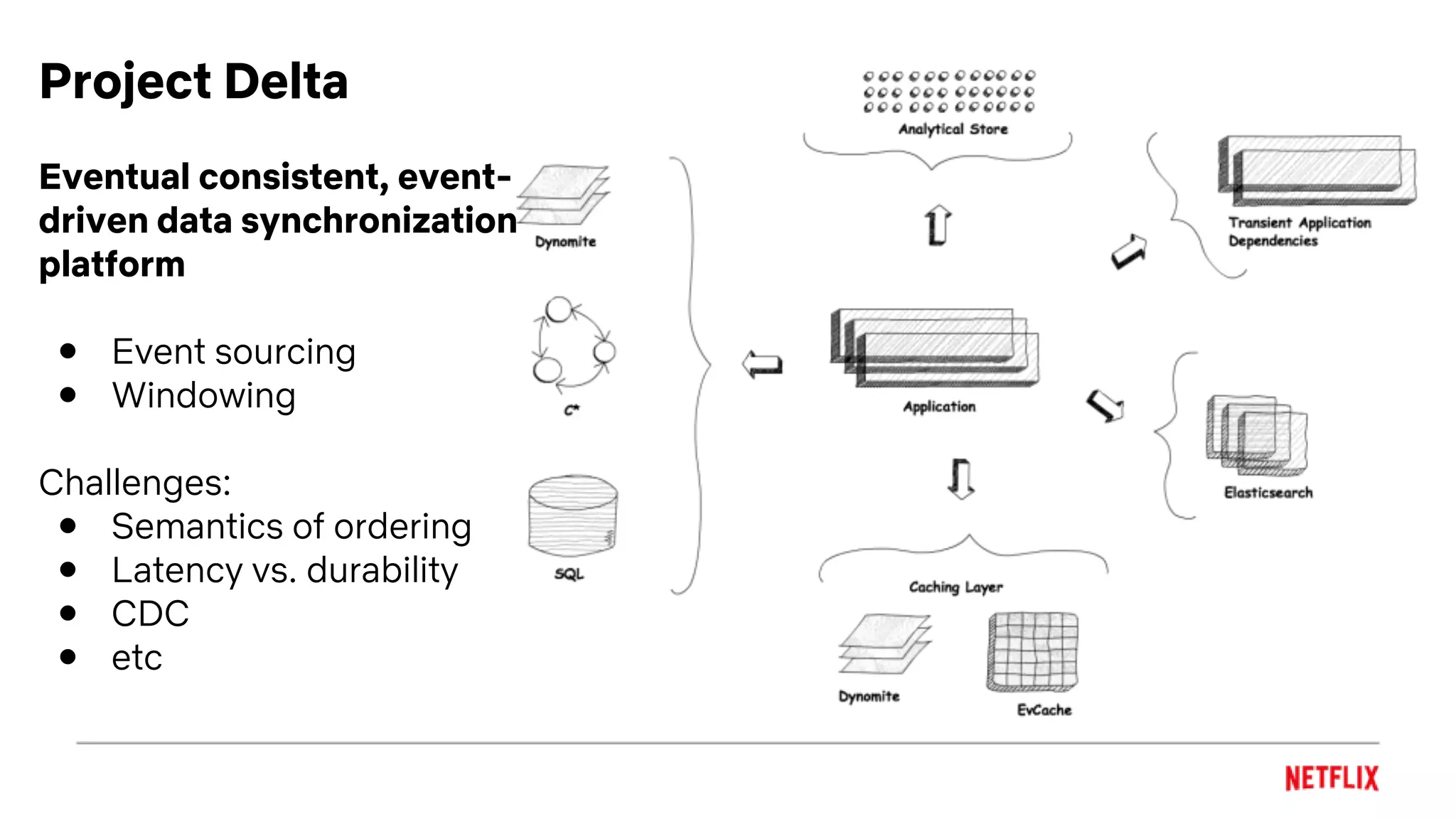
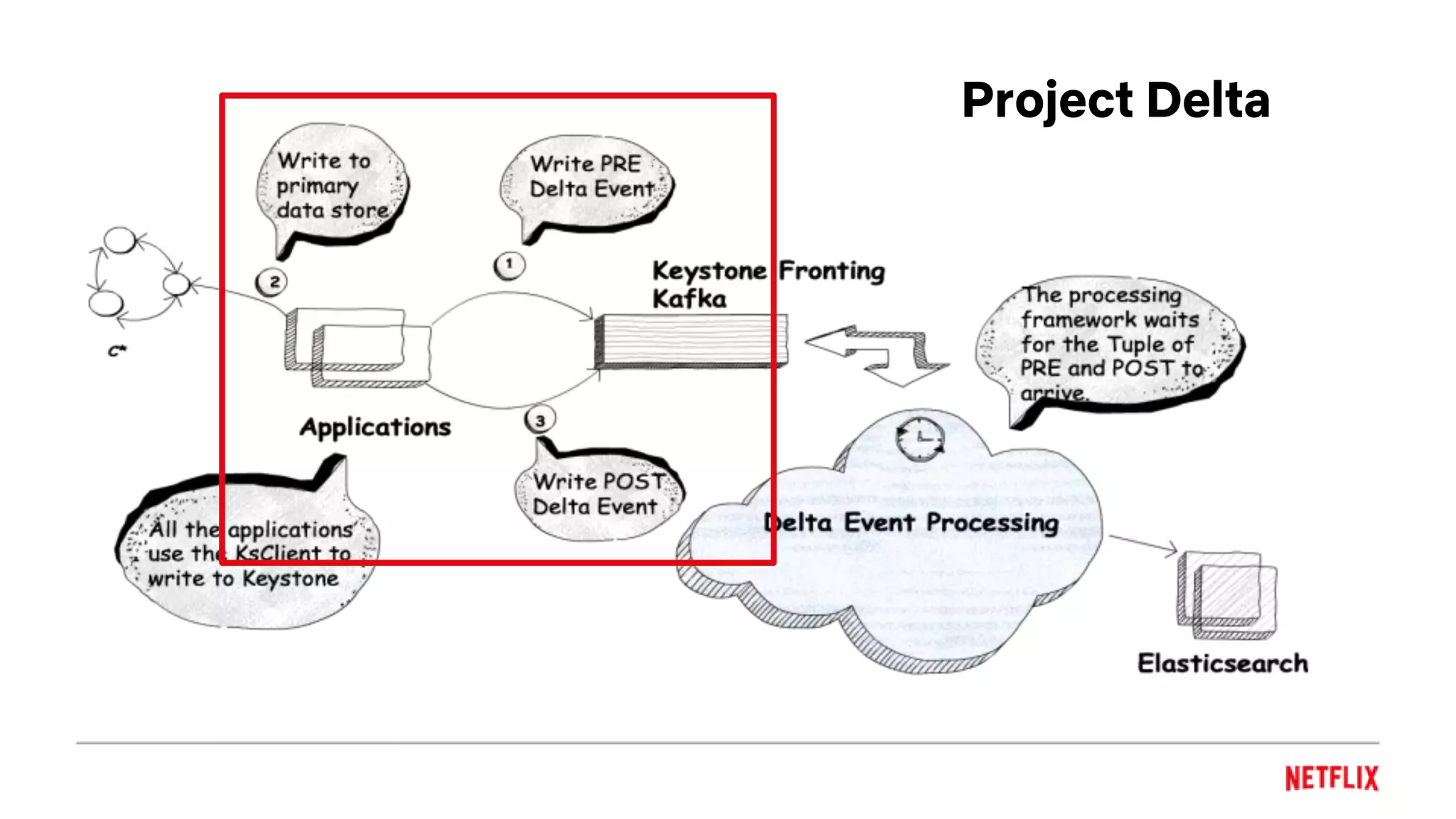
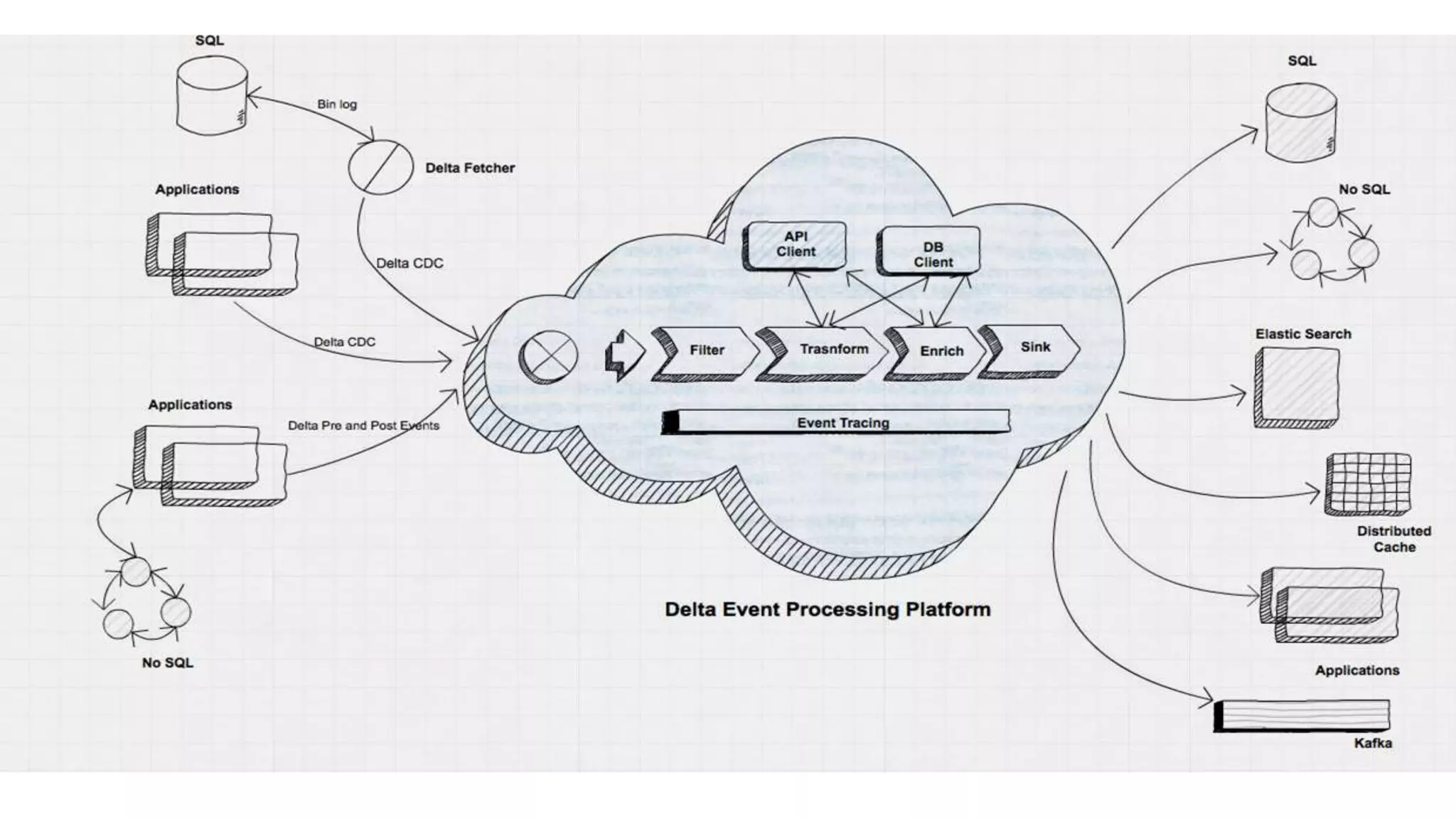
Project Delta
Eventual consistent, event-
driven data synchronization
platform
● Event sourcing
● Windowing
Challenges:
● Semantics of ordering
● Latency vs. durability
● CDC
● etc
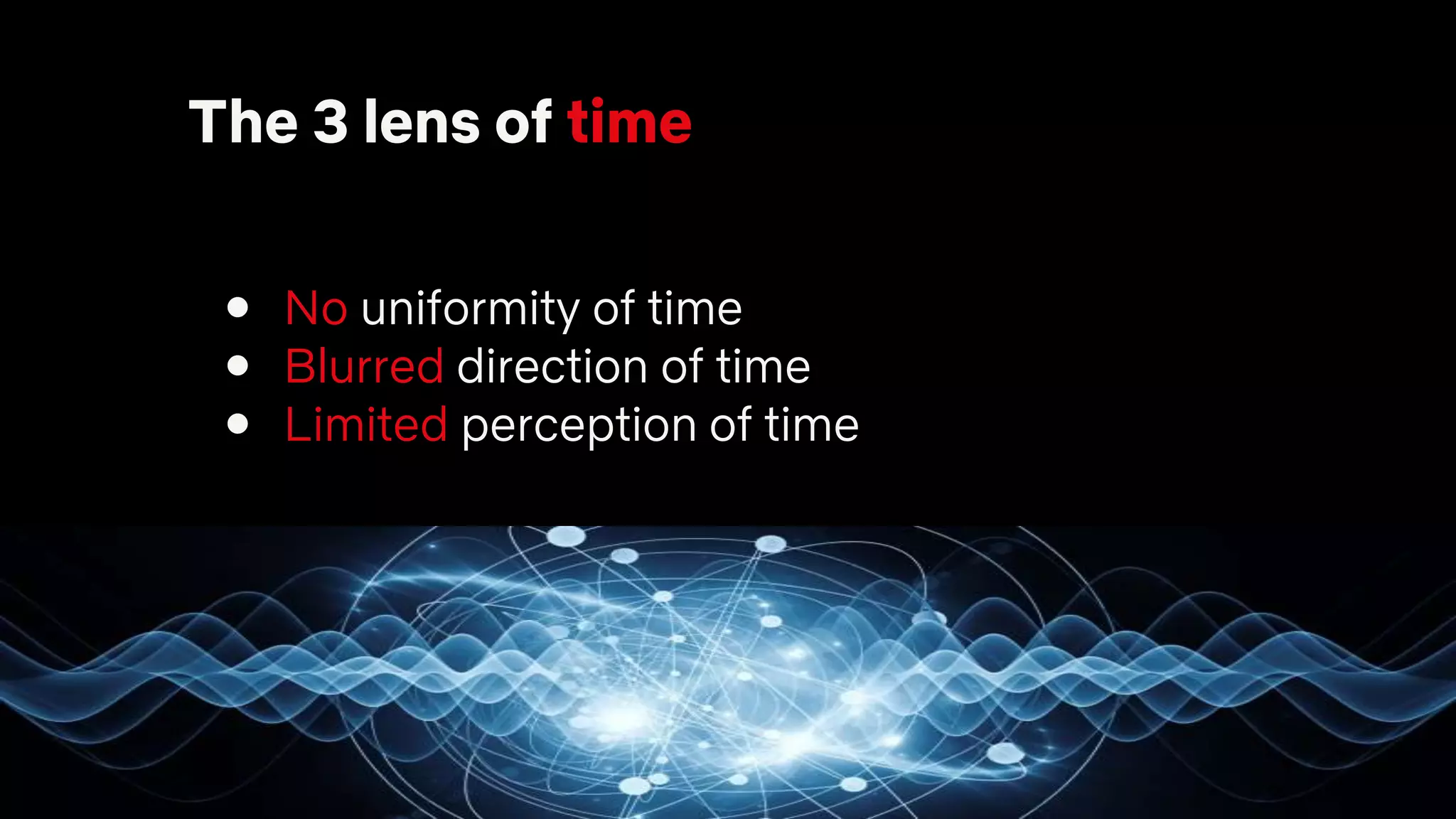
… via the three lens of time
● Uniformity of time
● Arrow of time
● Perception of time
#1
Uniformity of time
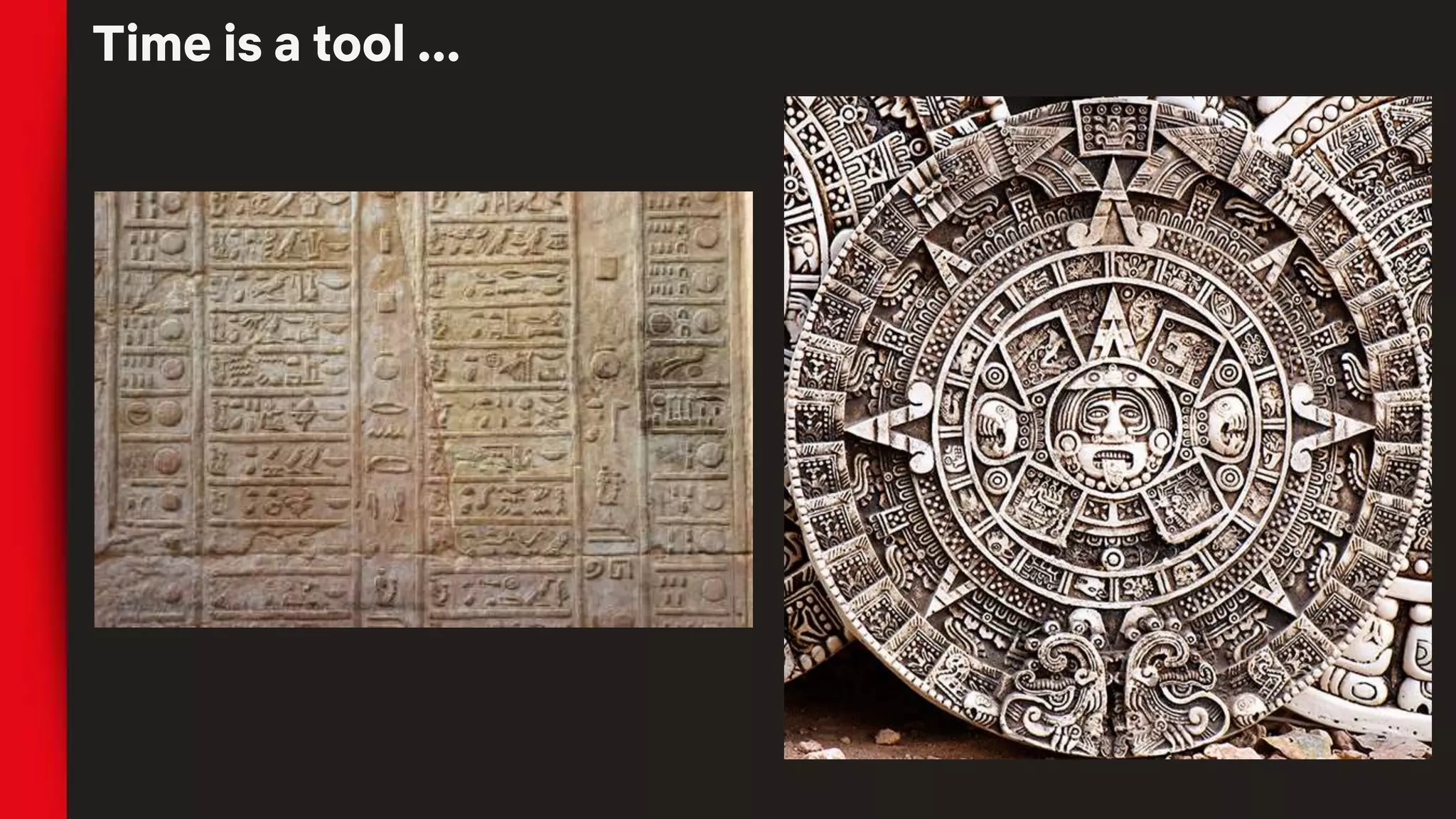
Time is a tool ...
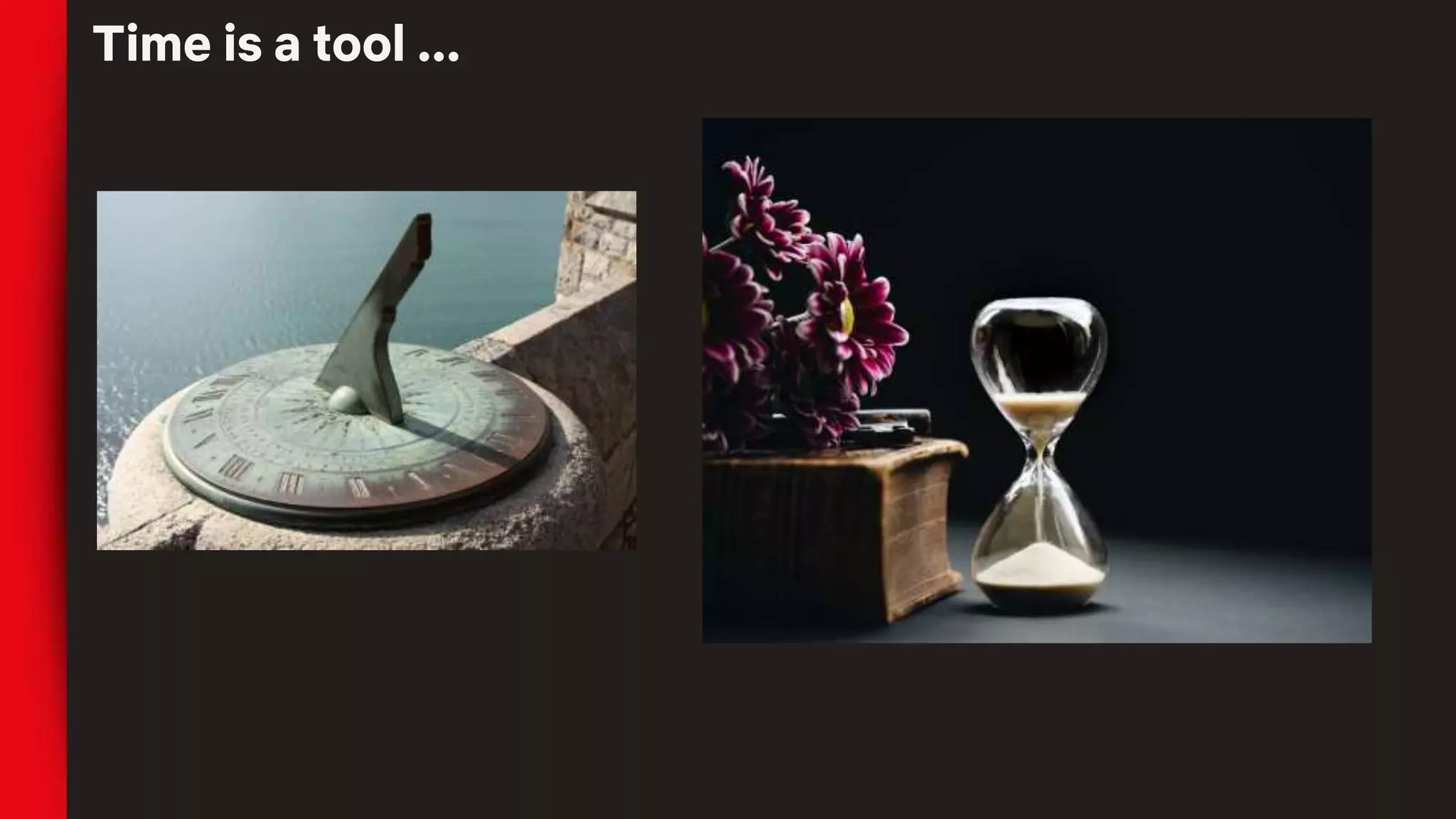
Time is a tool ...
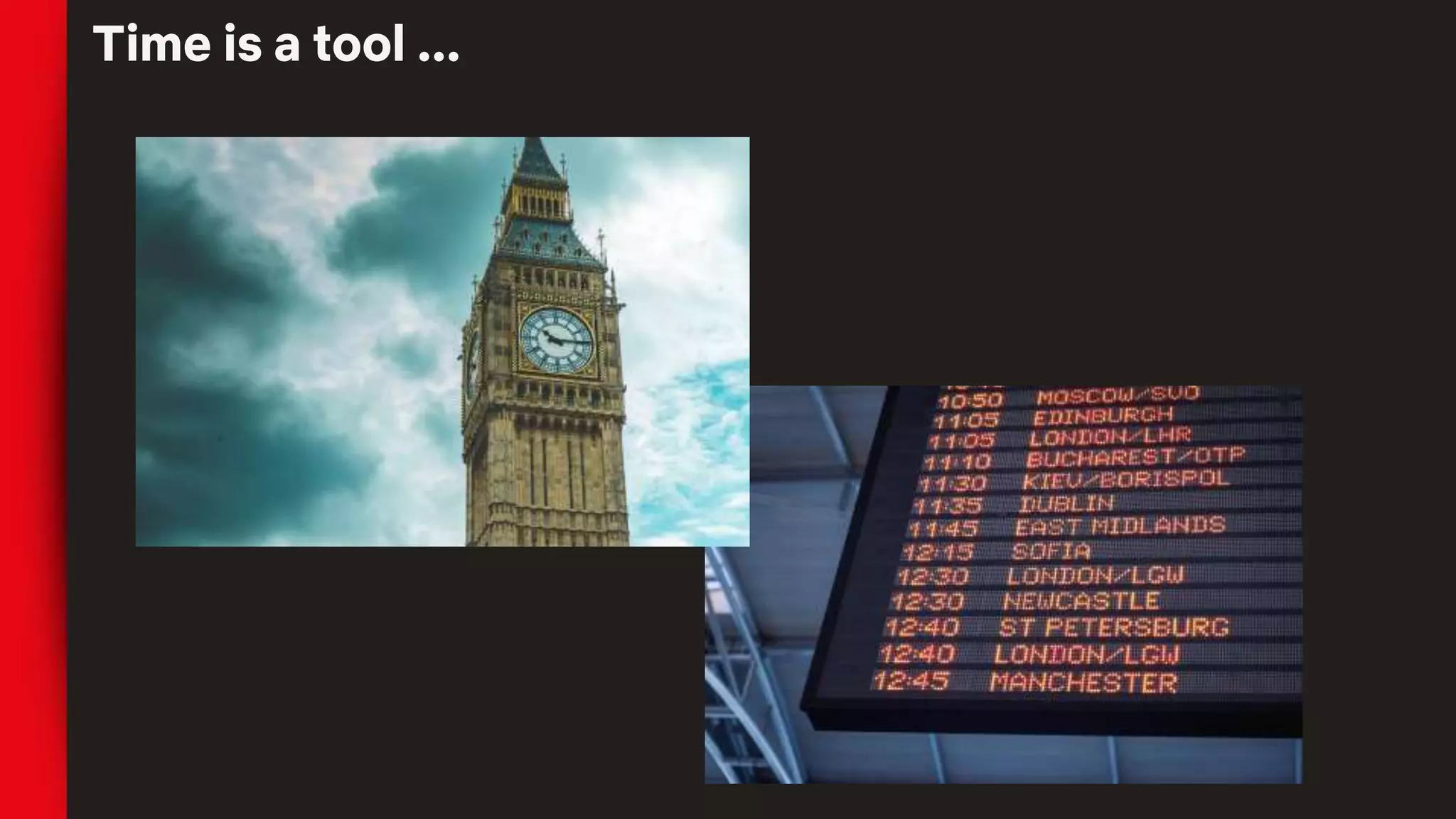
Time is a tool ...
Need for synchronization?
= uniform time
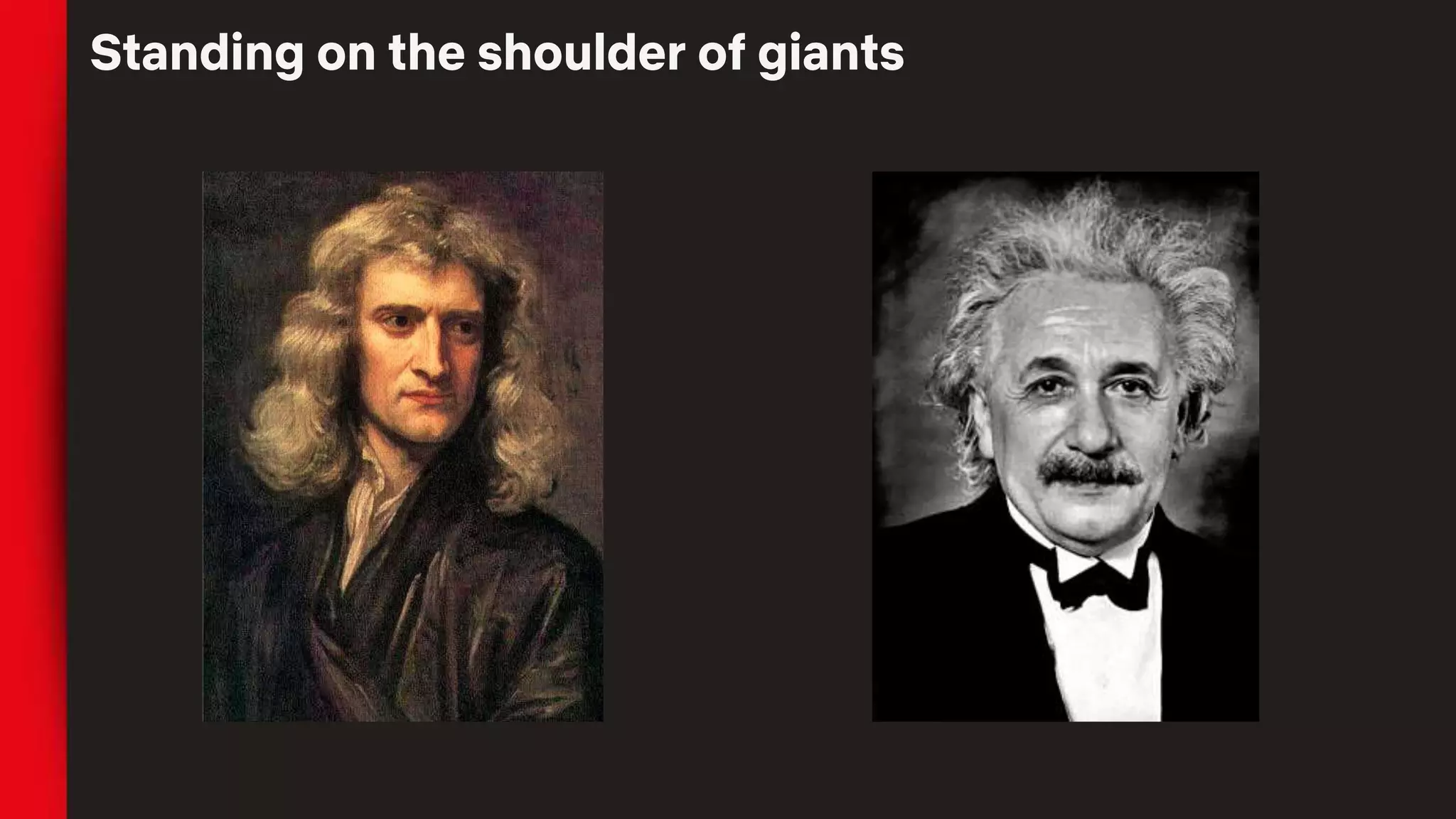
Standing on the shoulder of giants
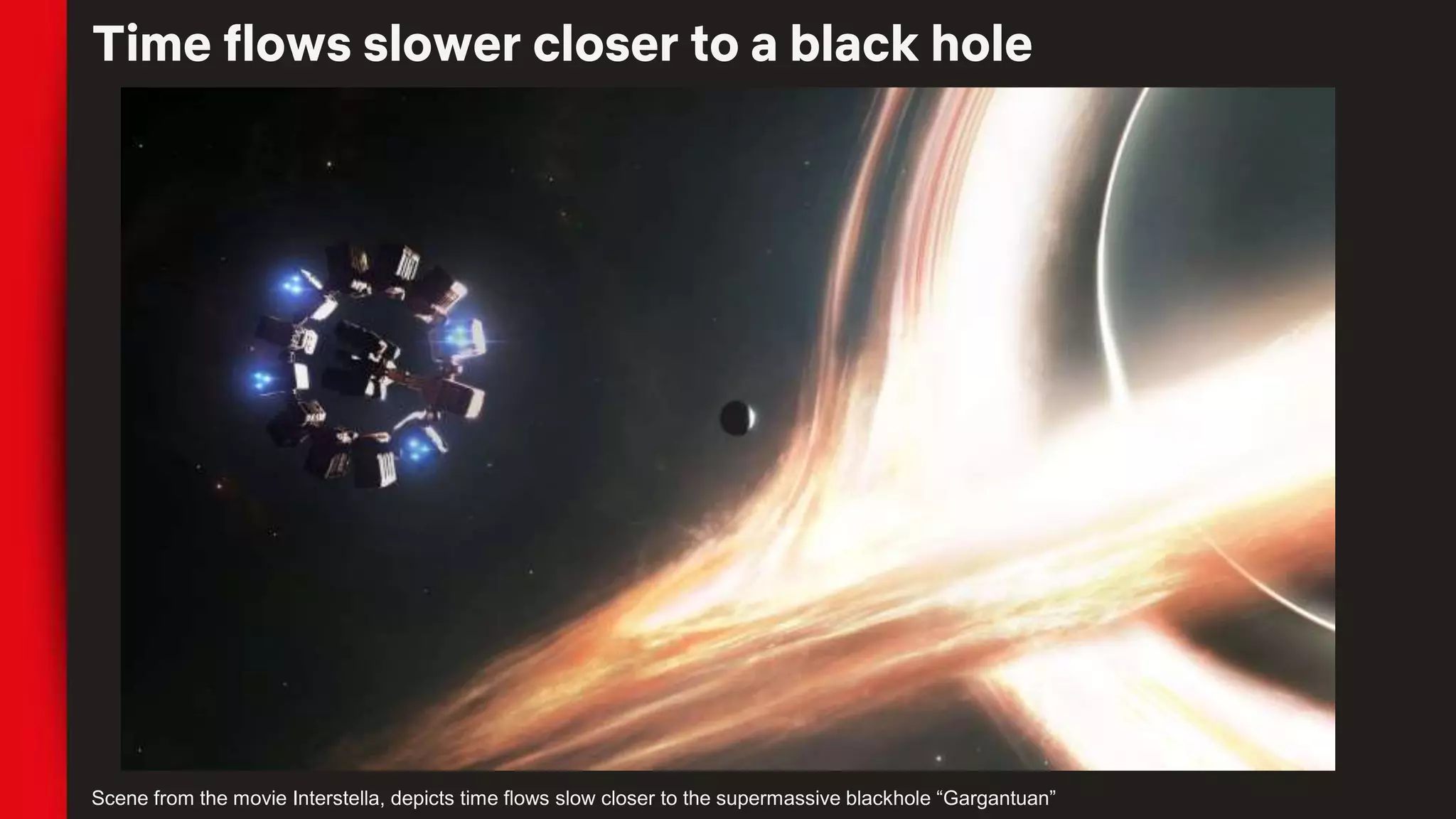
Time flows slower closer to a black hole
Scene from the movie Interstella, depicts time flows slow closer to the supermassive blackhole “Gargantuan”
Clock
synchronization
over network
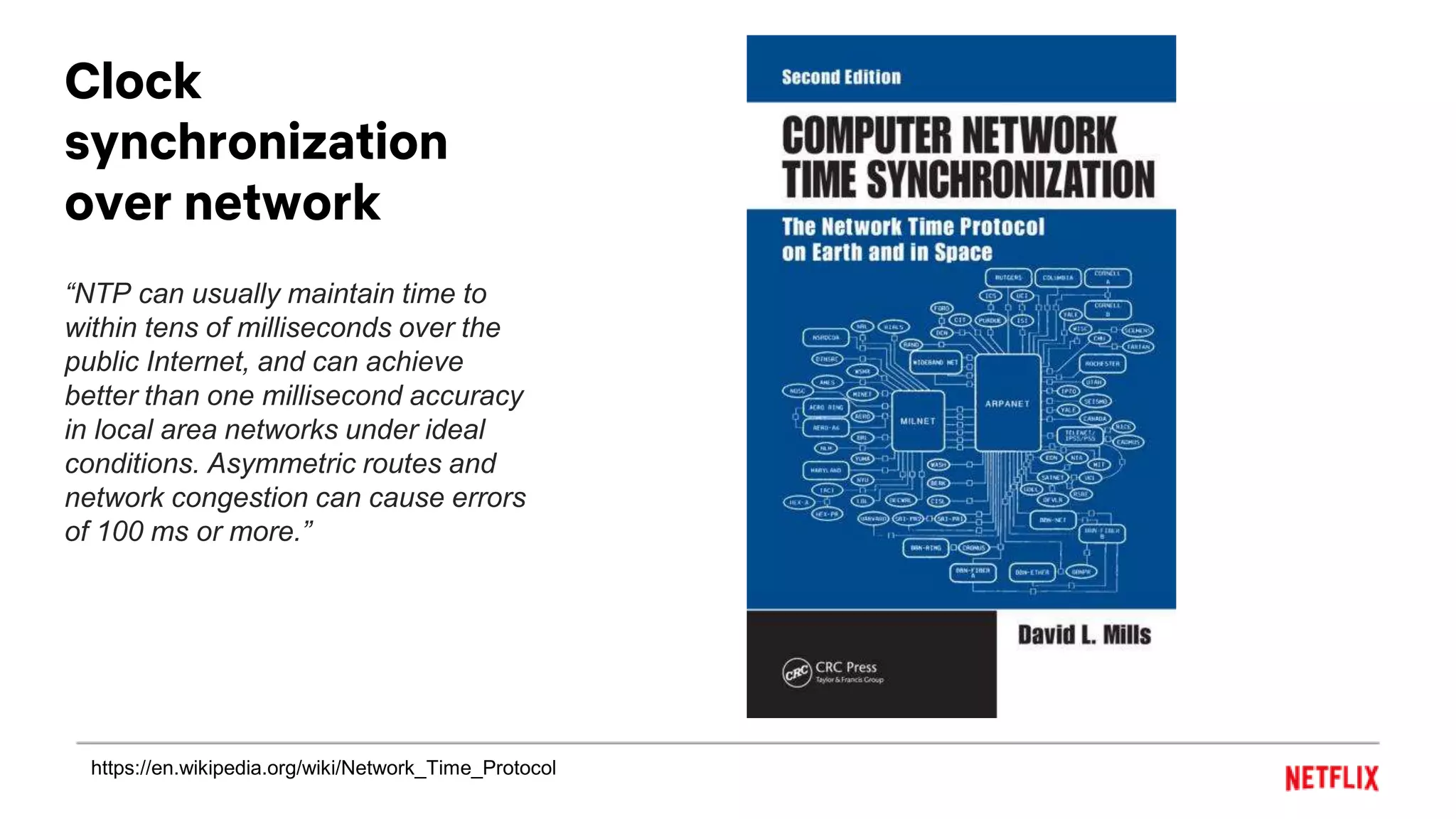
“NTP can usually maintain time to
within tens of milliseconds over the
public Internet, and can achieve
better than one millisecond accuracy
in local area networks under ideal
conditions. Asymmetric routes and
network congestion can cause errors
of 100 ms or more.”
https://en.wikipedia.org/wiki/Network_Time_Protocol
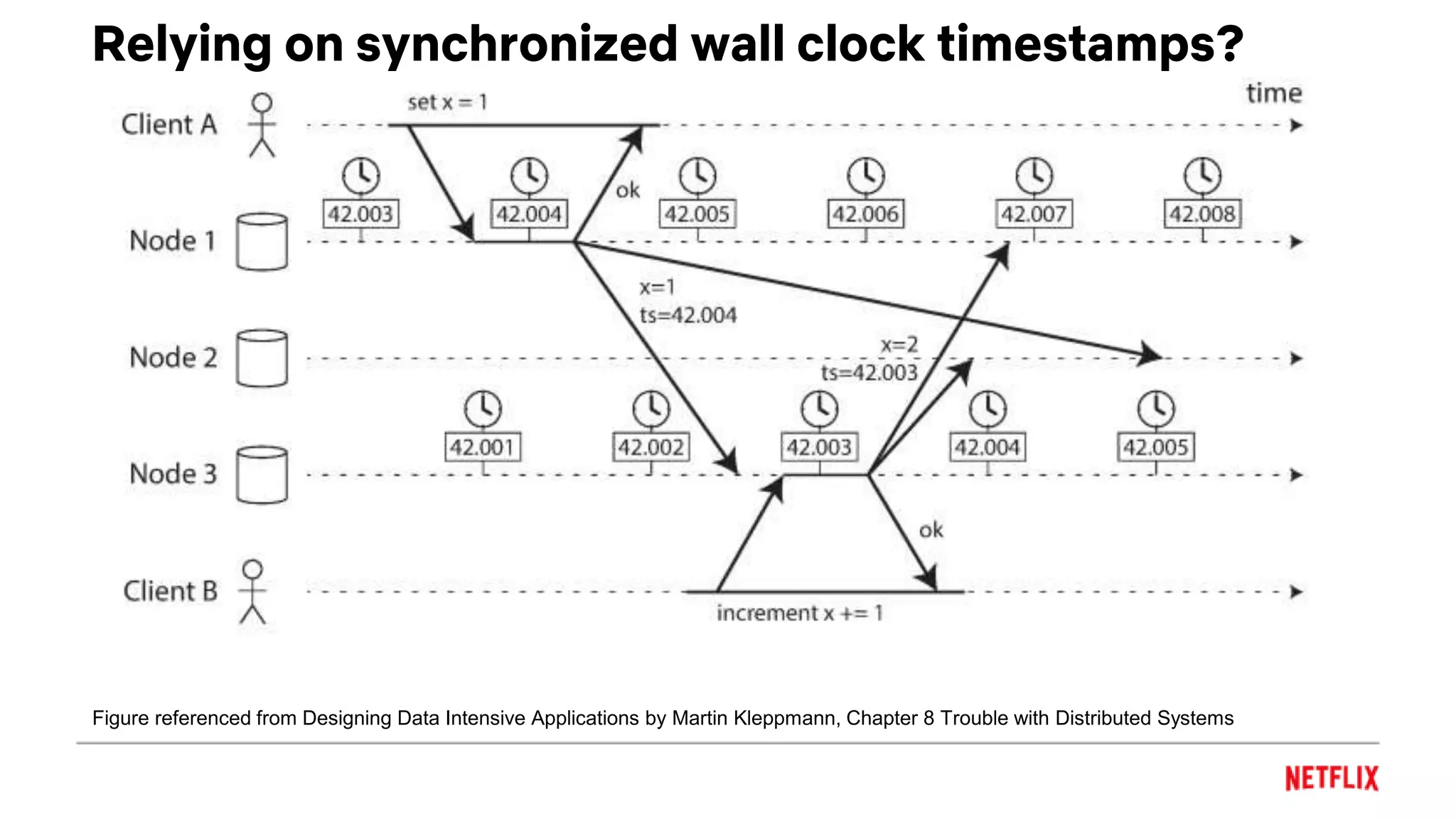
Figure referenced from Designing Data Intensive Applications by Martin Kleppmann, Chapter 8 Trouble with Distributed Systems
Relying on synchronized wall clock timestamps?
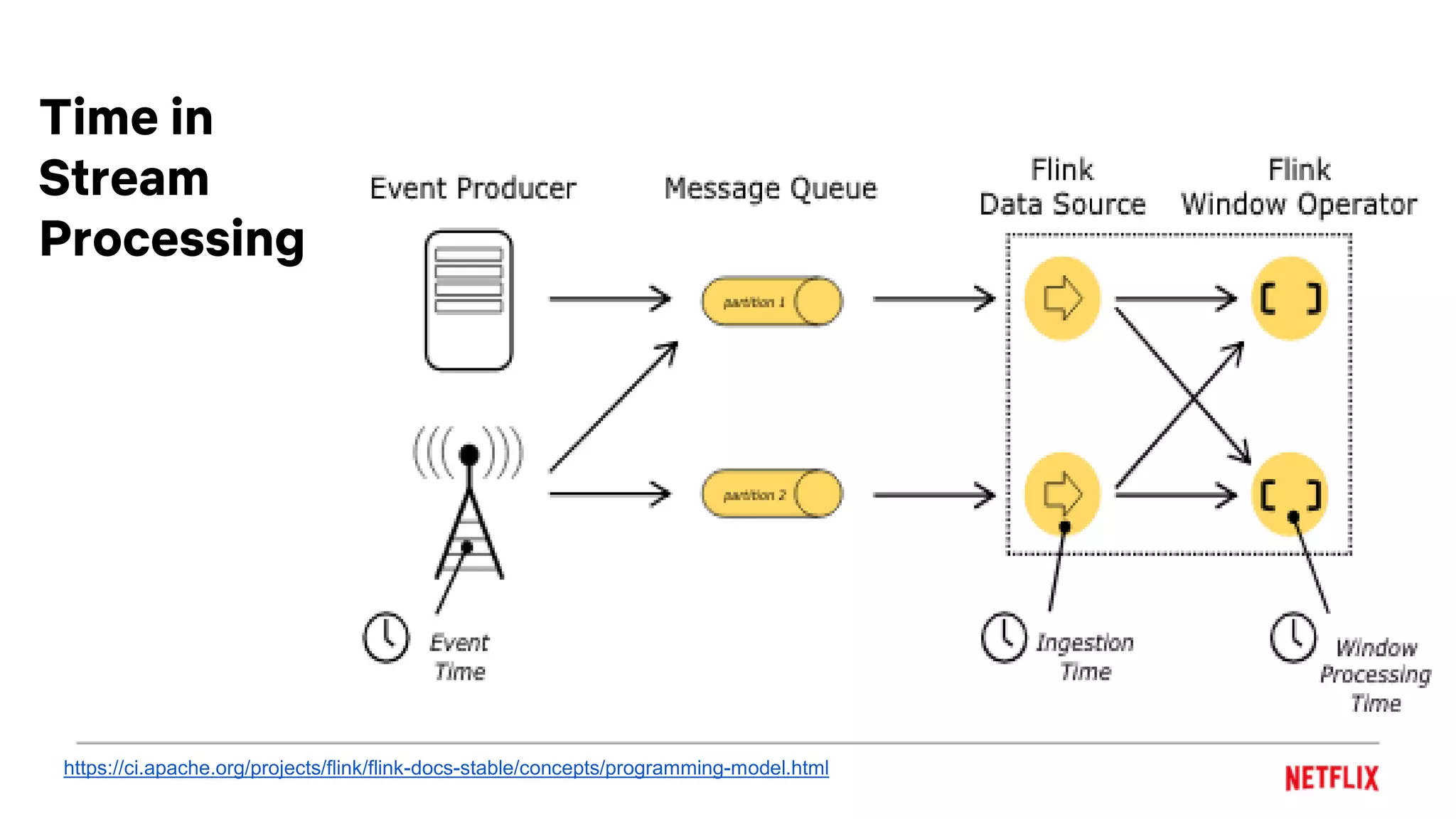
Time in
Stream
Processing
https://ci.apache.org/projects/flink/flink-docs-stable/concepts/programming-model.html
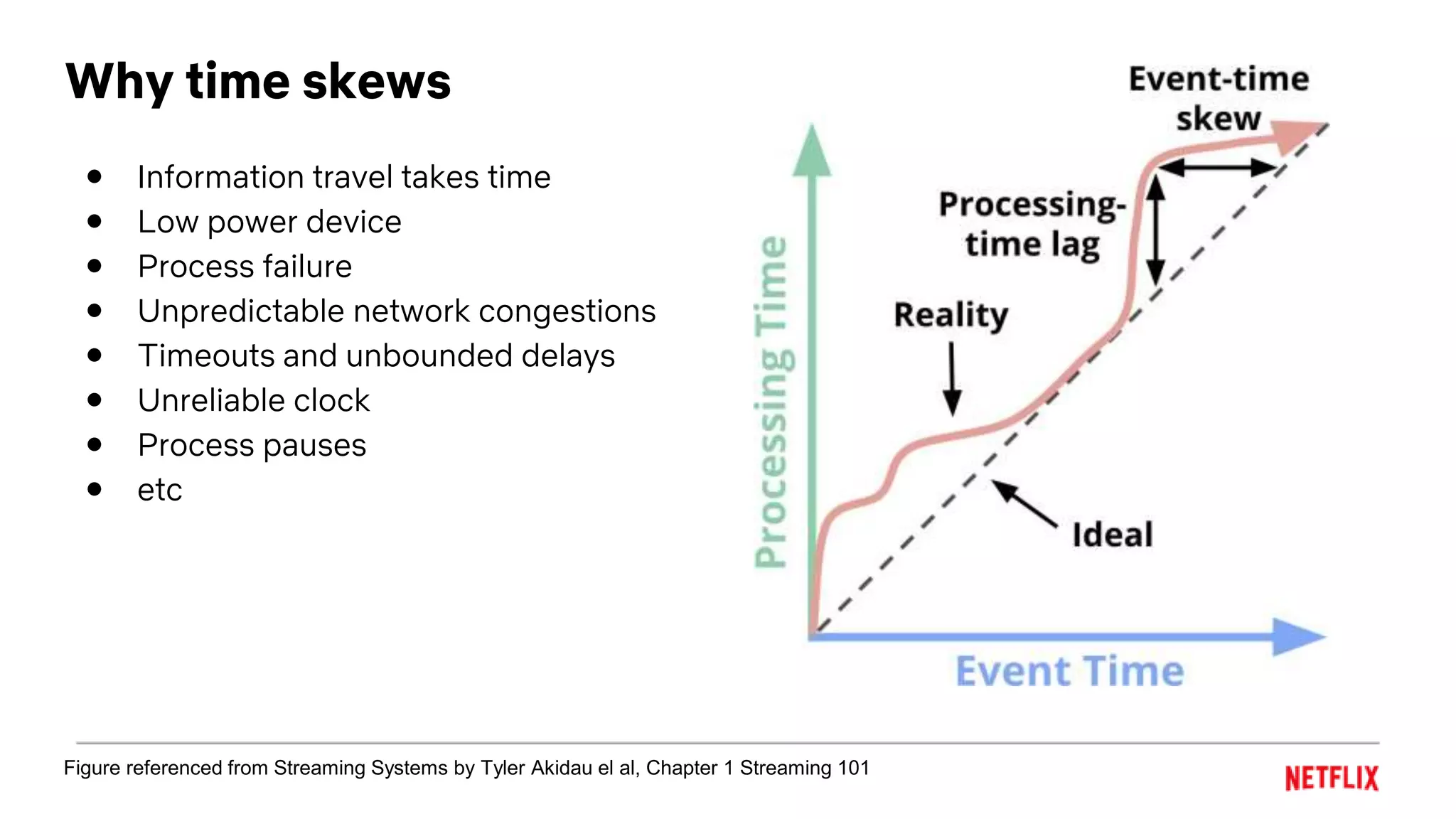
Why time skews
● Information travel takes time
● Low power device
● Process failure
● Unpredictable network congestions
● Timeouts and unbounded delays
● Unreliable clock
● Process pauses
● etc
Figure referenced from Streaming Systems by Tyler Akidau el al, Chapter 1 Streaming 101
Watermark
in action
Animation referenced from Streaming Systems by Tyler Akidau el al, http://streamingbook.net/fig/2-11
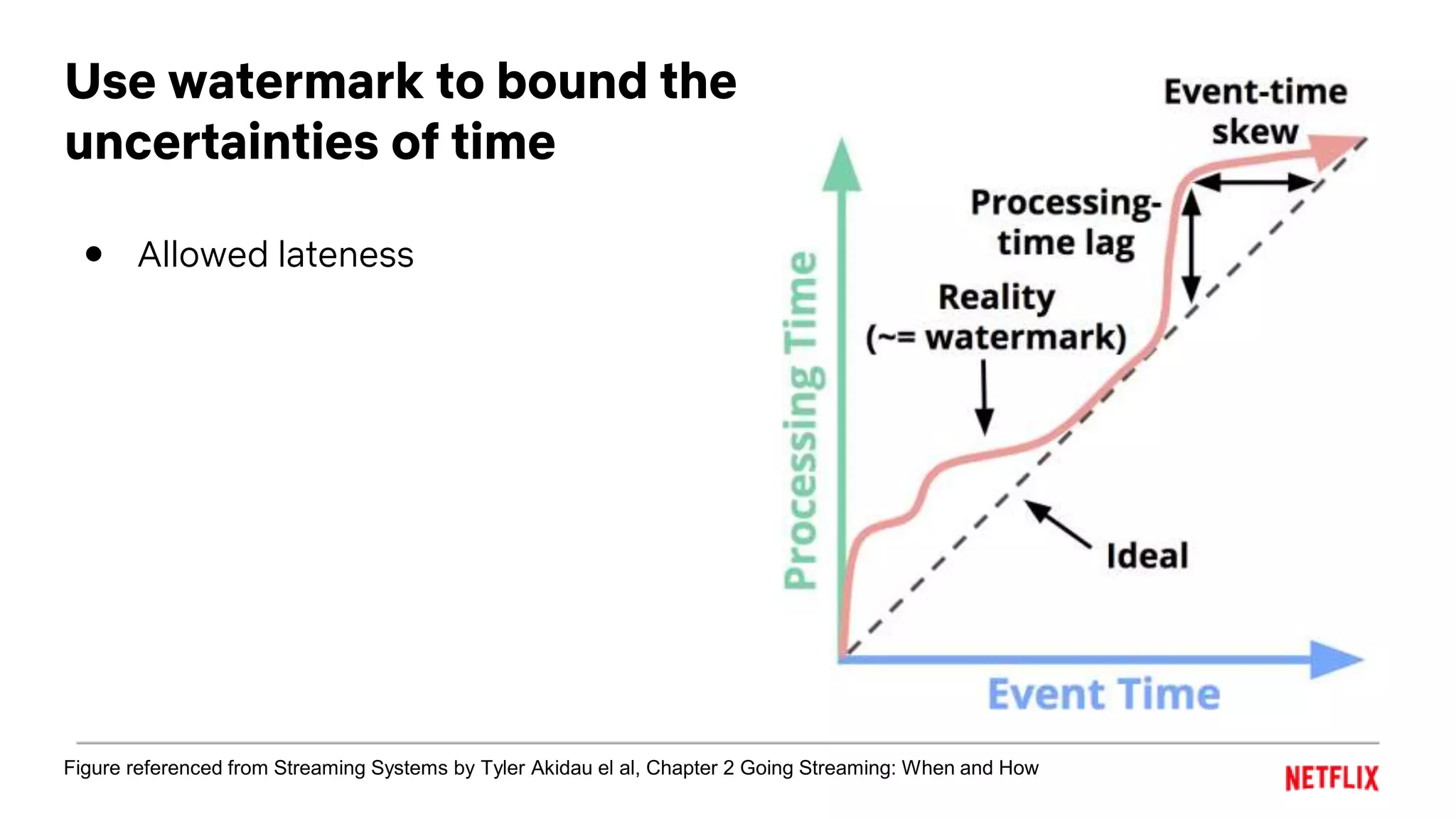
Use watermark to bound the
uncertainties of time
● Allowed lateness
Figure referenced from Streaming Systems by Tyler Akidau el al, Chapter 2 Going Streaming: When and How
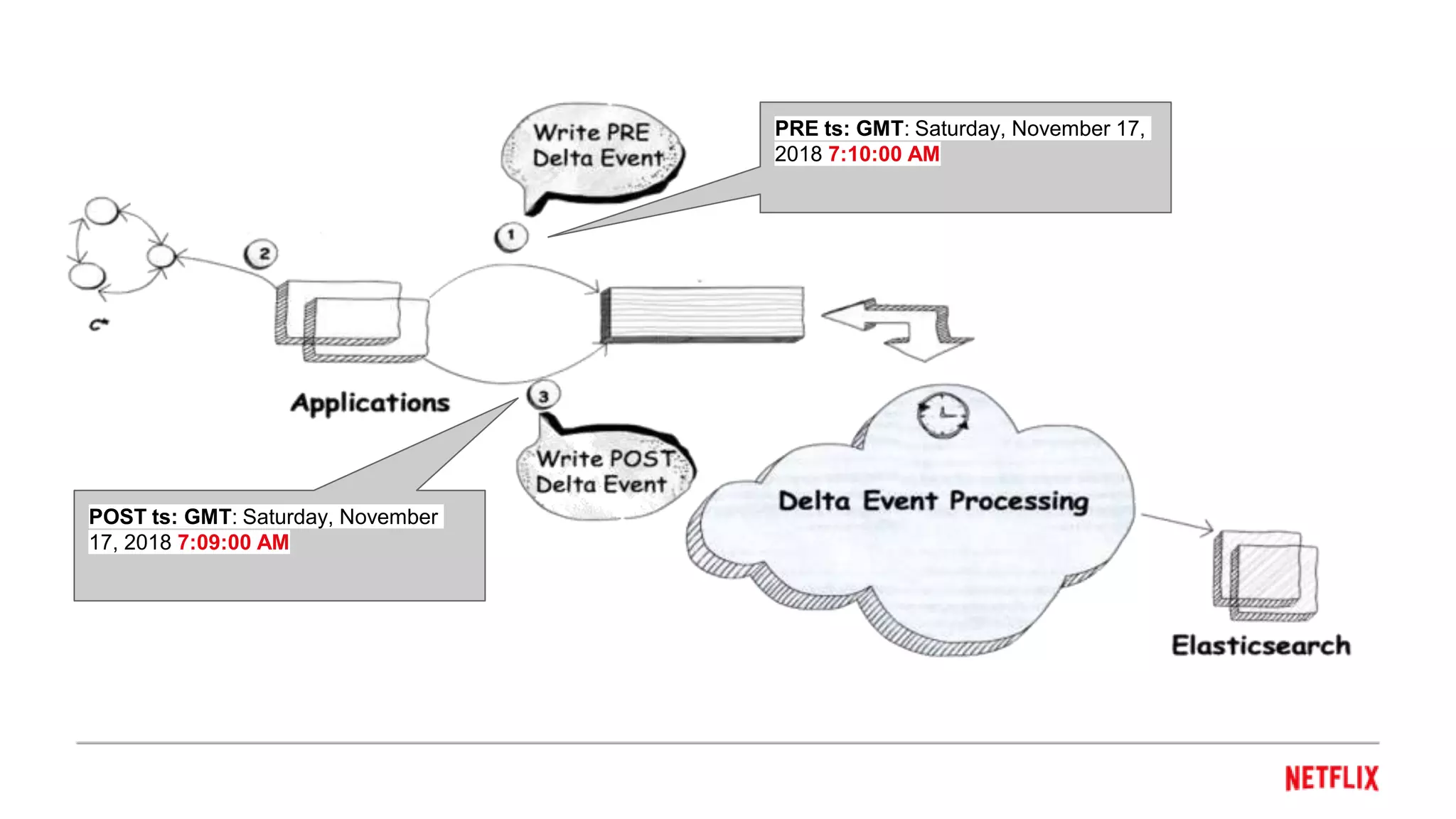
Project Delta
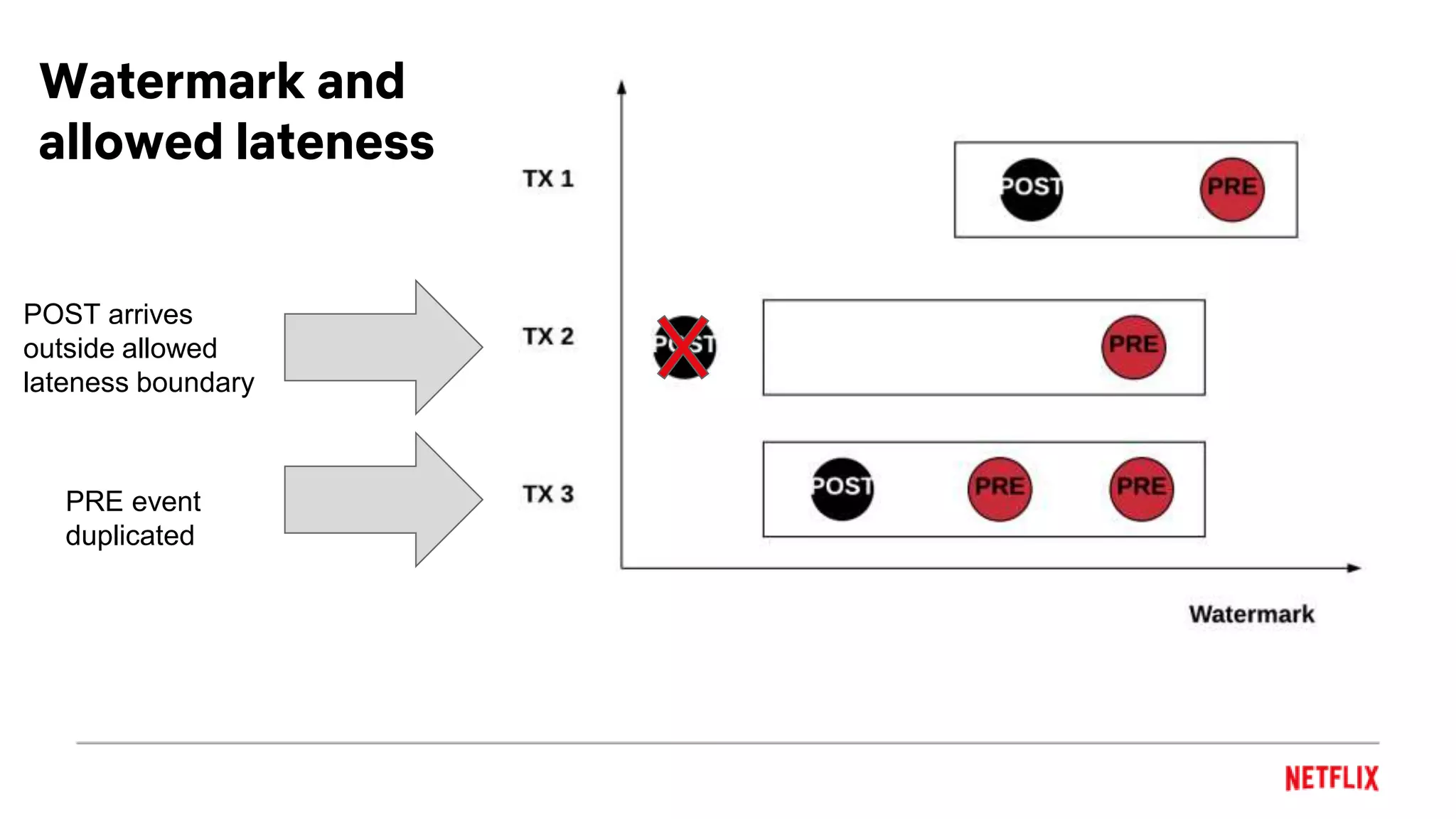
Watermark and
allowed lateness
POST arrives
outside allowed
lateness boundary
PRE event
duplicated
#2
Arrow of time
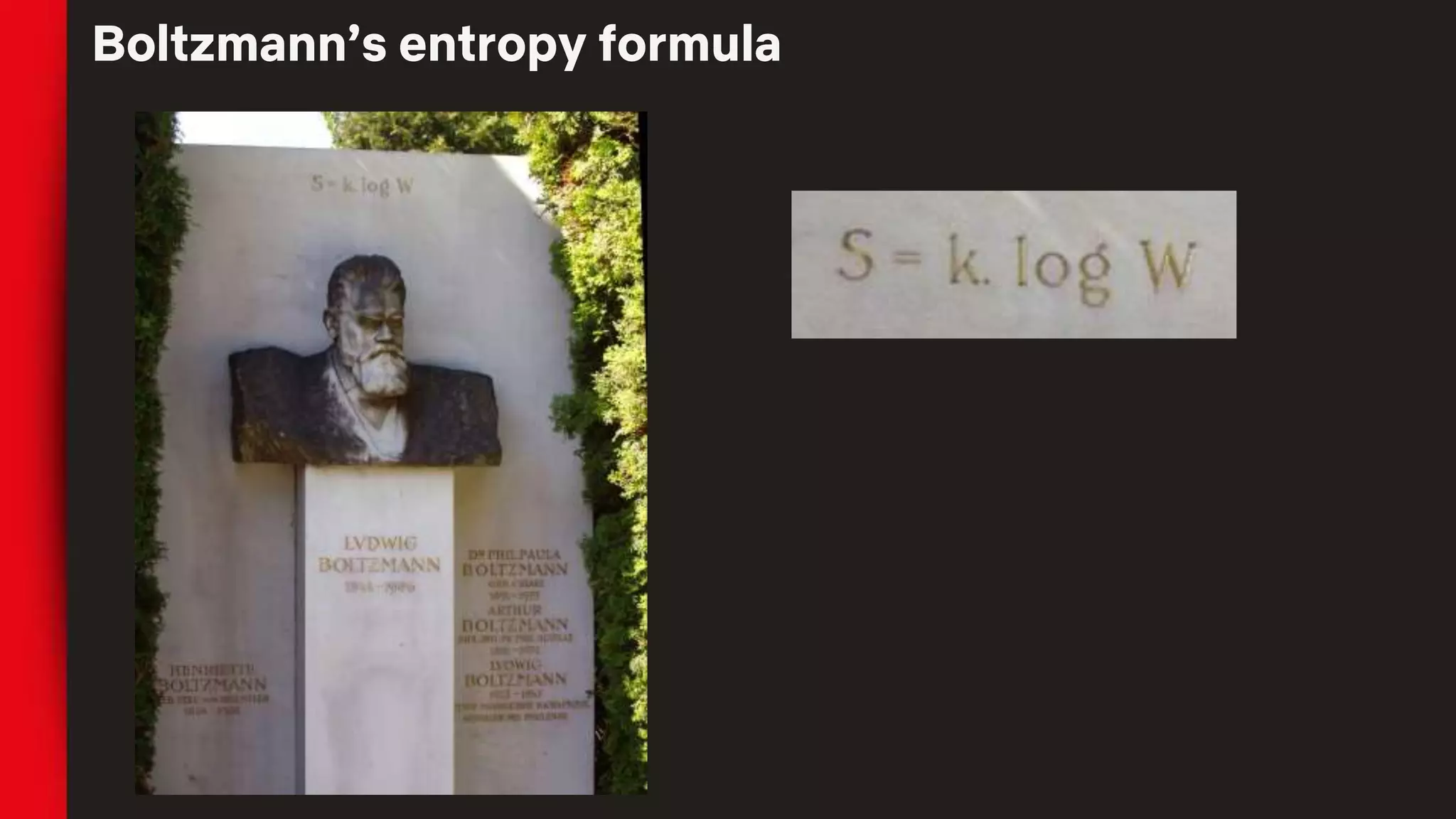
Boltzmann’s entropy formula
PRE ts: GMT: Saturday, November 17,
2018 7:10:00 AM
POST ts: GMT: Saturday, November
17, 2018 7:09:00 AM
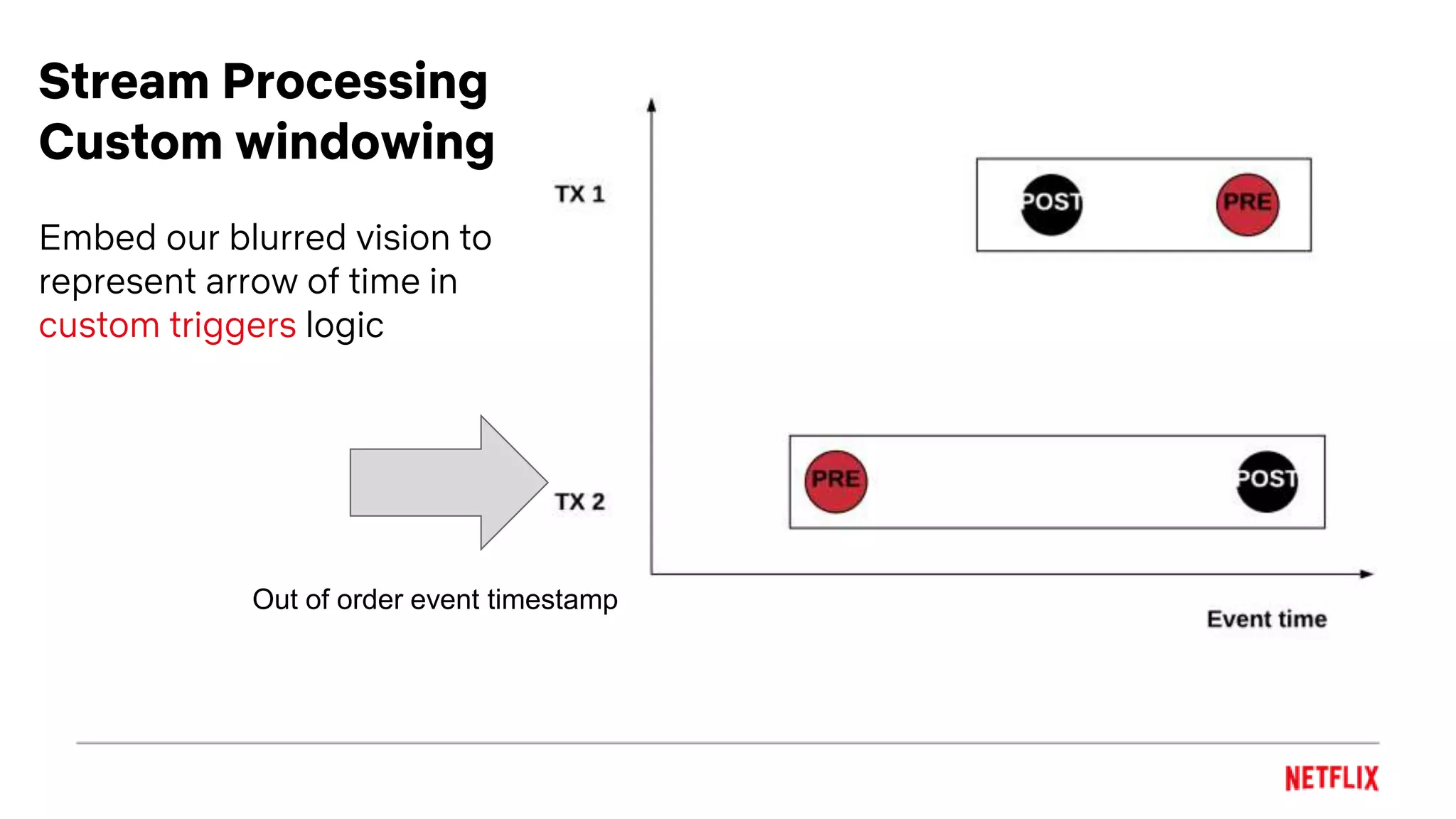
Stream Processing
Custom windowing
Embed our blurred vision to
represent arrow of time in
custom triggers logic
Out of order event timestamp
#3
Perception of time
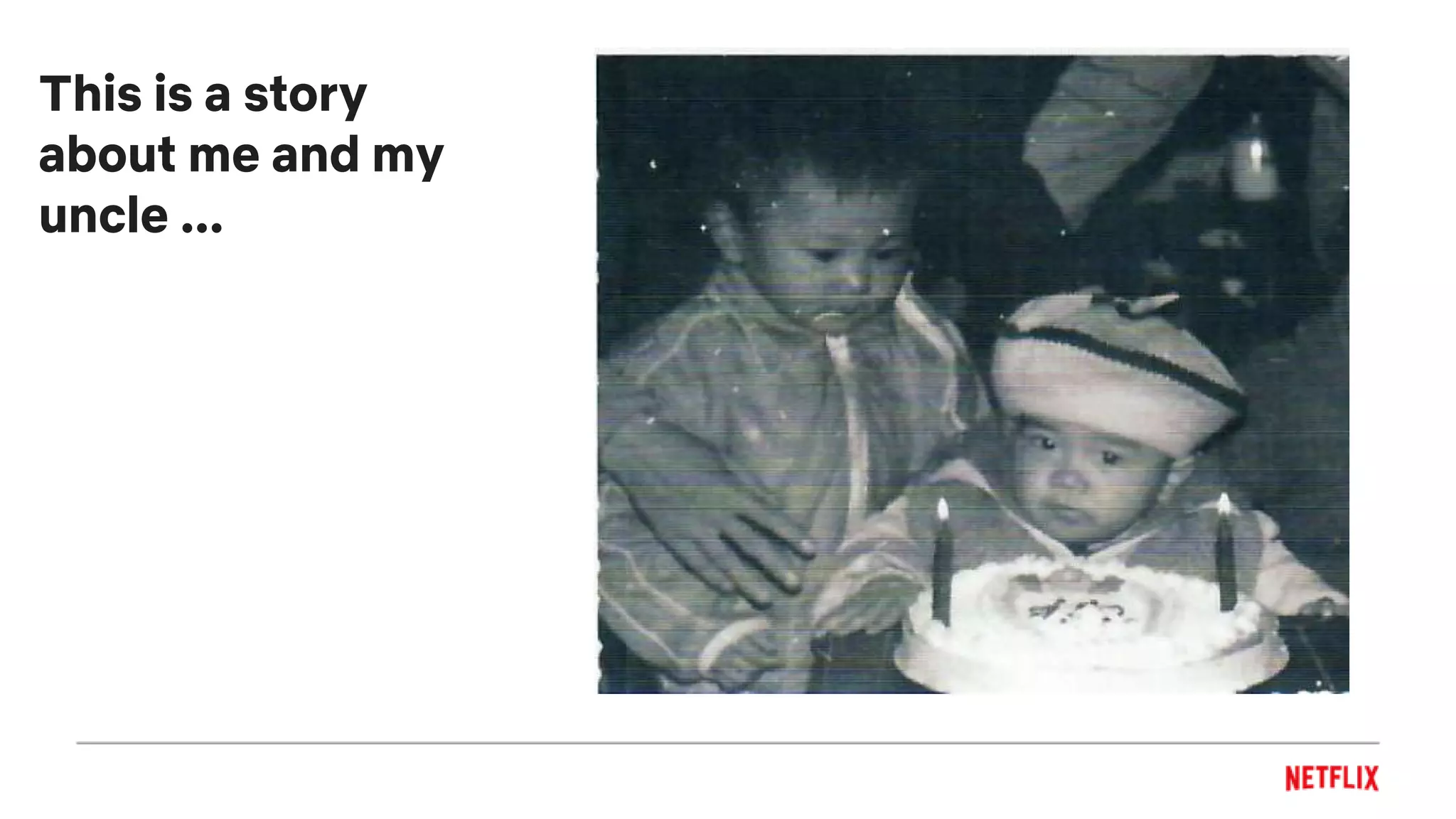
This is a story
about me and my
uncle ...
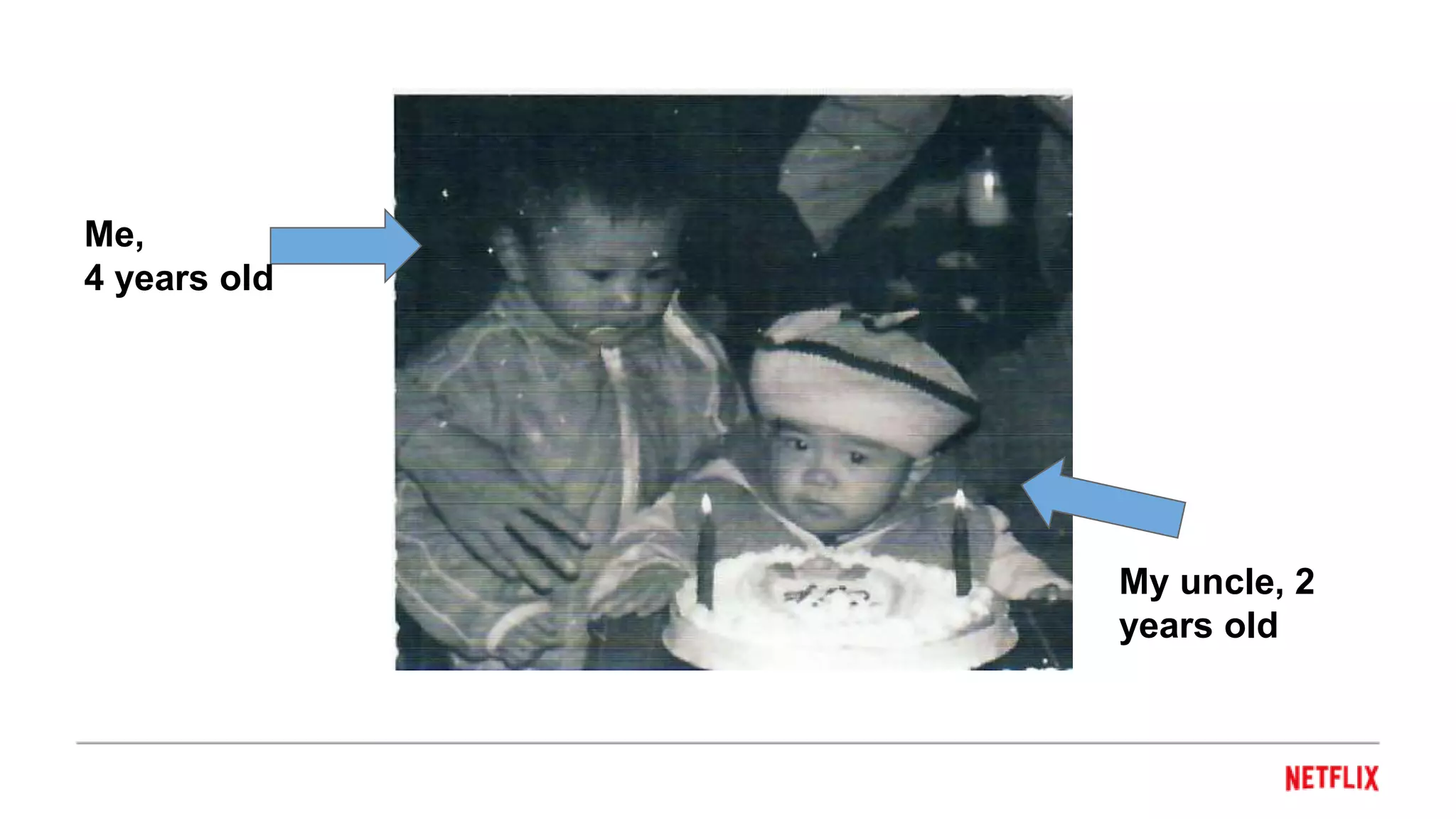
Me,
4 years old
My uncle, 2
years old
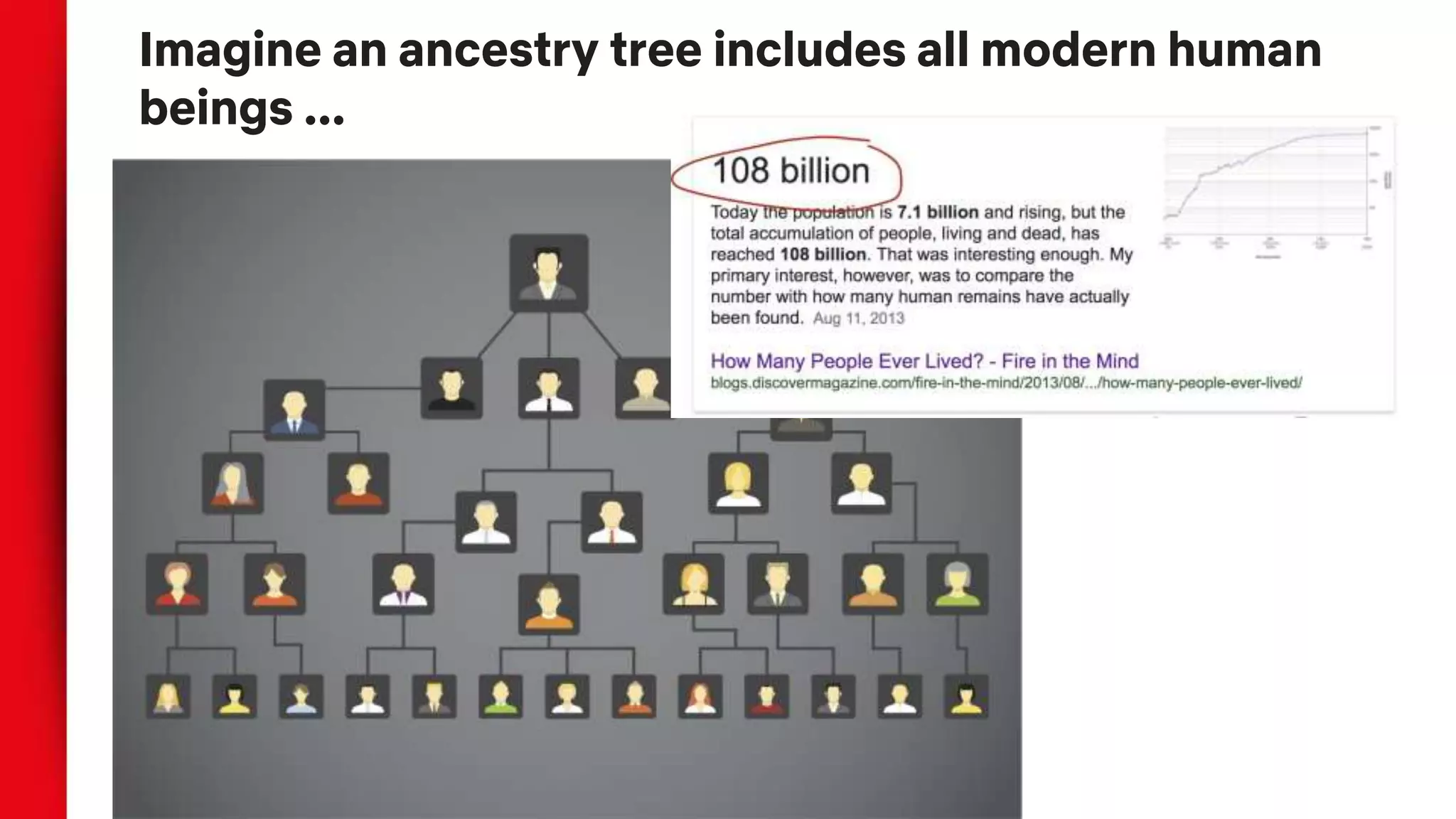
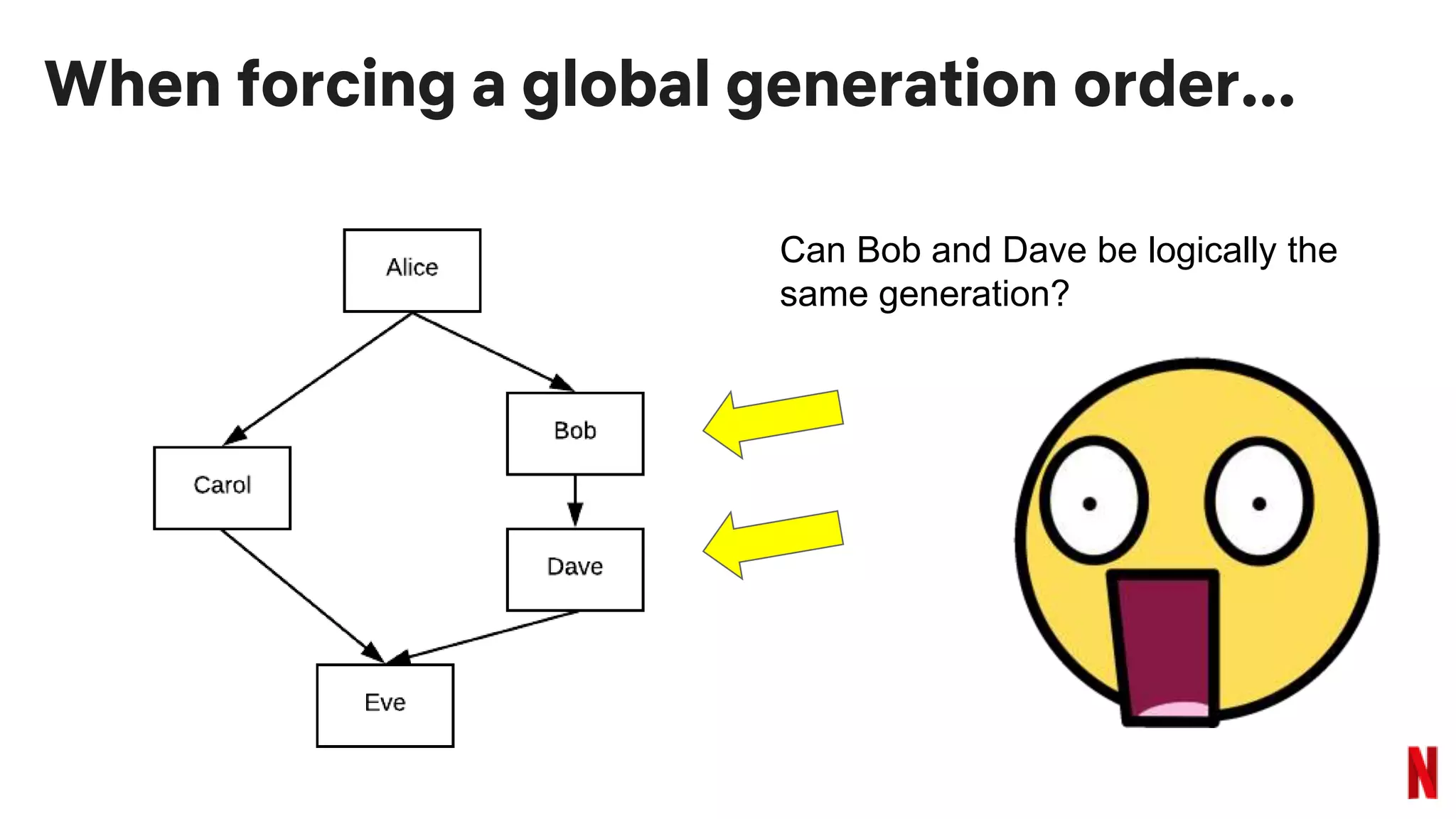
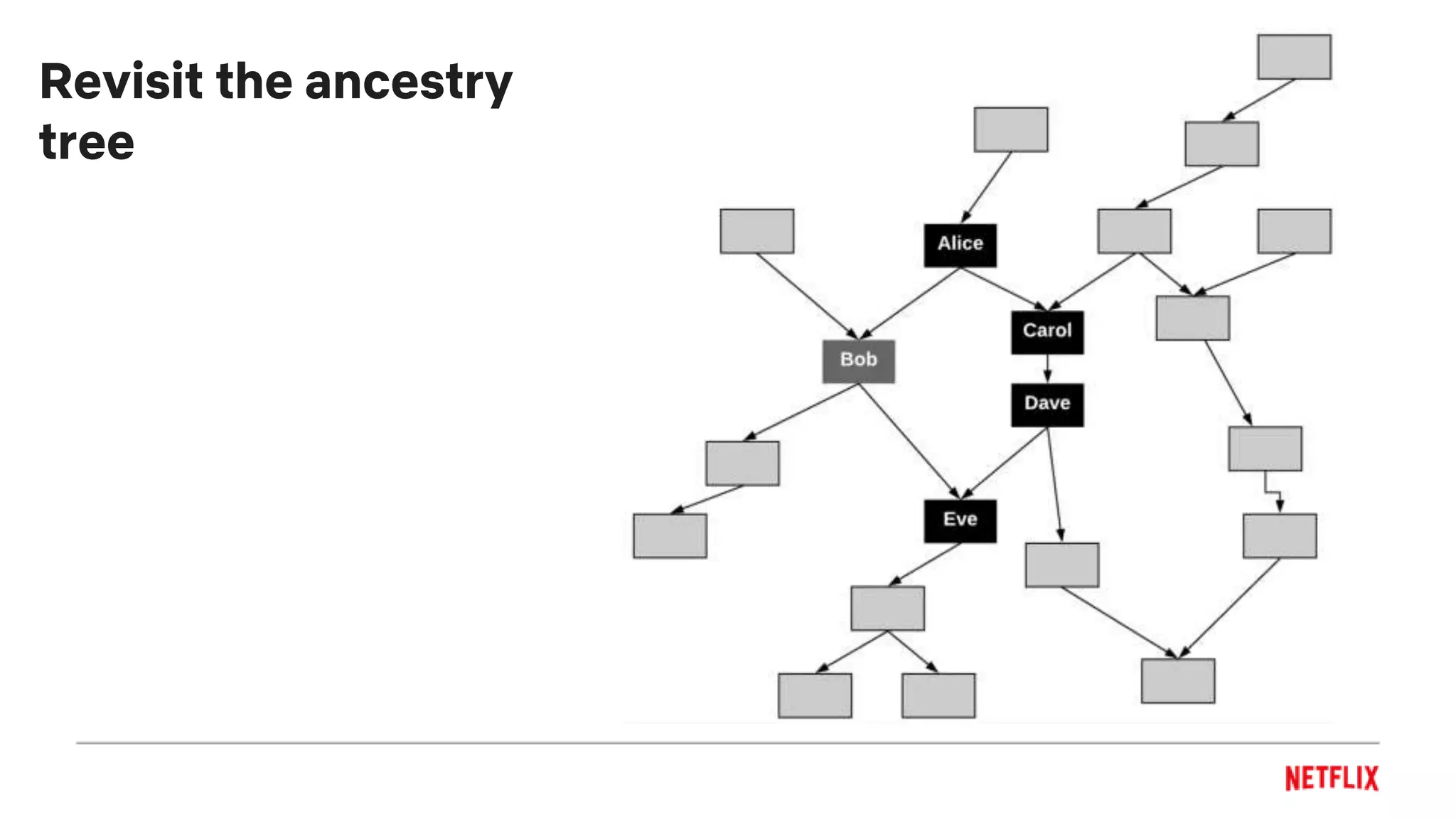
Imagine an ancestry tree includes all modern human
beings ...
When forcing a global generation order...
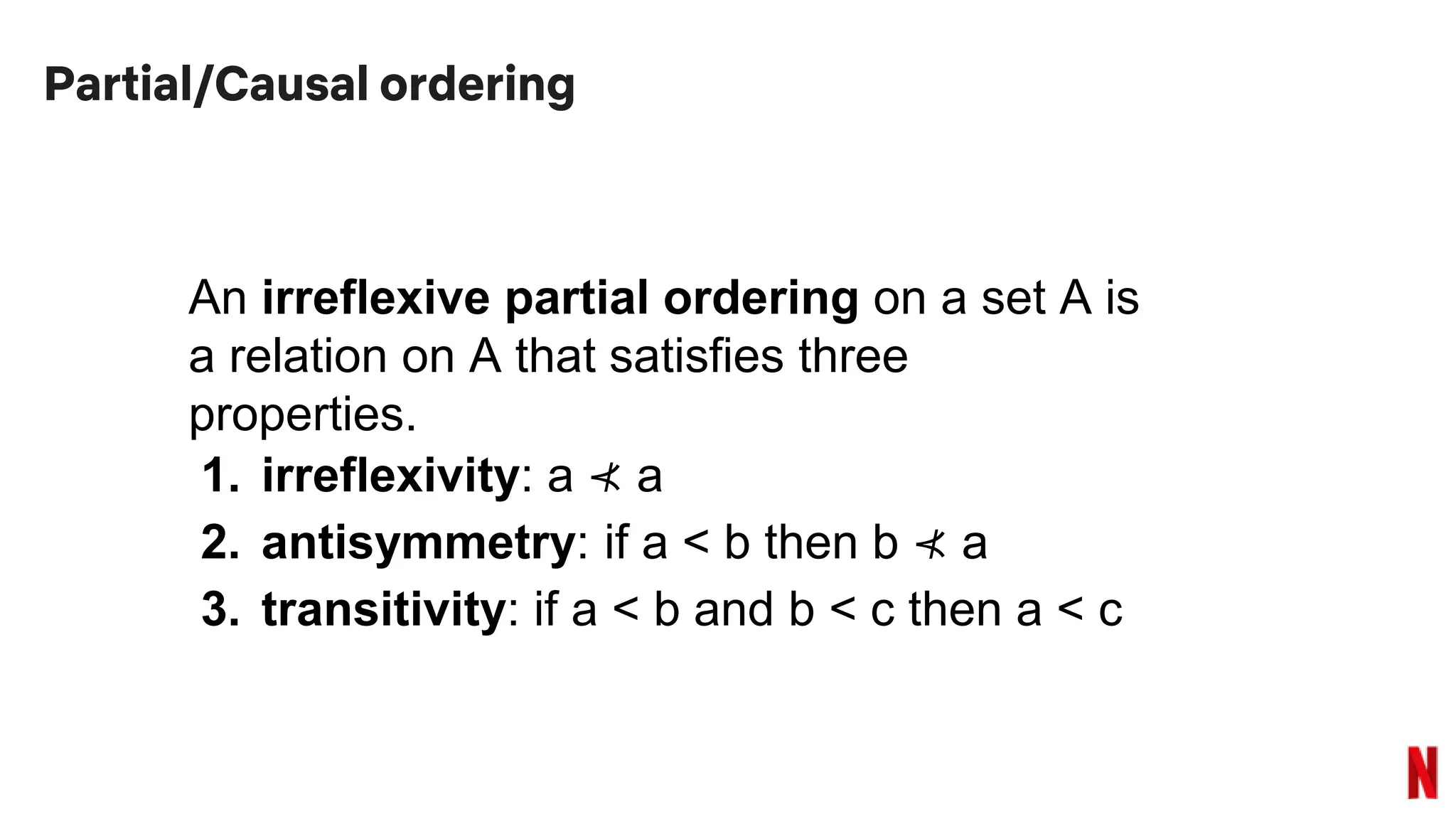
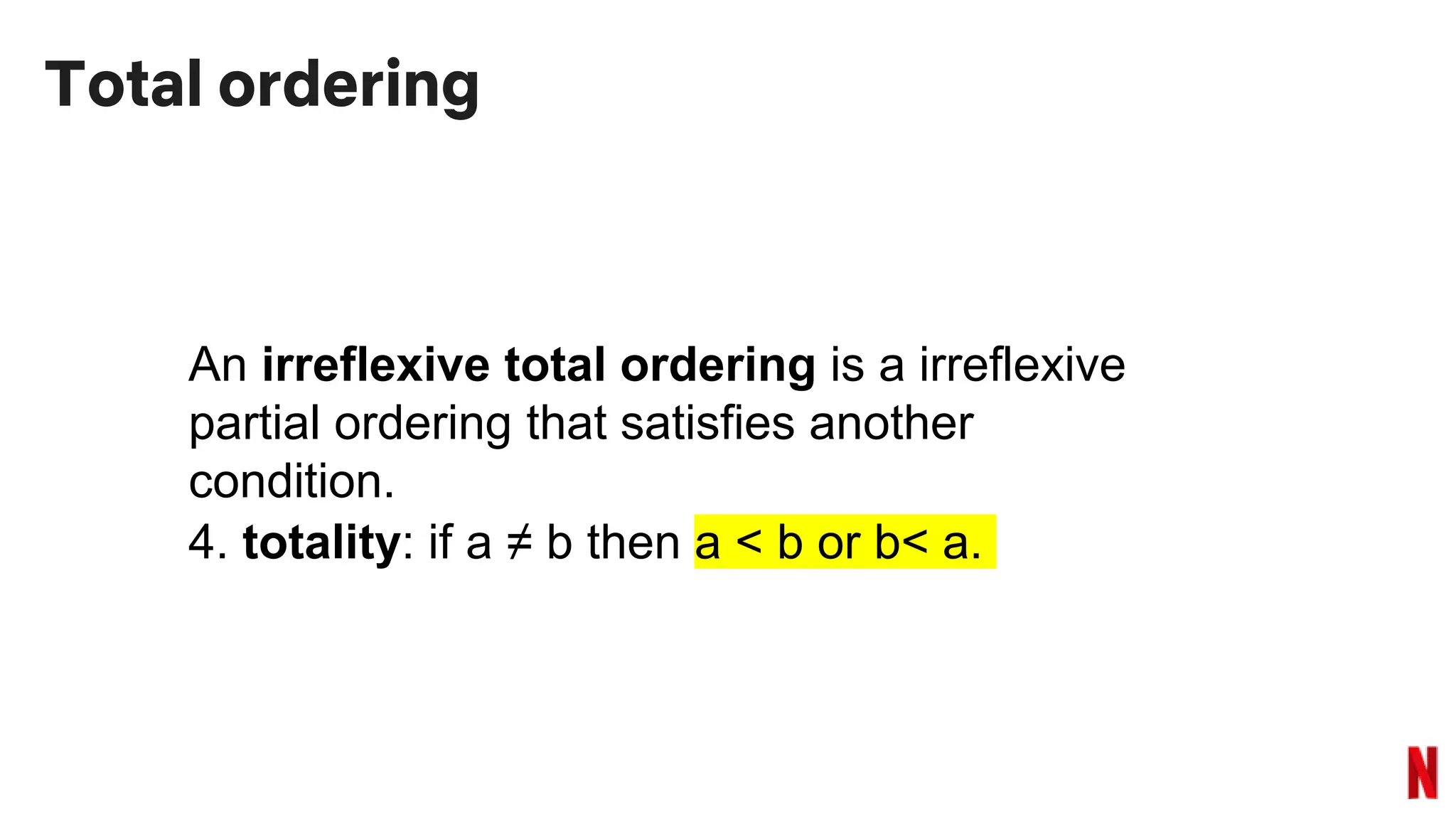
Can Bob and Dave be logically the
same generation?
What’s the meaning of “now”?
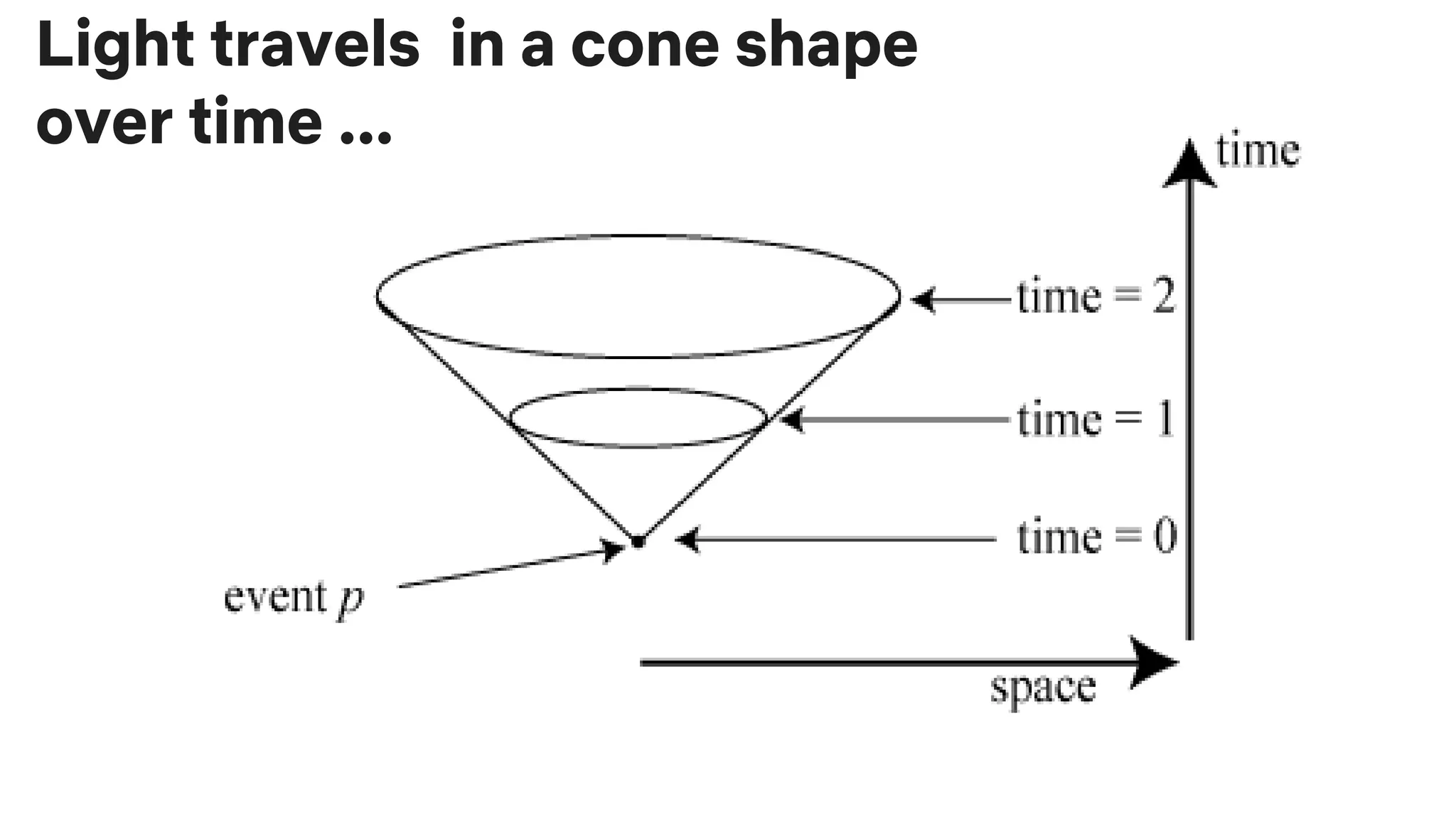
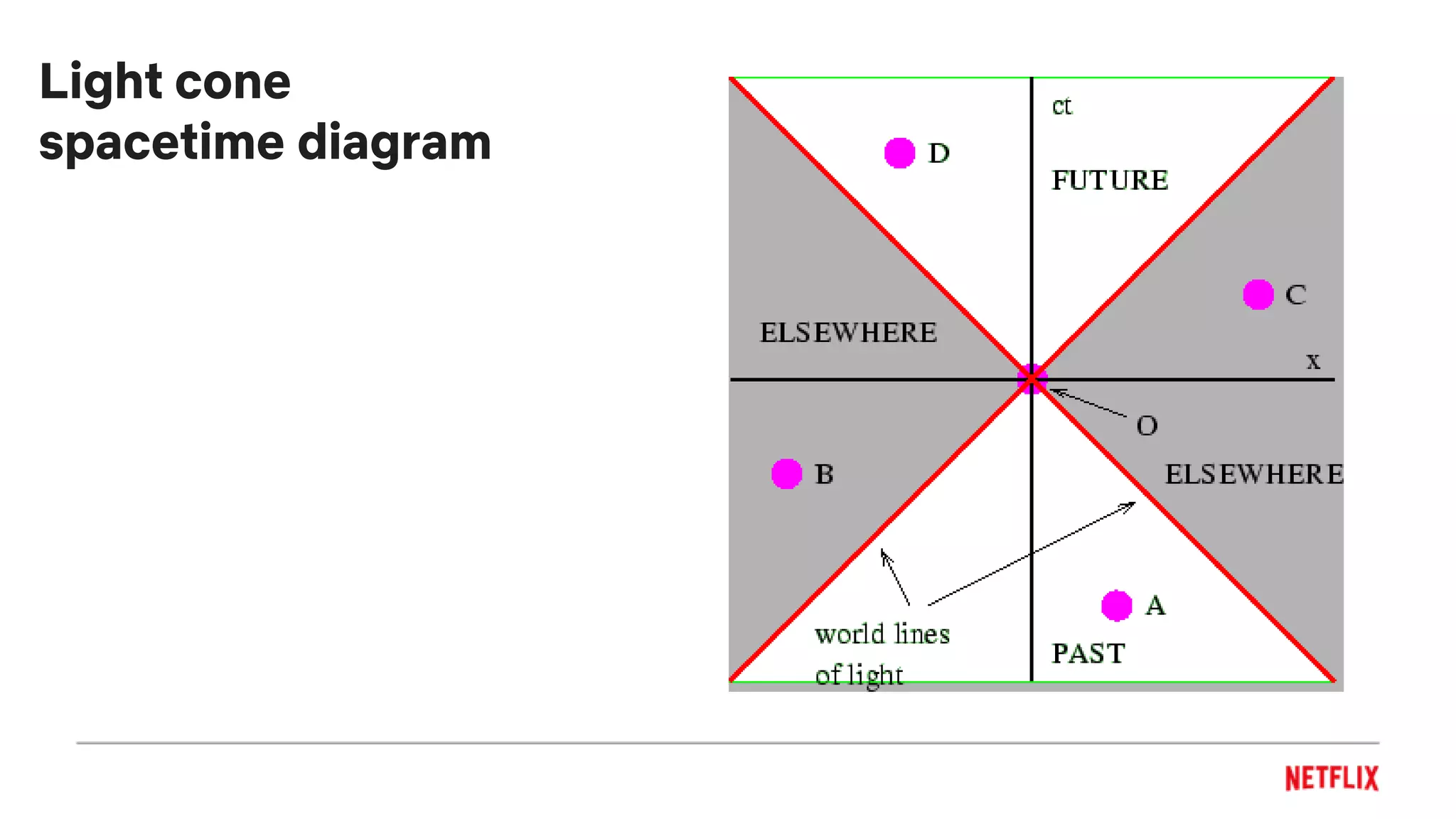
Light travels in a cone shape
over time ...
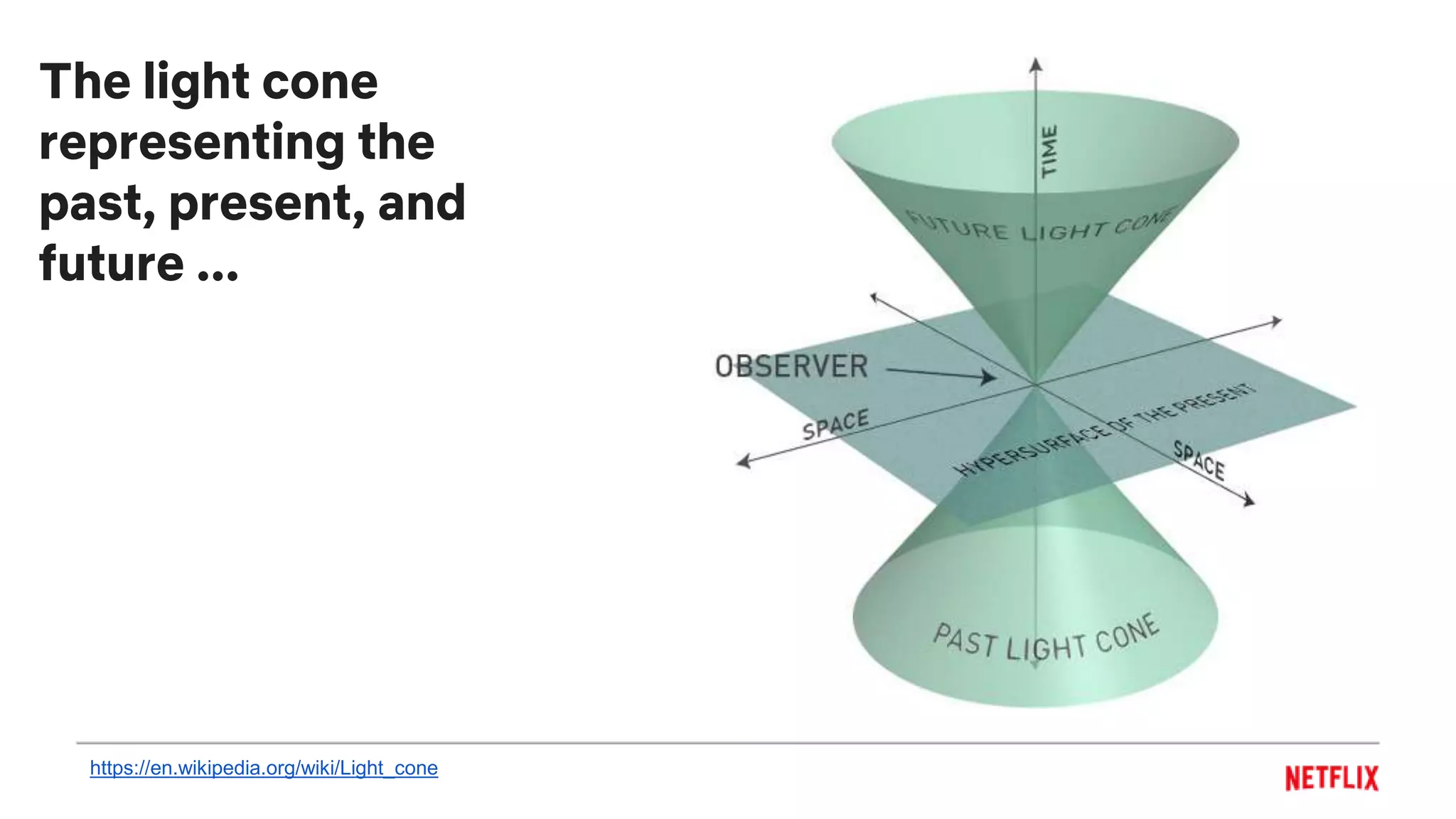
The light cone
representing the
past, present, and
future ...
https://en.wikipedia.org/wiki/Light_cone
Light cone
spacetime diagram
Revisit the ancestry
tree
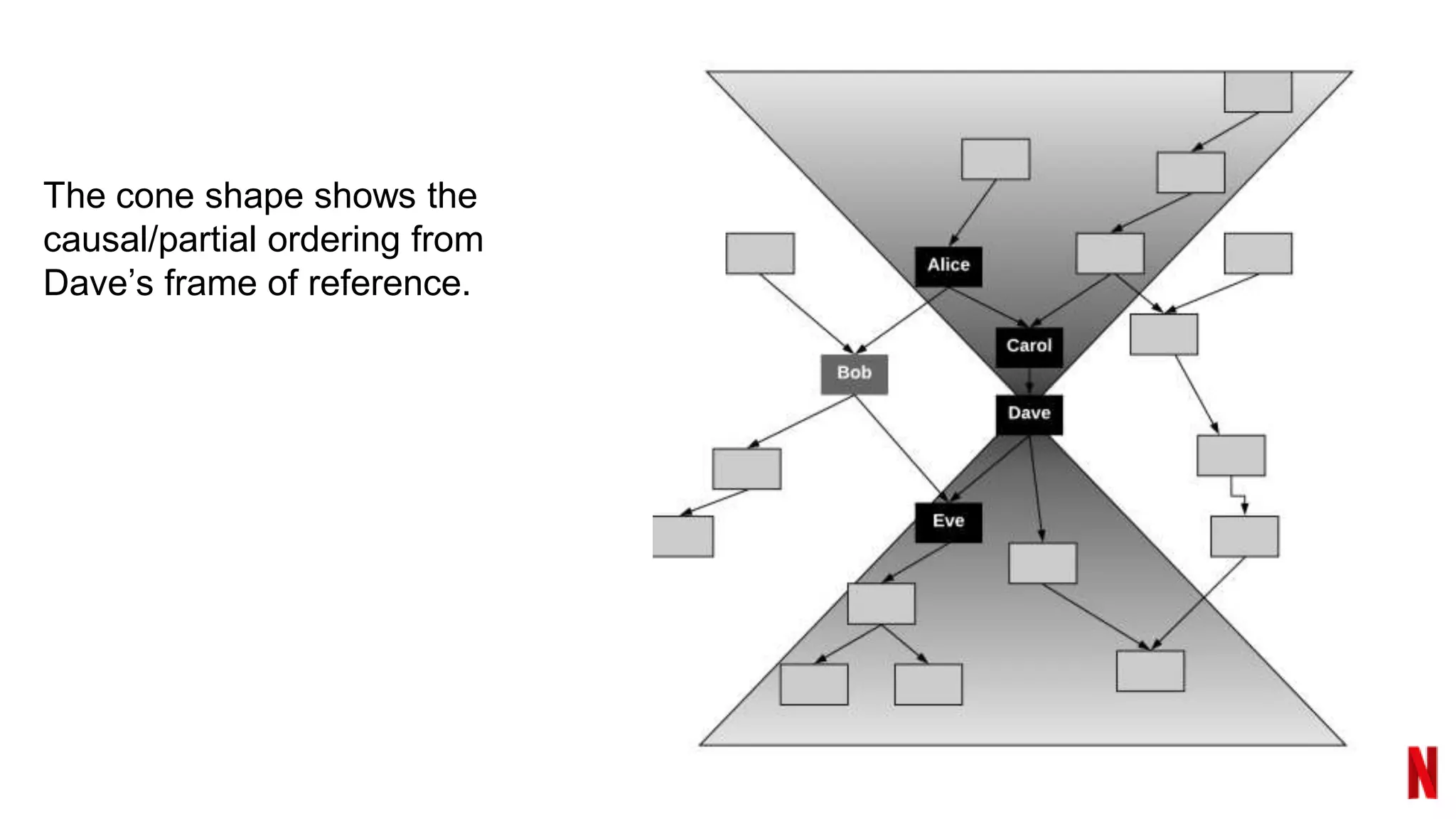
The cone shape shows the
causal/partial ordering from
Dave’s frame of reference.
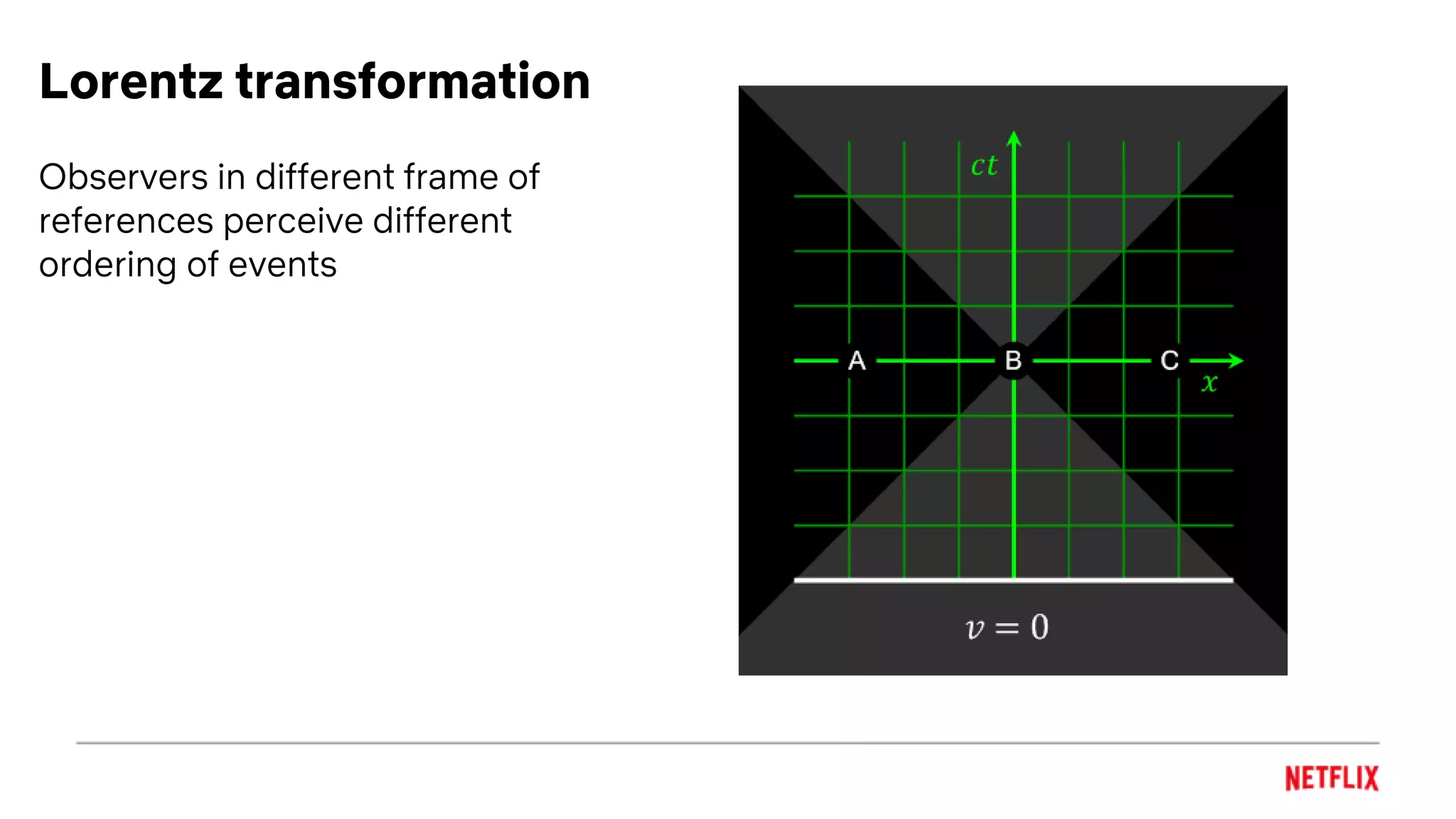
Lorentz transformation
Observers in different frame of
references perceive different
ordering of events
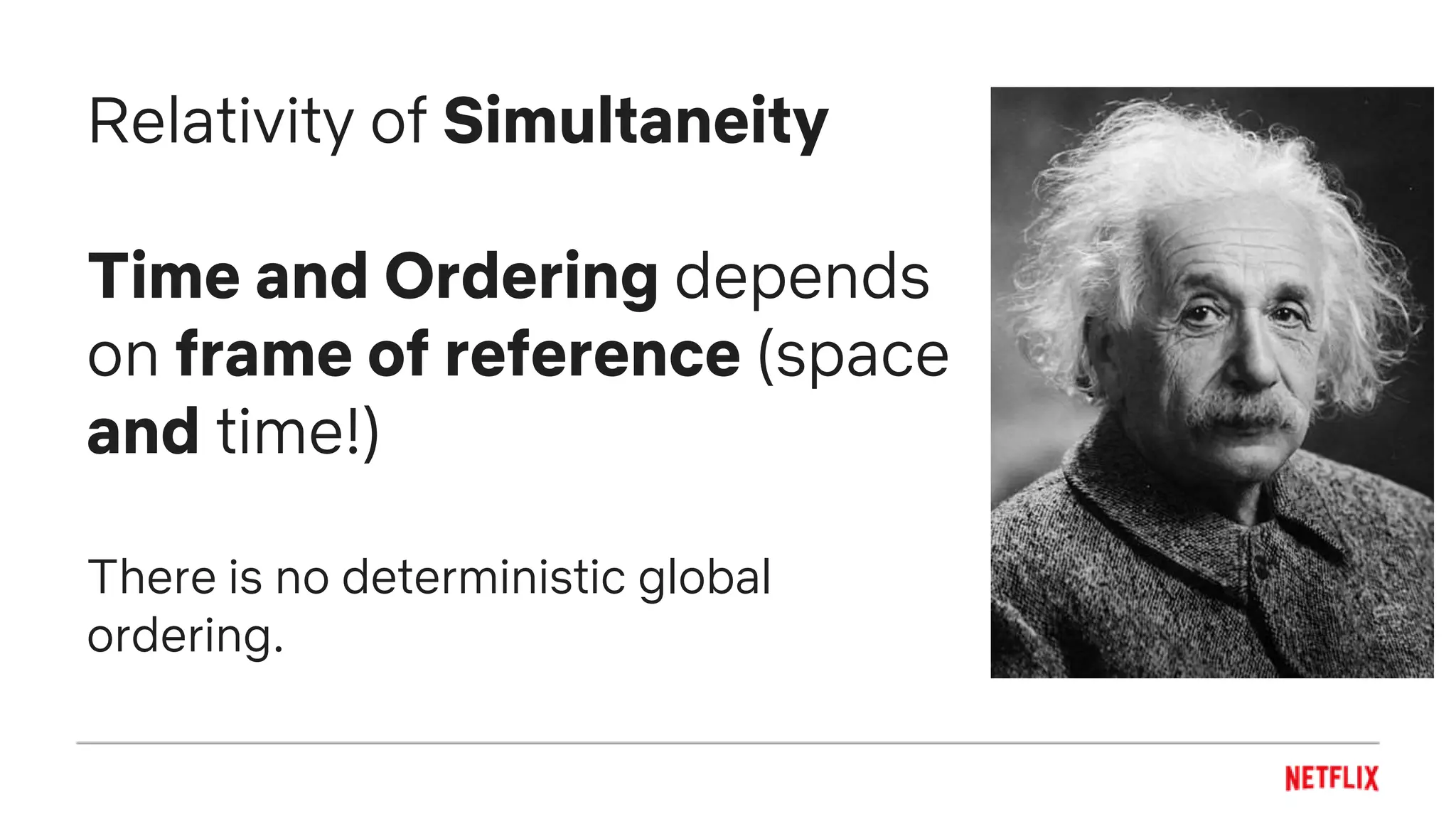
Relativity of Simultaneity
Time and Ordering depends
on frame of reference (space
and time!)
There is no deterministic global
ordering.
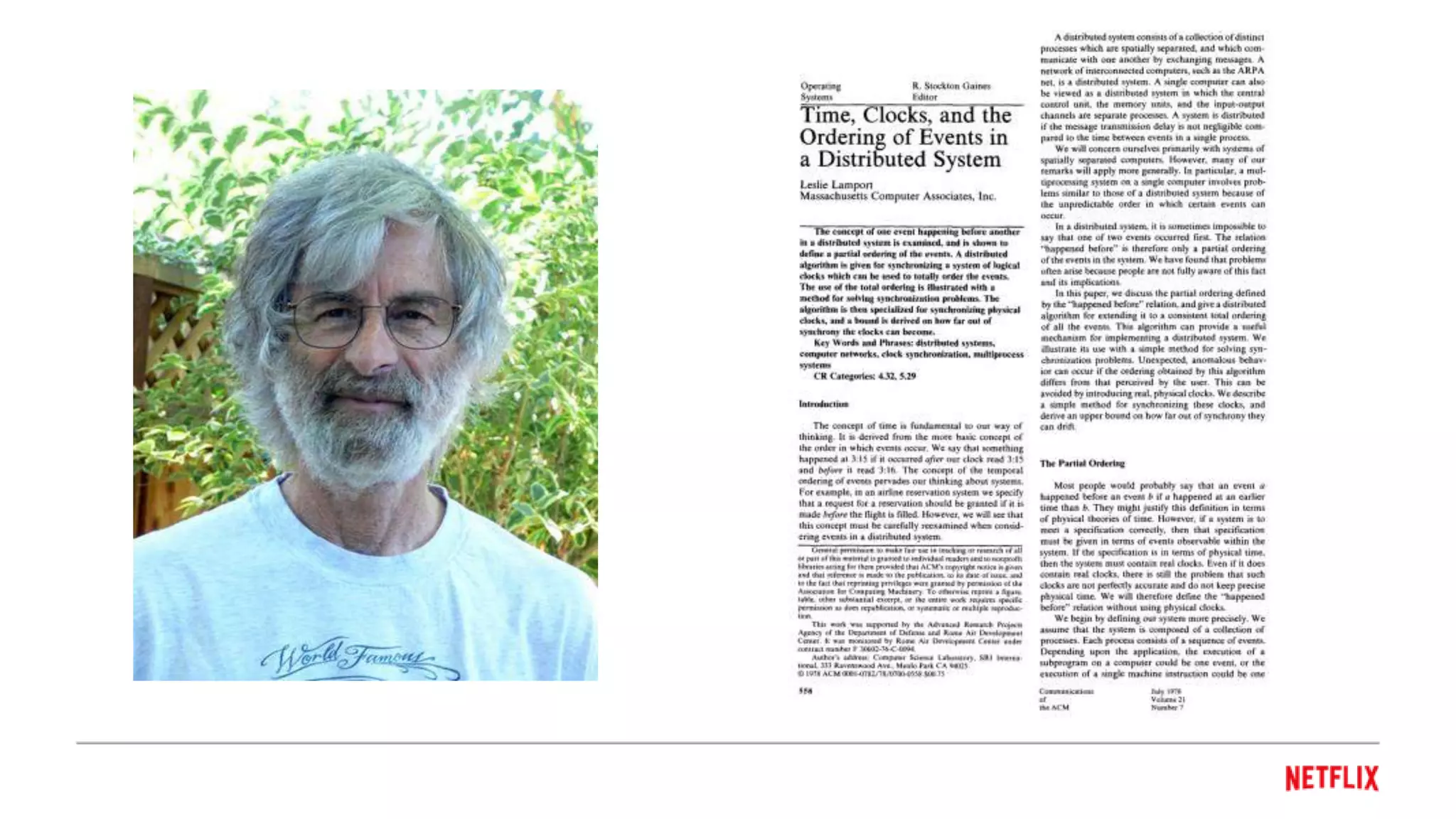
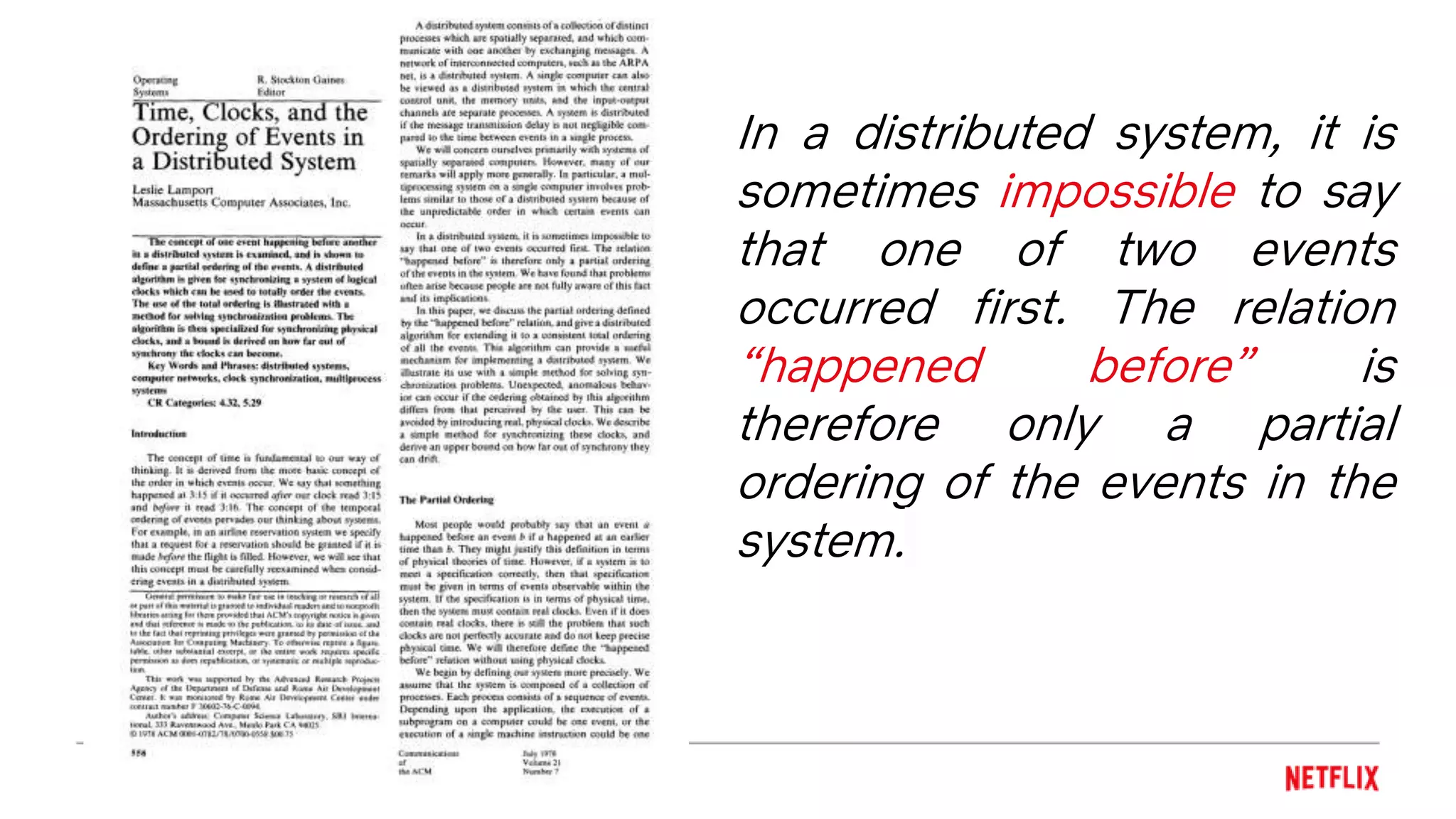
In a distributed system, it is
sometimes impossible to say
that one of two events
occurred first. The relation
“happened before” is
therefore only a partial
ordering of the events in the
system.
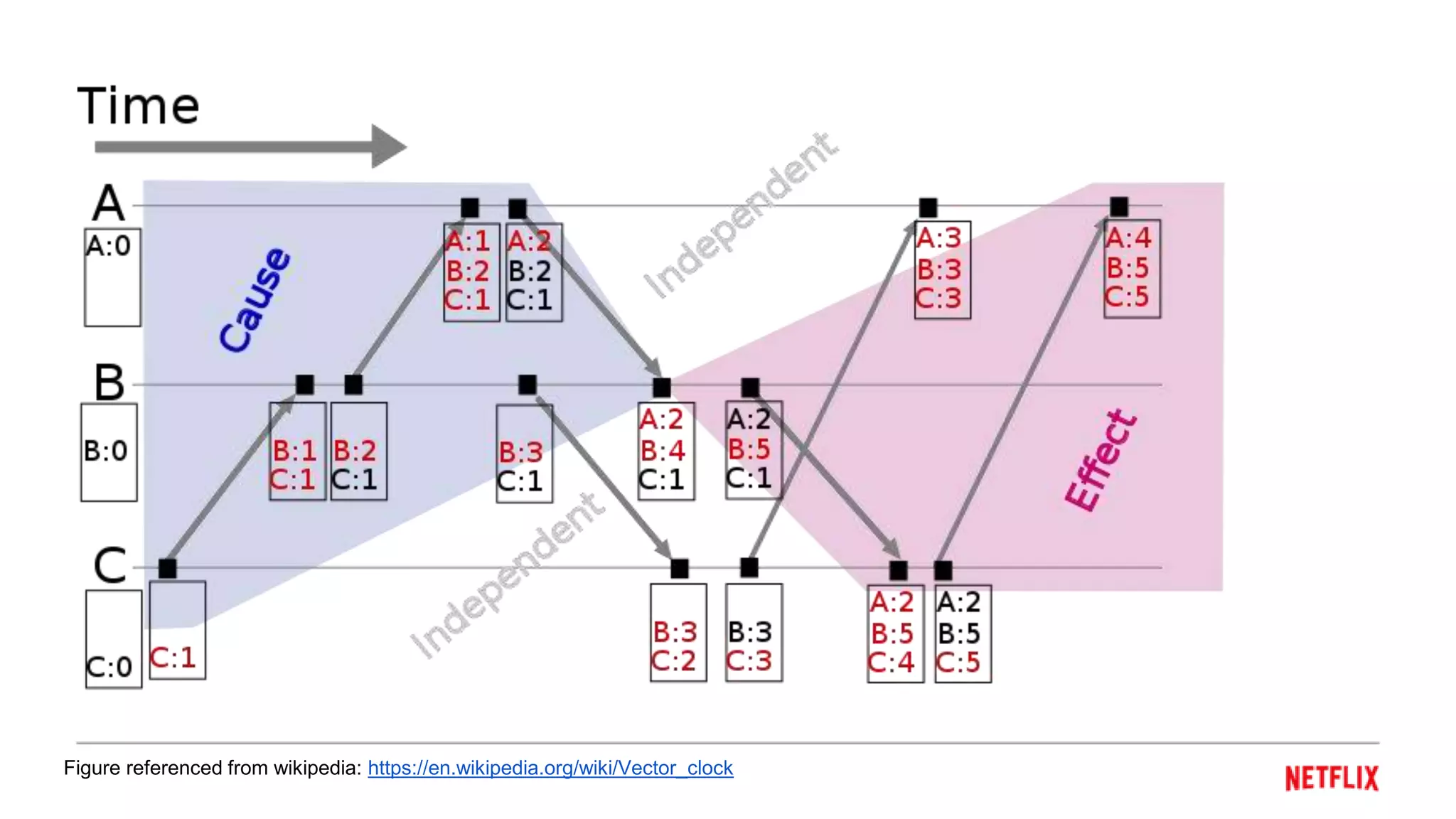
Figure referenced from wikipedia: https://en.wikipedia.org/wiki/Vector_clock
Partial/Causal ordering
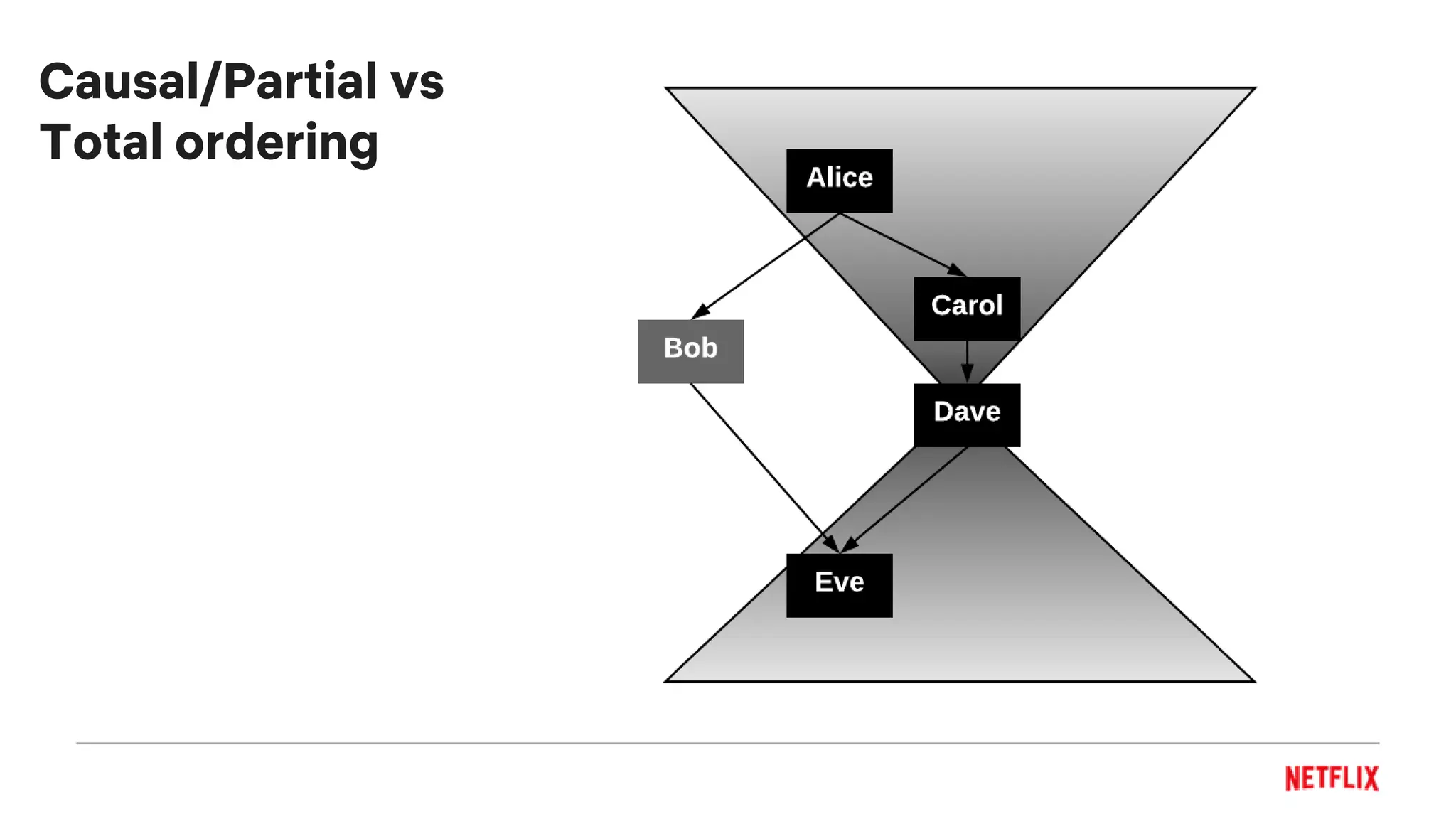
An irreflexive partial ordering on a set A is
a relation on A that satisfies three
properties.
1. irreflexivity: a ⊀ a
2. antisymmetry: if a < b then b ⊀ a
3. transitivity: if a < b and b < c then a < c
Total ordering
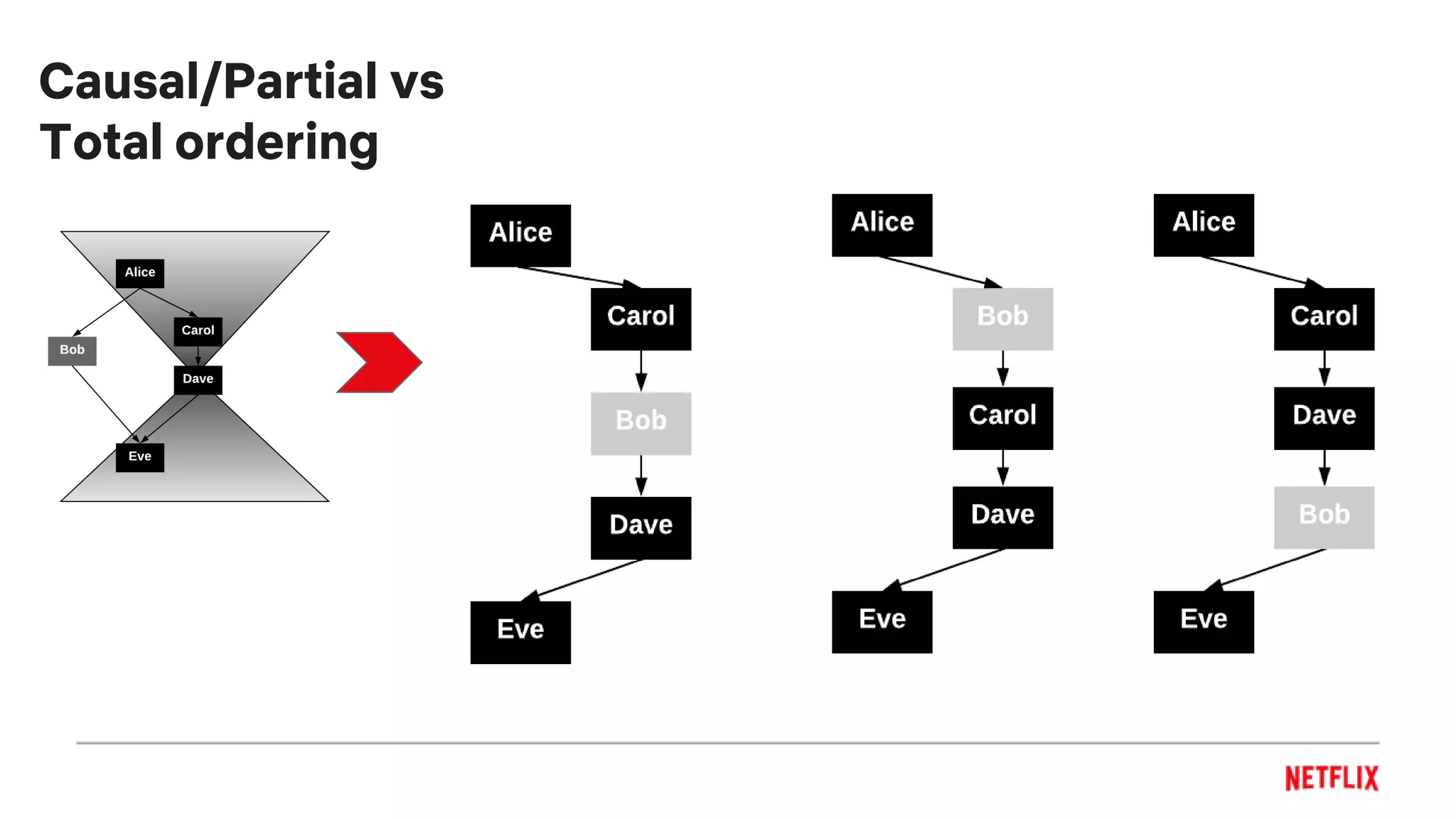
An irreflexive total ordering is a irreflexive
partial ordering that satisfies another
condition.
4. totality: if a ≠ b then a < b or b< a.
Causal/Partial vs
Total ordering
Causal/Partial vs
Total ordering
Distributed Consensus and Atomic
Broadcast is the same thing!
Both requires total order broadcast.
Linearizability
… to make a system appear as if there is
only a single copy of the data.
Linearizability is the C in CAP theorem.
(practically no CA system, only CP)
Linearizability requires total ordering…
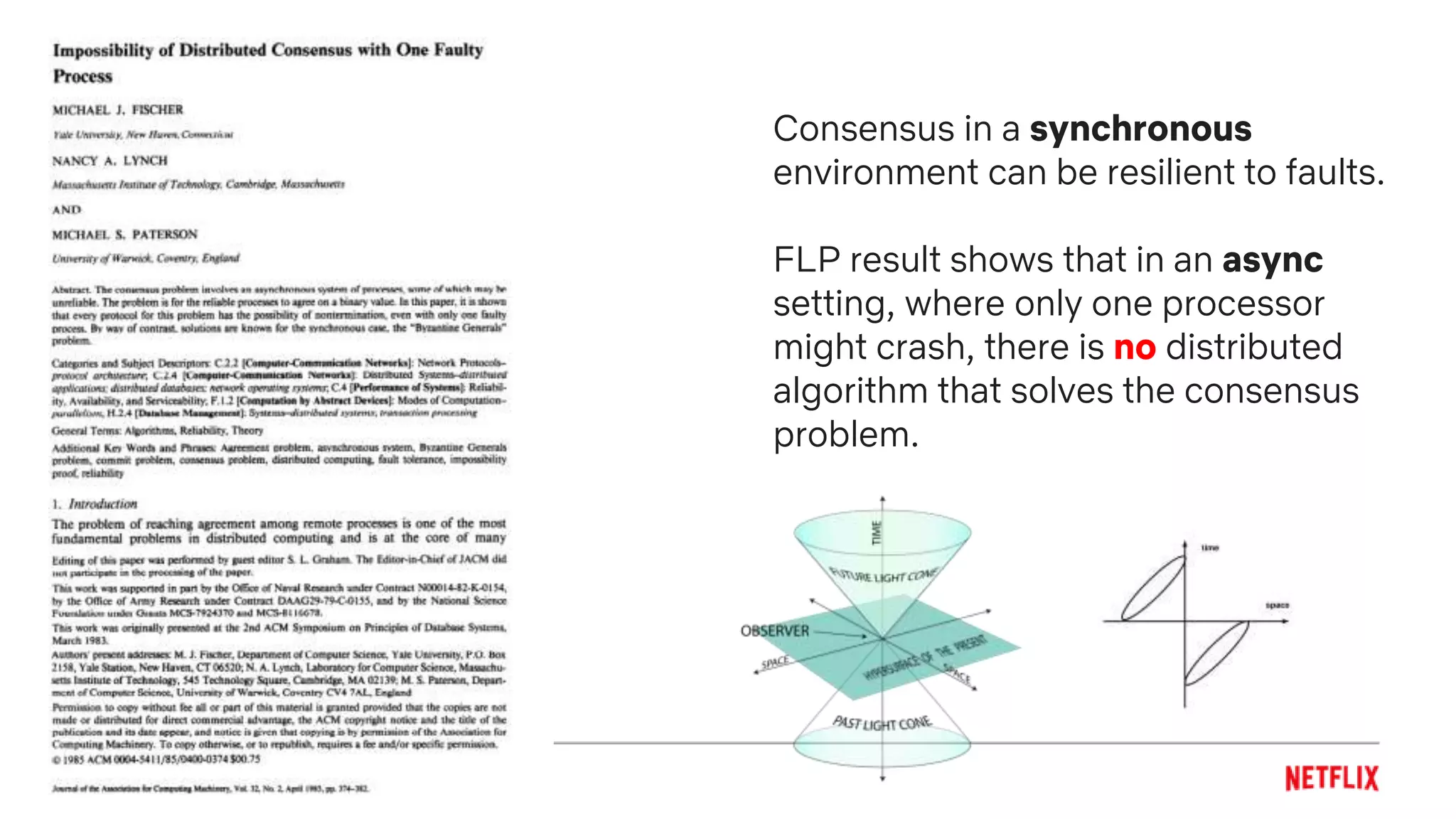
Consensus in a synchronous
environment can be resilient to faults.
FLP result shows that in an async
setting, where only one processor
might crash, there is no distributed
algorithm that solves the consensus
problem.
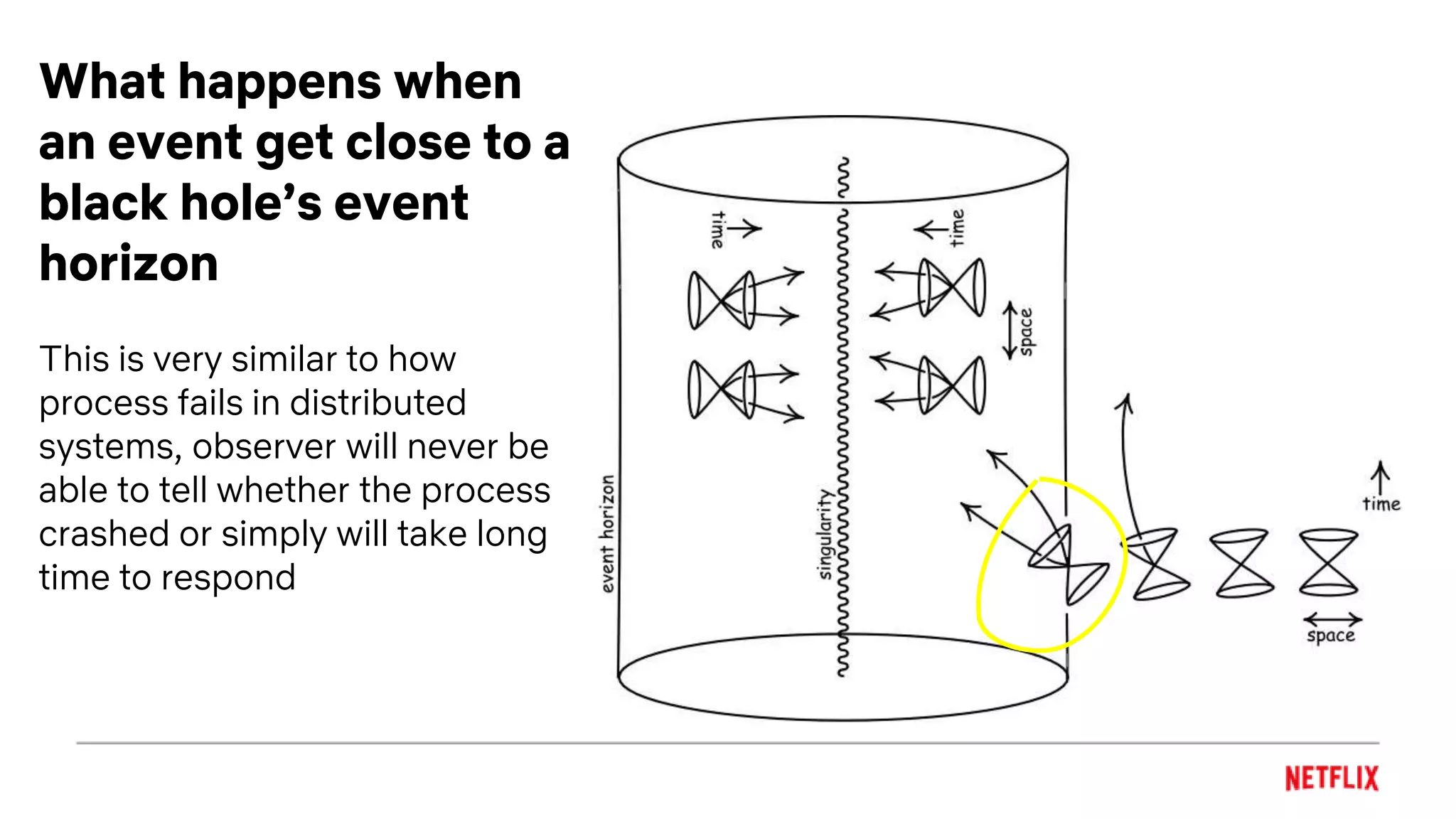
What happens when
an event get close to a
black hole’s event
horizon
This is very similar to how
process fails in distributed
systems, observer will never be
able to tell whether the process
crashed or simply will take long
time to respond
The 3 lens of time
● No uniformity of time
● Blurred direction of time
● Limited perception of time
Thank you.
Time and ordering in streaming distributed systems

Time and ordering in streaming distributed systems