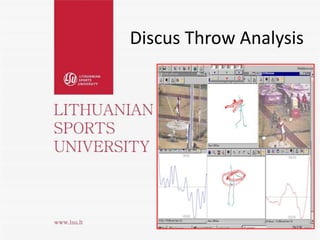
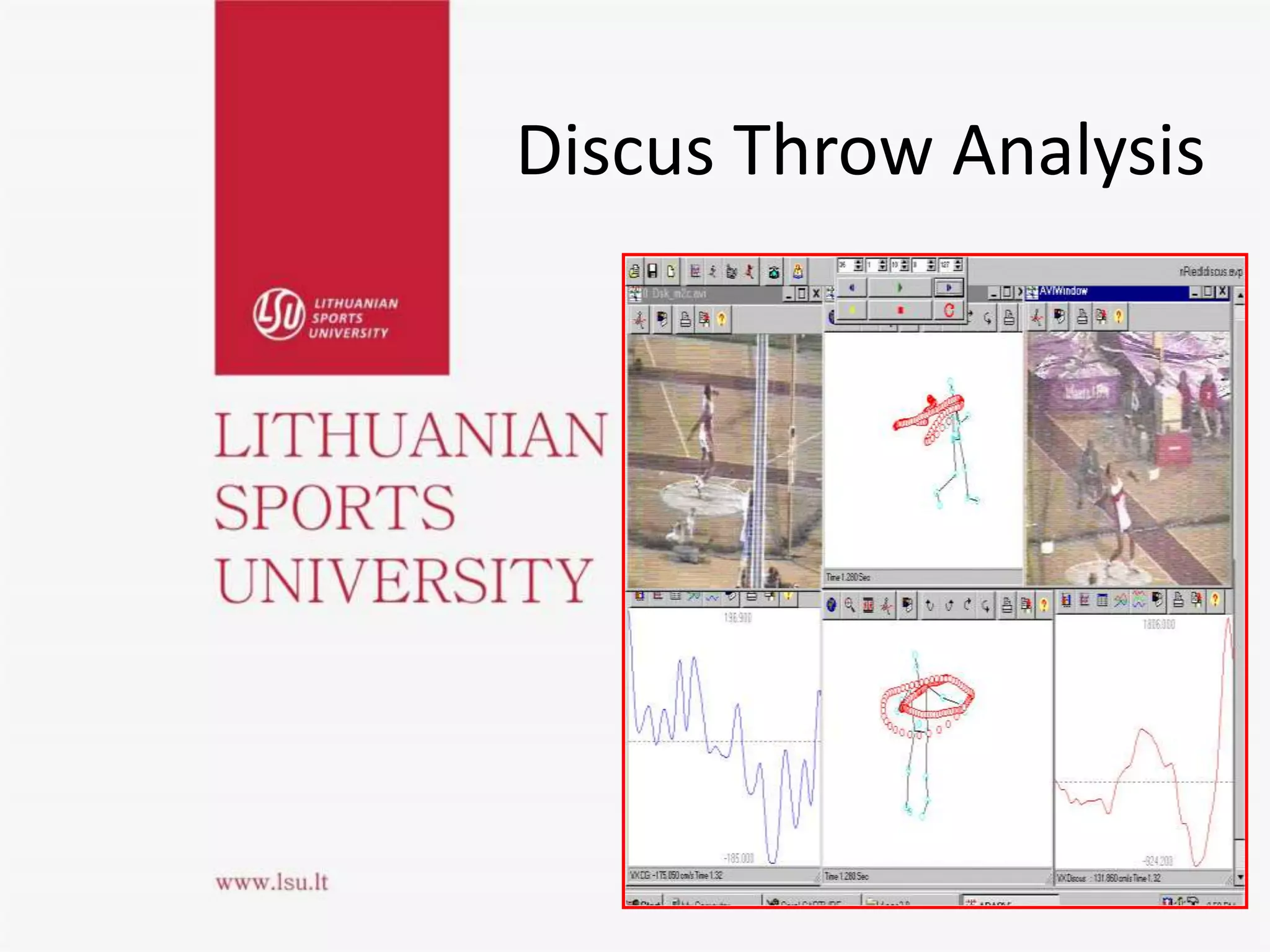
Discus Throw Analysis
Variables for Analysis
• Phases of Discus Throw
• Velocity curve
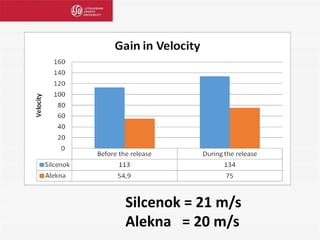
• Gain in Velocity
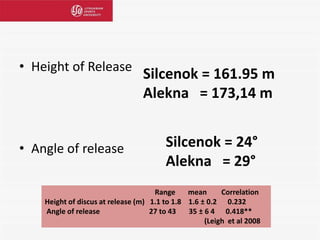
• Angle of Release
• Height of release
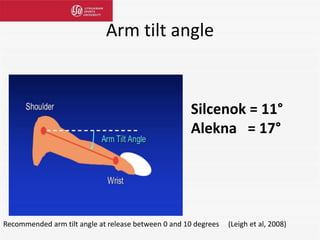
• Arm tilt angle
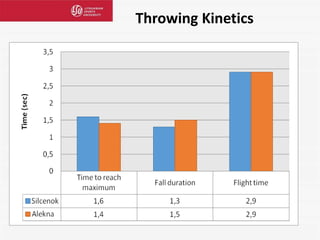
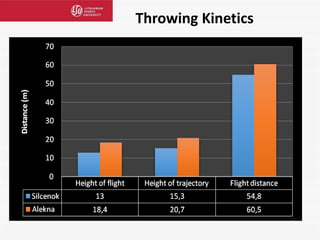
• Throwing kinetics
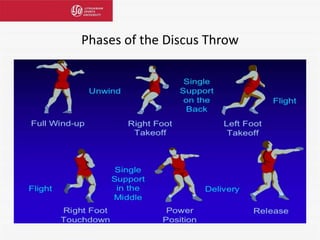
Phases of the Discus Throw
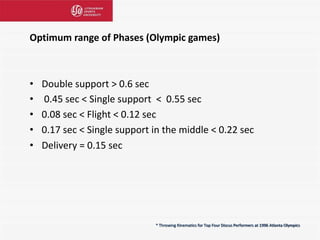
Optimum range of Phases (Olympic games)
• Double support > 0.6 sec
• 0.45 sec < Single support < 0.55 sec
• 0.08 sec < Flight < 0.12 sec
• 0.17 sec < Single support in the middle < 0.22 sec
• Delivery = 0.15 sec
* Throwing Kinematics for Top Four Discus Performers at 1996 Atlanta Olympics
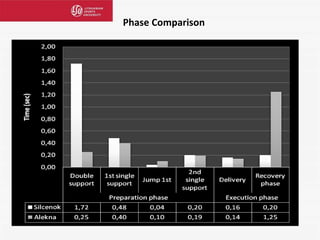
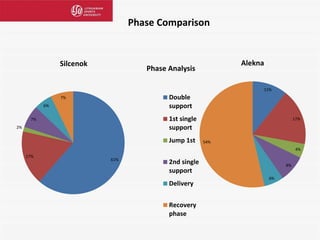
Phase Comparison
61%
17%
2%
7%
6%
7%
Phase Analysis
Double
support
1st single
support
Jump 1st
2nd single
support
Delivery
Recovery
phase
11%
17%
4%
8%
6%
54%
AleknaSilcenok
Phase Comparison
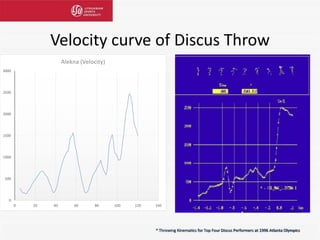
Velocity curve of Discus Throw
0
500
1000
1500
2000
2500
3000
0 20 40 60 80 100 120 140
Alekna (Velocity)
* Throwing Kinematics for Top Four Discus Performers at 1996 Atlanta Olympics
Silcenok = 21 m/s
Alekna = 20 m/s
Arm tilt angle
Silcenok = 11°
Alekna = 17°
Recommended arm tilt angle at release between 0 and 10 degrees (Leigh et al, 2008)
• Height of Release
• Angle of release
Silcenok = 161.95 m
Alekna = 173,14 m
Silcenok = 24°
Alekna = 29°
Range mean Correlation
Height of discus at release (m) 1.1 to 1.8 1.6 ± 0.2 0.232
Angle of release 27 to 43 35 ± 6 4 0.418**
(Leigh et al 2008
Throwing Kinetics
Throwing Kinetics
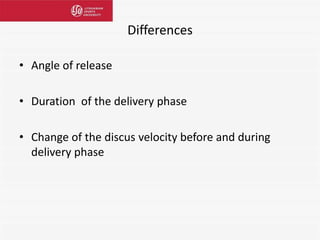
Differences
• Angle of release
• Duration of the delivery phase
• Change of the discus velocity before and during
delivery phase
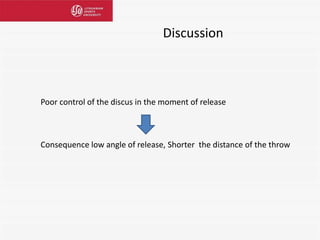
Discussion
Poor control of the discus in the moment of release
Consequence low angle of release, Shorter the distance of the throw
Contributions to Throwing Velocity
• Translated linear velocity of CM & shoulder
• Hip rotation
• Spinal rotation
• Horizental flexion of shoulder joint
• Internal rotation of humerus
• Elbow extention
• Wrist and finger flexion
Refrences
Leigh, Steve & T Gross, Michael & Li, Li & Yu, Bing. (2008). The relationship between
discus throwing performance and combinations of selected technical parameters.
Sports biomechanics / International Society of Biomechanics in Sports. 7. 173-93.
10.1080/14763140701841399.
* Throwing Kinematics for Top Four Discus Performers at 1996 Atlanta Olympics
Discus throw Biomechanical Analysis

Discus throw Biomechanical Analysis

  • 1.
  • 2.
    Variables for Analysis •Phases of Discus Throw • Velocity curve • Gain in Velocity • Angle of Release • Height of release • Arm tilt angle • Throwing kinetics
  • 3.
    Phases of theDiscus Throw
  • 4.
    Optimum range ofPhases (Olympic games) • Double support > 0.6 sec • 0.45 sec < Single support < 0.55 sec • 0.08 sec < Flight < 0.12 sec • 0.17 sec < Single support in the middle < 0.22 sec • Delivery = 0.15 sec * Throwing Kinematics for Top Four Discus Performers at 1996 Atlanta Olympics
  • 5.
  • 6.
    61% 17% 2% 7% 6% 7% Phase Analysis Double support 1st single support Jump1st 2nd single support Delivery Recovery phase 11% 17% 4% 8% 6% 54% AleknaSilcenok Phase Comparison
  • 7.
    Velocity curve ofDiscus Throw 0 500 1000 1500 2000 2500 3000 0 20 40 60 80 100 120 140 Alekna (Velocity) * Throwing Kinematics for Top Four Discus Performers at 1996 Atlanta Olympics
  • 8.
    Silcenok = 21m/s Alekna = 20 m/s
  • 9.
    Arm tilt angle Silcenok= 11° Alekna = 17° Recommended arm tilt angle at release between 0 and 10 degrees (Leigh et al, 2008)
  • 10.
    • Height ofRelease • Angle of release Silcenok = 161.95 m Alekna = 173,14 m Silcenok = 24° Alekna = 29° Range mean Correlation Height of discus at release (m) 1.1 to 1.8 1.6 ± 0.2 0.232 Angle of release 27 to 43 35 ± 6 4 0.418** (Leigh et al 2008
  • 11.
  • 12.
  • 13.
    Differences • Angle ofrelease • Duration of the delivery phase • Change of the discus velocity before and during delivery phase
  • 14.
    Discussion Poor control ofthe discus in the moment of release Consequence low angle of release, Shorter the distance of the throw
  • 15.
    Contributions to ThrowingVelocity • Translated linear velocity of CM & shoulder • Hip rotation • Spinal rotation • Horizental flexion of shoulder joint • Internal rotation of humerus • Elbow extention • Wrist and finger flexion
  • 16.
    Refrences Leigh, Steve &T Gross, Michael & Li, Li & Yu, Bing. (2008). The relationship between discus throwing performance and combinations of selected technical parameters. Sports biomechanics / International Society of Biomechanics in Sports. 7. 173-93. 10.1080/14763140701841399. * Throwing Kinematics for Top Four Discus Performers at 1996 Atlanta Olympics