TRADE LOADING
CHANNEL STUFFING
WHAT IS CHANNEL STUFFING OR TRADE
LOADING?
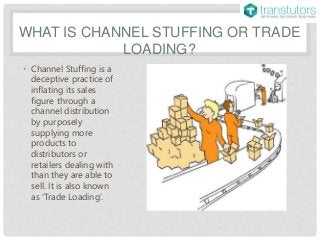
• Channel Stuffing is a
deceptive practice of
inflating its sales
figure through a
channel distribution
by purposely
supplying more
products to
distributors or
retailers dealing with
than they are able to
sell. It is also known
as ‘Trade Loading’.
EXAMPLE OF CHANNEL STUFFING
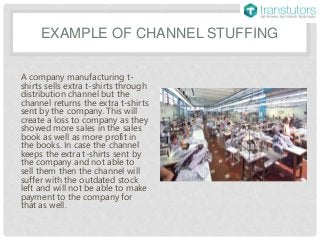
A company manufacturing t-
shirts sells extra t-shirts through
distribution channel but the
channel returns the extra t-shirts
sent by the company. This will
create a loss to company as they
showed more sales in the sales
book as well as more profit in
the books. In case the channel
keeps the extra t-shirts sent by
the company and not able to
sell them then the channel will
suffer with the outdated stock
left and will not be able to make
payment to the company for
that as well.
EFFECTS OF CHANNEL STUFFING
• Accounts Receivables goes up for
short period
• Distribution channels might return
back the unsold goods instead of
cash payments
• Backlog of inventory
• Returned inventory affects the
profits and image of the company
• Trade loading will delay in the
orders for next month
• Discounts allowed will put negative
impact.
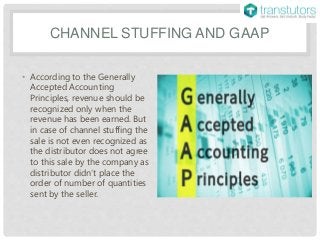
CHANNEL STUFFING AND GAAP
• According to the Generally
Accepted Accounting
Principles, revenue should be
recognized only when the
revenue has been earned. But
in case of channel stuffing the
sale is not even recognized as
the distributor does not agree
to this sale by the company as
distributor didn’t place the
order of number of quantities
sent by the seller.
CORRECTIVE ACTIONS FOR CHANNEL
STUFFING
• Unrealistic targets should not
be set for sales department.
• Auditor should keep a check
and consider forecasting sales.
• The factors influencing sales
must be analyzed properly, i.e.,
length of sales cycle, terms and
conditions, sales incentives,
true cost of sale, etc.
HEY FRIEND,
This was just a summary on Channel Stuffing (Trade loading). For
more detailed information on this topic, please type the link given below
or copy it from the description of this PPT and open it in a new browser
window.
www.transtutors.com/homework-help/accounting/revenue-recognition-at-point-sale-
trade-loading/

Channel Stuffing (Trade loading) | Accounting

  • 1.
  • 2.
    WHAT IS CHANNELSTUFFING OR TRADE LOADING? • Channel Stuffing is a deceptive practice of inflating its sales figure through a channel distribution by purposely supplying more products to distributors or retailers dealing with than they are able to sell. It is also known as ‘Trade Loading’.
  • 3.
    EXAMPLE OF CHANNELSTUFFING A company manufacturing t- shirts sells extra t-shirts through distribution channel but the channel returns the extra t-shirts sent by the company. This will create a loss to company as they showed more sales in the sales book as well as more profit in the books. In case the channel keeps the extra t-shirts sent by the company and not able to sell them then the channel will suffer with the outdated stock left and will not be able to make payment to the company for that as well.
  • 4.
    EFFECTS OF CHANNELSTUFFING • Accounts Receivables goes up for short period • Distribution channels might return back the unsold goods instead of cash payments • Backlog of inventory • Returned inventory affects the profits and image of the company • Trade loading will delay in the orders for next month • Discounts allowed will put negative impact.
  • 5.
    CHANNEL STUFFING ANDGAAP • According to the Generally Accepted Accounting Principles, revenue should be recognized only when the revenue has been earned. But in case of channel stuffing the sale is not even recognized as the distributor does not agree to this sale by the company as distributor didn’t place the order of number of quantities sent by the seller.
  • 6.
    CORRECTIVE ACTIONS FORCHANNEL STUFFING • Unrealistic targets should not be set for sales department. • Auditor should keep a check and consider forecasting sales. • The factors influencing sales must be analyzed properly, i.e., length of sales cycle, terms and conditions, sales incentives, true cost of sale, etc.
  • 7.
    HEY FRIEND, This wasjust a summary on Channel Stuffing (Trade loading). For more detailed information on this topic, please type the link given below or copy it from the description of this PPT and open it in a new browser window. www.transtutors.com/homework-help/accounting/revenue-recognition-at-point-sale- trade-loading/