


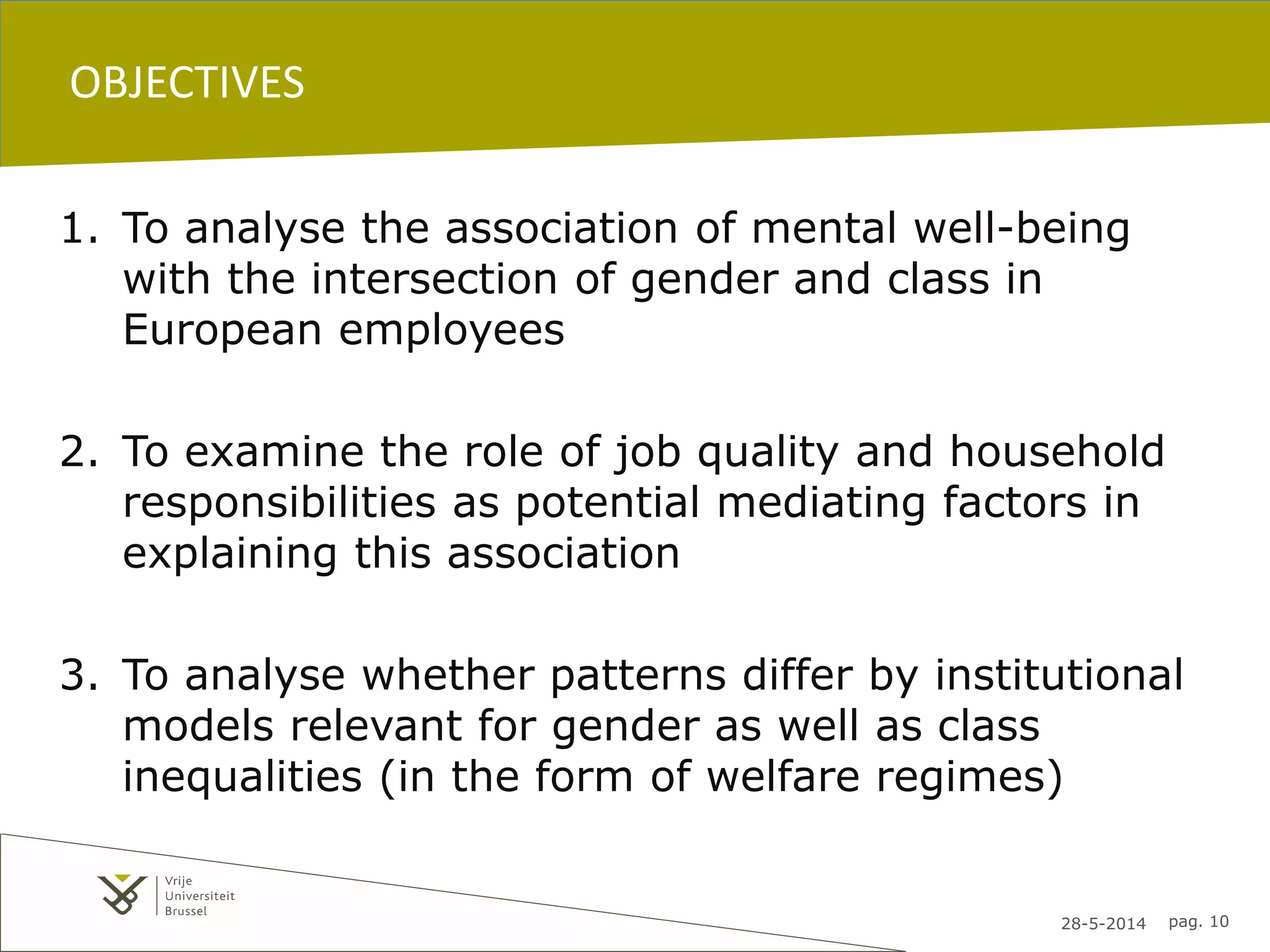
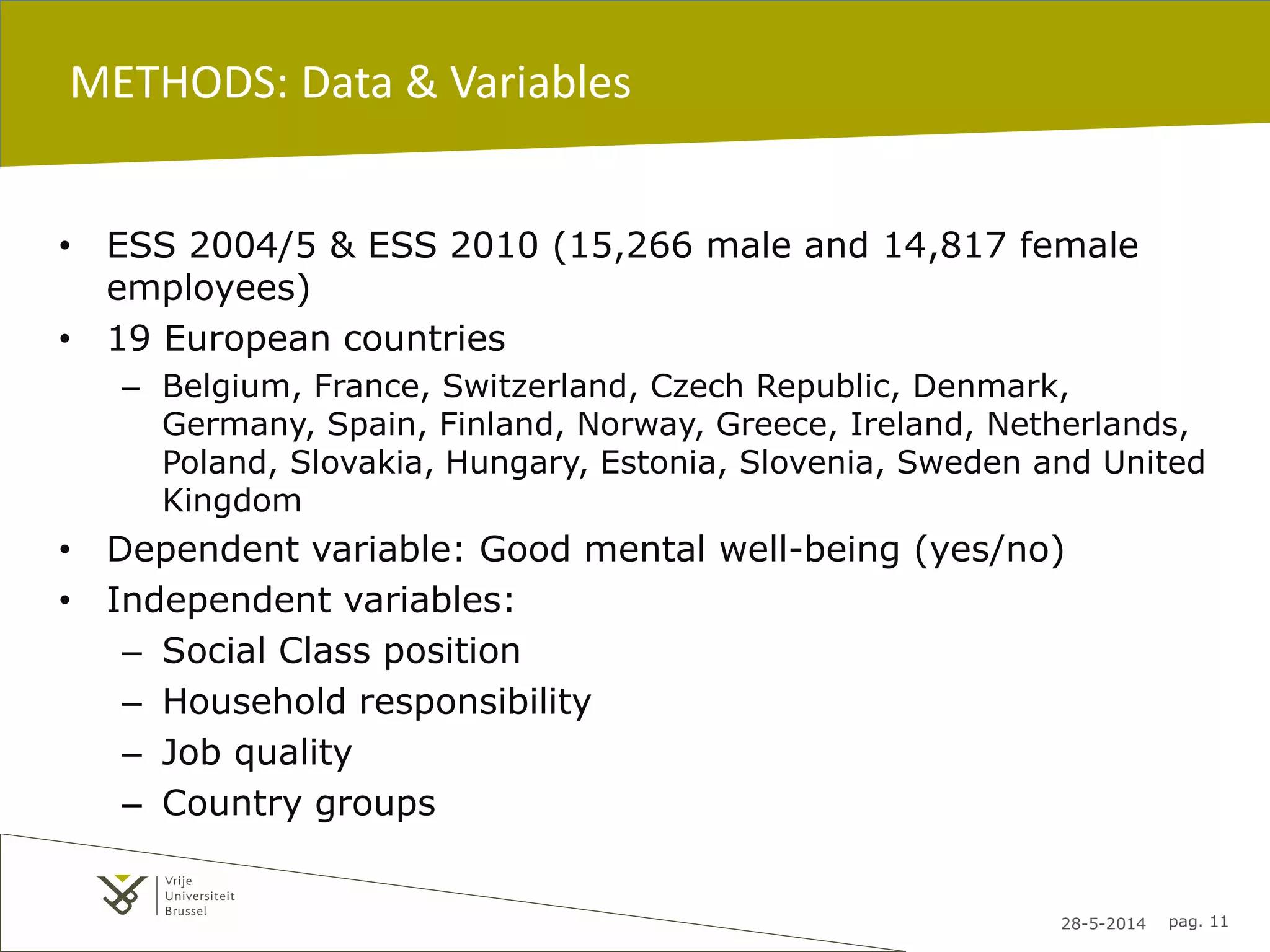
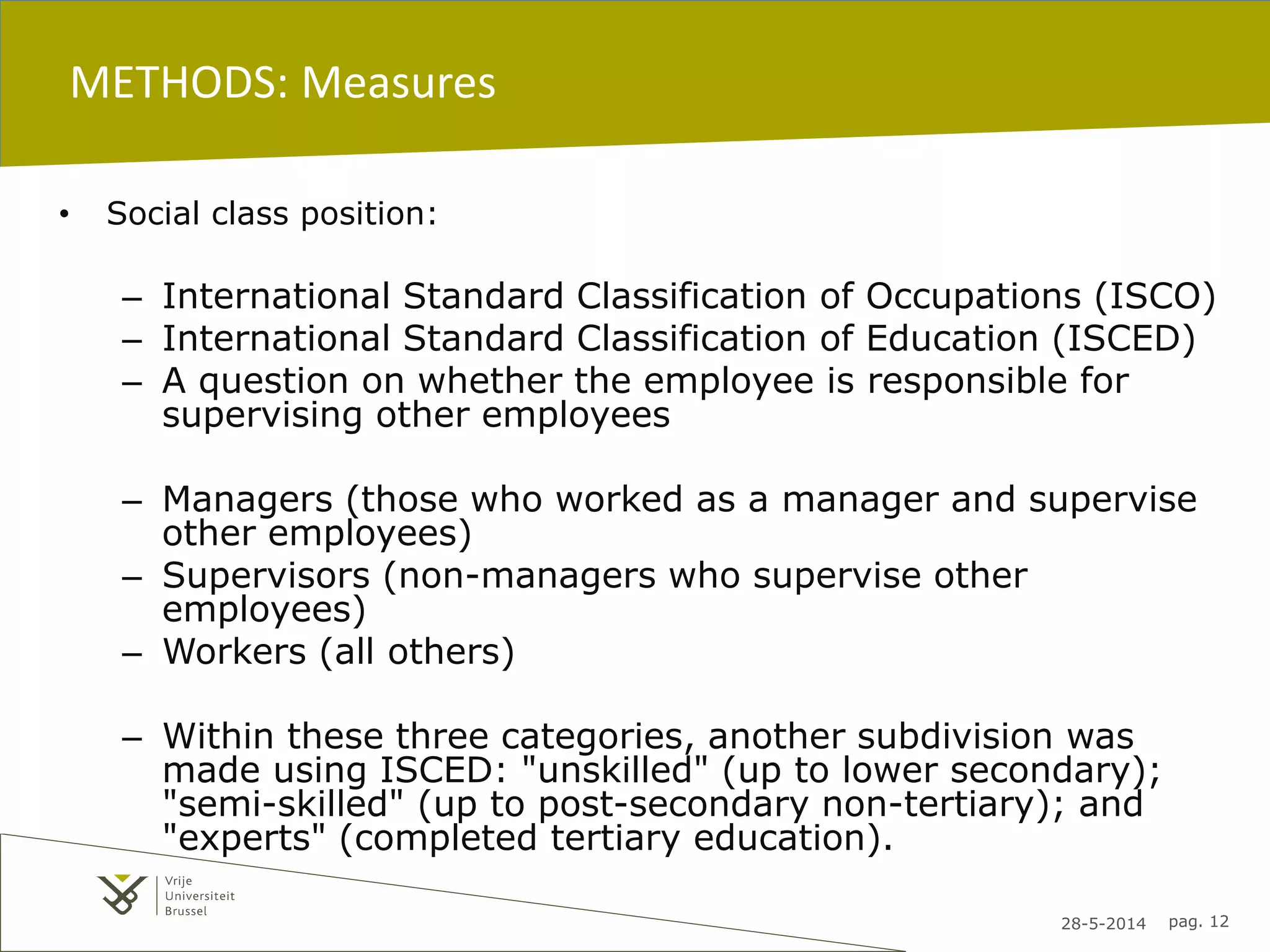
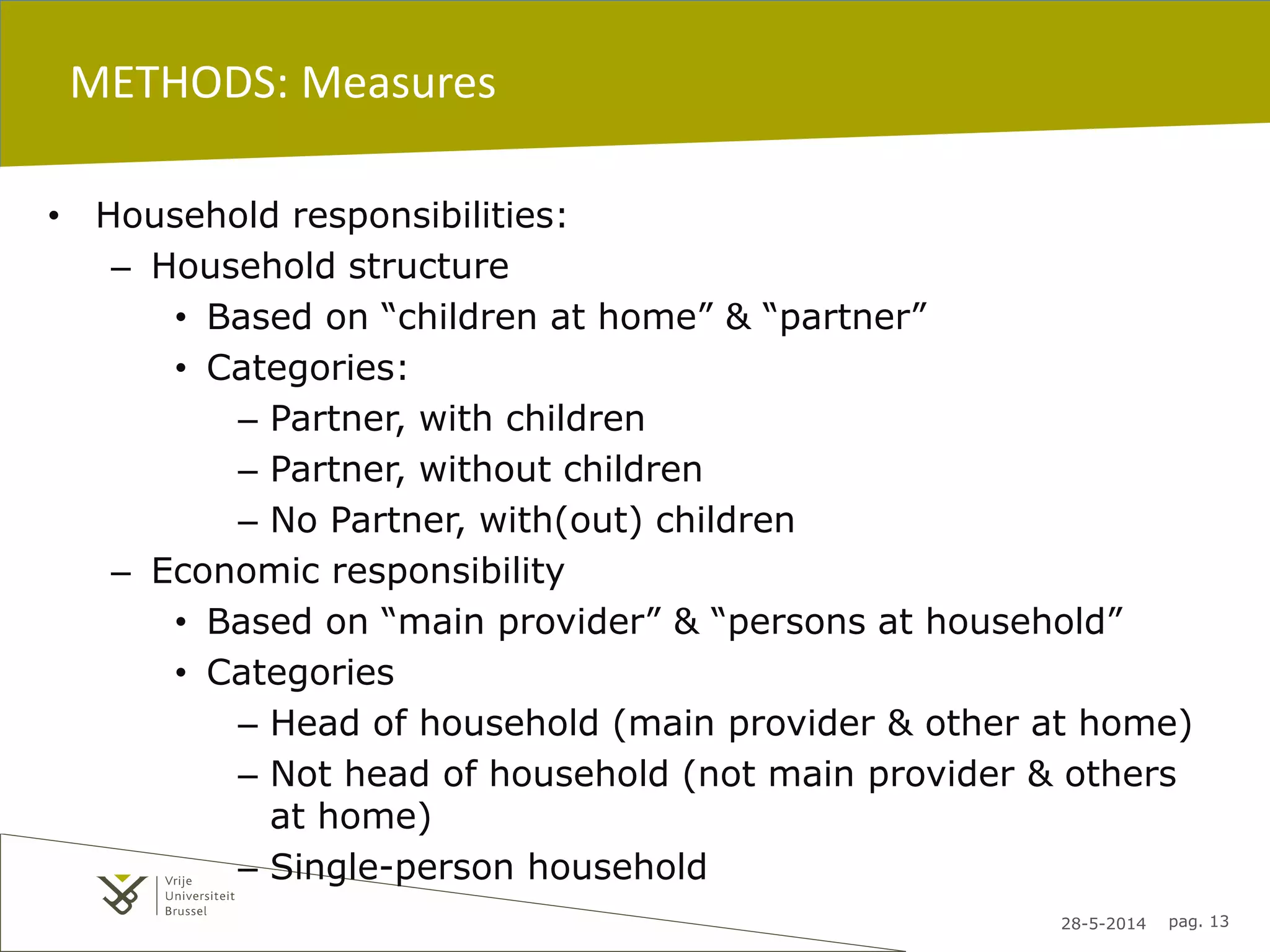
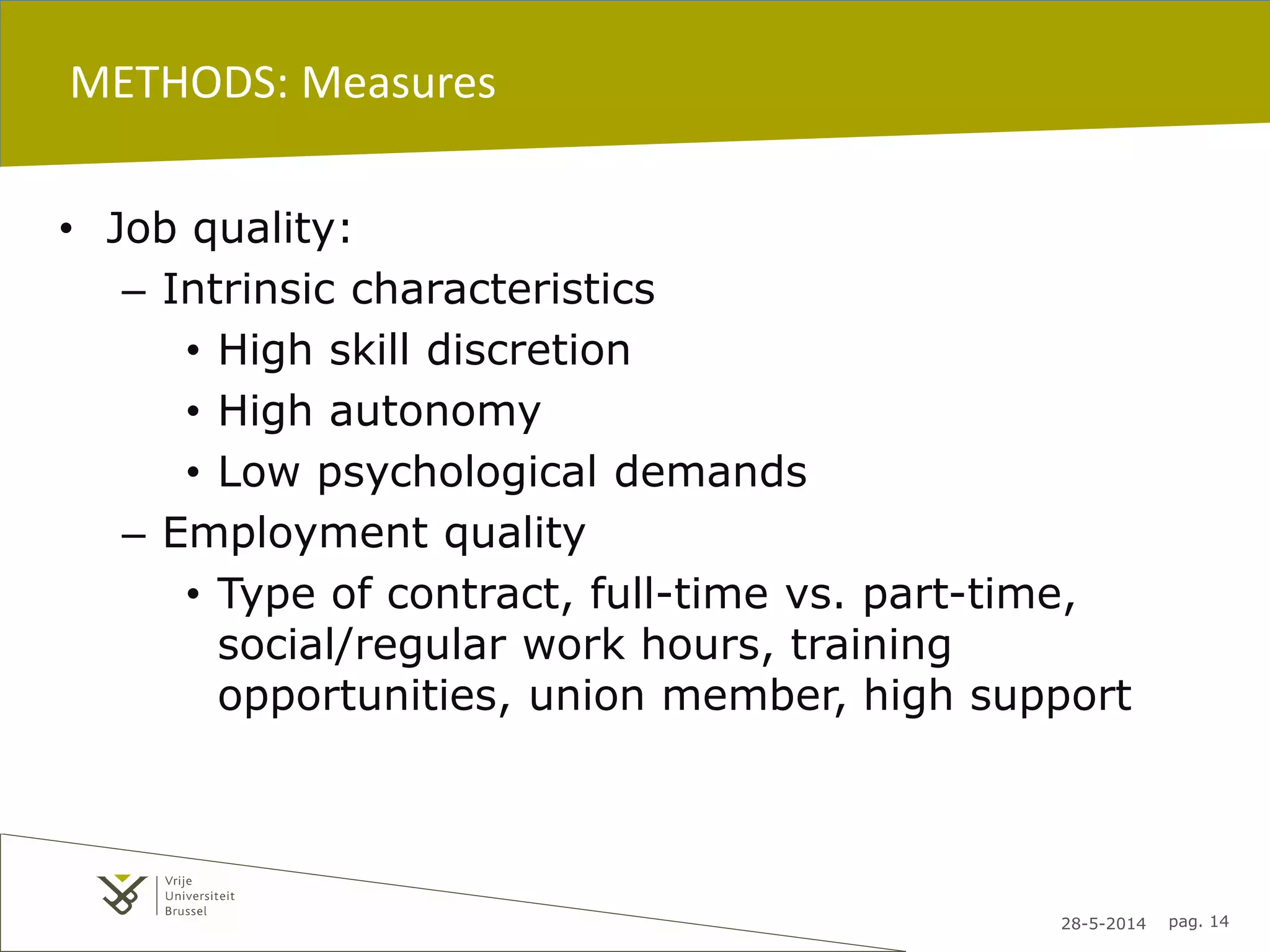
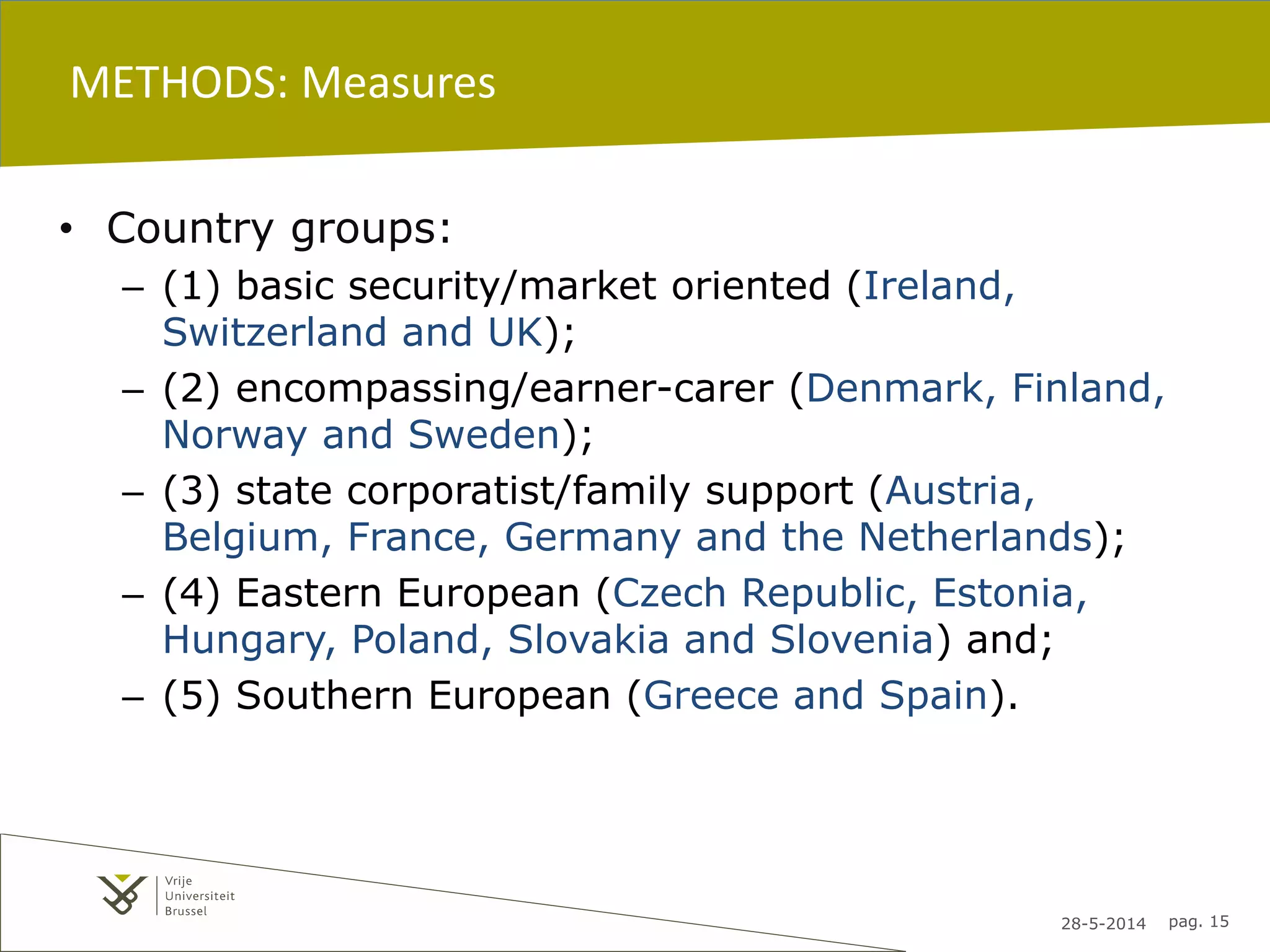
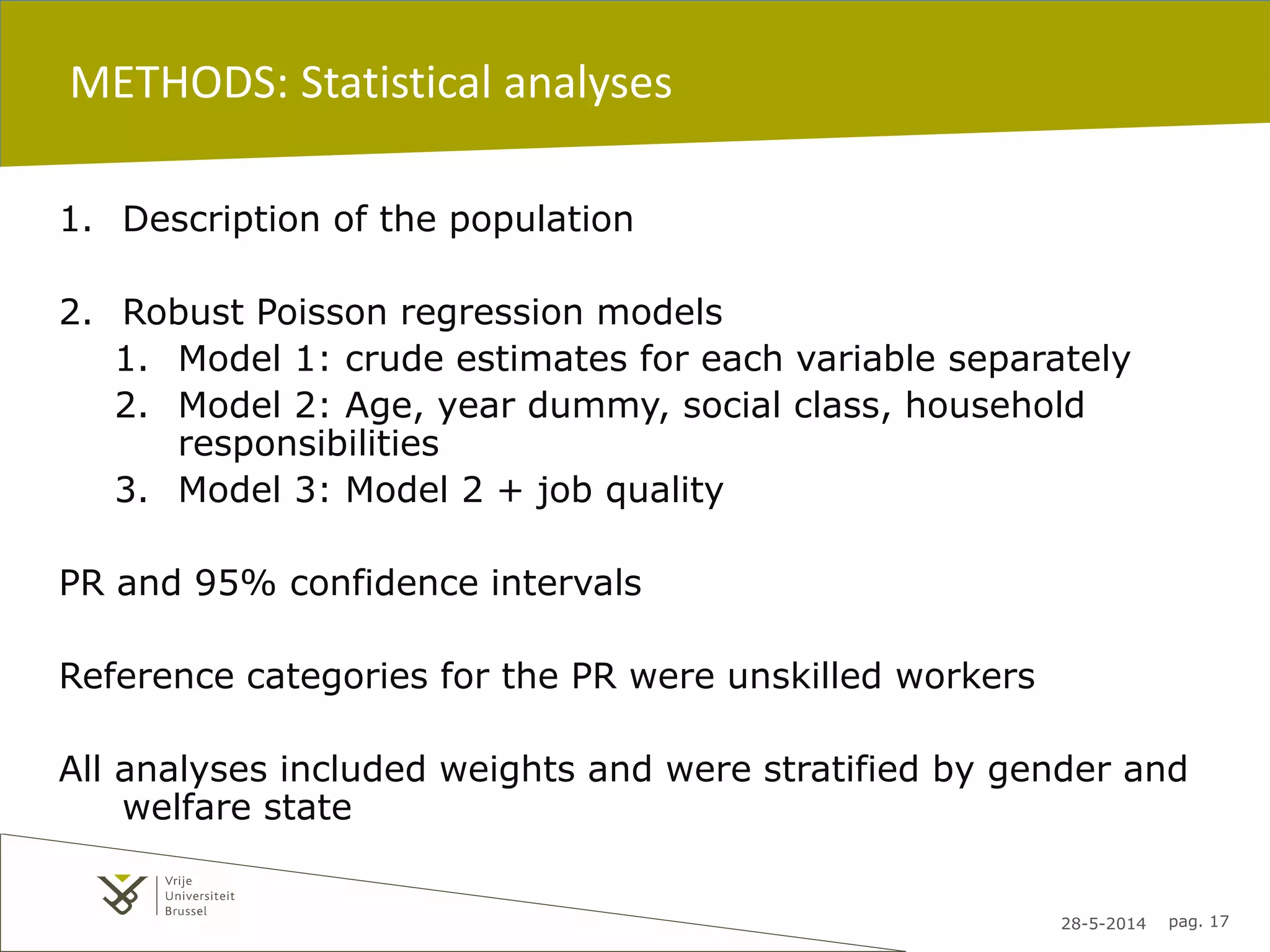



This document investigates the impact of welfare regimes on the mental well-being of European employees, particularly focusing on gender and social class intersections. It employs an intersectional approach and utilizes data from multiple European countries to analyze how job quality and household responsibilities mediate the associations between social class and mental well-being. The findings suggest that social class inequalities in mental well-being are influenced by welfare state models, with variations across genders and regions.


