Reliable Plan Selection
with
Quantified Risk-Sensitivity
Presenter: MahyaM. Kashani
Tobias John, MahyaM. Kashani, Jeremy P. Coffelt, Einar B. Johnsen, Andrzej Wąsowski
University of Oslo, IT- University of Copenhagen, ROSEN Research and Technology Center- Bremen
34th Nordic Workshop on Programming Theory (NWPT2023)
Thu 23 November 2023, Västerås, Sweden
This work is part of the project REMARO that has received funding from the European Union’s Horizon
2020 research and innovation programme under the Marie Skłodowska-Curie grant agreement No 956200
Risk-sensitive Planning
2
• Inspiration paper: Koenig, Sven, and Reid G. Simmons.
"How to make reactive planners' risk-sensitive."
• Transformed MDP using an exponential utility function
• To have a safe plan, we need to consider risk-averse of above
function
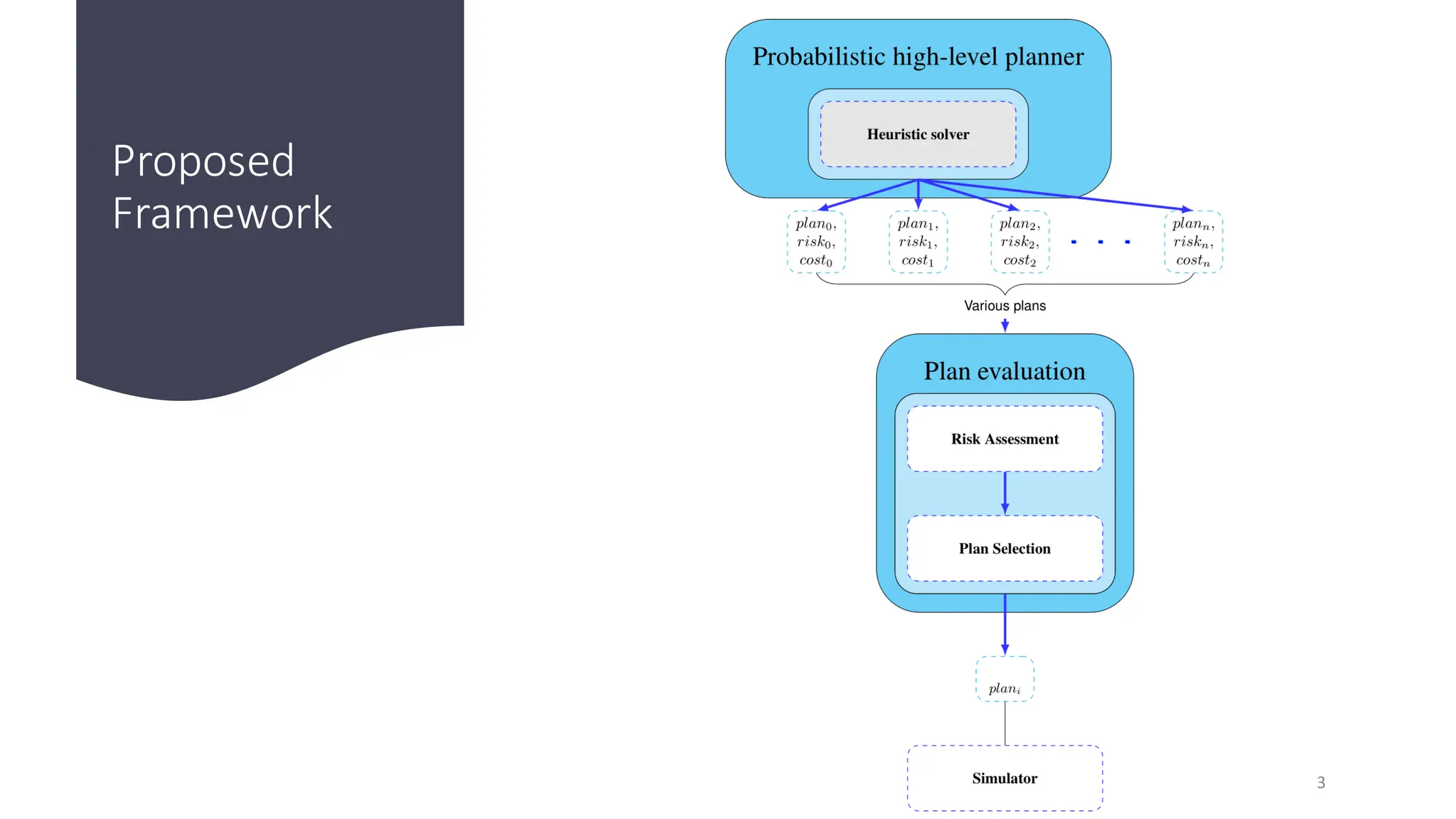
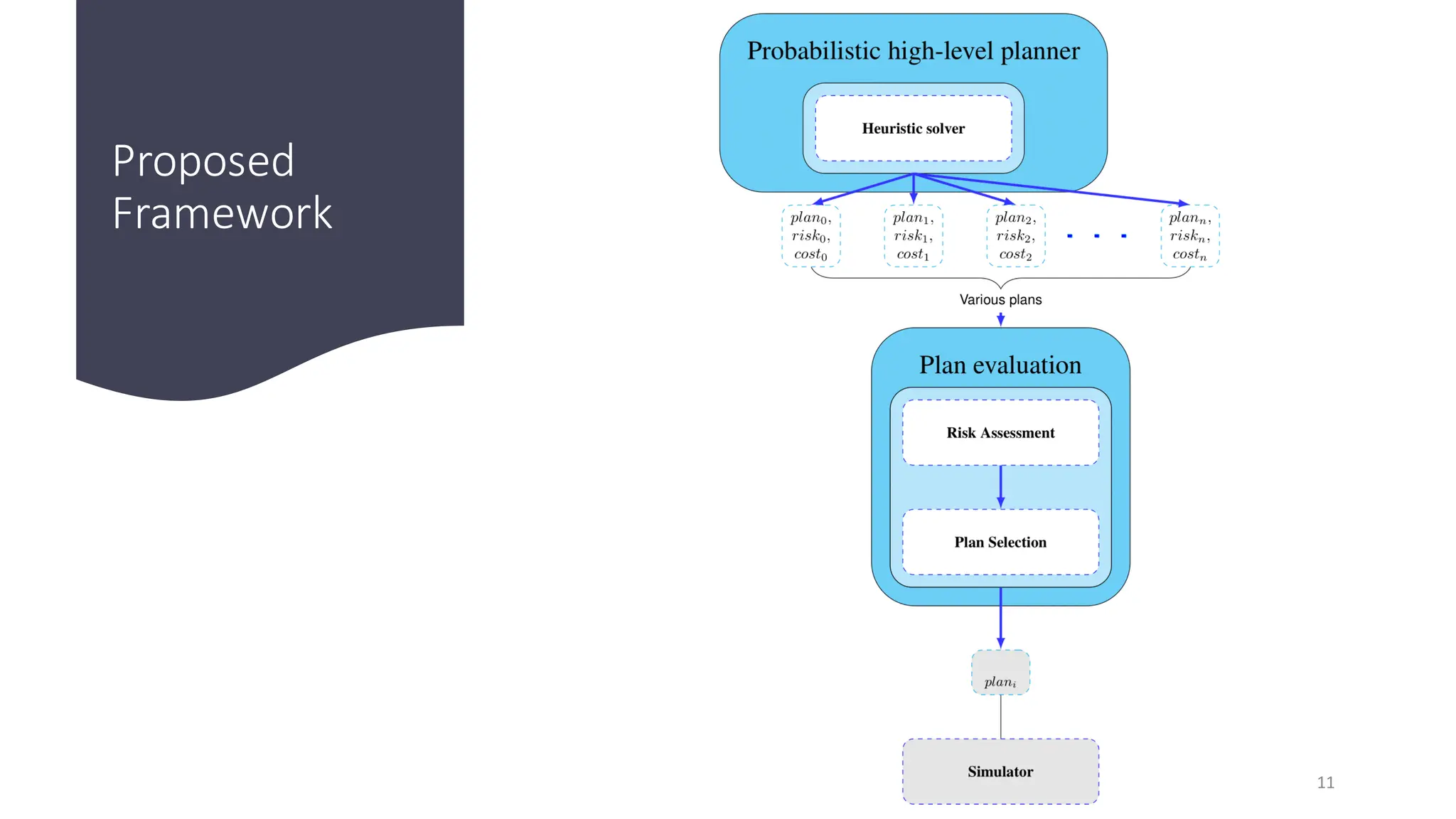
Proposed
Framework
3
Probabilistic Planning
4
It’s great when a plan works …
… but world doesn’t work like that.
To plan effectively we need to take uncertainty seriously.
Goal
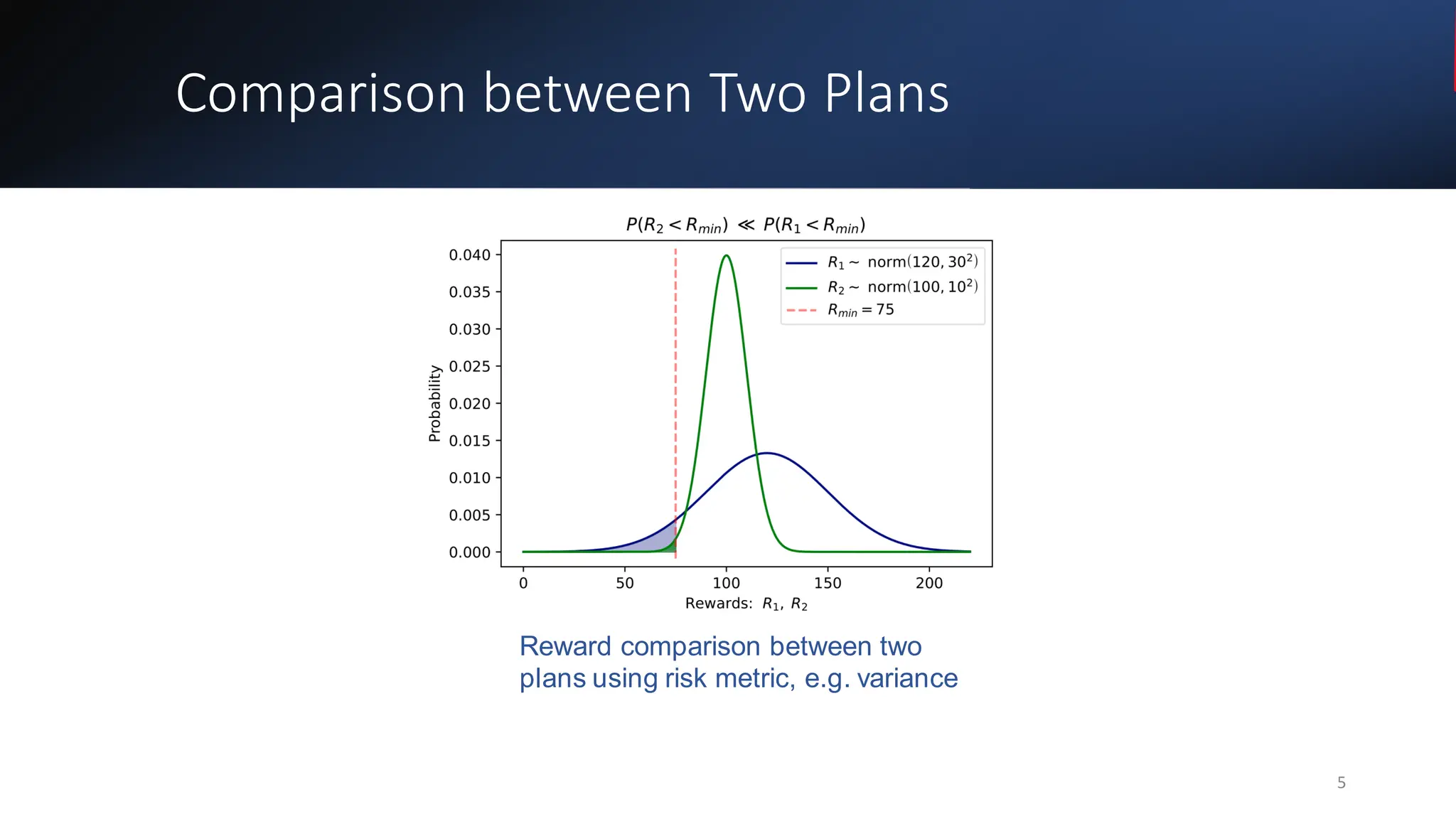
Comparison between Two Plans
Reward comparison between two
plans using risk metric, e.g. variance
5
Proposed
Framework
6
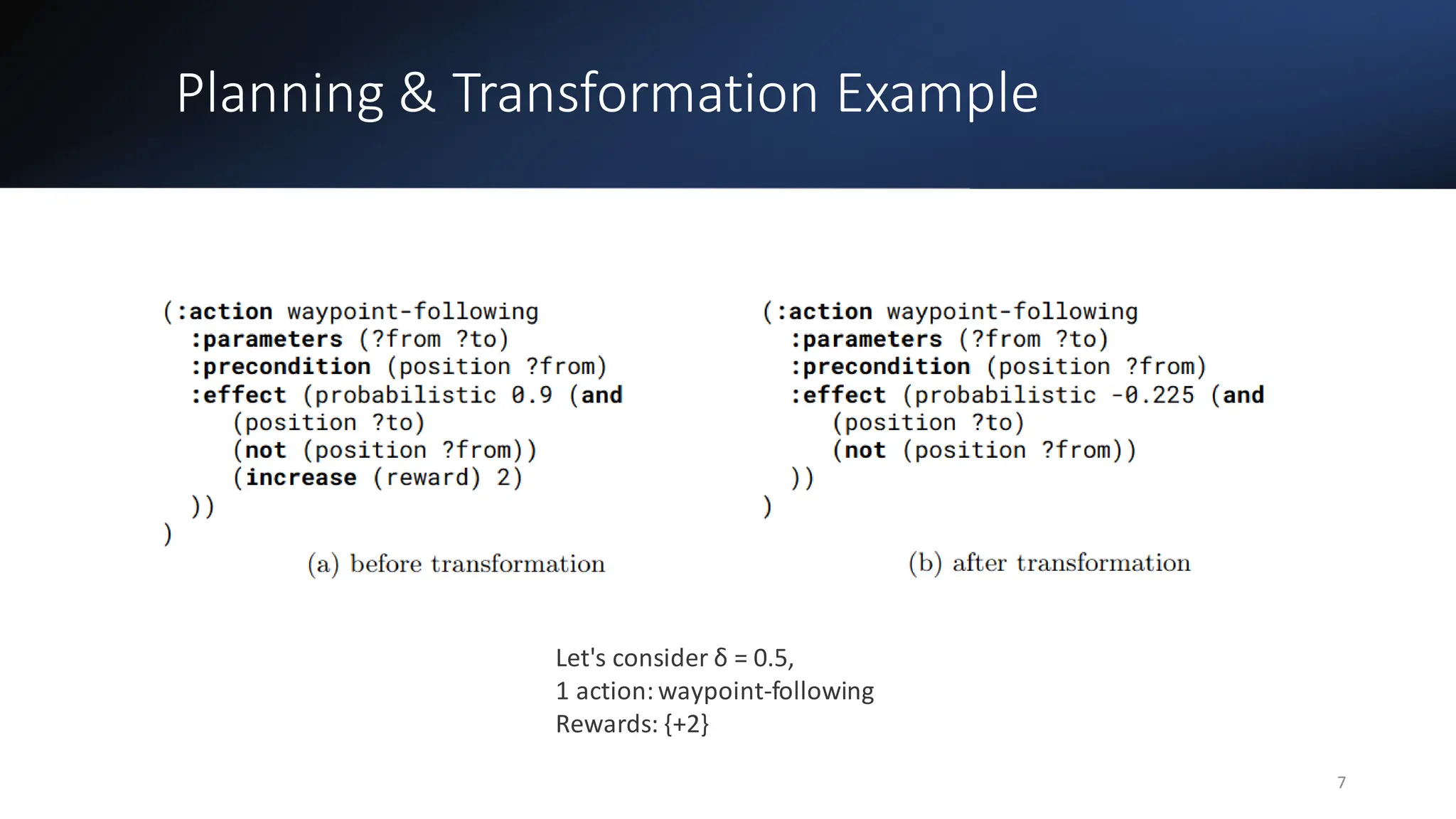
Planning & Transformation Example
Let's consider δ = 0.5,
1 action:waypoint-following
Rewards: {+2}
7
Proposed
Framework
8
Plan Selection
• Expected reward
• Variance of the reward
9
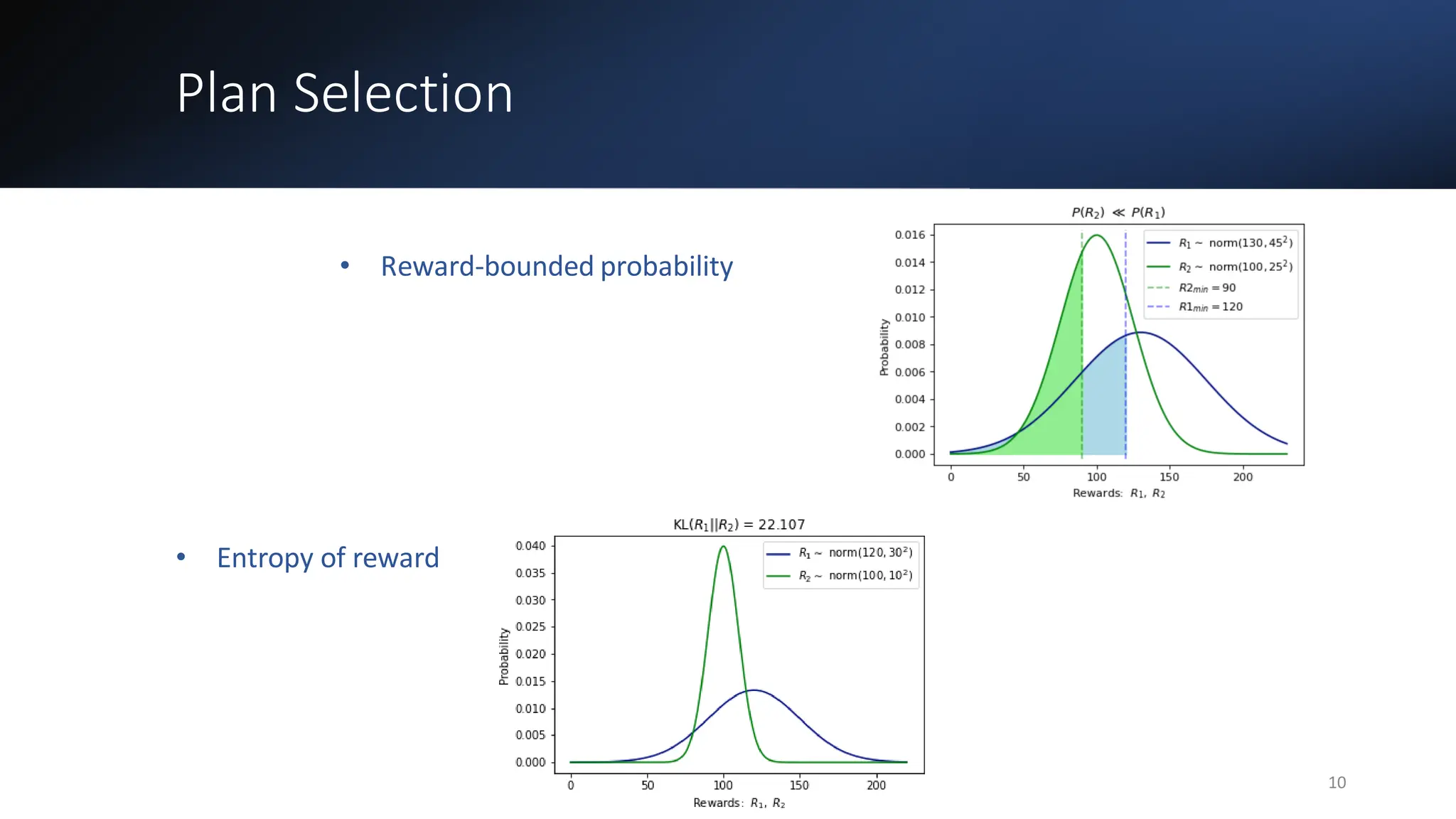
Plan Selection
• Reward-bounded probability
• Entropy of reward
10
Proposed
Framework
11
Subsea Infrastructure Inspection Scenario
12
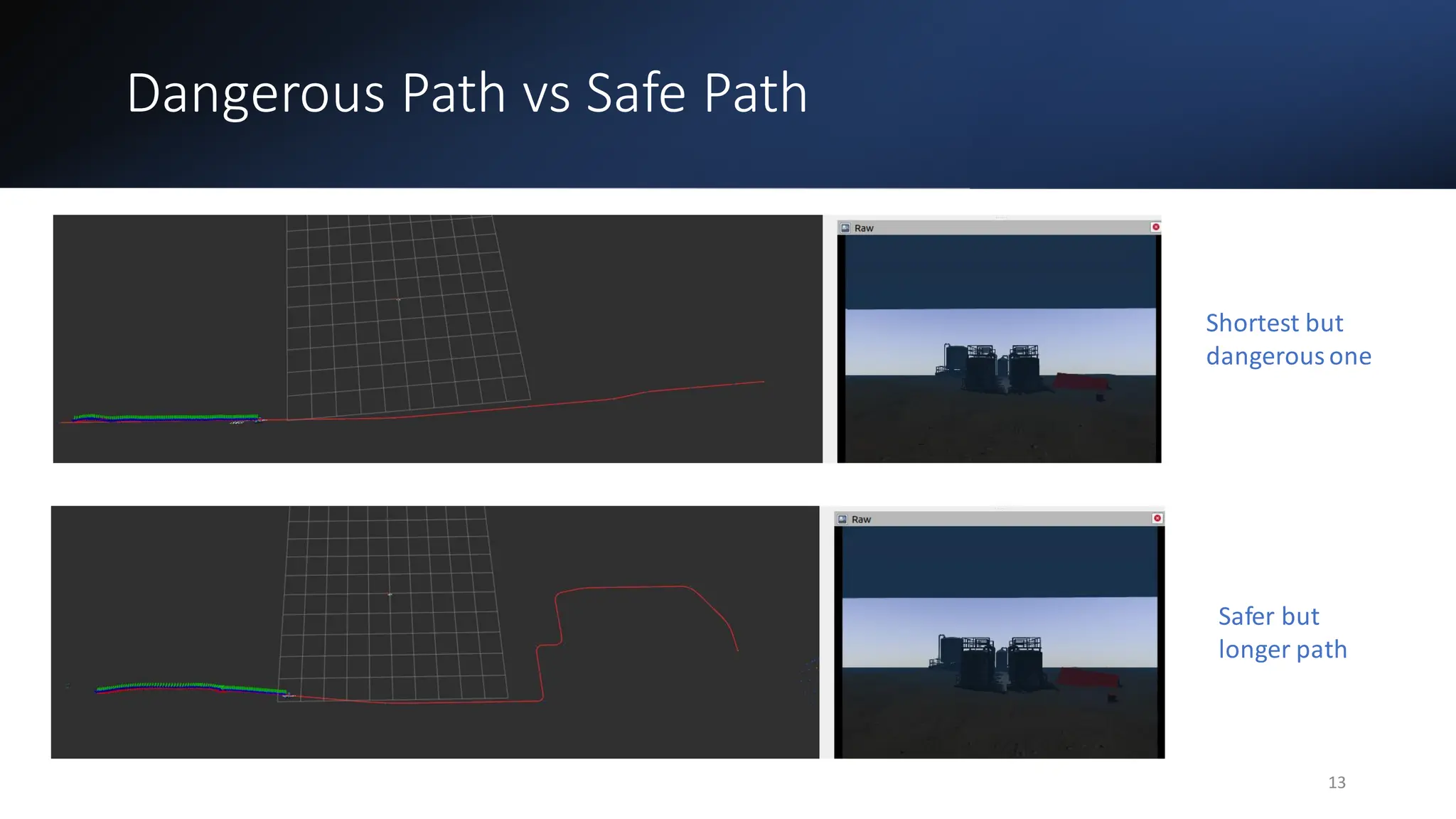
Dangerous Path vs Safe Path
13
Shortest but
dangerous one
Safer but
longer path
Conclusion
o Common risk-neutral planners’ issue is those optimize planning problem w.r.t.
time step
o Modeling transformed MDP with risk-sensitive utility
o Utilizing new model in PPDDL programming language format
Future work:
• Developing and leveraging an integrated risk-sensitive plan selection in risk-
neutral probabilistic planner
• Evaluating generated plans using introduced metrics
14

NWPT23-1.pdf

  • 1.
    Reliable Plan Selection with QuantifiedRisk-Sensitivity Presenter: MahyaM. Kashani Tobias John, MahyaM. Kashani, Jeremy P. Coffelt, Einar B. Johnsen, Andrzej Wąsowski University of Oslo, IT- University of Copenhagen, ROSEN Research and Technology Center- Bremen 34th Nordic Workshop on Programming Theory (NWPT2023) Thu 23 November 2023, Västerås, Sweden This work is part of the project REMARO that has received funding from the European Union’s Horizon 2020 research and innovation programme under the Marie Skłodowska-Curie grant agreement No 956200
  • 2.
    Risk-sensitive Planning 2 • Inspirationpaper: Koenig, Sven, and Reid G. Simmons. "How to make reactive planners' risk-sensitive." • Transformed MDP using an exponential utility function • To have a safe plan, we need to consider risk-averse of above function
  • 3.
  • 4.
    Probabilistic Planning 4 It’s greatwhen a plan works … … but world doesn’t work like that. To plan effectively we need to take uncertainty seriously. Goal
  • 5.
    Comparison between TwoPlans Reward comparison between two plans using risk metric, e.g. variance 5
  • 6.
  • 7.
    Planning & TransformationExample Let's consider δ = 0.5, 1 action:waypoint-following Rewards: {+2} 7
  • 8.
  • 9.
    Plan Selection • Expectedreward • Variance of the reward 9
  • 10.
    Plan Selection • Reward-boundedprobability • Entropy of reward 10
  • 11.
  • 12.
  • 13.
    Dangerous Path vsSafe Path 13 Shortest but dangerous one Safer but longer path
  • 14.
    Conclusion o Common risk-neutralplanners’ issue is those optimize planning problem w.r.t. time step o Modeling transformed MDP with risk-sensitive utility o Utilizing new model in PPDDL programming language format Future work: • Developing and leveraging an integrated risk-sensitive plan selection in risk- neutral probabilistic planner • Evaluating generated plans using introduced metrics 14