GREEN COMPUTING
PRESENTED BY
SAI SRUTHI.V.T
BRINDHA.T
CONTENT
 What is green computing ?
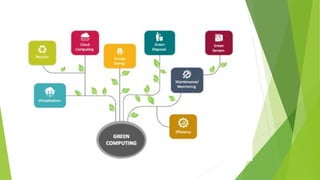
 Approaches to green computing
 History & Objectives of green computing
 Need of green computing
 Green disposal
 Future of green computing
 Advantages of green computing
 Conclusion
GREEN COMPUTING
 Green computing is the practice of using computing
resources effectively.
 Designing ,manufacturing and disposing computer,
servers with no impact on the environment.
 To reduce the use of Hazardous materials, maximize energy
efficiency during product’s lifetime.
APPROACHES
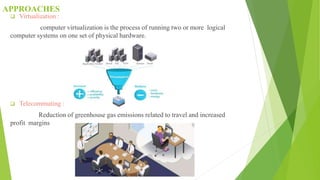
 Virtualization :
computer virtualization is the process of running two or more logical
computer systems on one set of physical hardware.
 Telecommuting :
Reduction of greenhouse gas emissions related to travel and increased
profit margins
HISTORY
 The term “ Green Computing “ was probably
coined shortly after the ‘ ENERGY STAR’ program
began way back in 1992.
 One of the first results in green computing was the
“SLEEP MODE” function of computer monitors.
 As the concept developed ,green computing began
to encompass thin client solutions ,energy cost,
accounting, virtualization practices ,e-waste etc…
OBJECTIVES
 Reduce climate change
 Savings
 Reliability of power
 Reduce the use of hazardous materials
Objectives of Green computing
 Climate Change:
First and Foremost ,conclusive research shows that Co2 and
other emissions are causing Global climate and Environmental Damage .
 Savings:
Green Computing can lead to serious cost savings overtime.
Maximize energy efficiency during the product’s Lifetime.
 Reliability of Power:
As energy demands in the world go up ,energy supply is declining or
flat . ENERGY EFFICIENT SYSTEMS helps ensure healthy power systems.
 Materials Recycling:
Many organizations ,including some manufacturers themselves, are
willing to take equipment back and recycle the components into new products.
Recent implementation of
Green computing
BLACKLE
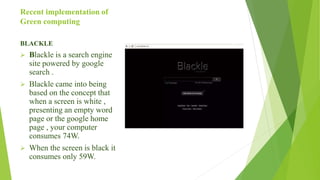
 Blackle is a search engine
site powered by google
search .
 Blackle came into being
based on the concept that
when a screen is white ,
presenting an empty word
page or the google home
page , your computer
consumes 74W.
 When the screen is black it
consumes only 59W.
NEED OF GREEN COMPUTING
WHY?????
 COMPUTER ENERGY IS OFTEN WASTEFUL
Leaving the computer on when not in use
 POLLUTION
Due to manufacturing , packaging , disposal techniques
 TOXICITY
Due to toxic chemicals involved in the manufacturing
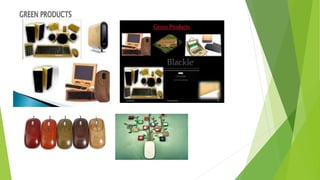
 GREEN MANUFACTURING
i BAMBOO
ii RECYCLABLE PLASTIC
iii INVENTORY MANAGEMENT
iv VOLUME REDUCTION
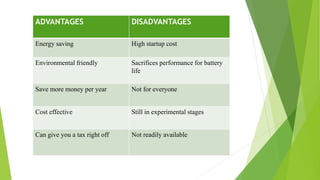
ADVANTAGES DISADVANTAGES
Energy saving High startup cost
Environmental friendly Sacrifices performance for battery
life
Save more money per year Not for everyone
Cost effective Still in experimental stages
Can give you a tax right off Not readily available
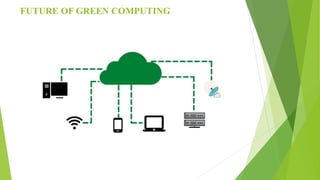
FUTURE OF GREEN COMPUTING
CONCLUSION
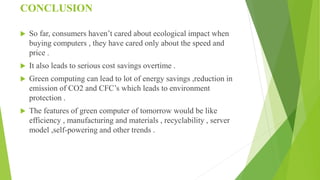
 So far, consumers haven’t cared about ecological impact when
buying computers , they have cared only about the speed and
price .
 It also leads to serious cost savings overtime .
 Green computing can lead to lot of energy savings ,reduction in
emission of CO2 and CFC’s which leads to environment
protection .
 The features of green computer of tomorrow would be like
efficiency , manufacturing and materials , recyclability , server
model ,self-powering and other trends .
REFERENCE AND RESOURCES
 en.wikipedia.org/wiki/Green computing
 https://www.ibm.com/blog/green-computing/
 https://www.lancaster.ac.uk/data-science-of-the-natural-
environment/blogs/green-computing-a-contribution-to-save-the-environment
 https://www.techtarget.com/searchcio/definition/green-IT-green-
information-technology
THANK YOU FOR THE
OPPURTUNITY NANDHA ARTS AND
SCIENCE COLLEGE

GREEN COMPUTING (1).pptx

  • 1.
  • 2.
    CONTENT  What isgreen computing ?  Approaches to green computing  History & Objectives of green computing  Need of green computing  Green disposal  Future of green computing  Advantages of green computing  Conclusion
  • 4.
    GREEN COMPUTING  Greencomputing is the practice of using computing resources effectively.  Designing ,manufacturing and disposing computer, servers with no impact on the environment.  To reduce the use of Hazardous materials, maximize energy efficiency during product’s lifetime.
  • 5.
    APPROACHES  Virtualization : computervirtualization is the process of running two or more logical computer systems on one set of physical hardware.  Telecommuting : Reduction of greenhouse gas emissions related to travel and increased profit margins
  • 8.
    HISTORY  The term“ Green Computing “ was probably coined shortly after the ‘ ENERGY STAR’ program began way back in 1992.  One of the first results in green computing was the “SLEEP MODE” function of computer monitors.  As the concept developed ,green computing began to encompass thin client solutions ,energy cost, accounting, virtualization practices ,e-waste etc… OBJECTIVES  Reduce climate change  Savings  Reliability of power  Reduce the use of hazardous materials
  • 9.
    Objectives of Greencomputing  Climate Change: First and Foremost ,conclusive research shows that Co2 and other emissions are causing Global climate and Environmental Damage .  Savings: Green Computing can lead to serious cost savings overtime. Maximize energy efficiency during the product’s Lifetime.  Reliability of Power: As energy demands in the world go up ,energy supply is declining or flat . ENERGY EFFICIENT SYSTEMS helps ensure healthy power systems.  Materials Recycling: Many organizations ,including some manufacturers themselves, are willing to take equipment back and recycle the components into new products.
  • 11.
    Recent implementation of Greencomputing BLACKLE  Blackle is a search engine site powered by google search .  Blackle came into being based on the concept that when a screen is white , presenting an empty word page or the google home page , your computer consumes 74W.  When the screen is black it consumes only 59W.
  • 12.
    NEED OF GREENCOMPUTING
  • 13.
    WHY?????  COMPUTER ENERGYIS OFTEN WASTEFUL Leaving the computer on when not in use  POLLUTION Due to manufacturing , packaging , disposal techniques  TOXICITY Due to toxic chemicals involved in the manufacturing  GREEN MANUFACTURING i BAMBOO ii RECYCLABLE PLASTIC iii INVENTORY MANAGEMENT iv VOLUME REDUCTION
  • 14.
    ADVANTAGES DISADVANTAGES Energy savingHigh startup cost Environmental friendly Sacrifices performance for battery life Save more money per year Not for everyone Cost effective Still in experimental stages Can give you a tax right off Not readily available
  • 15.
    FUTURE OF GREENCOMPUTING
  • 16.
    CONCLUSION  So far,consumers haven’t cared about ecological impact when buying computers , they have cared only about the speed and price .  It also leads to serious cost savings overtime .  Green computing can lead to lot of energy savings ,reduction in emission of CO2 and CFC’s which leads to environment protection .  The features of green computer of tomorrow would be like efficiency , manufacturing and materials , recyclability , server model ,self-powering and other trends .
  • 17.
    REFERENCE AND RESOURCES en.wikipedia.org/wiki/Green computing  https://www.ibm.com/blog/green-computing/  https://www.lancaster.ac.uk/data-science-of-the-natural- environment/blogs/green-computing-a-contribution-to-save-the-environment  https://www.techtarget.com/searchcio/definition/green-IT-green- information-technology
  • 18.
    THANK YOU FORTHE OPPURTUNITY NANDHA ARTS AND SCIENCE COLLEGE