Habitat Conservation Plans:
Can They Support Energy
Development in the West?
CLE Endangered Species Act Conference
San Francisco, CA
September 18, 2014
David Zippin, PhD
Vice President, ICF International
2
Presentation Outline
ď‚§ Habitat Conservation Plan (HCP) Overview
ď‚§ Example Large-Scale Energy Development HCPs
ď‚§ Can Regional HCPs facilitate Western Energy Development?
– Benefits
– Challenges
– Solutions
3
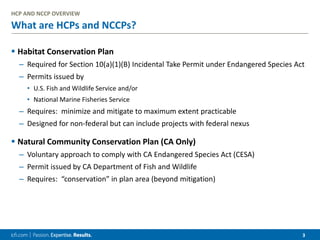
What are HCPs and NCCPs?
ď‚§ Habitat Conservation Plan
– Required for Section 10(a)(1)(B) Incidental Take Permit under Endangered Species Act
– Permits issued by
• U.S. Fish and Wildlife Service and/or
• National Marine Fisheries Service
– Requires: minimize and mitigate to maximum extent practicable
– Designed for non-federal but can include projects with federal nexus
ď‚§ Natural Community Conservation Plan (CA Only)
– Voluntary approach to comply with CA Endangered Species Act (CESA)
– Permit issued by CA Department of Fish and Wildlife
– Requires: “conservation” in plan area (beyond mitigation)
HCP AND NCCP OVERVIEW
4
Permit(s) issued to local or state agencies
(county, city, water agency, special district)
Take authorization
for private projects under
agency jurisdiction
Take authorization
for agency
projects and O&M
Regional HCP and NCCP: How they Work
HCP AND NCCP OVERVIEW
Endangered Species Permits
from USFWS and/or NMFS and CDFW
State or Local
Permit
5
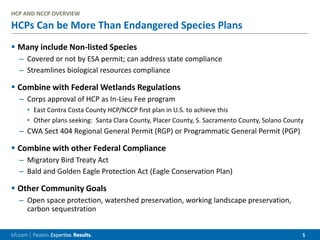
HCPs Can be More Than Endangered Species Plans
ď‚§ Many include Non-listed Species
– Covered or not by ESA permit; can address state compliance
– Streamlines biological resources compliance
ď‚§ Combine with Federal Wetlands Regulations
– Corps approval of HCP as In-Lieu Fee program
• East Contra Costa County HCP/NCCP first plan in U.S. to achieve this
• Other plans seeking: Santa Clara County, Placer County, S. Sacramento County, Solano County
– CWA Sect 404 Regional General Permit (RGP) or Programmatic General Permit (PGP)
ď‚§ Combine with other Federal Compliance
– Migratory Bird Treaty Act
– Bald and Golden Eagle Protection Act (Eagle Conservation Plan)
ď‚§ Other Community Goals
– Open space protection, watershed preservation, working landscape preservation,
carbon sequestration
HCP AND NCCP OVERVIEW
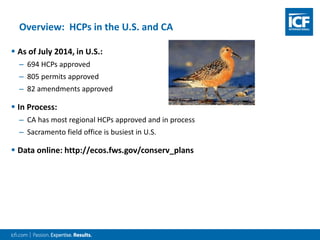
ď‚§ As of July 2014, in U.S.:
– 694 HCPs approved
– 805 permits approved
– 82 amendments approved
ď‚§ In Process:
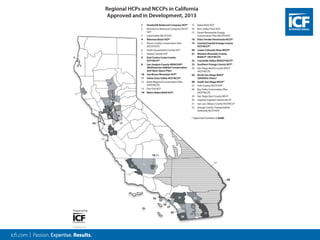
– CA has most regional HCPs approved and in process
– Sacramento field office is busiest in U.S.
ď‚§ Data online: http://ecos.fws.gov/conserv_plans
Overview: HCPs in the U.S. and CA
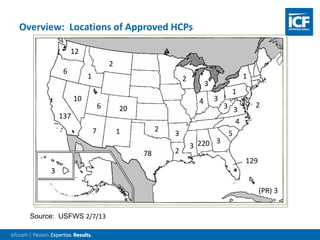
Overview: Locations of Approved HCPs
Source: USFWS 2/7/13
144
203
82
46
15
131
8
10
2
11
14
1
3
4
5
3
3
1
2
2
1 1
(PR) 2
2
1
1
1
1
137
78
220
37
20
129
10
6
1
6
12
2
3
4
5
3
3
2
2
4
(PR) 3
3
3
2
3
3
1
1
1
2
Growth in HCPs
Source: USFWS 11/14/11
1 0 0 1 0 0 0 1 1 2
7
12
46
41
27
21
35
69
44
36
23
34
25
59
50
19
14
42
9
0
10
20
30
40
50
60
70
80
NumberofApprovedHCPs
Year
“No Surprises”
Policy
Final Rule
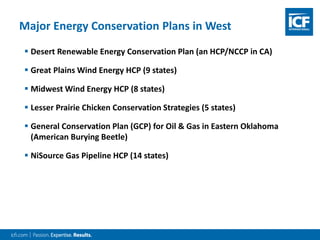
ď‚§ Desert Renewable Energy Conservation Plan (an HCP/NCCP in CA)
ď‚§ Great Plains Wind Energy HCP (9 states)
ď‚§ Midwest Wind Energy HCP (8 states)
ď‚§ Lesser Prairie Chicken Conservation Strategies (5 states)
ď‚§ General Conservation Plan (GCP) for Oil & Gas in Eastern Oklahoma
(American Burying Beetle)
ď‚§ NiSource Gas Pipeline HCP (14 states)
Major Energy Conservation Plans in West
ď‚§ Durable permits: Better and longer than Section 7 Biological Opinion
ď‚§ Ability to cover non-listed species: Insurance
ď‚§ Cover non-federal activities: Project or O&M on state or private land
ď‚§ Increases local control of endangered species permitting
ď‚§ Federal grants available for HCP planning ($7.2 million FY14)
ď‚§ Scale creates
– Efficiency (conservation and cost)
– Political momentum
Benefits of Regional HCPs for Energy in West
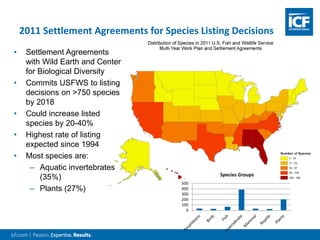
2011 Settlement Agreements for Species Listing Decisions
• Settlement Agreements
with Wild Earth and Center
for Biological Diversity
• Commits USFWS to listing
decisions on >750 species
by 2018
• Could increase listed
species by 20-40%
• Highest rate of listing
expected since 1994
• Most species are:
– Aquatic invertebrates
(35%)
– Plants (27%)
0
100
200
300
400
500
Species Groups
ď‚§ Large investment to complete them: time and $$
ď‚§ Some may bite off more than can be chewed
 Problem of “control” over covered activities
ď‚§ Integrating federal lands and actions
ď‚§ Sharing data to realize HCP goals
ď‚§ Thinking large scale and long term
Challenges of Regional HCPs for Energy in West
Desert Renewable Energy Conservation Plan, California
ď‚§ Covers all renewable energy
development in CA desert
ď‚§ > 21 million acres
ď‚§ Solar, wind, geothermal, biomass,
transmission
15
Challenge: Patchwork of Agencies with “Control”
Direct Control
ď‚§ USFWS 2013 Final Guidance for Incidental Take Permits Covering Multiple
Projects or Project Owners
 Take authorization extended to any person under “direct control” of
permittee (50 CFR 13.25(d))
– Persons employed by permittee
– Person or entity under contract to permittee
– Applicants under regulatory jurisdiction of permittee
– Person or entity receiving permit from permittee
– Executed written agreement with permittee (e.g., Certificate of Inclusion,
Cooperative Agreement)
18
Whooping Crane
19
Whooping crane
Lesser prairie-
chicken
Interior least tern
Piping plover
Participants:
• 2 regions USFWS
• 9 State
Wildlife Agencies
• 19 wind energy
companies
Great Plains Wind Energy HCP
Midwest Wind Energy Multi-Species HCP
ď‚— Focused on FWS Region 3 (8 states)
ď‚— 20+ wind companies, AWEA, and NGO
ď‚— Cover up to 9 species
ď‚— Indiana bat, gray bat, 3 others
ď‚— Piping plover
ď‚— Bald eagle
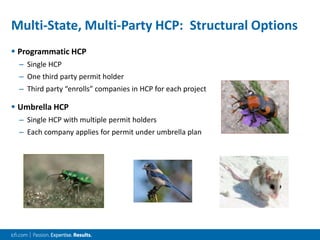
Multi-State, Multi-Party HCP: Structural Options
ď‚§ Programmatic HCP
– Single HCP
– One third party permit holder
– Third party “enrolls” companies in HCP for each project
ď‚§ Umbrella HCP
– Single HCP with multiple permit holders
– Each company applies for permit under umbrella plan
ď‚§ Large investment to complete them: time and $$
ď‚§ Some may bite off more than can be chewed
 Problem of “control” over covered activities
ď‚§ Integrating federal lands and actions
ď‚§ Sharing data to realize HCP goals
ď‚§ Thinking large scale and long term
Challenges of Regional HCPs for Energy in West
23
Can Regional HCPs Support Energy Development in the West?
ď‚§ YES, but set up plans for success
– Focused geographic area, covered activities, covered species, or all
– Consider phasing geographically (CA gnatcatcher example)
– Design feasible permit structure
– Set realistic schedule
ď‚§ YES, and consider other options in interim
– Species mitigation framework
– Voluntary conservation strategy
– Programmatic Sect. 7 consultation
Thank you!
David Zippin, PhD
415.677.7179
david.zippin@icfi.com

Zippin_HCPs_Energy_Development_09-18-14

  • 1.
    Habitat Conservation Plans: CanThey Support Energy Development in the West? CLE Endangered Species Act Conference San Francisco, CA September 18, 2014 David Zippin, PhD Vice President, ICF International
  • 2.
    2 Presentation Outline  HabitatConservation Plan (HCP) Overview  Example Large-Scale Energy Development HCPs  Can Regional HCPs facilitate Western Energy Development? – Benefits – Challenges – Solutions
  • 3.
    3 What are HCPsand NCCPs?  Habitat Conservation Plan – Required for Section 10(a)(1)(B) Incidental Take Permit under Endangered Species Act – Permits issued by • U.S. Fish and Wildlife Service and/or • National Marine Fisheries Service – Requires: minimize and mitigate to maximum extent practicable – Designed for non-federal but can include projects with federal nexus  Natural Community Conservation Plan (CA Only) – Voluntary approach to comply with CA Endangered Species Act (CESA) – Permit issued by CA Department of Fish and Wildlife – Requires: “conservation” in plan area (beyond mitigation) HCP AND NCCP OVERVIEW
  • 4.
    4 Permit(s) issued tolocal or state agencies (county, city, water agency, special district) Take authorization for private projects under agency jurisdiction Take authorization for agency projects and O&M Regional HCP and NCCP: How they Work HCP AND NCCP OVERVIEW Endangered Species Permits from USFWS and/or NMFS and CDFW State or Local Permit
  • 5.
    5 HCPs Can beMore Than Endangered Species Plans  Many include Non-listed Species – Covered or not by ESA permit; can address state compliance – Streamlines biological resources compliance  Combine with Federal Wetlands Regulations – Corps approval of HCP as In-Lieu Fee program • East Contra Costa County HCP/NCCP first plan in U.S. to achieve this • Other plans seeking: Santa Clara County, Placer County, S. Sacramento County, Solano County – CWA Sect 404 Regional General Permit (RGP) or Programmatic General Permit (PGP)  Combine with other Federal Compliance – Migratory Bird Treaty Act – Bald and Golden Eagle Protection Act (Eagle Conservation Plan)  Other Community Goals – Open space protection, watershed preservation, working landscape preservation, carbon sequestration HCP AND NCCP OVERVIEW
  • 6.
     As ofJuly 2014, in U.S.: – 694 HCPs approved – 805 permits approved – 82 amendments approved  In Process: – CA has most regional HCPs approved and in process – Sacramento field office is busiest in U.S.  Data online: http://ecos.fws.gov/conserv_plans Overview: HCPs in the U.S. and CA
  • 7.
    Overview: Locations ofApproved HCPs Source: USFWS 2/7/13 144 203 82 46 15 131 8 10 2 11 14 1 3 4 5 3 3 1 2 2 1 1 (PR) 2 2 1 1 1 1 137 78 220 37 20 129 10 6 1 6 12 2 3 4 5 3 3 2 2 4 (PR) 3 3 3 2 3 3 1 1 1 2
  • 8.
    Growth in HCPs Source:USFWS 11/14/11 1 0 0 1 0 0 0 1 1 2 7 12 46 41 27 21 35 69 44 36 23 34 25 59 50 19 14 42 9 0 10 20 30 40 50 60 70 80 NumberofApprovedHCPs Year “No Surprises” Policy Final Rule
  • 10.
    ď‚§ Desert RenewableEnergy Conservation Plan (an HCP/NCCP in CA) ď‚§ Great Plains Wind Energy HCP (9 states) ď‚§ Midwest Wind Energy HCP (8 states) ď‚§ Lesser Prairie Chicken Conservation Strategies (5 states) ď‚§ General Conservation Plan (GCP) for Oil & Gas in Eastern Oklahoma (American Burying Beetle) ď‚§ NiSource Gas Pipeline HCP (14 states) Major Energy Conservation Plans in West
  • 11.
     Durable permits:Better and longer than Section 7 Biological Opinion  Ability to cover non-listed species: Insurance  Cover non-federal activities: Project or O&M on state or private land  Increases local control of endangered species permitting  Federal grants available for HCP planning ($7.2 million FY14)  Scale creates – Efficiency (conservation and cost) – Political momentum Benefits of Regional HCPs for Energy in West
  • 12.
    2011 Settlement Agreementsfor Species Listing Decisions • Settlement Agreements with Wild Earth and Center for Biological Diversity • Commits USFWS to listing decisions on >750 species by 2018 • Could increase listed species by 20-40% • Highest rate of listing expected since 1994 • Most species are: – Aquatic invertebrates (35%) – Plants (27%) 0 100 200 300 400 500 Species Groups
  • 13.
     Large investmentto complete them: time and $$  Some may bite off more than can be chewed  Problem of “control” over covered activities  Integrating federal lands and actions  Sharing data to realize HCP goals  Thinking large scale and long term Challenges of Regional HCPs for Energy in West
  • 14.
    Desert Renewable EnergyConservation Plan, California ď‚§ Covers all renewable energy development in CA desert ď‚§ > 21 million acres ď‚§ Solar, wind, geothermal, biomass, transmission
  • 15.
  • 16.
    Challenge: Patchwork ofAgencies with “Control”
  • 17.
    Direct Control  USFWS2013 Final Guidance for Incidental Take Permits Covering Multiple Projects or Project Owners  Take authorization extended to any person under “direct control” of permittee (50 CFR 13.25(d)) – Persons employed by permittee – Person or entity under contract to permittee – Applicants under regulatory jurisdiction of permittee – Person or entity receiving permit from permittee – Executed written agreement with permittee (e.g., Certificate of Inclusion, Cooperative Agreement)
  • 18.
  • 19.
    19 Whooping crane Lesser prairie- chicken Interiorleast tern Piping plover Participants: • 2 regions USFWS • 9 State Wildlife Agencies • 19 wind energy companies Great Plains Wind Energy HCP
  • 20.
    Midwest Wind EnergyMulti-Species HCP ď‚— Focused on FWS Region 3 (8 states) ď‚— 20+ wind companies, AWEA, and NGO ď‚— Cover up to 9 species ď‚— Indiana bat, gray bat, 3 others ď‚— Piping plover ď‚— Bald eagle
  • 21.
    Multi-State, Multi-Party HCP:Structural Options  Programmatic HCP – Single HCP – One third party permit holder – Third party “enrolls” companies in HCP for each project  Umbrella HCP – Single HCP with multiple permit holders – Each company applies for permit under umbrella plan
  • 22.
     Large investmentto complete them: time and $$  Some may bite off more than can be chewed  Problem of “control” over covered activities  Integrating federal lands and actions  Sharing data to realize HCP goals  Thinking large scale and long term Challenges of Regional HCPs for Energy in West
  • 23.
    23 Can Regional HCPsSupport Energy Development in the West?  YES, but set up plans for success – Focused geographic area, covered activities, covered species, or all – Consider phasing geographically (CA gnatcatcher example) – Design feasible permit structure – Set realistic schedule  YES, and consider other options in interim – Species mitigation framework – Voluntary conservation strategy – Programmatic Sect. 7 consultation
  • 24.
    Thank you! David Zippin,PhD 415.677.7179 david.zippin@icfi.com