Solar cells
Yogesh Wakchaure
Overview
 Solar cell fundamentals
 Novel solar cell structures
 Thin film solar cells
 Next generation solar cell
Appealing Characteristics
 Consumes no fuel
 No pollution
 Wide power-handling capabilities
 High power-to-weight ratio
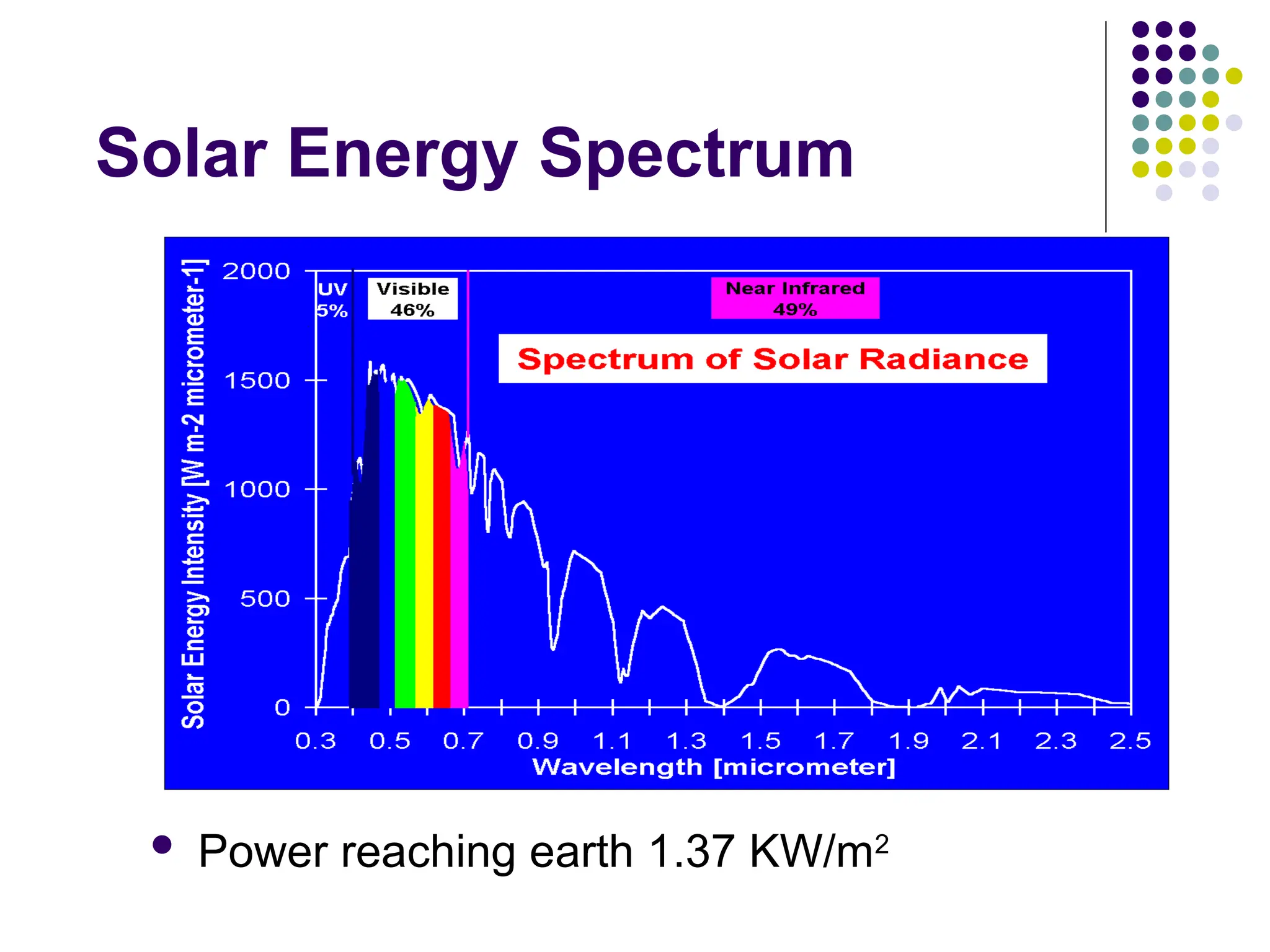
Solar Energy Spectrum
 Power reaching earth 1.37 KW/m2
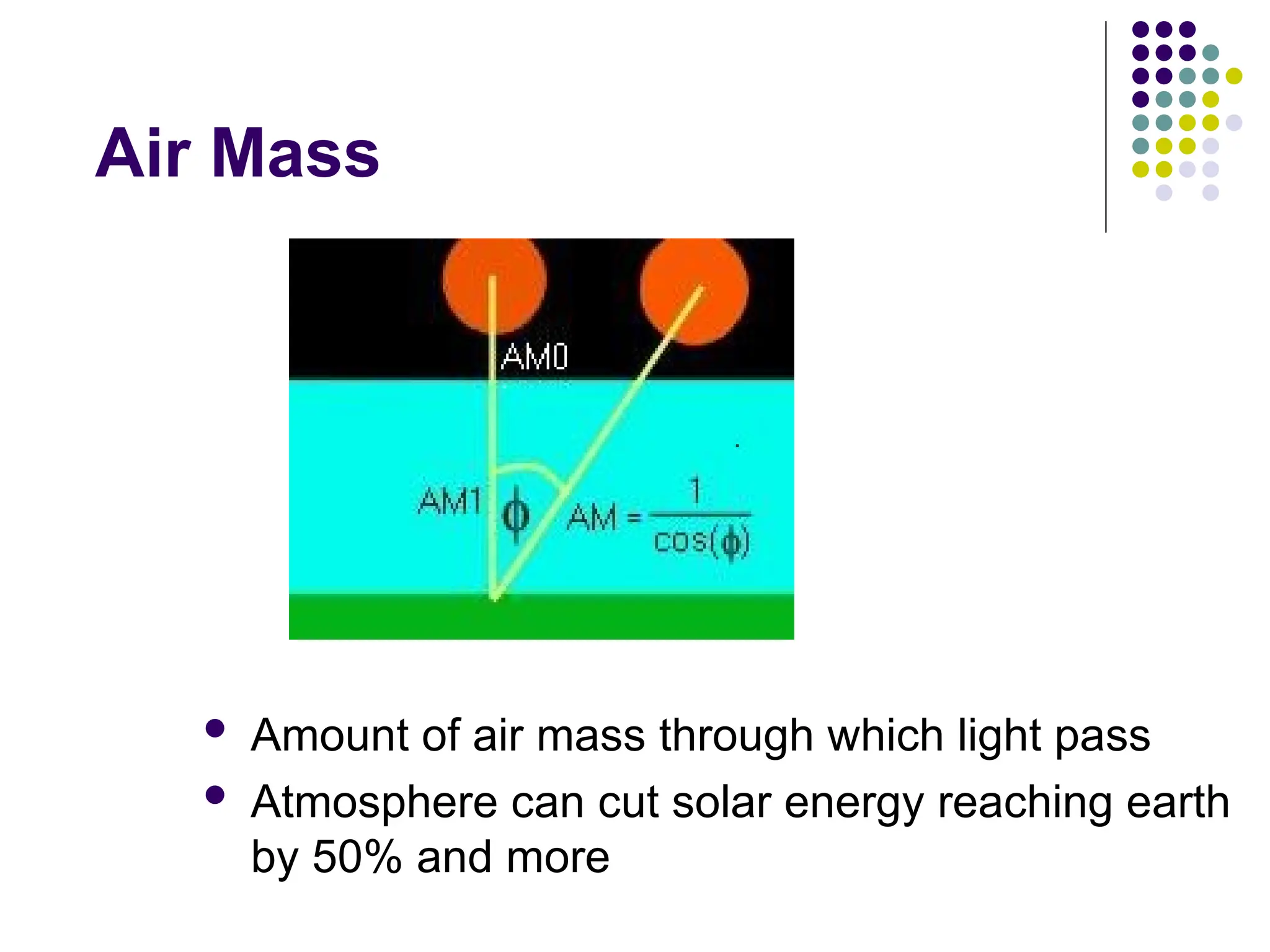
Air Mass
 Amount of air mass through which light pass
 Atmosphere can cut solar energy reaching earth
by 50% and more
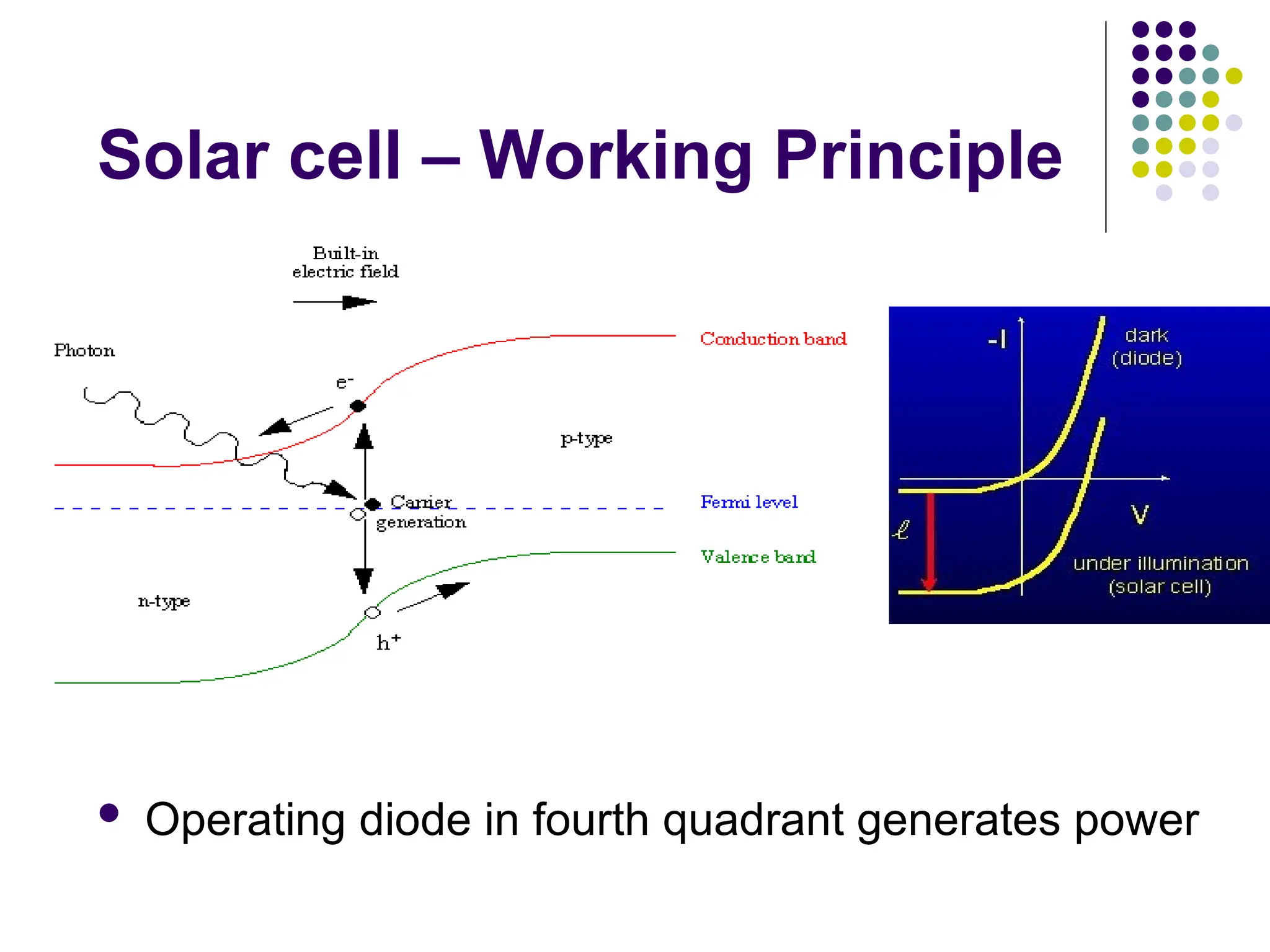
Solar cell – Working Principle
 Operating diode in fourth quadrant generates power
Overview
 Solar cell fundamentals
 Novel solar cell structures
 Thin film solar cells
 Next generation solar cell
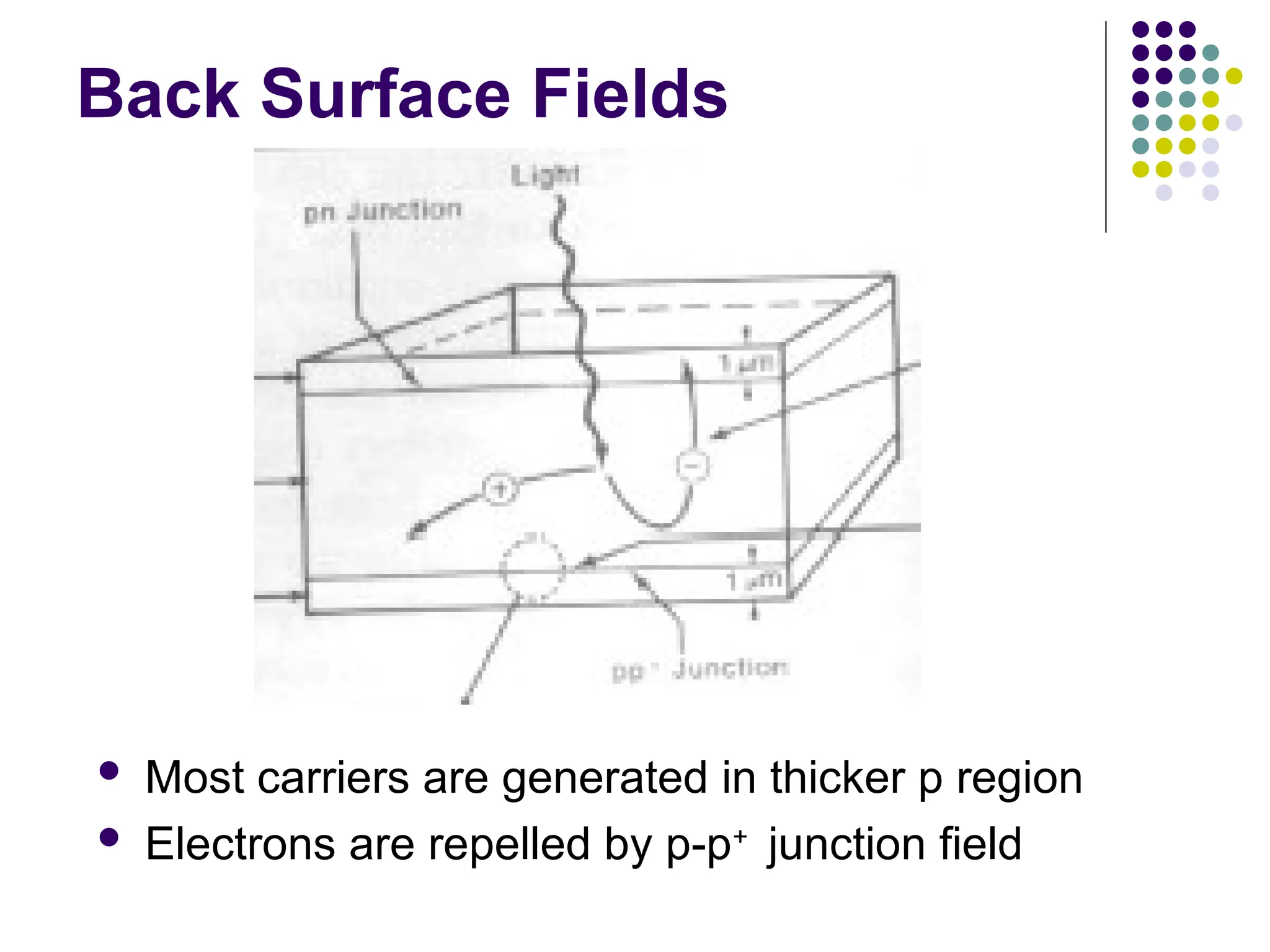
Back Surface Fields
 Most carriers are generated in thicker p region
 Electrons are repelled by p-p+
junction field
Schottky Barrier Cell
 Principle similar to p-n junction cell
 Cheap and easy alternative to traditional cell
Limitations:
 Conducting grid on top of metal layer
 Surface damage due to high temperature in
grid-attachment technique
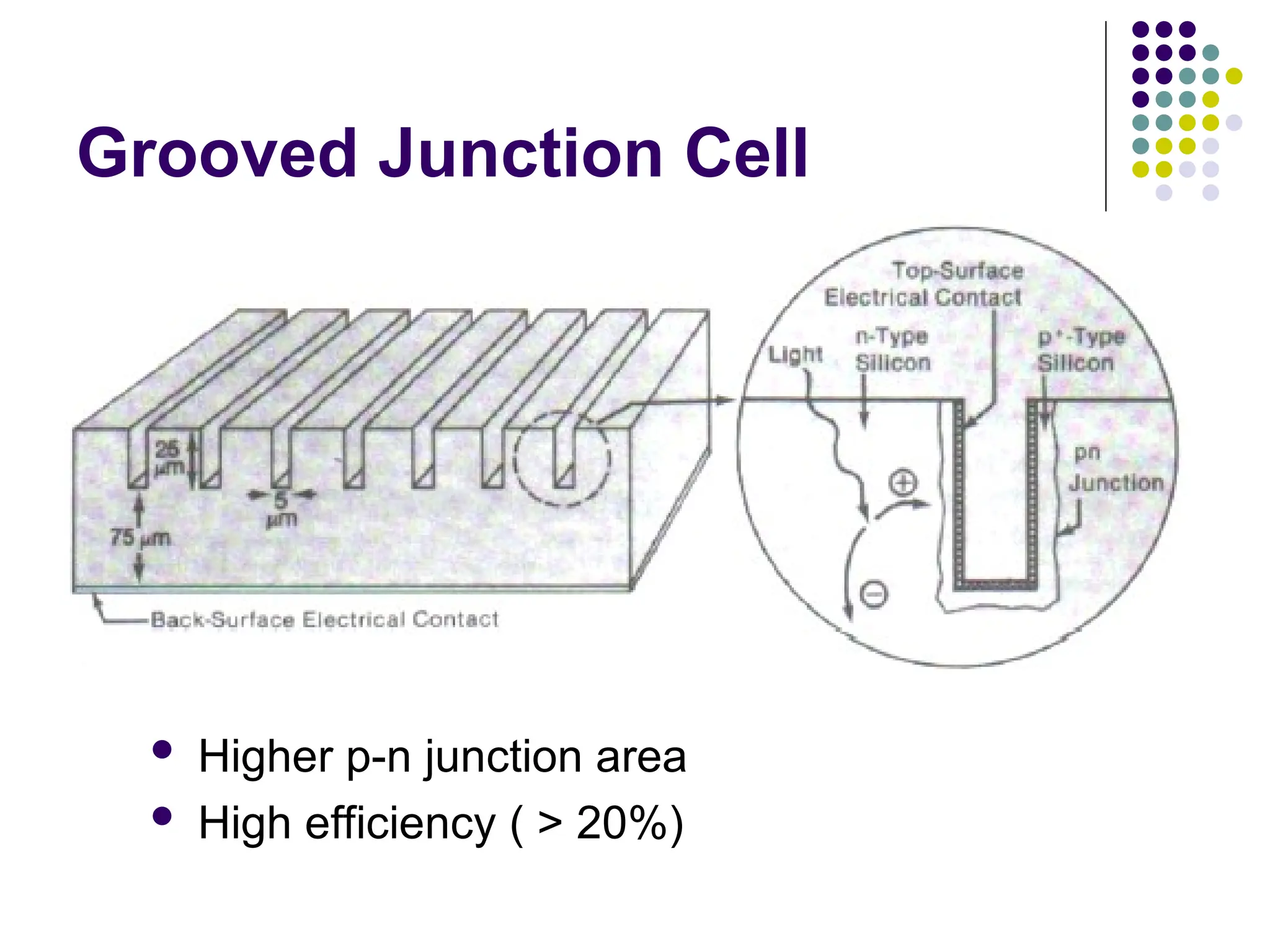
Grooved Junction Cell
 Higher p-n junction area
 High efficiency ( > 20%)
Overview
 Solar cell fundamentals
 Novel solar cell structures
 Thin film solar cells
 Next generation solar cell
Thin Film Solar Cells
 Produced from cheaper polycrystalline
materials and glass
 High optical absorption coefficients
 Bandgap suited to solar spectrum
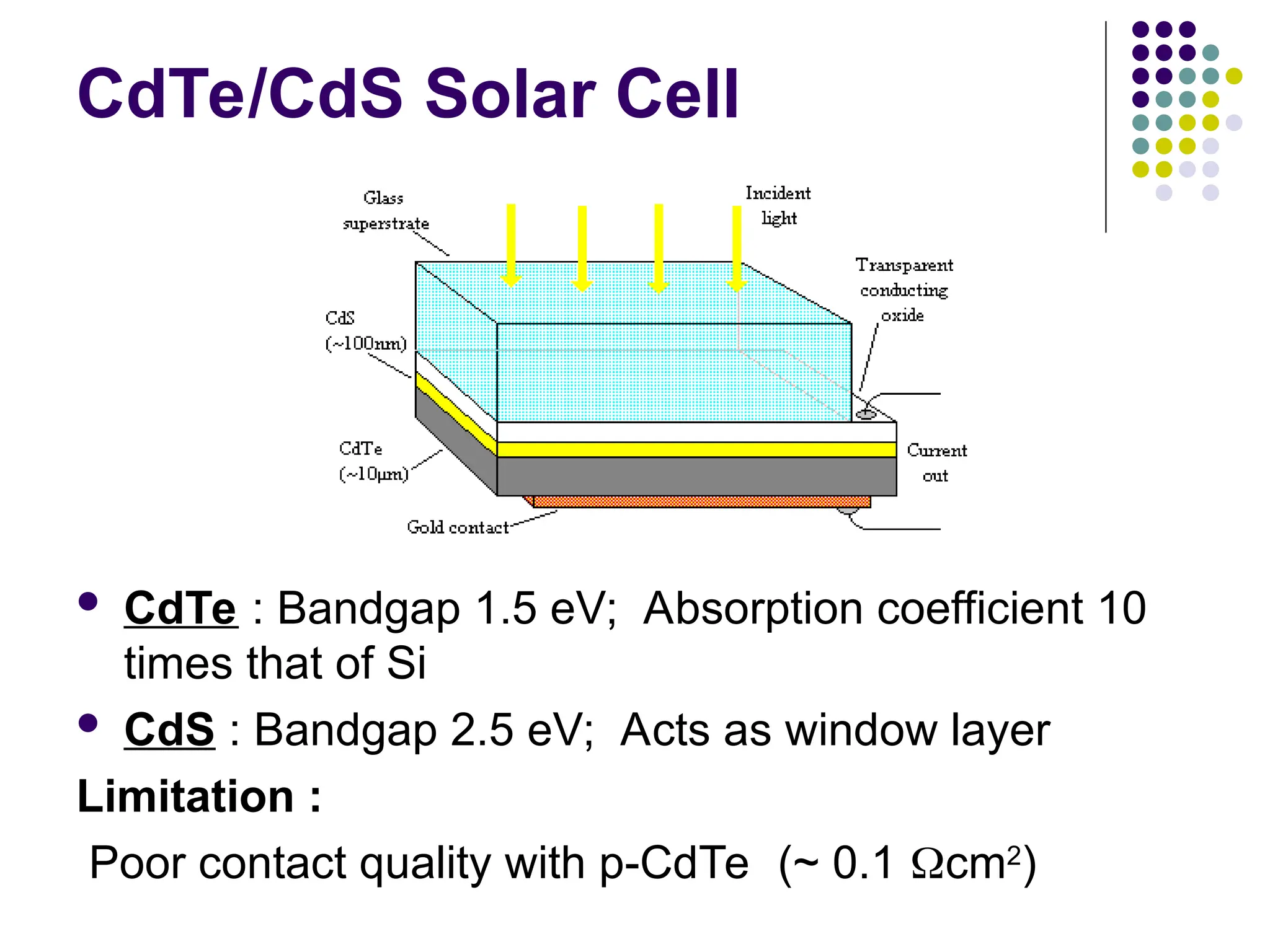
CdTe/CdS Solar Cell
 CdTe : Bandgap 1.5 eV; Absorption coefficient 10
times that of Si
 CdS : Bandgap 2.5 eV; Acts as window layer
Limitation :
Poor contact quality with p-CdTe (~ 0.1 cm2
)
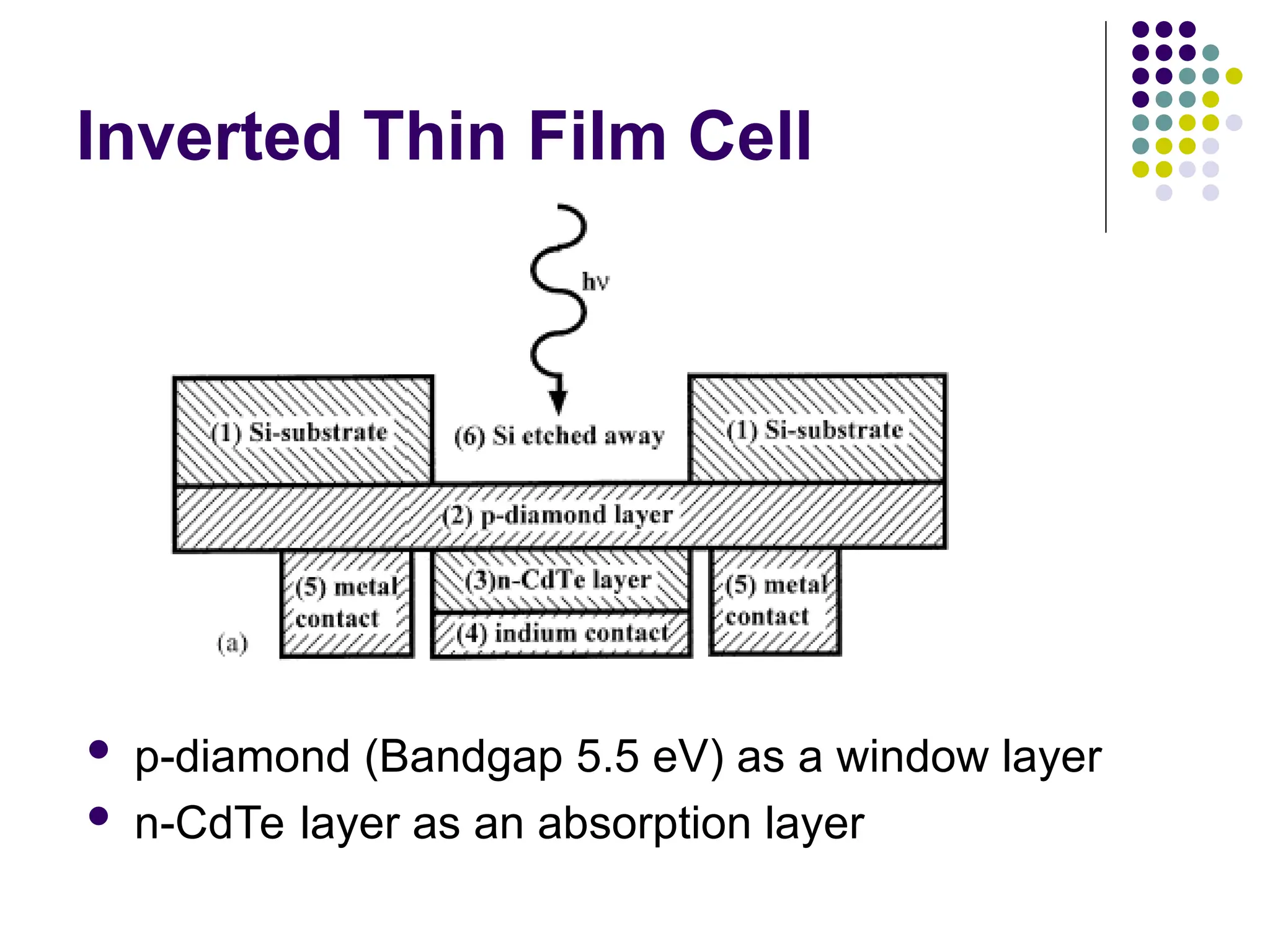
Inverted Thin Film Cell
 p-diamond (Bandgap 5.5 eV) as a window layer
 n-CdTe layer as an absorption layer
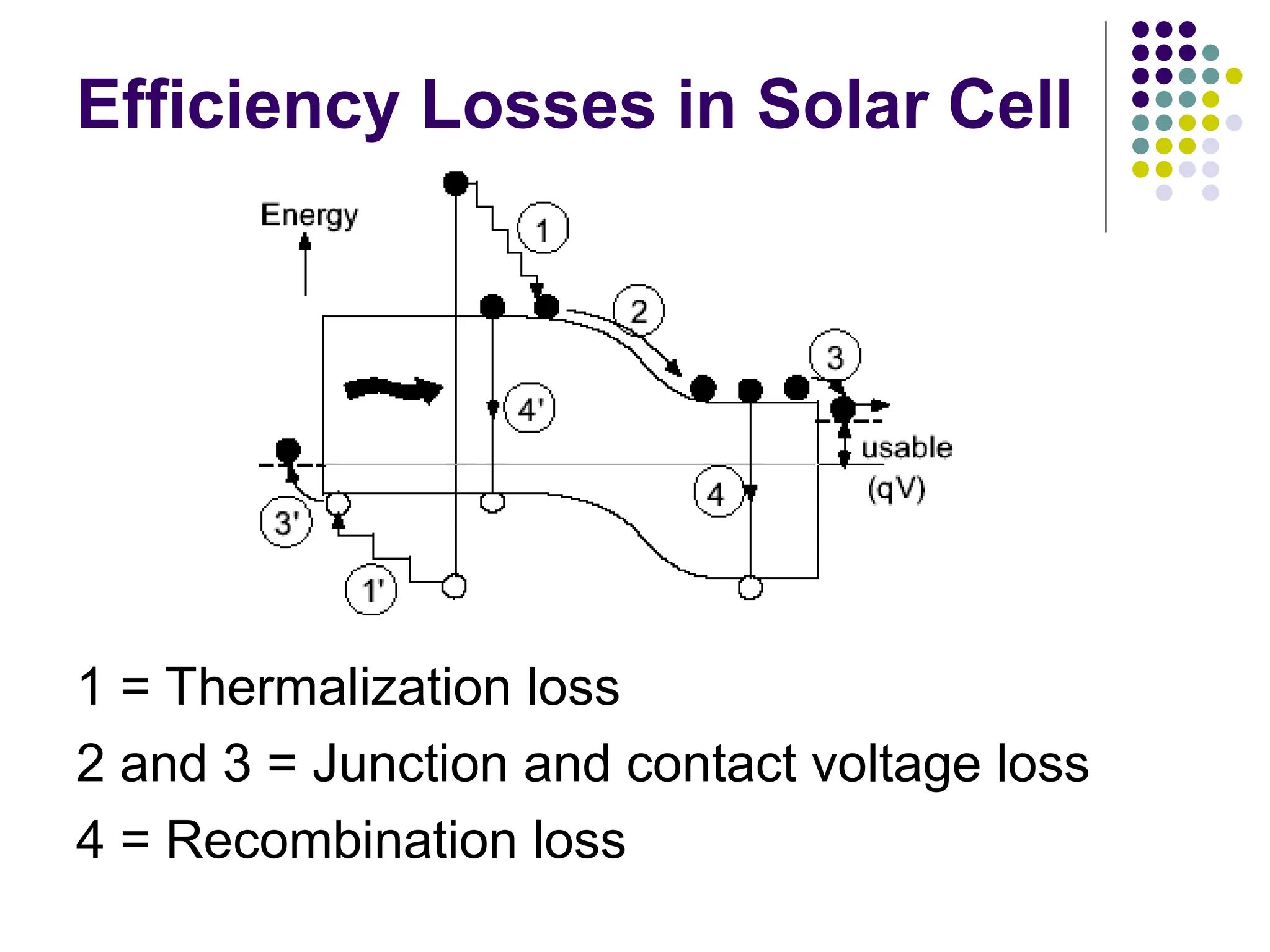
Efficiency Losses in Solar Cell
1 = Thermalization loss
2 and 3 = Junction and contact voltage loss
4 = Recombination loss
Overview
 Solar cell fundamentals
 Novel solar cell structures
 Thin film solar cells
 Next generation solar cell
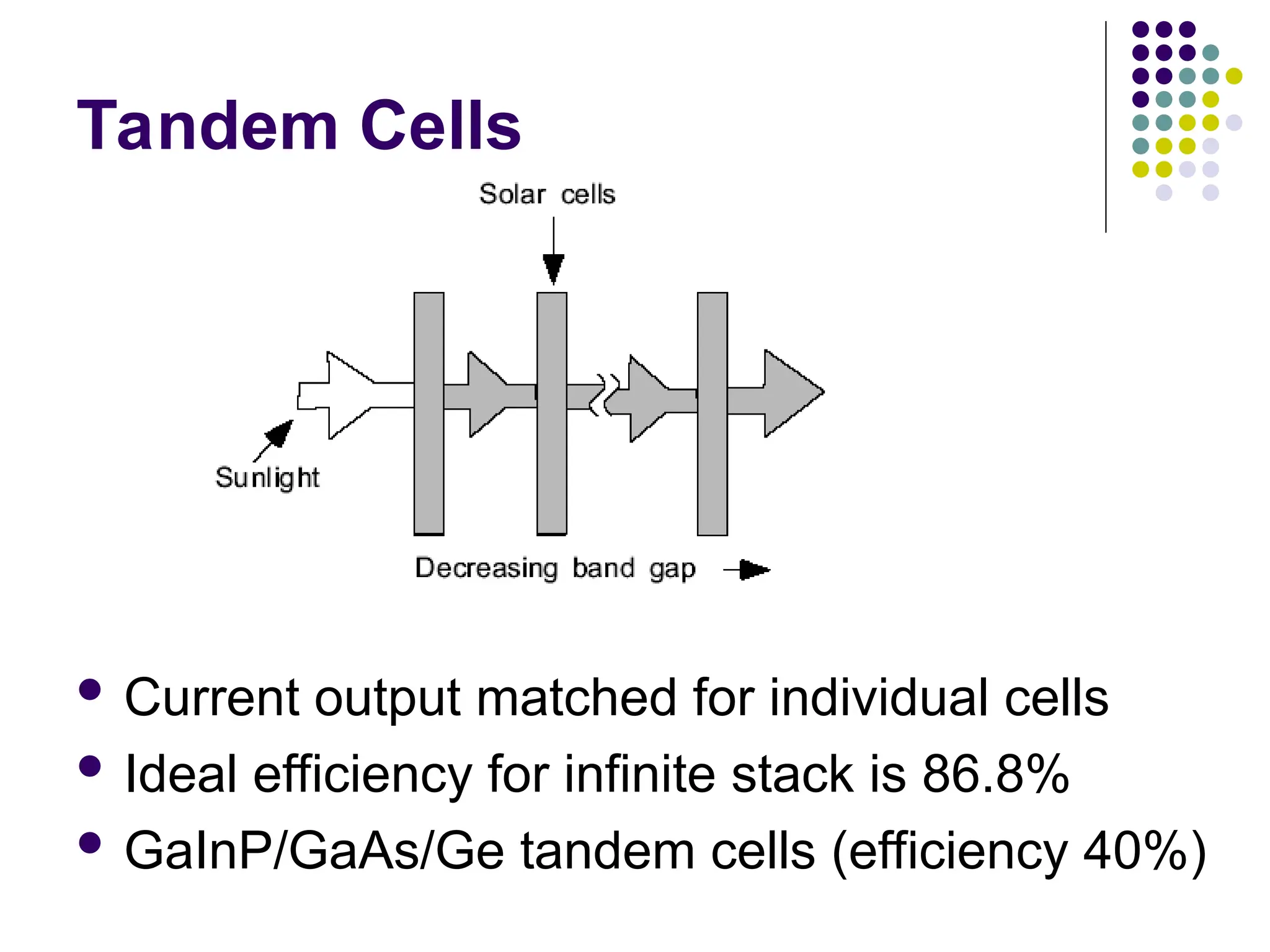
Tandem Cells
 Current output matched for individual cells
 Ideal efficiency for infinite stack is 86.8%
 GaInP/GaAs/Ge tandem cells (efficiency 40%)
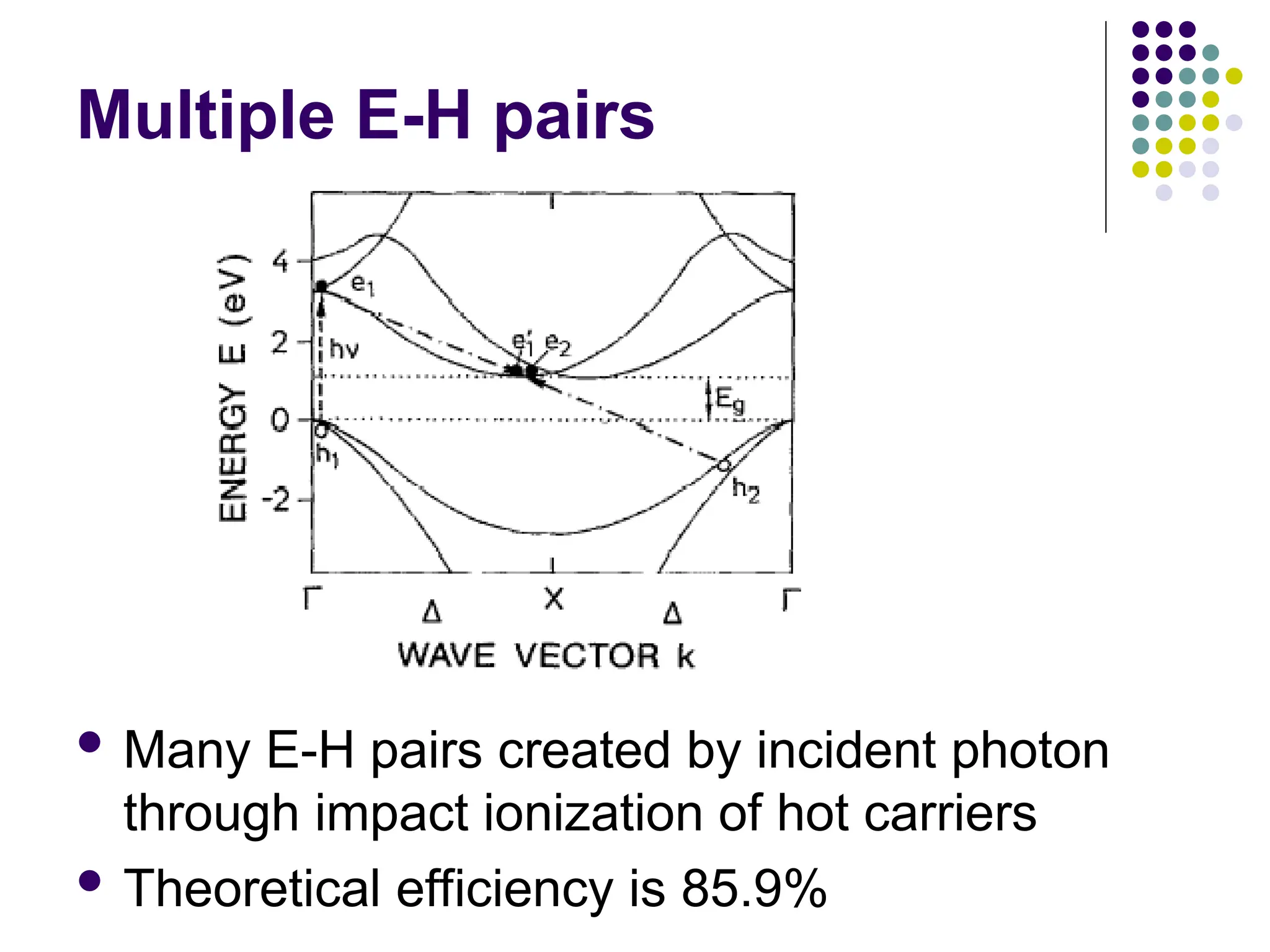
Multiple E-H pairs
 Many E-H pairs created by incident photon
through impact ionization of hot carriers
 Theoretical efficiency is 85.9%
Multiband Cells
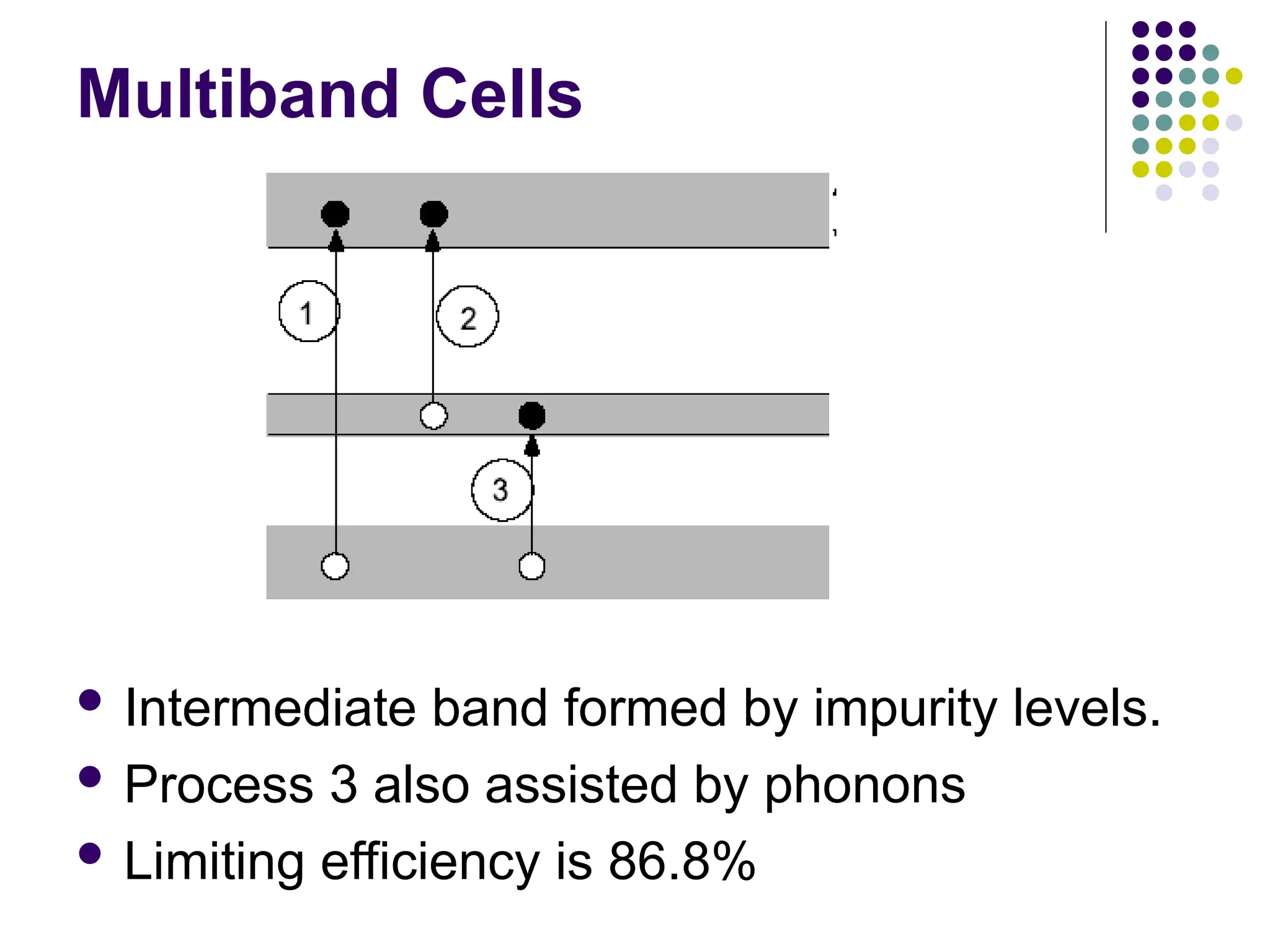
 Intermediate band formed by impurity levels.
 Process 3 also assisted by phonons
 Limiting efficiency is 86.8%
Multiple Quantum Well
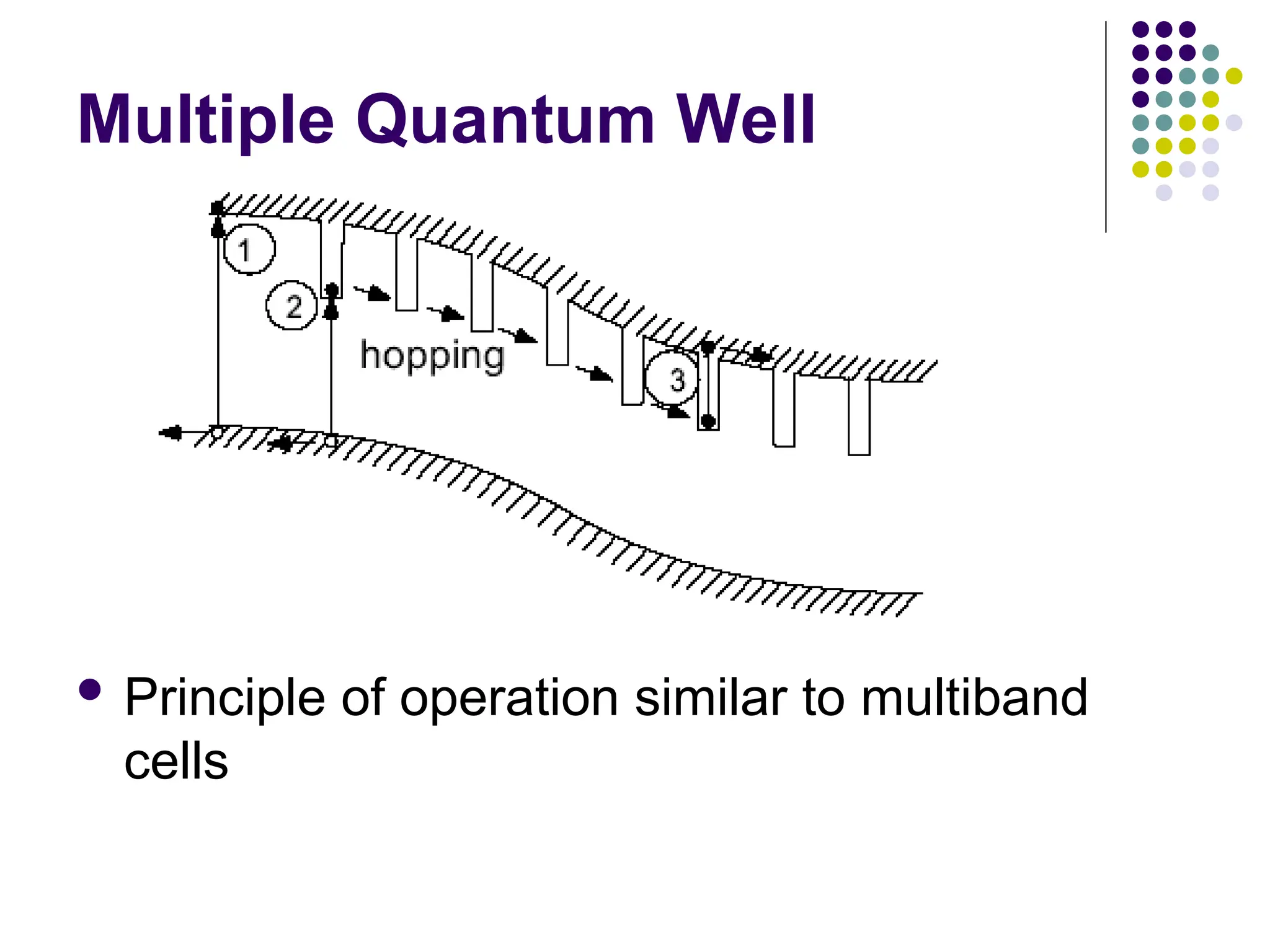
 Principle of operation similar to multiband
cells
Thermophotonic Cells
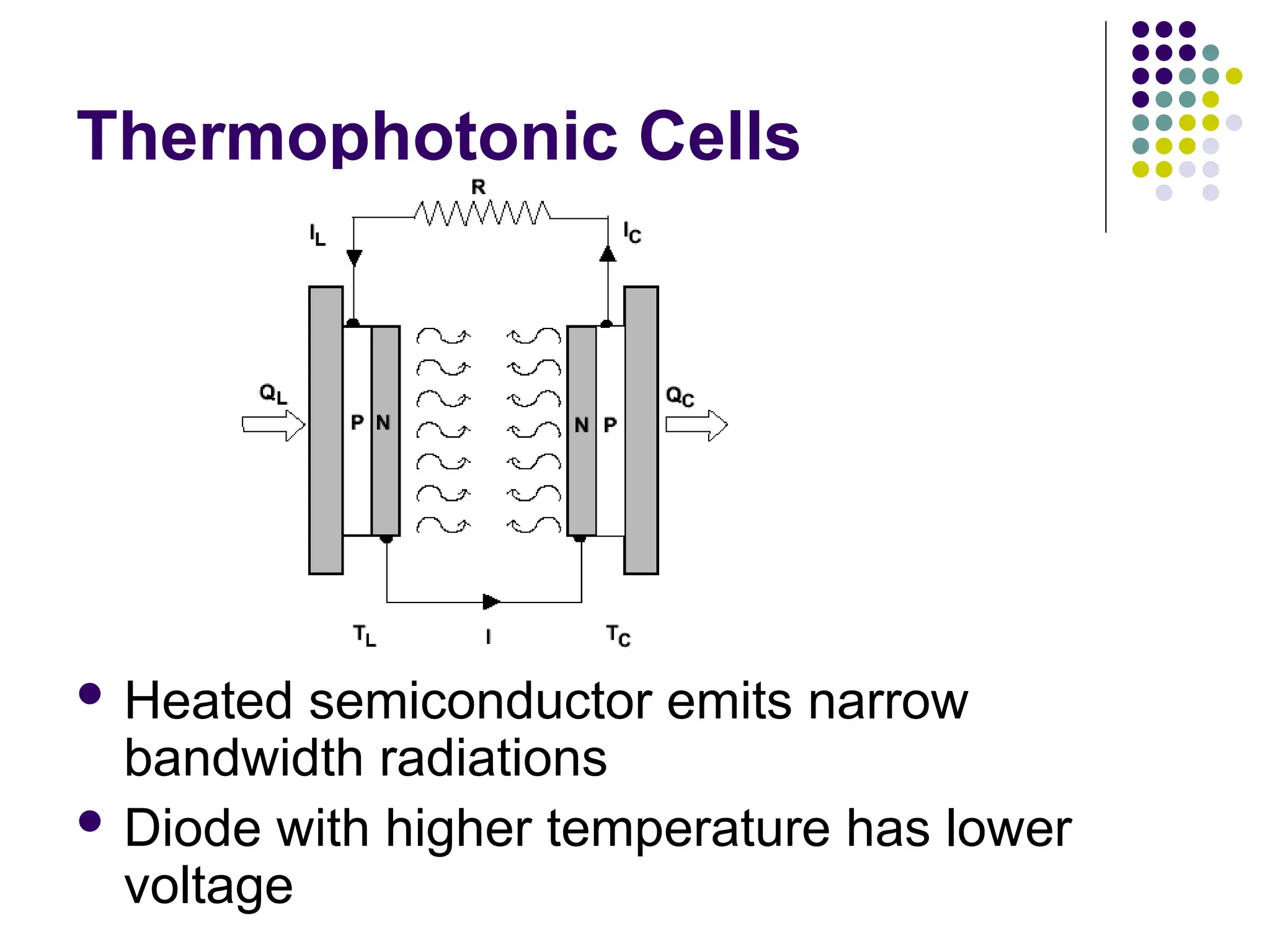
 Heated semiconductor emits narrow
bandwidth radiations
 Diode with higher temperature has lower
voltage
Thermophotovoltaic Cell
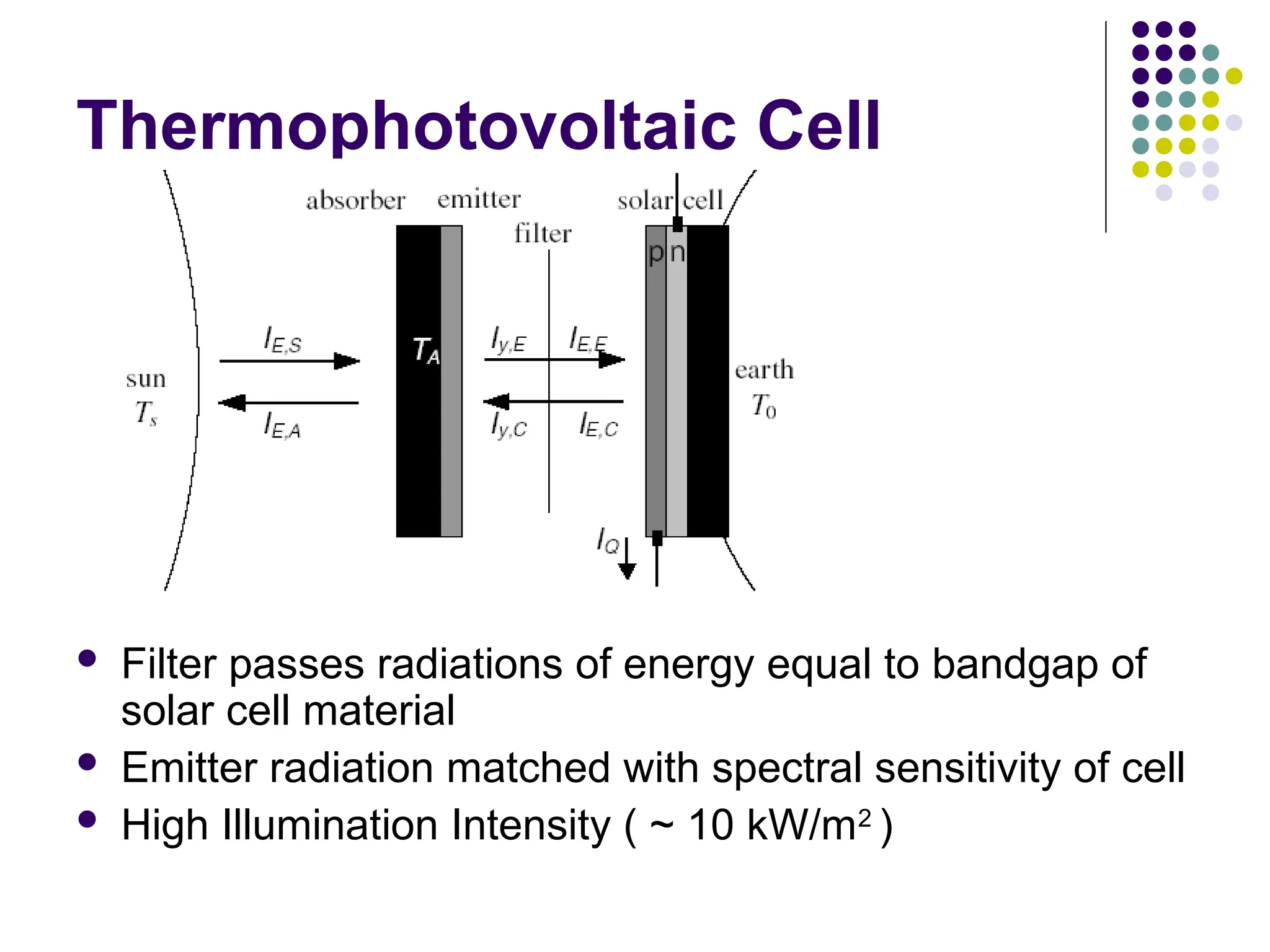
 Filter passes radiations of energy equal to bandgap of
solar cell material
 Emitter radiation matched with spectral sensitivity of cell
 High Illumination Intensity ( ~ 10 kW/m2
)
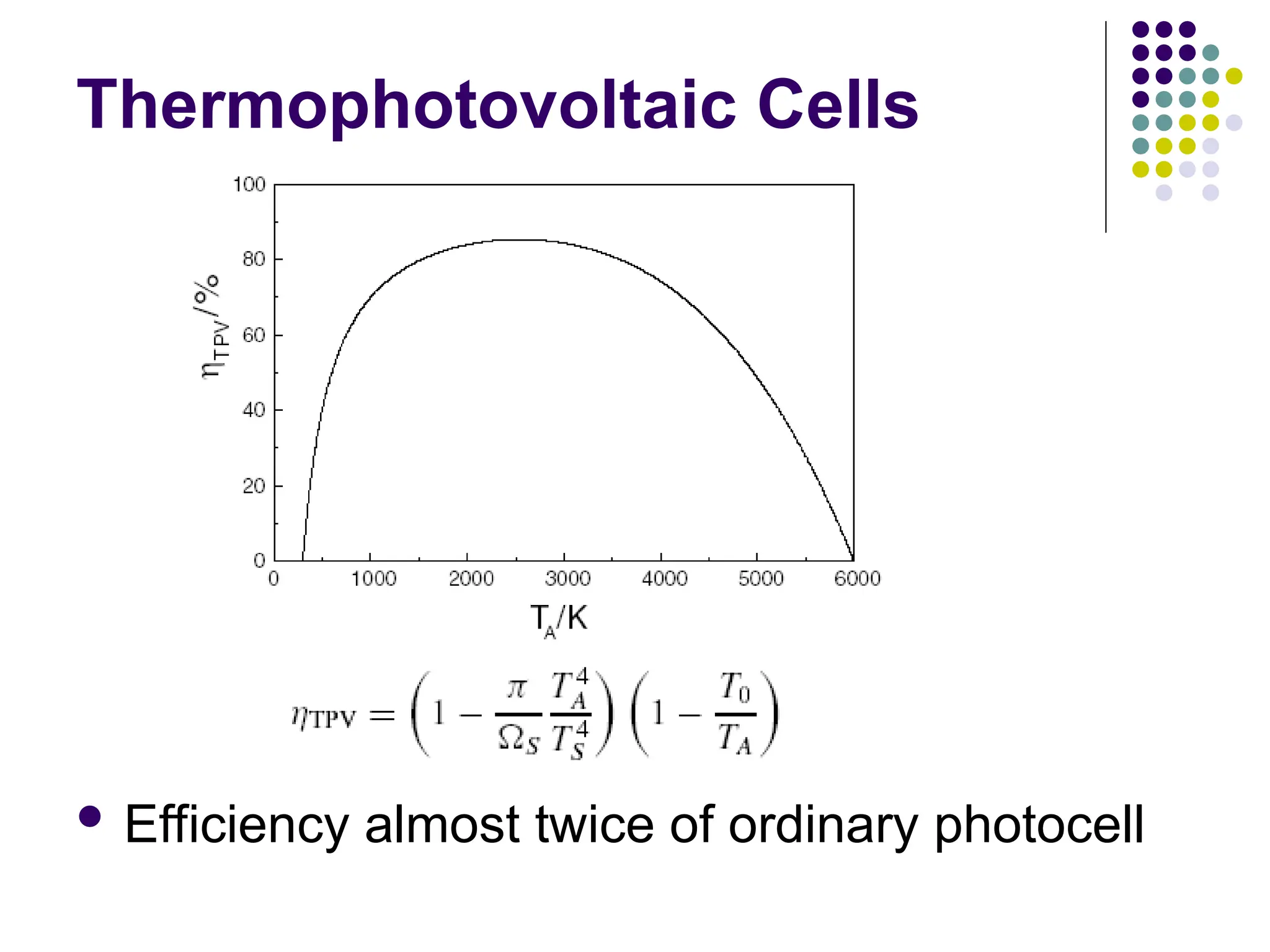
Thermophotovoltaic Cells
 Efficiency almost twice of ordinary photocell

yogeshjkfh khdkfj dkdhfud jkgd judf_solar_cells.ppt

  • 1.
  • 2.
    Overview  Solar cellfundamentals  Novel solar cell structures  Thin film solar cells  Next generation solar cell
  • 3.
    Appealing Characteristics  Consumesno fuel  No pollution  Wide power-handling capabilities  High power-to-weight ratio
  • 4.
    Solar Energy Spectrum Power reaching earth 1.37 KW/m2
  • 5.
    Air Mass  Amountof air mass through which light pass  Atmosphere can cut solar energy reaching earth by 50% and more
  • 6.
    Solar cell –Working Principle  Operating diode in fourth quadrant generates power
  • 7.
    Overview  Solar cellfundamentals  Novel solar cell structures  Thin film solar cells  Next generation solar cell
  • 8.
    Back Surface Fields Most carriers are generated in thicker p region  Electrons are repelled by p-p+ junction field
  • 9.
    Schottky Barrier Cell Principle similar to p-n junction cell  Cheap and easy alternative to traditional cell Limitations:  Conducting grid on top of metal layer  Surface damage due to high temperature in grid-attachment technique
  • 10.
    Grooved Junction Cell Higher p-n junction area  High efficiency ( > 20%)
  • 11.
    Overview  Solar cellfundamentals  Novel solar cell structures  Thin film solar cells  Next generation solar cell
  • 12.
    Thin Film SolarCells  Produced from cheaper polycrystalline materials and glass  High optical absorption coefficients  Bandgap suited to solar spectrum
  • 13.
    CdTe/CdS Solar Cell CdTe : Bandgap 1.5 eV; Absorption coefficient 10 times that of Si  CdS : Bandgap 2.5 eV; Acts as window layer Limitation : Poor contact quality with p-CdTe (~ 0.1 cm2 )
  • 14.
    Inverted Thin FilmCell  p-diamond (Bandgap 5.5 eV) as a window layer  n-CdTe layer as an absorption layer
  • 15.
    Efficiency Losses inSolar Cell 1 = Thermalization loss 2 and 3 = Junction and contact voltage loss 4 = Recombination loss
  • 16.
    Overview  Solar cellfundamentals  Novel solar cell structures  Thin film solar cells  Next generation solar cell
  • 17.
    Tandem Cells  Currentoutput matched for individual cells  Ideal efficiency for infinite stack is 86.8%  GaInP/GaAs/Ge tandem cells (efficiency 40%)
  • 18.
    Multiple E-H pairs Many E-H pairs created by incident photon through impact ionization of hot carriers  Theoretical efficiency is 85.9%
  • 19.
    Multiband Cells  Intermediateband formed by impurity levels.  Process 3 also assisted by phonons  Limiting efficiency is 86.8%
  • 20.
    Multiple Quantum Well Principle of operation similar to multiband cells
  • 21.
    Thermophotonic Cells  Heatedsemiconductor emits narrow bandwidth radiations  Diode with higher temperature has lower voltage
  • 22.
    Thermophotovoltaic Cell  Filterpasses radiations of energy equal to bandgap of solar cell material  Emitter radiation matched with spectral sensitivity of cell  High Illumination Intensity ( ~ 10 kW/m2 )
  • 23.
    Thermophotovoltaic Cells  Efficiencyalmost twice of ordinary photocell