Writing for Life

PRESENTED BY PROFESSOR BARLETTA
        JANUARY 5, 2012
Writing Basics

 Cover letter
 E-mail
 Thank You Note
Writing a Cover Letter

 Purpose of a Cover Letter:
   Expresses your interest and qualifications for a particular
    position
 Key Elements of a Cover Letter:
   Personal enough to humanize yourself as an individual, but
    professional enough to be taken seriously as a prospective
    employee
   Demonstrates why you are the person for the job
   Explains how you meet the requirements
   It is an extension of your resume, but should explain your
    qualifications and goals in more detail
Elements of a Cover Letter

 Header (Name and Contact Information)
 Date (January 3, 2012)
 Employer Address
 Salutation (Dear Mr./Ms./Mrs./Dr., etc.)
Elements of a Cover Letter

 1st paragraph-explains who you are and your
  skills: professional experience, training and
  education, and interpersonal skills)
 2nd paragraph-explains what you can do for the
  company as an employee and includes your goals
 Conclusion-thanks the employer for considering
  your application and expressing your interest in
  following up with the possibility of becoming
  part of their organization
 Closing-end with “sincerely,” or a similar closing
  and sign your name
E-mail Etiquette

 Use an e-mail account you check on a regular basis or set
    up an e-mail account for professional use with your name
    as your e-mail address (cbarletta@keiseruniversity.edu)
   Address the potential employer as Mr./Ms./Mrs./Dr. etc.
   Write a clear subject heading
   Write clearly and concisely. If you are asking questions,
    number them so the employer can identify your needs.
   Use proper grammar and write in a formal tone.
   End your e-mail with a polite closing, your name, and
    contact information
Follow-up and Thank You Notes

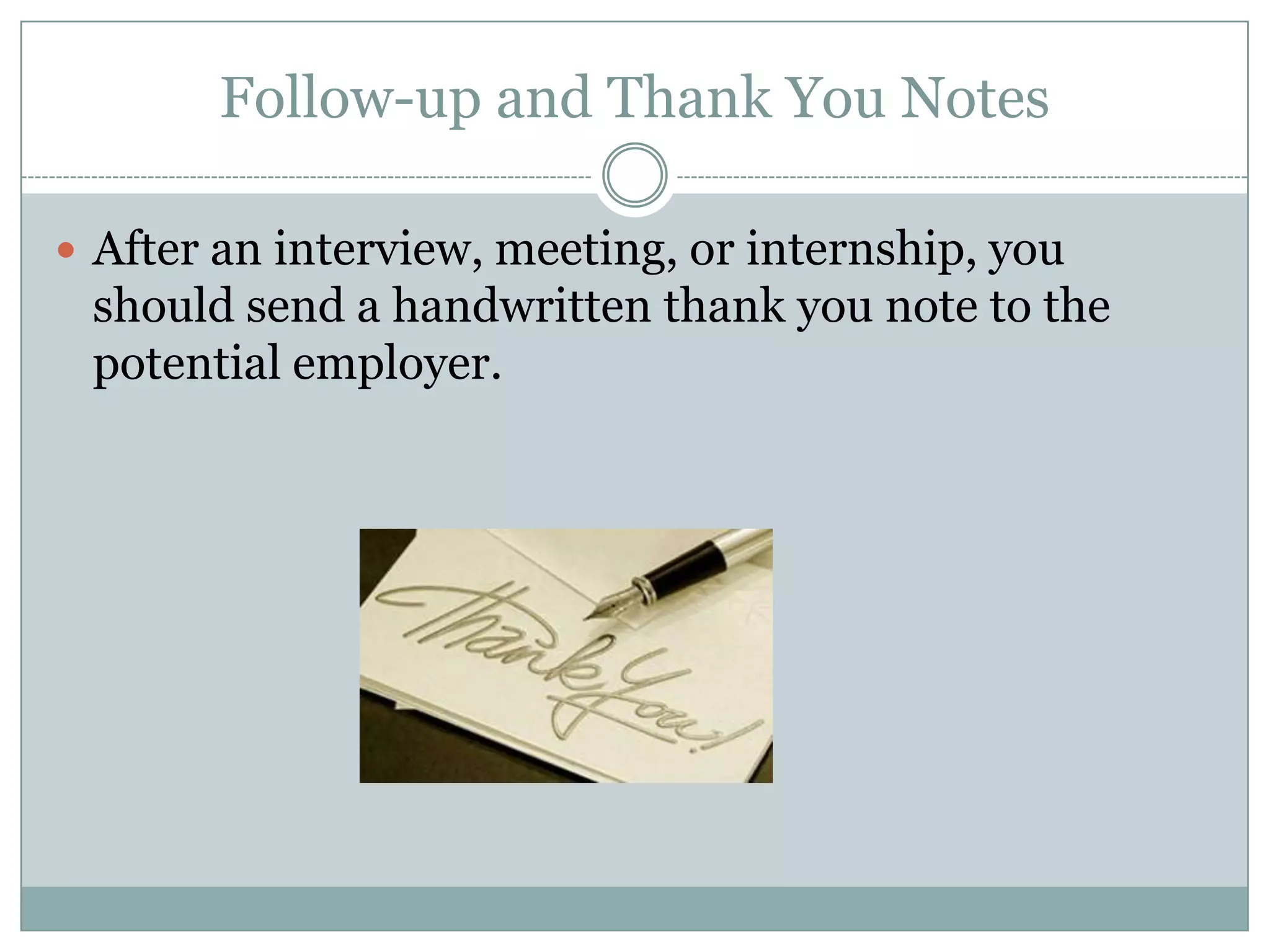
 After an interview, meeting, or internship, you
 should send a handwritten thank you note to the
 potential employer.
Follow-up and Thank You Notes

 Why write follow-up and thank you letters?
   Write a follow-up letter to an employer to ensure that they
    have received your application.
   Write a thank you letter to thank the employer for his/her time
    in reviewing a résumé or, cover letter, or for interviewing you
    for the position.
  When do I need to do a follow-up with a potential employer?
       Write a follow-up letter if you have not heard from a
  potential employer for two weeks after submitting your résumé
  and cover letter.

Writing for life

  • 1.
    Writing for Life PRESENTEDBY PROFESSOR BARLETTA JANUARY 5, 2012
  • 2.
    Writing Basics  Coverletter  E-mail  Thank You Note
  • 3.
    Writing a CoverLetter  Purpose of a Cover Letter:  Expresses your interest and qualifications for a particular position  Key Elements of a Cover Letter:  Personal enough to humanize yourself as an individual, but professional enough to be taken seriously as a prospective employee  Demonstrates why you are the person for the job  Explains how you meet the requirements  It is an extension of your resume, but should explain your qualifications and goals in more detail
  • 4.
    Elements of aCover Letter  Header (Name and Contact Information)  Date (January 3, 2012)  Employer Address  Salutation (Dear Mr./Ms./Mrs./Dr., etc.)
  • 5.
    Elements of aCover Letter  1st paragraph-explains who you are and your skills: professional experience, training and education, and interpersonal skills)  2nd paragraph-explains what you can do for the company as an employee and includes your goals  Conclusion-thanks the employer for considering your application and expressing your interest in following up with the possibility of becoming part of their organization  Closing-end with “sincerely,” or a similar closing and sign your name
  • 6.
    E-mail Etiquette  Usean e-mail account you check on a regular basis or set up an e-mail account for professional use with your name as your e-mail address (cbarletta@keiseruniversity.edu)  Address the potential employer as Mr./Ms./Mrs./Dr. etc.  Write a clear subject heading  Write clearly and concisely. If you are asking questions, number them so the employer can identify your needs.  Use proper grammar and write in a formal tone.  End your e-mail with a polite closing, your name, and contact information
  • 7.
    Follow-up and ThankYou Notes  After an interview, meeting, or internship, you should send a handwritten thank you note to the potential employer.
  • 8.
    Follow-up and ThankYou Notes  Why write follow-up and thank you letters?  Write a follow-up letter to an employer to ensure that they have received your application.  Write a thank you letter to thank the employer for his/her time in reviewing a résumé or, cover letter, or for interviewing you for the position. When do I need to do a follow-up with a potential employer? Write a follow-up letter if you have not heard from a potential employer for two weeks after submitting your résumé and cover letter.