INTRODUCTION TO
DOWSING
Jane Radford
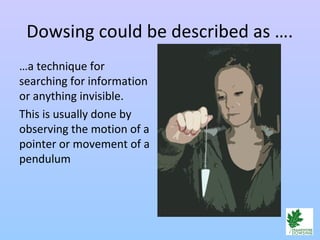
Dowsing could be described as ….
…a technique for
searching for information
or anything invisible.
This is usually done by
observing the motion of a
pointer or movement of a
pendulum
It is frequently used for….
Archeology
Earth energies and ley lines
Health and wellbeing
Finding water, underground pipes and cables
and diagnosing breaks or leaks
Locating lost items
Accessing your intuition
And more …….
Dowsing Instruments
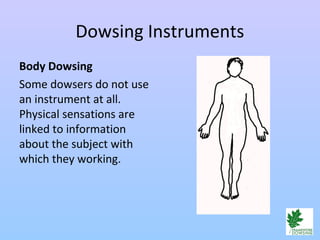
Body Dowsing
Some dowsers do not use
an instrument at all.
Physical sensations are
linked to information
about the subject with
which they working.
Dowsing Instruments
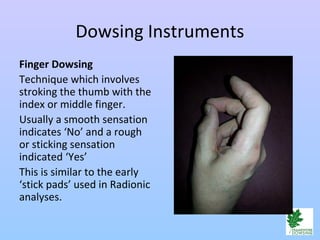
Finger Dowsing
Technique which involves
stroking the thumb with the
index or middle finger.
Usually a smooth sensation
indicates ‘No’ and a rough
or sticking sensation
indicated ‘Yes’
This is similar to the early
‘stick pads’ used in Radionic
analyses.
Dowsing Instruments
Rods
Evolved from the forked
Hazel twigs often seen in
many logos for different
dowsing groups and
organisations.
Usually 2 rods are used.
These cross or uncross to
convey ‘yes’ and ‘no’ as
well as indicating
directions.
Bobbers
Similar responses to
pendulums but rigid
sprung wire, usually with a
weight at the end and held
pointing away from the
body.
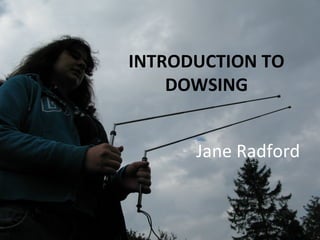
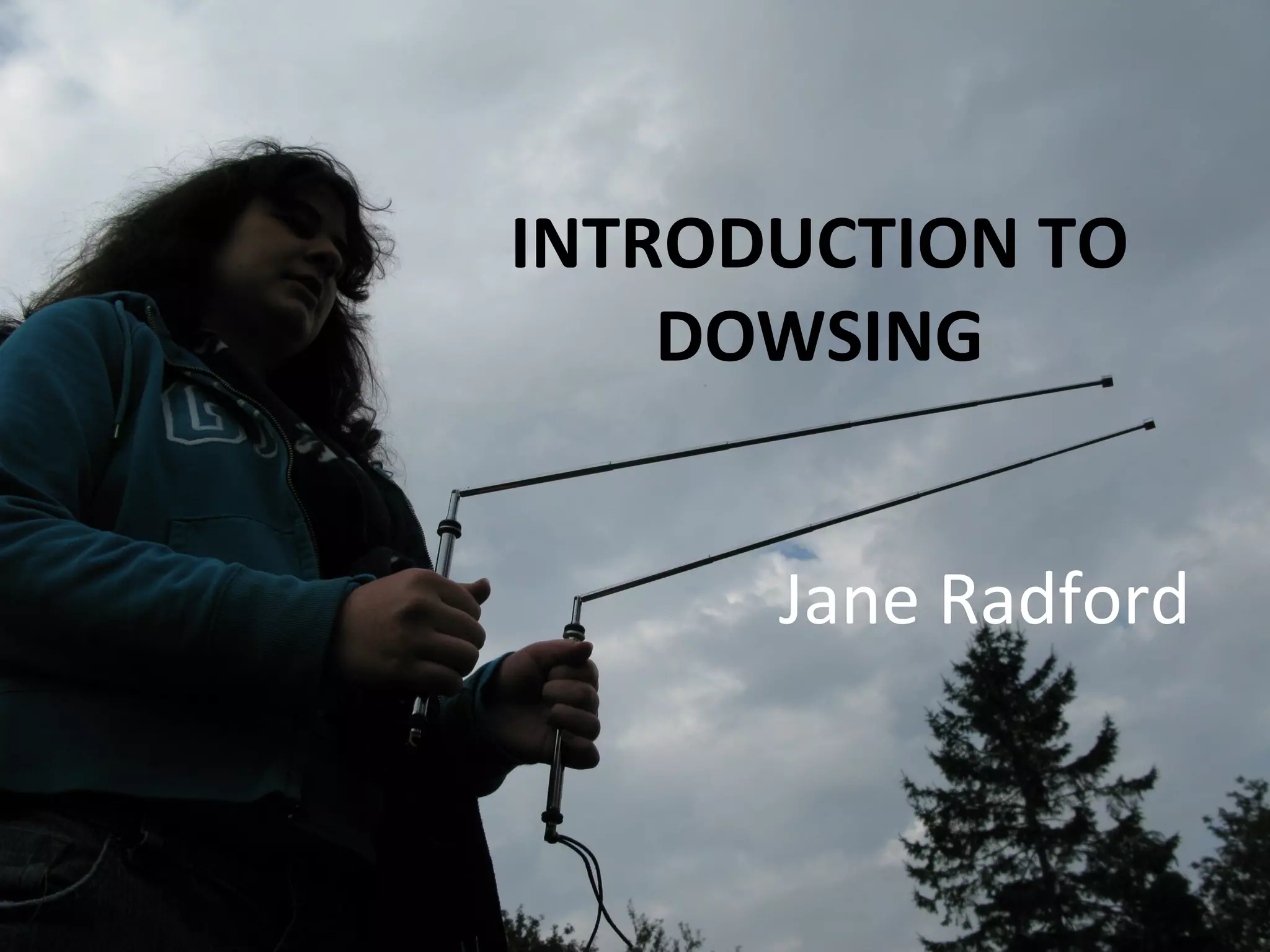
See the cover slide for a
picture of Anna with
dowsing rods
Dowsing Instruments
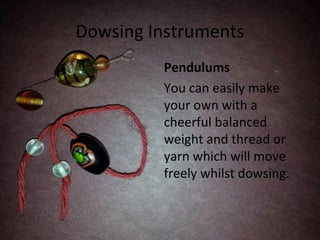
Pendulums
You can easily make
your own with a
cheerful balanced
weight and thread or
yarn which will move
freely whilst dowsing.
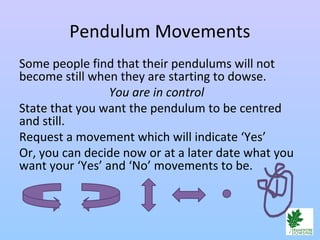
Pendulum Movements
Some people find that their pendulums will not
become still when they are starting to dowse.
You are in control
State that you want the pendulum to be centred
and still.
Request a movement which will indicate ‘Yes’
Or, you can decide now or at a later date what you
want your ‘Yes’ and ‘No’ movements to be.
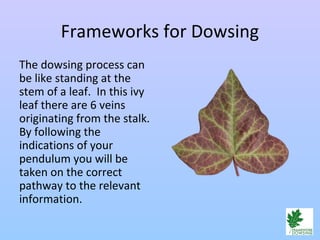
Frameworks for Dowsing
The dowsing process can
be like standing at the
stem of a leaf. In this ivy
leaf there are 6 veins
originating from the stalk.
By following the
indications of your
pendulum you will be
taken on the correct
pathway to the relevant
information.
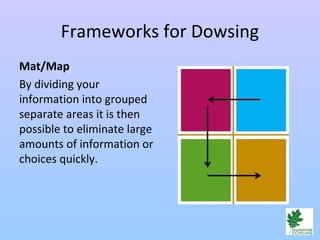
Frameworks for Dowsing
Mat/Map
By dividing your
information into grouped
separate areas it is then
possible to eliminate large
amounts of information or
choices quickly.
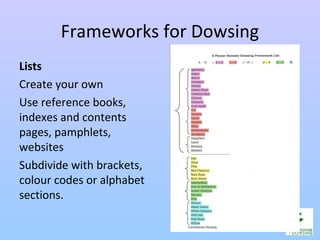
Frameworks for Dowsing
Lists
Create your own
Use reference books,
indexes and contents
pages, pamphlets,
websites
Subdivide with brackets,
colour codes or alphabet
sections.
Frameworks for Dowsing
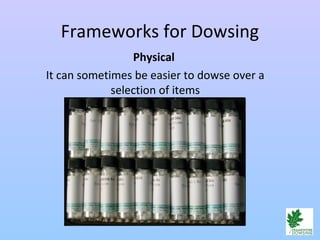
Physical
It can sometimes be easier to dowse over a
selection of items
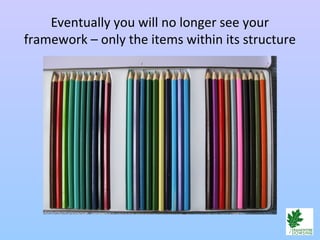
Eventually you will no longer see your
framework – only the items within its structure
Question Structures
Most dowsers work with ‘Yes’ and ‘No’ indicators.
Thinking of precise questions whilst dowsing,
which can be decisively answered with a ‘Yes’ or
‘No’ is difficult and makes the dowsing process
clunky.
If you have put time into creating your
frameworks the questions are much simpler and
flow more easily.
Question Structures
First state the situation – written and verbal
I have here ……..
Examples
Is it indicated that I dowse for this situation?
Where do I begin? Is there an item indicated from
this list?
Is the item listed in this page/section/bracket etc
The questions then become straight forward and
easily remembered.
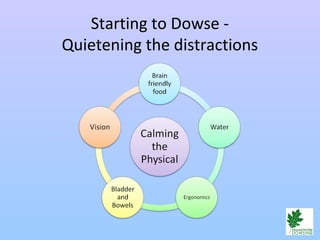
Starting to Dowse -
Quietening the distractions
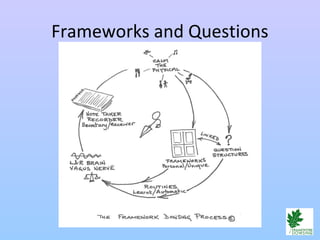
Frameworks and Questions
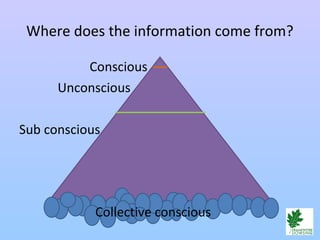
Conscious
Unconscious
Sub conscious
Where does the information come from?
Collective conscious
Thank you for watching
http://frameworkdowsing.co.uk
http://www.youtube.com/user/frameworkdowser
http://www.slideshare.net/JaneRadford
https://www.facebook.com/pages/Framework-Dowsing/279891658724058
Join me on Linkedin

Introduction to Dowsing

  • 1.
  • 2.
    Dowsing could bedescribed as …. …a technique for searching for information or anything invisible. This is usually done by observing the motion of a pointer or movement of a pendulum
  • 3.
    It is frequentlyused for…. Archeology Earth energies and ley lines Health and wellbeing Finding water, underground pipes and cables and diagnosing breaks or leaks Locating lost items Accessing your intuition And more …….
  • 4.
    Dowsing Instruments Body Dowsing Somedowsers do not use an instrument at all. Physical sensations are linked to information about the subject with which they working.
  • 5.
    Dowsing Instruments Finger Dowsing Techniquewhich involves stroking the thumb with the index or middle finger. Usually a smooth sensation indicates ‘No’ and a rough or sticking sensation indicated ‘Yes’ This is similar to the early ‘stick pads’ used in Radionic analyses.
  • 6.
    Dowsing Instruments Rods Evolved fromthe forked Hazel twigs often seen in many logos for different dowsing groups and organisations. Usually 2 rods are used. These cross or uncross to convey ‘yes’ and ‘no’ as well as indicating directions. Bobbers Similar responses to pendulums but rigid sprung wire, usually with a weight at the end and held pointing away from the body. See the cover slide for a picture of Anna with dowsing rods
  • 7.
    Dowsing Instruments Pendulums You caneasily make your own with a cheerful balanced weight and thread or yarn which will move freely whilst dowsing.
  • 8.
    Pendulum Movements Some peoplefind that their pendulums will not become still when they are starting to dowse. You are in control State that you want the pendulum to be centred and still. Request a movement which will indicate ‘Yes’ Or, you can decide now or at a later date what you want your ‘Yes’ and ‘No’ movements to be.
  • 9.
    Frameworks for Dowsing Thedowsing process can be like standing at the stem of a leaf. In this ivy leaf there are 6 veins originating from the stalk. By following the indications of your pendulum you will be taken on the correct pathway to the relevant information.
  • 10.
    Frameworks for Dowsing Mat/Map Bydividing your information into grouped separate areas it is then possible to eliminate large amounts of information or choices quickly.
  • 11.
    Frameworks for Dowsing Lists Createyour own Use reference books, indexes and contents pages, pamphlets, websites Subdivide with brackets, colour codes or alphabet sections.
  • 12.
    Frameworks for Dowsing Physical Itcan sometimes be easier to dowse over a selection of items
  • 13.
    Eventually you willno longer see your framework – only the items within its structure
  • 14.
    Question Structures Most dowserswork with ‘Yes’ and ‘No’ indicators. Thinking of precise questions whilst dowsing, which can be decisively answered with a ‘Yes’ or ‘No’ is difficult and makes the dowsing process clunky. If you have put time into creating your frameworks the questions are much simpler and flow more easily.
  • 15.
    Question Structures First statethe situation – written and verbal I have here …….. Examples Is it indicated that I dowse for this situation? Where do I begin? Is there an item indicated from this list? Is the item listed in this page/section/bracket etc The questions then become straight forward and easily remembered.
  • 16.
    Starting to Dowse- Quietening the distractions
  • 17.
  • 18.
    Conscious Unconscious Sub conscious Where doesthe information come from? Collective conscious
  • 19.
    Thank you forwatching http://frameworkdowsing.co.uk http://www.youtube.com/user/frameworkdowser http://www.slideshare.net/JaneRadford https://www.facebook.com/pages/Framework-Dowsing/279891658724058 Join me on Linkedin