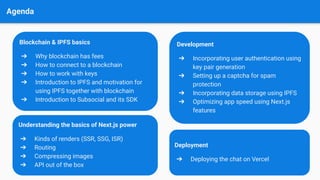
Agenda
Blockchain & IPFS basics
➔ Why blockchain has fees
➔ How to connect to a blockchain
➔ How to work with keys
➔ Introduction to IPFS and motivation for
using IPFS together with blockchain
➔ Introduction to Subsocial and its SDK
Understanding the basics of Next.js power
➔ Kinds of renders (SSR, SSG, ISR)
➔ Routing
➔ Compressing images
➔ API out of the box
Development
➔ Incorporating user authentication using
key pair generation
➔ Setting up a captcha for spam
protection
➔ Incorporating data storage using IPFS
➔ Optimizing app speed using Next.js
features
Deployment
➔ Deploying the chat on Vercel
Blockchain & IPFS basics
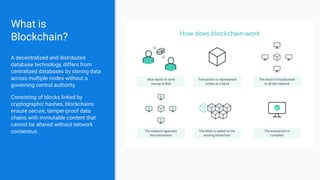
What is
Blockchain?
A decentralized and distributed
database technology, differs from
centralized databases by storing data
across multiple nodes without a
governing central authority.
Consisting of blocks linked by
cryptographic hashes, blockchains
ensure secure, tamper-proof data
chains with immutable content that
cannot be altered without network
consensus.
What is the main difference in interacting with a blockchain
compared to databases?
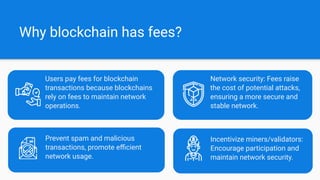
Fees
Prevent spam and malicious
transactions, promote efficient
network usage.
Why blockchain has fees?
Incentivize miners/validators:
Encourage participation and
maintain network security.
Users pay fees for blockchain
transactions because blockchains
rely on fees to maintain network
operations.
Network security: Fees raise
the cost of potential attacks,
ensuring a more secure and
stable network.
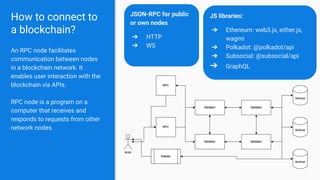
How to connect to
a blockchain?
An RPC node facilitates
communication between nodes
in a blockchain network. It
enables user interaction with the
blockchain via APIs.
RPC node is a program on a
computer that receives and
responds to requests from other
network nodes.
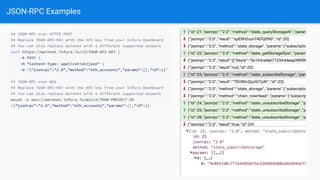
JSON-RPC for public
or own nodes
➔ HTTP
➔ WS
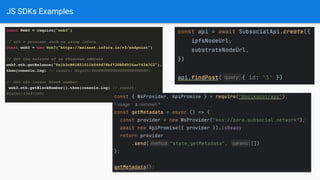
JS libraries:
➔ Ethereum: web3.js, either.js,
wagmi
➔ Polkadot: @polkadot/api
➔ Subsocial: @subsocial/api
➔ GraphQL
JSON-RPC Examples
JS SDKs Examples
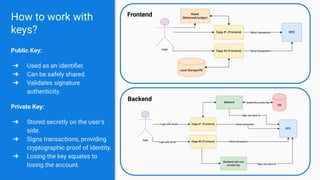
Frontend
How to work with
keys?
Public Key:
➔ Used as an identifier.
➔ Can be safely shared.
➔ Validates signature
authenticity.
Private Key:
➔ Stored secretly on the user's
side.
➔ Signs transactions, providing
cryptographic proof of identity.
➔ Losing the key equates to
losing the account.
Backend
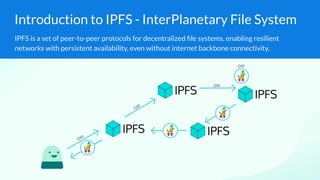
Introduction to IPFS - InterPlanetary File System
IPFS is a set of peer-to-peer protocols for decentralized file systems, enabling resilient
networks with persistent availability, even without internet backbone connectivity.
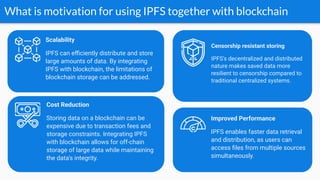
What is motivation for using IPFS together with blockchain
Cost Reduction
Storing data on a blockchain can be
expensive due to transaction fees and
storage constraints. Integrating IPFS
with blockchain allows for off-chain
storage of large data while maintaining
the data's integrity.
Improved Performance
IPFS enables faster data retrieval
and distribution, as users can
access files from multiple sources
simultaneously.
Scalability
IPFS can efficiently distribute and store
large amounts of data. By integrating
IPFS with blockchain, the limitations of
blockchain storage can be addressed.
Censorship resistant storing
IPFS's decentralized and distributed
nature makes saved data more
resilient to censorship compared to
traditional centralized systems.
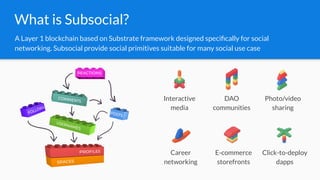
What is Subsocial?
A Layer 1 blockchain based on Substrate framework designed specifically for social
networking. Subsocial provide social primitives suitable for many social use case
Click-to-deploy
dapps
Interactive
media
DAO
communities
Photo/video
sharing
Career
networking
E-commerce
storefronts
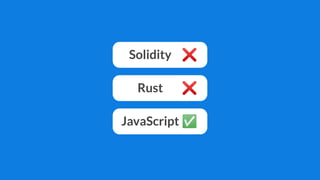
Solidity
Rust
JavaScript
❌
❌
✅
Understanding the basics of
Next.js
Disclaimer: We are looking at the stable version of Next.js. Currently, there is a
Beta version that offers a different project structure, but this concept remains
the same, only the organization style changes.
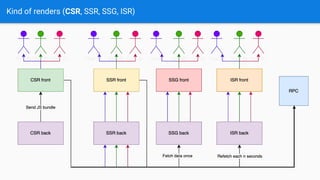
Kind of renders (CSR, SSR, SSG, ISR)
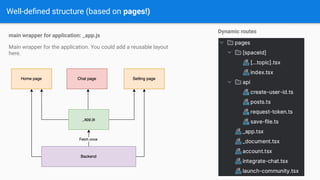
Well-defined structure (based on pages!)
main wrapper for application: _app.js
Main wrapper for the application. You could add a reusable layout
here.
Dynamic routes
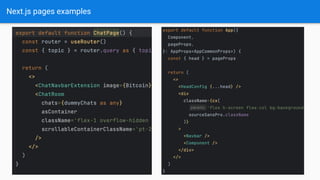
Next.js pages examples
Optimization from the Box
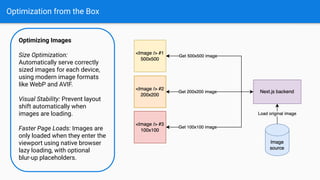
Optimizing Images
Size Optimization:
Automatically serve correctly
sized images for each device,
using modern image formats
like WebP and AVIF.
Visual Stability: Prevent layout
shift automatically when
images are loading.
Faster Page Loads: Images are
only loaded when they enter the
viewport using native browser
lazy loading, with optional
blur-up placeholders.
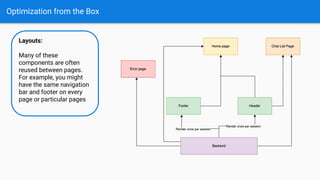
Optimization from the Box
Layouts:
Many of these
components are often
reused between pages.
For example, you might
have the same navigation
bar and footer on every
page or particular pages
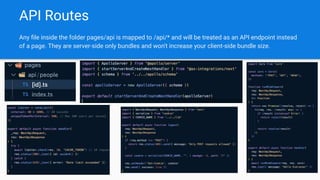
API Routes
Any file inside the folder pages/api is mapped to /api/* and will be treated as an API endpoint instead
of a page. They are server-side only bundles and won't increase your client-side bundle size.
Development
Tech stack: Next.js, SWR, Typescript, TailwindCSS, Subsocial SDK
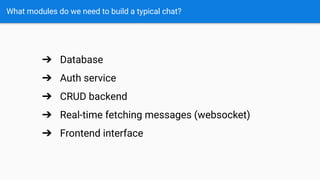
What modules do we need to build a typical chat?
➔ Database
➔ Auth service
➔ CRUD backend
➔ Real-time fetching messages (websocket)
➔ Frontend interface
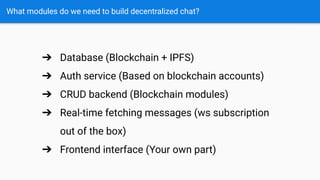
What modules do we need to build decentralized chat?
➔ Database (Blockchain + IPFS)
➔ Auth service (Based on blockchain accounts)
➔ CRUD backend (Blockchain modules)
➔ Real-time fetching messages (ws subscription
out of the box)
➔ Frontend interface (Your own part)
Connect to Blockchain
Fetch messages from blockchain with Subscription
Login with accounts
Transaction sending
Captcha
Next.js optimizations
Deployment
➔ Deploying the chat on Vercel

Workshop "Building Decentralised Chat with Next.js", Oleh Melnychuk

  • 2.
    Agenda Blockchain & IPFSbasics ➔ Why blockchain has fees ➔ How to connect to a blockchain ➔ How to work with keys ➔ Introduction to IPFS and motivation for using IPFS together with blockchain ➔ Introduction to Subsocial and its SDK Understanding the basics of Next.js power ➔ Kinds of renders (SSR, SSG, ISR) ➔ Routing ➔ Compressing images ➔ API out of the box Development ➔ Incorporating user authentication using key pair generation ➔ Setting up a captcha for spam protection ➔ Incorporating data storage using IPFS ➔ Optimizing app speed using Next.js features Deployment ➔ Deploying the chat on Vercel
  • 3.
  • 4.
    What is Blockchain? A decentralizedand distributed database technology, differs from centralized databases by storing data across multiple nodes without a governing central authority. Consisting of blocks linked by cryptographic hashes, blockchains ensure secure, tamper-proof data chains with immutable content that cannot be altered without network consensus.
  • 6.
    What is themain difference in interacting with a blockchain compared to databases?
  • 7.
  • 8.
    Prevent spam andmalicious transactions, promote efficient network usage. Why blockchain has fees? Incentivize miners/validators: Encourage participation and maintain network security. Users pay fees for blockchain transactions because blockchains rely on fees to maintain network operations. Network security: Fees raise the cost of potential attacks, ensuring a more secure and stable network.
  • 9.
    How to connectto a blockchain? An RPC node facilitates communication between nodes in a blockchain network. It enables user interaction with the blockchain via APIs. RPC node is a program on a computer that receives and responds to requests from other network nodes. JSON-RPC for public or own nodes ➔ HTTP ➔ WS JS libraries: ➔ Ethereum: web3.js, either.js, wagmi ➔ Polkadot: @polkadot/api ➔ Subsocial: @subsocial/api ➔ GraphQL
  • 10.
  • 11.
  • 12.
    Frontend How to workwith keys? Public Key: ➔ Used as an identifier. ➔ Can be safely shared. ➔ Validates signature authenticity. Private Key: ➔ Stored secretly on the user's side. ➔ Signs transactions, providing cryptographic proof of identity. ➔ Losing the key equates to losing the account. Backend
  • 13.
    Introduction to IPFS- InterPlanetary File System IPFS is a set of peer-to-peer protocols for decentralized file systems, enabling resilient networks with persistent availability, even without internet backbone connectivity.
  • 14.
    What is motivationfor using IPFS together with blockchain Cost Reduction Storing data on a blockchain can be expensive due to transaction fees and storage constraints. Integrating IPFS with blockchain allows for off-chain storage of large data while maintaining the data's integrity. Improved Performance IPFS enables faster data retrieval and distribution, as users can access files from multiple sources simultaneously. Scalability IPFS can efficiently distribute and store large amounts of data. By integrating IPFS with blockchain, the limitations of blockchain storage can be addressed. Censorship resistant storing IPFS's decentralized and distributed nature makes saved data more resilient to censorship compared to traditional centralized systems.
  • 15.
    What is Subsocial? ALayer 1 blockchain based on Substrate framework designed specifically for social networking. Subsocial provide social primitives suitable for many social use case Click-to-deploy dapps Interactive media DAO communities Photo/video sharing Career networking E-commerce storefronts
  • 16.
  • 17.
    Understanding the basicsof Next.js Disclaimer: We are looking at the stable version of Next.js. Currently, there is a Beta version that offers a different project structure, but this concept remains the same, only the organization style changes.
  • 18.
    Kind of renders(CSR, SSR, SSG, ISR)
  • 19.
    Well-defined structure (basedon pages!) main wrapper for application: _app.js Main wrapper for the application. You could add a reusable layout here. Dynamic routes
  • 20.
  • 21.
    Optimization from theBox Optimizing Images Size Optimization: Automatically serve correctly sized images for each device, using modern image formats like WebP and AVIF. Visual Stability: Prevent layout shift automatically when images are loading. Faster Page Loads: Images are only loaded when they enter the viewport using native browser lazy loading, with optional blur-up placeholders.
  • 22.
    Optimization from theBox Layouts: Many of these components are often reused between pages. For example, you might have the same navigation bar and footer on every page or particular pages
  • 23.
    API Routes Any fileinside the folder pages/api is mapped to /api/* and will be treated as an API endpoint instead of a page. They are server-side only bundles and won't increase your client-side bundle size.
  • 24.
    Development Tech stack: Next.js,SWR, Typescript, TailwindCSS, Subsocial SDK
  • 25.
    What modules dowe need to build a typical chat?
  • 26.
    What modules dowe need to build a typical chat? ➔ Database ➔ Auth service ➔ CRUD backend ➔ Real-time fetching messages (websocket) ➔ Frontend interface
  • 27.
    What modules dowe need to build decentralized chat? ➔ Database (Blockchain + IPFS) ➔ Auth service (Based on blockchain accounts) ➔ CRUD backend (Blockchain modules) ➔ Real-time fetching messages (ws subscription out of the box) ➔ Frontend interface (Your own part)
  • 28.
  • 29.
    Fetch messages fromblockchain with Subscription
  • 30.
  • 31.
  • 32.
  • 33.
  • 34.