Seven Wonders of the World
Done by,
D.Sai Tarun Kumar
The Pyramid at Chichen Itza;
Mexico 
•

Chichen Itza once
served as the
political and
economic center of
Mayan civilization.
The city housed
masterpieces like the Temple of Chac Mool, the Hall of the
Thousand Pillars, the Playing Field of the Prisoners and the
pyramid of Kukulkan, which was the last Mayan temple.
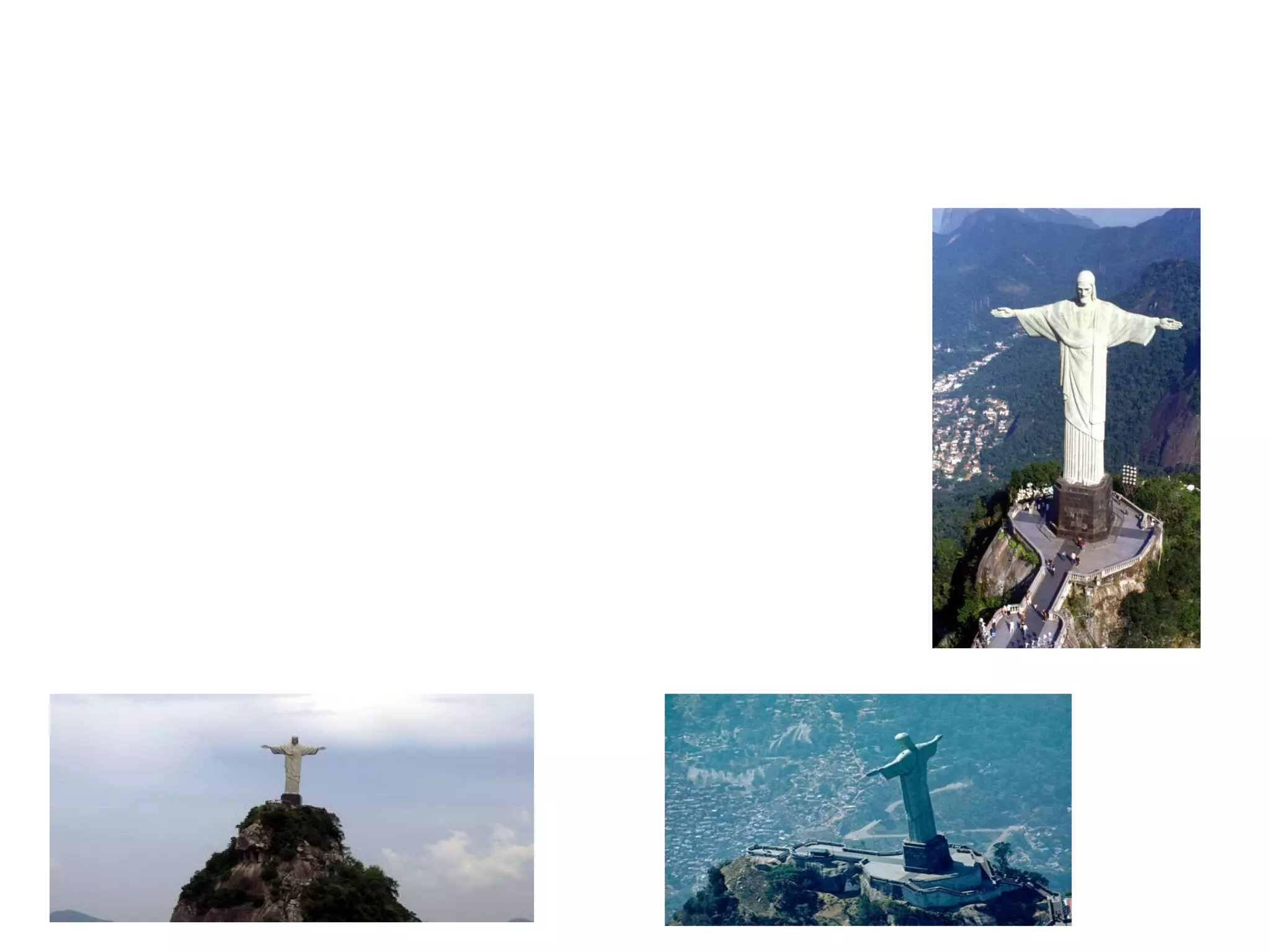
Christ Redeemer; Brazil  
•

The 124-foot statue
of Jesus stands
atop the
Corcovado
Mountain
overlooking
Rio de Janeiro.
Built in 1931, it took five years to construct and symbolizes
the warmth and welcoming spirit of the Brazilian people.
•

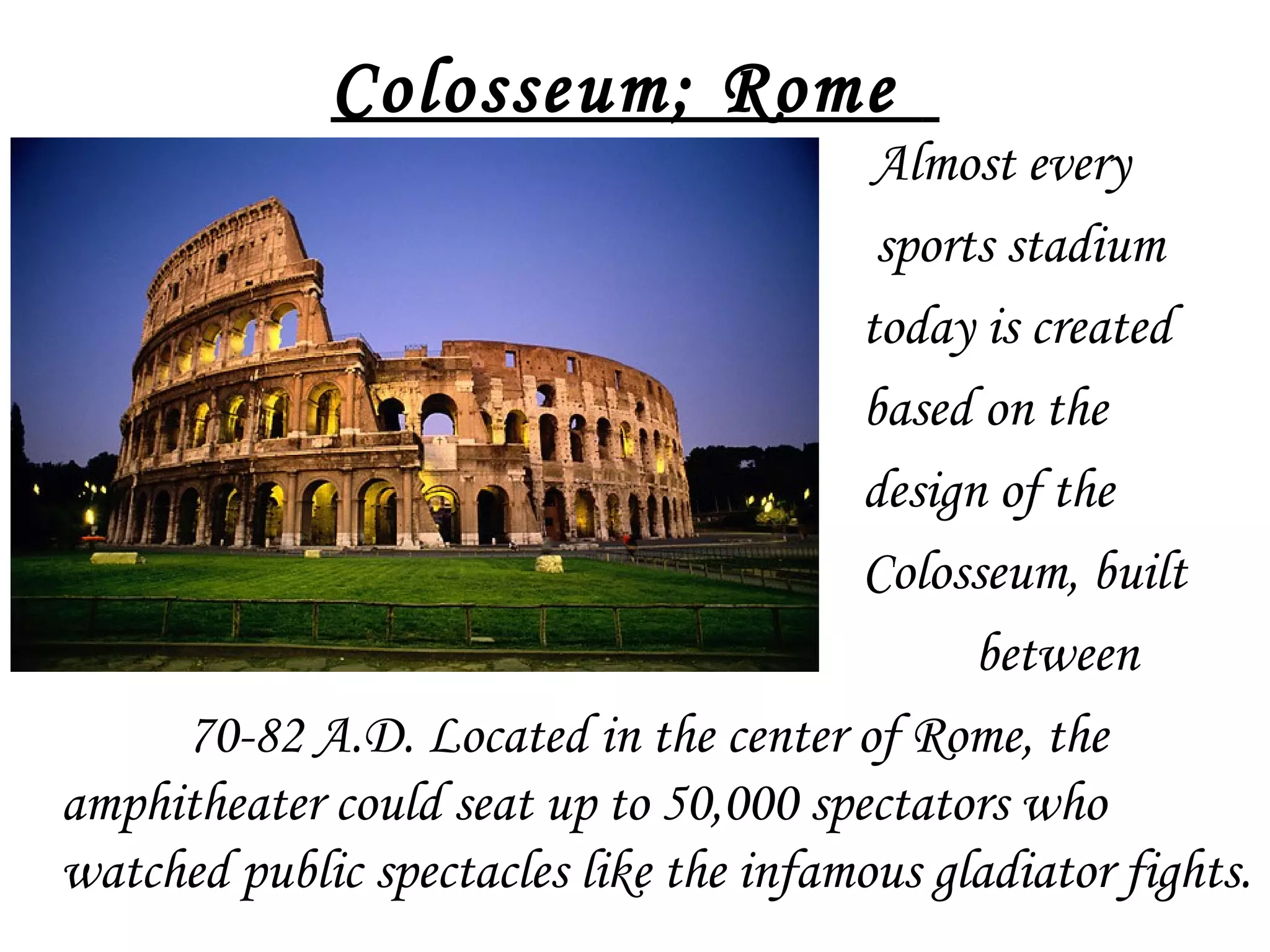
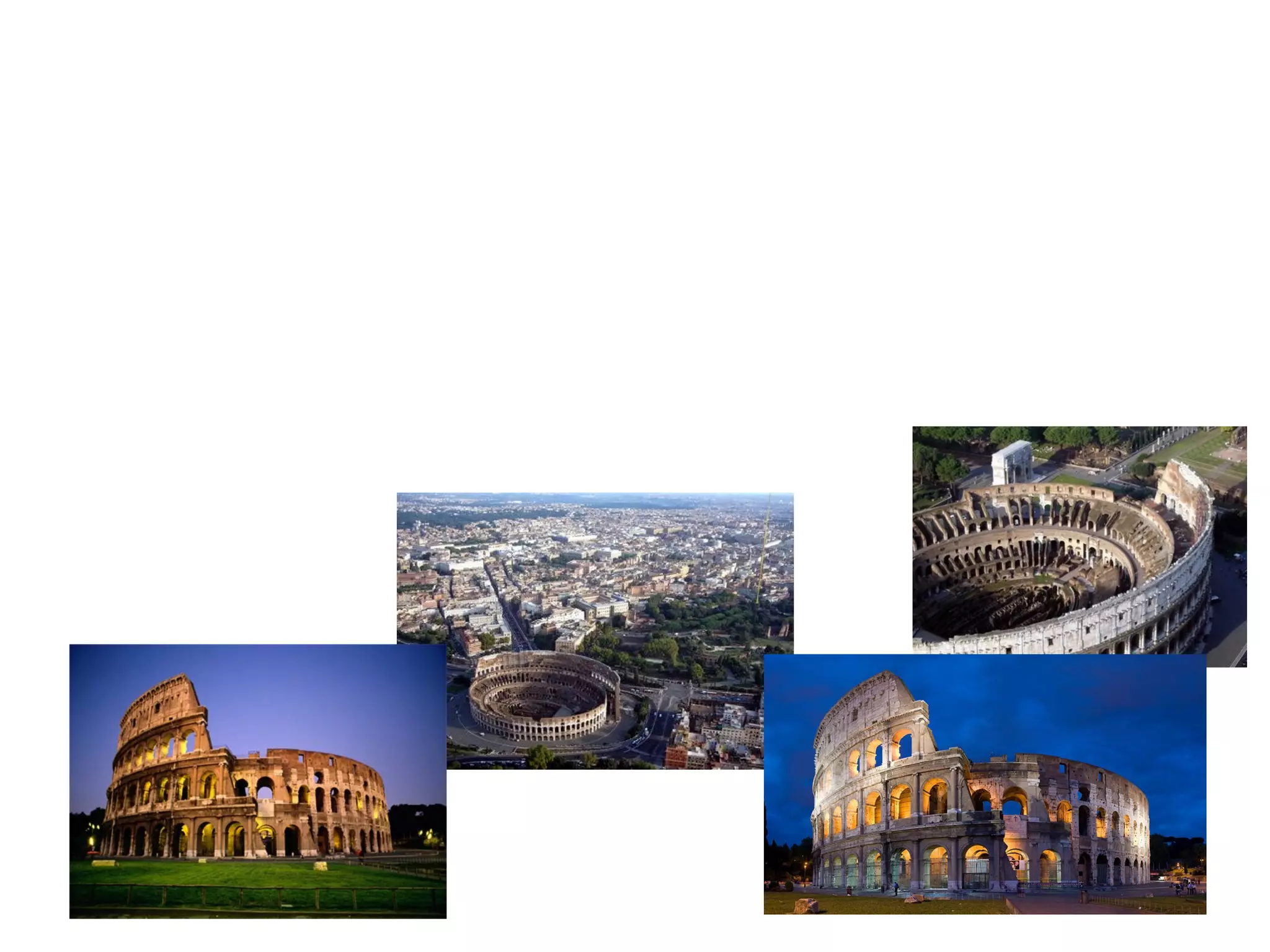
Colosseum; Rome 
Almost every
sports stadium
today is created
based on the
design of the
Colosseum, built
between
70-82 A.D. Located in the center of Rome, the
amphitheater could seat up to 50,000 spectators who
watched public spectacles like the infamous gladiator fights.
•

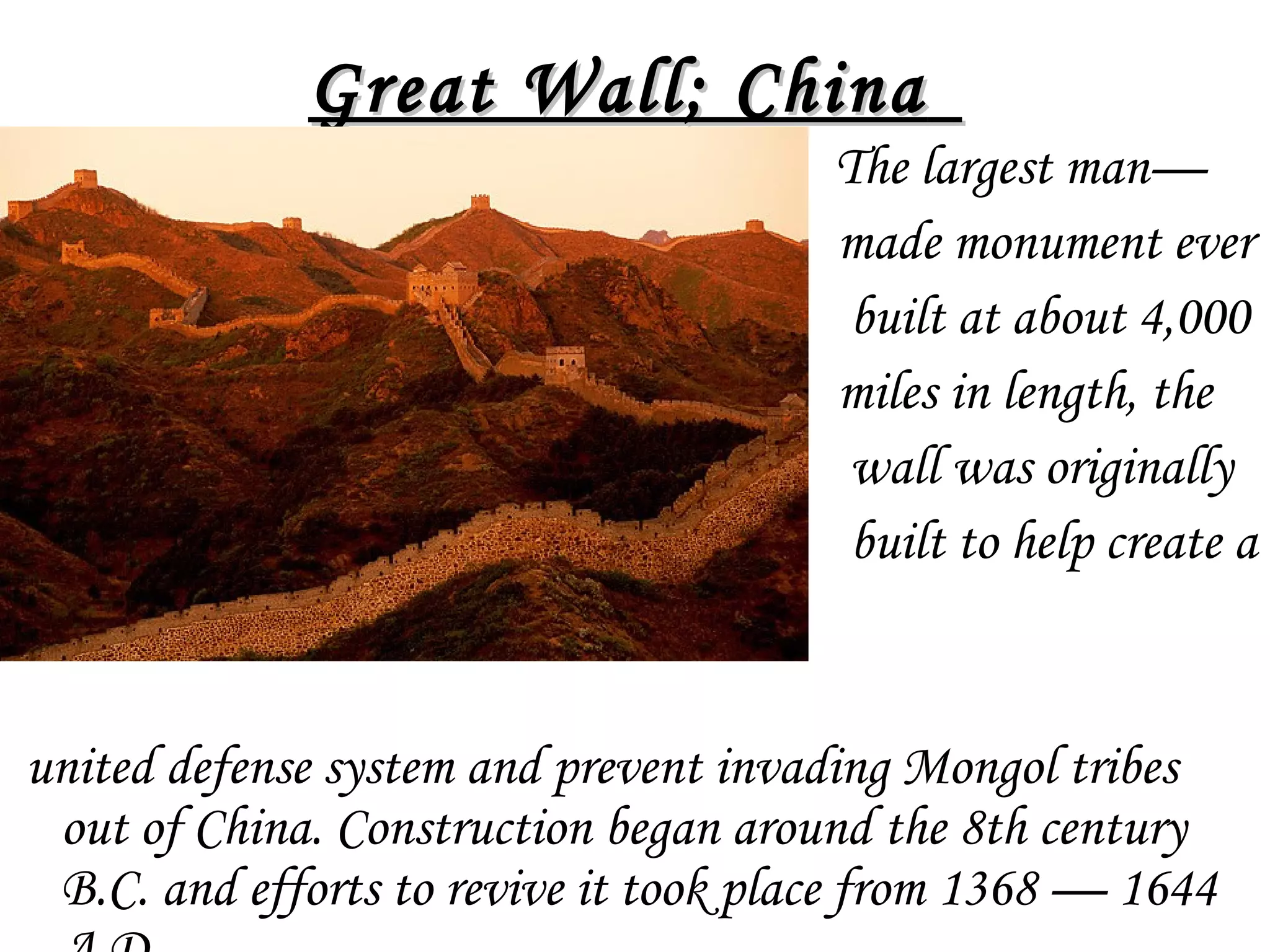
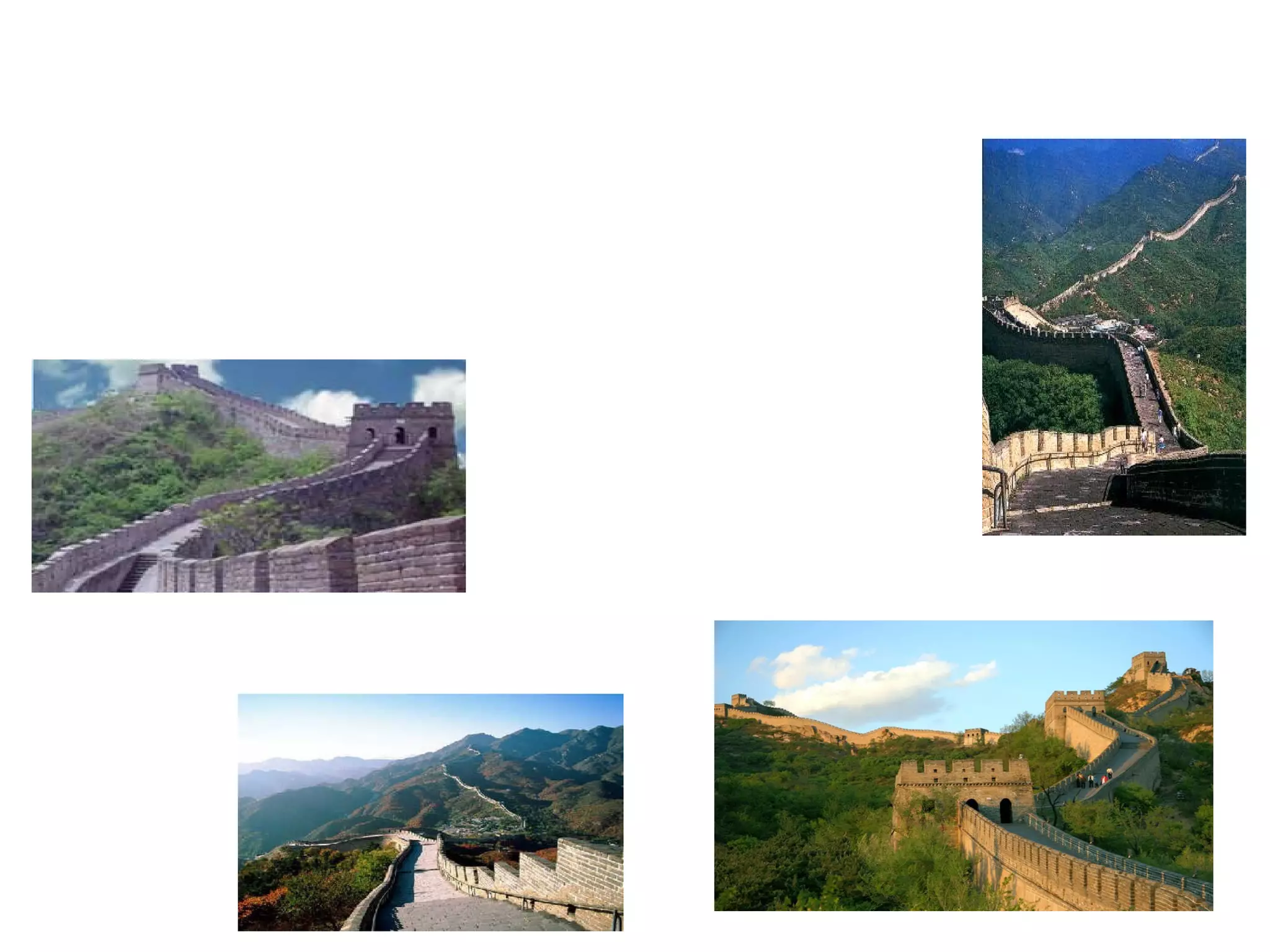
Great Wall; China  
The largest man—
made monument ever
built at about 4,000
miles in length, the
wall was originally
built to help create a

united defense system and prevent invading Mongol tribes
out of China. Construction began around the 8th century
B.C. and efforts to revive it took place from 1368 — 1644
•

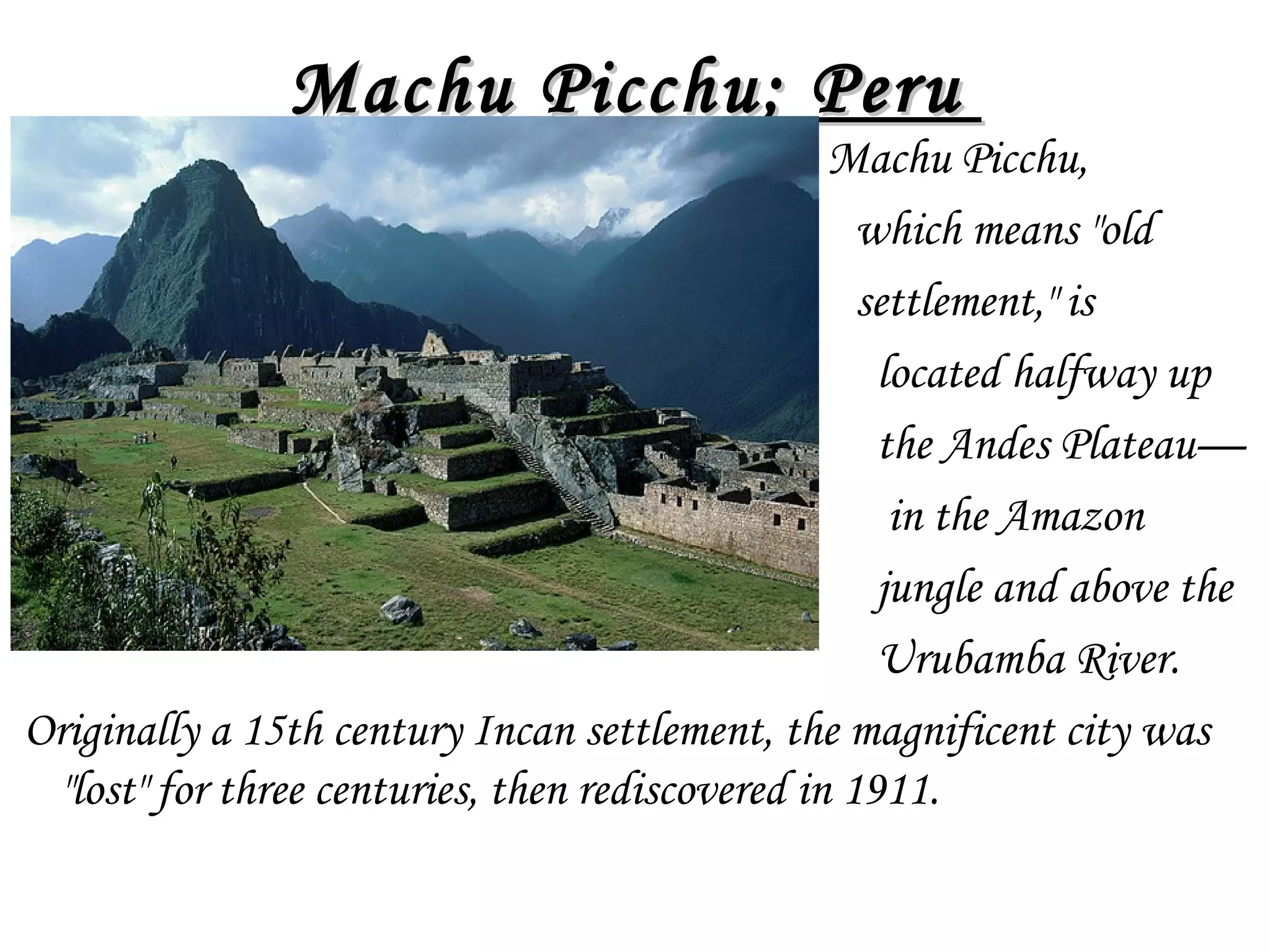
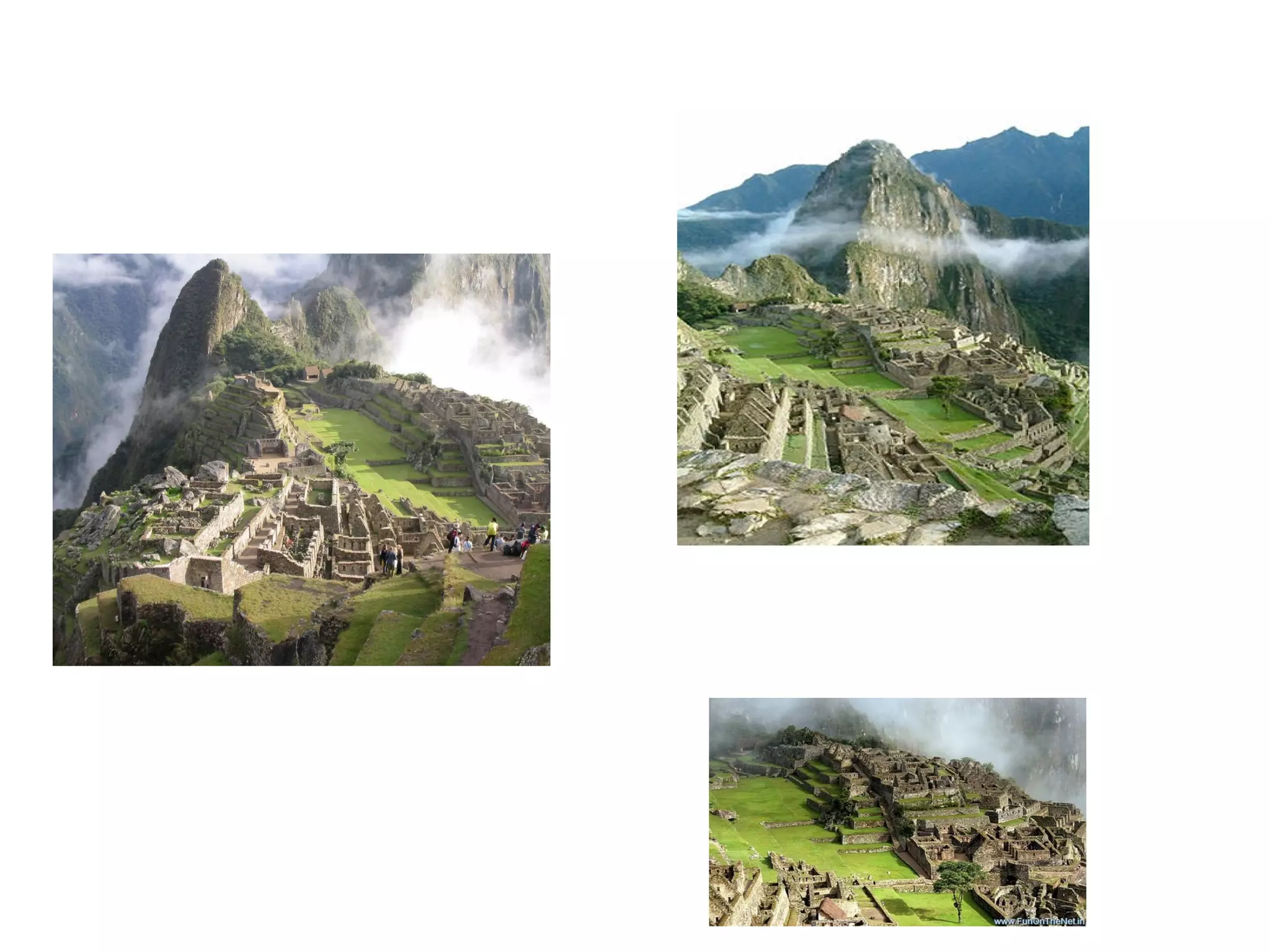
Machu Picchu; Peru

Machu Picchu,
which means "old
settlement," is
located halfway up
the Andes Plateau—
in the Amazon
jungle and above the
Urubamba River.
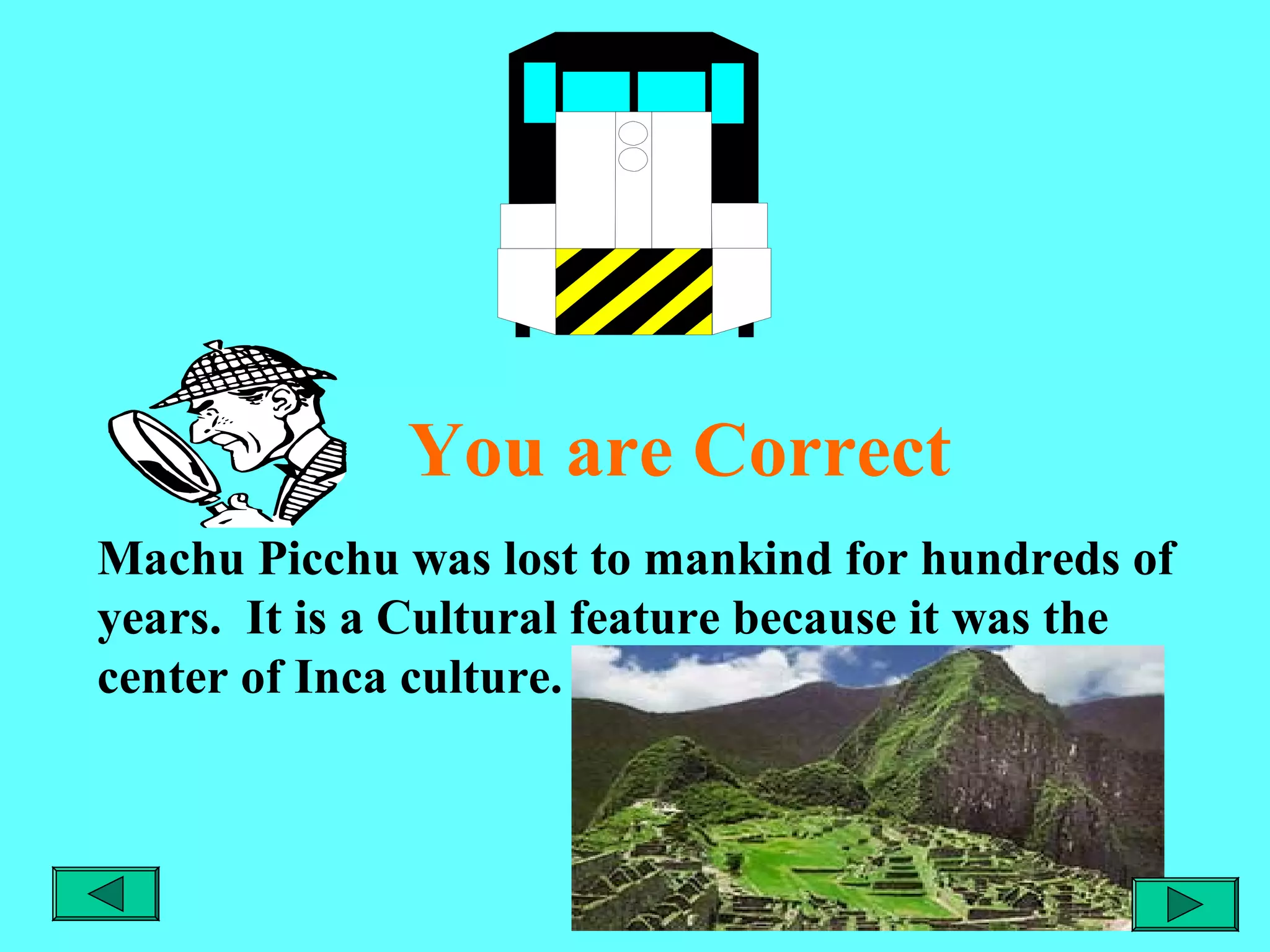
Originally a 15th century Incan settlement, the magnificent city was
"lost" for three centuries, then rediscovered in 1911.
•

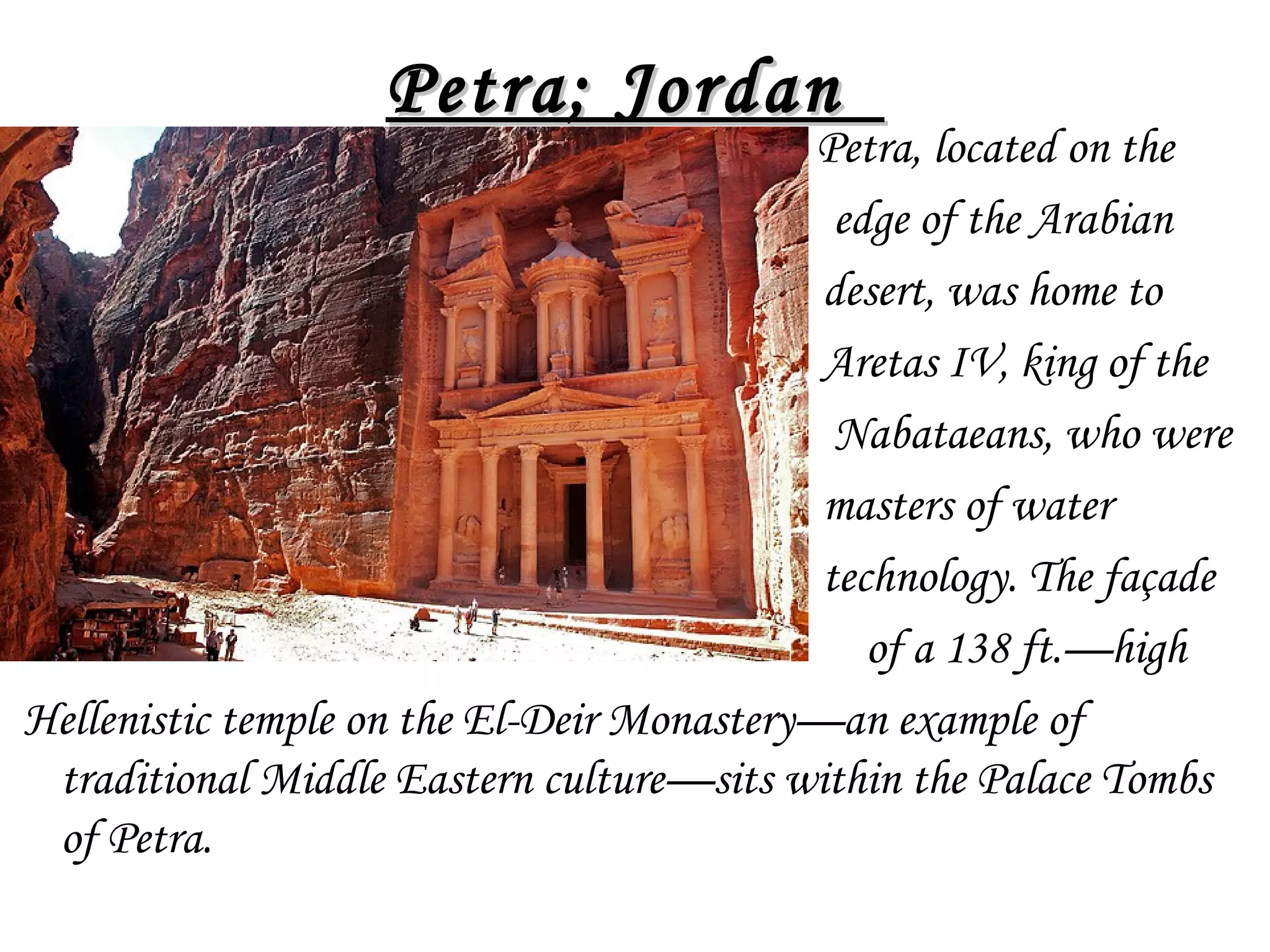
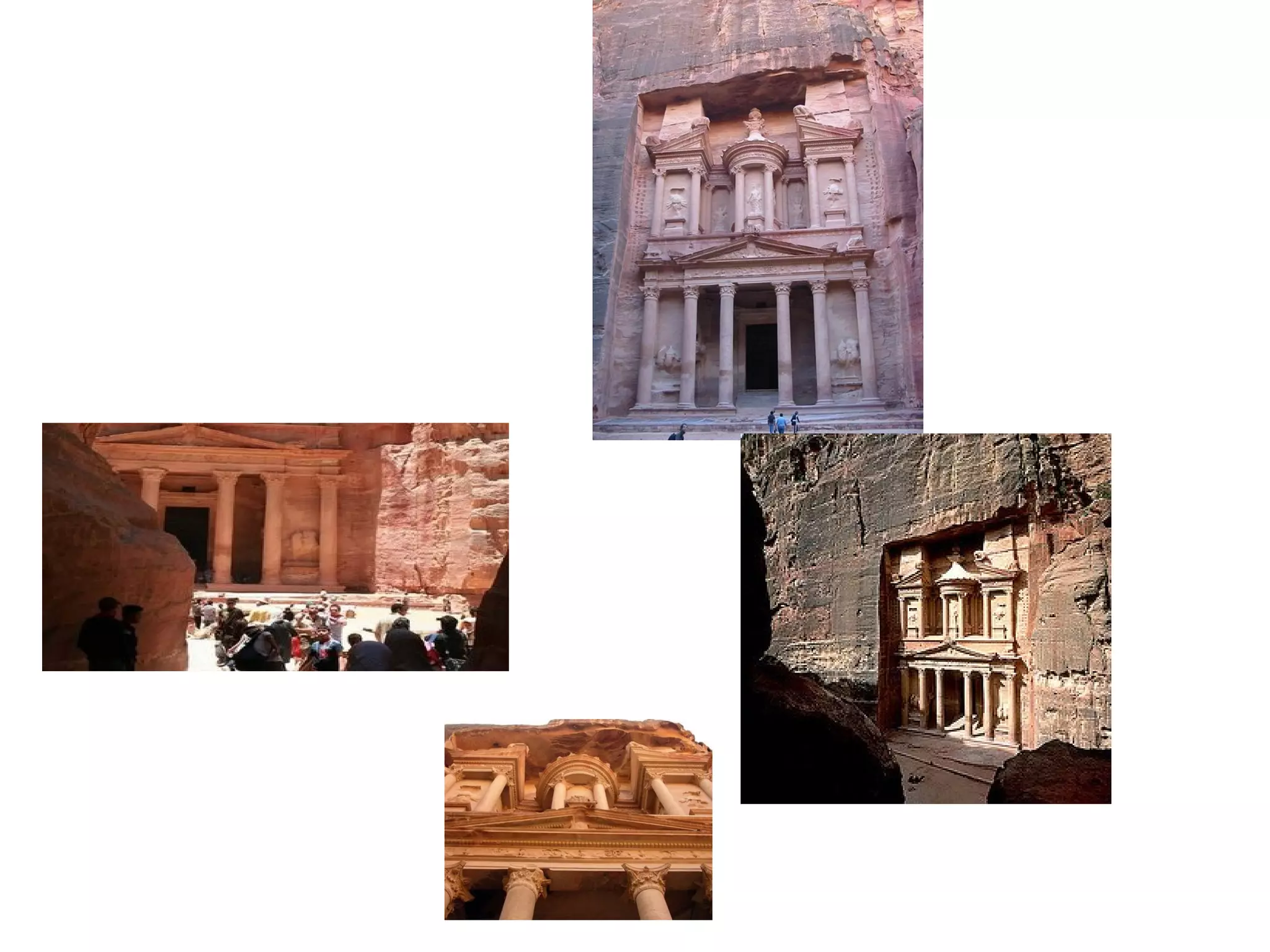
Petra; Jordan 

Petra, located on the
edge of the Arabian
desert, was home to
Aretas IV, king of the
Nabataeans, who were
masters of water
technology. The façade
of a 138 ft.—high
Hellenistic temple on the El-Deir Monastery—an example of
traditional Middle Eastern culture—sits within the Palace Tombs
of Petra.
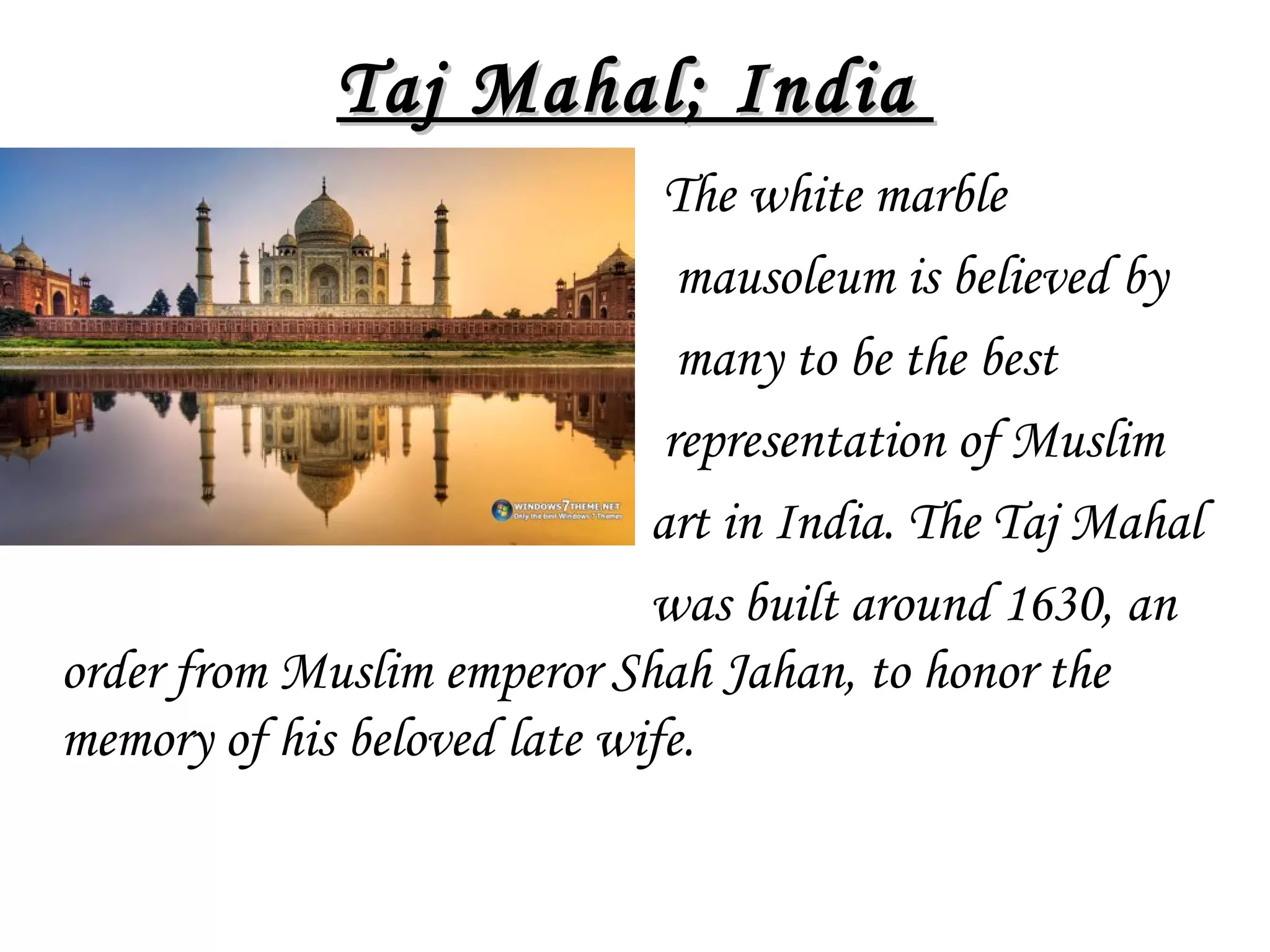
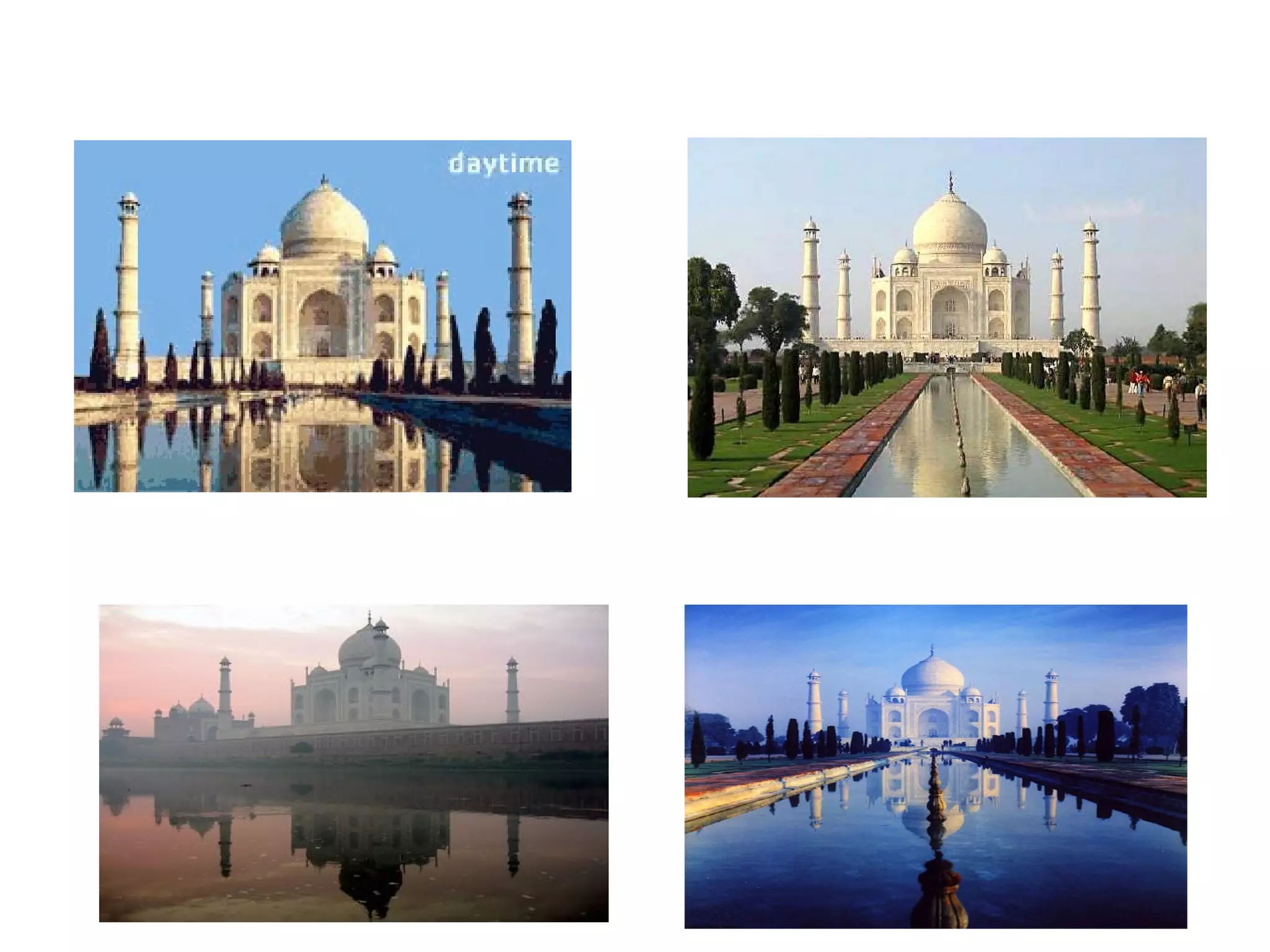
Taj Mahal; India
The white marble
mausoleum is believed by
many to be the best
representation of Muslim
art in India. The Taj Mahal
was built around 1630, an
order from Muslim emperor Shah Jahan, to honor the
memory of his beloved late wife.
5. Machu Picchu was lost to
mankind for hundreds of years. It is
a Cultural feature because it was the
center of __________ culture.
A. Cherokee
B. Inca
C. Hindu
You are Correct
Machu Picchu was lost to mankind for hundreds of
years. It is a Cultural feature because it was the
center of Inca culture.
6. The Taj Mahal is the world’s most
beautiful ___________?
A. Tomb
B. Palace
C. Business
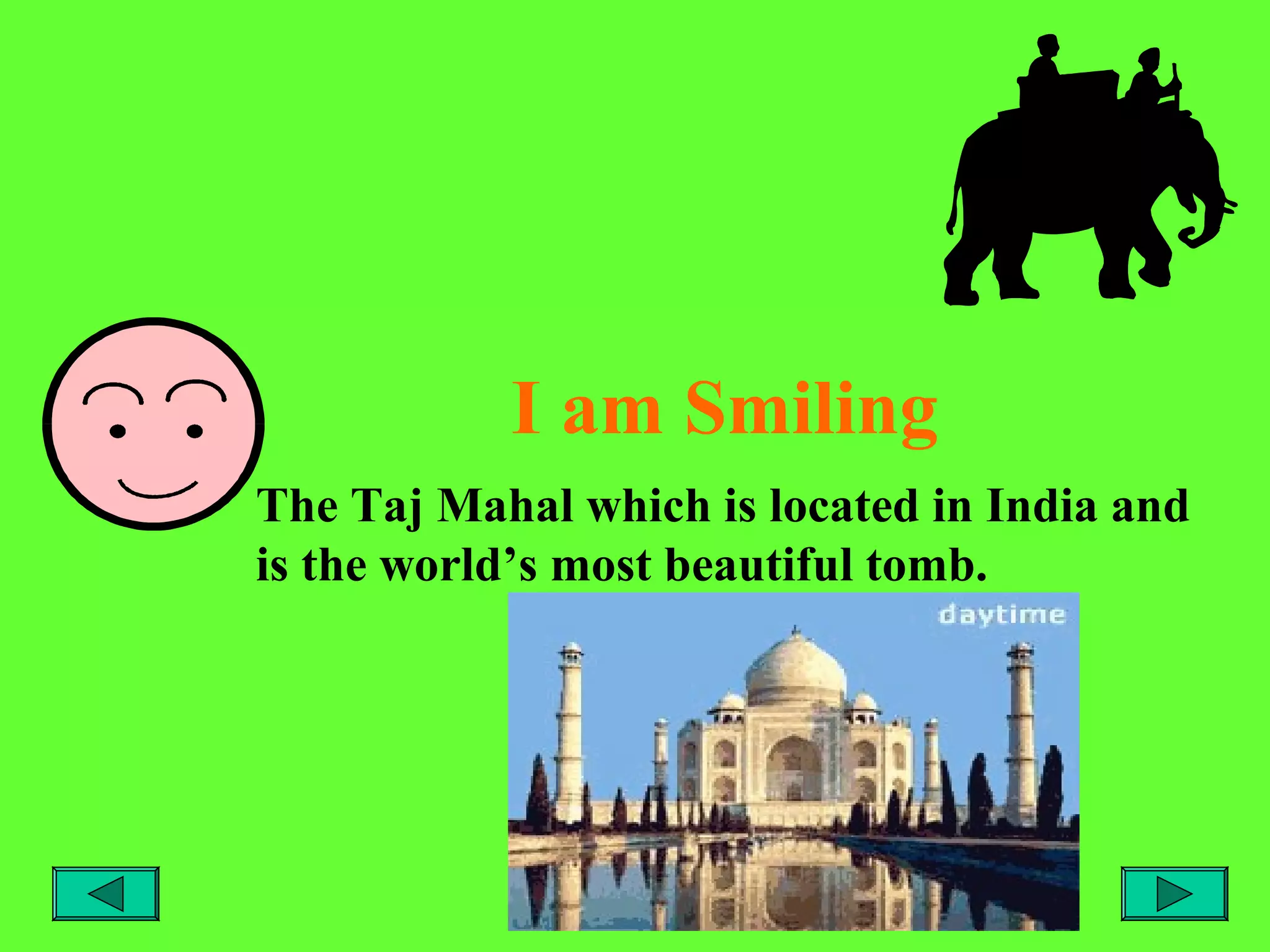
I am Smiling
The Taj Mahal which is located in India and
is the world’s most beautiful tomb.
10. What is the largest man-made
barrier in the world?

A. Machu Picchu
B. Taj Mahal
C. Great Wall of China
Journey Over
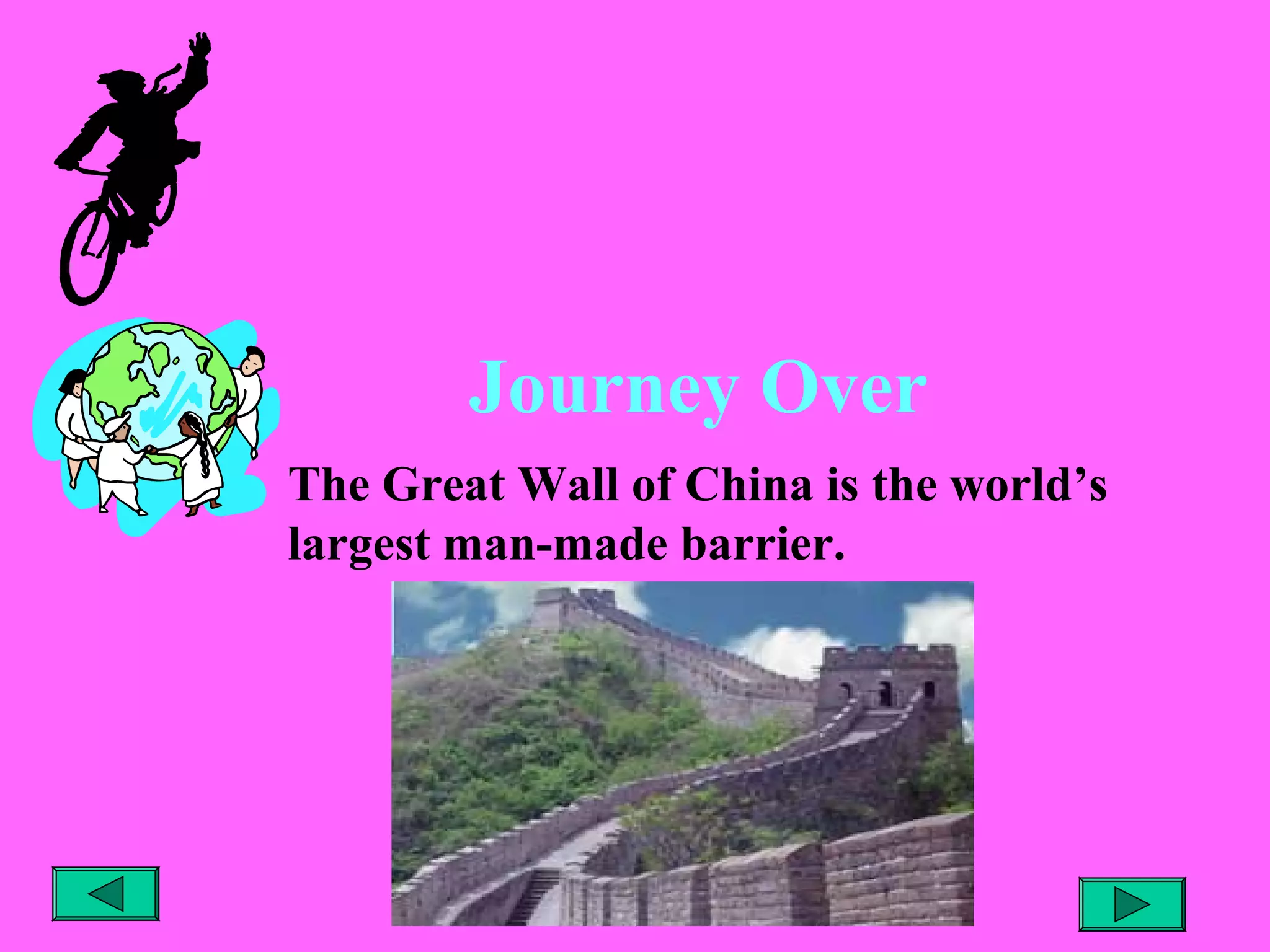
The Great Wall of China is the world’s
largest man-made barrier.
Wonders of ppt

Wonders of ppt

  • 2.
    Seven Wonders ofthe World Done by, D.Sai Tarun Kumar
  • 3.
    The Pyramid atChichen Itza; Mexico  • Chichen Itza once served as the political and economic center of Mayan civilization. The city housed masterpieces like the Temple of Chac Mool, the Hall of the Thousand Pillars, the Playing Field of the Prisoners and the pyramid of Kukulkan, which was the last Mayan temple.
  • 5.
    Christ Redeemer; Brazil  • The 124-foot statue of Jesus stands atop the Corcovado Mountain overlooking Rio de Janeiro. Built in 1931, it took five years to construct and symbolizes the warmth and welcoming spirit of the Brazilian people.
  • 7.
    • Colosseum; Rome  Almost every sportsstadium today is created based on the design of the Colosseum, built between 70-82 A.D. Located in the center of Rome, the amphitheater could seat up to 50,000 spectators who watched public spectacles like the infamous gladiator fights.
  • 9.
    • Great Wall; China  The largest man— made monument ever built at about 4,000 miles in length, the wall was originally built to help create a united defense system and prevent invading Mongol tribes out of China. Construction began around the 8th century B.C. and efforts to revive it took place from 1368 — 1644
  • 11.
    • Machu Picchu; Peru MachuPicchu, which means "old settlement," is located halfway up the Andes Plateau— in the Amazon jungle and above the Urubamba River. Originally a 15th century Incan settlement, the magnificent city was "lost" for three centuries, then rediscovered in 1911.
  • 13.
    • Petra; Jordan  Petra, locatedon the edge of the Arabian desert, was home to Aretas IV, king of the Nabataeans, who were masters of water technology. The façade of a 138 ft.—high Hellenistic temple on the El-Deir Monastery—an example of traditional Middle Eastern culture—sits within the Palace Tombs of Petra.
  • 15.
    Taj Mahal; India Thewhite marble mausoleum is believed by many to be the best representation of Muslim art in India. The Taj Mahal was built around 1630, an order from Muslim emperor Shah Jahan, to honor the memory of his beloved late wife.
  • 17.
    5. Machu Picchuwas lost to mankind for hundreds of years. It is a Cultural feature because it was the center of __________ culture. A. Cherokee B. Inca C. Hindu
  • 18.
    You are Correct MachuPicchu was lost to mankind for hundreds of years. It is a Cultural feature because it was the center of Inca culture.
  • 19.
    6. The TajMahal is the world’s most beautiful ___________? A. Tomb B. Palace C. Business
  • 20.
    I am Smiling TheTaj Mahal which is located in India and is the world’s most beautiful tomb.
  • 21.
    10. What isthe largest man-made barrier in the world? A. Machu Picchu B. Taj Mahal C. Great Wall of China
  • 22.
    Journey Over The GreatWall of China is the world’s largest man-made barrier.