Cloud-Native Middleware as a Programming Language
Anupama Pathirage
June 2022
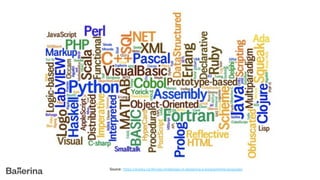
Source : https://snarky.ca/the-key-challenges-in-designing-a-programming-language/
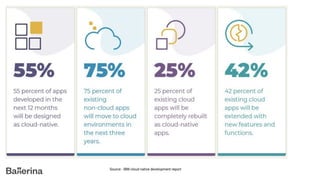
Source : IBM cloud native development report
In this session
Why we need a new programming language?
What is Ballerina?
Key features of Ballerina
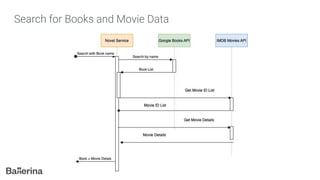
Demo - Develop a REST service using Ballerina
Open source contributions to Ballerina
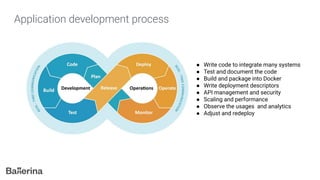
Application development process
● Write code to integrate many systems
● Test and document the code
● Build and package into Docker
● Write deployment descriptors
● API management and security
● Scaling and performance
● Observe the usages and analytics
● Adjust and redeploy
Why we need a new programming language?
○ Better network abstractions
○ Better support for data representation
○ Network aware type system
○ 1st Class support for a wide spectrum of network protocols
○ Ability to handle concurrency easily
○ Cloud friendliness
○ Visual representations for the full picture
○ Should be a complete platform, not just a language
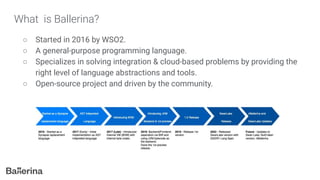
What is Ballerina?
○ Started in 2016 by WSO2.
○ A general-purpose programming language.
○ Specializes in solving integration & cloud-based problems by providing the
right level of language abstractions and tools.
○ Open-source project and driven by the community.
What is Ballerina?
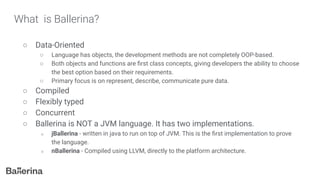
○ Data-Oriented
○ Language has objects, the development methods are not completely OOP-based.
○ Both objects and functions are first class concepts, giving developers the ability to choose
the best option based on their requirements.
○ Primary focus is on represent, describe, communicate pure data.
○ Compiled
○ Flexibly typed
○ Concurrent
○ Ballerina is NOT a JVM language. It has two implementations.
○ jBallerina - written in java to run on top of JVM. This is the first implementation to prove
the language.
○ nBallerina - Compiled using LLVM, directly to the platform architecture.
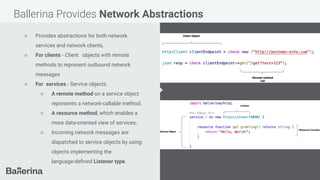
Ballerina Provides Network Abstractions
○ Provides abstractions for both network
services and network clients.
○ For clients - Client objects with remote
methods to represent outbound network
messages
○ For services - Service objects
○ A remote method on a service object
represents a network-callable method.
○ A resource method, which enables a
more data-oriented view of services.
○ Incoming network messages are
dispatched to service objects by using
objects implementing the
language-defined Listener type.
Ballerina has Network-Aware Data & Type System
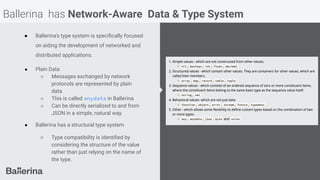
● Ballerina’s type system is specifically focused
on aiding the development of networked and
distributed applications.
● Plain Data
○ Messages exchanged by network
protocols are represented by plain
data
○ This is called anydata in Ballerina
○ Can be directly serialized to and from
JSON in a simple, natural way.
● Ballerina has a structural type system
○ Type compatibility is identified by
considering the structure of the value
rather than just relying on the name of
the type.
Code to Cloud with Ballerina
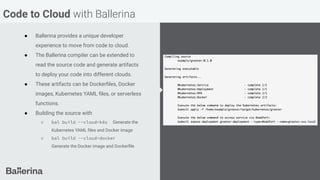
● Ballerina provides a unique developer
experience to move from code to cloud.
● The Ballerina compiler can be extended to
read the source code and generate artifacts
to deploy your code into different clouds.
● These artifacts can be Dockerfiles, Docker
images, Kubernetes YAML files, or serverless
functions.
● Building the source with
○ bal build --cloud=k8s Generate the
Kubernetes YAML files and Docker image
○ bal build --cloud=docker
Generate the Docker image and Dockerfile
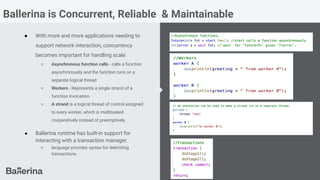
Ballerina is Concurrent, Reliable & Maintainable
● With more and more applications needing to
support network interaction, concurrency
becomes important for handling scale.
○ Asynchronous function calls - calls a function
asynchronously and the function runs on a
separate logical thread
○ Workers - Represents a single strand of a
function invocation.
○ A strand is a logical thread of control assigned
to every worker, which is multitasked
cooperatively instead of preemptively.
● Ballerina runtime has built-in support for
interacting with a transaction manager.
○ language provides syntax for delimiting
transactions.
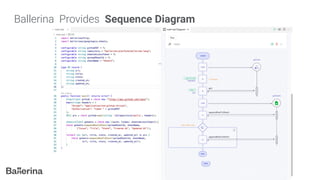
Ballerina Provides Sequence Diagram
Ballerina is a Platform
Ballerina has:
- "The language" - This is the core and it's the part that's defined in the
language specification.
- "Platform" - The language has been designed in conjunction with key
components of the surrounding ecosystem
The platform includes:
● a standard library
● a centralized module repository, and the tooling needed to support that
● a documentation system (based on Markdown)
● a testing framework
● extensions/plug-ins for popular IDEs (notably Visual Studio Code).
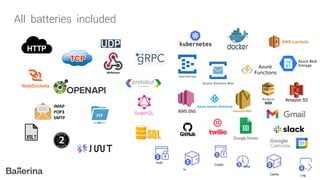
All batteries included
Auth
Cache
Crypto
Log
io
time
Demo
Search for Books and Movie Data
Contributing to Ballerina
Ballerina has:
○ https://ballerina-platform.slack.com/
○ - - https://groups.google.com/g/ballerina-dev
○ https://github.com/ballerina-platform/
Thank You

[Women in Tech Global Conference - 2022]Cloud-Native Middleware as a Programming Language

  • 1.
    Cloud-Native Middleware asa Programming Language Anupama Pathirage June 2022
  • 2.
  • 3.
    Source : IBMcloud native development report
  • 4.
    In this session Whywe need a new programming language? What is Ballerina? Key features of Ballerina Demo - Develop a REST service using Ballerina Open source contributions to Ballerina
  • 5.
    Application development process ●Write code to integrate many systems ● Test and document the code ● Build and package into Docker ● Write deployment descriptors ● API management and security ● Scaling and performance ● Observe the usages and analytics ● Adjust and redeploy
  • 6.
    Why we needa new programming language? ○ Better network abstractions ○ Better support for data representation ○ Network aware type system ○ 1st Class support for a wide spectrum of network protocols ○ Ability to handle concurrency easily ○ Cloud friendliness ○ Visual representations for the full picture ○ Should be a complete platform, not just a language
  • 7.
    What is Ballerina? ○Started in 2016 by WSO2. ○ A general-purpose programming language. ○ Specializes in solving integration & cloud-based problems by providing the right level of language abstractions and tools. ○ Open-source project and driven by the community.
  • 8.
    What is Ballerina? ○Data-Oriented ○ Language has objects, the development methods are not completely OOP-based. ○ Both objects and functions are first class concepts, giving developers the ability to choose the best option based on their requirements. ○ Primary focus is on represent, describe, communicate pure data. ○ Compiled ○ Flexibly typed ○ Concurrent ○ Ballerina is NOT a JVM language. It has two implementations. ○ jBallerina - written in java to run on top of JVM. This is the first implementation to prove the language. ○ nBallerina - Compiled using LLVM, directly to the platform architecture.
  • 9.
    Ballerina Provides NetworkAbstractions ○ Provides abstractions for both network services and network clients. ○ For clients - Client objects with remote methods to represent outbound network messages ○ For services - Service objects ○ A remote method on a service object represents a network-callable method. ○ A resource method, which enables a more data-oriented view of services. ○ Incoming network messages are dispatched to service objects by using objects implementing the language-defined Listener type.
  • 10.
    Ballerina has Network-AwareData & Type System ● Ballerina’s type system is specifically focused on aiding the development of networked and distributed applications. ● Plain Data ○ Messages exchanged by network protocols are represented by plain data ○ This is called anydata in Ballerina ○ Can be directly serialized to and from JSON in a simple, natural way. ● Ballerina has a structural type system ○ Type compatibility is identified by considering the structure of the value rather than just relying on the name of the type.
  • 11.
    Code to Cloudwith Ballerina ● Ballerina provides a unique developer experience to move from code to cloud. ● The Ballerina compiler can be extended to read the source code and generate artifacts to deploy your code into different clouds. ● These artifacts can be Dockerfiles, Docker images, Kubernetes YAML files, or serverless functions. ● Building the source with ○ bal build --cloud=k8s Generate the Kubernetes YAML files and Docker image ○ bal build --cloud=docker Generate the Docker image and Dockerfile
  • 12.
    Ballerina is Concurrent,Reliable & Maintainable ● With more and more applications needing to support network interaction, concurrency becomes important for handling scale. ○ Asynchronous function calls - calls a function asynchronously and the function runs on a separate logical thread ○ Workers - Represents a single strand of a function invocation. ○ A strand is a logical thread of control assigned to every worker, which is multitasked cooperatively instead of preemptively. ● Ballerina runtime has built-in support for interacting with a transaction manager. ○ language provides syntax for delimiting transactions.
  • 13.
  • 14.
    Ballerina is aPlatform Ballerina has: - "The language" - This is the core and it's the part that's defined in the language specification. - "Platform" - The language has been designed in conjunction with key components of the surrounding ecosystem The platform includes: ● a standard library ● a centralized module repository, and the tooling needed to support that ● a documentation system (based on Markdown) ● a testing framework ● extensions/plug-ins for popular IDEs (notably Visual Studio Code).
  • 15.
  • 16.
  • 17.
    Search for Booksand Movie Data
  • 18.
    Contributing to Ballerina Ballerinahas: ○ https://ballerina-platform.slack.com/ ○ - - https://groups.google.com/g/ballerina-dev ○ https://github.com/ballerina-platform/
  • 19.