Wildlife (protection)act,1972
BY:-
ALAPATI JYOTHSNA
(1210715204)
IT(C2)
Wildlife protection act came to existence in 1972.
The Indian board of wildlife(IBWL) was created in 1952 in our
country, which after the enactment of the
wildlife(protection)act actively took up the task of setting up
wildlife national parks and sanctuaries
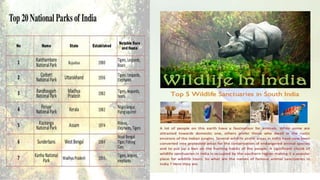
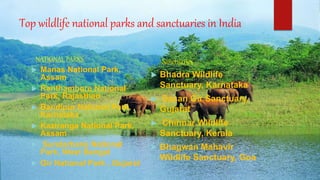
Top wildlife national parks and sanctuaries in India
NATIONAL PARKS
 Manas National Park,
Assam
 Ranthambore National
Park, Rajasthan
 Bandipur National Park,
Karnataka
 Kaziranga National Park,
Assam
 Sundarbans National
Park, West Bengal
 Gir National Park , Gujarat
Sanctuaries
 Bhadra Wildlife
Sanctuary, Karnataka
 Sasan Gir Sanctuary,
Gujarat
 Chinnar Wildlife
Sanctuary, Kerala
 Bhagwan Mahavir
Wildlife Sanctuary, Goa
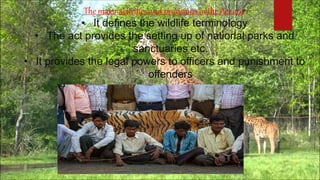
The major activities and provisions in the Act are:
• It defines the wildlife terminology
• The act provides the setting up of national parks and
sanctuaries etc.
• It provides the legal powers to officers and punishment to
offenders
• The act imposes the ban on the trade in scheduled
animals​.
• The Act provides for the constitution of Central Zoo
authority.
• There is provision for trade or commerce in some
wildlife species with license for sale, possession,
transfer etc.
• Protection of some endangered
plants like pitcher plant, blue vanda,
ladies slipper orchid etc.
Under the act, comprehensive listing of
endangered wildlife species was done for the
first time and prohibition of hunting of the
endangered species was mentioned.
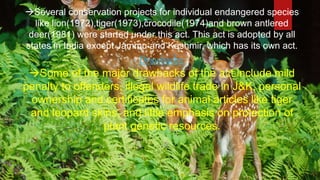
Several conservation projects for individual endangered species
like lion(1972),tiger(1973),crocodile(1974)and brown antlered
deer(1981) were started under this act. This act is adopted by all
states in India except Jammu and Kashmir, which has its own act.
Drawbacks:
Some of the major drawbacks of the act include mild
penalty to offenders, illegal wildlife trade in J&K, personal
ownership and certificates for animal articles like tiger
and leopard skins, and little emphasis on protection of
plant genetic resources.
Endangered species:
The species of animal or plant that are seriously at risk of
extinction.
Examples: Tiger, elephant, red panda, giant tortoise, shark
etc.
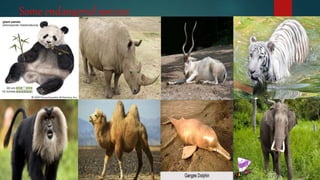
Some endangered species:
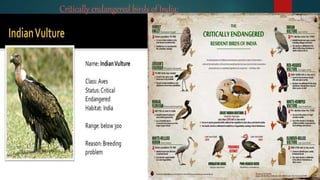
Critically endangered birds of India:
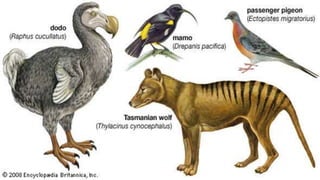
Extinct species:
The species of plants or animals that are no longer in existence.
Examples: dodo, passenger pigeon, pink-headed duck etc.
CONT(FOREST(CONSERVATION)ACT-1980)

Wildlife (protection)act,1972-environmental studies

  • 1.
  • 2.
    Wildlife protection actcame to existence in 1972. The Indian board of wildlife(IBWL) was created in 1952 in our country, which after the enactment of the wildlife(protection)act actively took up the task of setting up wildlife national parks and sanctuaries
  • 4.
    Top wildlife nationalparks and sanctuaries in India NATIONAL PARKS  Manas National Park, Assam  Ranthambore National Park, Rajasthan  Bandipur National Park, Karnataka  Kaziranga National Park, Assam  Sundarbans National Park, West Bengal  Gir National Park , Gujarat Sanctuaries  Bhadra Wildlife Sanctuary, Karnataka  Sasan Gir Sanctuary, Gujarat  Chinnar Wildlife Sanctuary, Kerala  Bhagwan Mahavir Wildlife Sanctuary, Goa
  • 5.
    The major activitiesand provisions in the Act are: • It defines the wildlife terminology • The act provides the setting up of national parks and sanctuaries etc. • It provides the legal powers to officers and punishment to offenders
  • 6.
    • The actimposes the ban on the trade in scheduled animals​. • The Act provides for the constitution of Central Zoo authority. • There is provision for trade or commerce in some wildlife species with license for sale, possession, transfer etc.
  • 7.
    • Protection ofsome endangered plants like pitcher plant, blue vanda, ladies slipper orchid etc.
  • 8.
    Under the act,comprehensive listing of endangered wildlife species was done for the first time and prohibition of hunting of the endangered species was mentioned.
  • 9.
    Several conservation projectsfor individual endangered species like lion(1972),tiger(1973),crocodile(1974)and brown antlered deer(1981) were started under this act. This act is adopted by all states in India except Jammu and Kashmir, which has its own act. Drawbacks: Some of the major drawbacks of the act include mild penalty to offenders, illegal wildlife trade in J&K, personal ownership and certificates for animal articles like tiger and leopard skins, and little emphasis on protection of plant genetic resources.
  • 10.
    Endangered species: The speciesof animal or plant that are seriously at risk of extinction. Examples: Tiger, elephant, red panda, giant tortoise, shark etc.
  • 11.
  • 12.
  • 13.
    Extinct species: The speciesof plants or animals that are no longer in existence. Examples: dodo, passenger pigeon, pink-headed duck etc.
  • 15.