India has over 441 animal sanctuaries, referred to as Wildlife
sanctuaries (IUCN Category IVProtected Area). Among these, the
28 Tiger Reserves are governed by Project Tiger, and are of special
significance in the conservation of the tiger. Some wildlife sanctuaries
are specifically named Bird Sanctuary, e.g. Keoladeo National
Park before attained National Park status. Many National Parks were
initially Wildlife Sanctuaries.
Wildlife sanctuaries of national importance to conservation, usually due
to some flagship faunal species, are named National Wildlife Sanctuary,
like National Chambal (Gharial) Wildlife Sanctuary for conserving
the Gharial (1978)


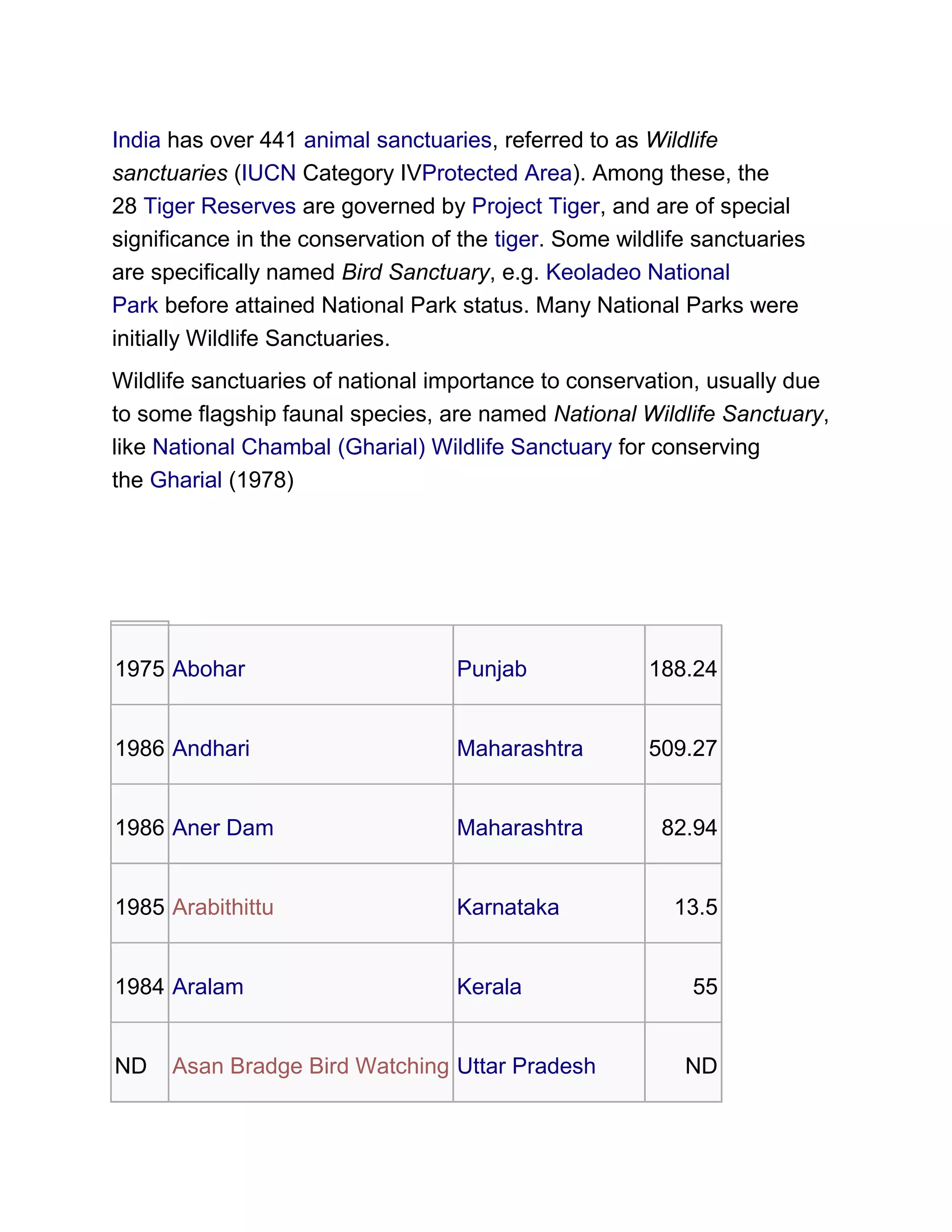
1975 Abohar                        Punjab              188.24


1986 Andhari                       Maharashtra         509.27


1986 Aner Dam                      Maharashtra           82.94


1985 Arabithittu                   Karnataka              13.5


1984 Aralam                        Kerala                   55


ND    Asan Bradge Bird Watching Uttar Pradesh              ND
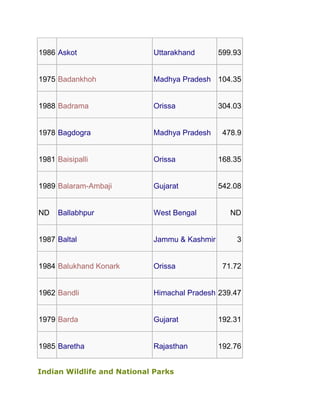
1986 Askot                  Uttarakhand       599.93


1975 Badankhoh              Madhya Pradesh 104.35


1988 Badrama                Orissa            304.03


1978 Bagdogra               Madhya Pradesh     478.9


1981 Baisipalli             Orissa            168.35


1989 Balaram-Ambaji         Gujarat           542.08


ND   Ballabhpur             West Bengal          ND


1987 Baltal                 Jammu & Kashmir       3


1984 Balukhand Konark       Orissa             71.72


1962 Bandli                 Himachal Pradesh 239.47


1979 Barda                  Gujarat           192.31


1985 Baretha                Rajasthan         192.76


Indian Wildlife and National Parks
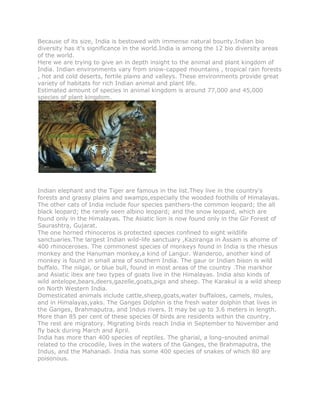
Because of its size, India is bestowed with immense natural bounty.Indian bio
diversity has it's significance in the world.India is among the 12 bio diversity areas
of the world.
Here we are trying to give an in depth insight to the animal and plant kingdom of
India. Indian environments vary from snow-capped mountains , tropical rain forests
, hot and cold deserts, fertile plains and valleys. These environments provide great
variety of habitats for rich Indian animal and plant life.
Estimated amount of species in animal kingdom is around 77,000 and 45,000
species of plant kingdom.


Indian elephant and the Tiger are famous in the list.They live in the country's
forests and grassy plains and swamps,especially the wooded foothills of Himalayas.
The other cats of India include four species panthers-the common leopard; the all
black leopard; the rarely seen albino leopard; and the snow leopard, which are
found only in the Himalayas. The Asiatic lion is now found only in the Gir Forest of
Saurashtra, Gujarat.
The one horned rhinoceros is protected species confined to eight wildlife
sanctuaries.The largest Indian wild-life sanctuary ,Kaziranga in Assam is ahome of
400 rhinoceroses. The commonest species of monkeys found in India is the rhesus
monkey and the Hanuman monkey,a kind of Langur. Wanderoo, another kind of
monkey is found in small area of southern India. The gaur or Indian bison is wild
buffalo. The nilgai, or blue bull, found in most areas of the country .The markhor
and Asiatic ibex are two types of goats live in the Himalayas. India also kinds of
wild antelope,bears,deers,gazelle,goats,pigs and sheep. The Karakul is a wild sheep
on North Western India.
Domesticated animals include cattle,sheep,goats,water buffaloes, camels, mules,
and in Himalayas,yaks. The Ganges Dolphin is the fresh water dolphin that lives in
the Ganges, Brahmaputra, and Indus rivers. It may be up to 3.6 meters in length.
More than 85 per cent of these species 0f birds are residents within the country.
The rest are migratory. Migrating birds reach India in September to November and
fly back during March and April.
India has more than 400 species of reptiles. The gharial, a long-snouted animal
related to the crocodile, lives in the waters of the Ganges, the Brahmaputra, the
Indus, and the Mahanadi. India has some 400 species of snakes of which 80 are
poisonous.

Wildlife

  • 1.
    India has over441 animal sanctuaries, referred to as Wildlife sanctuaries (IUCN Category IVProtected Area). Among these, the 28 Tiger Reserves are governed by Project Tiger, and are of special significance in the conservation of the tiger. Some wildlife sanctuaries are specifically named Bird Sanctuary, e.g. Keoladeo National Park before attained National Park status. Many National Parks were initially Wildlife Sanctuaries. Wildlife sanctuaries of national importance to conservation, usually due to some flagship faunal species, are named National Wildlife Sanctuary, like National Chambal (Gharial) Wildlife Sanctuary for conserving the Gharial (1978) 1975 Abohar Punjab 188.24 1986 Andhari Maharashtra 509.27 1986 Aner Dam Maharashtra 82.94 1985 Arabithittu Karnataka 13.5 1984 Aralam Kerala 55 ND Asan Bradge Bird Watching Uttar Pradesh ND
  • 2.
    1986 Askot Uttarakhand 599.93 1975 Badankhoh Madhya Pradesh 104.35 1988 Badrama Orissa 304.03 1978 Bagdogra Madhya Pradesh 478.9 1981 Baisipalli Orissa 168.35 1989 Balaram-Ambaji Gujarat 542.08 ND Ballabhpur West Bengal ND 1987 Baltal Jammu & Kashmir 3 1984 Balukhand Konark Orissa 71.72 1962 Bandli Himachal Pradesh 239.47 1979 Barda Gujarat 192.31 1985 Baretha Rajasthan 192.76 Indian Wildlife and National Parks
  • 3.
    Because of itssize, India is bestowed with immense natural bounty.Indian bio diversity has it's significance in the world.India is among the 12 bio diversity areas of the world. Here we are trying to give an in depth insight to the animal and plant kingdom of India. Indian environments vary from snow-capped mountains , tropical rain forests , hot and cold deserts, fertile plains and valleys. These environments provide great variety of habitats for rich Indian animal and plant life. Estimated amount of species in animal kingdom is around 77,000 and 45,000 species of plant kingdom. Indian elephant and the Tiger are famous in the list.They live in the country's forests and grassy plains and swamps,especially the wooded foothills of Himalayas. The other cats of India include four species panthers-the common leopard; the all black leopard; the rarely seen albino leopard; and the snow leopard, which are found only in the Himalayas. The Asiatic lion is now found only in the Gir Forest of Saurashtra, Gujarat. The one horned rhinoceros is protected species confined to eight wildlife sanctuaries.The largest Indian wild-life sanctuary ,Kaziranga in Assam is ahome of 400 rhinoceroses. The commonest species of monkeys found in India is the rhesus monkey and the Hanuman monkey,a kind of Langur. Wanderoo, another kind of monkey is found in small area of southern India. The gaur or Indian bison is wild buffalo. The nilgai, or blue bull, found in most areas of the country .The markhor and Asiatic ibex are two types of goats live in the Himalayas. India also kinds of wild antelope,bears,deers,gazelle,goats,pigs and sheep. The Karakul is a wild sheep on North Western India. Domesticated animals include cattle,sheep,goats,water buffaloes, camels, mules, and in Himalayas,yaks. The Ganges Dolphin is the fresh water dolphin that lives in the Ganges, Brahmaputra, and Indus rivers. It may be up to 3.6 meters in length. More than 85 per cent of these species 0f birds are residents within the country. The rest are migratory. Migrating birds reach India in September to November and fly back during March and April. India has more than 400 species of reptiles. The gharial, a long-snouted animal related to the crocodile, lives in the waters of the Ganges, the Brahmaputra, the Indus, and the Mahanadi. India has some 400 species of snakes of which 80 are poisonous.