Widescreen Presentation
This template is formatted
with a 16:9 “widescreen”
aspect ratio. It’s a great
way to take advantage of
laptops, televisions and
projectors equipped with
widescreen displays.

Even if you do not have a
widescreen display, you
can still create and
present 16:9 slides.
PowerPoint’s Slide Show
always resizes your slides
to fit any screen.
Widescreen Advantages
 Side

by side material
fits more naturally.
 Widescreen adds
drama to graphics and
images.
Widescreen Graphics
East

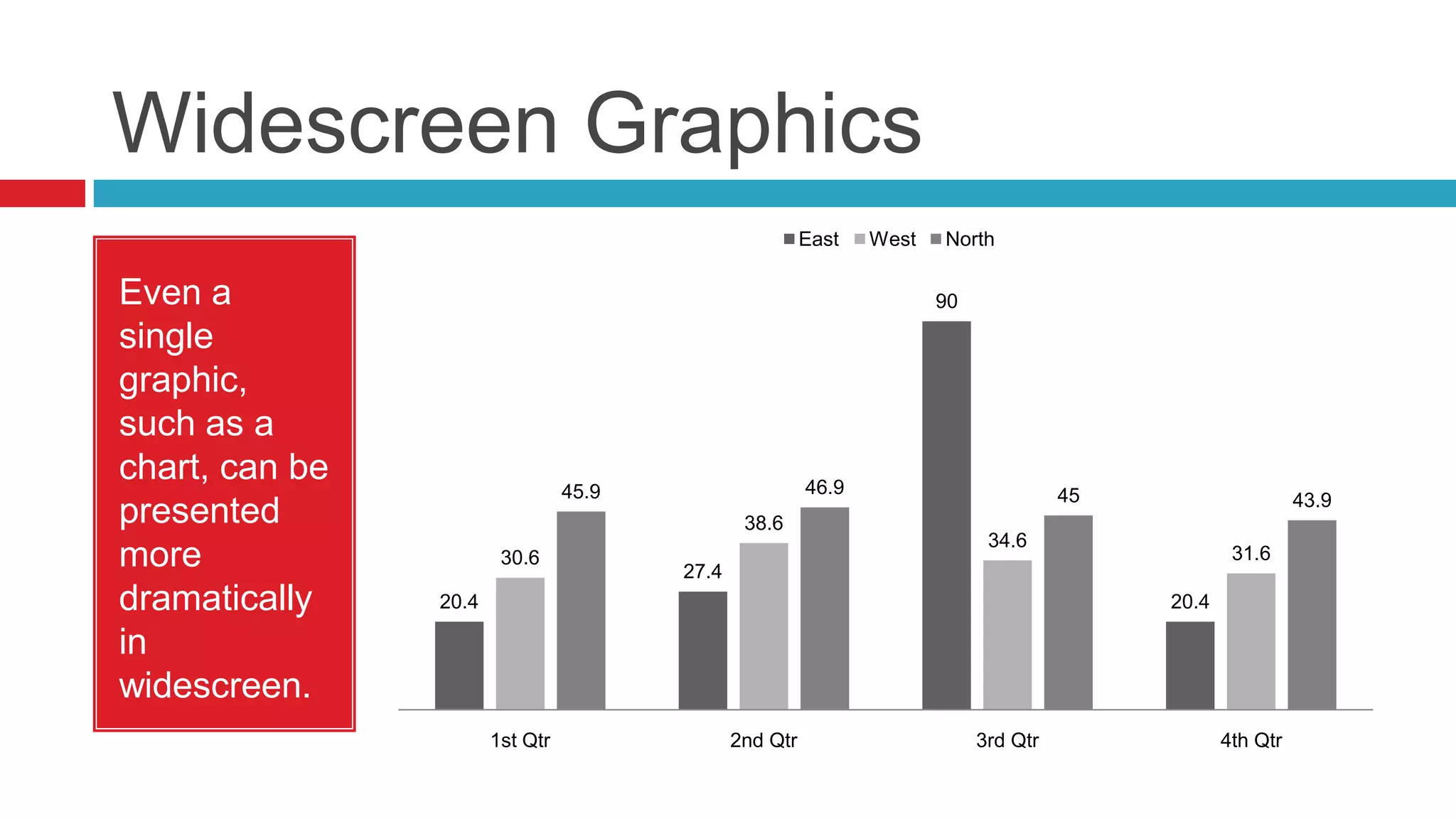
Even a
single
graphic,
such as a
chart, can be
presented
more
dramatically
in
widescreen.

West

North
90

46.9

45.9
38.6
30.6

45

43.9

34.6

31.6

27.4

20.4

20.4

1st Qtr

2nd Qtr

3rd Qtr

4th Qtr
Widescreen Pictures
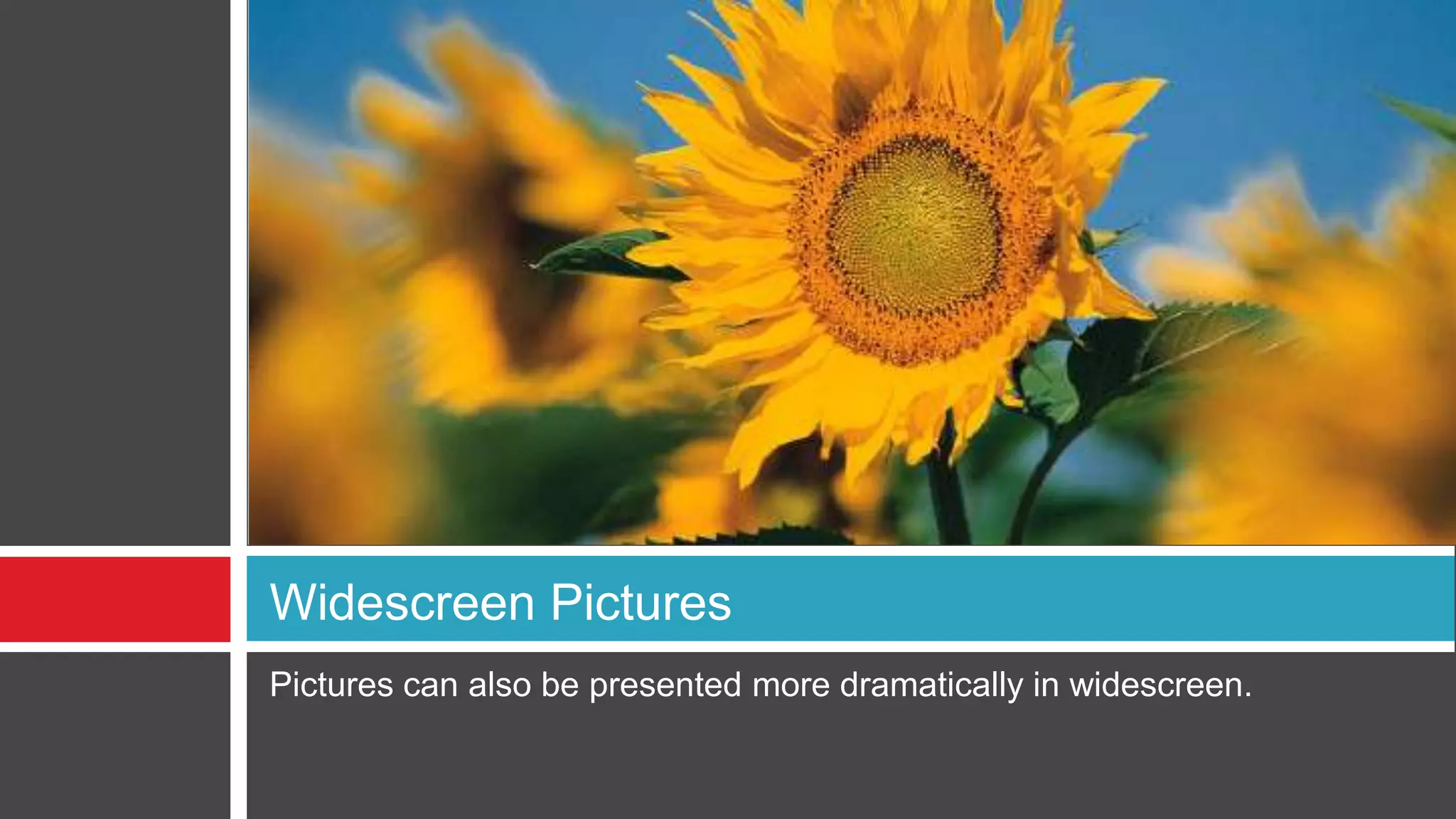
Pictures can also be presented more dramatically in widescreen.
Creating 16:9 Presentations
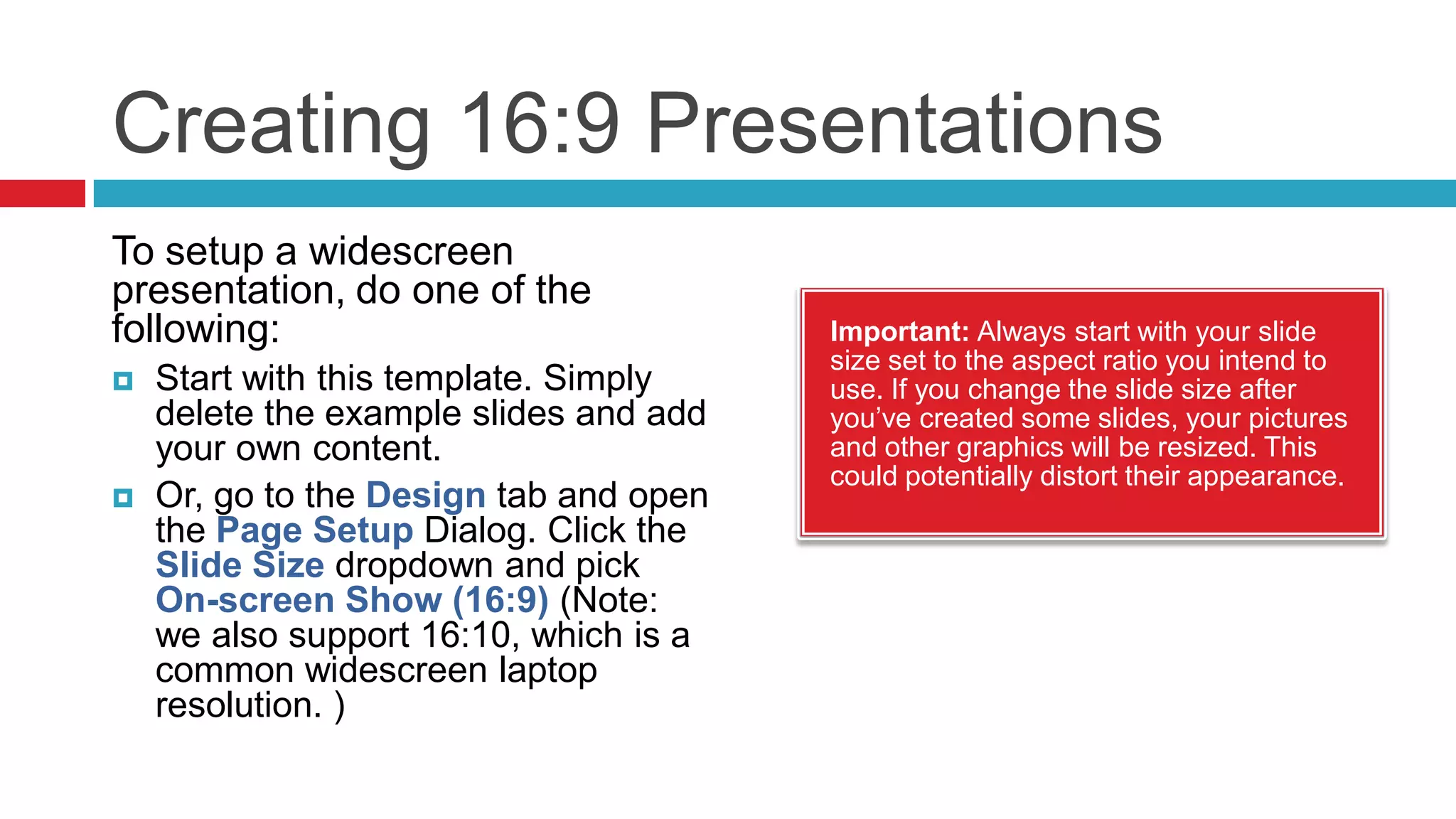
To setup a widescreen
presentation, do one of the
following:




Start with this template. Simply
delete the example slides and add
your own content.
Or, go to the Design tab and open
the Page Setup Dialog. Click the
Slide Size dropdown and pick
On-screen Show (16:9) (Note:
we also support 16:10, which is a
common widescreen laptop
resolution. )

Important: Always start with your slide
size set to the aspect ratio you intend to
use. If you change the slide size after
you’ve created some slides, your pictures
and other graphics will be resized. This
could potentially distort their appearance.
Slide Show Tips








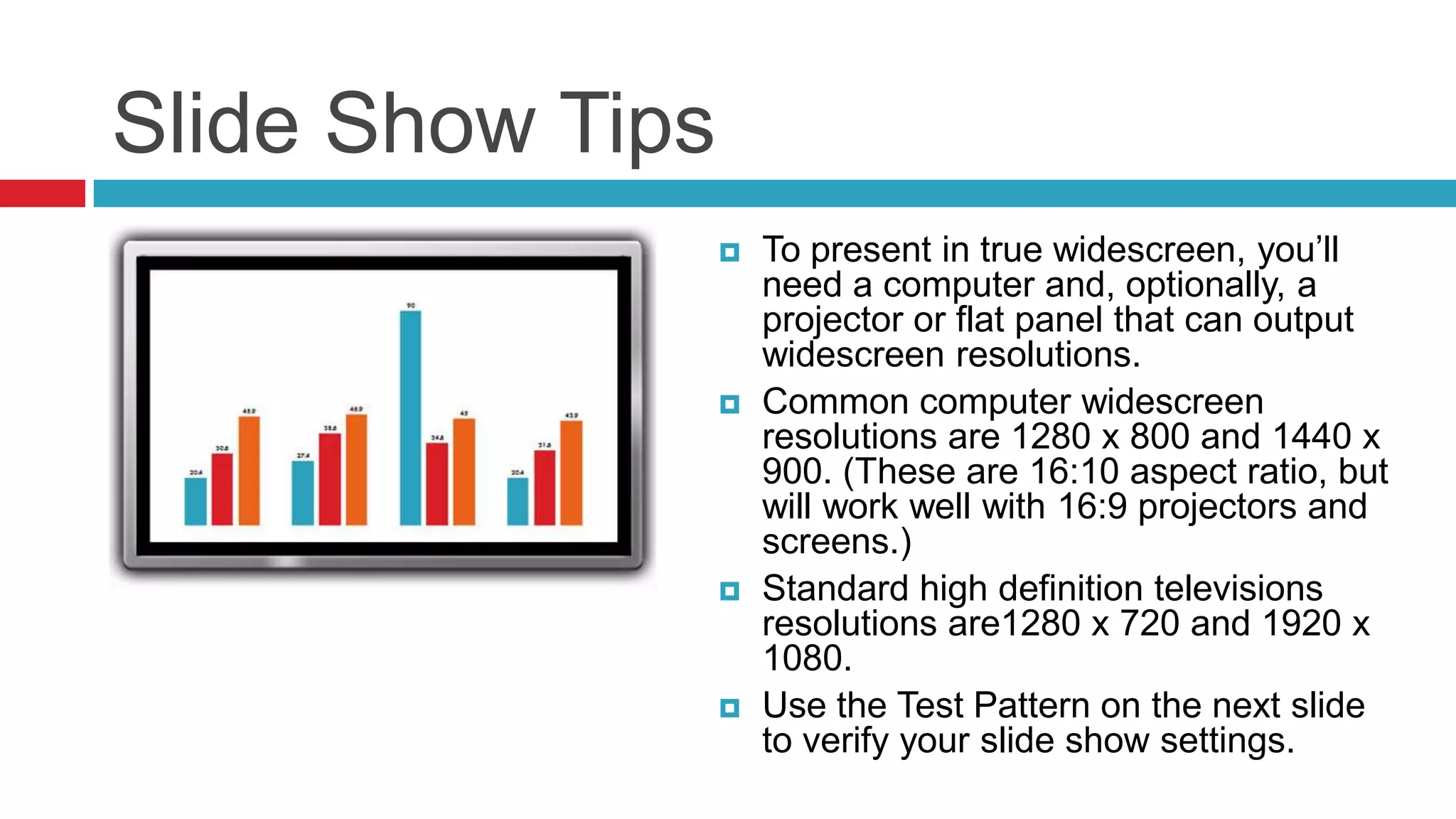
To present in true widescreen, you’ll
need a computer and, optionally, a
projector or flat panel that can output
widescreen resolutions.
Common computer widescreen
resolutions are 1280 x 800 and 1440 x
900. (These are 16:10 aspect ratio, but
will work well with 16:9 projectors and
screens.)
Standard high definition televisions
resolutions are1280 x 720 and 1920 x
1080.
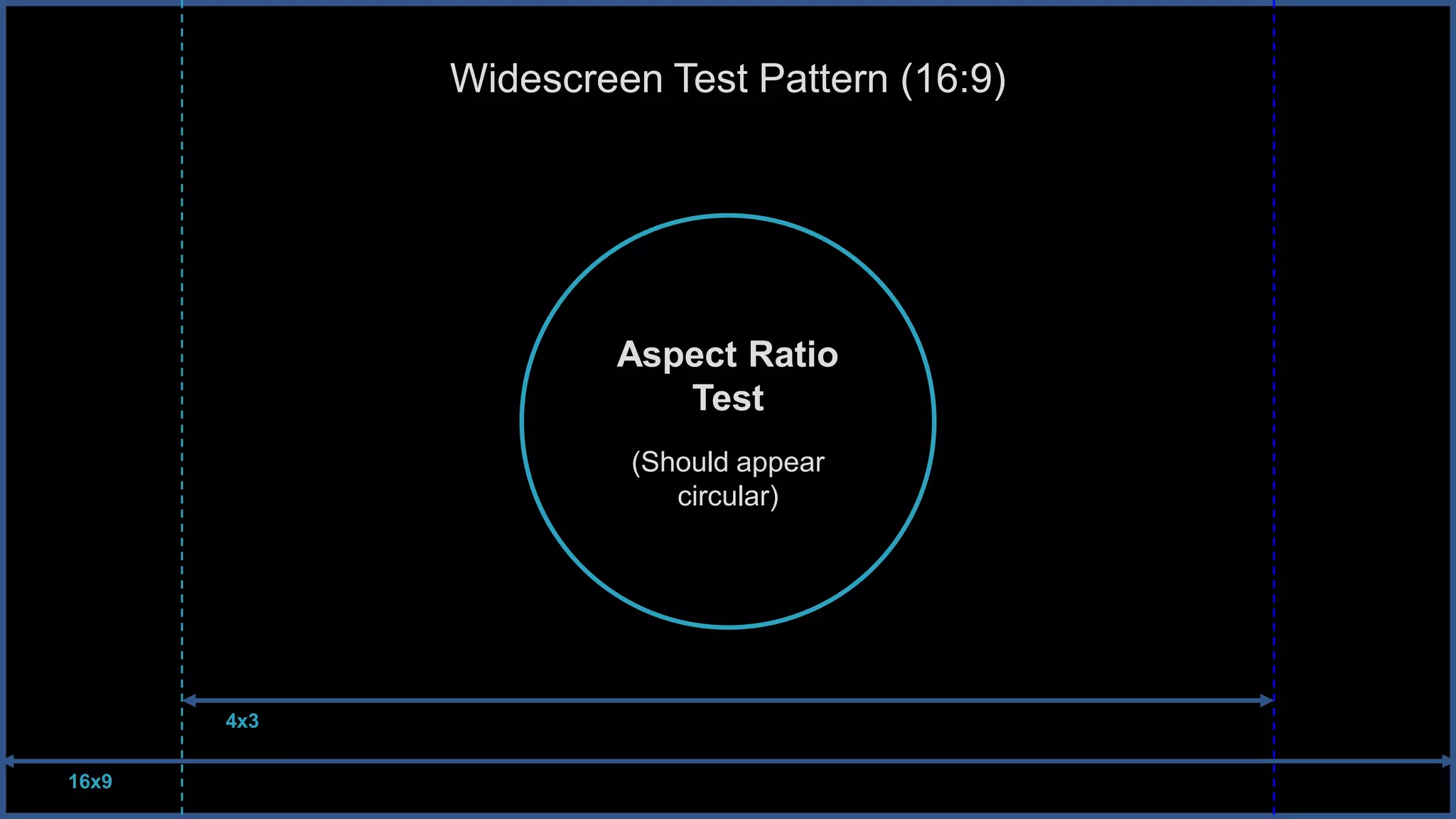
Use the Test Pattern on the next slide
to verify your slide show settings.
Widescreen Test Pattern (16:9)

Aspect Ratio
Test
(Should appear
circular)

4x3
16x9

Widescreen presentation

  • 4.
    Widescreen Presentation This templateis formatted with a 16:9 “widescreen” aspect ratio. It’s a great way to take advantage of laptops, televisions and projectors equipped with widescreen displays. Even if you do not have a widescreen display, you can still create and present 16:9 slides. PowerPoint’s Slide Show always resizes your slides to fit any screen.
  • 5.
    Widescreen Advantages  Side byside material fits more naturally.  Widescreen adds drama to graphics and images.
  • 6.
    Widescreen Graphics East Even a single graphic, suchas a chart, can be presented more dramatically in widescreen. West North 90 46.9 45.9 38.6 30.6 45 43.9 34.6 31.6 27.4 20.4 20.4 1st Qtr 2nd Qtr 3rd Qtr 4th Qtr
  • 7.
    Widescreen Pictures Pictures canalso be presented more dramatically in widescreen.
  • 8.
    Creating 16:9 Presentations Tosetup a widescreen presentation, do one of the following:   Start with this template. Simply delete the example slides and add your own content. Or, go to the Design tab and open the Page Setup Dialog. Click the Slide Size dropdown and pick On-screen Show (16:9) (Note: we also support 16:10, which is a common widescreen laptop resolution. ) Important: Always start with your slide size set to the aspect ratio you intend to use. If you change the slide size after you’ve created some slides, your pictures and other graphics will be resized. This could potentially distort their appearance.
  • 9.
    Slide Show Tips     Topresent in true widescreen, you’ll need a computer and, optionally, a projector or flat panel that can output widescreen resolutions. Common computer widescreen resolutions are 1280 x 800 and 1440 x 900. (These are 16:10 aspect ratio, but will work well with 16:9 projectors and screens.) Standard high definition televisions resolutions are1280 x 720 and 1920 x 1080. Use the Test Pattern on the next slide to verify your slide show settings.
  • 10.
    Widescreen Test Pattern(16:9) Aspect Ratio Test (Should appear circular) 4x3 16x9