Why AI inhealthcare?
• Save time and improve efficiency
• Shortage of clinicians
• Improve patient outcomes
• Strengthen security
3.
Why AI now?
•The perfect storm
• Tons of data (big data)
• Robust algorithms
• Processing power
4.
Barriers to useof AI in healthcare
• Dirty data (data management has to happen first)
• Silo’d data
• Lack of infrastructure/data management plan
• DMP should be predicated on International Data Corporation (IDC) Third
Platform Principles, which are anchored by 4 areas
• Big Data & Analytics
• Cloud
• Mobile
• Social
5.
AI & Healthcare-Types
• Robotic process automation (RPA): use of AI in computer
programs to automate administrative and clinical workflows;
improve patient experience
• Natural language processing (NLP): use of ML to understand
human language, verbal or written, and interpret documentation,
notes, reports, and published research
6.
AI & Healthcare-Types
• Machine learning (ML): training algorithms using data sets, such
as health records, to create models capable of performing such
tasks as categorizing information or predicting outcomes.
• Deep learning: subset of artificial intelligence that involves greater
volumes of data, training times, and layers of ML algorithms to
produce neural networks capable of more complex tasks.
7.
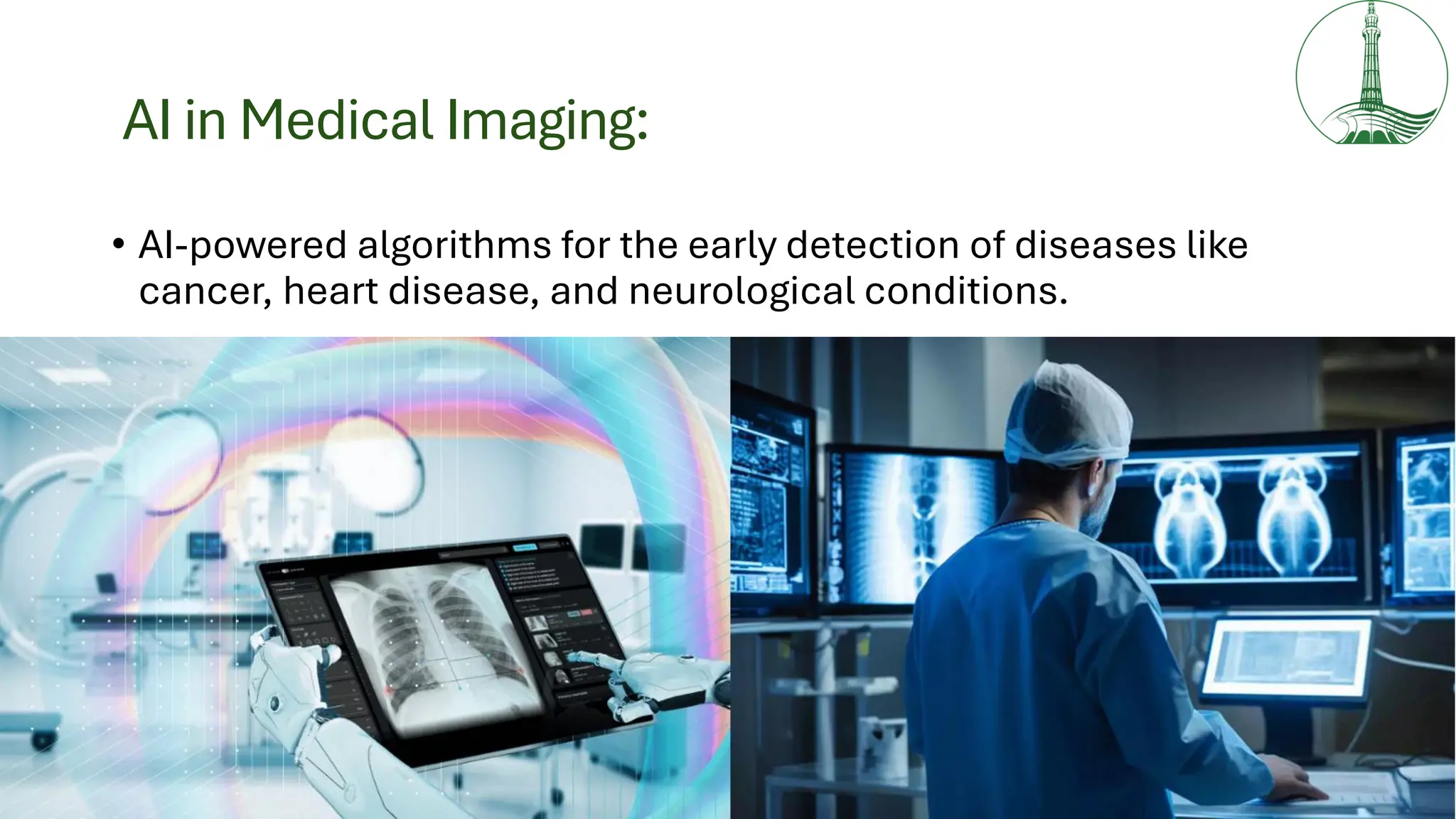
AI in MedicalImaging:
• AI-powered algorithms for the early detection of diseases like
cancer, heart disease, and neurological conditions.
8.
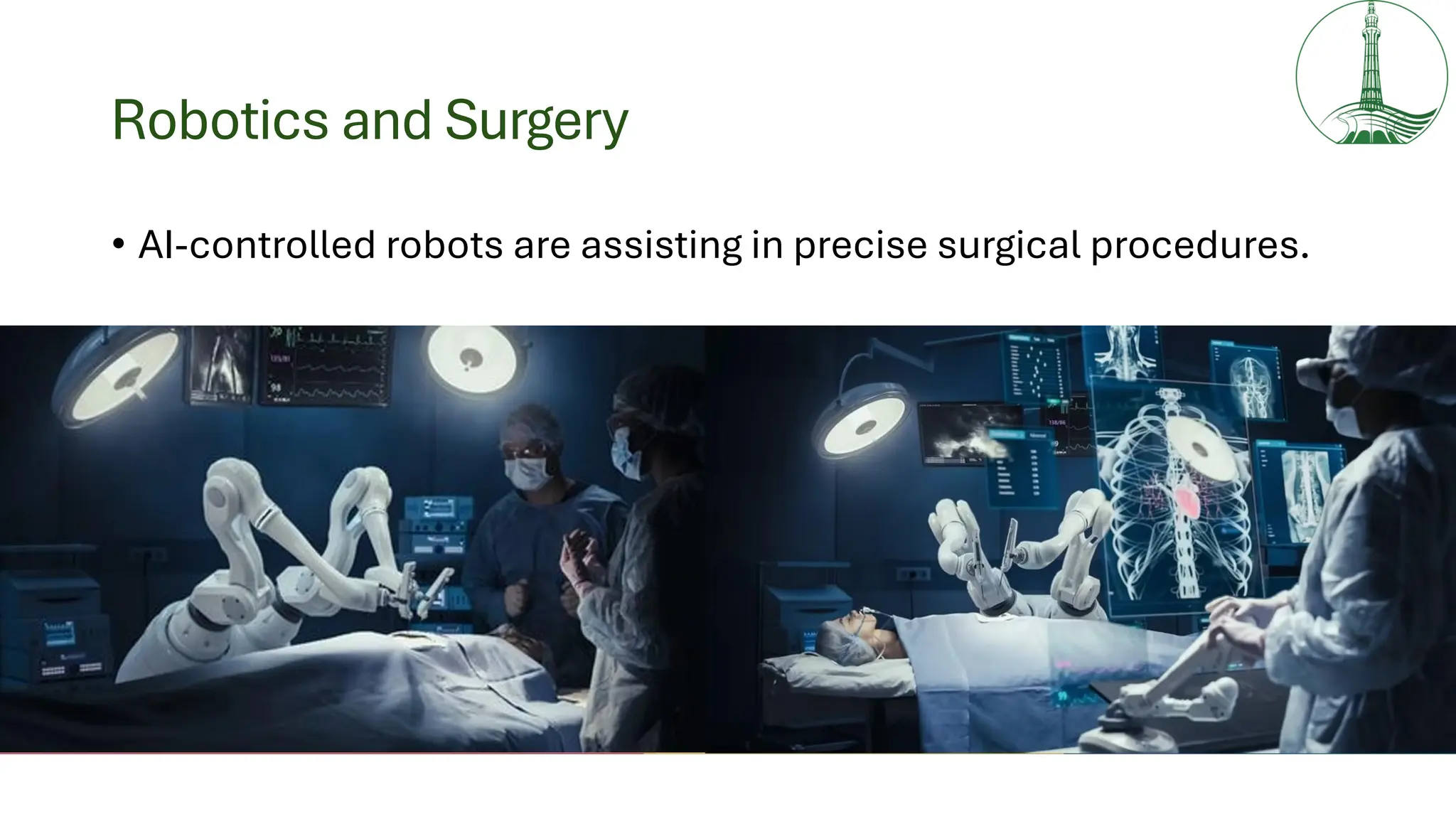
Robotics and Surgery
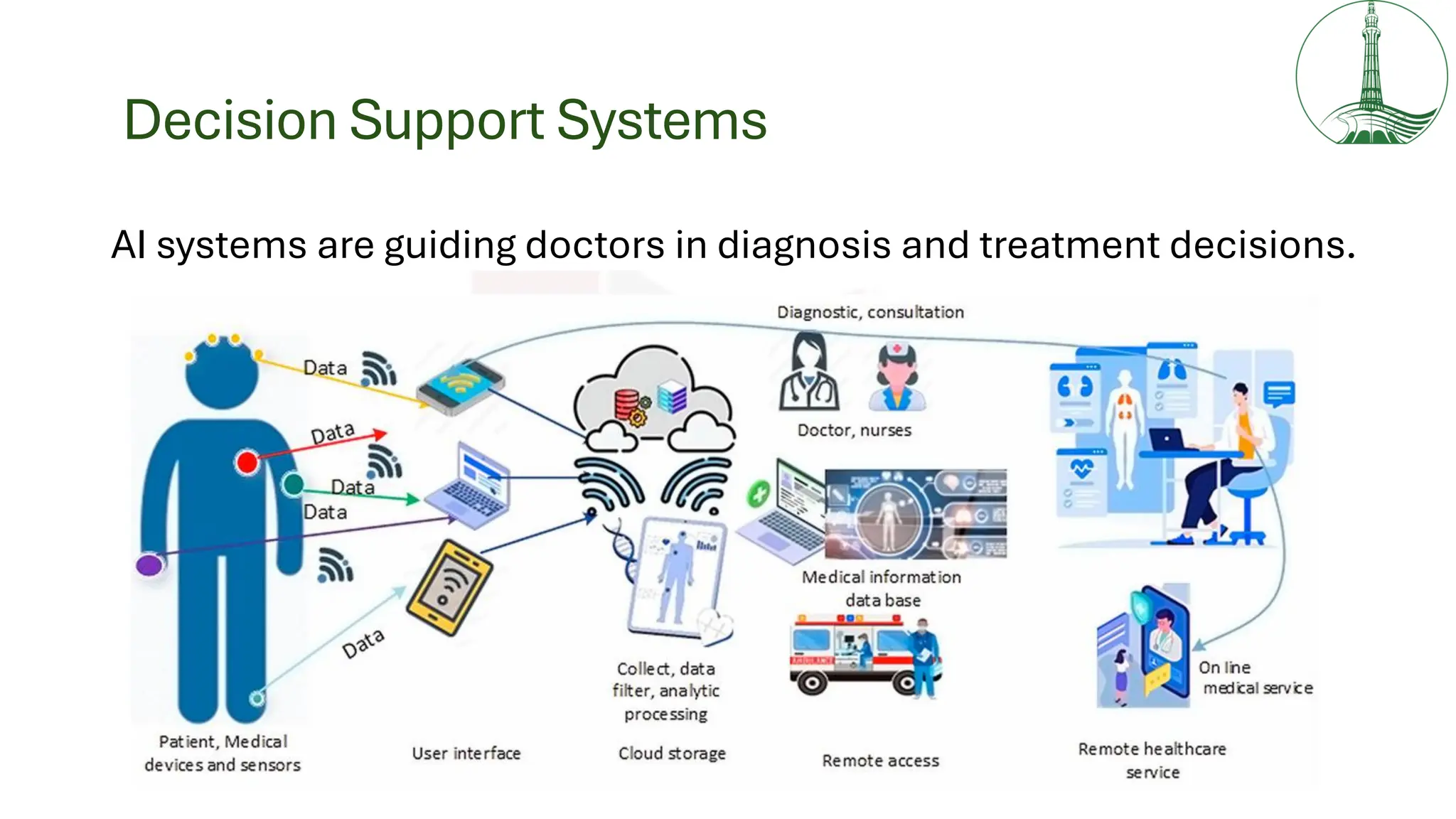
•AI-controlled robots are assisting in precise surgical procedures.
What is IoTin Healthcare?
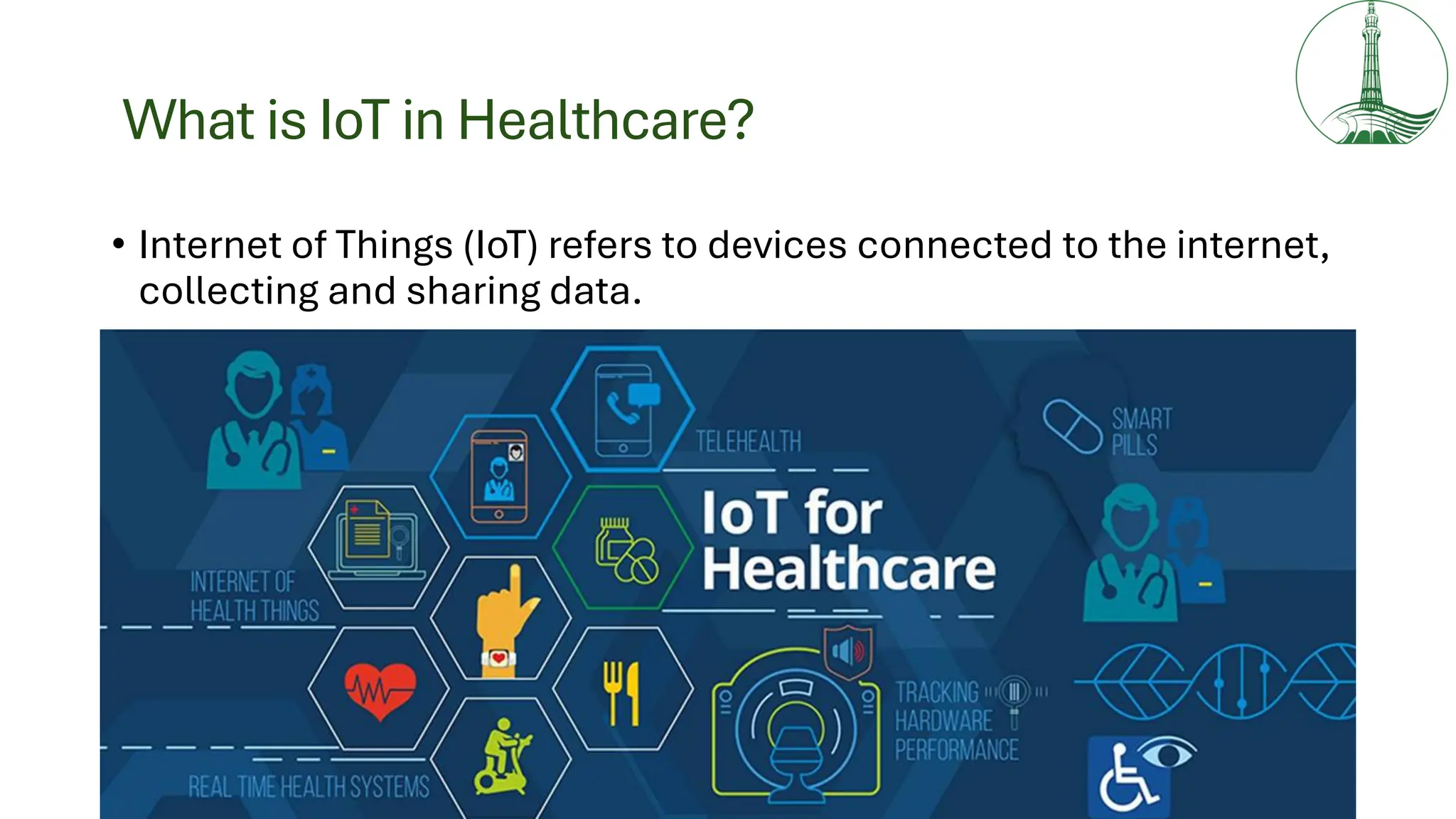
• Internet of Things (IoT) refers to devices connected to the internet,
collecting and sharing data.
11.
Benefits of IoTin Healthcare
• Real-time monitoring of patients.
• Remote care for patients with chronic diseases.
• Improved patient engagement and outcomes
IoT Devices inHealthcare
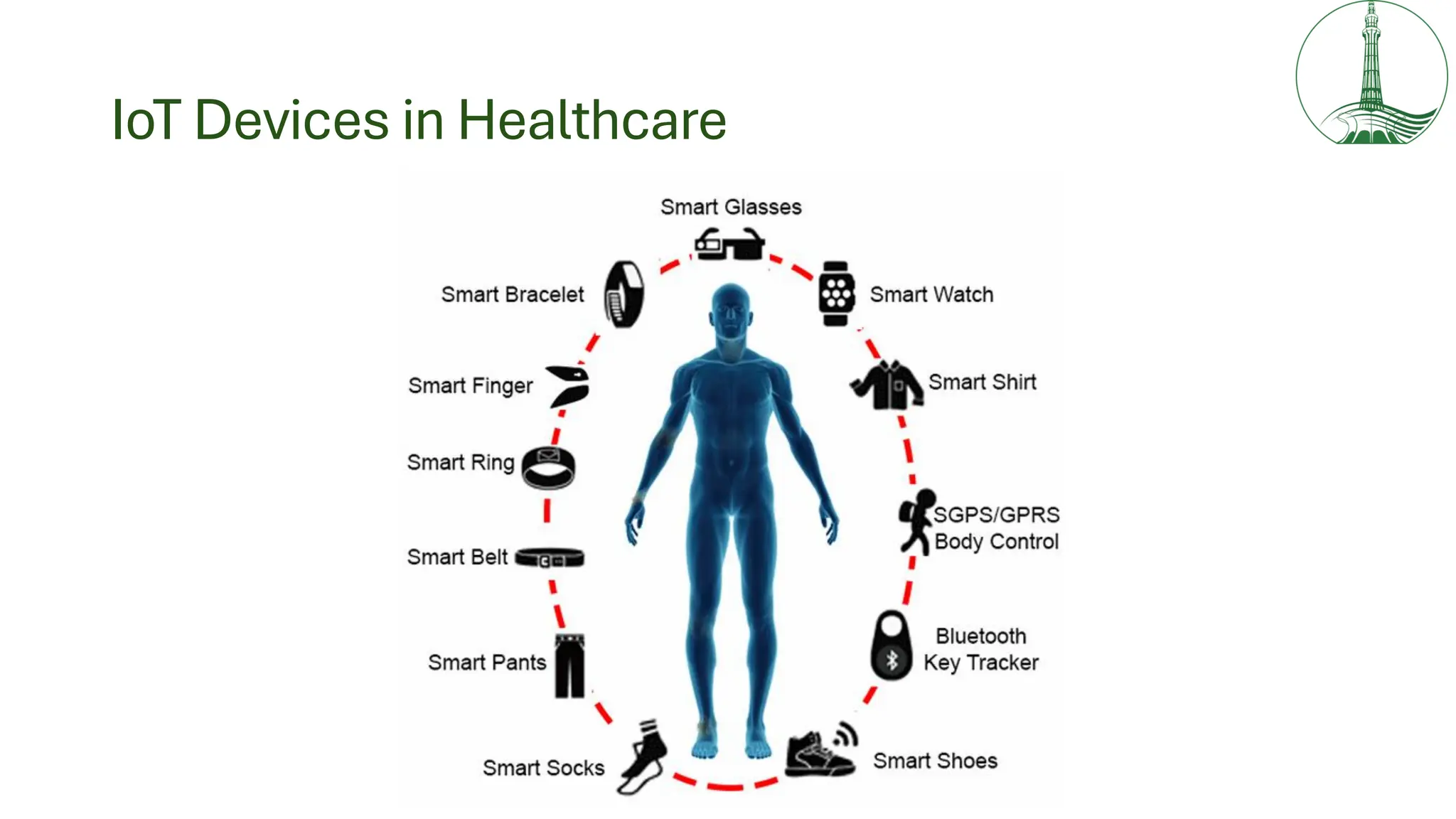
• Wearables and Monitoring Devices:
• Smartwatches, ECG monitors, glucose meters, and sleep
trackers.
• Smart Hospitals and Equipment:
• IoT-enabled medical devices, such as infusion pumps, ventilators,
and smart beds.
• Remote Patient Monitoring:
• Devices sending real-time data to healthcare providers for timely
intervention.
14.
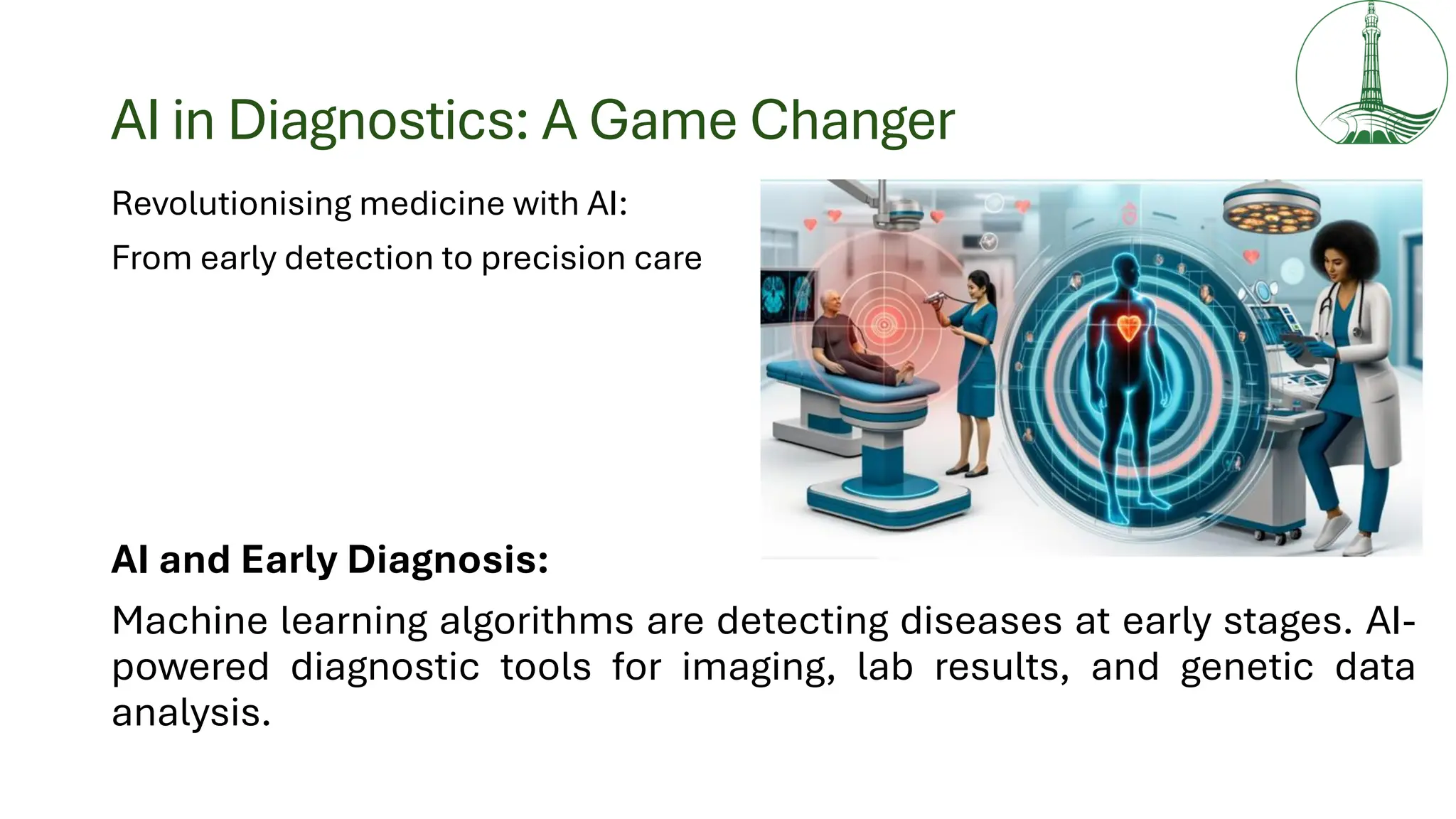
AI in Diagnostics:A Game Changer
Revolutionising medicine with AI:
From early detection to precision care
AI and Early Diagnosis:
Machine learning algorithms are detecting diseases at early stages. AI-
powered diagnostic tools for imaging, lab results, and genetic data
analysis.
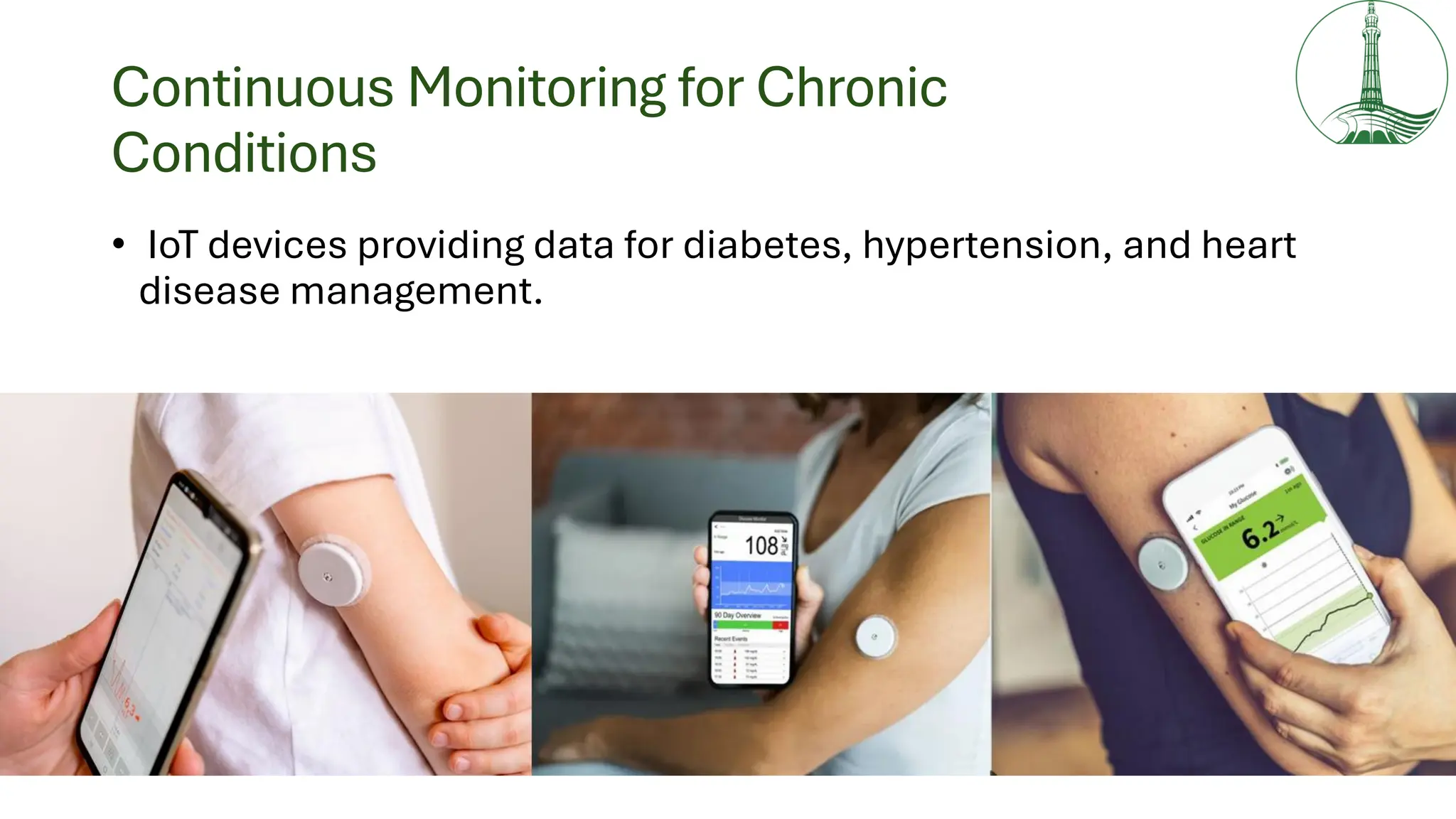
Continuous Monitoring forChronic
Conditions
• IoT devices providing data for diabetes, hypertension, and heart
disease management.
17.
AI in Radiology
AIfor Early Cancer Detection:
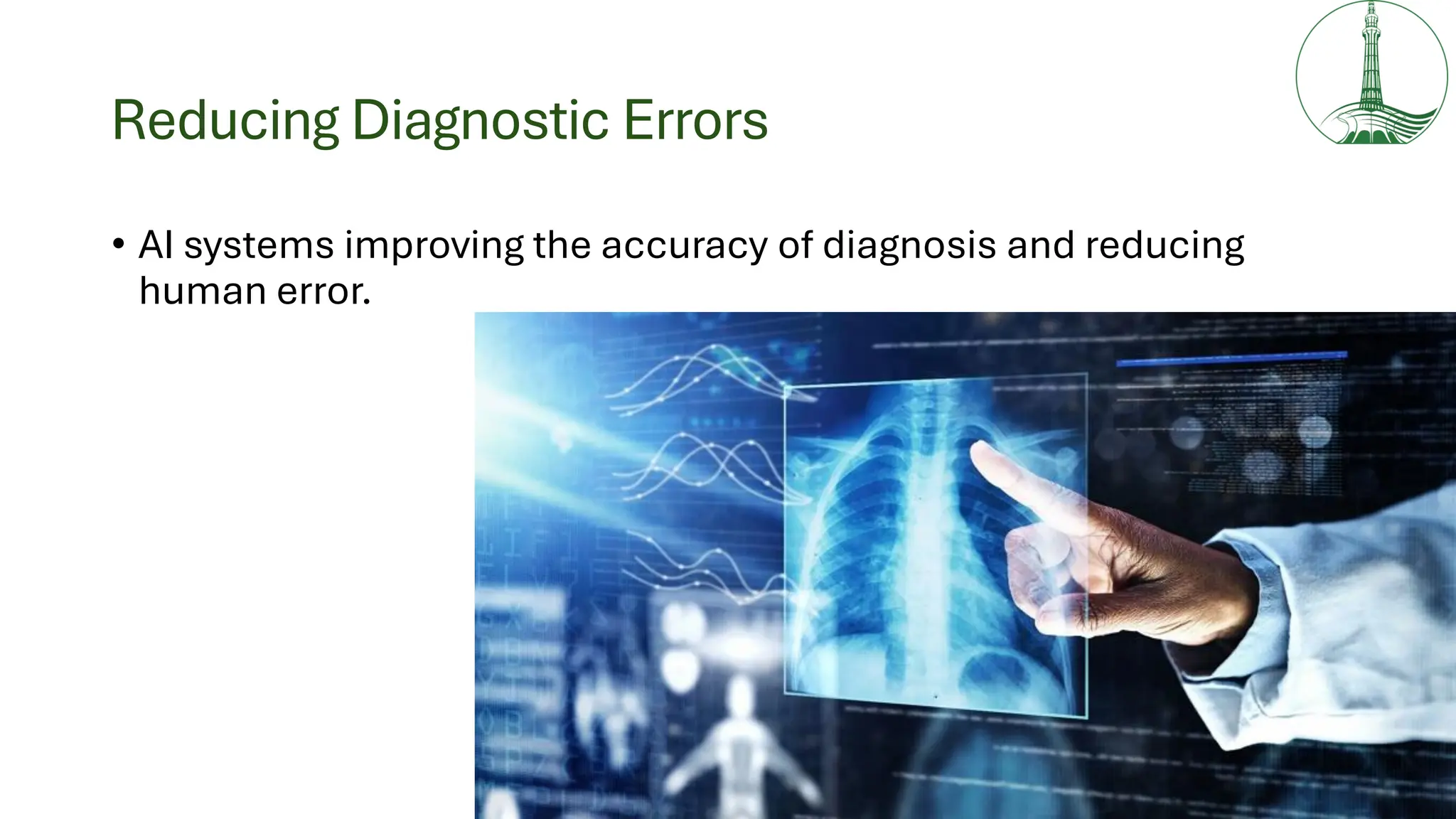
• Use of AI in detecting abnormalities in medical images (X-rays,
MRIs).
Impact on Diagnosis and Treatment:
• Case studies showing improved outcomes from AI-powered
diagnostic tools.