Download free for 30 days
Sign in
Upload
Language (EN)
Support
Business
Mobile
Social Media
Marketing
Technology
Art & Photos
Career
Design
Education
Presentations & Public Speaking
Government & Nonprofit
Healthcare
Internet
Law
Leadership & Management
Automotive
Engineering
Software
Recruiting & HR
Retail
Sales
Services
Science
Small Business & Entrepreneurship
Food
Environment
Economy & Finance
Data & Analytics
Investor Relations
Sports
Spiritual
News & Politics
Travel
Self Improvement
Real Estate
Entertainment & Humor
Health & Medicine
Devices & Hardware
Lifestyle
Change Language
Language
English
Español
Português
Français
Deutsche
Cancel
Save
Submit search
EN
Uploaded by
jayeshgupta217
PPT, PDF
5 views
WhiteBox-Testing.ppt education purpose only
it gives the idea of whitebox
Education
◦
Read more
0
Save
Share
Embed
Embed presentation
Download
Download to read offline
1
/ 24
2
/ 24
3
/ 24
4
/ 24
5
/ 24
6
/ 24
7
/ 24
8
/ 24
9
/ 24
10
/ 24
11
/ 24
12
/ 24
13
/ 24
14
/ 24
15
/ 24
16
/ 24
17
/ 24
18
/ 24
19
/ 24
20
/ 24
21
/ 24
22
/ 24
23
/ 24
24
/ 24
More Related Content
PPT
CS8494 SOFTWARE ENGINEERING Unit-4
by
SIMONTHOMAS S
PPTX
Introduction to White box testing
by
Aliaa Monier Ismaail
PPTX
oose ppt white box testing and black box
by
SUJALArora15
PPTX
Whitebox Testing,Types,Different techniques
by
vasukir11
PPTX
Software testing methods
by
Ing. Donato Di Pierro
PPTX
White-box testing.pptx
by
halaalz3by
PPT
1414_lecturueueueueuueueeueueueuusuee_7.ppt
by
abdulbasetalselwi
PPTX
SOFTWARE TESTING.pptx
by
ssrpr
CS8494 SOFTWARE ENGINEERING Unit-4
by
SIMONTHOMAS S
Introduction to White box testing
by
Aliaa Monier Ismaail
oose ppt white box testing and black box
by
SUJALArora15
Whitebox Testing,Types,Different techniques
by
vasukir11
Software testing methods
by
Ing. Donato Di Pierro
White-box testing.pptx
by
halaalz3by
1414_lecturueueueueuueueeueueueuusuee_7.ppt
by
abdulbasetalselwi
SOFTWARE TESTING.pptx
by
ssrpr
Similar to WhiteBox-Testing.ppt education purpose only
PPT
Software Engineering (Testing techniques)
by
ShudipPal
PPT
Software Engineering (Testing techniques)
by
ShudipPal
PPT
Chapter 14 software testing techniques
by
SHREEHARI WADAWADAGI
PPT
Testing
by
Mohammed
PPTX
Software Testing and Debugging
by
university of education,Lahore
PPT
Dynamic Testing
by
Jimi Patel
PPTX
19 Software Testing Techniques presentation file.pptx
by
mdahsan5626
PPT
Black box and white box testing
by
AWADHESH PRATAP SINGH UNIVERSITY, REWA (M.P.)
PPTX
Software_Testing_Techniques_undergraduate.pptx
by
MrittikaMahbub1
PPT
software quality Assurance-lecture26.ppt
by
ZainabShahzad9
PPTX
White Box Testing
by
Alisha Roy
PPTX
Software Testing & Debugging
by
Computing Cage
PPT
blackboxandwhiteboxtesting in software testing.ppt
by
suchita74
PPTX
white box and black box testing in software engineering
by
NabeelRehman21
PPTX
BLACK BOX & WHITE BOX TESTING.pptx
by
MohammadShahjalalKha
PPT
CPP09 - Testing
by
Michael Heron
PPTX
presentation_testing_1455044600_187410.pptx
by
sidh18
PPTX
Testing Technique (Part 2)
by
Ajeng Savitri
PPTX
White box testing
by
Mayuri Verma
PPT
Software Testing Tecniques
by
ersanbilik
Software Engineering (Testing techniques)
by
ShudipPal
Software Engineering (Testing techniques)
by
ShudipPal
Chapter 14 software testing techniques
by
SHREEHARI WADAWADAGI
Testing
by
Mohammed
Software Testing and Debugging
by
university of education,Lahore
Dynamic Testing
by
Jimi Patel
19 Software Testing Techniques presentation file.pptx
by
mdahsan5626
Black box and white box testing
by
AWADHESH PRATAP SINGH UNIVERSITY, REWA (M.P.)
Software_Testing_Techniques_undergraduate.pptx
by
MrittikaMahbub1
software quality Assurance-lecture26.ppt
by
ZainabShahzad9
White Box Testing
by
Alisha Roy
Software Testing & Debugging
by
Computing Cage
blackboxandwhiteboxtesting in software testing.ppt
by
suchita74
white box and black box testing in software engineering
by
NabeelRehman21
BLACK BOX & WHITE BOX TESTING.pptx
by
MohammadShahjalalKha
CPP09 - Testing
by
Michael Heron
presentation_testing_1455044600_187410.pptx
by
sidh18
Testing Technique (Part 2)
by
Ajeng Savitri
White box testing
by
Mayuri Verma
Software Testing Tecniques
by
ersanbilik
Recently uploaded
PPTX
Pig- piggy bank in Big Data Analytics.ppt.pptx
by
Varshini M
PPTX
Overview of how to Create a Model in Odoo 18
by
Celine George
PDF
The Tale of Melon City poem ppt by Sahasra
by
bitrasahasra
PDF
Scalable-MADDPG-Based Cooperative Target Invasion for a Multi-USV System.pdf
by
Man_Ebook
PDF
Analyzing the data of your initial survey
by
Thelma Villaflores
PPTX
10-12-2025 Francois Staring How can Researchers and Initial Teacher Educators...
by
EduSkills OECD
PPTX
META-ANALYSIS INTERPRETATION, PUBLICATION BIAS AND GRADE ASSESSMENT.pptx
by
Systematic Reviews Network (SRN)
PPTX
How to Manage Package Reservation in Odoo 18 Inventory
by
Celine George
PPTX
Details of Epithelial and Connective Tissue.pptx
by
Ashish Umale
PDF
DHA/HAAD/MOH/DOH OPTOMETRY MCQ PYQ. .pdf
by
Anmol Singh
PPTX
How to Track a Link Using Odoo 18 SMS Marketing
by
Celine George
PPTX
3 G8_Q3_L3_ (Cartoon as Representation in Opinion Editorial Article).pptx
by
NorafeSahagun
PDF
IMANI Africa files RTI request seeking full disclosure on 2026 SIM registrati...
by
nservice241
PDF
M.Sc. Nonchordates Complete Syllabus PPT | All Important Topics Covered
by
KNIPSS SULTANPUR
PPTX
Partial Correlation of Coefficient - Values of r₁₂.₃, r₂₃.₁ & r₁₃.₂
by
Sundar B N
PDF
Risk management in Moroccan public hospitals_ a literature review
by
Man_Ebook
PPTX
PARENTAL ROUTES OF DRUGS ADMINISTRATION .pptx
by
AneetaSharma15
PPTX
Partial Correlation - Values of r₁₂.₃, r₂₃.₁ & r₁₃.₂ r₁₂, r₁₃ and r₂₃
by
Sundar B N
PDF
Cultivating Greatness Pune's Best Preschools and Schools.pdf
by
Wellington College
PPTX
Semester 6 Unit 2 Club foot (talipes).pptx
by
sachin7989
Pig- piggy bank in Big Data Analytics.ppt.pptx
by
Varshini M
Overview of how to Create a Model in Odoo 18
by
Celine George
The Tale of Melon City poem ppt by Sahasra
by
bitrasahasra
Scalable-MADDPG-Based Cooperative Target Invasion for a Multi-USV System.pdf
by
Man_Ebook
Analyzing the data of your initial survey
by
Thelma Villaflores
10-12-2025 Francois Staring How can Researchers and Initial Teacher Educators...
by
EduSkills OECD
META-ANALYSIS INTERPRETATION, PUBLICATION BIAS AND GRADE ASSESSMENT.pptx
by
Systematic Reviews Network (SRN)
How to Manage Package Reservation in Odoo 18 Inventory
by
Celine George
Details of Epithelial and Connective Tissue.pptx
by
Ashish Umale
DHA/HAAD/MOH/DOH OPTOMETRY MCQ PYQ. .pdf
by
Anmol Singh
How to Track a Link Using Odoo 18 SMS Marketing
by
Celine George
3 G8_Q3_L3_ (Cartoon as Representation in Opinion Editorial Article).pptx
by
NorafeSahagun
IMANI Africa files RTI request seeking full disclosure on 2026 SIM registrati...
by
nservice241
M.Sc. Nonchordates Complete Syllabus PPT | All Important Topics Covered
by
KNIPSS SULTANPUR
Partial Correlation of Coefficient - Values of r₁₂.₃, r₂₃.₁ & r₁₃.₂
by
Sundar B N
Risk management in Moroccan public hospitals_ a literature review
by
Man_Ebook
PARENTAL ROUTES OF DRUGS ADMINISTRATION .pptx
by
AneetaSharma15
Partial Correlation - Values of r₁₂.₃, r₂₃.₁ & r₁₃.₂ r₁₂, r₁₃ and r₂₃
by
Sundar B N
Cultivating Greatness Pune's Best Preschools and Schools.pdf
by
Wellington College
Semester 6 Unit 2 Club foot (talipes).pptx
by
sachin7989
WhiteBox-Testing.ppt education purpose only
1.
White Box Testing Core
QA Team 12th March 2008
2.
2 ©Copyright Kenexa® 2004 Agenda What
is White-Box Testing Why we do White-Box Testing Need of White-Box Testing Skills required Roles and Responsibilities of White-Box Tester Where White-Box Testing is Used The White-Box Testing process includes. Black-Box Vs White-Box Testing
3.
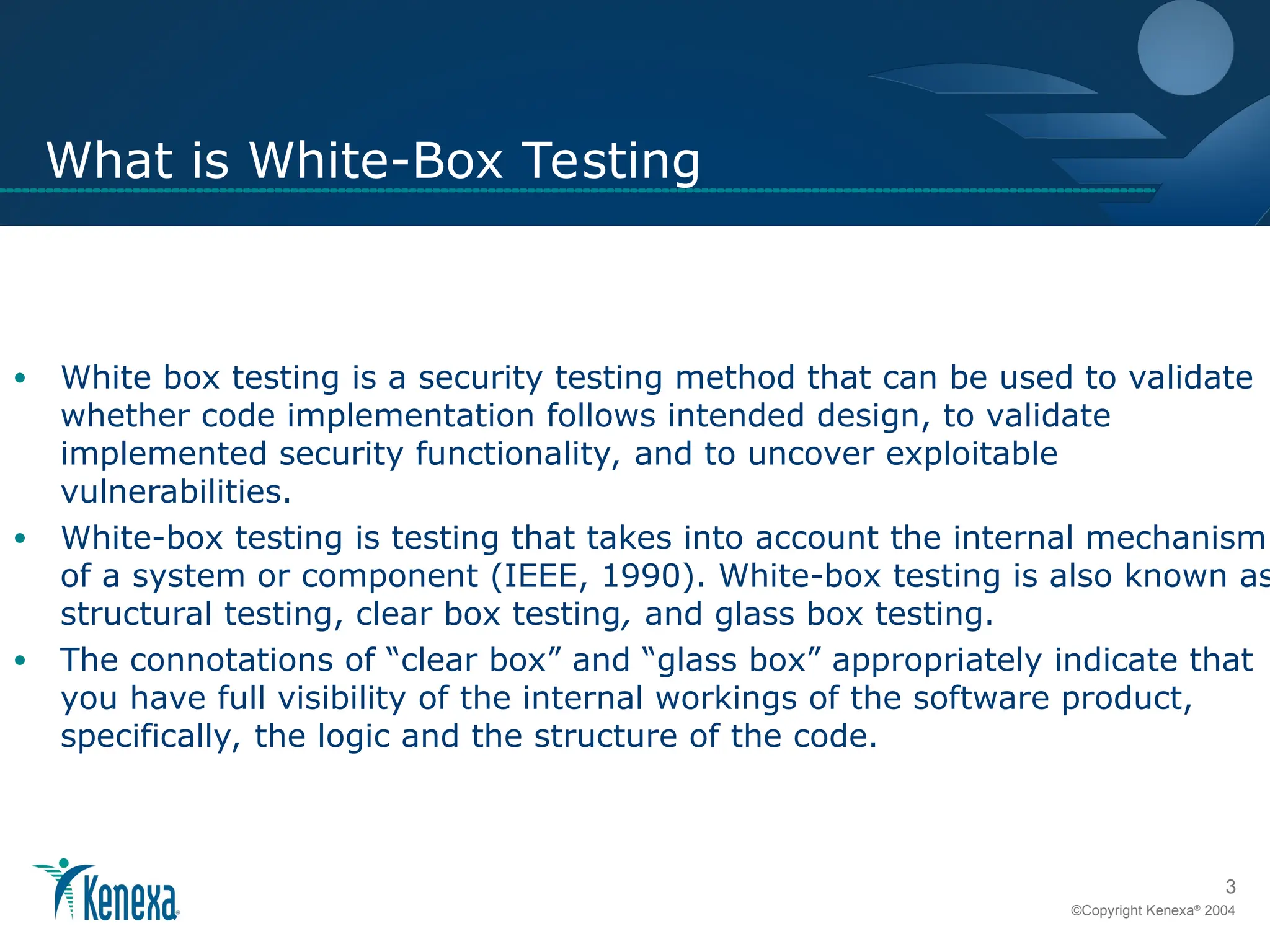
3 ©Copyright Kenexa® 2004 What is
White-Box Testing • White box testing is a security testing method that can be used to validate whether code implementation follows intended design, to validate implemented security functionality, and to uncover exploitable vulnerabilities. • White-box testing is testing that takes into account the internal mechanism of a system or component (IEEE, 1990). White-box testing is also known as structural testing, clear box testing, and glass box testing. • The connotations of “clear box” and “glass box” appropriately indicate that you have full visibility of the internal workings of the software product, specifically, the logic and the structure of the code.
4.
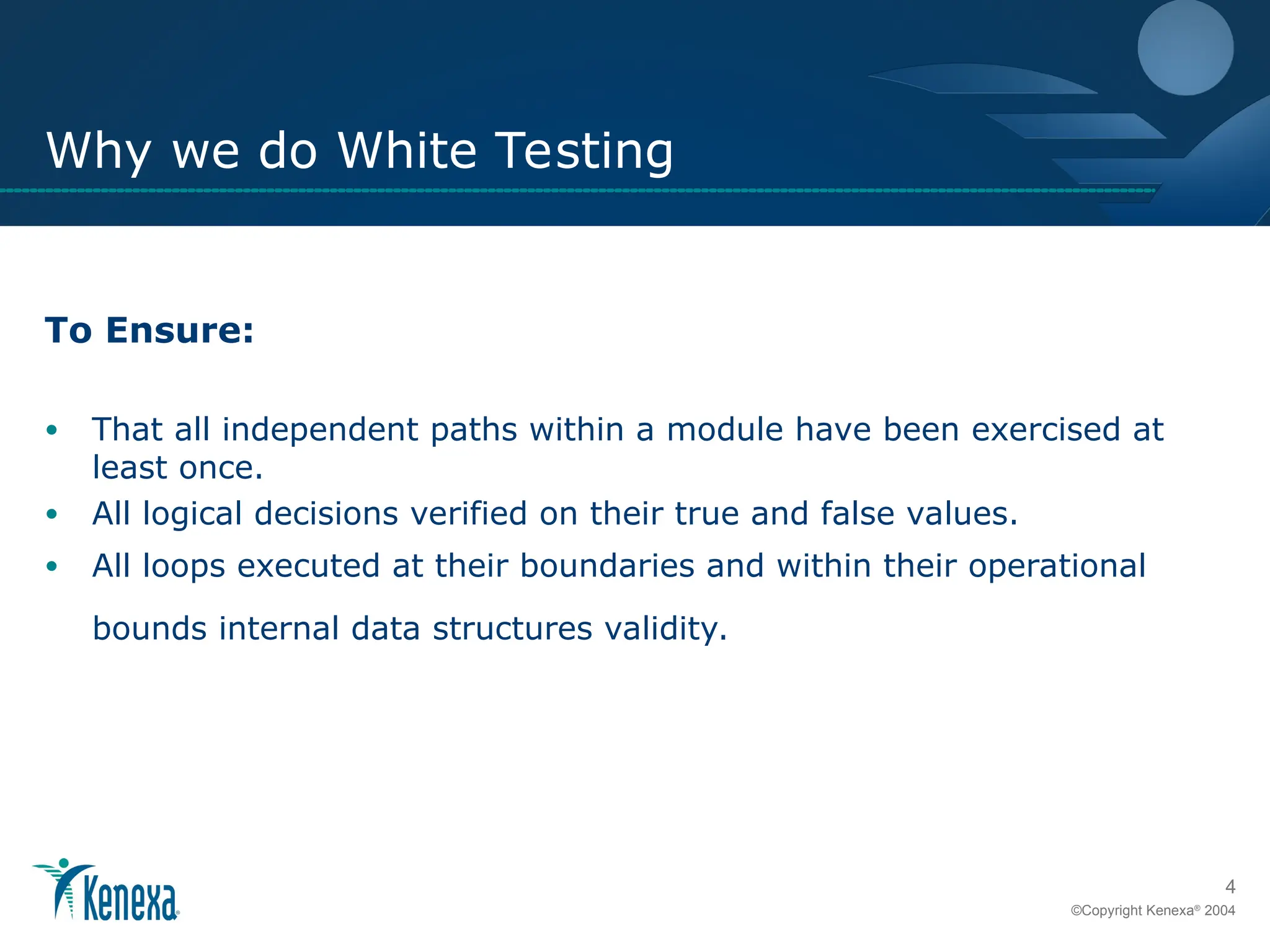
4 ©Copyright Kenexa® 2004 Why we
do White Testing To Ensure: • That all independent paths within a module have been exercised at least once. • All logical decisions verified on their true and false values. • All loops executed at their boundaries and within their operational bounds internal data structures validity.
5.
5 ©Copyright Kenexa® 2004 Need of
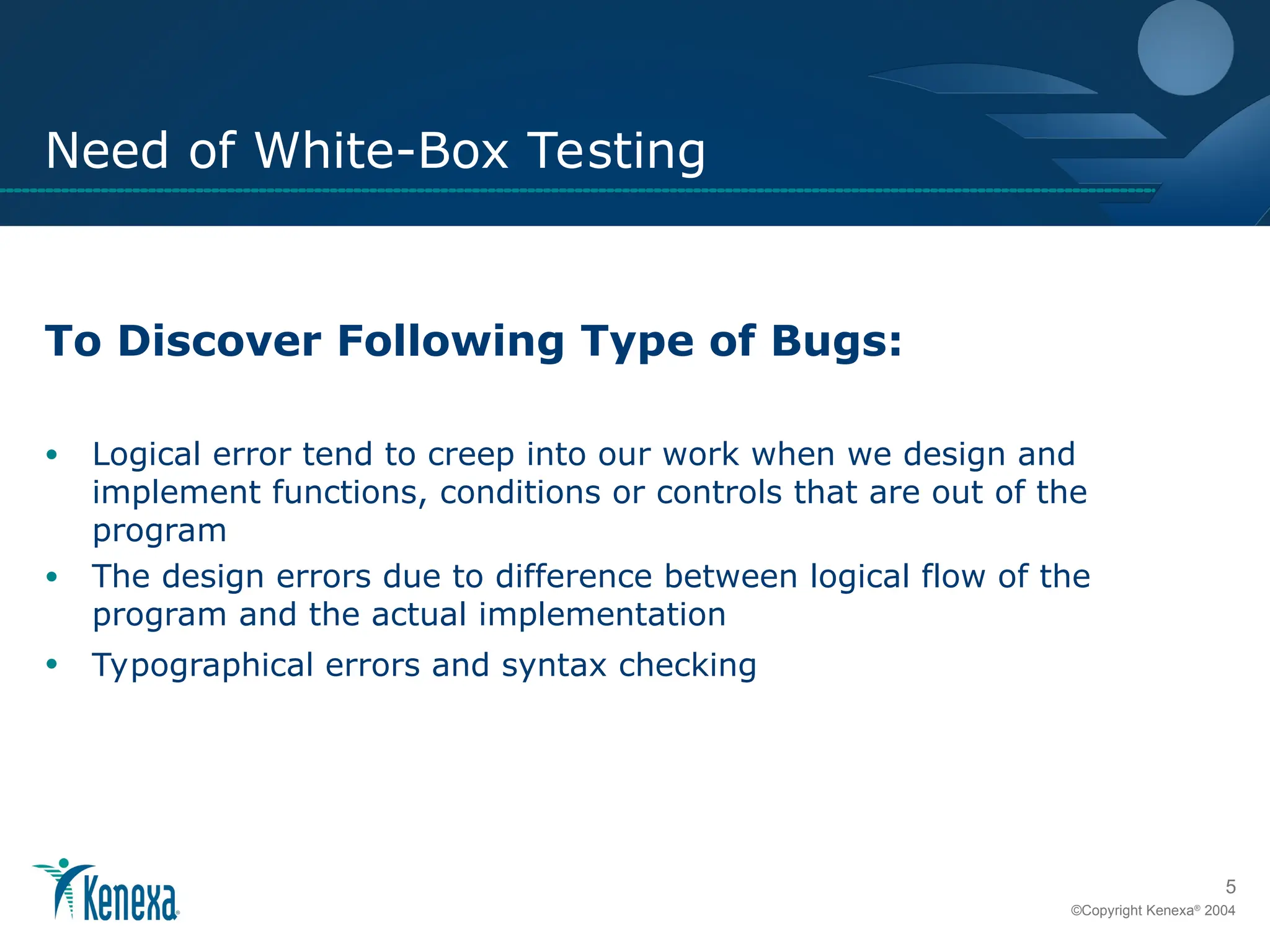
White-Box Testing To Discover Following Type of Bugs: • Logical error tend to creep into our work when we design and implement functions, conditions or controls that are out of the program • The design errors due to difference between logical flow of the program and the actual implementation • Typographical errors and syntax checking
6.
6 ©Copyright Kenexa® 2004 Skills required •
We need to write test cases that ensure the complete coverage of the program logic. For this we need to know the program well i.e. We should know the specification and the code to be tested. Knowledge of programming languages and logic.
7.
7 ©Copyright Kenexa® 2004 Roles and
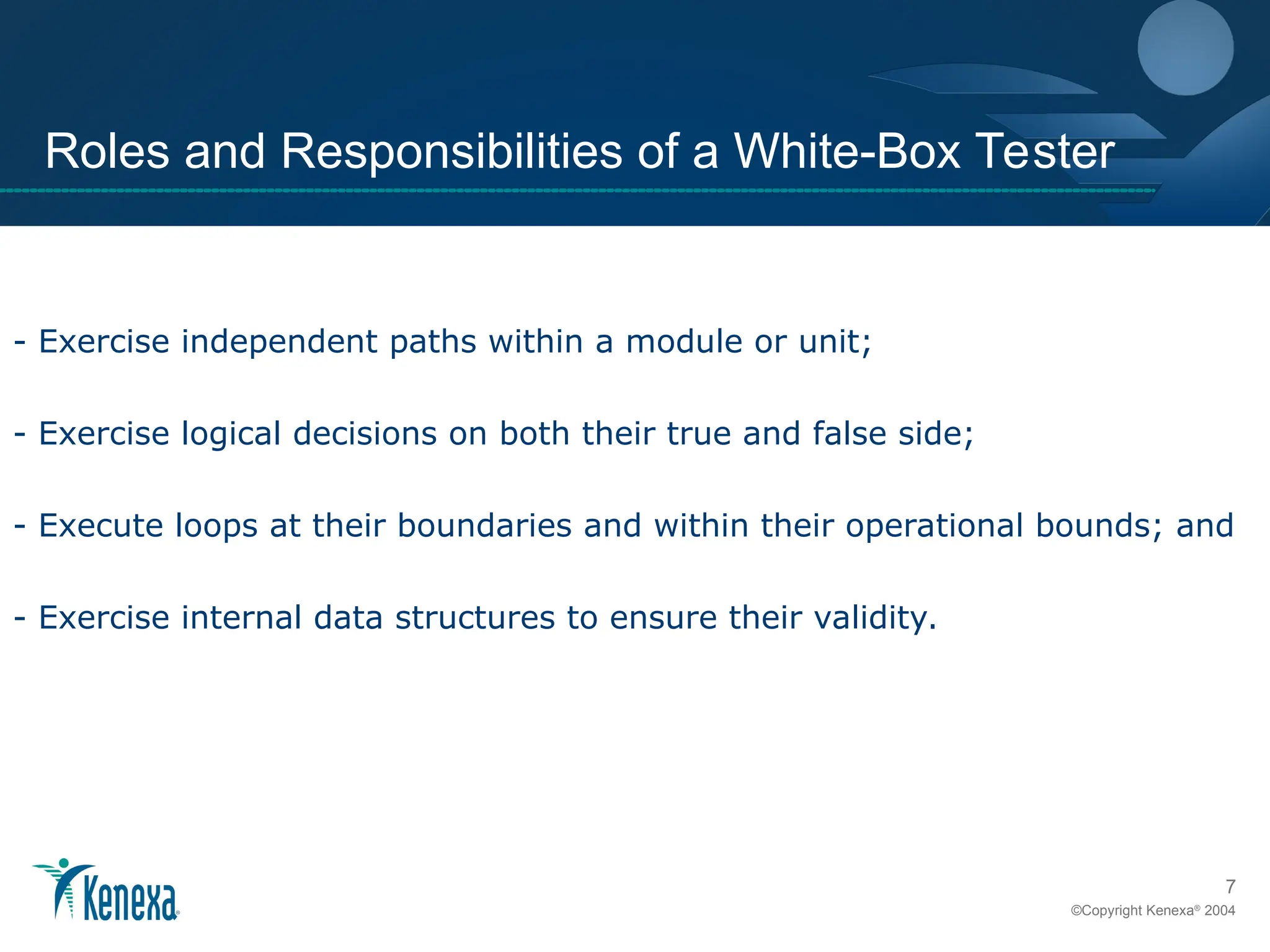
Responsibilities of a White-Box Tester - Exercise independent paths within a module or unit; - Exercise logical decisions on both their true and false side; - Execute loops at their boundaries and within their operational bounds; and - Exercise internal data structures to ensure their validity.
8.
8 ©Copyright Kenexa® 2004 Where White-Box
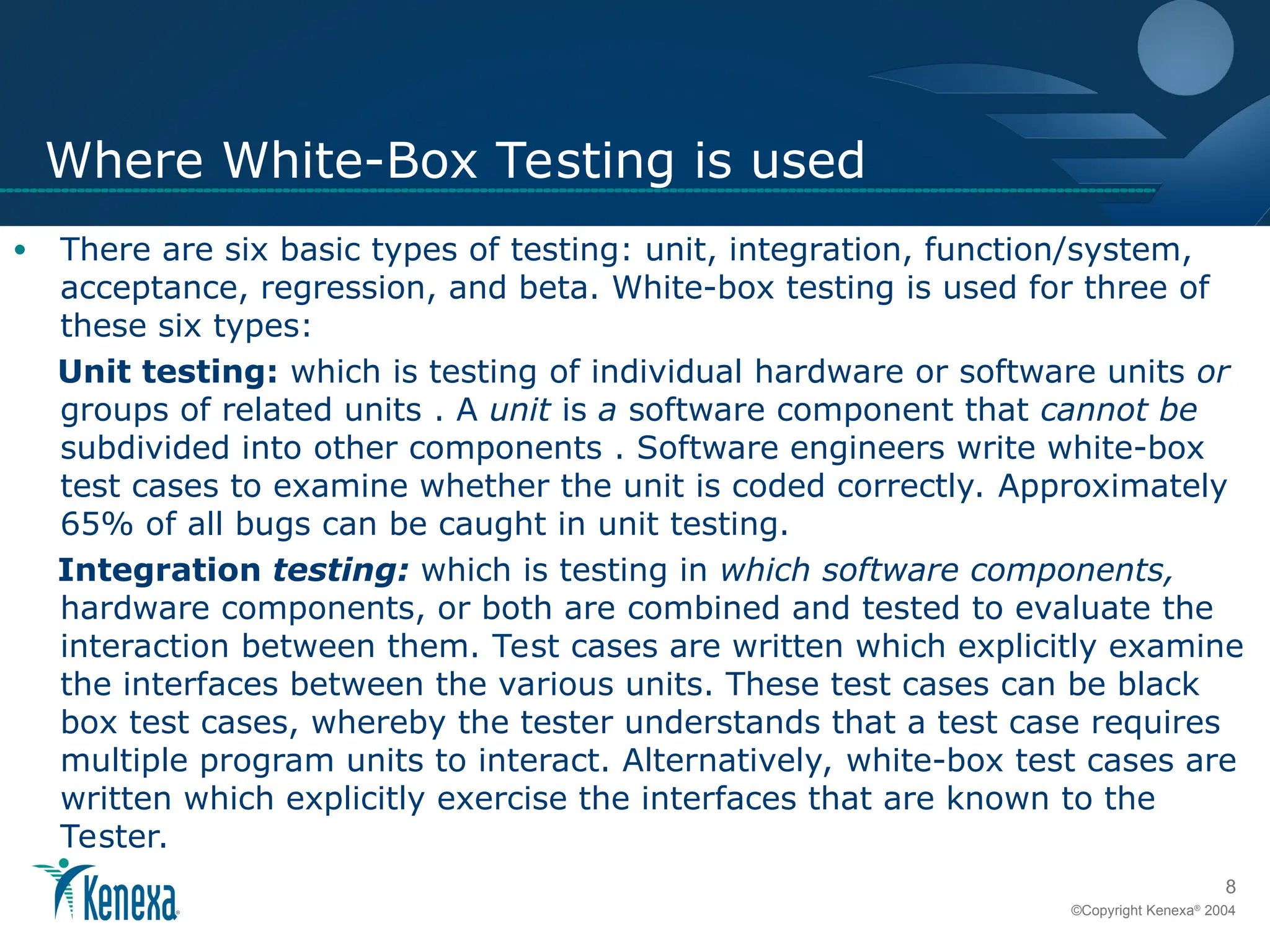
Testing is used • There are six basic types of testing: unit, integration, function/system, acceptance, regression, and beta. White-box testing is used for three of these six types: Unit testing: which is testing of individual hardware or software units or groups of related units . A unit is a software component that cannot be subdivided into other components . Software engineers write white-box test cases to examine whether the unit is coded correctly. Approximately 65% of all bugs can be caught in unit testing. Integration testing: which is testing in which software components, hardware components, or both are combined and tested to evaluate the interaction between them. Test cases are written which explicitly examine the interfaces between the various units. These test cases can be black box test cases, whereby the tester understands that a test case requires multiple program units to interact. Alternatively, white-box test cases are written which explicitly exercise the interfaces that are known to the Tester.
9.
9 ©Copyright Kenexa® 2004 Where White-Box
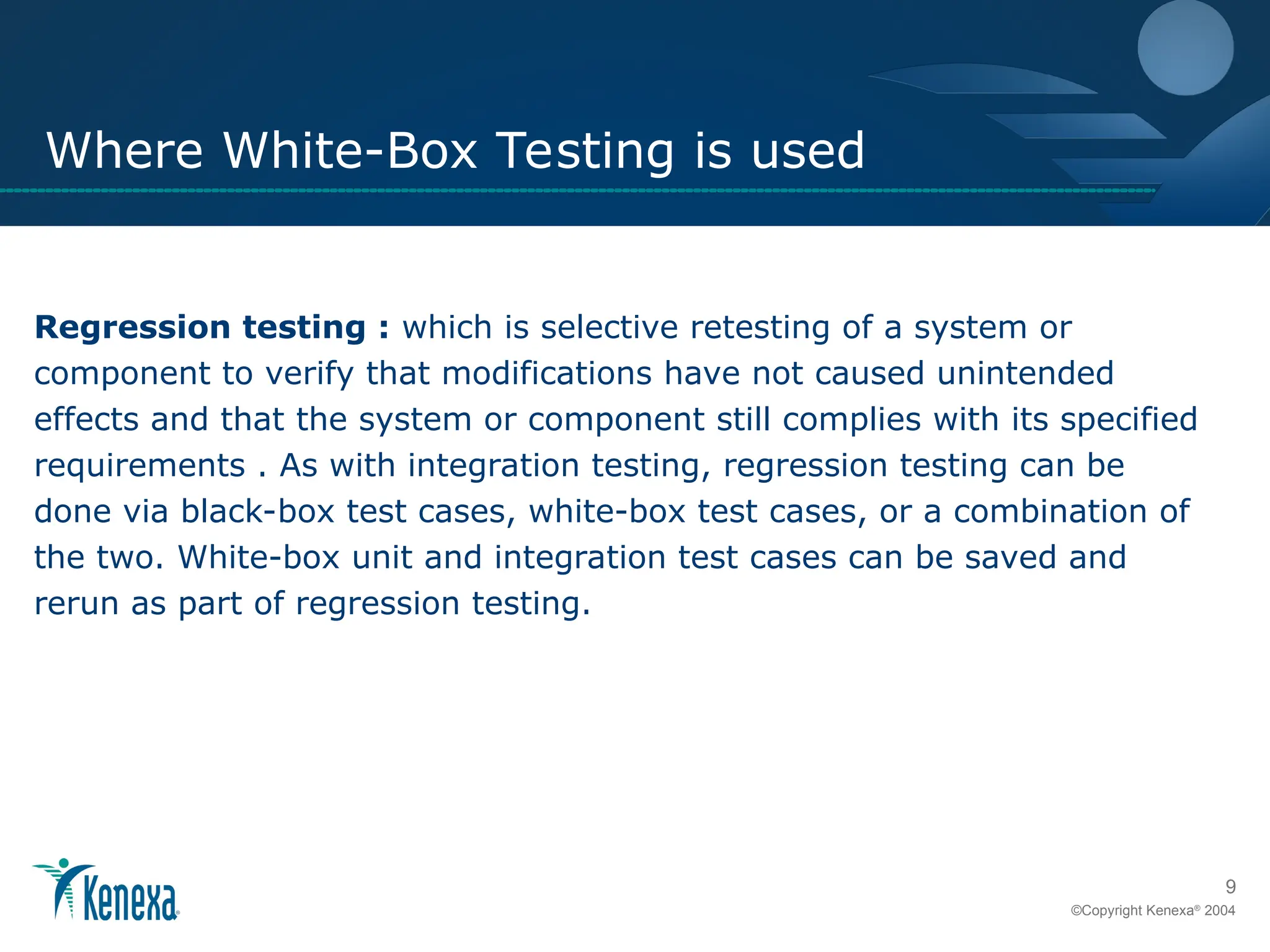
Testing is used Regression testing : which is selective retesting of a system or component to verify that modifications have not caused unintended effects and that the system or component still complies with its specified requirements . As with integration testing, regression testing can be done via black-box test cases, white-box test cases, or a combination of the two. White-box unit and integration test cases can be saved and rerun as part of regression testing.
10.
10 ©Copyright Kenexa® 2004 The White-Box
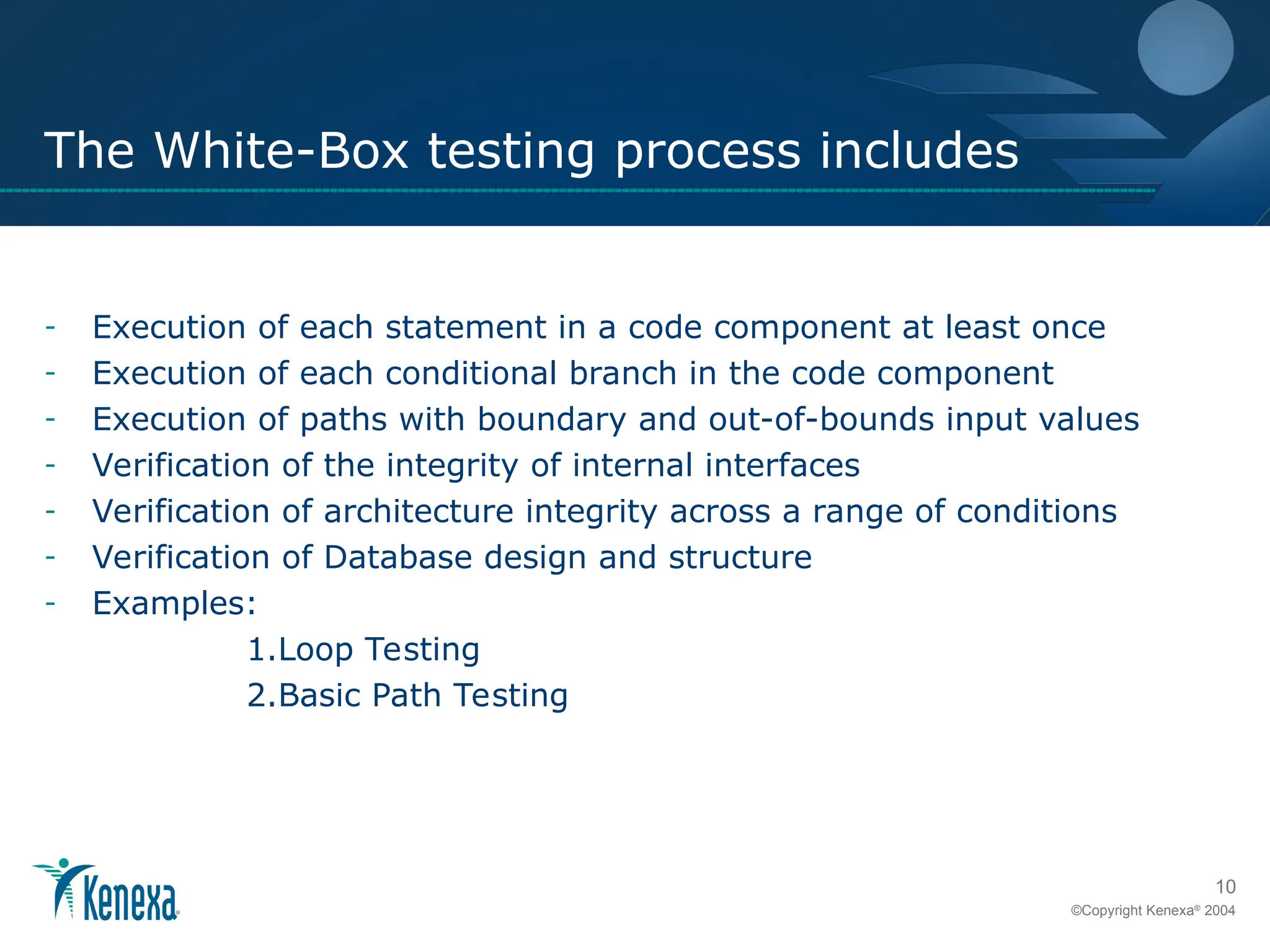
testing process includes - Execution of each statement in a code component at least once - Execution of each conditional branch in the code component - Execution of paths with boundary and out-of-bounds input values - Verification of the integrity of internal interfaces - Verification of architecture integrity across a range of conditions - Verification of Database design and structure - Examples: 1.Loop Testing 2.Basic Path Testing
11.
11 ©Copyright Kenexa® 2004 Loop Testing This
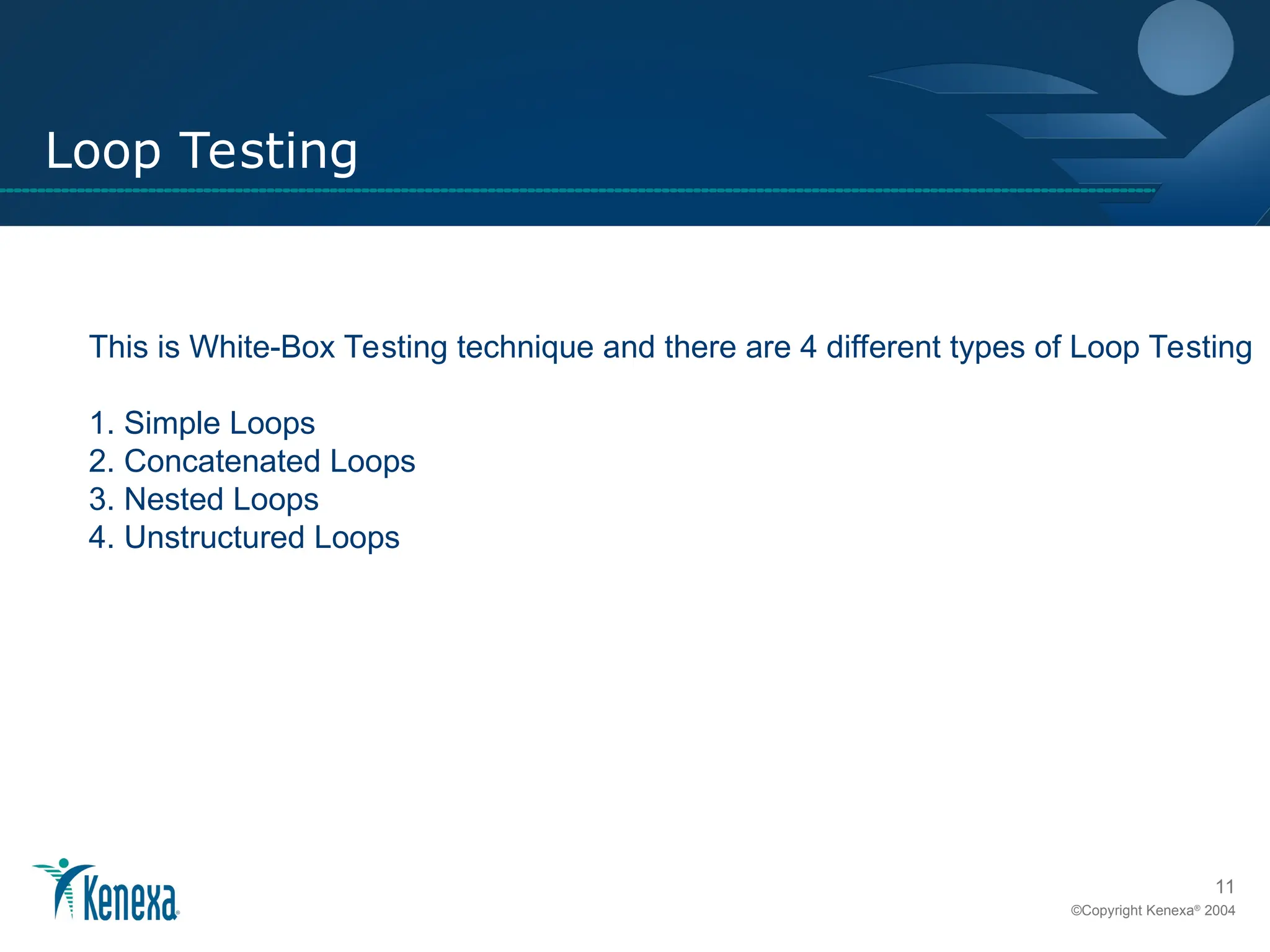
is White-Box Testing technique and there are 4 different types of Loop Testing 1. Simple Loops 2. Concatenated Loops 3. Nested Loops 4. Unstructured Loops
12.
12 ©Copyright Kenexa® 2004 Basic Path
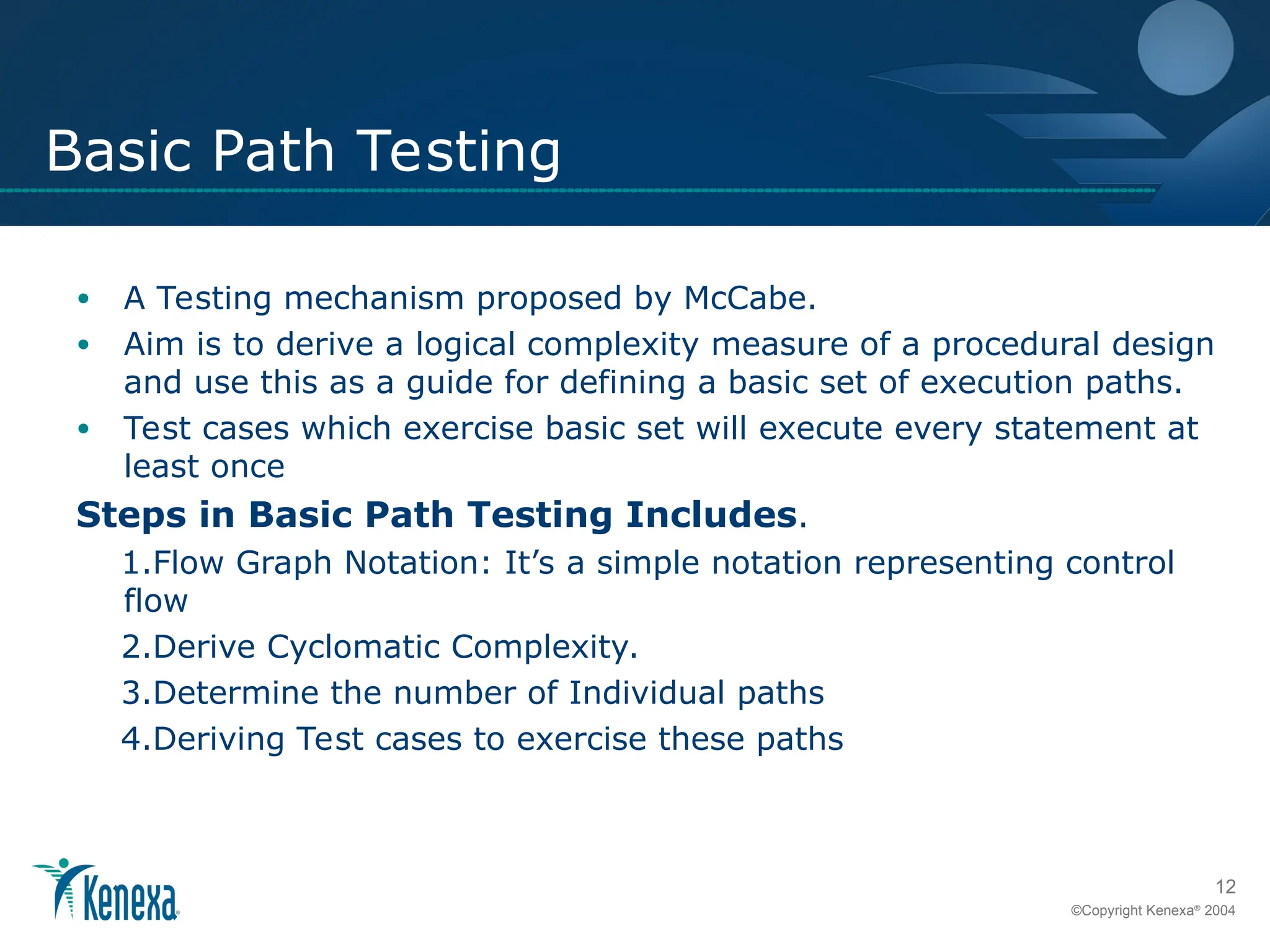
Testing • A Testing mechanism proposed by McCabe. • Aim is to derive a logical complexity measure of a procedural design and use this as a guide for defining a basic set of execution paths. • Test cases which exercise basic set will execute every statement at least once Steps in Basic Path Testing Includes. 1.Flow Graph Notation: It’s a simple notation representing control flow 2.Derive Cyclomatic Complexity. 3.Determine the number of Individual paths 4.Deriving Test cases to exercise these paths
13.
13 ©Copyright Kenexa® 2004 Basic Path
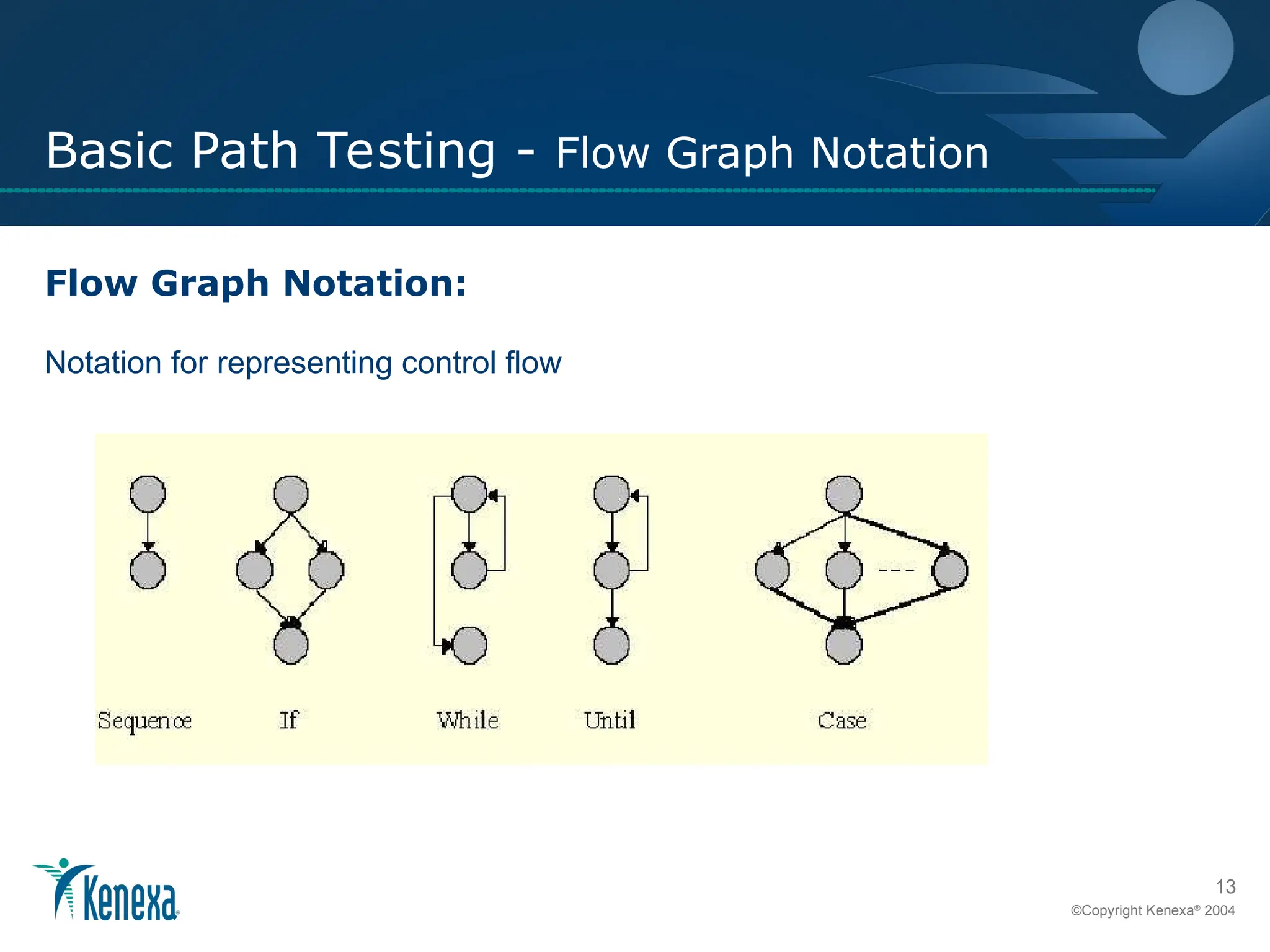
Testing - Flow Graph Notation Flow Graph Notation: Notation for representing control flow
14.
14 ©Copyright Kenexa® 2004 Basic Path
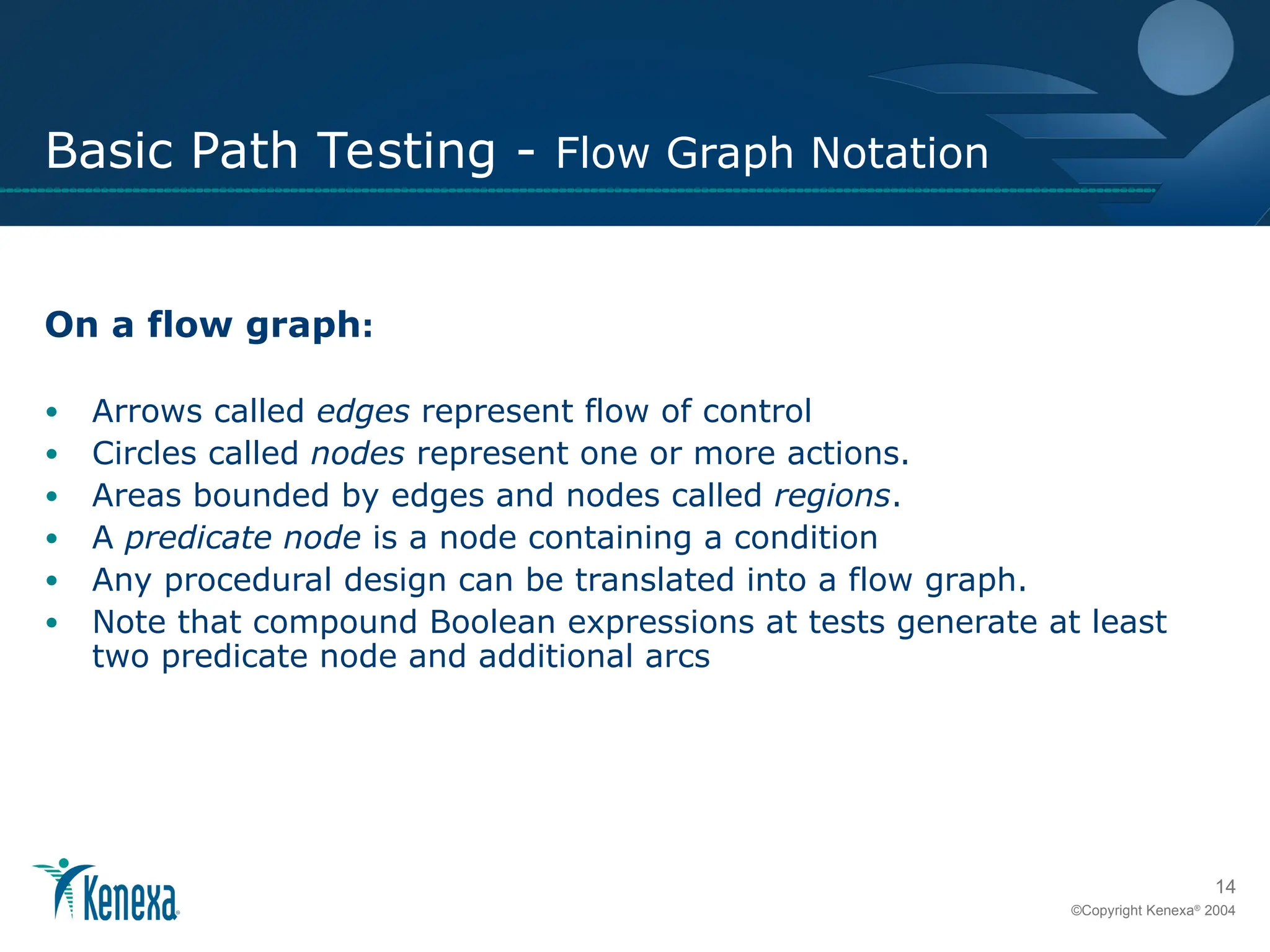
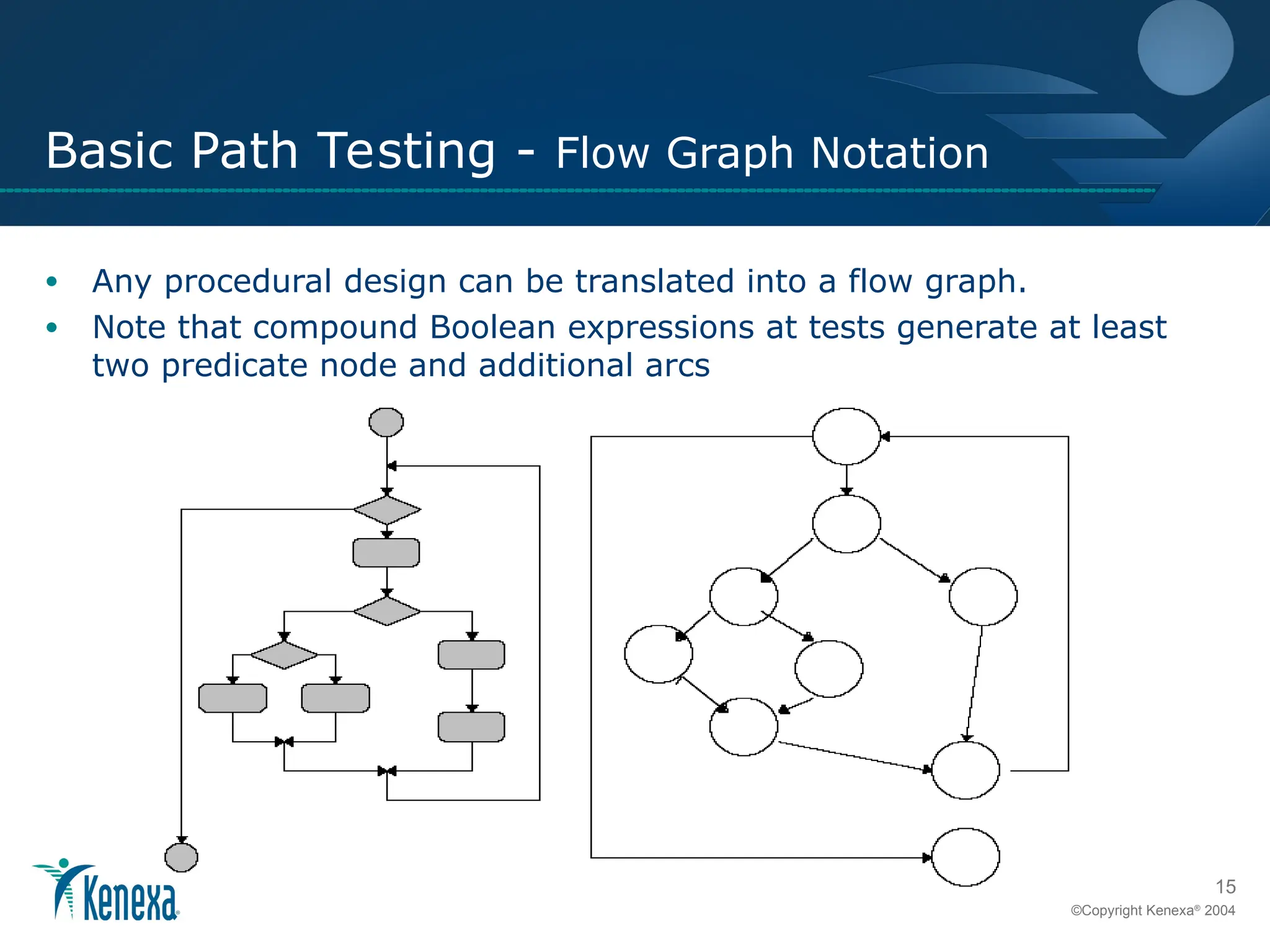
Testing - Flow Graph Notation On a flow graph: • Arrows called edges represent flow of control • Circles called nodes represent one or more actions. • Areas bounded by edges and nodes called regions. • A predicate node is a node containing a condition • Any procedural design can be translated into a flow graph. • Note that compound Boolean expressions at tests generate at least two predicate node and additional arcs
15.
15 ©Copyright Kenexa® 2004 Basic Path
Testing - Flow Graph Notation • Any procedural design can be translated into a flow graph. • Note that compound Boolean expressions at tests generate at least two predicate node and additional arcs
16.
16 ©Copyright Kenexa® 2004 Basic Path
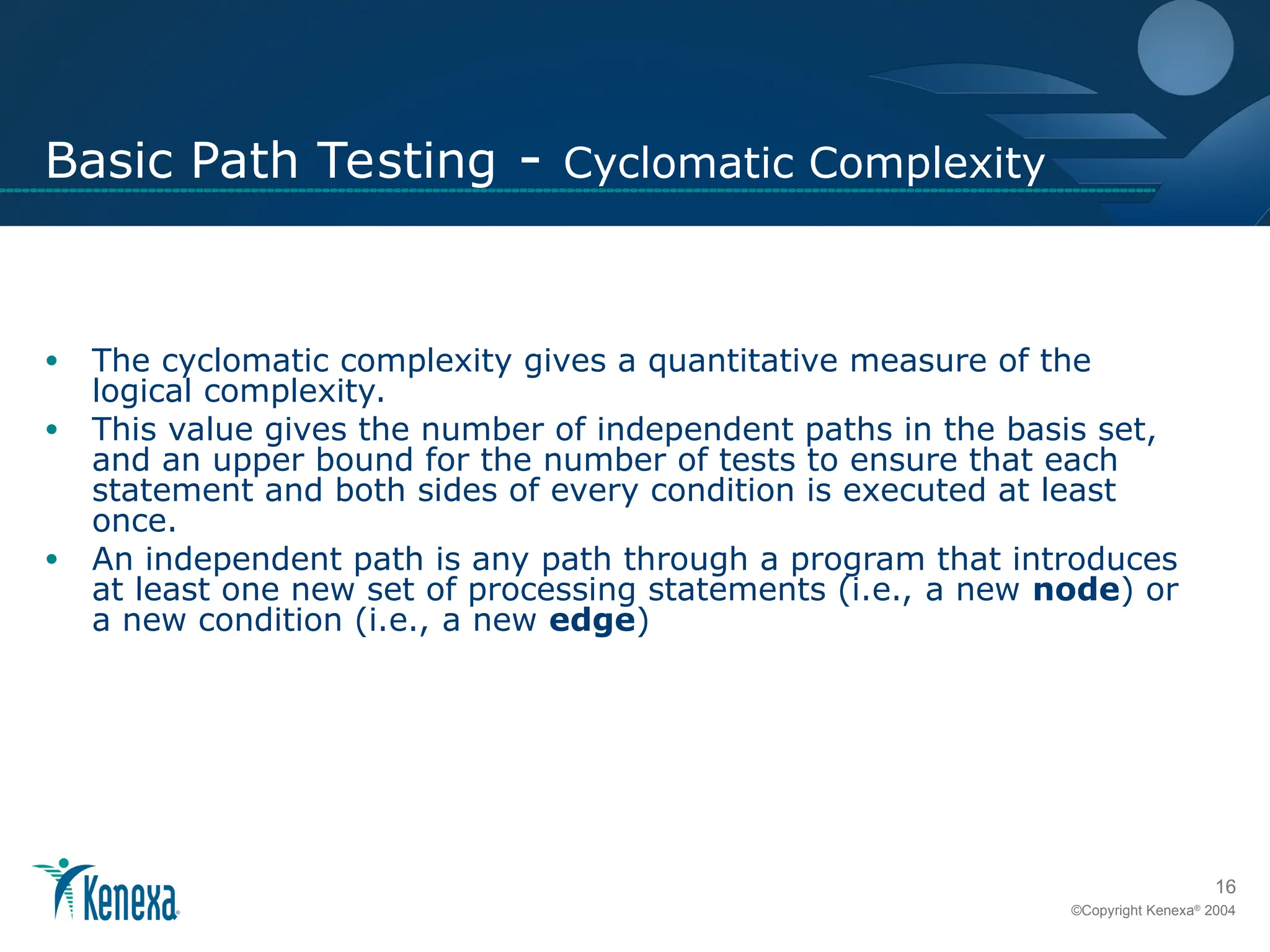
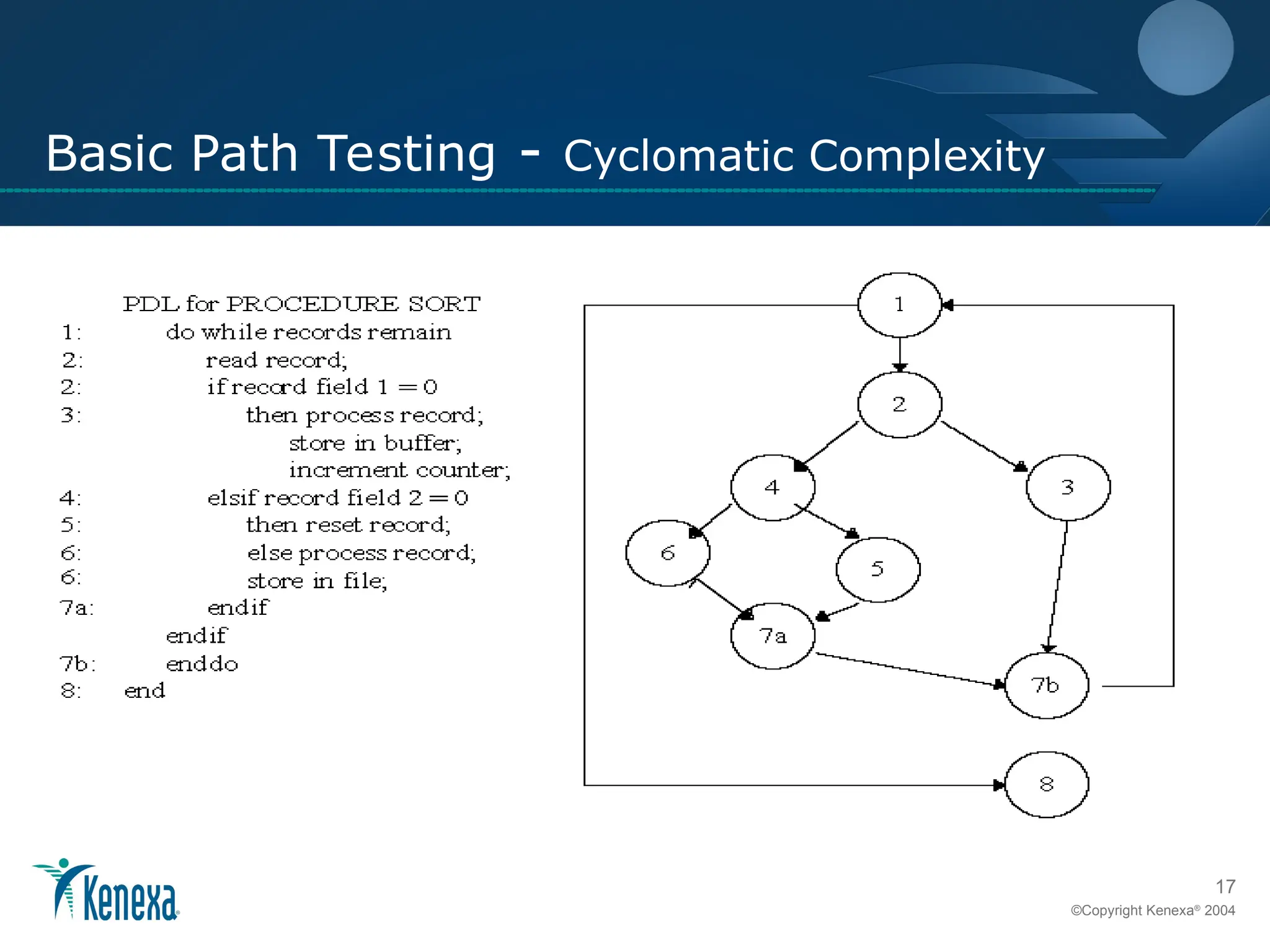
Testing - Cyclomatic Complexity • The cyclomatic complexity gives a quantitative measure of the logical complexity. • This value gives the number of independent paths in the basis set, and an upper bound for the number of tests to ensure that each statement and both sides of every condition is executed at least once. • An independent path is any path through a program that introduces at least one new set of processing statements (i.e., a new node) or a new condition (i.e., a new edge)
17.
17 ©Copyright Kenexa® 2004 Basic Path
Testing - Cyclomatic Complexity
18.
18 ©Copyright Kenexa® 2004 Basic Path
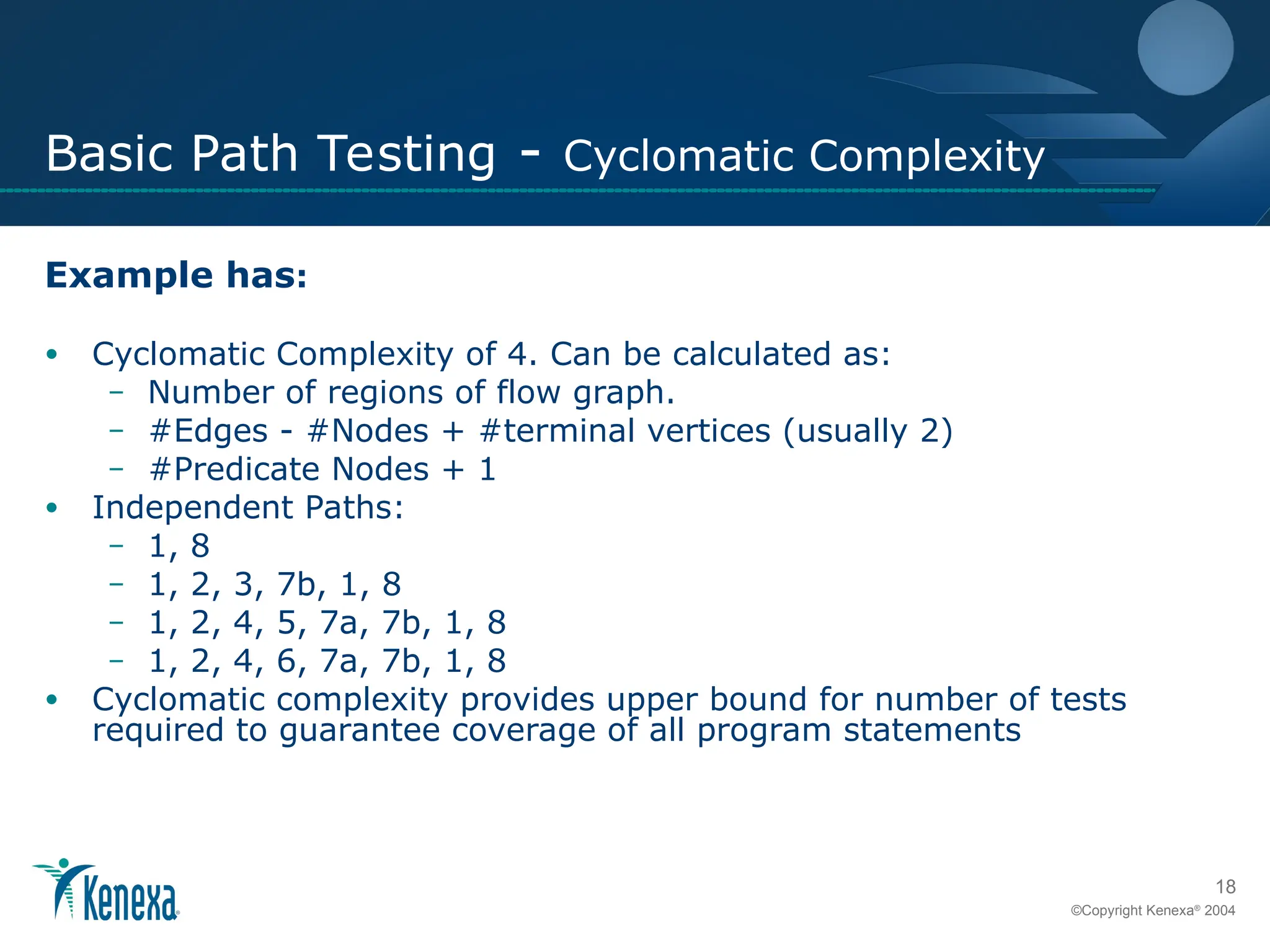
Testing - Cyclomatic Complexity Example has: • Cyclomatic Complexity of 4. Can be calculated as: – Number of regions of flow graph. – #Edges - #Nodes + #terminal vertices (usually 2) – #Predicate Nodes + 1 • Independent Paths: – 1, 8 – 1, 2, 3, 7b, 1, 8 – 1, 2, 4, 5, 7a, 7b, 1, 8 – 1, 2, 4, 6, 7a, 7b, 1, 8 • Cyclomatic complexity provides upper bound for number of tests required to guarantee coverage of all program statements
19.
19 ©Copyright Kenexa® 2004 Basic Path
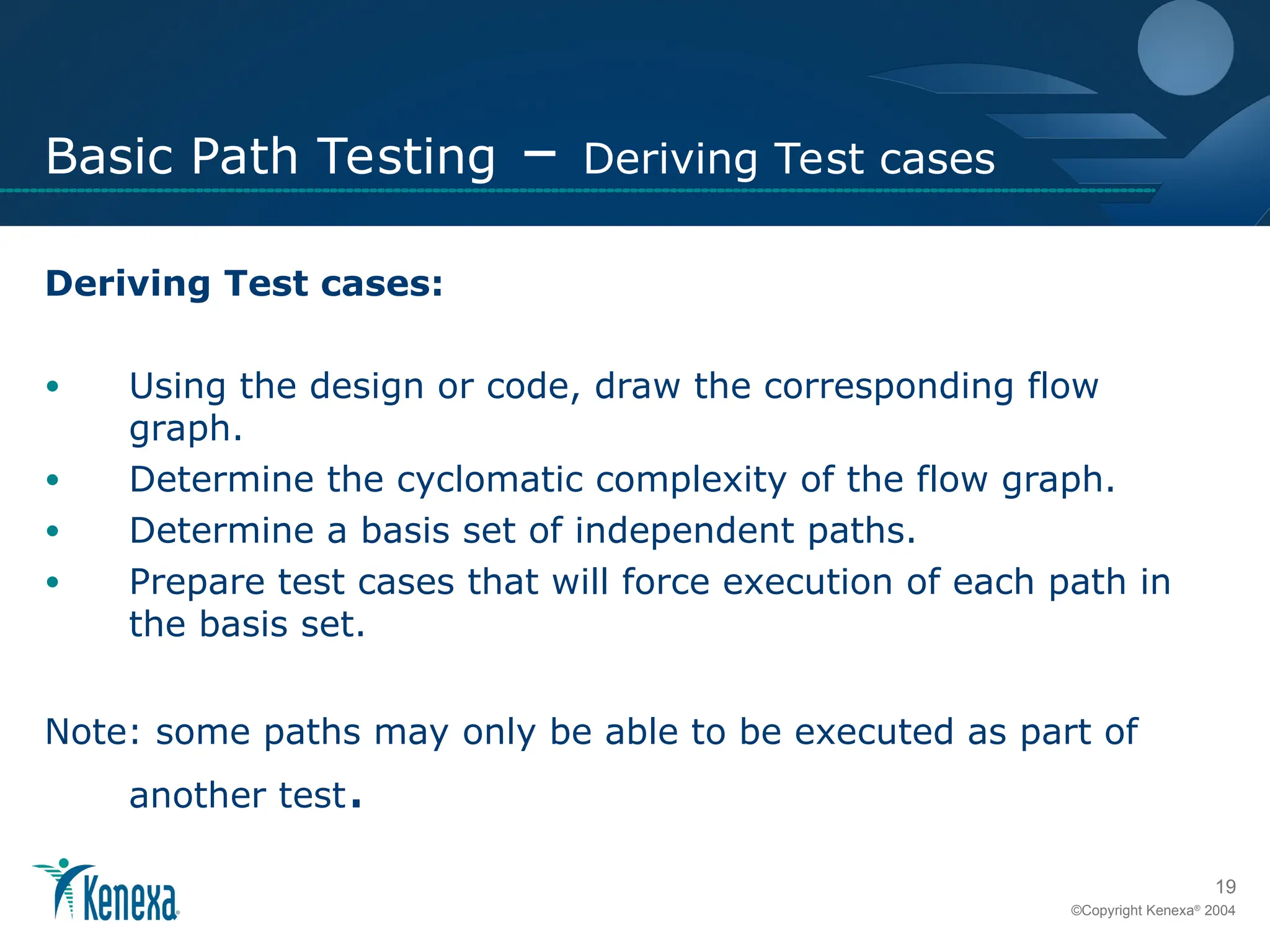
Testing – Deriving Test cases Deriving Test cases: • Using the design or code, draw the corresponding flow graph. • Determine the cyclomatic complexity of the flow graph. • Determine a basis set of independent paths. • Prepare test cases that will force execution of each path in the basis set. Note: some paths may only be able to be executed as part of another test.
20.
20 ©Copyright Kenexa® 2004 Black Box
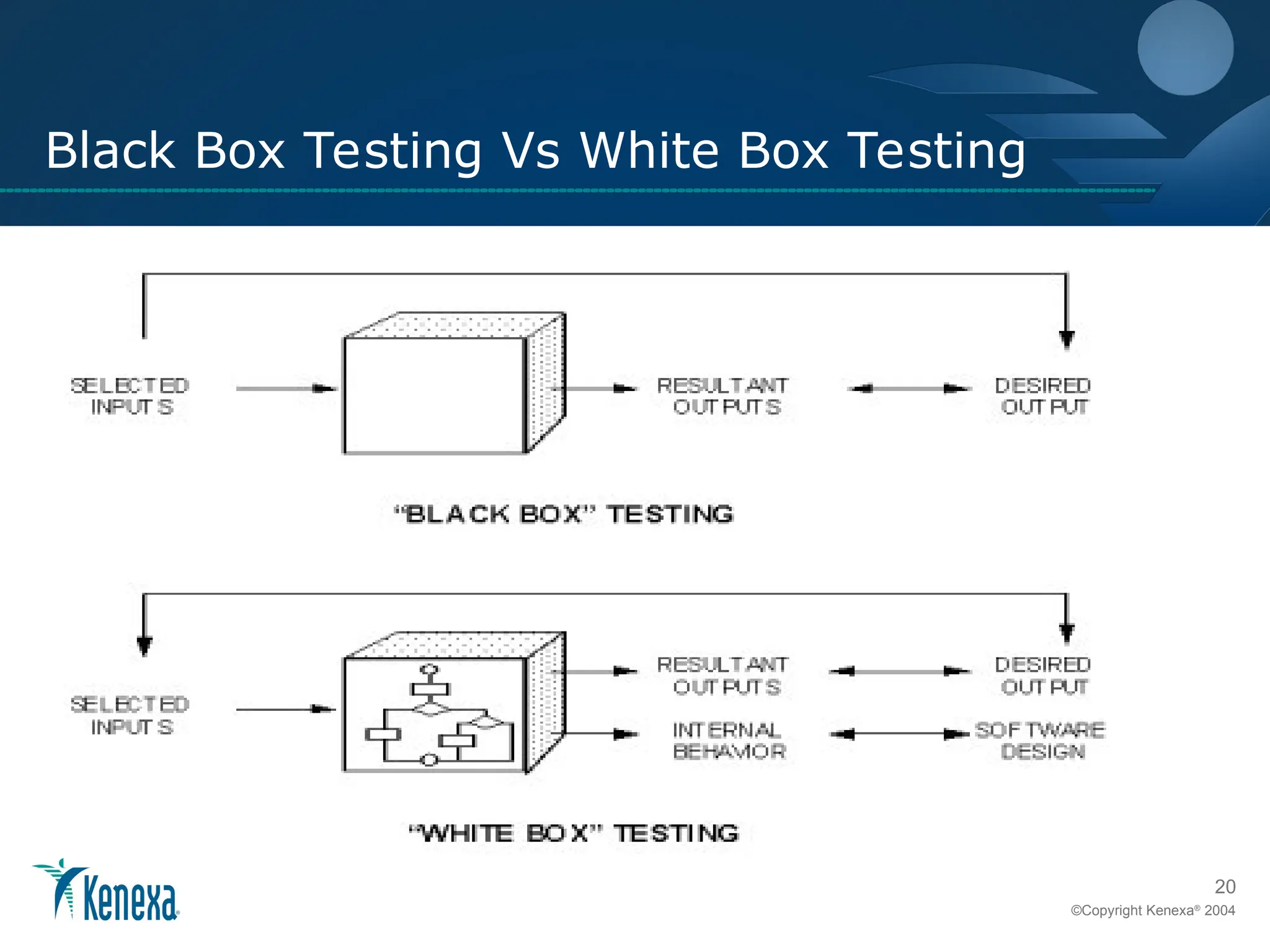
Testing Vs White Box Testing
21.
21 ©Copyright Kenexa® 2004 Black Box
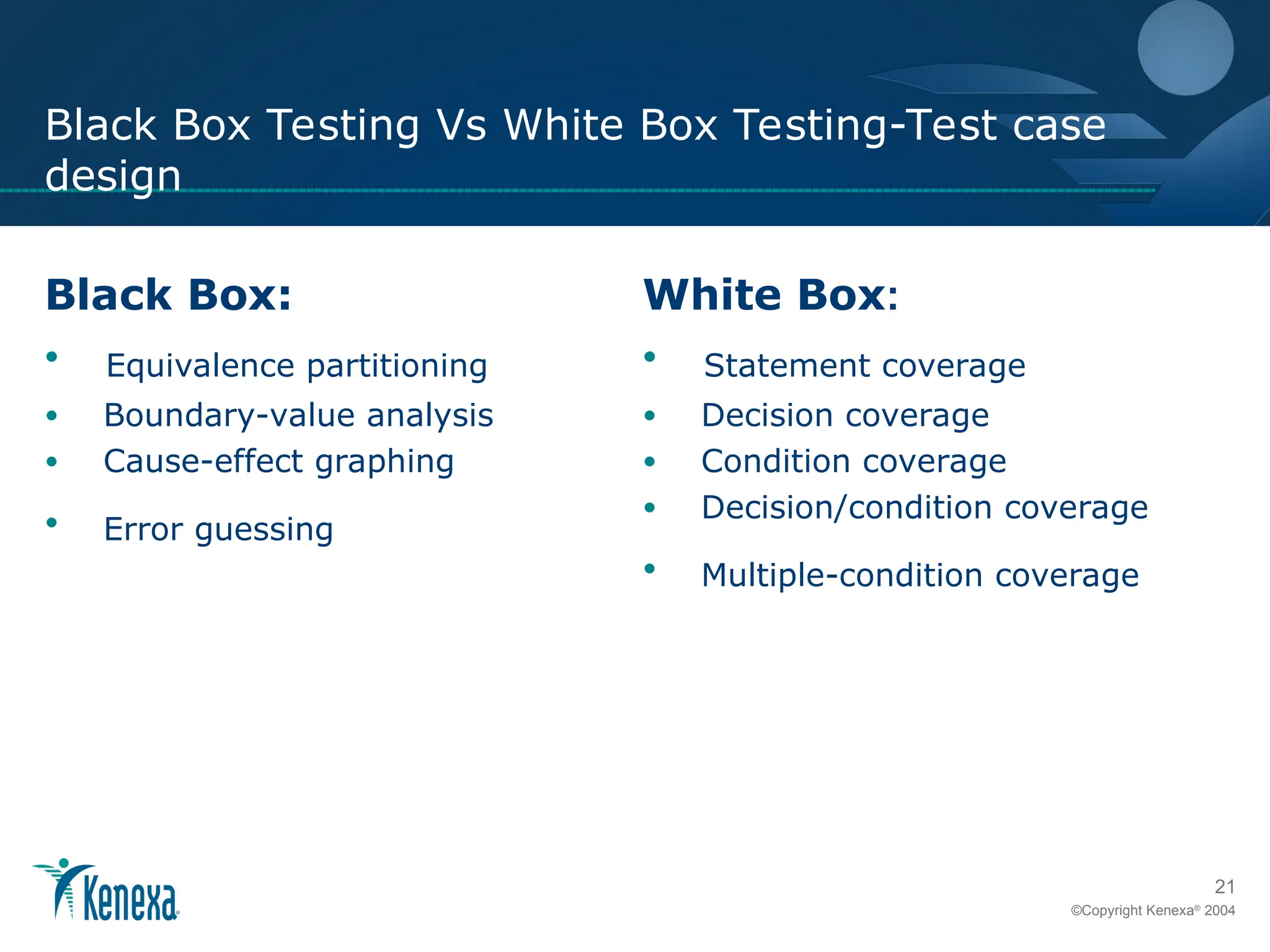
Testing Vs White Box Testing-Test case design Black Box: • Equivalence partitioning • Boundary-value analysis • Cause-effect graphing • Error guessing White Box: • Statement coverage • Decision coverage • Condition coverage • Decision/condition coverage • Multiple-condition coverage
22.
22 ©Copyright Kenexa® 2004 References http://www.stctek.com/faqs.htm http://www.geekinterview.com/question_details/35815 http://www.testinggeek.com/whitebox.asp http://www.cs.rit.edu/~afb/20012/cs4/slides/stl-04.html
23.
23 ©Copyright Kenexa® 2004
24.
www.kenexa.com
Download