Demystifying
the Human
Resource
Management
Process
Introduction
In this presentation, we will
the human resource
management process, providing a
comprehensive understanding of
its key components and best
practices. We will explore the
,training, and
performance evaluation processes,
shedding light on their importance
in organizational success.
Recruitment Process
The process is a critical
aspect of human resource
management, involving the
identification and selection of top
talent to meet organizational
needs. This slide will delve into the
various strategies,
including internal and external
sourcing, as well as the significance
of a well-defined job description
and candidate assessment.
Training and Development
Effective training and development
programs are essential for nurturing
employee skills and enhancing
performance. This slide will emphasize
the importance of ongoing
initiatives, including mentorship
programs, workshops, and e-learning
platforms, in fostering a culture of
continuous learning and growth
within the organization.
Performance Evaluation
The process plays a
pivotal role in assessing employee contributions
and providing constructive feedback. This slide
will highlight the significance of regular
performance appraisals, goal setting, and
feedback mechanisms in driving employee
engagement and productivity.
Employee Relations
Maintaining positive employee
relations is crucial for fostering a
harmonious work environment and
mitigating potential conflicts. This
slide will explore the key principles of
effective ,
including open communication,
conflict resolution strategies, and the
promotion of a healthy work-life
balance.
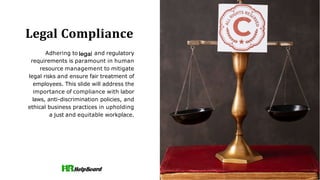
Legal Compliance
Adhering to and regulatory
requirements is paramount in human
resource management to mitigate
legal risks and ensure fair treatment of
employees. This slide will address the
importance of compliance with labor
laws, anti-discrimination policies, and
ethical business practices in upholding
a just and equitable workplace.
Strategic HR Planning
Strategic planning involves
aligning human resource initiatives
with organizational goals and
objectives. This slide will emphasize
the role of HR professionals in
strategic planning, talent forecasting,
and succession planning to ensure
the long-term sustainability and
success of the organization.
Conclusion
In conclusion, demystifying the human resource
management process is essential for organizations to
optimize their talent management strategies and foster a
culture of continuous improvement. By prioritizing effective
recruitment, training, performance evaluation, and employee
relations, organizations can create a thriving and inclusive
workplace that drives sustainable success.
Thanks!
Do you have any questions?
info@hrhelpboard.com
+919899990261
www.hrhelpboard.com

What is Human Resource Management Process

  • 1.
  • 2.
    Introduction In this presentation,we will the human resource management process, providing a comprehensive understanding of its key components and best practices. We will explore the ,training, and performance evaluation processes, shedding light on their importance in organizational success.
  • 3.
    Recruitment Process The processis a critical aspect of human resource management, involving the identification and selection of top talent to meet organizational needs. This slide will delve into the various strategies, including internal and external sourcing, as well as the significance of a well-defined job description and candidate assessment.
  • 4.
    Training and Development Effectivetraining and development programs are essential for nurturing employee skills and enhancing performance. This slide will emphasize the importance of ongoing initiatives, including mentorship programs, workshops, and e-learning platforms, in fostering a culture of continuous learning and growth within the organization.
  • 5.
    Performance Evaluation The processplays a pivotal role in assessing employee contributions and providing constructive feedback. This slide will highlight the significance of regular performance appraisals, goal setting, and feedback mechanisms in driving employee engagement and productivity.
  • 6.
    Employee Relations Maintaining positiveemployee relations is crucial for fostering a harmonious work environment and mitigating potential conflicts. This slide will explore the key principles of effective , including open communication, conflict resolution strategies, and the promotion of a healthy work-life balance.
  • 7.
    Legal Compliance Adhering toand regulatory requirements is paramount in human resource management to mitigate legal risks and ensure fair treatment of employees. This slide will address the importance of compliance with labor laws, anti-discrimination policies, and ethical business practices in upholding a just and equitable workplace.
  • 8.
    Strategic HR Planning Strategicplanning involves aligning human resource initiatives with organizational goals and objectives. This slide will emphasize the role of HR professionals in strategic planning, talent forecasting, and succession planning to ensure the long-term sustainability and success of the organization.
  • 9.
    Conclusion In conclusion, demystifyingthe human resource management process is essential for organizations to optimize their talent management strategies and foster a culture of continuous improvement. By prioritizing effective recruitment, training, performance evaluation, and employee relations, organizations can create a thriving and inclusive workplace that drives sustainable success.
  • 10.
    Thanks! Do you haveany questions? info@hrhelpboard.com +919899990261 www.hrhelpboard.com