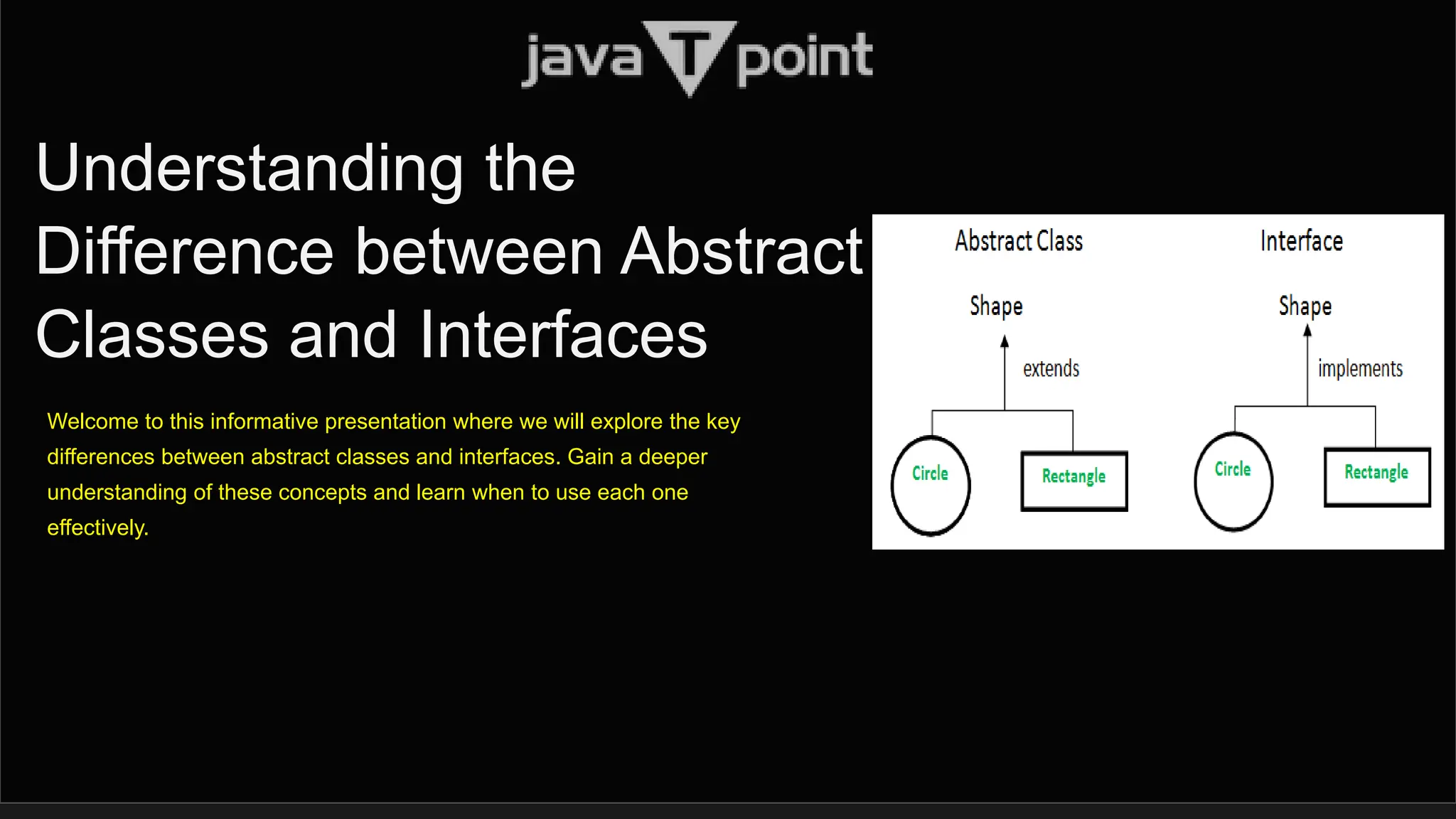
Understanding the
Difference between Abstract
Classes and Interfaces
Welcome to this informative presentation where we will explore the key
differences between abstract classes and interfaces. Gain a deeper
understanding of these concepts and learn when to use each one
effectively.
Abstract Classes: The Backbone of
Object-Oriented Programming
Definition
An abstract class provides a blueprint for derived classes to inherit from while allowing the
class itself to remain incomplete.
Characteristics
Abstract classes can have both abstract and non-abstract methods, and they allow method
implementation.
Examples
Some well-known examples of abstract classes include the Number, InputStream, and
OutputStream classes in Java.
Interfaces: A Contract for Implementing
Behavior
1 Definition
An interface defines a
set of methods that a
class must implement,
effectively providing a
contract for behavior.
2 Characteristics
Interfaces can only have
abstract methods, and
they do not allow
method implementation.
3 Examples
Popular examples of
interfaces include the
Comparable,
Serializable, and
ActionListener interfaces
in Java.
Differences between Abstract Classes and
Interfaces
Syntax and Usage Abstract classes are declared using the
"abstract" keyword and used with the
"extends" keyword, while interfaces are
declared using the "interface" keyword and
used with the "implements" keyword.
Inheritance and Implementation
An abstract class can provide both abstract and
non-abstract methods, and a class can only extend
one abstract class. On the other hand, a class can
implement multiple interfaces, but interfaces can
only have abstract methods.
Benefits and Use Cases of Abstract Classes
1 When to Use Abstract
Classes
Abstract classes are best used when
creating a base class that includes
some default behavior while allowing
flexibility for derived classes to define
their own specific behavior.
2
Advantages of Using
Abstract Classes
They provide code reusability, allow a
mix of method implementation and
abstraction, and facilitate the creation
of hierarchies with common
functionality.
Benefits and Use Cases of Interfaces
When to Use Interfaces
Interfaces are valuable when you want a class to
adhere to a specific contract, allowing for loose
coupling and multiple inheritance of behavior.
Advantages of Using Interfaces
Interfaces help achieve modular and flexible
code, promote code reuse, and allow for easy unit
testing and mocking.
Conclusion
Understanding the distinction between abstract classes
and interfaces is crucial for mastering object-oriented
programming principles. Both have their own unique
purposes and benefits, and choosing the right one
depends on the specific requirements of your application.

what is differance between abstract class and interface ppt

  • 1.
    Understanding the Difference betweenAbstract Classes and Interfaces Welcome to this informative presentation where we will explore the key differences between abstract classes and interfaces. Gain a deeper understanding of these concepts and learn when to use each one effectively.
  • 2.
    Abstract Classes: TheBackbone of Object-Oriented Programming Definition An abstract class provides a blueprint for derived classes to inherit from while allowing the class itself to remain incomplete. Characteristics Abstract classes can have both abstract and non-abstract methods, and they allow method implementation. Examples Some well-known examples of abstract classes include the Number, InputStream, and OutputStream classes in Java.
  • 3.
    Interfaces: A Contractfor Implementing Behavior 1 Definition An interface defines a set of methods that a class must implement, effectively providing a contract for behavior. 2 Characteristics Interfaces can only have abstract methods, and they do not allow method implementation. 3 Examples Popular examples of interfaces include the Comparable, Serializable, and ActionListener interfaces in Java.
  • 4.
    Differences between AbstractClasses and Interfaces Syntax and Usage Abstract classes are declared using the "abstract" keyword and used with the "extends" keyword, while interfaces are declared using the "interface" keyword and used with the "implements" keyword. Inheritance and Implementation An abstract class can provide both abstract and non-abstract methods, and a class can only extend one abstract class. On the other hand, a class can implement multiple interfaces, but interfaces can only have abstract methods.
  • 5.
    Benefits and UseCases of Abstract Classes 1 When to Use Abstract Classes Abstract classes are best used when creating a base class that includes some default behavior while allowing flexibility for derived classes to define their own specific behavior. 2 Advantages of Using Abstract Classes They provide code reusability, allow a mix of method implementation and abstraction, and facilitate the creation of hierarchies with common functionality.
  • 6.
    Benefits and UseCases of Interfaces When to Use Interfaces Interfaces are valuable when you want a class to adhere to a specific contract, allowing for loose coupling and multiple inheritance of behavior. Advantages of Using Interfaces Interfaces help achieve modular and flexible code, promote code reuse, and allow for easy unit testing and mocking.
  • 7.
    Conclusion Understanding the distinctionbetween abstract classes and interfaces is crucial for mastering object-oriented programming principles. Both have their own unique purposes and benefits, and choosing the right one depends on the specific requirements of your application.