www.datavail.com 1
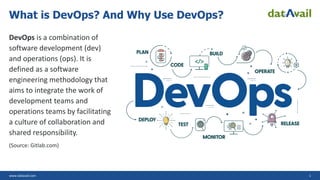
DevOps is a combination of
software development (dev)
and operations (ops). It is
defined as a software
engineering methodology that
aims to integrate the work of
development teams and
operations teams by facilitating
a culture of collaboration and
shared responsibility.
(Source: Gitlab.com)
What is DevOps? And Why Use DevOps?
www.datavail.com 2
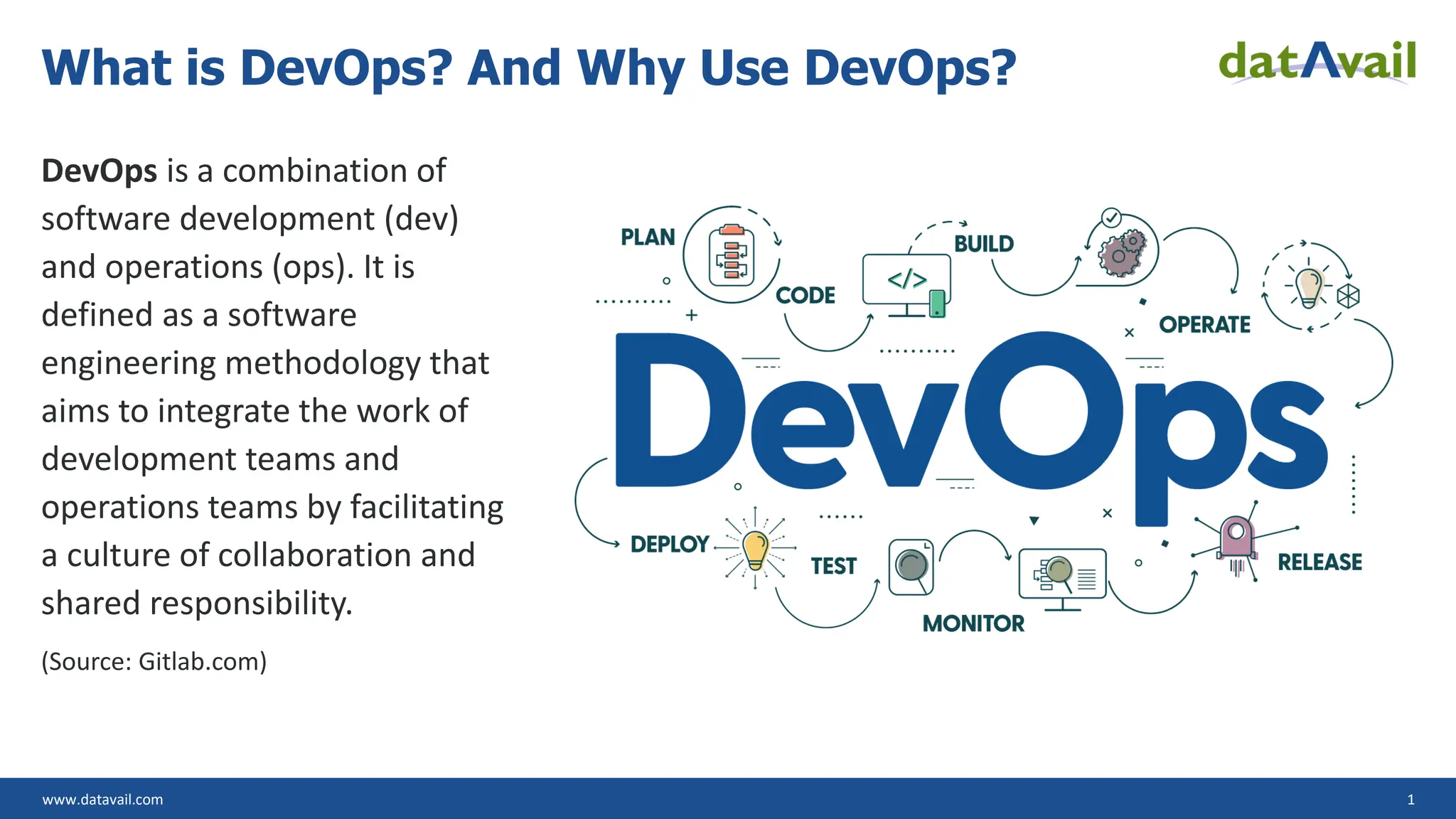
DevOps is more than just CI / CD
Code Build Integrate Test Release Deploy Operate
Agile Development
Continuous Integration
Continuous Delivery
Continuous Deployment
DevOps
www.datavail.com 3
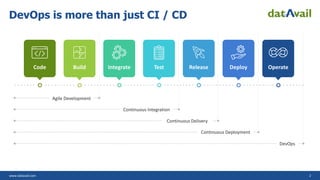
DevOps on AWS
CI/CD Services
CodePipeline
Builds, tests, and deploys code change based on
release process models defined.
CodeBuild
Fully managed build service that compiles source code,
runs tests, and produces packages ready to deploy.
CodeDeploy
Automates code deployments to any instance
including EC2 and on-premises.
CodeStar
Provides a unified interface to manage software
delivery from a single place.
Infrastructure as a Code
CloudFormation
Provides an easy way to create and manage
collection of AWS resources.
OpsWorks
Configuration management service that uses Chef, an
automation platform that treats server configs as code.
Systems Manager
Management service that helps to collect software
inventory, apply OS patches, create system images.
Config
Provides AWS resource inventory, configuration history,
configuration change notifications to enable security,
governance.
www.datavail.com 4
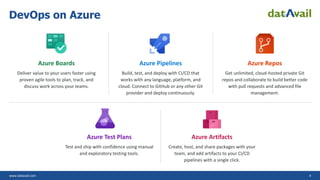
DevOps on Azure
Azure Boards
Deliver value to your users faster using
proven agile tools to plan, track, and
discuss work across your teams.
Azure Pipelines
Build, test, and deploy with CI/CD that
works with any language, platform, and
cloud. Connect to GitHub or any other Git
provider and deploy continuously.
Azure Repos
Get unlimited, cloud-hosted private Git
repos and collaborate to build better code
with pull requests and advanced file
management.
Azure Test Plans
Test and ship with confidence using manual
and exploratory testing tools.
Azure Artifacts
Create, host, and share packages with your
team, and add artifacts to your CI/CD
pipelines with a single click.
www.datavail.com 5
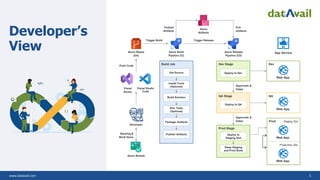
Developer’s
View
QA Stage
Push Code
Backlog &
Work Items
Azure Build
Pipeline (CI)
Azure Release
Pipeline (CD)
Trigger Build
Publish
Artifacts
Azure
Artifacts
Pull
Artifacts
Trigger Release
Build Job
Get Source
Install Tools
(Optional)
Build Solution
Run Tests
(Optional)
Package Artifacts
Publish Artifacts
Deploy to Dev
Deploy to QA
Prod Stage
Deploy to
Staging Slot
Swap Staging
and Prod Slots
Approvals &
Gates
Approvals &
Gates
Azure Boards
Azure Repos
(Git)
Dev Stage
Developer
Visual
Studio
Visual Studio
Code
App Service
Prod Staging Slot
Production Slot
Dev
QA
Web App
Web App
Web App
Web App
www.datavail.com 6
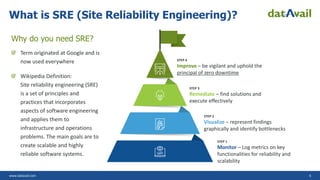
What is SRE (Site Reliability Engineering)?
STEP 1
Monitor – Log metrics on key
functionalities for reliability and
scalability
STEP 2
Visualize – represent findings
graphically and identify bottlenecks
STEP 3
Remediate – find solutions and
execute effectively
STEP 4
Improve – be vigilant and uphold the
principal of zero downtime
Why do you need SRE?
Term originated at Google and is
now used everywhere
Wikipedia Definition:
Site reliability engineering (SRE)
is a set of principles and
practices that incorporates
aspects of software engineering
and applies them to
infrastructure and operations
problems. The main goals are to
create scalable and highly
reliable software systems.
www.datavail.com 7
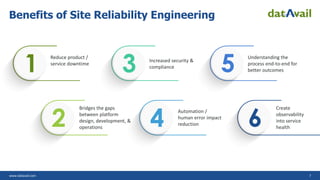
Benefits of Site Reliability Engineering
Reduce product /
service downtime
Bridges the gaps
between platform
design, development, &
operations
Increased security &
compliance
Automation /
human error impact
reduction
Understanding the
process end-to-end for
better outcomes
Create
observability
into service
health
www.datavail.com 8
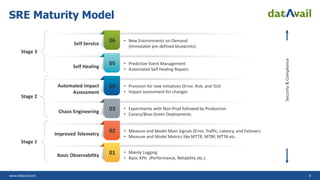
SRE Maturity Model
• Predictive Event Management
• Automated Self Healing Repairs
• New Environments on Demand
(Immutable pre-defined blueprints)
• Provision for new initiatives (Error, Risk, and Toil)
• Impact assessment for changes
• Experiments with Non-Prod followed by Production
• Canary/Blue-Green Deployments
• Measure and Model Main Signals (Error, Traffic, Latency, and Failover)
• Measure and Model Metrics like MTTR, MTBF, MTTA etc.
• Mainly Logging
• Basic KPIs (Performance, Reliability etc.)
Self Service
Self Healing
Automated Impact
Assessment
Chaos Engineering
Improved Telemetry
Basic Observability
Stage 1
Stage 2
Stage 3
Security
&
Compliance
01
02
03
04
05
06
www.datavail.com 9
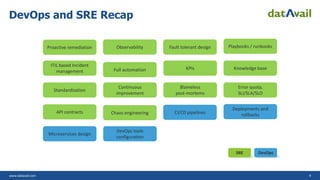
DevOps and SRE Recap
Observability
Proactive remediation
Full automation
Playbooks / runbooks
ITIL based Incident
management
Fault tolerant design
KPIs Knowledge base
Standardization
Continuous
improvement
Blameless
post-mortems
Error quota,
SLI/SLA/SLO
Microservices design
DevOps tools
configuration
Deployments and
rollbacks
API contracts CI/CD pipelines
SRE DevOps
Chaos engineering

What is DevOps? And Why Use DevOps? What?

  • 1.
    www.datavail.com 1 DevOps isa combination of software development (dev) and operations (ops). It is defined as a software engineering methodology that aims to integrate the work of development teams and operations teams by facilitating a culture of collaboration and shared responsibility. (Source: Gitlab.com) What is DevOps? And Why Use DevOps?
  • 2.
    www.datavail.com 2 DevOps ismore than just CI / CD Code Build Integrate Test Release Deploy Operate Agile Development Continuous Integration Continuous Delivery Continuous Deployment DevOps
  • 3.
    www.datavail.com 3 DevOps onAWS CI/CD Services CodePipeline Builds, tests, and deploys code change based on release process models defined. CodeBuild Fully managed build service that compiles source code, runs tests, and produces packages ready to deploy. CodeDeploy Automates code deployments to any instance including EC2 and on-premises. CodeStar Provides a unified interface to manage software delivery from a single place. Infrastructure as a Code CloudFormation Provides an easy way to create and manage collection of AWS resources. OpsWorks Configuration management service that uses Chef, an automation platform that treats server configs as code. Systems Manager Management service that helps to collect software inventory, apply OS patches, create system images. Config Provides AWS resource inventory, configuration history, configuration change notifications to enable security, governance.
  • 4.
    www.datavail.com 4 DevOps onAzure Azure Boards Deliver value to your users faster using proven agile tools to plan, track, and discuss work across your teams. Azure Pipelines Build, test, and deploy with CI/CD that works with any language, platform, and cloud. Connect to GitHub or any other Git provider and deploy continuously. Azure Repos Get unlimited, cloud-hosted private Git repos and collaborate to build better code with pull requests and advanced file management. Azure Test Plans Test and ship with confidence using manual and exploratory testing tools. Azure Artifacts Create, host, and share packages with your team, and add artifacts to your CI/CD pipelines with a single click.
  • 5.
    www.datavail.com 5 Developer’s View QA Stage PushCode Backlog & Work Items Azure Build Pipeline (CI) Azure Release Pipeline (CD) Trigger Build Publish Artifacts Azure Artifacts Pull Artifacts Trigger Release Build Job Get Source Install Tools (Optional) Build Solution Run Tests (Optional) Package Artifacts Publish Artifacts Deploy to Dev Deploy to QA Prod Stage Deploy to Staging Slot Swap Staging and Prod Slots Approvals & Gates Approvals & Gates Azure Boards Azure Repos (Git) Dev Stage Developer Visual Studio Visual Studio Code App Service Prod Staging Slot Production Slot Dev QA Web App Web App Web App Web App
  • 6.
    www.datavail.com 6 What isSRE (Site Reliability Engineering)? STEP 1 Monitor – Log metrics on key functionalities for reliability and scalability STEP 2 Visualize – represent findings graphically and identify bottlenecks STEP 3 Remediate – find solutions and execute effectively STEP 4 Improve – be vigilant and uphold the principal of zero downtime Why do you need SRE? Term originated at Google and is now used everywhere Wikipedia Definition: Site reliability engineering (SRE) is a set of principles and practices that incorporates aspects of software engineering and applies them to infrastructure and operations problems. The main goals are to create scalable and highly reliable software systems.
  • 7.
    www.datavail.com 7 Benefits ofSite Reliability Engineering Reduce product / service downtime Bridges the gaps between platform design, development, & operations Increased security & compliance Automation / human error impact reduction Understanding the process end-to-end for better outcomes Create observability into service health
  • 8.
    www.datavail.com 8 SRE MaturityModel • Predictive Event Management • Automated Self Healing Repairs • New Environments on Demand (Immutable pre-defined blueprints) • Provision for new initiatives (Error, Risk, and Toil) • Impact assessment for changes • Experiments with Non-Prod followed by Production • Canary/Blue-Green Deployments • Measure and Model Main Signals (Error, Traffic, Latency, and Failover) • Measure and Model Metrics like MTTR, MTBF, MTTA etc. • Mainly Logging • Basic KPIs (Performance, Reliability etc.) Self Service Self Healing Automated Impact Assessment Chaos Engineering Improved Telemetry Basic Observability Stage 1 Stage 2 Stage 3 Security & Compliance 01 02 03 04 05 06
  • 9.
    www.datavail.com 9 DevOps andSRE Recap Observability Proactive remediation Full automation Playbooks / runbooks ITIL based Incident management Fault tolerant design KPIs Knowledge base Standardization Continuous improvement Blameless post-mortems Error quota, SLI/SLA/SLO Microservices design DevOps tools configuration Deployments and rollbacks API contracts CI/CD pipelines SRE DevOps Chaos engineering