What is Artificial Memory?
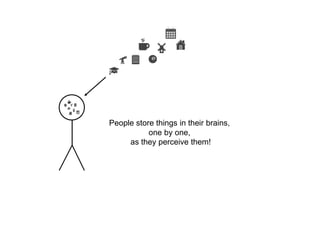
People store things in their brains, one by one, as they perceive them!
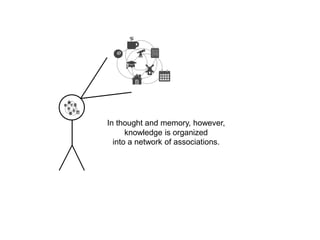
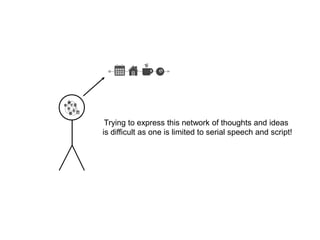
In thought and memory, however, knowledge is organized into a network of associations.
Trying to express this network of thoughts and ideas is difficult as one is limited to serial speech and script!
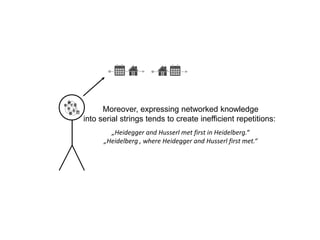
Moreover, expressing networked knowledgeinto serial strings tends to create inefficient repetitions: „Heidegger and Husserl met first in Heidelberg.“„Heidelberg , where Heidegger and Husserl first met.“
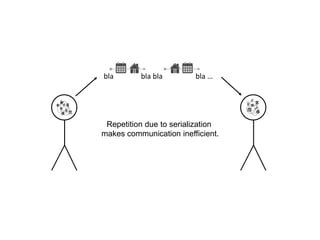
bla               bla bla                  bla …Repetition due to serialization makes communication inefficient.
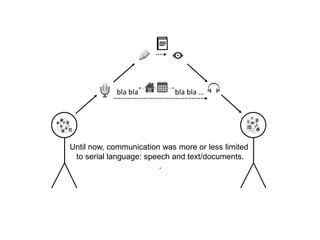
bla bla                    bla bla …Until now, communication was more or less limited to serial language: speech and text/documents..
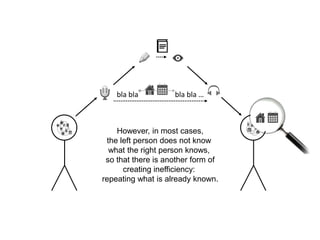
bla bla                    bla bla …However, in most cases,the left person does not know what the right person knows, so that there is another form ofcreating inefficiency: repeating what is already known.
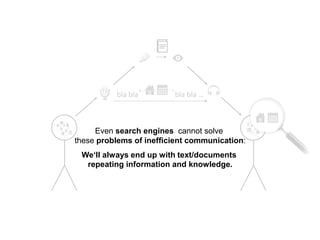
bla bla                    bla bla …Even search engines  cannot solve these problems of inefficient communication:We‘ll always end up with text/documents repeating information and knowledge.
Wouldn‘t life be a lot easier if one didn‘t have to repeat oneself? And if we didn‘t have to hear and read what we already know?
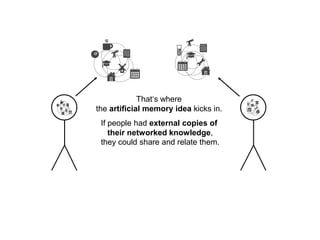
That‘s where the artificial memory idea kicks in. If people had external copies of their networked knowledge,they could share and relate them.
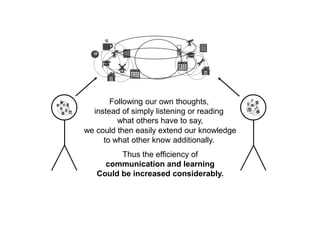
Following our own thoughts, instead of simply listening or reading what others have to say,we could then easily extend our knowledgeto what other know additionally. Thus the efficiency ofcommunication and learning Could be increased considerably.
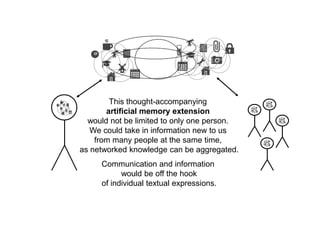
This thought-accompanying artificial memory extension would not be limited to only one person. We could take in information new to us from many people at the same time, as networked knowledge can be aggregated.Communication and information would be off the hookof individual textual expressions.
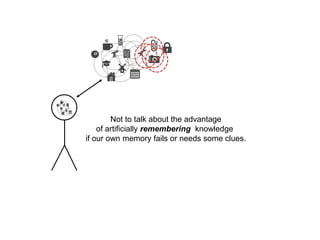
Not to talk about the advantageof artificially remembering  knowledge if our own memory fails or needs some clues.
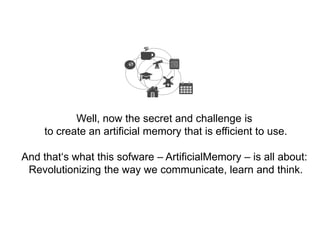
Well, now the secret and challenge is to create an artificial memory that is efficient to use.And that‘s what this sofware – ArtificialMemory – is all about: Revolutionizing the way we communicate, learn and think.

What is Artificial Memory?

  • 1.
  • 2.
    People store thingsin their brains, one by one, as they perceive them!
  • 3.
    In thought andmemory, however, knowledge is organized into a network of associations.
  • 4.
    Trying to expressthis network of thoughts and ideas is difficult as one is limited to serial speech and script!
  • 5.
    Moreover, expressing networkedknowledgeinto serial strings tends to create inefficient repetitions: „Heidegger and Husserl met first in Heidelberg.“„Heidelberg , where Heidegger and Husserl first met.“
  • 6.
    bla bla bla bla …Repetition due to serialization makes communication inefficient.
  • 7.
    bla bla bla bla …Until now, communication was more or less limited to serial language: speech and text/documents..
  • 8.
    bla bla bla bla …However, in most cases,the left person does not know what the right person knows, so that there is another form ofcreating inefficiency: repeating what is already known.
  • 9.
    bla bla bla bla …Even search engines cannot solve these problems of inefficient communication:We‘ll always end up with text/documents repeating information and knowledge.
  • 10.
    Wouldn‘t life bea lot easier if one didn‘t have to repeat oneself? And if we didn‘t have to hear and read what we already know?
  • 11.
    That‘s where theartificial memory idea kicks in. If people had external copies of their networked knowledge,they could share and relate them.
  • 12.
    Following our ownthoughts, instead of simply listening or reading what others have to say,we could then easily extend our knowledgeto what other know additionally. Thus the efficiency ofcommunication and learning Could be increased considerably.
  • 13.
    This thought-accompanying artificialmemory extension would not be limited to only one person. We could take in information new to us from many people at the same time, as networked knowledge can be aggregated.Communication and information would be off the hookof individual textual expressions.
  • 14.
    Not to talkabout the advantageof artificially remembering knowledge if our own memory fails or needs some clues.
  • 15.
    Well, now thesecret and challenge is to create an artificial memory that is efficient to use.And that‘s what this sofware – ArtificialMemory – is all about: Revolutionizing the way we communicate, learn and think.