What is an API
and why use it?
In simple terms, an API (application
programming interface) acts like a messenger
that runs back and forth between applications,
databases, and devices. In more technical terms,
an API is a set of protocols, standardized
programming instructions and requirements.
3Tutorial - API basics
What do APIs actually do?
4
An API enables one software system to use a
service component from another software
system. This way separate software systems can
work together to deliver a service. A useful
analogy is lego – the brick size and color
represent a service component (e.g. online
maps, log in), while the lego brick’s studs and
tubes represent the API (e.g. how the service
components can be linked together).
5Tutorial - API basics
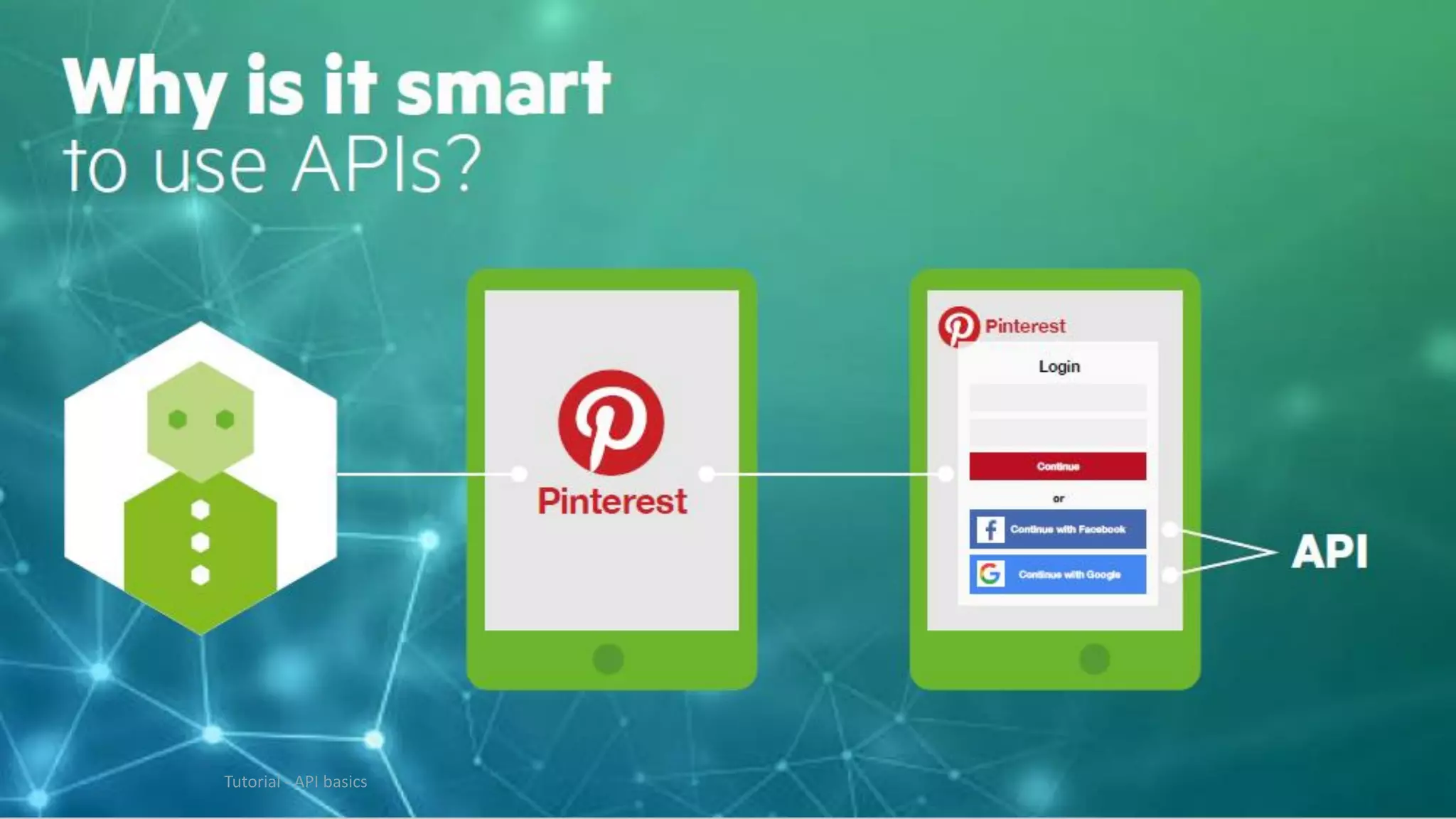
For example, when you use the Uber app, you
will see cars nearby on a map. The Google Maps
API is used to provide this service component.
Technology heavyweights like Facebook, Google,
and Twitter allow other companies to piggyback
on their service components—such as Google
Maps—through APIs.
6Tutorial - API basics
What do APIs actually do?
7
Stop reinventing the wheel!
Many available APIs already cover essential
software capabilities. You can develop a new
service much easier, better, and faster by using
APIs that offer all the required building blocks.
8Tutorial - API basics
9Tutorial - API basics
Benefits of using APIs
APIs offer many different benefits for users, we
list the three most important for you:
10
Speed up time-to-market
When you use APIs, you don’t have to build each
component from scratch. Many APIs are ready to use and
have a standardized interface. This makes APIs easy,
consistent, and predictable to integrate, minimizing your
development time and effort.
Tutorial - API basics 11
Improve customer experience
Your customers’ needs change over time. APIs help you to
react to these changes through their flexibility. In addition,
APIs enable you to customize your applications to match
your customers’ needs. APIs make it easy to add specific
functionalities, provide personalized data, and make your
application interoperable. It is even relatively easy to
migrate to other API providers.
Tutorial - API basics 12
Innovate and co-create
Once you start using APIs, the next step is to engage with
customers and possible partners in the co-creation of
innovative new solutions. Through direct partnership,
companies can design and build new services together.
Tutorial - API basics 13
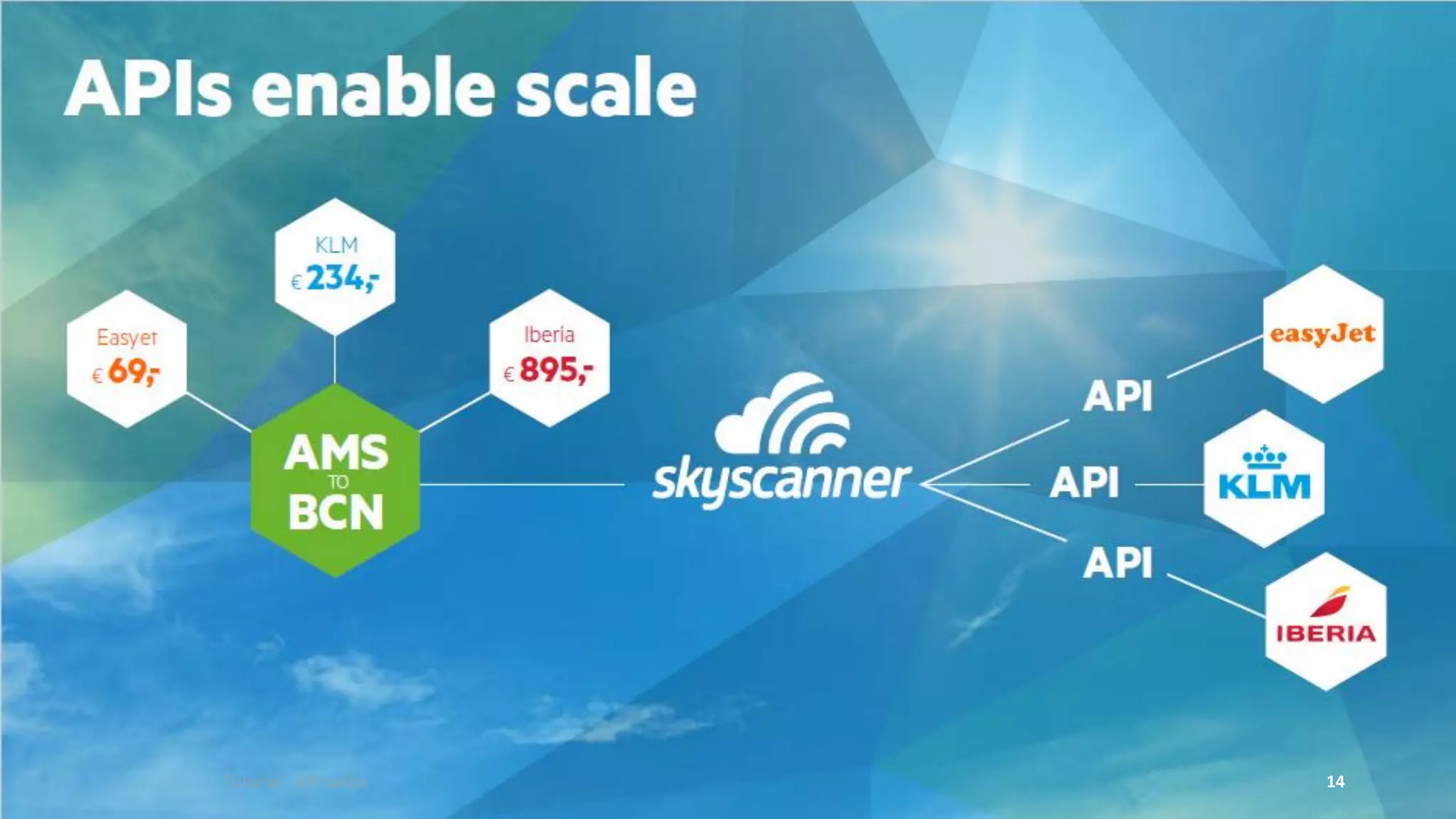
Tutorial - API basics 14
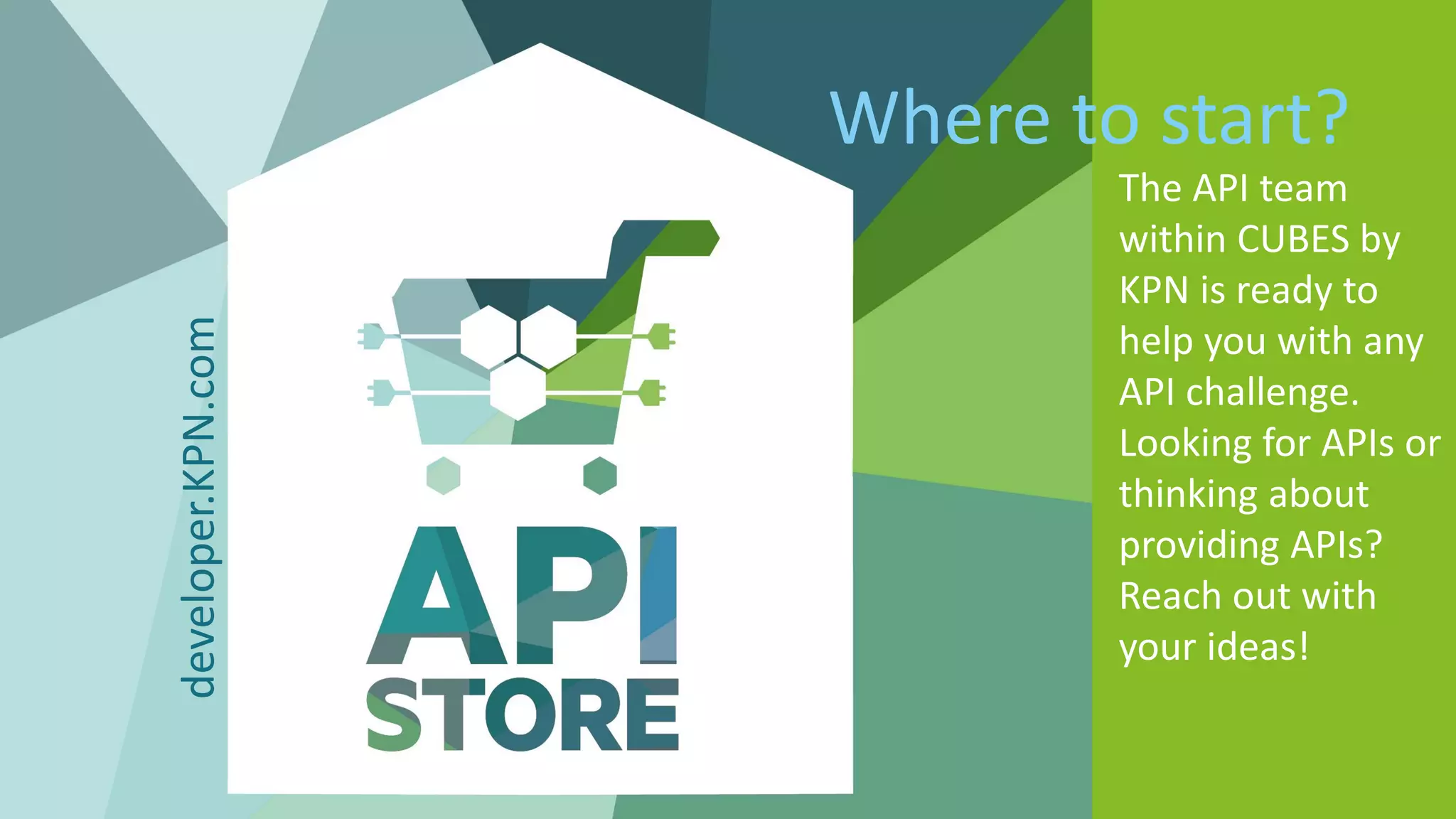
The API team
within CUBES by
KPN is ready to
help you with any
API challenge.
Looking for APIs or
thinking about
providing APIs?
Reach out with
your ideas!
Where to start?
developer.KPN.com
Anushka Diderich – Thought Leader API
CUBES by KPN
KPNinnovations.com
KPN’S INNOVATION ENGINE
WHERE NEW PRODUCTS SPRING TO LIFE

What is an API and why use it?

  • 1.
    What is anAPI and why use it?
  • 3.
    In simple terms,an API (application programming interface) acts like a messenger that runs back and forth between applications, databases, and devices. In more technical terms, an API is a set of protocols, standardized programming instructions and requirements. 3Tutorial - API basics
  • 4.
    What do APIsactually do? 4
  • 5.
    An API enablesone software system to use a service component from another software system. This way separate software systems can work together to deliver a service. A useful analogy is lego – the brick size and color represent a service component (e.g. online maps, log in), while the lego brick’s studs and tubes represent the API (e.g. how the service components can be linked together). 5Tutorial - API basics
  • 6.
    For example, whenyou use the Uber app, you will see cars nearby on a map. The Google Maps API is used to provide this service component. Technology heavyweights like Facebook, Google, and Twitter allow other companies to piggyback on their service components—such as Google Maps—through APIs. 6Tutorial - API basics
  • 7.
    What do APIsactually do? 7
  • 8.
    Stop reinventing thewheel! Many available APIs already cover essential software capabilities. You can develop a new service much easier, better, and faster by using APIs that offer all the required building blocks. 8Tutorial - API basics
  • 9.
  • 10.
    Benefits of usingAPIs APIs offer many different benefits for users, we list the three most important for you: 10
  • 11.
    Speed up time-to-market Whenyou use APIs, you don’t have to build each component from scratch. Many APIs are ready to use and have a standardized interface. This makes APIs easy, consistent, and predictable to integrate, minimizing your development time and effort. Tutorial - API basics 11
  • 12.
    Improve customer experience Yourcustomers’ needs change over time. APIs help you to react to these changes through their flexibility. In addition, APIs enable you to customize your applications to match your customers’ needs. APIs make it easy to add specific functionalities, provide personalized data, and make your application interoperable. It is even relatively easy to migrate to other API providers. Tutorial - API basics 12
  • 13.
    Innovate and co-create Onceyou start using APIs, the next step is to engage with customers and possible partners in the co-creation of innovative new solutions. Through direct partnership, companies can design and build new services together. Tutorial - API basics 13
  • 14.
    Tutorial - APIbasics 14
  • 15.
    The API team withinCUBES by KPN is ready to help you with any API challenge. Looking for APIs or thinking about providing APIs? Reach out with your ideas! Where to start? developer.KPN.com
  • 16.
    Anushka Diderich –Thought Leader API CUBES by KPN KPNinnovations.com KPN’S INNOVATION ENGINE WHERE NEW PRODUCTS SPRING TO LIFE