Thriller conventions
Whatis a Thriller?
A thriller is a genre of film that is usually based on crime or espionage. They
tend to have a complex narrative structure, and include false paths, clues and
resolutions. It gives the viewers heightened feelings of suspense, excitement,
surprise, anticipation and anxiety, all built up by the mood they elicit.
What are the main Thrillersub-genres?
 Crime thriller
 Action thriller
 Conspiracy thriller
 Disaster thriller
 Eco thriller
 Spy thriller
 Suspense thriller
 Mystery thriller
 Supernatural thriller
 Drama thriller
 Legal thriller
 Political thriller
 Psychological
 Horror thriller
 Techno thriller
These are:
What themes does the thrillergenre usually
present/deal with?
Thrillers generally present themes of identity, mistaken identity, doubling and
doppelgangers and also amnesia. Thrillers may also present themes such as
mirroring, reflection and seeing.
What is the typical iconographyof a Thriller?
(signs/symbols/props)
 Knives- connotes death, pain, blood and brutality
 Shadows- helps give a thriller enigma and mystery towards the audience
 Confined spaces- helps give the audience a feeling of claustrophobia
 Woods- a location used in a lot of thrillers as they are often isolated
 Running water- often associated with blood and often means the
characters are in danger
 Street lamps
 Bars on windows and fences- creates the idea of imprisonment and
isolation
 Cities- generally used in psychological thrillers as it gives the sense of
reality for the audience
The typical Iconography's of a thriller
are:
Whatis the typical setting of a Thriller?
A thriller can be characterized by an atmosphere such as sudden violence and
menacing tones, which are normally included in crime and murder films. Most
of the tension in the movie usually arises once the character (or characters) are
in danger, especially a real threat of danger rather than having the knowledge
they’ll be safe because they are the protagonist. It adds a level of surprise and
seating holding engagement.
Whatare key elementsof mise-en-scene within
thrillers? (lighting,mirrors, colourpalette, etc.)
The lighting used in thrillers, is generally low key, to create harsh shadows on
characters faces, bodies and props. It also helps to set the scene for thrillers being
dark, shadowy and disturbing. Low lighting is usually used in these scenes to
emphasise suspense and tension, and as well as creating a troubling atmosphere.
Colour is a main convention for mise-en-scene in thrillers, as it shows emotion and
thoughts through different colours, for example red can represent anger or blue can
represent sadness, immediately creating tension and giving the audience the feeling
of being on edge.
One of the most important things within a thriller is the costumes, they have to seem
life like, because the way a character is presented is how the audience perceive
them.
where the scene is set or taking place, is based on the location. Places such as dark
alleys, woods, haunted houses, derelict buildings, mental wards etc. A minimal
amount of colour is usually used in the setting as it can show the reality of normal
life and contrast with the villain in the film due to the dramatic and fearful effect
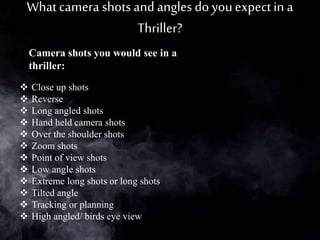
Whatcamera shots and angles do youexpectin a
Thriller?
 Close up shots
 Reverse
 Long angled shots
 Hand held camera shots
 Over the shoulder shots
 Zoom shots
 Point of view shots
 Low angle shots
 Extreme long shots or long shots
 Tilted angle
 Tracking or planning
 High angled/ birds eye view
Camera shots you would see in a
thriller:
What soundsdoyou expectto hearin a
Thriller?
The sounds used in thrillers help create suspense, understanding and meaning for
the audience. Thrillers use both sounds and soundtracks to help the viewer get a
full understanding as to what is happening in the film. The sounds are used to
show the emotions of a character to get a response from the audience, and sound
can also be used to symbolise the protagonist and antagonists movements.
Whatediting techniquesare used in Thrillers?
A lot of jump cuts are considered when it comes to editing the film as there
would be things that the audience are unaware of, happening, so jump cuts are
essential for the film to make sense. Cross cutting is another technique
considered in editing as it can be used to build up suspense. The use of
continued editing is used to help the audience to understand the film better as it
gives it more of a flow.

What is a thriller

  • 1.
  • 2.
    Whatis a Thriller? Athriller is a genre of film that is usually based on crime or espionage. They tend to have a complex narrative structure, and include false paths, clues and resolutions. It gives the viewers heightened feelings of suspense, excitement, surprise, anticipation and anxiety, all built up by the mood they elicit.
  • 3.
    What are themain Thrillersub-genres?  Crime thriller  Action thriller  Conspiracy thriller  Disaster thriller  Eco thriller  Spy thriller  Suspense thriller  Mystery thriller  Supernatural thriller  Drama thriller  Legal thriller  Political thriller  Psychological  Horror thriller  Techno thriller These are:
  • 4.
    What themes doesthe thrillergenre usually present/deal with? Thrillers generally present themes of identity, mistaken identity, doubling and doppelgangers and also amnesia. Thrillers may also present themes such as mirroring, reflection and seeing.
  • 5.
    What is thetypical iconographyof a Thriller? (signs/symbols/props)  Knives- connotes death, pain, blood and brutality  Shadows- helps give a thriller enigma and mystery towards the audience  Confined spaces- helps give the audience a feeling of claustrophobia  Woods- a location used in a lot of thrillers as they are often isolated  Running water- often associated with blood and often means the characters are in danger  Street lamps  Bars on windows and fences- creates the idea of imprisonment and isolation  Cities- generally used in psychological thrillers as it gives the sense of reality for the audience The typical Iconography's of a thriller are:
  • 6.
    Whatis the typicalsetting of a Thriller? A thriller can be characterized by an atmosphere such as sudden violence and menacing tones, which are normally included in crime and murder films. Most of the tension in the movie usually arises once the character (or characters) are in danger, especially a real threat of danger rather than having the knowledge they’ll be safe because they are the protagonist. It adds a level of surprise and seating holding engagement.
  • 7.
    Whatare key elementsofmise-en-scene within thrillers? (lighting,mirrors, colourpalette, etc.) The lighting used in thrillers, is generally low key, to create harsh shadows on characters faces, bodies and props. It also helps to set the scene for thrillers being dark, shadowy and disturbing. Low lighting is usually used in these scenes to emphasise suspense and tension, and as well as creating a troubling atmosphere. Colour is a main convention for mise-en-scene in thrillers, as it shows emotion and thoughts through different colours, for example red can represent anger or blue can represent sadness, immediately creating tension and giving the audience the feeling of being on edge. One of the most important things within a thriller is the costumes, they have to seem life like, because the way a character is presented is how the audience perceive them. where the scene is set or taking place, is based on the location. Places such as dark alleys, woods, haunted houses, derelict buildings, mental wards etc. A minimal amount of colour is usually used in the setting as it can show the reality of normal life and contrast with the villain in the film due to the dramatic and fearful effect
  • 8.
    Whatcamera shots andangles do youexpectin a Thriller?  Close up shots  Reverse  Long angled shots  Hand held camera shots  Over the shoulder shots  Zoom shots  Point of view shots  Low angle shots  Extreme long shots or long shots  Tilted angle  Tracking or planning  High angled/ birds eye view Camera shots you would see in a thriller:
  • 9.
    What soundsdoyou expecttohearin a Thriller? The sounds used in thrillers help create suspense, understanding and meaning for the audience. Thrillers use both sounds and soundtracks to help the viewer get a full understanding as to what is happening in the film. The sounds are used to show the emotions of a character to get a response from the audience, and sound can also be used to symbolise the protagonist and antagonists movements.
  • 10.
    Whatediting techniquesare usedin Thrillers? A lot of jump cuts are considered when it comes to editing the film as there would be things that the audience are unaware of, happening, so jump cuts are essential for the film to make sense. Cross cutting is another technique considered in editing as it can be used to build up suspense. The use of continued editing is used to help the audience to understand the film better as it gives it more of a flow.