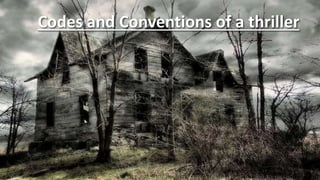
Codes and Conventions of a thriller
What is a Thriller?
A thriller typically is a work of fiction or drama designed to hold
interest through a high degree of intrigue adventure of suspense
Thrillers often promote a mood of
anxiety and anticipation as the
audience are left ‘On the edge of
their seats’The main elements
include the sensation of feeling
excitement and tension, essentially
the audience are waiting to be
thrilled.
There are many sub genres
that are associated with a
Thriller which is dependant
on the type of tone and mood
the director wants to create. A
few examples include: crime,
horror, physiological and
mystery.
Often society is perceived as unsettling, an environment that is dark
and corrupted, it doesn’t follow the expectations of reality and as a
result creates a successful eerie atmosphere for the audience
Characters within a thriller
Characters are used to successfully build tension when
they are shown to be within a threatening situation or an
escalating predicament. Usually lives are at risk and they
are often presented as unable to escape.
Characters within thrillers are often outcasts within society
or have personalities that are deemed unacceptable within
society. For example: Criminals, stalkers, murderers,
escaped convicts, terrorists and individuals that suffer with
psychotic tendencies.
Thrillers mostly take place in ordinary locations
such as: cities. It provides contrast as characters
are often dangerous in locations where we would
normally assume safety. This allows suspense to
be built and is troubling for an audience to watch.
Genres of Thrillers.
Directors often implement a sub genre
along side the initial thriller in order to
gain the audience’s attention and
heighten the experience of tension.
Often there is overlap between these
distinctions when a plot is progressing
but usually it is clear for an audience to
recognise.
Examples Include: Horror thriller,
Physiological thriller, Comedy thriller,
romantic thriller and crime thriller.
Sound and editing
Sound and editing plays a major role in
heightening the atmosphere for the
audience.
For example short quick cuts and rapid
editing create a sense of urgency and
danger. As a result these components
are essential when creating a thriller.
Incidental music and music stings also
contributes to the overall feeling of a
thriller.
Often selection and flashbacks are used in
order to heighten the story of the protagonist,
it is clear as an audience that they are in a
position of vulnerability and therefore we can
feel empathy for the character.
The lighting is also telling within a thriller, the
most common is low key lighting to show an
element of danger and the unknown. However
naturalistic can be used to provide a stark
contrast to the unravelling of events.
Techniques to remember
High angle shot
Rapid Editing
Extreme close up
Continuity editing
Tone

Codes and conventions

  • 1.
    Codes and Conventionsof a thriller
  • 2.
    What is aThriller? A thriller typically is a work of fiction or drama designed to hold interest through a high degree of intrigue adventure of suspense Thrillers often promote a mood of anxiety and anticipation as the audience are left ‘On the edge of their seats’The main elements include the sensation of feeling excitement and tension, essentially the audience are waiting to be thrilled. There are many sub genres that are associated with a Thriller which is dependant on the type of tone and mood the director wants to create. A few examples include: crime, horror, physiological and mystery. Often society is perceived as unsettling, an environment that is dark and corrupted, it doesn’t follow the expectations of reality and as a result creates a successful eerie atmosphere for the audience
  • 3.
    Characters within athriller Characters are used to successfully build tension when they are shown to be within a threatening situation or an escalating predicament. Usually lives are at risk and they are often presented as unable to escape. Characters within thrillers are often outcasts within society or have personalities that are deemed unacceptable within society. For example: Criminals, stalkers, murderers, escaped convicts, terrorists and individuals that suffer with psychotic tendencies. Thrillers mostly take place in ordinary locations such as: cities. It provides contrast as characters are often dangerous in locations where we would normally assume safety. This allows suspense to be built and is troubling for an audience to watch.
  • 4.
    Genres of Thrillers. Directorsoften implement a sub genre along side the initial thriller in order to gain the audience’s attention and heighten the experience of tension. Often there is overlap between these distinctions when a plot is progressing but usually it is clear for an audience to recognise. Examples Include: Horror thriller, Physiological thriller, Comedy thriller, romantic thriller and crime thriller.
  • 5.
    Sound and editing Soundand editing plays a major role in heightening the atmosphere for the audience. For example short quick cuts and rapid editing create a sense of urgency and danger. As a result these components are essential when creating a thriller. Incidental music and music stings also contributes to the overall feeling of a thriller. Often selection and flashbacks are used in order to heighten the story of the protagonist, it is clear as an audience that they are in a position of vulnerability and therefore we can feel empathy for the character. The lighting is also telling within a thriller, the most common is low key lighting to show an element of danger and the unknown. However naturalistic can be used to provide a stark contrast to the unravelling of events.
  • 6.
    Techniques to remember Highangle shot Rapid Editing Extreme close up Continuity editing Tone