In the early years of the Weimar Republic from 1918-1925:
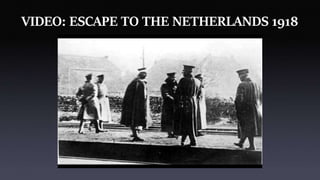
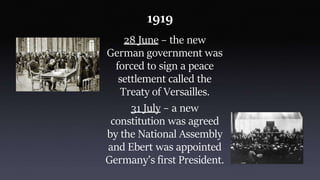
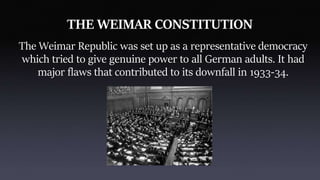
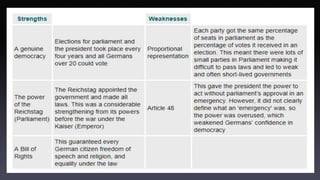
1) Germany transitioned to a democratic republic after World War 1 and the abdication of the Kaiser in 1918.
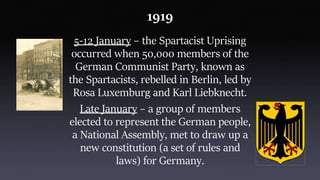
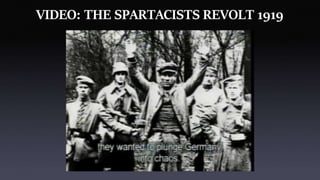
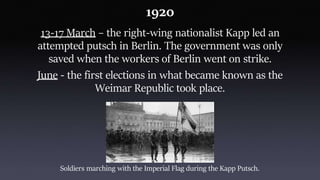
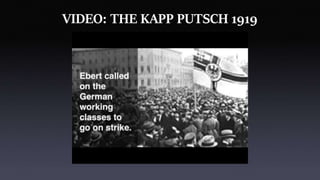
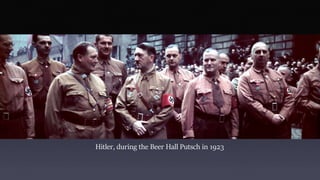
2) The republic struggled with unrest like the Spartacist Uprising of 1919 and Kapp Putsch of 1920.
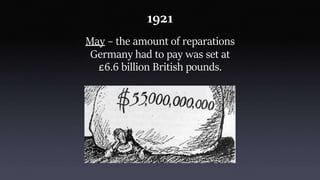
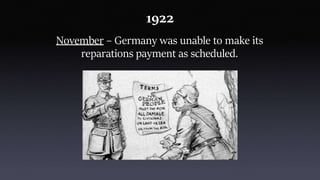
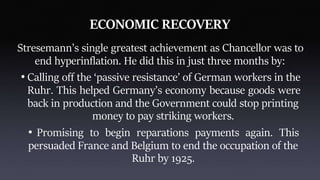
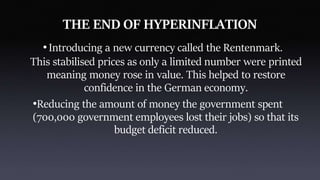
3) Hyperinflation crippled Germany's economy in 1923 until the introduction of the Rentenmark stabilized prices.
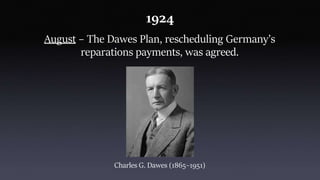
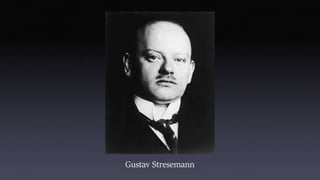
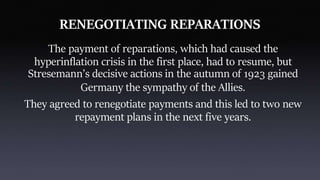
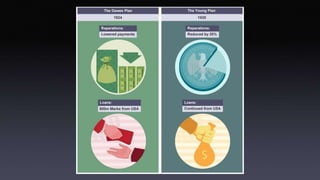
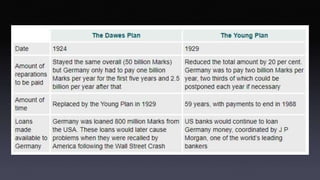
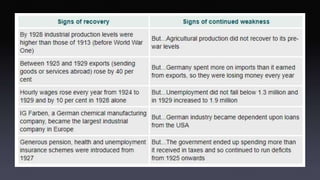
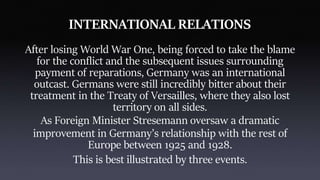
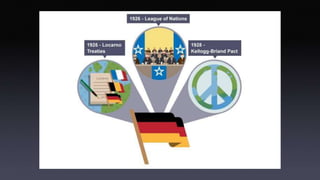
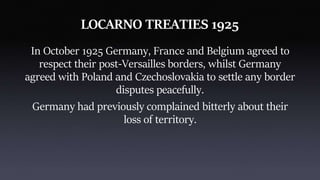
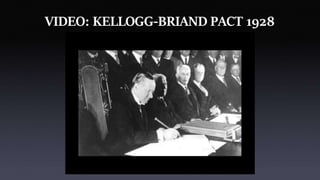
4) Under Stresemann, Germany's international relations and economy improved through agreements like the Dawes Plan and Locarno Treaties.