Introduction to How High-speed Dial-up Works


                    the average file size for Web content is getting larger and larger

                    The handshake protocol, as the name implies, begins the
                    conversation that allows data to be sent to and from your computer
                    using the Internet.

                    High-speed dial-up providers can't do anything about the modem
                    handshake, but they can speed up the software handshake.


2011   12   22
Acceleration Servers


                 you can get the idea of the back-and-forths that need to occur in the
                 handshake protocol before information can be sent or received.

                 high-speed dial-up providers have come up with some pretty clever
                 ways to open up that bottleneck.

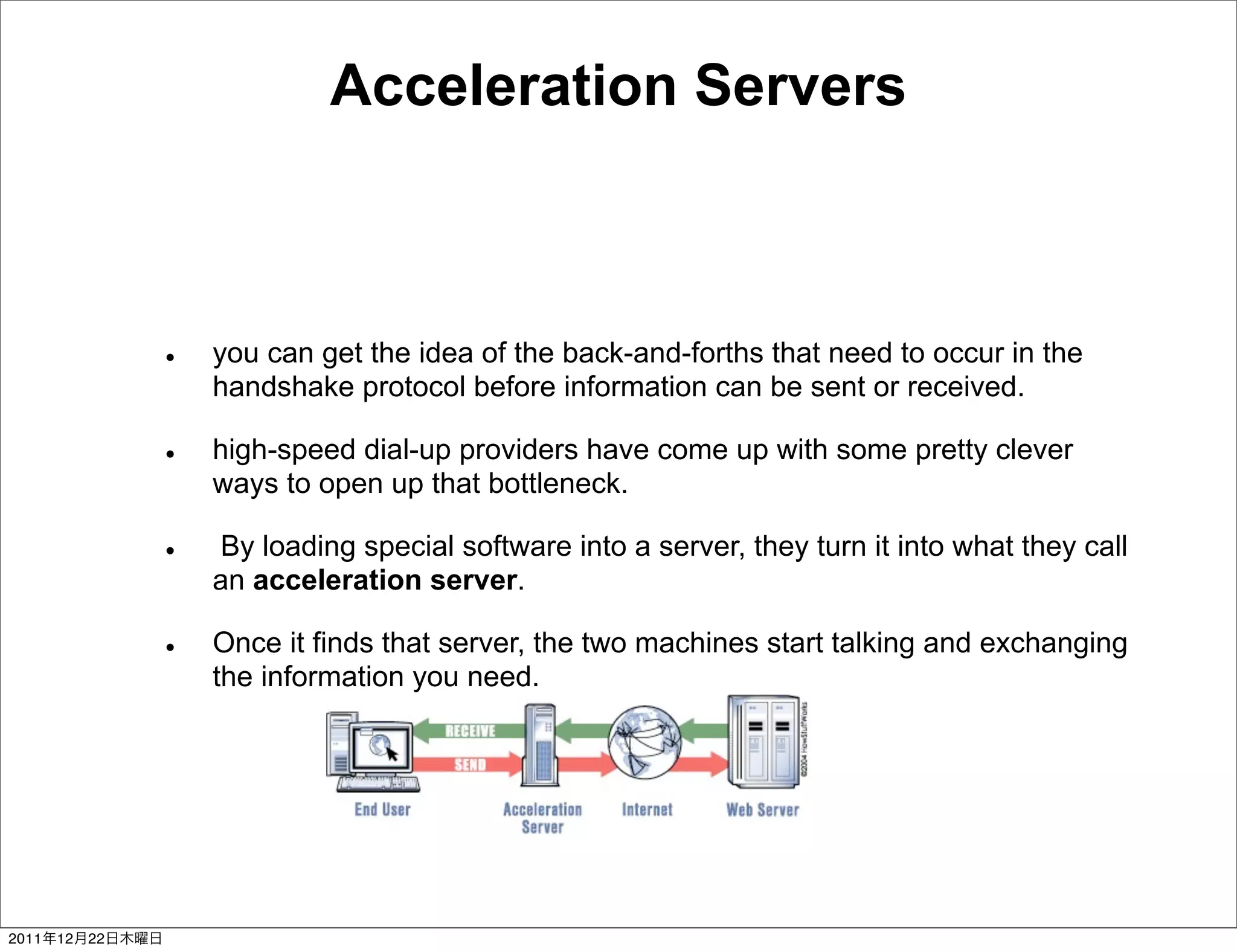
                 By loading special software into a server, they turn it into what they call
                 an acceleration server.

                 Once it finds that server, the two machines start talking and exchanging
                 the information you need.


2011   12   22
File Compression

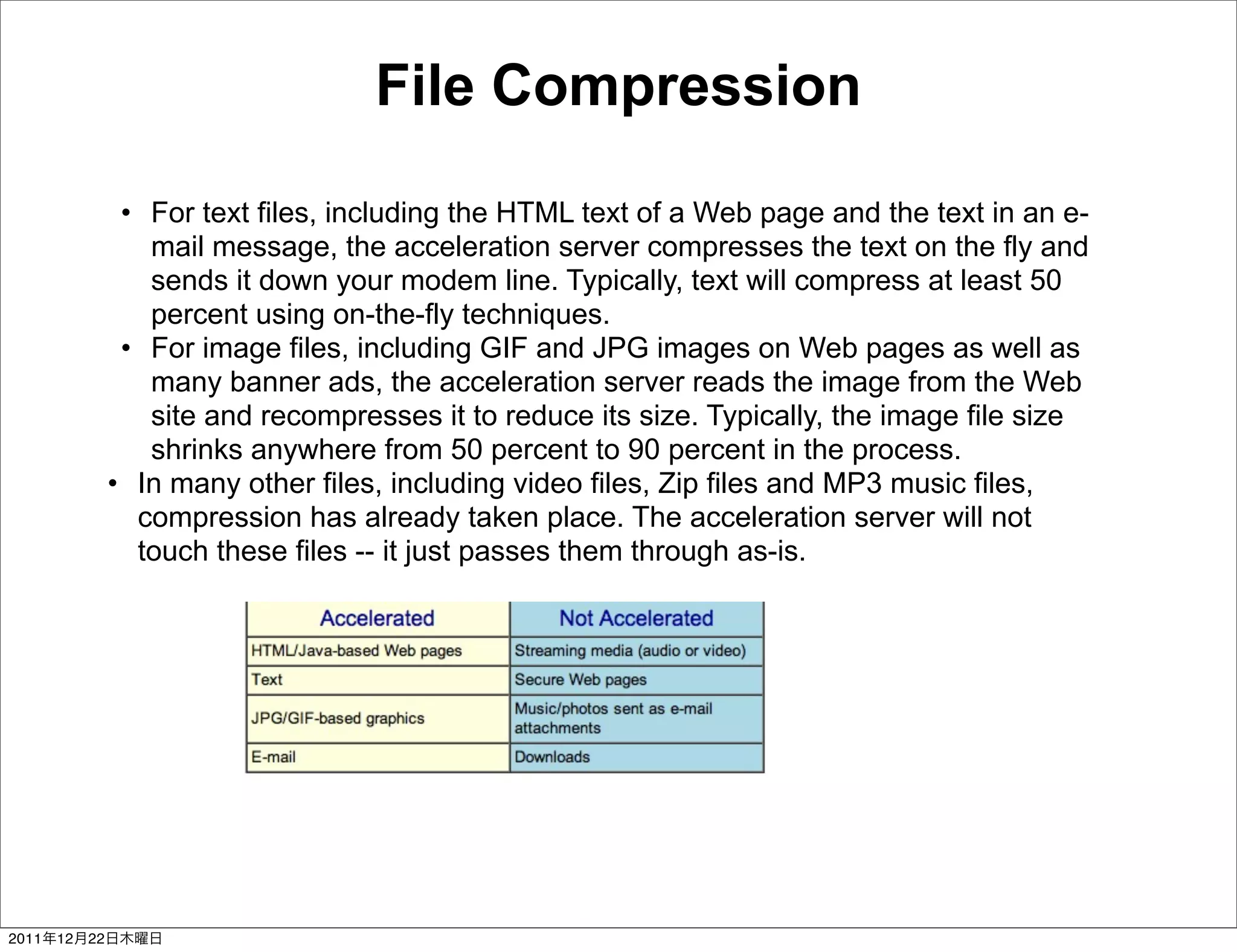
                  • For text files, including the HTML text of a Web page and the text in an e-
                    mail message, the acceleration server compresses the text on the fly and
                    sends it down your modem line. Typically, text will compress at least 50
                    percent using on-the-fly techniques.
                  • For image files, including GIF and JPG images on Web pages as well as
                    many banner ads, the acceleration server reads the image from the Web
                    site and recompresses it to reduce its size. Typically, the image file size
                    shrinks anywhere from 50 percent to 90 percent in the process.
                 • In many other files, including video files, Zip files and MP3 music files,
                   compression has already taken place. The acceleration server will not
                   touch these files -- it just passes them through as-is.


2011   12   22
Filtering and Caching

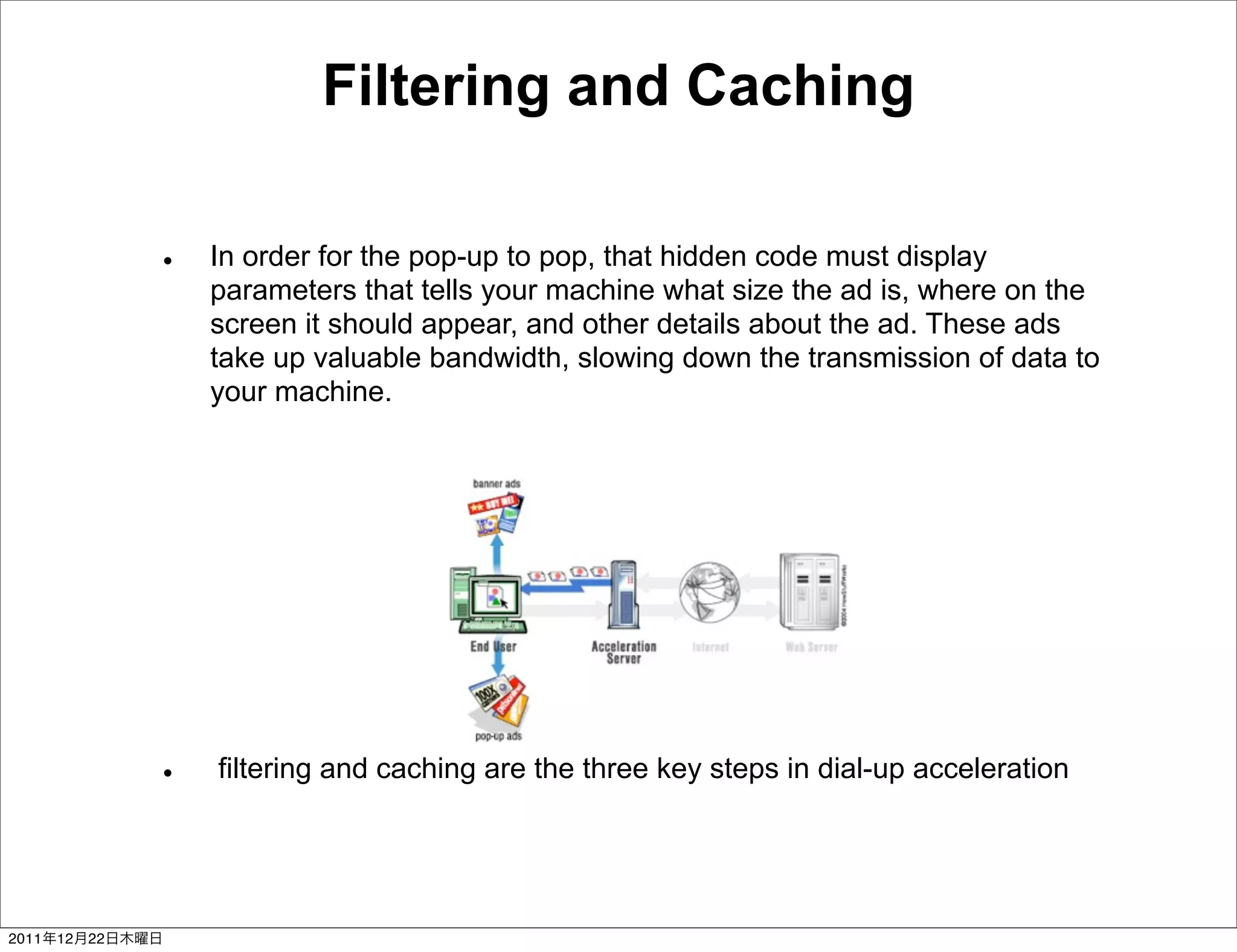
                 In order for the pop-up to pop, that hidden code must display
                 parameters that tells your machine what size the ad is, where on the
                 screen it should appear, and other details about the ad. These ads
                 take up valuable bandwidth, slowing down the transmission of data to
                 your machine.


                 filtering and caching are the three key steps in dial-up acceleration


2011   12   22
The Bottom Line

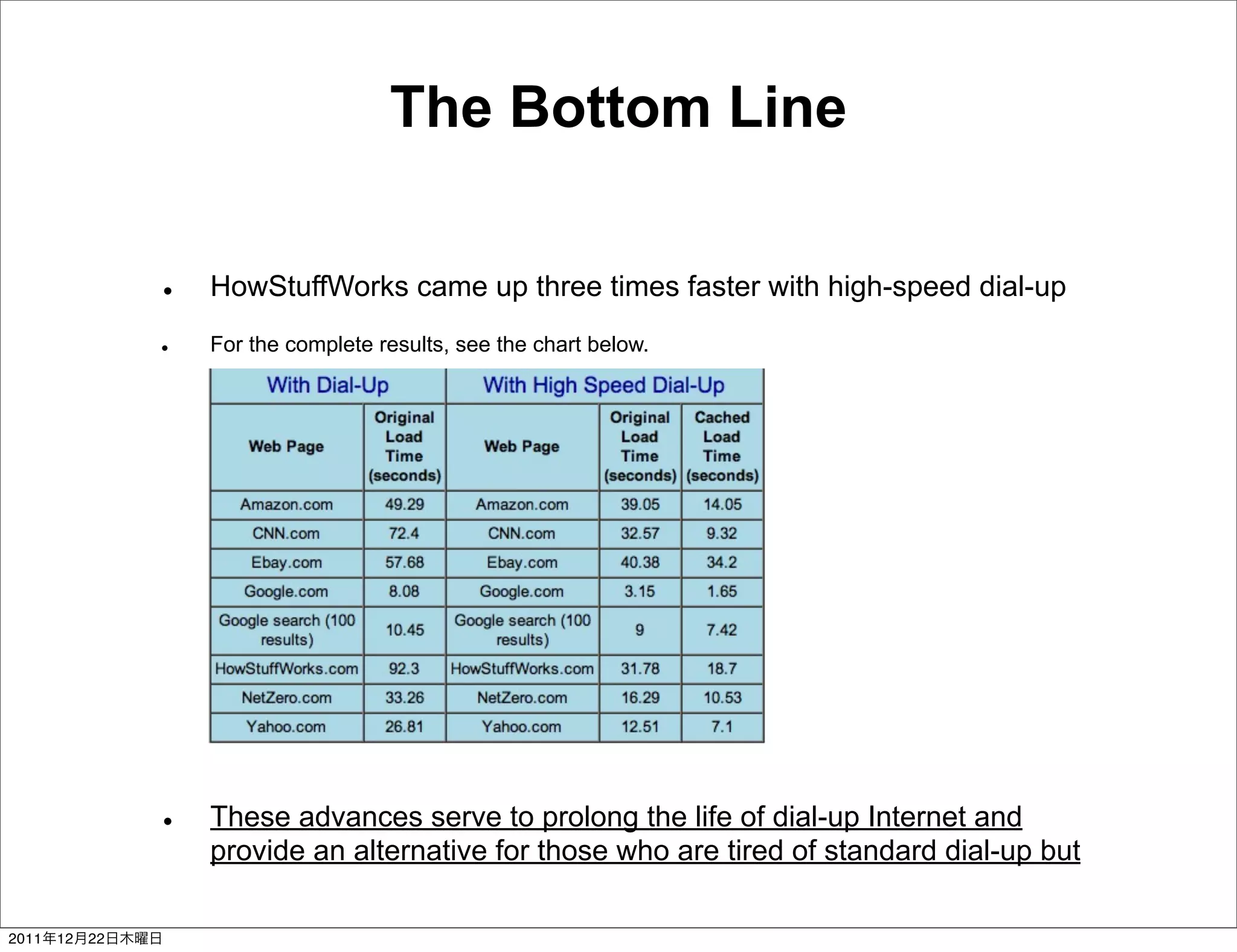
                 HowStuffWorks came up three times faster with high-speed dial-up
                 For the complete results, see the chart below.


                 These advances serve to prolong the life of dial-up Internet and
                 provide an alternative for those who are tired of standard dial-up but

2011   12   22
Conclusion


                 It would seem that a clever combination of fairly straightforward
                 technologies has helped to overcome some of the speed bumps of
                 dial-up Internet.

                 These advances serve to prolong the life of dial-up Internet and
                 provide an alternative for those who are tired of standard dial-up but
                 not quite ready for the leap to broadband.

                 If these advances continue, dial-up may be here to stay for quite a
                 while.


2011   12   22

week10 assignment

  • 1.
    Introduction to HowHigh-speed Dial-up Works the average file size for Web content is getting larger and larger The handshake protocol, as the name implies, begins the conversation that allows data to be sent to and from your computer using the Internet. High-speed dial-up providers can't do anything about the modem handshake, but they can speed up the software handshake. 2011 12 22
  • 2.
    Acceleration Servers you can get the idea of the back-and-forths that need to occur in the handshake protocol before information can be sent or received. high-speed dial-up providers have come up with some pretty clever ways to open up that bottleneck. By loading special software into a server, they turn it into what they call an acceleration server. Once it finds that server, the two machines start talking and exchanging the information you need. 2011 12 22
  • 3.
    File Compression • For text files, including the HTML text of a Web page and the text in an e- mail message, the acceleration server compresses the text on the fly and sends it down your modem line. Typically, text will compress at least 50 percent using on-the-fly techniques. • For image files, including GIF and JPG images on Web pages as well as many banner ads, the acceleration server reads the image from the Web site and recompresses it to reduce its size. Typically, the image file size shrinks anywhere from 50 percent to 90 percent in the process. • In many other files, including video files, Zip files and MP3 music files, compression has already taken place. The acceleration server will not touch these files -- it just passes them through as-is. 2011 12 22
  • 4.
    Filtering and Caching In order for the pop-up to pop, that hidden code must display parameters that tells your machine what size the ad is, where on the screen it should appear, and other details about the ad. These ads take up valuable bandwidth, slowing down the transmission of data to your machine. filtering and caching are the three key steps in dial-up acceleration 2011 12 22
  • 5.
    The Bottom Line HowStuffWorks came up three times faster with high-speed dial-up For the complete results, see the chart below. These advances serve to prolong the life of dial-up Internet and provide an alternative for those who are tired of standard dial-up but 2011 12 22
  • 6.
    Conclusion It would seem that a clever combination of fairly straightforward technologies has helped to overcome some of the speed bumps of dial-up Internet. These advances serve to prolong the life of dial-up Internet and provide an alternative for those who are tired of standard dial-up but not quite ready for the leap to broadband. If these advances continue, dial-up may be here to stay for quite a while. 2011 12 22