…the	
  future	
  is	
  in	
  our	
  hands	
  
0-­‐1	
  degrees:	
  Floods,	
  droughts	
  and	
  more	
  powerful	
  hurricanes.	
  The	
  glaciers	
  are	
  
mel-ng.	
  Arc-c	
  ice	
  shrinks.	


1-­‐2	
  degrees:	
  Reduced	
  food	
  produc>on,	
  drier,	
  	
  large	
  forest	
  fires,	
  water	
  shortage.	


2-­‐3	
  degrees:	
  Millions	
  of	
  refugees.	
  Efficient	
  agriculture	
  difficult.	
  Heat	
  and	
  drought	
  
spreads.	
  The	
  Amazon	
  and	
  Congo	
  forest	
  in	
  danger,	
  great	
  rivers	
  dry	
  out,	
  Greenland	
  
and	
  Antarc-c	
  ice	
  melts.	


3-­‐4	
  degrees:	
  Rising	
  sea	
  level	
  by	
  25	
  meters.	
  Major	
  ci>es	
  flooded.	
  The	
  desert	
  is	
  
spreading	
  in	
  Southern	
  Europe.	
  Africa,	
  Asia,	
  Australia,	
  Middle	
  East	
  and	
  the	
  southern	
  
US	
  is	
  par-ally	
  uninhabitable	
  due	
  to	
  high	
  temperatures.	
  Permafrost	
  mel-ng.	


4-­‐6	
  degrees:	
  Our	
  civiliza>on	
  has	
  been	
  destroyed	
  due	
  to	
  water	
  shortages,	
  food	
  
shortages,	
  diseases	
  and	
  natural	
  disasters.	
  Homo	
  Sapiens	
  are	
  s-ll	
  exis-ng	
  as	
  a	
  
species.	
  
Today	


The	
  goal	
  for	
  2020	


Not	
  wanted	


Expected	


Feared	
  
Clima>c	
  facts	
  
There	
  is	
  no	
  solu>on	
  
to	
  climate	
  change	
  
without	
  responsible	
  
commercial	
  forestry	


80	
  years	
  
6	
  years	
  
Oil	
  is	
  out	
  
All	
  that	
  can	
  be	
  made	
  of	
  oil,	
  can	
  be	
  made	
  
of	
  Bamboo	
  
Bioeconomy	
  
•  A	
  smart	
  way	
  of	
  using	
  bamboo	
  sustainably	
  by	
  produc>on	
  of	
  
renewable	
  biological	
  resources	
  and	
  their	
  conversion	
  into	
  food,	
  
feed,	
  bio-­‐based	
  products	
  and	
  bioenergy	
  
•  The	
  Kenya	
  Bamboo	
  Bioeconomy	
  Vision:	
  
•  Keep	
  Kenya	
  compe++ve,	
  innova+ve	
  and	
  prosperous	
  by	
  providing	
  	
  
sustainable	
  economic	
  growth	
  and	
  jobs,	
  mee+ng	
  the	
  needs	
  of	
  a	
  
growing	
  popula+on	
  whilst	
  protec+ng	
  our	
  environment	
  and	
  
resources.	
  
•  This	
  means	
  an	
  economy	
  not	
  only	
  based	
  on	
  fossil	
  fuel	
  resources.	
  
•  Bamboo	
  is	
  an	
  renewable	
  opportunity:	
  The	
  Bioeconomy	
  is	
  an	
  
important	
  part	
  of	
  using	
  resources	
  in	
  an	
  efficient	
  and	
  sustainable	
  
way.	
  
•  Bamboo	
  can	
  replace	
  wood,	
  plas-cs,	
  chemicals	
  and	
  steel	
  in	
  
consumer	
  products	
  
Bioeconomy	
  
•  Polyester	
  
•  Fossil	
  based	
  energy	
  
•  Plas-c	
  
•  Oil	
  based	
  fer-lizer	
  
•  Oilpaint	
  
•  Trash	
  bags	
  
•  Chemicals	
  
•  Million	
  diff.	
  uses/	
  not	
  
renewable	
  
•  Black	
  carbon	
  
•  Viscose	
  (Fiber)	
  
•  Renewable	
  energy	
  
•  Bioplas-c	
  (Coca	
  cola)	
  
•  Biochar,	
  fer-lizer	
  
•  Biopaint	
  
•  Plant	
  bags	
  
•  Organic	
  chemicals	
  
•  Organic	
  silicium	
  
•  Diff.	
  kind	
  of	
  pulp	
  
•  Million	
  diff.	
  uses/renewable	
  
•  Green	
  carbon	
  
From	
  oil	
  to	
  bamboo	
  
Bamboo	
  is	
  the	
  innova>ve	
  approach	
  -­‐	
  
CoUon	
  is	
  cul>va>ng	
  poverty	
  
•  One	
  T-­‐shirt	
  of	
  coUon	
  on	
  /	
  6m2	
  
•  	
  CoUon	
  needs	
  20	
  -me	
  more	
  water	
  
•  11%	
  of	
  world’s	
  pes-cides	
  /	
  3%	
  of	
  area	
  
•  25%	
  of	
  world’s	
  insec-cides	
  
•  More	
  comfortable	
  than	
  polyester	
  
•  Six	
  T-­‐shirts	
  made	
  of	
  
viscose	
  
•  Bamboo	
  needs	
  less	
  water	
  
•  No	
  pes-cides	
  
•  No	
  insec-cides	
  
•  Viscose,	
  almost	
  like	
  silk	
  
Cellulose	
  fibers:	
  a	
  global	
  growth	
  market	
  
•  Viscose	
  is	
  a	
  fast	
  growing	
  segment	
  in	
  the	
  world	
  of	
  tex-le	
  fibers.	
  
•  Pulp	
  for	
  tex-le	
  gives	
  higher	
  price	
  
•  Drivers:	
  Popula-on	
  growth	
  and	
  rising	
  prosperity	
  in	
  the	
  emerging	
  markets	
  
•  CoUon	
  is	
  land-­‐,	
  water-­‐	
  and	
  pes-cide	
  demanding.	
  Stagnant	
  produc-on.	
  
Parquet	
  Butcher	
  block	
  
Tradi>onal	
  VGC	
  with	
  strand	
  woven	
  core	
  
Strand	
  woven	
  with	
  VGC	
  core	
  
Interiors	
  is	
  a	
  game	
  change:	
  Big	
  volume	
  demand	
  	
  
WORKTOPS	
  /	
  COUNTERTOPS	
  /	
  BENCHTOPS	
  
Vision	
  2030	
  versus	
  Bamboo	
  2030	
  
Vision	
  2030:	
  7	
  billion	
  trees/bamboo	
  planted	
  =	
  466	
  m.	
  annually	
  
5%	
  Bamboo	
  =	
  24	
  mill.	
  planted	
  yearly	
  =	
  40	
  000	
  ha	
  
Bamboo	
  2030:	
  360	
  mill.	
  planted	
  =	
  600	
  000	
  ha	
  
Bamboo	
  2030:	
  360	
  mill.	
  x	
  5	
  =	
  1.8	
  bill	
  stems	
  	
  @	
  ¼	
  on	
  target	
  
Make	
  it	
  10%	
  bamboo:	
  720	
  mil.	
  x	
  5	
  =	
  3.6	
  bill	
  stems	
  @	
  50%	
  off	
  
target	
  
Biomass	
  produc-on:	
  Eucalyptus	
  =	
  20-­‐30	
  ton	
  pr	
  ha,	
  	
  Bamboo	
  =	
  
30-­‐90	
  ton	
  pr	
  ha	
  
Vision	
  2030	
  versus	
  Bamboo	
  2030	
  
10%	
  bamboo:	
  720	
  mil.	
  x	
  5	
  =	
  3.6	
  b.	
  stems	
  @	
  50%	
  off	
  target	
  
1.2	
  mill.	
  ha	
  of	
  land	
  =	
  2.1%	
  of	
  Kenya	
  	
  
Jobs	
  (small	
  scale	
  outgrowers):	
  Caretaking,	
  harves-ng,	
  transport,	
  
processing,	
  sales	
  etc	
  	
  =	
  3	
  mill.	
  employed	
  
Income:	
  1.5	
  $	
  pr	
  pole	
  =	
  3.6	
  b.	
  stems	
  x	
  1.5	
  $	
  =	
  5.4	
  b.$,	
  500	
  b.	
  ksh	
  
	
  150	
  $	
  pr	
  ton	
  of	
  biomass.	
  30	
  ton	
  pr	
  ha	
  X	
  1.2.m.	
  ha	
  =	
  5.4	
  b.	
  $	
  
Processing	
  of	
  biomass	
  within	
  the	
  Bioeconomy	
  =	
  value	
  added	
  
Environmental	
  Impact	
  not	
  calculated:	
  PES,	
  more	
  efficient	
  agriculture	
  
(+20%),	
  no	
  soilerosion,	
  CO2	
  mi>ga>on…….etc	
  	
  
1.  Supply	
  of	
  bamboo	
  
2.  No	
  supply,	
  no	
  investment,	
  no	
  
industrializa-on	


3.  Implemen-ng	
  large	
  scale	
  bamboo	
  
propaga-on,	
  nursing	
  and	
  farming	


4.  Capital	
  investments	
  at	
  all	
  levels	
  of	
  the	
  
bamboo	
  industry	
  
5.  Available	
  land	
  area,	
  knowledge	
  of	
  farming,	
  
processing	
  	
  
6.  Pre	
  condi-on	
  for	
  start	
  up	
  of	
  a	
  new	
  industry:	
  
Government	
  interven-on	
  and	
  investment	


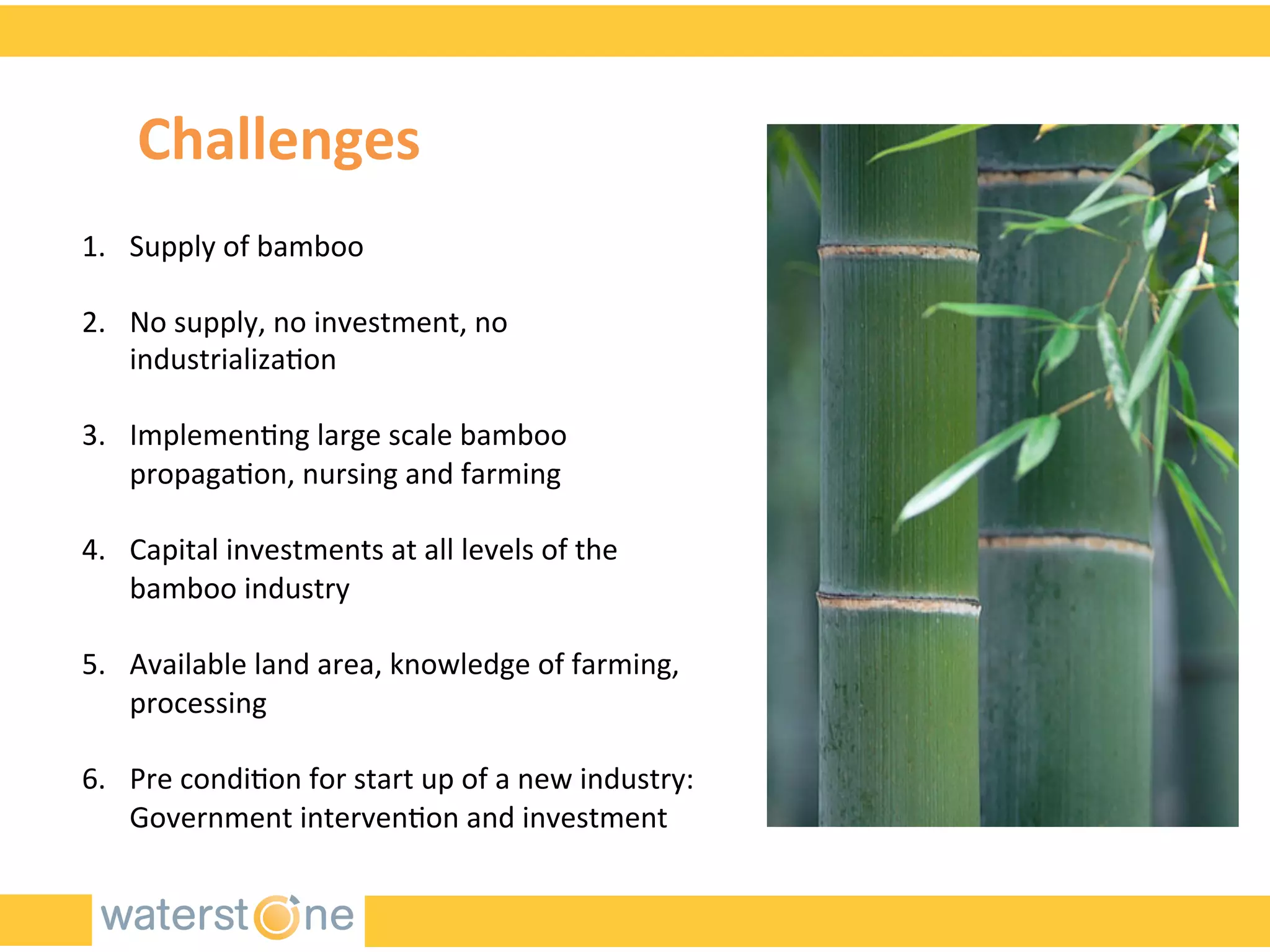
Challenges	
  	
  
Waterstone:	
  
Consultancy,	
  advice,	
  
project	
  management,	
  
planning	
  for	
  
industrial	
  
development	
  
COOP,	
  Out-­‐
growers.	
  
Investments	
  in	
  
Seedlings/
land/care	
  
County/
Government	
  
Waterstone	
  Bamboo	
  businesses	
  Commercial	
  markeds	
  
Local,	
  
district	
  
Na-onal	
  &	
  
East	
  Africa	
  
East	
  Africa	
  
&	
  beyond	
  
Planta>ons	
  &	
  
a-­‐	
  /	
  
reforesta>on	
  
projects	


  Industrial	
  	
  
Development,	
  
Merchandise,	
  Energy	


Ownership:	
  Governm.,	
  
private	
  investors	
  
Income	
  
Bamboo	
  poles	
  
Waterstone’s	
  pilot	
  planta>on	
  
In	
  coopera>on	
  with	
  GBM’s	
  women	
  groups	


Bamboo	
  in	
  February	
  2013	
   Bamboo	
  in	
  September	
  2014	
  
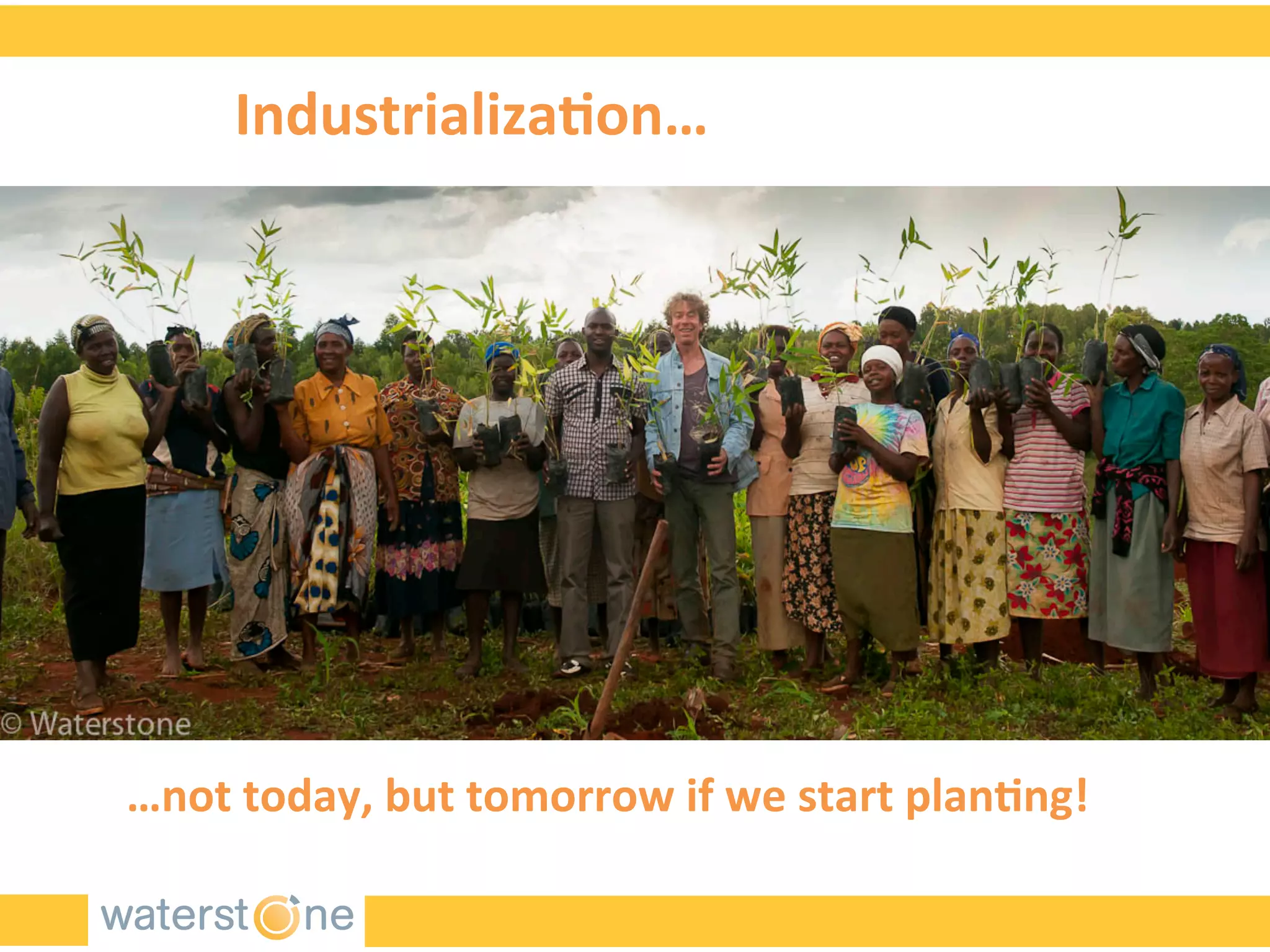
Industrializa>on…	
  
…not	
  today,	
  but	
  tomorrow	
  if	
  we	
  start	
  plan>ng!	
  
Thank	
  you	
  

Waterstone inbar 2015

  • 1.
    …the  future  is  in  our  hands  
  • 2.
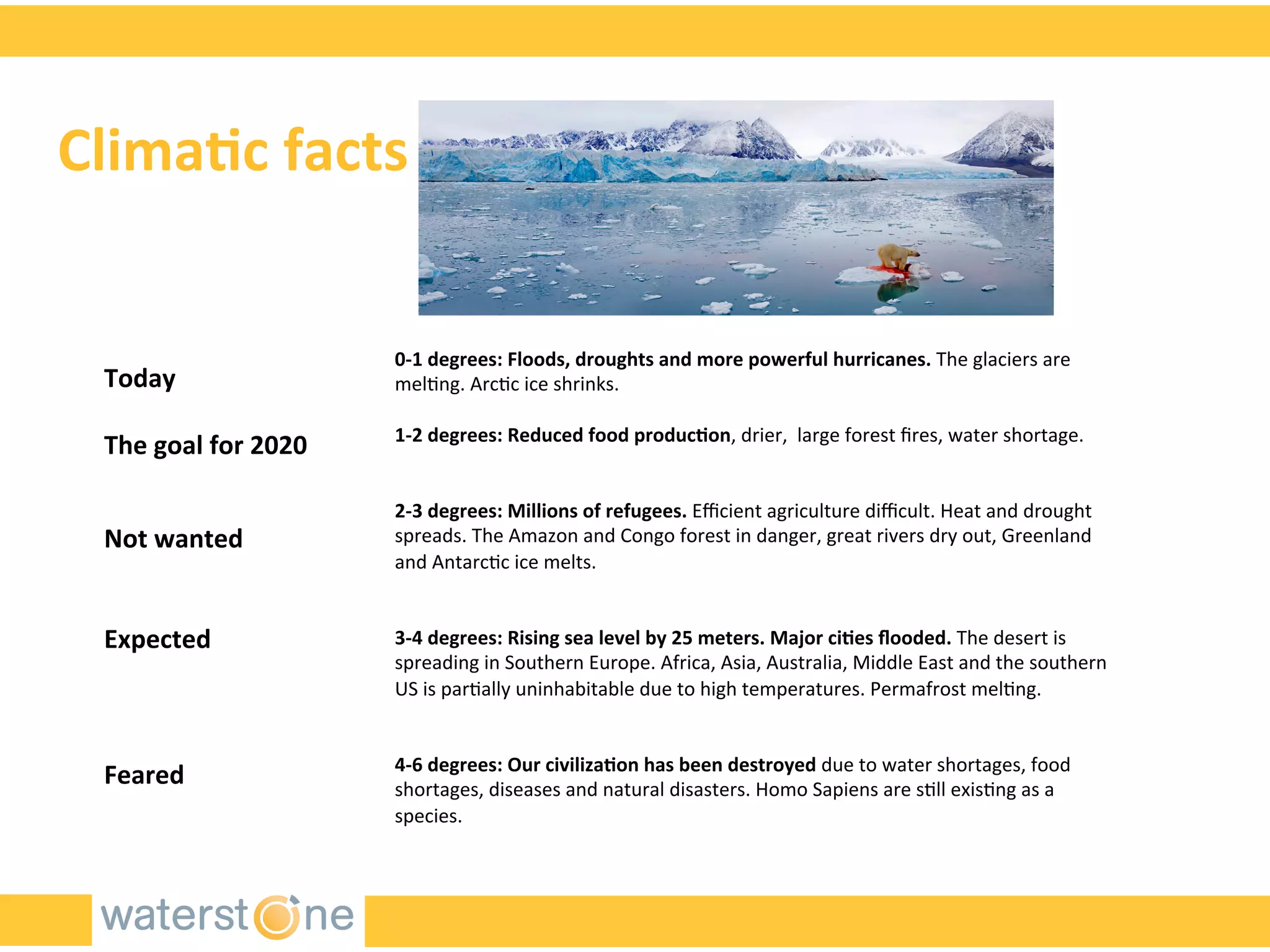
    0-­‐1  degrees:  Floods,  droughts  and  more  powerful  hurricanes.  The  glaciers  are   mel-ng.  Arc-c  ice  shrinks.       1-­‐2  degrees:  Reduced  food  produc>on,  drier,    large  forest  fires,  water  shortage.       2-­‐3  degrees:  Millions  of  refugees.  Efficient  agriculture  difficult.  Heat  and  drought   spreads.  The  Amazon  and  Congo  forest  in  danger,  great  rivers  dry  out,  Greenland   and  Antarc-c  ice  melts.       3-­‐4  degrees:  Rising  sea  level  by  25  meters.  Major  ci>es  flooded.  The  desert  is   spreading  in  Southern  Europe.  Africa,  Asia,  Australia,  Middle  East  and  the  southern   US  is  par-ally  uninhabitable  due  to  high  temperatures.  Permafrost  mel-ng.         4-­‐6  degrees:  Our  civiliza>on  has  been  destroyed  due  to  water  shortages,  food   shortages,  diseases  and  natural  disasters.  Homo  Sapiens  are  s-ll  exis-ng  as  a   species.   Today     The  goal  for  2020       Not  wanted       Expected         Feared   Clima>c  facts  
  • 3.
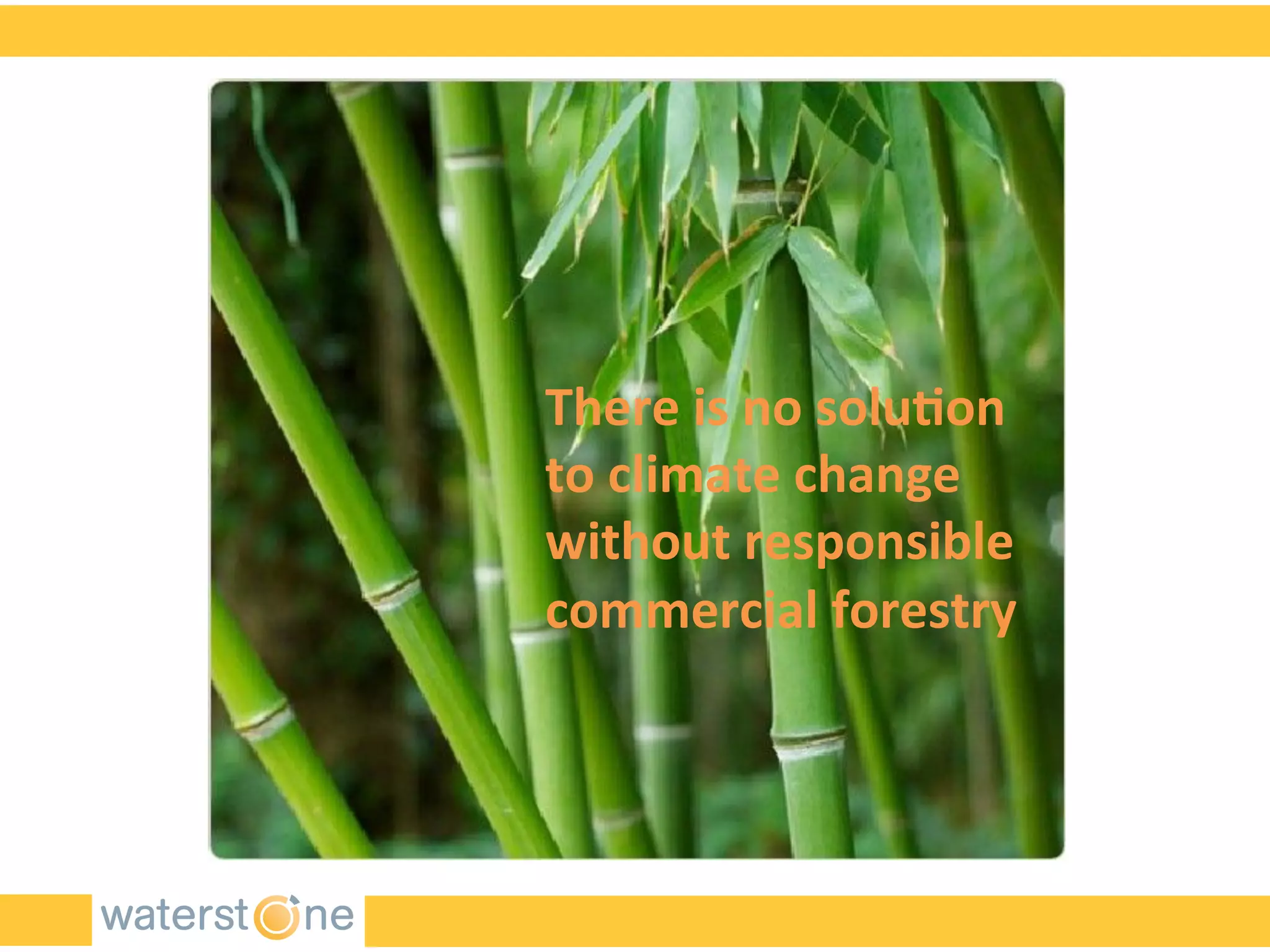
    There  is  no  solu>on   to  climate  change   without  responsible   commercial  forestry    
  • 4.
  • 5.
  • 6.
  • 7.
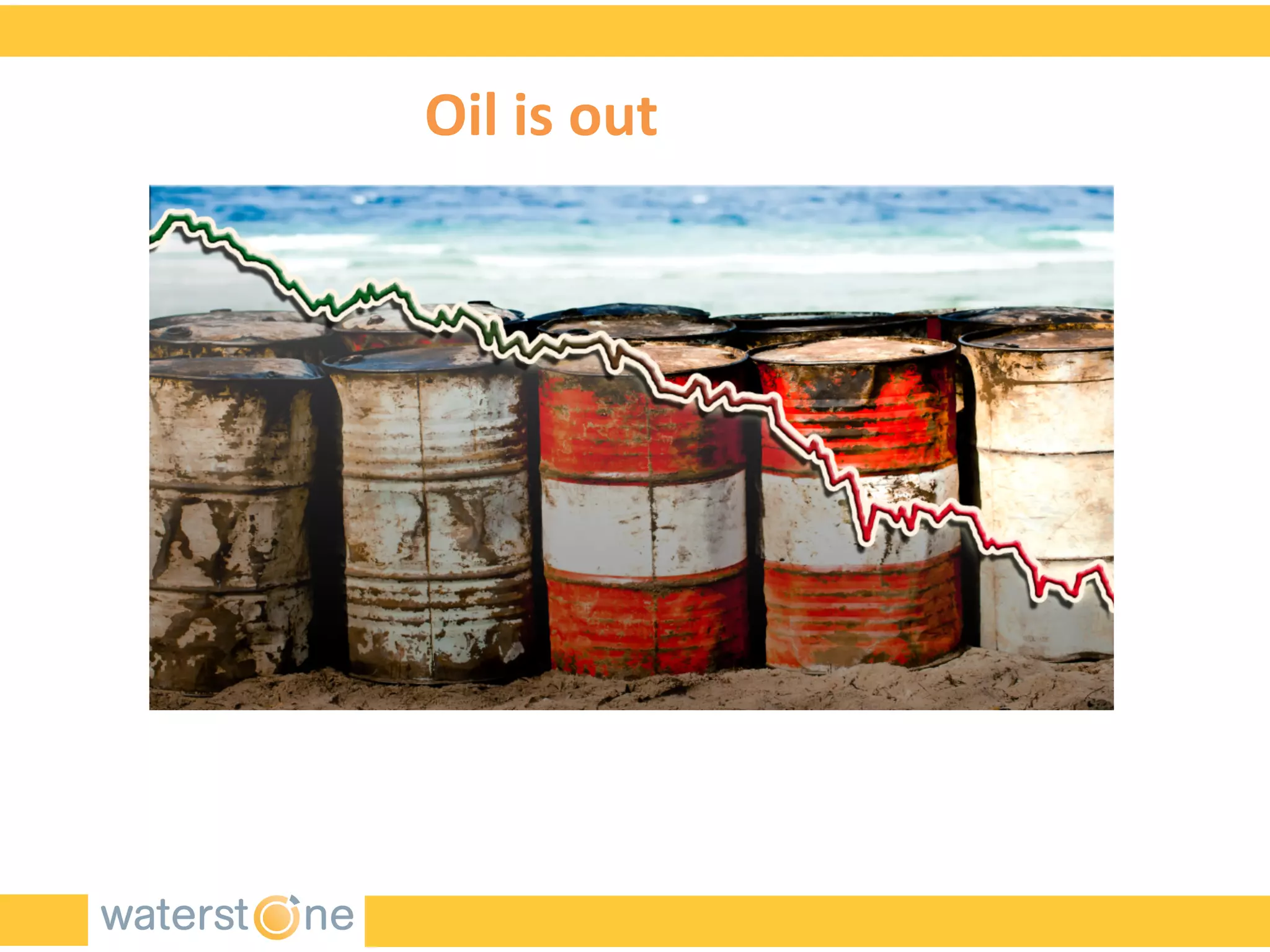
    All  that  can  be  made  of  oil,  can  be  made   of  Bamboo  
  • 8.
    Bioeconomy   •  A  smart  way  of  using  bamboo  sustainably  by  produc>on  of   renewable  biological  resources  and  their  conversion  into  food,   feed,  bio-­‐based  products  and  bioenergy   •  The  Kenya  Bamboo  Bioeconomy  Vision:   •  Keep  Kenya  compe++ve,  innova+ve  and  prosperous  by  providing     sustainable  economic  growth  and  jobs,  mee+ng  the  needs  of  a   growing  popula+on  whilst  protec+ng  our  environment  and   resources.   •  This  means  an  economy  not  only  based  on  fossil  fuel  resources.   •  Bamboo  is  an  renewable  opportunity:  The  Bioeconomy  is  an   important  part  of  using  resources  in  an  efficient  and  sustainable   way.   •  Bamboo  can  replace  wood,  plas-cs,  chemicals  and  steel  in   consumer  products  
  • 9.
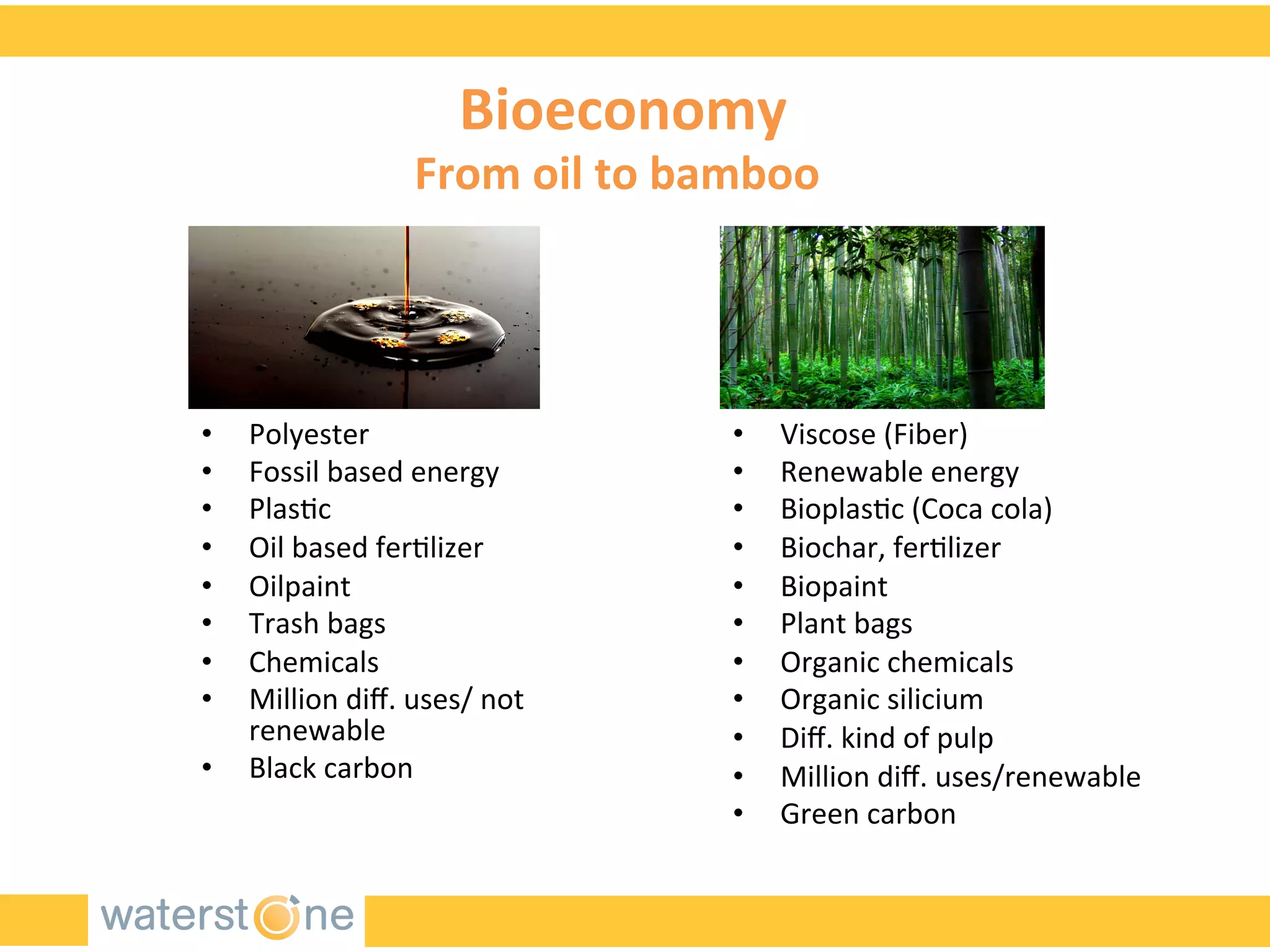
    Bioeconomy   •  Polyester   •  Fossil  based  energy   •  Plas-c   •  Oil  based  fer-lizer   •  Oilpaint   •  Trash  bags   •  Chemicals   •  Million  diff.  uses/  not   renewable   •  Black  carbon   •  Viscose  (Fiber)   •  Renewable  energy   •  Bioplas-c  (Coca  cola)   •  Biochar,  fer-lizer   •  Biopaint   •  Plant  bags   •  Organic  chemicals   •  Organic  silicium   •  Diff.  kind  of  pulp   •  Million  diff.  uses/renewable   •  Green  carbon   From  oil  to  bamboo  
  • 10.
    Bamboo  is  the  innova>ve  approach  -­‐   CoUon  is  cul>va>ng  poverty   •  One  T-­‐shirt  of  coUon  on  /  6m2   •   CoUon  needs  20  -me  more  water   •  11%  of  world’s  pes-cides  /  3%  of  area   •  25%  of  world’s  insec-cides   •  More  comfortable  than  polyester   •  Six  T-­‐shirts  made  of   viscose   •  Bamboo  needs  less  water   •  No  pes-cides   •  No  insec-cides   •  Viscose,  almost  like  silk  
  • 11.
    Cellulose  fibers:  a  global  growth  market   •  Viscose  is  a  fast  growing  segment  in  the  world  of  tex-le  fibers.   •  Pulp  for  tex-le  gives  higher  price   •  Drivers:  Popula-on  growth  and  rising  prosperity  in  the  emerging  markets   •  CoUon  is  land-­‐,  water-­‐  and  pes-cide  demanding.  Stagnant  produc-on.  
  • 12.
    Parquet  Butcher  block   Tradi>onal  VGC  with  strand  woven  core   Strand  woven  with  VGC  core   Interiors  is  a  game  change:  Big  volume  demand     WORKTOPS  /  COUNTERTOPS  /  BENCHTOPS  
  • 13.
    Vision  2030  versus  Bamboo  2030   Vision  2030:  7  billion  trees/bamboo  planted  =  466  m.  annually   5%  Bamboo  =  24  mill.  planted  yearly  =  40  000  ha   Bamboo  2030:  360  mill.  planted  =  600  000  ha   Bamboo  2030:  360  mill.  x  5  =  1.8  bill  stems    @  ¼  on  target   Make  it  10%  bamboo:  720  mil.  x  5  =  3.6  bill  stems  @  50%  off   target   Biomass  produc-on:  Eucalyptus  =  20-­‐30  ton  pr  ha,    Bamboo  =   30-­‐90  ton  pr  ha  
  • 14.
    Vision  2030  versus  Bamboo  2030   10%  bamboo:  720  mil.  x  5  =  3.6  b.  stems  @  50%  off  target   1.2  mill.  ha  of  land  =  2.1%  of  Kenya     Jobs  (small  scale  outgrowers):  Caretaking,  harves-ng,  transport,   processing,  sales  etc    =  3  mill.  employed   Income:  1.5  $  pr  pole  =  3.6  b.  stems  x  1.5  $  =  5.4  b.$,  500  b.  ksh    150  $  pr  ton  of  biomass.  30  ton  pr  ha  X  1.2.m.  ha  =  5.4  b.  $   Processing  of  biomass  within  the  Bioeconomy  =  value  added   Environmental  Impact  not  calculated:  PES,  more  efficient  agriculture   (+20%),  no  soilerosion,  CO2  mi>ga>on…….etc    
  • 15.
    1.  Supply  of  bamboo   2.  No  supply,  no  investment,  no   industrializa-on     3.  Implemen-ng  large  scale  bamboo   propaga-on,  nursing  and  farming     4.  Capital  investments  at  all  levels  of  the   bamboo  industry   5.  Available  land  area,  knowledge  of  farming,   processing     6.  Pre  condi-on  for  start  up  of  a  new  industry:   Government  interven-on  and  investment     Challenges    
  • 16.
    Waterstone:   Consultancy,  advice,   project  management,   planning  for   industrial   development   COOP,  Out-­‐ growers.   Investments  in   Seedlings/ land/care   County/ Government   Waterstone  Bamboo  businesses  Commercial  markeds   Local,   district   Na-onal  &   East  Africa   East  Africa   &  beyond   Planta>ons  &   a-­‐  /   reforesta>on   projects        Industrial     Development,   Merchandise,  Energy     Ownership:  Governm.,   private  investors   Income   Bamboo  poles  
  • 17.
    Waterstone’s  pilot  planta>on   In  coopera>on  with  GBM’s  women  groups                                     Bamboo  in  February  2013   Bamboo  in  September  2014  
  • 18.
    Industrializa>on…   …not  today,  but  tomorrow  if  we  start  plan>ng!  
  • 19.