Warm Understanding
Dan Klyn
understandinggroup.com
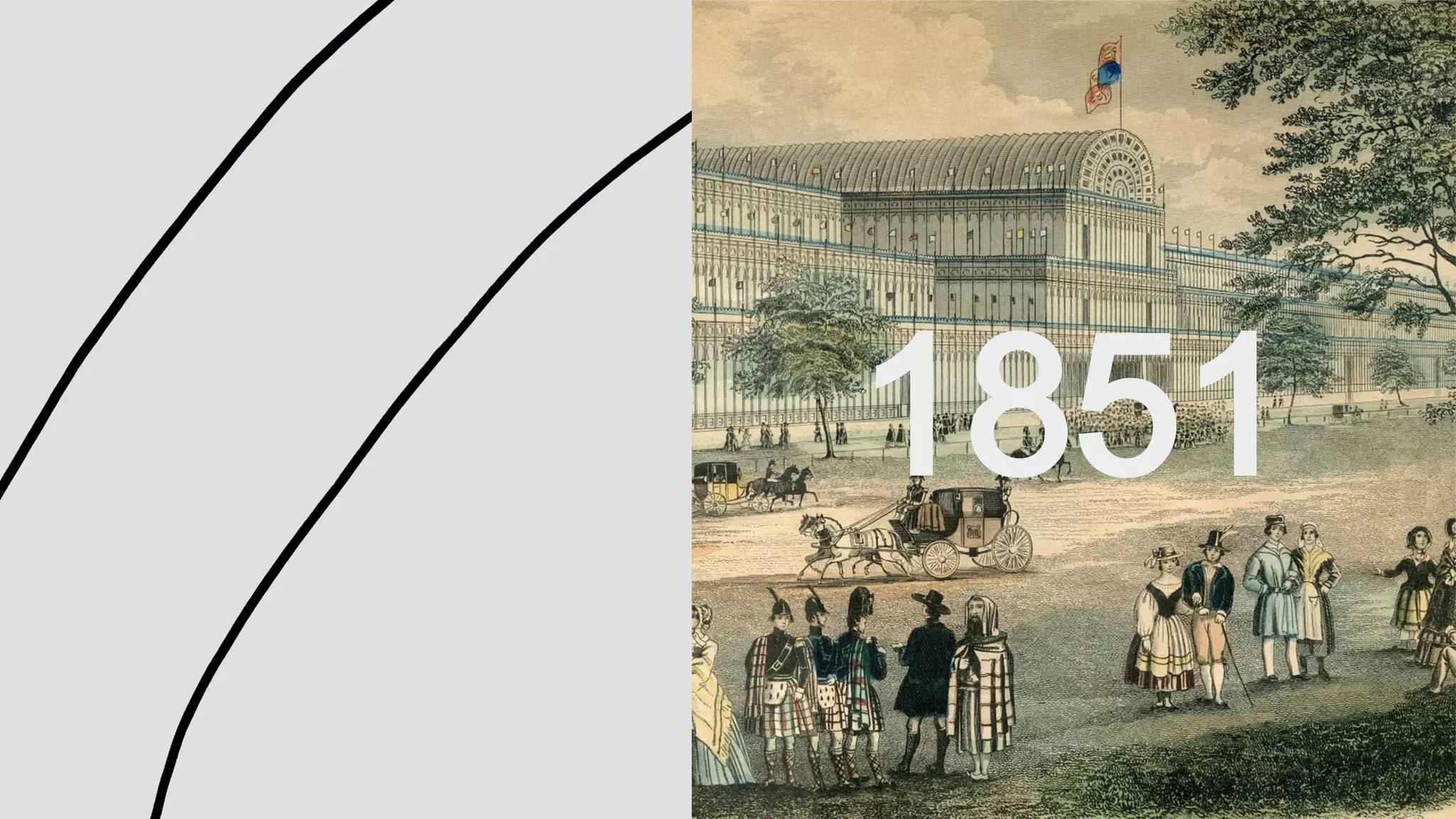
1851
8
9
With The
Crystal Palace of 1851
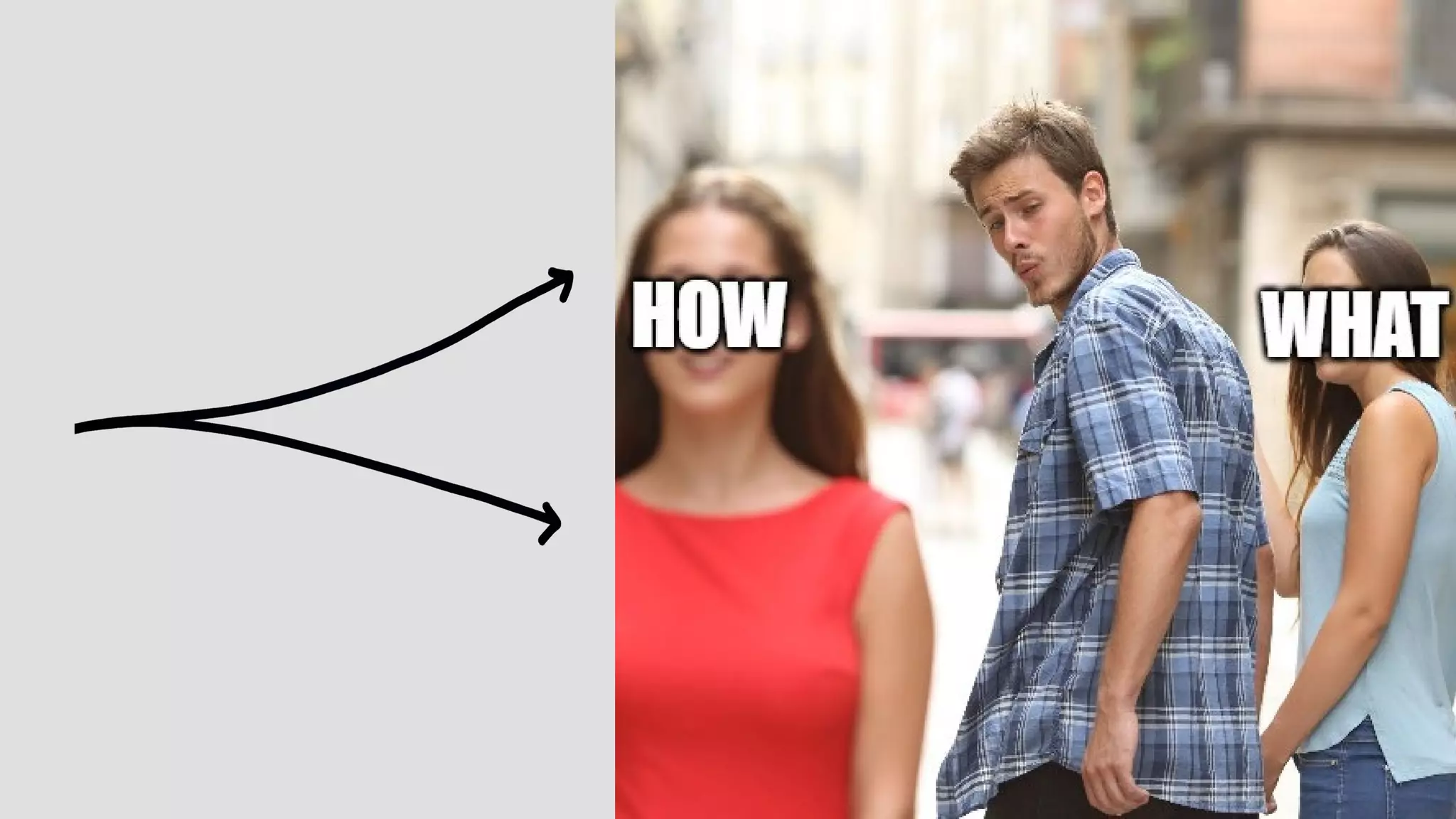
the question of “how”
began at a public level
to take precedence over
the issue of “what”
— Kenneth Frampton (1973)
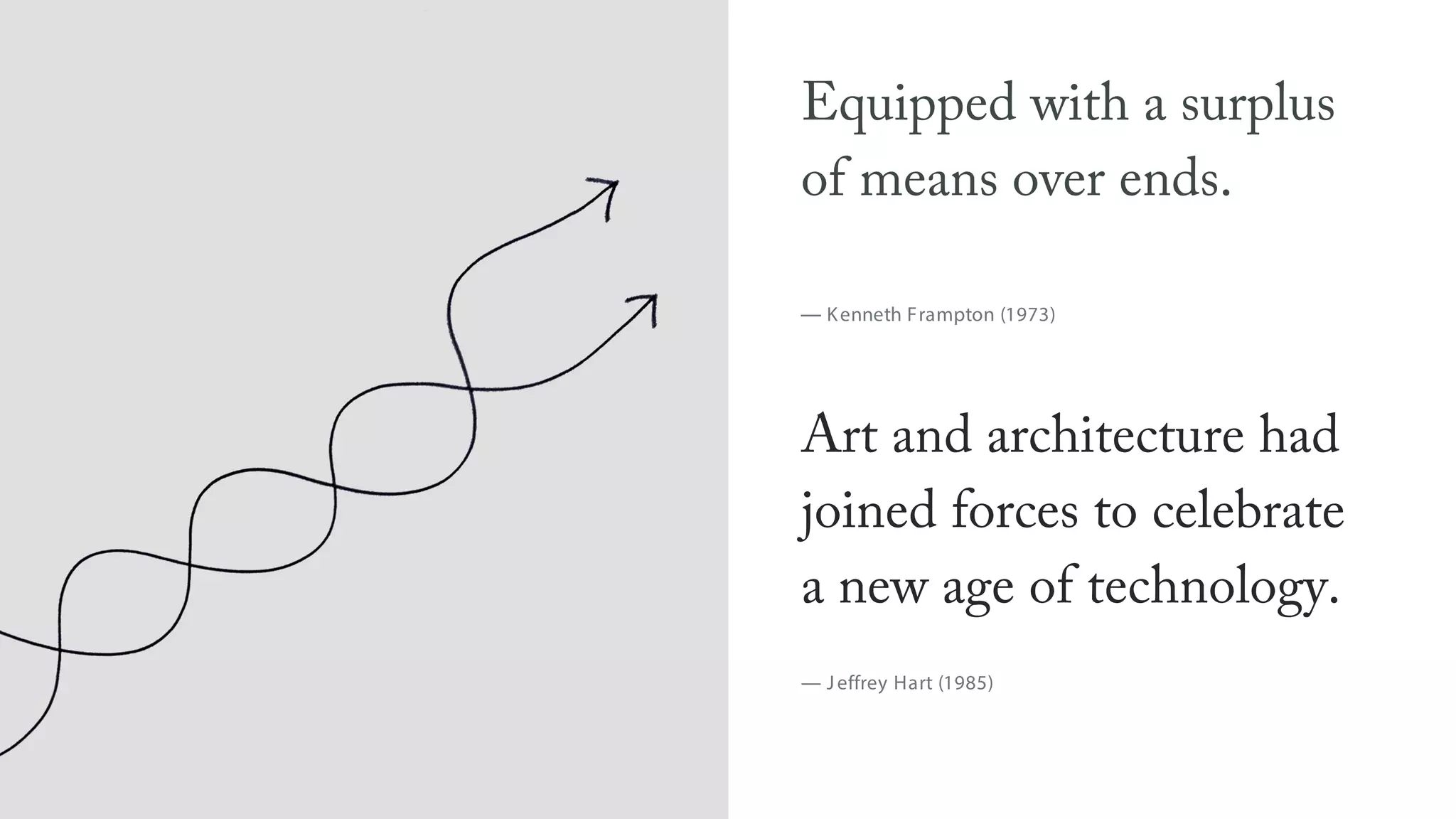
Equipped with a surplus
of means over ends.
— Kenneth Frampton (1973)
Art and architecture had
joined forces to celebrate
a new age of technology.
— Jeffrey Hart (1985)
Nothing has to be
or to remain as it is
or as it appears to be.
— Horst Rittel (1967)
1939
The story we have to tell
is the story of this planned
environment. If we allow
ourselves, as members of a
great metropolis, to think
for the world at large, we
may lay the foundation for a
pattern of life which would
have an enormous impact in
times to come.
— Lewis Mumford (1935)
17
18
To avoid collapse,
a new innovation must be
initiated that resets the
clock, allowing growth to
continue and the
impending singularity
to be avoided.
— Geoffrey West (2017)
1855
20
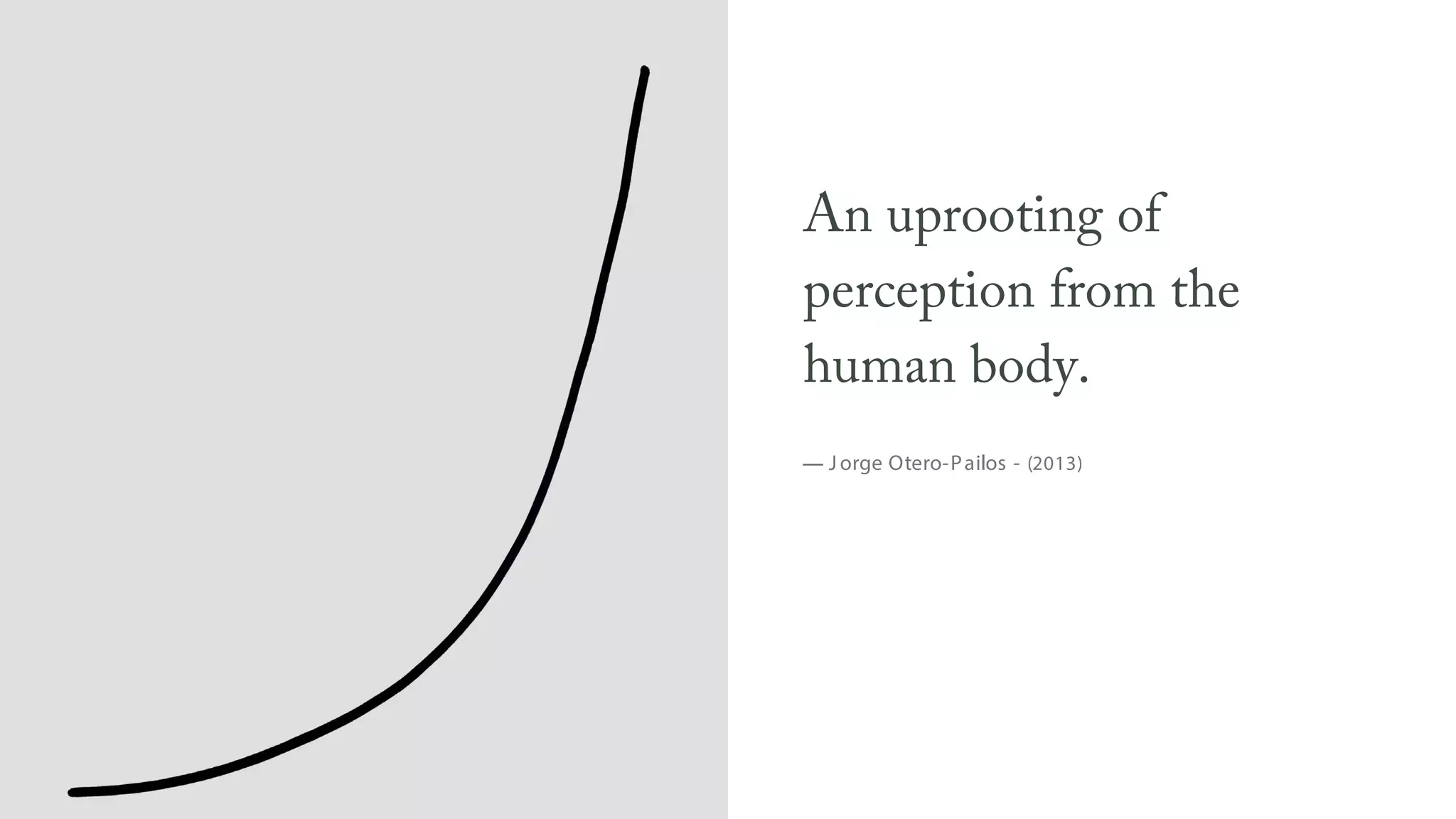
An uprooting of
perception from the
human body.
— J orge Otero-Pailos - (2013)
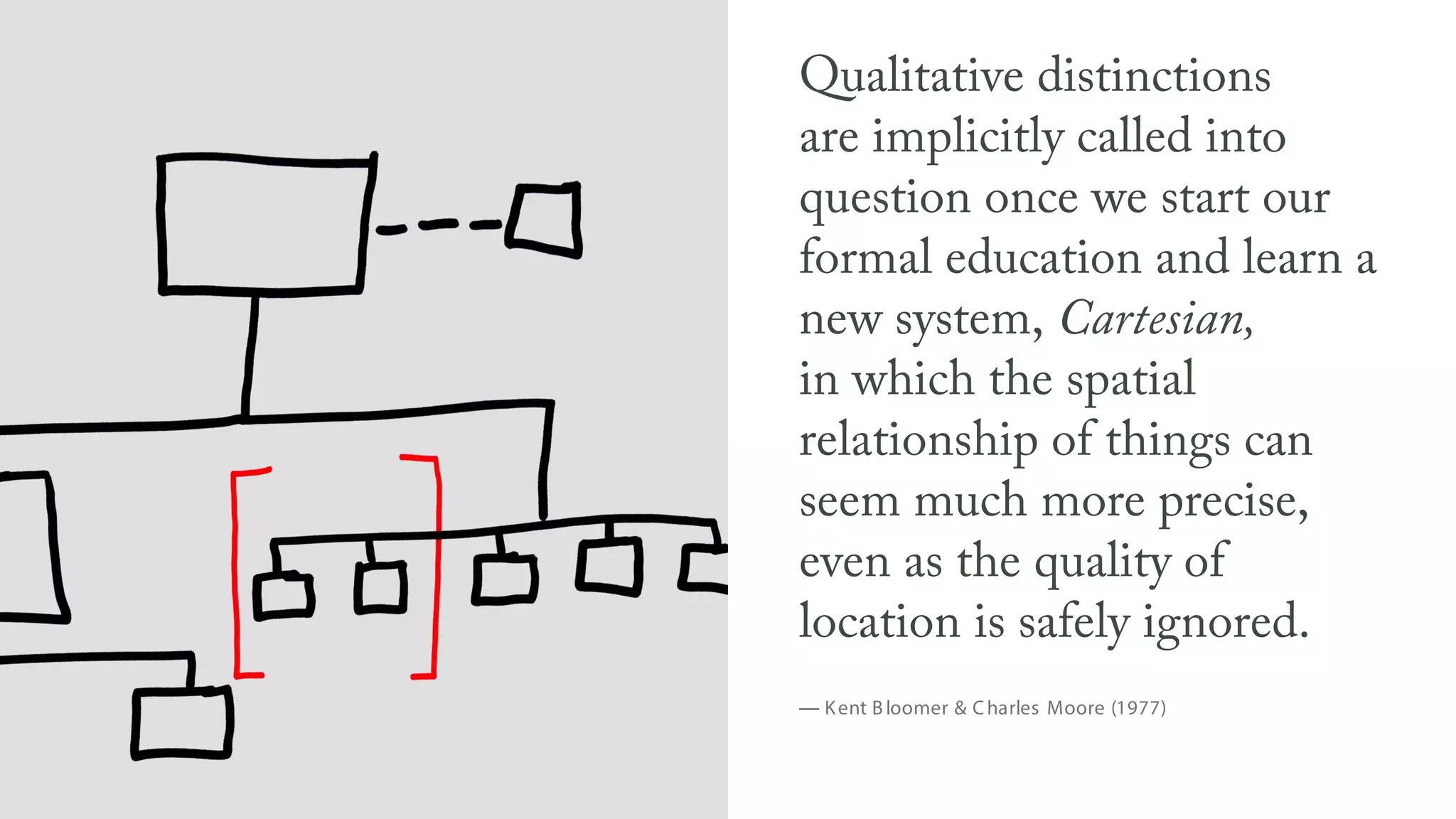
Qualitative distinctions
are implicitly called into
question once we start our
formal education and learn a
new system, Cartesian,
in which the spatial
relationship of things can
seem much more precise,
even as the quality of
location is safely ignored.
— Kent Bloomer & Charles Moore (1977)
[ “it depends” ]
Any two things equal in
price are equal in value.
Nothing is better than
anything that may
profitably or fashionably
replace it.
Forest = field = parking lot.
— Wendell Berry (2000)
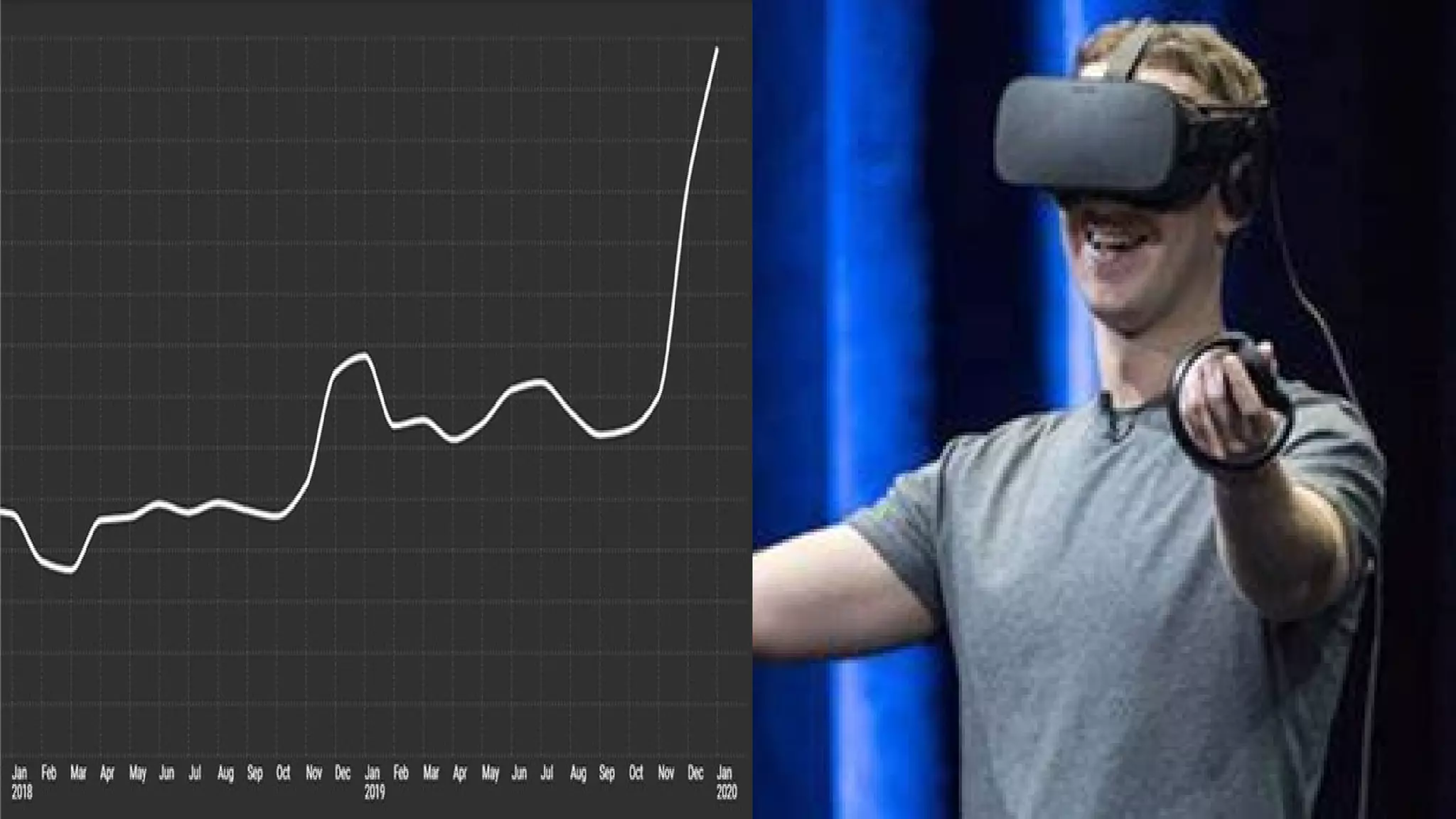
20% “profit” for growing 2x
Anxiety disorders
afflict 18% of Americans,
and millions more are
suffering from subclinical
generalized anxiety.
— Metropolis Magazine (2020)
The loss of rapport with
things that occurs in states
of depression...
— Martin Heidegger (1971)
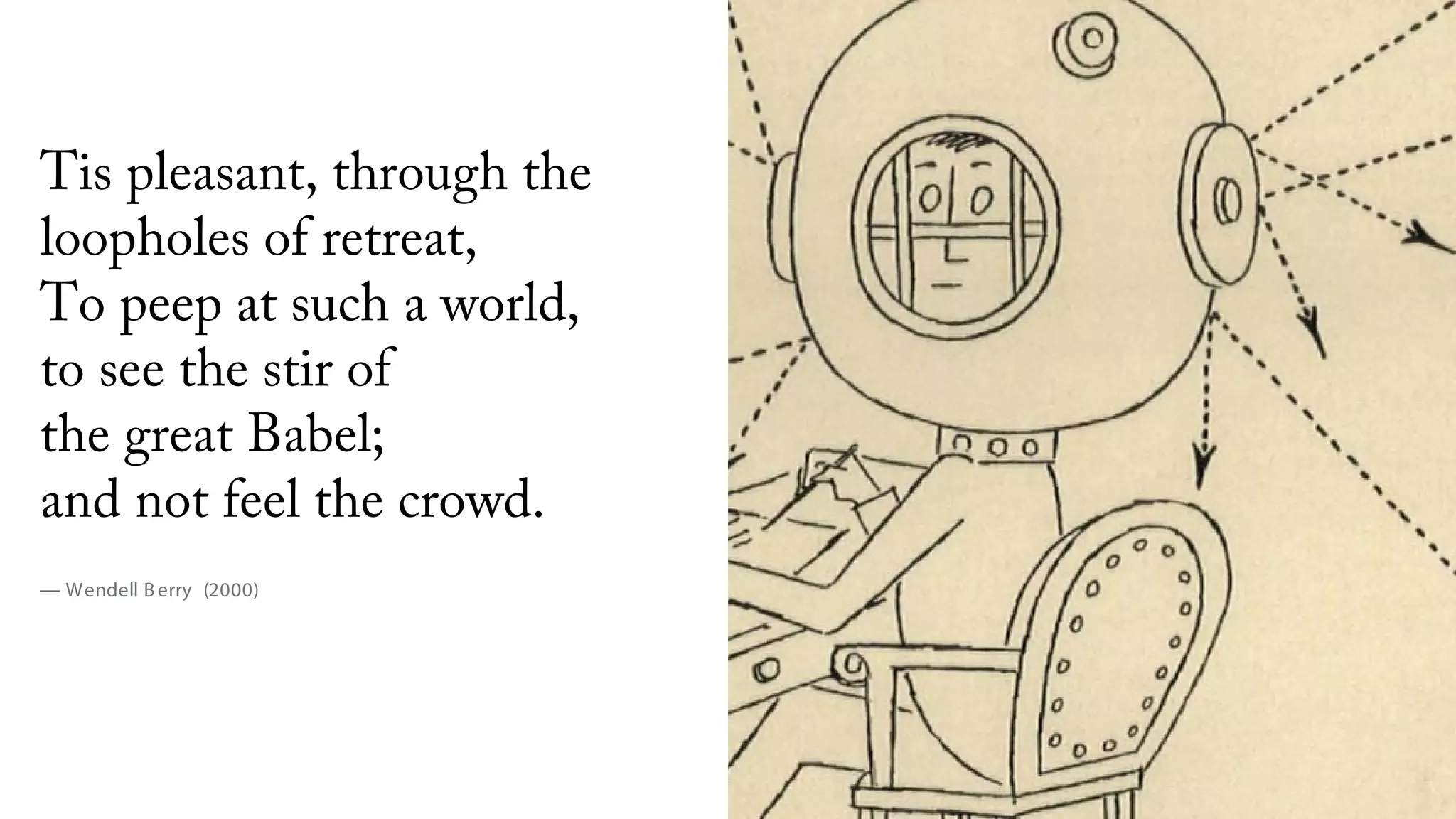
Tis pleasant, through the
loopholes of retreat,
To peep at such a world,
to see the stir of
the great Babel;
and not feel the crowd.
— Wendell Berry (2000)
Tis pleasant, through the
loopholes of retreat,
To peep at such a world,
to see the stir of
the great Babel;
and not feel the crowd.
— Wendell Berry (2000)
Photo © David Peter S imon
What if architecture were
not defined by some
essential core but was
instead the name for a
practice that does
certain things?
That creates
certain affects?
— Michael S peaks (1999)
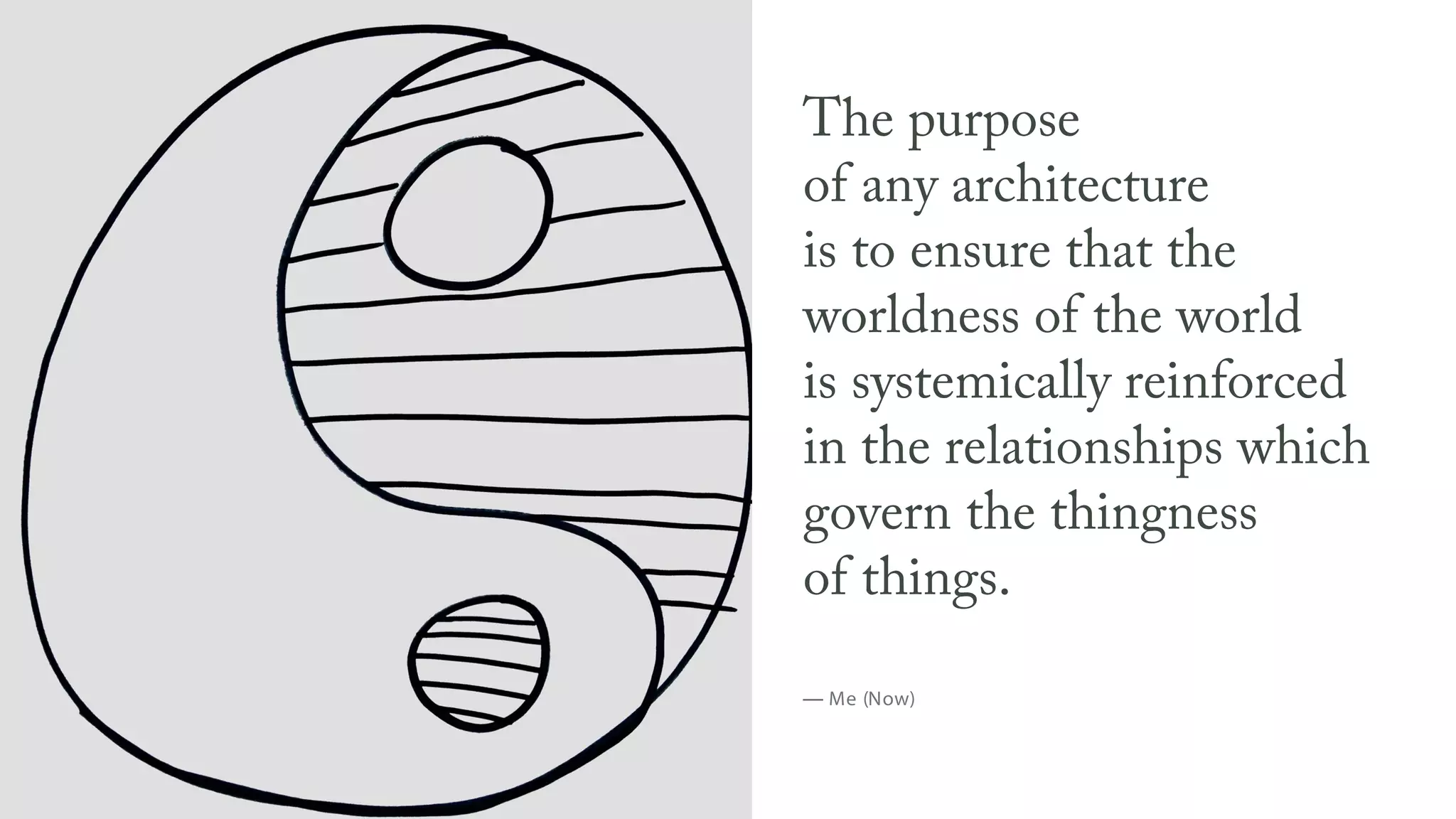
The purpose
of any architecture
is to ensure that the
worldness of the world
is systemically reinforced
in the relationships which
govern the thingness
of things.
— Me (Now)
In as much as any entity
within-the-world
is likewise in space
its spatiality will have
ontological connection
with the world
ONTOLOGY
TOPOLOGY
CHOREOGRAPHY
KLYN & RESMINI OTC MODEL (2019)
The classic pervasive
seduction to designers
has been to find a solution
instead of the truth.
— Richard S aul Wurman (1989)
When I try to solve a
problem I try to go
backwards.
— Richard S aul Wurman (1983)
Stakeholder Alignment
Content / Pages Audit
Usage Analysis
Ethnography
Contextual Inquiry
As-Is Journey Map
Ted J. Rau - Supporting Networks With Sociocracy (2018)
Things Relationships
Personas Archetypes
Sprint Walk
Simplify Clarify
Distinctness Relatedness
Narrow Encompass
Perhaps it would be better to look for once in awe
at what is here, not with great learnedness
but with warm understanding.
— Rudolf S chwarz (1938)
25% reduction in
energy use for
growing 2x
We believe in growing the “ought” carefully from the “is”
— Denise S cott Brown
Warm Understanding
Dan Klyn

Warm Understanding

  • 1.
  • 2.
  • 8.
  • 9.
  • 10.
    With The Crystal Palaceof 1851 the question of “how” began at a public level to take precedence over the issue of “what” — Kenneth Frampton (1973)
  • 12.
    Equipped with asurplus of means over ends. — Kenneth Frampton (1973) Art and architecture had joined forces to celebrate a new age of technology. — Jeffrey Hart (1985)
  • 13.
    Nothing has tobe or to remain as it is or as it appears to be. — Horst Rittel (1967)
  • 15.
  • 16.
    The story wehave to tell is the story of this planned environment. If we allow ourselves, as members of a great metropolis, to think for the world at large, we may lay the foundation for a pattern of life which would have an enormous impact in times to come. — Lewis Mumford (1935)
  • 17.
  • 18.
  • 19.
    To avoid collapse, anew innovation must be initiated that resets the clock, allowing growth to continue and the impending singularity to be avoided. — Geoffrey West (2017)
  • 20.
  • 23.
    An uprooting of perceptionfrom the human body. — J orge Otero-Pailos - (2013)
  • 25.
    Qualitative distinctions are implicitlycalled into question once we start our formal education and learn a new system, Cartesian, in which the spatial relationship of things can seem much more precise, even as the quality of location is safely ignored. — Kent Bloomer & Charles Moore (1977)
  • 26.
  • 29.
    Any two thingsequal in price are equal in value. Nothing is better than anything that may profitably or fashionably replace it. Forest = field = parking lot. — Wendell Berry (2000)
  • 30.
  • 34.
    Anxiety disorders afflict 18%of Americans, and millions more are suffering from subclinical generalized anxiety. — Metropolis Magazine (2020)
  • 35.
    The loss ofrapport with things that occurs in states of depression... — Martin Heidegger (1971)
  • 36.
    Tis pleasant, throughthe loopholes of retreat, To peep at such a world, to see the stir of the great Babel; and not feel the crowd. — Wendell Berry (2000)
  • 37.
    Tis pleasant, throughthe loopholes of retreat, To peep at such a world, to see the stir of the great Babel; and not feel the crowd. — Wendell Berry (2000) Photo © David Peter S imon
  • 39.
    What if architecturewere not defined by some essential core but was instead the name for a practice that does certain things? That creates certain affects? — Michael S peaks (1999)
  • 40.
    The purpose of anyarchitecture is to ensure that the worldness of the world is systemically reinforced in the relationships which govern the thingness of things. — Me (Now)
  • 42.
    In as muchas any entity within-the-world is likewise in space its spatiality will have ontological connection with the world
  • 43.
  • 44.
    The classic pervasive seductionto designers has been to find a solution instead of the truth. — Richard S aul Wurman (1989)
  • 46.
    When I tryto solve a problem I try to go backwards. — Richard S aul Wurman (1983)
  • 47.
    Stakeholder Alignment Content /Pages Audit Usage Analysis Ethnography Contextual Inquiry As-Is Journey Map
  • 48.
    Ted J. Rau- Supporting Networks With Sociocracy (2018)
  • 49.
    Things Relationships Personas Archetypes SprintWalk Simplify Clarify Distinctness Relatedness Narrow Encompass
  • 50.
    Perhaps it wouldbe better to look for once in awe at what is here, not with great learnedness but with warm understanding. — Rudolf S chwarz (1938)
  • 52.
    25% reduction in energyuse for growing 2x
  • 53.
    We believe ingrowing the “ought” carefully from the “is” — Denise S cott Brown
  • 55.