


Role of probiotics in gestational
diabetes and related NCDs:
What you should know
Dr. Anders Henriksson
Principal Application Specialist
DuPont Nutrition & Health, Australia/ New Zealand
Vitafoods Asia 2017
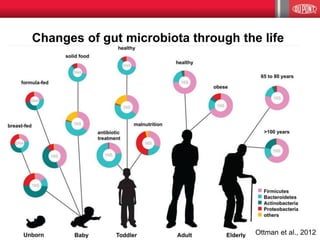
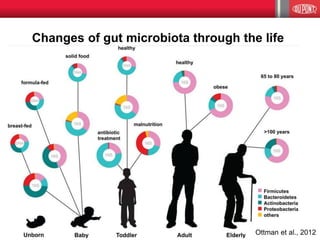
Ottman et al., 2012
Changes of gut microbiota through the life
1/17/2012 3
1/17/2012 4
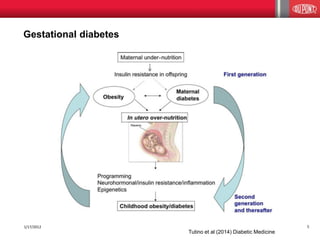
Gestational diabetes
51/17/2012
Tutino et al (2014) Diabetic Medicine
6
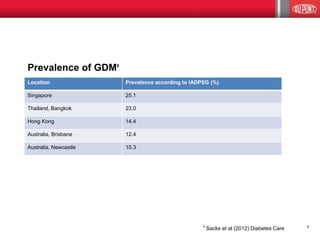
Location Prevalence according to IADPSG (%)
Singapore 25.1
Thailand, Bangkok 23.0
Hong Kong 14.4
Australia, Brisbane 12.4
Australia, Newcastle 15.3
Prevalence of GDMˠ
ˠ Sacks et al (2012) Diabetes Care
1/17/2012 7
TM
Results suggest that
Lactobacillus rhamnosus HN001TM may reduce the prevalence of
gestational diabetes. Results suggests that a daily administration of this
strain from the first trimester of pregnancy may reduce a prevalence of
25% to as low as 8%
Lactobacillus acidophilus NCFM® may improve insulin sensitivity in obese
men with impaired insulin sensitivity or diabetes
Probiotic strains with such properties may reduce the prevalence and
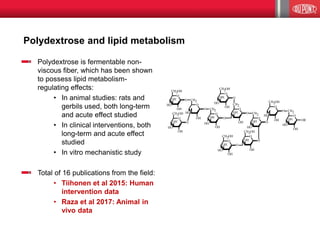
severity of other symptoms of the metabolic syndrome
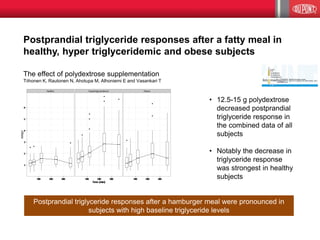
9
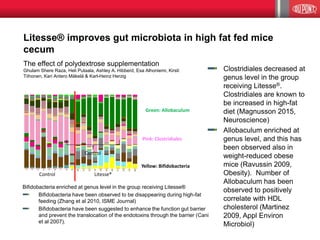
1/17/2012 10
The friendly bug you will want
to catch in your golden years
Vitafoods Asia 2017
Dr. Anders Henriksson
Principal Application Specialist
DuPont Nutrition & Health, Australia/ New Zealand
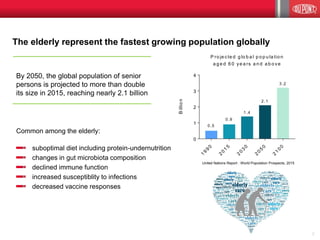
The elderly represent the fastest growing population globally
By 2050, the global population of senior
persons is projected to more than double
its size in 2015, reaching nearly 2.1 billion
Common among the elderly:
United Nations Report : World Population Prospects, 2015
2
1
9
9
0
2
0
1
5
2
0
3
0
2
0
5
0
2
1
0
0
0
1
2
3
4
P ro je c te d g lo b a l p o p u la tio n
a g e d 6 0 ye a rs a n d a b o ve
Billion
0 .5
0 .9
2 .1
1 .4
3 .2
suboptimal diet including protein-undernutrition
changes in gut microbiota composition
declined immune function
increased susceptiblity to infections
decreased vaccine responses
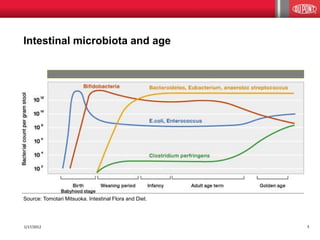
Intestinal microbiota and age
31/17/2012
Source: Tomotari Mitsuoka. Intestinal Flora and Diet.
Probiotics may improve immune system function in the elderly
through different mechanisms which lead to health benefits
Beneficial changes in gut
microbiota composition
e.g. number of bifidobacteria
Cytokine production
Phagocytic
and cytotolytic
Activity Antibody
production
Secretion of
immuno-
modulatory
compounds
Direct impact on
immune cells
Modulation
of gut
microbiota
Innate immunity
function
Acquired immunity
function
Enhancement and balancing of local and
systemic immune response
Health Benefits
(e.g. reduced risk of infections,
improved vaccine response)
T-cell respose
4
Introduction to Bifidobacterium lactis HN019TM
5DUPONT - CONFIDENTIAL
Long history of safe use
B. lactis HN019™ is a well-characterised strain with documented
probiotic effects.
Excellent stability in dietary supplements and dairy products
Excellent stability in conditions of the human gastrointestinal tract (bile
and acid)
Health-related benefits, as presented in published clinical studies:
- Helps to reduce gastrointestial infections
- Helps to improve gastrointestinal transit
- Enhances the innate immunity (NK cell and phagoycyte activity)
- Enhances production of Immunoglobulin A, which may contribute to
an increased resistance against infections
AIM OF THE STUDY
Determine effects of probiotic intake on microbiota
composition in healthy elderly and the dose response
effect.
PRODUCT FORMULA
3 doses of Bifidobacterium lactis HN019™ in 250 ml of
milk
• 5 x 10⁹ CFU (high)
• 1 x 10⁹ CFU (medium)
• 6.5 x 10⁷ CFU (low)
• Placebo (reconstituted skim milk)
SUBJECTS
20 healthy elderly (>60 years) in each group.
STUDY DESIGN
• Randomized, double-blind, placebo controlled study.
• 2 week run-in, 4 week intervention, 2-week wash-out
• Bacterial population levels detected in fecal samples
at 6 time points
PUBLICATION
Ahmed at al. J Nutr Health Aging. 2007 Jan-
Feb;11(1):26-31
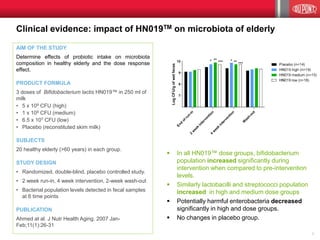
Clinical evidence: impact of HN019TM on microbiota of elderly
▪ In all HN019™ dose groups, bifidobacterium
population increased significantly during
intervention when compared to pre-intervention
levels.
▪ Similarly lactobacilli and streptococci population
increased in high and medium dose groups
▪ Potentially harmful enterobacteria decreased
significantly in high and dose groups.
▪ No changes in placebo group.
6
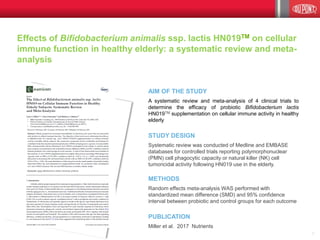
Effects of Bifidobacterium animalis ssp. lactis HN019TM on cellular
immune function in healthy elderly: a systematic review and meta-
analysis
AIM OF THE STUDY
A systematic review and meta-analysis of 4 clinical trials to
determine the efficacy of probiotic Bifidobacterium lactis
HN019TM supplementation on cellular immune activity in healthy
elderly
STUDY DESIGN
Systematic review was conducted of Medline and EMBASE
databases for controlled trials reporting polymorphonuclear
(PMN) cell phagocytic capacity or natural killer (NK) cell
tumoricidal activity following HN019 use in the elderly.
METHODS
Random effects meta-analysis WAS performed with
standardized mean difference (SMD) and 95% confidence
interval between probiotic and control groups for each outcome
PUBLICATION
Miller et al. 2017 Nutrients
7
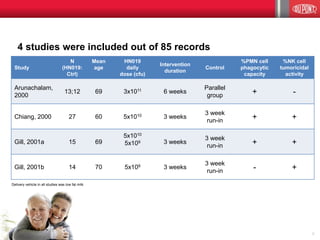
4 studies were included out of 85 records
Study
N
(HN019:
Ctrl)
Mean
age
HN019
daily
dose (cfu)
Intervention
duration
Control
%PMN cell
phagocytic
capacity
%NK cell
tumoricidal
activity
Arunachalam,
2000
13;12 69 3x10¹¹ 6 weeks
Parallel
group + -
Chiang, 2000 27 60 5x10¹⁰ 3 weeks
3 week
run-in + +
Gill, 2001a 15 69
5x10¹⁰
5x10⁹ 3 weeks
3 week
run-in + +
Gill, 2001b 14 70 5x10⁹ 3 weeks
3 week
run-in - +
Delivery vehicle in all studies was low fat milk
8
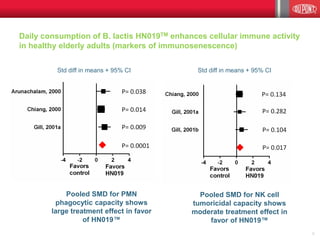
Daily consumption of B. lactis HN019TM enhances cellular immune activity
in healthy elderly adults (markers of immunosenescence)
Std diff in means + 95% CI Std diff in means + 95% CI
Pooled SMD for PMN
phagocytic capacity shows
large treatment effect in favor
of HN019™
Pooled SMD for NK cell
tumoricidal capacity shows
moderate treatment effect in
favor of HN019™
9
Will probiotics and prebiotics
be the future of weight
management?
Vitafoods Asia 2017
Dr. Anders Henriksson
Principal Application Specialist
DuPont Nutrition & Health, Australia/ New Zealand
Ottman et al., 2012
Changes of gut microbiota through the life
Smoothie contains 130 kcal/day
ingredient list in appendix
Stenman et al. EBioMedicine 2016
3
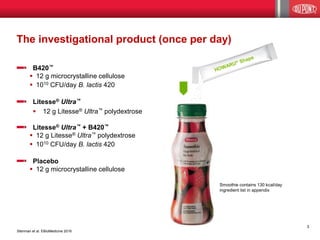
The investigational product (once per day)
B420™
▪ 12 g microcrystalline cellulose
▪ 1010 CFU/day B. lactis 420
Litesse® Ultra™
▪ 12 g Litesse® Ultra™ polydextrose
Litesse® Ultra™ + B420™
▪ 12 g Litesse® Ultra™ polydextrose
▪ 1010 CFU/day B. lactis 420
Placebo
▪ 12 g microcrystalline cellulose
4
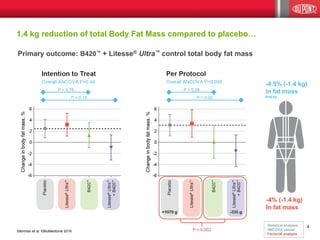
1.4 kg reduction of total Body Fat Mass compared to placebo…
Stenman et al. EBioMedicine 2016
Primary outcome: B420™ + Litesse® Ultra™ control total body fat mass
-4.5% (-1.4 kg)
in fat mass
P=0.02
-4% (-1.4 kg)
In fat mass
Statistical analyses:
ANCOVA values
Factorial analysis
5
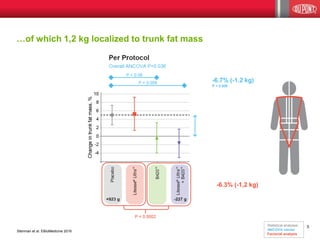
…of which 1,2 kg localized to trunk fat mass
Stenman et al. EBioMedicine 2016
-6.3% (-1,2 kg)
Statistical analyses:
ANCOVA values
Factorial analysis
-6.7% (-1.2 kg)
P = 0.008
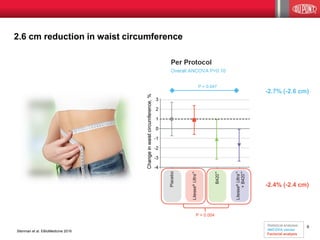
2.6 cm reduction in waist circumference
6
Stenman et al. EBioMedicine 2016
-2.7% (-2.6 cm)
-2.4% (-2.4 cm)
Statistical analyses:
ANCOVA values
Factorial analysis
7
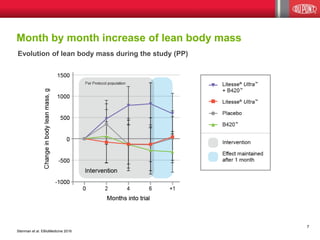
Stenman et al. EBioMedicine 2016
Evolution of lean body mass during the study (PP)
Month by month increase of lean body mass
8
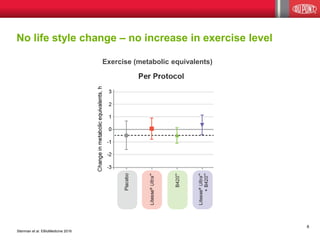
Stenman et al. EBioMedicine 2016
Exercise (metabolic equivalents)
No life style change – no increase in exercise level
Summary
Studies suggest that the microbiota has a role in
metabolic disease
Studies suggest that bifidobacteria minimize factors
that leads to onset of the metabolic syndrome
Recent clinical study using Bifidobacterium lactis
B420™ in combination with a prebiotic fiber
(Litesse® Ultra™) resulted loss of body fat mass
and increased proportion of lean body mass in
overweight or obese subjects
For health sake, increase your
fiber. Polydextrose and its
implications on obesity and
dyslipidemia.
Vitafoods Asia 2017
Ms. Kimberly Thong
Regional Product Manager
DuPont Nutrition & Health, ASEAN, SA & ANZ
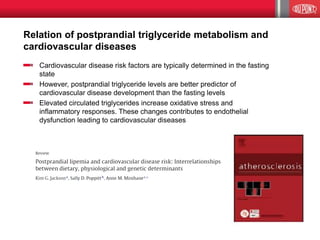
Relation of postprandial triglyceride metabolism and
cardiovascular diseases
Cardiovascular disease risk factors are typically determined in the fasting
state
However, postprandial triglyceride levels are better predictor of
cardiovascular disease development than the fasting levels
Elevated circulated triglycerides increase oxidative stress and
inflammatory responses. These changes contributes to endothelial
dysfunction leading to cardiovascular diseases
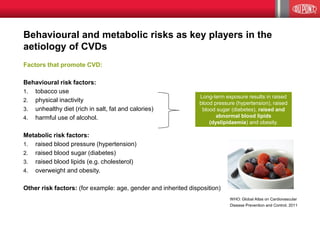
Behavioural and metabolic risks as key players in the
aetiology of CVDs
Factors that promote CVD:
Behavioural risk factors:
1. tobacco use
2. physical inactivity
3. unhealthy diet (rich in salt, fat and calories)
4. harmful use of alcohol.
Metabolic risk factors:
1. raised blood pressure (hypertension)
2. raised blood sugar (diabetes)
3. raised blood lipids (e.g. cholesterol)
4. overweight and obesity.
Other risk factors: (for example: age, gender and inherited disposition)
Long-term exposure results in raised
blood pressure (hypertension), raised
blood sugar (diabetes), raised and
abnormal blood lipids
(dyslipidaemia) and obesity.
WHO: Global Atlas on Cardiovascular
Disease Prevention and Control, 2011
How Litesse® can help to manage non-fasting blood
triglycerides?
Polydextrose and lipid metabolism
Polydextrose is fermentable non-
viscous fiber, which has been shown
to possess lipid metabolism-
regulating effects:
• In animal studies: rats and
gerbils used, both long-term
and acute effect studied
• In clinical interventions, both
long-term and acute effect
studied
• In vitro mechanistic study
Total of 16 publications from the field:
• Tiihonen et al 2015: Human
intervention data
• Raza et al 2017: Animal in
vivo data
HO
CH2OH
O
OH
HO
O CH2
OR
OH
OH
O
CH2
O
OH O
O
OH
OH
O
CH2
CH2OH
O
OH
OH
O
O
HO
OH
OH
O
CH2OH
HO
HO
OH
OH
O
CH2OH
O
HO
OH
OH
O
CH2OH
CH2OH
O
OH
OH
HO
O CH2
O
OH
HO
O
O
HO
OH
OH
O
CH2
O
Postprandial triglyceride responses after a fatty meal in
healthy, hyper triglyceridemic and obese subjects
The effect of polydextrose supplementation
Tiihonen K, Rautonen N, Ahotupa M, Alhoniemi E and Vasankari T
Postprandial triglyceride responses after a hamburger meal were pronounced in
subjects with high baseline triglyceride levels
• 12.5-15 g polydextrose
decreased postprandial
triglyceride response in
the combined data of all
subjects
• Notably the decrease in
triglyceride response
was strongest in healthy
subjects
Litesse® improves gut microbiota in high fat fed mice
cecum
Control
Litesse®
Yellow: Bifidobacteria
Pink: Clostridiales
Green: Allobaculum
The effect of polydextrose supplementation
Ghulam Shere Raza, Heli Putaala, Ashley A. Hibberd, Esa Alhoniemi, Kirsti
Tiihonen, Kari Antero Mäkelä & Karl-Heinz Herzig
Bifidobacteria enriched at genus level in the group receiving Litesse®
Bifidobacteria have been observed to be disappearing during high-fat
feeding (Zhang et al 2010, ISME Journal)
Bifidobacteria have been suggested to enhance the function gut barrier
and prevent the translocation of the endotoxins through the barrier (Cani
et al 2007).
Clostridiales decreased at
genus level in the group
receiving Litesse®.
Clostridiales are known to
be increased in high-fat
diet (Magnusson 2015,
Neuroscience)
Allobaculum enriched at
genus level, and this has
been observed also in
weight-reduced obese
mice (Ravussin 2009,
Obesity). Number of
Allobaculum has been
observed to positively
correlate with HDL
cholesterol (Martinez
2009, Appl Environ
Microbiol)
Control
Conclusions based on animal, human and in vitro data
Polydextrose has shown to attenuate postprandial triglycerides response
after a fatty meal
Polydextrose ingestion long-term may increase HDL cholesterol without
elevating LDL cholesterol
9
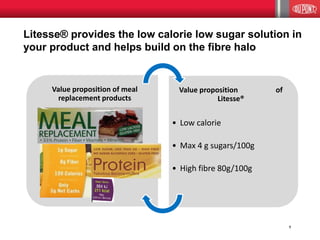
Value proposition of meal
replacement products
Value proposition of
Litesse®
• Low calorie
• Max 4 g sugars/100g
• High fibre 80g/100g
Litesse® provides the low calorie low sugar solution in
your product and helps build on the fibre halo
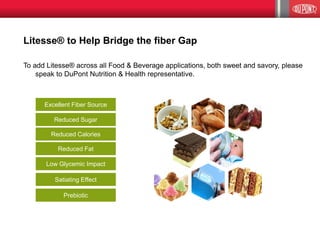
Litesse® to Help Bridge the fiber Gap
To add Litesse® across all Food & Beverage applications, both sweet and savory, please
speak to DuPont Nutrition & Health representative.
Reduced Sugar
Reduced Fat
Reduced Calories
Excellent Fiber Source
Satiating Effect
Low Glycemic Impact
Prebiotic
Understanding what’s driving
probiotics powerhouse in Asia –
A China Consumer Survey
Vitafoods Asia 2017
Michelle Lee
Regional Marketing Manager, ASEAN
DuPont Nutrition & Health
2
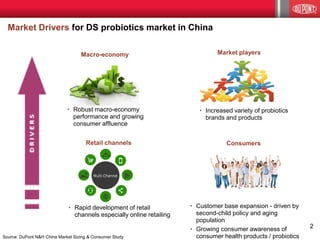
Market Drivers for DS probiotics market in China
Macro-economy
• Robust macro-economy
performance and growing
consumer affluence
Market players
• Increased variety of probiotics
brands and products
Retail channels
• Rapid development of retail
channels especially online retailing
Consumers
• Customer base expansion - driven by
second-child policy and aging
population
• Growing consumer awareness of
consumer health products / probioticsSource: DuPont N&H China Market Sizing & Consumer Study
3
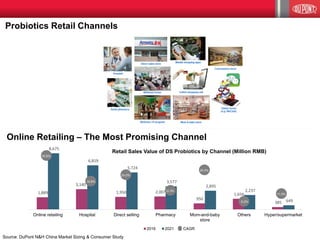
Probiotics Retail Channels
1,889
3,140
1,950 2,007
950
1,656
385
8,675
6,819
5,724
3,577
2,895
2,237
649
0%
5%
10%
15%
20%
25%
30%
35%
40%
-
1,000
2,000
3,000
4,000
5,000
6,000
7,000
8,000
9,000
10,000
Online retailing Hospital Direct selling Pharmacy Mom-and-baby
store
Others Hyper/supermarket
2016 2021 CAGR
Retail Sales Value of DS Probiotics by Channel (Million RMB)
16.8%
12.3%
25.0%
11.0%
35.6%
24.0%
6.2%
Online Retailing – The Most Promising Channel
Source: DuPont N&H China Market Sizing & Consumer Study
4
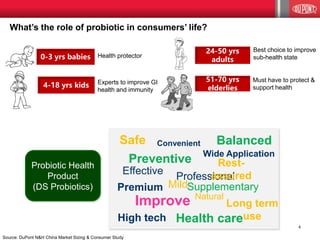
What’s the role of probiotic in consumers’ life?
Probiotic Health
Product
(DS Probiotics) Mild
Improve
Supplementary
BalancedConvenient
Preventive
Health care
Safe
Natural
Long term
use
Professional
Premium
High tech
Rest-
assuredEffective
Wide Application
0-3 yrs babies Health protector
4-18 yrs kids Experts to improve GI
health and immunity
24-50 yrs
adults
Best choice to improve
sub-health state
51-70 yrs
elderlies
Must have to protect &
support health
Source: DuPont N&H China Market Sizing & Consumer Study
5
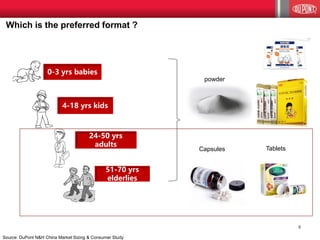
Which is the preferred format ?
0-3 yrs babies
4-18 yrs kids
24-50 yrs
adults
51-70 yrs
elderlies
powder
Capsules Tablets
Source: DuPont N&H China Market Sizing & Consumer Study
6
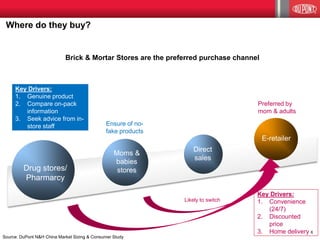
Where do they buy?
Preferred by
mom & adults
Key Drivers:
1. Genuine product
2. Compare on-pack
information
3. Seek advice from in-
store staff
Key Drivers:
1. Convenience
(24/7)
2. Discounted
price
3. Home delivery
Ensure of no-
fake products
Drug stores/
Pharmarcy
Moms &
babies
stores
Direct
sales
Brick & Mortar Stores are the preferred purchase channel
E-retailer
Source: DuPont N&H China Market Sizing & Consumer Study
Likely to switch
7
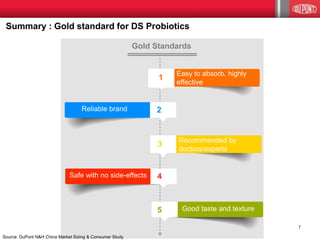
Summary : Gold standard for DS Probiotics
Reliable brand 2
Recommended by
doctors/experts
3
Safe with no side-effects 4
Good taste and texture5
Easy to absorb, highly
effective
1
Gold Standards
Source: DuPont N&H China Market Sizing & Consumer Study
Dealing with an aging Asia.
Overcoming muscle loss with
protein blends for the seniors.
Vitafoods Asia 2017
Dr. Wang Hongwei
Applied Nutrition Manager
DuPont Nutrition & Health, Greater China
9/11/2017 2
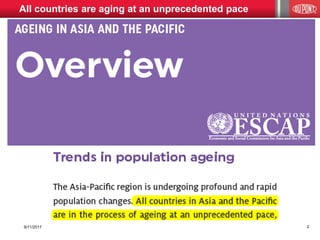
All countries are aging at an unprecedented pace
9/11/2017 3
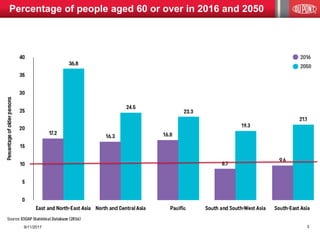
Percentage of people aged 60 or over in 2016 and 2050
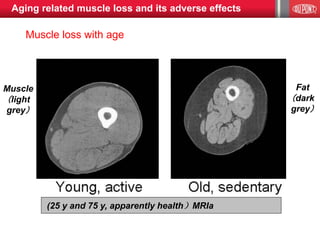
Muscle
(light
grey)
Fat
(dark
grey)
Roubenoff R et al.(2003)《老年学杂志》第58卷第11期,第1012-1017页,2003
(25 y and 75 y, apparently health)MRIa
Muscle loss with age
Aging related muscle loss and its adverse effects
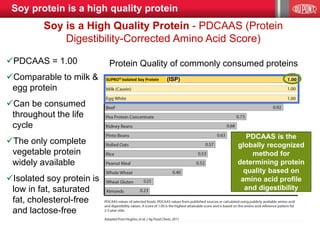
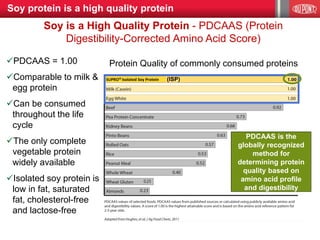
Protein Quality of commonly consumed proteins
SUPRO Isolated Soy Protein
PDCAAS is the
globally recognized
method for
determining protein
quality based on
amino acid profile
and digestibility
(ISP)
Soy is a High Quality Protein - PDCAAS (Protein
Digestibility-Corrected Amino Acid Score)
✓PDCAAS = 1.00
✓Comparable to milk &
egg protein
✓Can be consumed
throughout the life
cycle
✓The only complete
vegetable protein
widely available
✓Isolated soy protein is
low in fat, saturated
fat, cholesterol-free
and lactose-free
Soy protein is a high quality protein
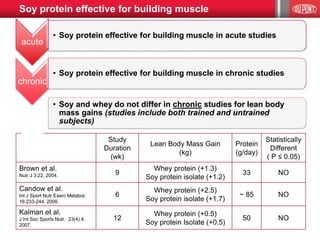
Study
Duration
(wk)
Lean Body Mass Gain
(kg)
Protein
(g/day)
Statistically
Different
( P ≤ 0.05)
Brown et al.
Nutr J 3:22, 2004. 9
Whey protein (+1.3)
Soy protein isolate (+1.2)
33 NO
Candow et al.
Int J Sport Nutr Exerc Metabol.
16:233-244, 2006.
6
Whey protein (+2.5)
Soy protein isolate (+1.7)
~ 85 NO
Kalman et al.
J Int Soc Sports Nutr. 23(4):4,
2007.
12
Whey protein (+0.5)
Soy protein Isolate (+0.5)
50 NO
acute
• Soy protein effective for building muscle in acute studies
chronic
• Soy protein effective for building muscle in chronic studies
• Soy and whey do not differ in chronic studies for lean body
mass gains (studies include both trained and untrained
subjects)
Soy protein effective for building muscle
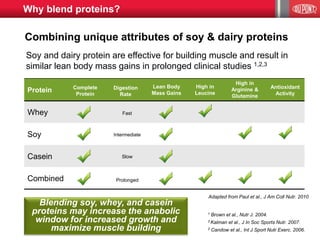
Adapted from Paul et al., J Am Coll Nutr. 2010
Protein
Whey
Soy
Casein
Combined
Intermediate
Fast
Slow
Prolonged
Complete
Protein
Digestion
Rate
Lean Body
Mass Gains
High in
Leucine
High in
Arginine &
Glutamine
Antioxidant
Activity
Combining unique attributes of soy & dairy proteins
Soy and dairy protein are effective for building muscle and result in
similar lean body mass gains in prolonged clinical studies 1,2,3
1 Brown et al., Nutr J. 2004.
3 Kalman et al., J In Soc Sports Nutr. 2007.
3 Candow et al., Int J Sport Nutr Exerc. 2006.
Blending soy, whey, and casein
proteins may increase the anabolic
window for increased growth and
maximize muscle building
Why blend proteins?
Acute Study in Aging Adults
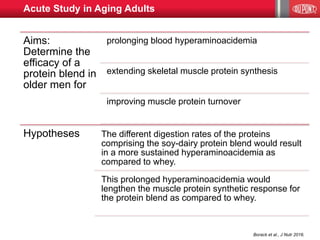
Aims:
Determine the
efficacy of a
protein blend in
older men for
prolonging blood hyperaminoacidemia
extending skeletal muscle protein synthesis
improving muscle protein turnover
Hypotheses The different digestion rates of the proteins
comprising the soy-dairy protein blend would result
in a more sustained hyperaminoacidemia as
compared to whey.
This prolonged hyperaminoacidemia would
lengthen the muscle protein synthetic response for
the protein blend as compared to whey.
Borack et al., J Nutr 2016.
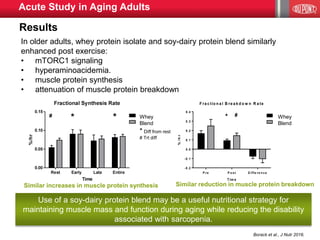
In older adults, whey protein isolate and soy-dairy protein blend similarly
enhanced post exercise:
• mTORC1 signaling
• hyperaminoacidemia.
• muscle protein synthesis
• attenuation of muscle protein breakdown
Acute Study in Aging Adults
Results
Use of a soy-dairy protein blend may be a useful nutritional strategy for
maintaining muscle mass and function during aging while reducing the disability
associated with sarcopenia.
P re P o st D iffe re n ce
-0.2
-0.1
0.0
0.1
0.2
0.3
0.4
F ra c tio n a l B re a k d o w n R a te
Tim e%/hr
W P I
P B
* #
Similar increases in muscle protein synthesis Similar reduction in muscle protein breakdown
Whey
Blend
* Diff from rest
# Trt diff
Whey
Blend
Borack et al., J Nutr 2016.
Summary
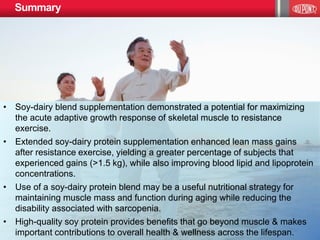
• Soy-dairy blend supplementation demonstrated a potential for maximizing
the acute adaptive growth response of skeletal muscle to resistance
exercise.
• Extended soy-dairy protein supplementation enhanced lean mass gains
after resistance exercise, yielding a greater percentage of subjects that
experienced gains (>1.5 kg), while also improving blood lipid and lipoprotein
concentrations.
• Use of a soy-dairy protein blend may be a useful nutritional strategy for
maintaining muscle mass and function during aging while reducing the
disability associated with sarcopenia.
• High-quality soy protein provides benefits that go beyond muscle & makes
important contributions to overall health & wellness across the lifespan.
Soy versus dairy protein.
Strategies to lowering cholesterol
and improving gut microbiota
diversity.
Vitafoods Asia 2017
Dr. Wang Hongwei
Applied Nutrition Manager
DuPont Nutrition & Health, Greater China
Protein Quality of commonly consumed proteins
SUPRO Isolated Soy Protein
PDCAAS is the
globally recognized
method for
determining protein
quality based on
amino acid profile
and digestibility
(ISP)
Soy is a High Quality Protein - PDCAAS (Protein
Digestibility-Corrected Amino Acid Score)
✓PDCAAS = 1.00
✓Comparable to milk &
egg protein
✓Can be consumed
throughout the life
cycle
✓The only complete
vegetable protein
widely available
✓Isolated soy protein is
low in fat, saturated
fat, cholesterol-free
and lactose-free
Soy protein is a high quality protein
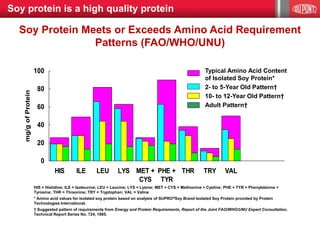
Soy Protein Meets or Exceeds Amino Acid Requirement
Patterns (FAO/WHO/UNU)
HIS = Histidine; ILE = Isoleucine; LEU = Leucine; LYS = Lysine; MET + CYS = Methionine + Cystine; PHE + TYR = Phenylalanine +
Tyrosine; THR = Threonine; TRY = Tryptophan; VAL = Valine
* Amino acid values for isolated soy protein based on analysis of SUPRO®Soy Brand Isolated Soy Protein provided by Protein
Technologies International.
† Suggested pattern of requirements from Energy and Protein Requirements, Report of the Joint FAO/WHO/UNU Expert Consultation.
Technical Report Series No. 724, 1985.
0
20
40
60
80
100
HIS ILE LEU LYS MET +
CYS
PHE +
TYR
THR TRY VAL
mg/gofProtein
0
20
40
60
80
100
HIS ILE LEU LYS MET +
CYS
PHE +
TYR
THR TRY VAL
mg/gofProtein
Typical Amino Acid Content
of Isolated Soy Protein*
2- to 5-Year Old Pattern†
10- to 12-Year Old Pattern†
Adult Pattern†
Soy protein is a high quality protein
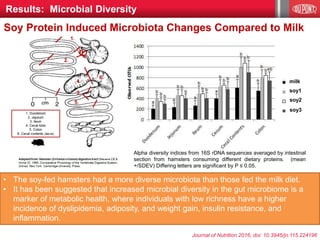
• The soy-fed hamsters had a more diverse microbiota than those fed the milk diet.
• It has been suggested that increased microbial diversity in the gut microbiome is a
marker of metabolic health, where individuals with low richness have a higher
incidence of dyslipidemia, adiposity, and weight gain, insulin resistance, and
inflammation.
Alpha diversity indices from 16S rDNA sequences averaged by intestinal
section from hamsters consuming different dietary proteins. (mean
+/SDEV) Differing letters are significant by P ≤ 0.05.
milk
soy1
soy3
soy2
Journal of Nutrition 2016, doi: 10.3945/​jn.115.224196
Results: Microbial Diversity
Soy Protein Induced Microbiota Changes Compared to Milk
Results: Microbial Composition
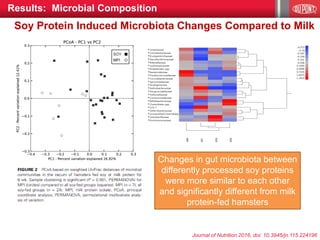
Changes in gut microbiota between
differently processed soy proteins
were more similar to each other
and significantly different from milk
protein-fed hamsters
Journal of Nutrition 2016, doi: 10.3945/​jn.115.224196
Soy Protein Induced Microbiota Changes Compared to Milk
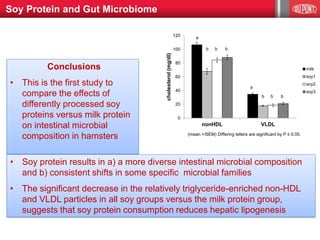
Soy Protein and Gut Microbiome
0
20
40
60
80
100
120
nonHDL VLDL
cholesterol(mg/dl)
milk
soy1
soy2
soy3
(mean +/SEM) Differing letters are significant by P ≤ 0.05.
a
a
b b b
b b b
Conclusions
• This is the first study to
compare the effects of
differently processed soy
proteins versus milk protein
on intestinal microbial
composition in hamsters
• Soy protein results in a) a more diverse intestinal microbial composition
and b) consistent shifts in some specific microbial families
• The significant decrease in the relatively triglyceride-enriched non-HDL
and VLDL particles in all soy groups versus the milk protein group,
suggests that soy protein consumption reduces hepatic lipogenesis

Vitafoods Asia 2017 - Presentations

  • 1.
    Role of probioticsin gestational diabetes and related NCDs: What you should know Dr. Anders Henriksson Principal Application Specialist DuPont Nutrition & Health, Australia/ New Zealand Vitafoods Asia 2017
  • 2.
    Ottman et al.,2012 Changes of gut microbiota through the life
  • 3.
  • 4.
  • 5.
    Gestational diabetes 51/17/2012 Tutino etal (2014) Diabetic Medicine
  • 6.
    6 Location Prevalence accordingto IADPSG (%) Singapore 25.1 Thailand, Bangkok 23.0 Hong Kong 14.4 Australia, Brisbane 12.4 Australia, Newcastle 15.3 Prevalence of GDMˠ ˠ Sacks et al (2012) Diabetes Care
  • 7.
  • 9.
    Results suggest that Lactobacillusrhamnosus HN001TM may reduce the prevalence of gestational diabetes. Results suggests that a daily administration of this strain from the first trimester of pregnancy may reduce a prevalence of 25% to as low as 8% Lactobacillus acidophilus NCFM® may improve insulin sensitivity in obese men with impaired insulin sensitivity or diabetes Probiotic strains with such properties may reduce the prevalence and severity of other symptoms of the metabolic syndrome 9
  • 10.
  • 11.
    The friendly bugyou will want to catch in your golden years Vitafoods Asia 2017 Dr. Anders Henriksson Principal Application Specialist DuPont Nutrition & Health, Australia/ New Zealand
  • 12.
    The elderly representthe fastest growing population globally By 2050, the global population of senior persons is projected to more than double its size in 2015, reaching nearly 2.1 billion Common among the elderly: United Nations Report : World Population Prospects, 2015 2 1 9 9 0 2 0 1 5 2 0 3 0 2 0 5 0 2 1 0 0 0 1 2 3 4 P ro je c te d g lo b a l p o p u la tio n a g e d 6 0 ye a rs a n d a b o ve Billion 0 .5 0 .9 2 .1 1 .4 3 .2 suboptimal diet including protein-undernutrition changes in gut microbiota composition declined immune function increased susceptiblity to infections decreased vaccine responses
  • 13.
    Intestinal microbiota andage 31/17/2012 Source: Tomotari Mitsuoka. Intestinal Flora and Diet.
  • 14.
    Probiotics may improveimmune system function in the elderly through different mechanisms which lead to health benefits Beneficial changes in gut microbiota composition e.g. number of bifidobacteria Cytokine production Phagocytic and cytotolytic Activity Antibody production Secretion of immuno- modulatory compounds Direct impact on immune cells Modulation of gut microbiota Innate immunity function Acquired immunity function Enhancement and balancing of local and systemic immune response Health Benefits (e.g. reduced risk of infections, improved vaccine response) T-cell respose 4
  • 15.
    Introduction to Bifidobacteriumlactis HN019TM 5DUPONT - CONFIDENTIAL Long history of safe use B. lactis HN019™ is a well-characterised strain with documented probiotic effects. Excellent stability in dietary supplements and dairy products Excellent stability in conditions of the human gastrointestinal tract (bile and acid) Health-related benefits, as presented in published clinical studies: - Helps to reduce gastrointestial infections - Helps to improve gastrointestinal transit - Enhances the innate immunity (NK cell and phagoycyte activity) - Enhances production of Immunoglobulin A, which may contribute to an increased resistance against infections
  • 16.
    AIM OF THESTUDY Determine effects of probiotic intake on microbiota composition in healthy elderly and the dose response effect. PRODUCT FORMULA 3 doses of Bifidobacterium lactis HN019™ in 250 ml of milk • 5 x 10⁹ CFU (high) • 1 x 10⁹ CFU (medium) • 6.5 x 10⁷ CFU (low) • Placebo (reconstituted skim milk) SUBJECTS 20 healthy elderly (>60 years) in each group. STUDY DESIGN • Randomized, double-blind, placebo controlled study. • 2 week run-in, 4 week intervention, 2-week wash-out • Bacterial population levels detected in fecal samples at 6 time points PUBLICATION Ahmed at al. J Nutr Health Aging. 2007 Jan- Feb;11(1):26-31 Clinical evidence: impact of HN019TM on microbiota of elderly ▪ In all HN019™ dose groups, bifidobacterium population increased significantly during intervention when compared to pre-intervention levels. ▪ Similarly lactobacilli and streptococci population increased in high and medium dose groups ▪ Potentially harmful enterobacteria decreased significantly in high and dose groups. ▪ No changes in placebo group. 6
  • 17.
    Effects of Bifidobacteriumanimalis ssp. lactis HN019TM on cellular immune function in healthy elderly: a systematic review and meta- analysis AIM OF THE STUDY A systematic review and meta-analysis of 4 clinical trials to determine the efficacy of probiotic Bifidobacterium lactis HN019TM supplementation on cellular immune activity in healthy elderly STUDY DESIGN Systematic review was conducted of Medline and EMBASE databases for controlled trials reporting polymorphonuclear (PMN) cell phagocytic capacity or natural killer (NK) cell tumoricidal activity following HN019 use in the elderly. METHODS Random effects meta-analysis WAS performed with standardized mean difference (SMD) and 95% confidence interval between probiotic and control groups for each outcome PUBLICATION Miller et al. 2017 Nutrients 7
  • 18.
    4 studies wereincluded out of 85 records Study N (HN019: Ctrl) Mean age HN019 daily dose (cfu) Intervention duration Control %PMN cell phagocytic capacity %NK cell tumoricidal activity Arunachalam, 2000 13;12 69 3x10¹¹ 6 weeks Parallel group + - Chiang, 2000 27 60 5x10¹⁰ 3 weeks 3 week run-in + + Gill, 2001a 15 69 5x10¹⁰ 5x10⁹ 3 weeks 3 week run-in + + Gill, 2001b 14 70 5x10⁹ 3 weeks 3 week run-in - + Delivery vehicle in all studies was low fat milk 8
  • 19.
    Daily consumption ofB. lactis HN019TM enhances cellular immune activity in healthy elderly adults (markers of immunosenescence) Std diff in means + 95% CI Std diff in means + 95% CI Pooled SMD for PMN phagocytic capacity shows large treatment effect in favor of HN019™ Pooled SMD for NK cell tumoricidal capacity shows moderate treatment effect in favor of HN019™ 9
  • 20.
    Will probiotics andprebiotics be the future of weight management? Vitafoods Asia 2017 Dr. Anders Henriksson Principal Application Specialist DuPont Nutrition & Health, Australia/ New Zealand
  • 21.
    Ottman et al.,2012 Changes of gut microbiota through the life
  • 22.
    Smoothie contains 130kcal/day ingredient list in appendix Stenman et al. EBioMedicine 2016 3 The investigational product (once per day) B420™ ▪ 12 g microcrystalline cellulose ▪ 1010 CFU/day B. lactis 420 Litesse® Ultra™ ▪ 12 g Litesse® Ultra™ polydextrose Litesse® Ultra™ + B420™ ▪ 12 g Litesse® Ultra™ polydextrose ▪ 1010 CFU/day B. lactis 420 Placebo ▪ 12 g microcrystalline cellulose
  • 23.
    4 1.4 kg reductionof total Body Fat Mass compared to placebo… Stenman et al. EBioMedicine 2016 Primary outcome: B420™ + Litesse® Ultra™ control total body fat mass -4.5% (-1.4 kg) in fat mass P=0.02 -4% (-1.4 kg) In fat mass Statistical analyses: ANCOVA values Factorial analysis
  • 24.
    5 …of which 1,2kg localized to trunk fat mass Stenman et al. EBioMedicine 2016 -6.3% (-1,2 kg) Statistical analyses: ANCOVA values Factorial analysis -6.7% (-1.2 kg) P = 0.008
  • 25.
    2.6 cm reductionin waist circumference 6 Stenman et al. EBioMedicine 2016 -2.7% (-2.6 cm) -2.4% (-2.4 cm) Statistical analyses: ANCOVA values Factorial analysis
  • 26.
    7 Stenman et al.EBioMedicine 2016 Evolution of lean body mass during the study (PP) Month by month increase of lean body mass
  • 27.
    8 Stenman et al.EBioMedicine 2016 Exercise (metabolic equivalents) No life style change – no increase in exercise level
  • 28.
    Summary Studies suggest thatthe microbiota has a role in metabolic disease Studies suggest that bifidobacteria minimize factors that leads to onset of the metabolic syndrome Recent clinical study using Bifidobacterium lactis B420™ in combination with a prebiotic fiber (Litesse® Ultra™) resulted loss of body fat mass and increased proportion of lean body mass in overweight or obese subjects
  • 29.
    For health sake,increase your fiber. Polydextrose and its implications on obesity and dyslipidemia. Vitafoods Asia 2017 Ms. Kimberly Thong Regional Product Manager DuPont Nutrition & Health, ASEAN, SA & ANZ
  • 30.
    Relation of postprandialtriglyceride metabolism and cardiovascular diseases Cardiovascular disease risk factors are typically determined in the fasting state However, postprandial triglyceride levels are better predictor of cardiovascular disease development than the fasting levels Elevated circulated triglycerides increase oxidative stress and inflammatory responses. These changes contributes to endothelial dysfunction leading to cardiovascular diseases
  • 31.
    Behavioural and metabolicrisks as key players in the aetiology of CVDs Factors that promote CVD: Behavioural risk factors: 1. tobacco use 2. physical inactivity 3. unhealthy diet (rich in salt, fat and calories) 4. harmful use of alcohol. Metabolic risk factors: 1. raised blood pressure (hypertension) 2. raised blood sugar (diabetes) 3. raised blood lipids (e.g. cholesterol) 4. overweight and obesity. Other risk factors: (for example: age, gender and inherited disposition) Long-term exposure results in raised blood pressure (hypertension), raised blood sugar (diabetes), raised and abnormal blood lipids (dyslipidaemia) and obesity. WHO: Global Atlas on Cardiovascular Disease Prevention and Control, 2011
  • 32.
    How Litesse® canhelp to manage non-fasting blood triglycerides?
  • 33.
    Polydextrose and lipidmetabolism Polydextrose is fermentable non- viscous fiber, which has been shown to possess lipid metabolism- regulating effects: • In animal studies: rats and gerbils used, both long-term and acute effect studied • In clinical interventions, both long-term and acute effect studied • In vitro mechanistic study Total of 16 publications from the field: • Tiihonen et al 2015: Human intervention data • Raza et al 2017: Animal in vivo data HO CH2OH O OH HO O CH2 OR OH OH O CH2 O OH O O OH OH O CH2 CH2OH O OH OH O O HO OH OH O CH2OH HO HO OH OH O CH2OH O HO OH OH O CH2OH CH2OH O OH OH HO O CH2 O OH HO O O HO OH OH O CH2 O
  • 34.
    Postprandial triglyceride responsesafter a fatty meal in healthy, hyper triglyceridemic and obese subjects The effect of polydextrose supplementation Tiihonen K, Rautonen N, Ahotupa M, Alhoniemi E and Vasankari T Postprandial triglyceride responses after a hamburger meal were pronounced in subjects with high baseline triglyceride levels • 12.5-15 g polydextrose decreased postprandial triglyceride response in the combined data of all subjects • Notably the decrease in triglyceride response was strongest in healthy subjects
  • 35.
    Litesse® improves gutmicrobiota in high fat fed mice cecum Control Litesse® Yellow: Bifidobacteria Pink: Clostridiales Green: Allobaculum The effect of polydextrose supplementation Ghulam Shere Raza, Heli Putaala, Ashley A. Hibberd, Esa Alhoniemi, Kirsti Tiihonen, Kari Antero Mäkelä & Karl-Heinz Herzig Bifidobacteria enriched at genus level in the group receiving Litesse® Bifidobacteria have been observed to be disappearing during high-fat feeding (Zhang et al 2010, ISME Journal) Bifidobacteria have been suggested to enhance the function gut barrier and prevent the translocation of the endotoxins through the barrier (Cani et al 2007). Clostridiales decreased at genus level in the group receiving Litesse®. Clostridiales are known to be increased in high-fat diet (Magnusson 2015, Neuroscience) Allobaculum enriched at genus level, and this has been observed also in weight-reduced obese mice (Ravussin 2009, Obesity). Number of Allobaculum has been observed to positively correlate with HDL cholesterol (Martinez 2009, Appl Environ Microbiol) Control
  • 36.
    Conclusions based onanimal, human and in vitro data Polydextrose has shown to attenuate postprandial triglycerides response after a fatty meal Polydextrose ingestion long-term may increase HDL cholesterol without elevating LDL cholesterol
  • 37.
    9 Value proposition ofmeal replacement products Value proposition of Litesse® • Low calorie • Max 4 g sugars/100g • High fibre 80g/100g Litesse® provides the low calorie low sugar solution in your product and helps build on the fibre halo
  • 38.
    Litesse® to HelpBridge the fiber Gap To add Litesse® across all Food & Beverage applications, both sweet and savory, please speak to DuPont Nutrition & Health representative. Reduced Sugar Reduced Fat Reduced Calories Excellent Fiber Source Satiating Effect Low Glycemic Impact Prebiotic
  • 39.
    Understanding what’s driving probioticspowerhouse in Asia – A China Consumer Survey Vitafoods Asia 2017 Michelle Lee Regional Marketing Manager, ASEAN DuPont Nutrition & Health
  • 40.
    2 Market Drivers forDS probiotics market in China Macro-economy • Robust macro-economy performance and growing consumer affluence Market players • Increased variety of probiotics brands and products Retail channels • Rapid development of retail channels especially online retailing Consumers • Customer base expansion - driven by second-child policy and aging population • Growing consumer awareness of consumer health products / probioticsSource: DuPont N&H China Market Sizing & Consumer Study
  • 41.
    3 Probiotics Retail Channels 1,889 3,140 1,9502,007 950 1,656 385 8,675 6,819 5,724 3,577 2,895 2,237 649 0% 5% 10% 15% 20% 25% 30% 35% 40% - 1,000 2,000 3,000 4,000 5,000 6,000 7,000 8,000 9,000 10,000 Online retailing Hospital Direct selling Pharmacy Mom-and-baby store Others Hyper/supermarket 2016 2021 CAGR Retail Sales Value of DS Probiotics by Channel (Million RMB) 16.8% 12.3% 25.0% 11.0% 35.6% 24.0% 6.2% Online Retailing – The Most Promising Channel Source: DuPont N&H China Market Sizing & Consumer Study
  • 42.
    4 What’s the roleof probiotic in consumers’ life? Probiotic Health Product (DS Probiotics) Mild Improve Supplementary BalancedConvenient Preventive Health care Safe Natural Long term use Professional Premium High tech Rest- assuredEffective Wide Application 0-3 yrs babies Health protector 4-18 yrs kids Experts to improve GI health and immunity 24-50 yrs adults Best choice to improve sub-health state 51-70 yrs elderlies Must have to protect & support health Source: DuPont N&H China Market Sizing & Consumer Study
  • 43.
    5 Which is thepreferred format ? 0-3 yrs babies 4-18 yrs kids 24-50 yrs adults 51-70 yrs elderlies powder Capsules Tablets Source: DuPont N&H China Market Sizing & Consumer Study
  • 44.
    6 Where do theybuy? Preferred by mom & adults Key Drivers: 1. Genuine product 2. Compare on-pack information 3. Seek advice from in- store staff Key Drivers: 1. Convenience (24/7) 2. Discounted price 3. Home delivery Ensure of no- fake products Drug stores/ Pharmarcy Moms & babies stores Direct sales Brick & Mortar Stores are the preferred purchase channel E-retailer Source: DuPont N&H China Market Sizing & Consumer Study Likely to switch
  • 45.
    7 Summary : Goldstandard for DS Probiotics Reliable brand 2 Recommended by doctors/experts 3 Safe with no side-effects 4 Good taste and texture5 Easy to absorb, highly effective 1 Gold Standards Source: DuPont N&H China Market Sizing & Consumer Study
  • 46.
    Dealing with anaging Asia. Overcoming muscle loss with protein blends for the seniors. Vitafoods Asia 2017 Dr. Wang Hongwei Applied Nutrition Manager DuPont Nutrition & Health, Greater China
  • 47.
    9/11/2017 2 All countriesare aging at an unprecedented pace
  • 48.
    9/11/2017 3 Percentage ofpeople aged 60 or over in 2016 and 2050
  • 49.
    Muscle (light grey) Fat (dark grey) Roubenoff R etal.(2003)《老年学杂志》第58卷第11期,第1012-1017页,2003 (25 y and 75 y, apparently health)MRIa Muscle loss with age Aging related muscle loss and its adverse effects
  • 50.
    Protein Quality ofcommonly consumed proteins SUPRO Isolated Soy Protein PDCAAS is the globally recognized method for determining protein quality based on amino acid profile and digestibility (ISP) Soy is a High Quality Protein - PDCAAS (Protein Digestibility-Corrected Amino Acid Score) ✓PDCAAS = 1.00 ✓Comparable to milk & egg protein ✓Can be consumed throughout the life cycle ✓The only complete vegetable protein widely available ✓Isolated soy protein is low in fat, saturated fat, cholesterol-free and lactose-free Soy protein is a high quality protein
  • 51.
    Study Duration (wk) Lean Body MassGain (kg) Protein (g/day) Statistically Different ( P ≤ 0.05) Brown et al. Nutr J 3:22, 2004. 9 Whey protein (+1.3) Soy protein isolate (+1.2) 33 NO Candow et al. Int J Sport Nutr Exerc Metabol. 16:233-244, 2006. 6 Whey protein (+2.5) Soy protein isolate (+1.7) ~ 85 NO Kalman et al. J Int Soc Sports Nutr. 23(4):4, 2007. 12 Whey protein (+0.5) Soy protein Isolate (+0.5) 50 NO acute • Soy protein effective for building muscle in acute studies chronic • Soy protein effective for building muscle in chronic studies • Soy and whey do not differ in chronic studies for lean body mass gains (studies include both trained and untrained subjects) Soy protein effective for building muscle
  • 52.
    Adapted from Paulet al., J Am Coll Nutr. 2010 Protein Whey Soy Casein Combined Intermediate Fast Slow Prolonged Complete Protein Digestion Rate Lean Body Mass Gains High in Leucine High in Arginine & Glutamine Antioxidant Activity Combining unique attributes of soy & dairy proteins Soy and dairy protein are effective for building muscle and result in similar lean body mass gains in prolonged clinical studies 1,2,3 1 Brown et al., Nutr J. 2004. 3 Kalman et al., J In Soc Sports Nutr. 2007. 3 Candow et al., Int J Sport Nutr Exerc. 2006. Blending soy, whey, and casein proteins may increase the anabolic window for increased growth and maximize muscle building Why blend proteins?
  • 53.
    Acute Study inAging Adults Aims: Determine the efficacy of a protein blend in older men for prolonging blood hyperaminoacidemia extending skeletal muscle protein synthesis improving muscle protein turnover Hypotheses The different digestion rates of the proteins comprising the soy-dairy protein blend would result in a more sustained hyperaminoacidemia as compared to whey. This prolonged hyperaminoacidemia would lengthen the muscle protein synthetic response for the protein blend as compared to whey. Borack et al., J Nutr 2016.
  • 54.
    In older adults,whey protein isolate and soy-dairy protein blend similarly enhanced post exercise: • mTORC1 signaling • hyperaminoacidemia. • muscle protein synthesis • attenuation of muscle protein breakdown Acute Study in Aging Adults Results Use of a soy-dairy protein blend may be a useful nutritional strategy for maintaining muscle mass and function during aging while reducing the disability associated with sarcopenia. P re P o st D iffe re n ce -0.2 -0.1 0.0 0.1 0.2 0.3 0.4 F ra c tio n a l B re a k d o w n R a te Tim e%/hr W P I P B * # Similar increases in muscle protein synthesis Similar reduction in muscle protein breakdown Whey Blend * Diff from rest # Trt diff Whey Blend Borack et al., J Nutr 2016.
  • 55.
    Summary • Soy-dairy blendsupplementation demonstrated a potential for maximizing the acute adaptive growth response of skeletal muscle to resistance exercise. • Extended soy-dairy protein supplementation enhanced lean mass gains after resistance exercise, yielding a greater percentage of subjects that experienced gains (>1.5 kg), while also improving blood lipid and lipoprotein concentrations. • Use of a soy-dairy protein blend may be a useful nutritional strategy for maintaining muscle mass and function during aging while reducing the disability associated with sarcopenia. • High-quality soy protein provides benefits that go beyond muscle & makes important contributions to overall health & wellness across the lifespan.
  • 56.
    Soy versus dairyprotein. Strategies to lowering cholesterol and improving gut microbiota diversity. Vitafoods Asia 2017 Dr. Wang Hongwei Applied Nutrition Manager DuPont Nutrition & Health, Greater China
  • 57.
    Protein Quality ofcommonly consumed proteins SUPRO Isolated Soy Protein PDCAAS is the globally recognized method for determining protein quality based on amino acid profile and digestibility (ISP) Soy is a High Quality Protein - PDCAAS (Protein Digestibility-Corrected Amino Acid Score) ✓PDCAAS = 1.00 ✓Comparable to milk & egg protein ✓Can be consumed throughout the life cycle ✓The only complete vegetable protein widely available ✓Isolated soy protein is low in fat, saturated fat, cholesterol-free and lactose-free Soy protein is a high quality protein
  • 58.
    Soy Protein Meetsor Exceeds Amino Acid Requirement Patterns (FAO/WHO/UNU) HIS = Histidine; ILE = Isoleucine; LEU = Leucine; LYS = Lysine; MET + CYS = Methionine + Cystine; PHE + TYR = Phenylalanine + Tyrosine; THR = Threonine; TRY = Tryptophan; VAL = Valine * Amino acid values for isolated soy protein based on analysis of SUPRO®Soy Brand Isolated Soy Protein provided by Protein Technologies International. † Suggested pattern of requirements from Energy and Protein Requirements, Report of the Joint FAO/WHO/UNU Expert Consultation. Technical Report Series No. 724, 1985. 0 20 40 60 80 100 HIS ILE LEU LYS MET + CYS PHE + TYR THR TRY VAL mg/gofProtein 0 20 40 60 80 100 HIS ILE LEU LYS MET + CYS PHE + TYR THR TRY VAL mg/gofProtein Typical Amino Acid Content of Isolated Soy Protein* 2- to 5-Year Old Pattern† 10- to 12-Year Old Pattern† Adult Pattern† Soy protein is a high quality protein
  • 59.
    • The soy-fedhamsters had a more diverse microbiota than those fed the milk diet. • It has been suggested that increased microbial diversity in the gut microbiome is a marker of metabolic health, where individuals with low richness have a higher incidence of dyslipidemia, adiposity, and weight gain, insulin resistance, and inflammation. Alpha diversity indices from 16S rDNA sequences averaged by intestinal section from hamsters consuming different dietary proteins. (mean +/SDEV) Differing letters are significant by P ≤ 0.05. milk soy1 soy3 soy2 Journal of Nutrition 2016, doi: 10.3945/​jn.115.224196 Results: Microbial Diversity Soy Protein Induced Microbiota Changes Compared to Milk
  • 60.
    Results: Microbial Composition Changesin gut microbiota between differently processed soy proteins were more similar to each other and significantly different from milk protein-fed hamsters Journal of Nutrition 2016, doi: 10.3945/​jn.115.224196 Soy Protein Induced Microbiota Changes Compared to Milk
  • 61.
    Soy Protein andGut Microbiome 0 20 40 60 80 100 120 nonHDL VLDL cholesterol(mg/dl) milk soy1 soy2 soy3 (mean +/SEM) Differing letters are significant by P ≤ 0.05. a a b b b b b b Conclusions • This is the first study to compare the effects of differently processed soy proteins versus milk protein on intestinal microbial composition in hamsters • Soy protein results in a) a more diverse intestinal microbial composition and b) consistent shifts in some specific microbial families • The significant decrease in the relatively triglyceride-enriched non-HDL and VLDL particles in all soy groups versus the milk protein group, suggests that soy protein consumption reduces hepatic lipogenesis